The NFR Class of 2023: My Ballot

It’s that time of year again; when the National Film Board Preservation meets to determine this year’s NFR inductees and I post my ballot as a not-so-subtle attempt to sway their votes. Here are my 50 picks for films that deserve to be on the Registry. Movies with an * are movies I’m nominating this year for the first time.

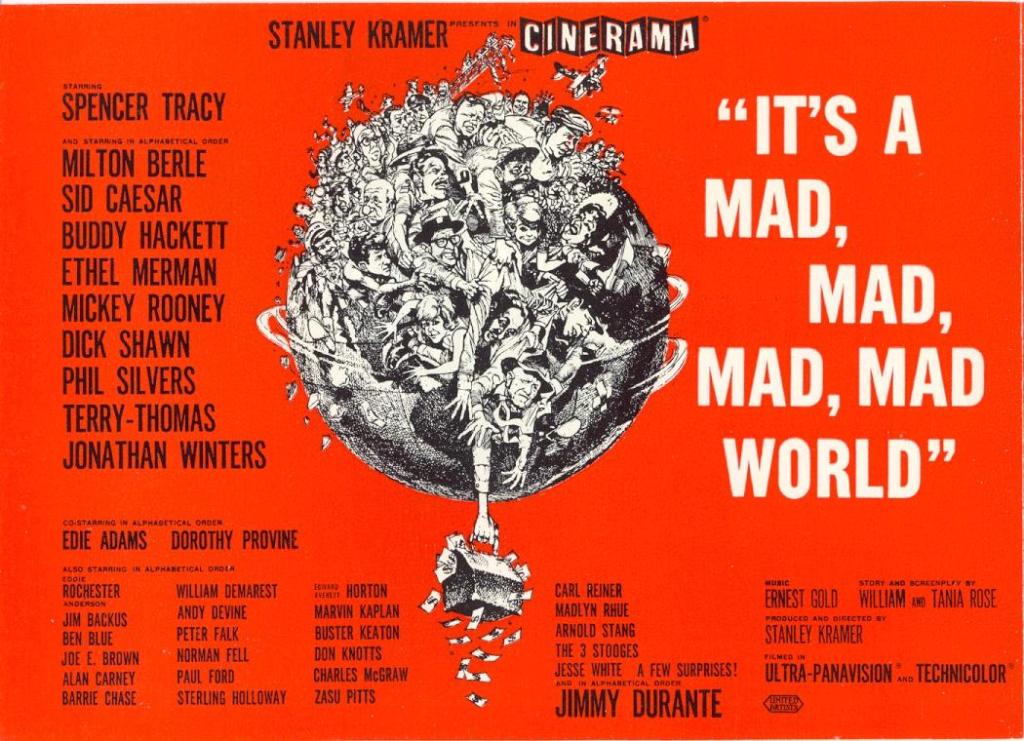
The Five Timers Club (Movies that I have nominated at least five times but have yet to make it): 9 to 5 (1980), Big (1988), It’s a Mad, Mad, Mad, Mad World (1963), The Miracle Worker (1962), Mystery Science Theater 3000: The Movie (1996), The Sixth Sense (1999)

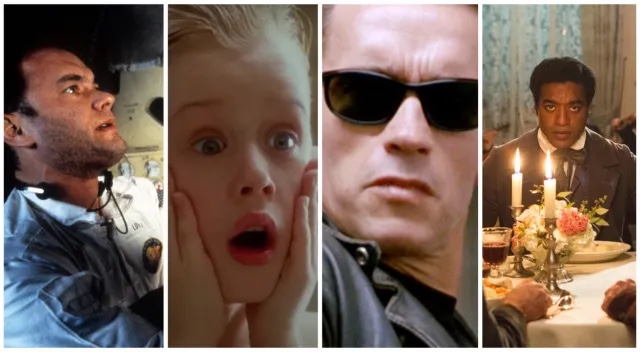
Personal Favorites: Rope (1948), Witness for the Prosecution (1957), Exploratorium (1974), Hardware Wars (1978), Clue (1985), Home Alone (1990), The Birdcage (1996), Best in Show (2000), Hedwig and the Angry Inch (2001)

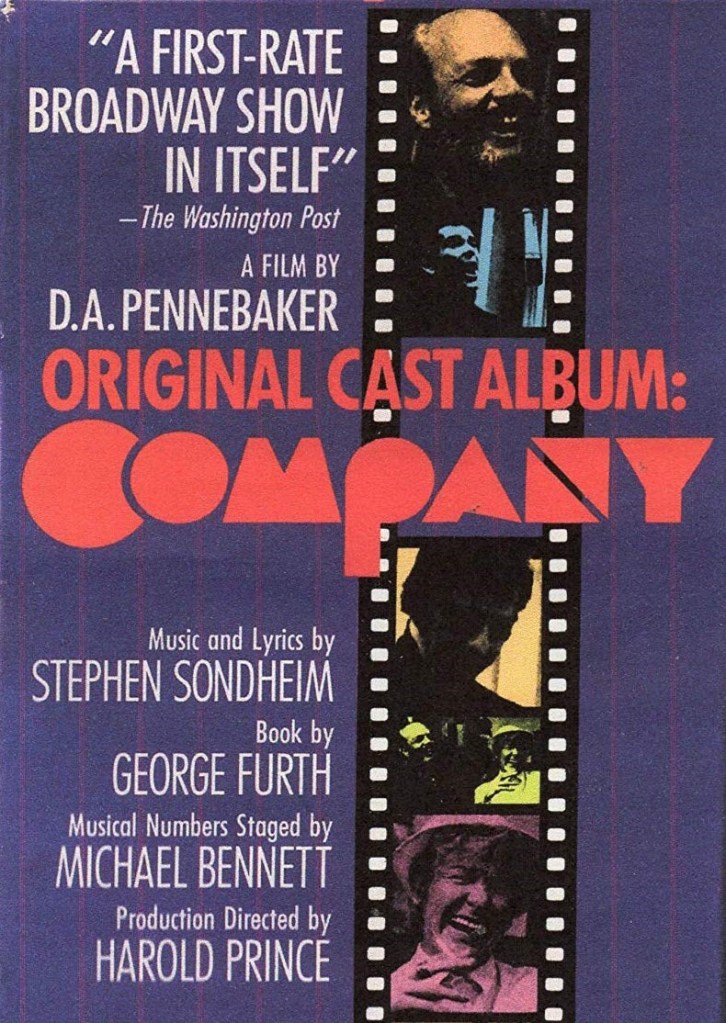
A Favorite that Should at Least Be on the List of Eligible Titles on the NFR’s Website: Original Cast Album: Company (1970)

Animation!: Humorous Phases of Funny Faces (1906), Feline Follies (1919)*, Der Fuehrer’s Face (1942), Cat Concerto (1947)*, Alice in Wonderland (1951), Winnie the Pooh and the Honey Tree (1966)*, The Nightmare Before Christmas (1993), Space Jam (1996)*, Finding Nemo (2003)

A Whole Buncha ’80s: Star Trek II: The Wrath of Khan (1982), Gremlins (1984)*, The Karate Kid (1984), The Color Purple (1985), Blue Velvet (1986), Labyrinth (1986), Dirty Dancing (1987), Fatal Attraction (1987), Beetlejuice (1988), Say Anything… (1989)*

Grab Bag: The Wolf Man (1941)*, Creature from the Black Lagoon (1954), The Great Escape (1963), Fantastic Voyage (1966)*, The Heartbreak Kid (1972)* Alice Doesn’t Live Here Anymore (1974), Sleepless in Seattle (1993), Cast Away (2000)*, O Brother, Where Art Thou? (2000)*, Moulin Rouge! (2001)*, Borat (2006)*, 300 (2007)*, Bridesmaids (2011)

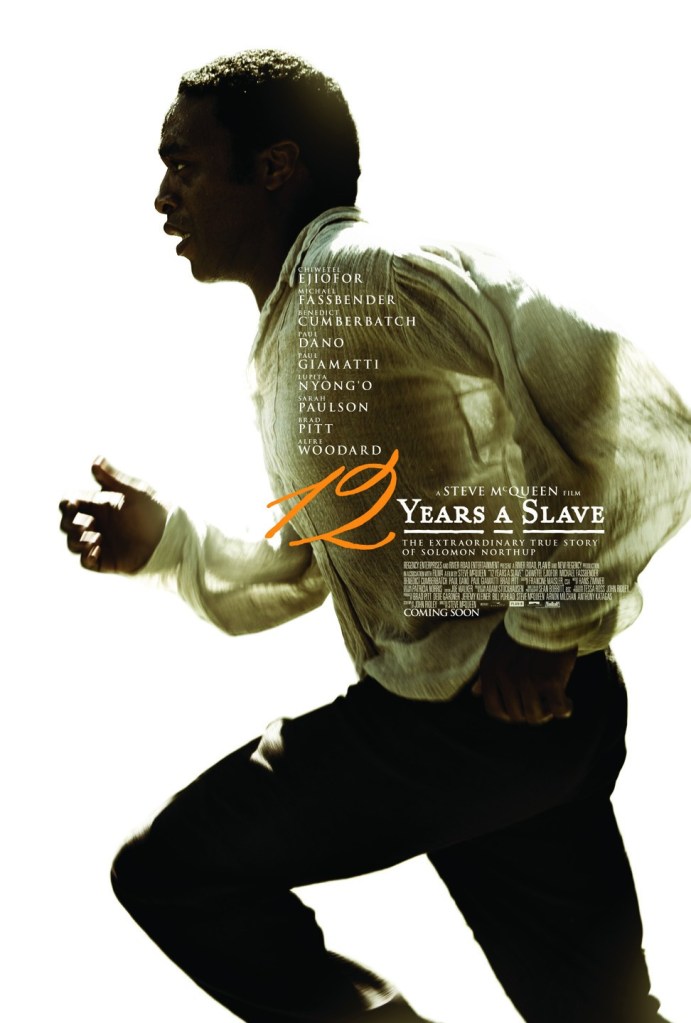
And finally, the Newly Eligible from 2013: 12 Years a Slave (2013)*, Frozen (2013)*

On average, three of the movies on my nominations ballot make the cut. Which ones will it be? Can I beat my personal best of getting five films on the list in one year? And is anyone on the National Film Preservation Board actually reading this? We’ll find out the answers to all of these questions in December.

Happy viewing,

Tony

#662) The Prisoner of Zenda (1937)

#662) The Prisoner of Zenda (1937)

OR “The Heir Apparent Trap”

Directed by John Cromwell

Written by John L. Balderston. Adaptation by Wells Root. Additional dialogue by Donald Ogden Stewart. Based on the novel by Anthony Hope and the stage adaptation by Edward Rose.

Class of 1991

Wow, no trailer to be found for this version of “Zenda”, so here’s an introduction to the film by one of those new TCM hosts.

The Plot: Englishman Rudolf Rassendyll (Ronald Colman) takes a vacation in the fictional European country Ruritania in the summer of 1897. He soon discovers that he looks nearly identical to Ruritania’s King Rudolf the V (also Ronald Colman), soon to be coronated and wed to Princess Flavia (Madeleine Carroll). Amused by their resemblance, King Rudolf invites Rudolf to dine with him on the eve of his coronation, where the king drinks a bottle of wine from his half-brother Michael (Raymond Massey) and is drugged. Worried that Michael will try to overtake the throne while Rudolph V is incapacitated, Colonel Zapt and Captain von Tarlenheim (C. Aubrey Smith and David Niven) convince Rudolf to fill in for the king for the coronation. Shortly afterwards, the real king is kidnapped by Michael’s henchman Rupert of Hentzau (Douglas Fairbanks Jr.) and held prisoner in the nearby village of Zenda. There’s action, romance, and some impressive optical effects in the kind of historical adventure that could only come from 1930s Hollywood.

Why It Matters: The NFR write-up is mostly a rundown of the film’s plot and production, with the only superlative going to the movie’s “escapist charm”.

But Does It Really?: This is another one of those movies that I think made the NFR a little sooner than it should have. I enjoyed “Zenda” quite a bit as an entertaining example of a Classic Hollywood studio adventure, but this should not be part of the same NFR class as “2001” and “Lawrence of Arabia“. While “Zenda” succeeds at being a charming historical romp, there are just so many other movies of the era that do it better (the Errol Flynn “Robin Hood” came out the next year). Also not helping things is the fact that no one reads or remembers the original novel of “Prisoner of Zenda”, so its cultural footprint isn’t what it was when this film was made. “Zelda” is fun if you’re willing to track it down, but I’d hardly call it a film essential, and I give its NFR designation a hearty “I guess?”

Everybody Gets One: John Cromwell started off as a stage actor, pivoting to directing before heading out to Hollywood as a dialogue director for this new thing called talking pictures. Cromwell pivoted to film director quickly, earning a reputation as an actor’s director. Fun Fact: John Cromwell is the father of the actor James Cromwell. This is also the only NFR appearance for leading lady Madeleine Carroll, whose most iconic film appearance is ineligible for this list: Hitchcock’s original 1935 version of “The 39 Steps”. Carroll retired from acting shortly after the war to focus on humanitarian efforts, and considered “Zenda” her favorite of her own film work.

Seriously, Oscars?: A hit upon release, “The Prisoner of Zenda” received two Oscar nominations. The film lost Art Direction to fellow NFR entry/Ronald Colman vehicle “Lost Horizon“, and Original Score to something called “One Hundred Men and a Girl”.

Other notes 

  • “The Prisoner of Zenda” was written by Anthony Hope in 1894 and was immediately successful, spawning a sequel novel and a popular stage adaptation. Prior to the 1937 film, there had been three silent film adaptations, most notably a 1922 version starring Lewis Stone and Ramón Navarro. In the early 1930s, the film rights to the “Zenda” were owned by MGM (its predecessor Metro Pictures made the 1922 version), and there were plans to make a musical adaptation starring Jeanette MacDonald and Nelson Eddy. A non-musical film to be produced by David O. Selznick was in production turnaround when Selznick left MGM to form his own studio, but his interest in the property was reignited when King Edward VIII abdicated the British throne in December 1936 to marry American divorcée Wallis Simpson. Recognizing the parallel story themes, Selznick quickly bought the film rights to “Zenda” from MGM, with production starting in March 1937 and the final film premiering that September.
  • I love me some creative writing in the credits. This ain’t no film adaptation, it’s a “picturization of the celebrated novel”. There’s also a disclaimer that any resemblance to a “Great Royal Scandal” from the last century is purely coincidental. Anyone know what they’re alluding to?
  • As expected, Ronald Colman is quite dashing in this, and is clearly having fun playing scenes with himself. In previous posts, I’ve referenced David Niven succeeding Ronald Colman as Hollywood’s “Charming British Guy”, but I didn’t realize they were in a movie together. I imagine Niven took a lot of notes during filming.
  • C. Aubrey Smith is a bit of stunt casting: He had played the lead dual roles in a stage production of “Zenda” 40 years earlier, appearing in other productions through the years and joking that he “played every part except Princess Flavia.”
  • I was hoping for some old-school split screen effects when the two Rudolphs meet, and this film does not disappoint. And then this movie goes the extra mile and includes a wide shot of Colman shaking hands with himself! How did they do that?
  • We don’t see a lot of Raymond Massey in this blog. Most of his NFR representation comes from his later work squaring off with James Dean and briefly reprising his work as Lincoln. It’s fun watching him play a heavy, and I’m still holding out for his best villainous performance to make the NFR: Jonathan Brewster in “Arsenic and Old Lace”.
  • Douglas Fairbanks Jr. looks remarkably like his dad, yet differently enough that every time he turns up in one of these movies I think “Who’s that guy? He looks familiar.” Fairbanks wanted to play Rudolf, and was initially disappointed when offered the role of Rupert, until Fairbanks Sr. reminded him it’s one of the best written villains in all of literature.
  • Poor Mary Astor: always the third wheel, always the other woman. That being said, I like her character Antoinette; Michael’s mistress who helps Rudolf so that she can marry Michael. Sort of an “Everybody loves somebody” deal.
  • Well there’s a lot of spectacle going on, especially with this coronation. Makes sense, there was no live news coverage in 1937. If you wanted to see a coronation, you had to go to one.
  • I love when Rudolph really leans into the king stuff, especially in his early scenes with Flavia where he berates Fritz for the fun of it. I actually laughed out loud at these scenes. Not bad for an 86 year old movie.
  • The conductor at the ball who gets increasingly frustrated at having to stop and start is played by Al Shean, uncle of the Marx brothers!
  • I questioned this movie’s reference to Florence Nightingale as anachronistic, but by 1897 Nightingale was already famous for her nursing achievements during the Crimean War. Side note: Despite having the Florence Nightingale Effect named after her, there is no evidence that she ever fell in love with one of her patients.
  • What is Rupert wearing in the last few scenes? He looks like one of the aliens from “Plan 9 from Outer Space”.
  • The presence of Douglas Fairbanks Jr. and the sword fight depicted on the poster led me to believe that there would be a lot more swashbuckling in this movie. Aside from the climactic sword fight between Rudolf and Rupert, my swash was hardly buckled at all. The weird thing about the sword fight is how much quippy dialogue there is throughout. Shouldn’t they save their energy for the actual fighting? Apparently I was not the only one disappointed by this fight scene; Selznick hated the original version and had the whole thing re-shot by an uncredited W. S. Van Dyke after production wrapped.
  • With the exception of some streamlining in the third act, this film of “Zenda” is very faithful to the book, including the downer ending in which Rudolf and Flavia don’t get together because of her obligation to marry the king. Oh come on! This all being said, that’s a great final shot of Rudolph literally riding off into the sunset. James Wong Howe, you’ve done it again!

Legacy 

  • “The Prisoner of Zenda” was a box office hit upon release, encouraging Selznick International Pictures to go big with one of their upcoming projects in pre-production at the time: an adaptation of the novel “Gone with the Wind“.
  • Selznick had plans to film the book’s sequel “Rupert of Hentzau” in the late 1940s with Joseph Cotten taking over the dual Rudolph roles, but the film never made it to production.
  • John Cromwell reunited with Raymond Massey for the 1940 biopic “Abe Lincoln in Illinois”. Cromwell spent the next decade making a number of historical pictures before being blacklisted in the early 1950s. He returned to New York and the theater, making only a handful of movies after the blacklist.
  • Always happy to crank out remakes of public domain IP, “Prisoner of Zenda” got two more major film adaptations after 1937. 1952’s version starred Stewart Granger and was virtually a shot-for-shot remake of the 1937 version (even using the same screenplay). The 1979 remake starred Peter Sellers and was a more broadly comedic version of the tale. As with many a later Sellers project, Peter’s on-set tyranny led to a forgettable, unfunny final product. All was forgiven, however, with the release of Sellers’ next film: “Being There“.
  • While no one remembers “The Prisoner of Zenda” either in novel or film form, the “commoner switches places with royalty” trope has echoed throughout pop culture; from “History of the World Part I” to “Dave”.
  • Oh, and apparently the crew outfits in “Star Trek II: The Wrath of Khan” were inspired by the uniforms in this film. I…got nothing, I’m not a Trekkie. But this is the best excuse I’ve had to play that clip of Shatner shouting “Khaaaaan!”

#661) Two-Lane Blacktop (1971)

#661) Two-Lane Blacktop (1971)

OR “I’ve Seen Tires and I Seem Drained”

Directed by Monte Hellman

Written by Rudolph Wurlitzer and Will Corry

Class of 2012

The Plot: Two guys known only as the Driver and the Mechanic (James Taylor and Dennis Wilson) drive their souped-up 1955 Chevrolet 150 across country, earning quick cash in illegal drag races. In the process they pick up a free-spirited young woman (“The Girl” – Laurie Bird) and have brief, antagonistic encounters with an older man who drives a Pontiac GTO (Warren Oates). While everyone is stopped at a gas station in New Mexico, the Driver and Mechanic challenge GTO to a race to Washington D.C. What follows is either an artsy introspective meditation on isolation in modern America or the most boring race movie ever made.

Why It Matters: The NFR contextualizes the film within “a spate of innovative, low-budget films by young filmmakers influenced by European directors” throughout the early ’70s. An essay by writer Sam Adams is a deep-dive into the film’s subtext.

But Does It Really?: Sometimes this blog teaches me something about myself, and today that something is that I really don’t care for the counterculture film movement of the late ’60s/early ’70s. There are people who love “Two-Lane Blacktop” and compare it favorably to the European art house movies that inspired it; I am not one of those people. What many find profound and insightful, I found just plain uninteresting. I suspect like so many other movies of its time this is another “You had to be there” kind of movie: My 2023 viewpoint just can’t get into what this movie was trying to tell a 1971 audience. “Two-Lane Blacktop” makes the list as an underground cult movie with a strong reputation amongst hardcore cinephiles, and therefore earns its NFR designation, but just barely in my humble opinion.

Everybody Gets One: Monte Hellman’s film career started, as so many others have, under the guidance of Roger Corman. In addition, Roger’s brother Gene Corman produced Hellman’s first movie: 1959’s “Beast from Haunted Cave“. Hellman made a series of low-budget “head” films in the late 1960s that starred the likes of Jack Nicholson and Warren Oates. Hellman met producer Michael Laughlin by chance and agreed to direct “Two-Lane Blacktop” based on a script owned by Laughlin, which was almost entirely thrown out and re-written except for, according to Hellman, “the title and the idea of a race.”

Seriously, Oscars?: No Oscar love for “Two-Lane Blacktop”, but Warren Oates managed to get a few Supporting Actor nominations from the New York Film Critics Circle and the National Society of Film Critics.

Other notes 

  • Perhaps the surest sign of the film’s low-budget: your two leads are musicians in their first (and ultimately final) film performances. While this is James Taylor’s sole NFR appearance, Dennis Wilson can be seen playing drums with his fellow Beach Boys in “The T.A.M.I. Show“, which I still consider one of the greatest movies on this list. Neither one of them is that great an actor, but it works in the context of these two loners who live in their own world.
  • “Two-Lane Blacktop” made some things very clear to me from the get-go. From its earliest moments, there’s an “Easy Rider” vibe to the whole movie (minus the soundtrack), which led to my ultimately-confirmed theory that this film was Universal’s attempt at their own counterculture hit in the wake of “Easy Rider”. The other major point came to me in the pre-credits sequence: an extended, dialogue-free scene of the Driver and Mechanic in a drag race. Right before the credits started I turned to my viewing partner and said, “I think this is what the whole movie will be like”. I hate it when I’m right.
  • Let’s see, what do I actually like about this movie? Well, there’s excellent use of natural lighting throughout. Shout out to the film’s cinematographer Gregory Sandor, who for union reasons couldn’t be credited as such, instead being billed as a “Photographic Advisor”.
  • It’s so weird hearing James Taylor say “fuck”. I got nothing else to say about that, it’s just so weird.
  • The other thing this movie has going against it for me: car talk. So much car talk. This movie might as well be in a foreign language.
  • In order to truly appreciate Warren Oates’ work in this movie, you have to have seen or at least be aware of his previous typecasting. Oates was primarily a western actor, often playing the henchman of whoever the main villain was. “Two-Lane” was a chance for Oates to play a more substantial, contemporary part. On its own I found the character a bit grating, but with more context I can start to understand why many critics singled out Oates and his performance in their reviews.
  • That’s a young Harry Dean Stanton (credited as H.D. Stanton) as the cowboy that GTO picks up, and who subsequently tries to pick up GTO, wink wink nudge nudge.
  • I couldn’t help but think of all the other car-related movies that could have made the NFR instead of this one. Where’s “Smokey and the Bandit”? “Duel”? “The Fast and the Furious”? “The Love Bug”? “Driving Miss Daisy”?
  • I know I complain a lot about movies where “nothing happens” and I tried to give this movie the benefit of the doubt, but man “Two-Lane” really tested my patience. It’s like they cut out the actual scenes and left the outtakes in the final film. I’m sure in 1971 it was still revolutionary to see a movie where people sit in silence for long passages, but my 2023 sensibility needed more. And before you say “You just didn’t get it,” rest assured I got it, and I did not care for it.
  • Oh my god, how did this movie make racing look so boring? I’ve seen senate races that were faster than this!
  • Coca-Cola products are all over the place in this movie. Did Coke pay Universal for all these shoutouts? Fun Fact: 1971 was the year Coke first aired their “Hilltop” ad, aka the Don Draper “I’d like to buy the world a Coke” commercial.
  • During my viewing, I predicted that the film would just end randomly, and I would say “That’s it?” Turns out “Two-Lane” has one of the more original final shots in a movie: As the Chevy drives off into the distance, the film appears to break and deteriorate before our eyes, leaving us with the final image of a blank screen. Points for originality, but for me this was too little too late.
  • Well, there was a two-lane blacktop in this movie. I have to admit they delivered on that.

Legacy 

  • In the lead-up to the release of “Two-Lane Blacktop”, Esquire magazine published the screenplay and prematurely declared the film “Our nomination for movie of the year”. Despite this prediction, and praise from critics, Universal head Lew Wasserman hated the film and pulled it from theaters after a brief run over the 4th of July weekend with zero advertising. After that, “Two-Lane Blacktop” remained unavailable to the viewing public, but started gaining an almost mythical stature amongst those who actually saw it.
  • For many years “Two-Lane Blacktop” didn’t get a video release due to a rights issue with the film’s use of The Doors’ song “Moonlight Drive”, exacerbated by Universal’s general disinterest in releasing the film. In 1999, video distributor Anchor Bay Entertainment (which specialized in releasing cult movies) was able to strike a deal with Universal and the surviving members of The Doors and got “Two-Lane Blacktop” a proper video release. A 2007 Criterion release on DVD helped earn the film a further re-evaluation. I borrowed the 2007 DVD from my local library for this write-up! Support your local library!
  • Monte Hellman reunited with Warren Oates and Laurie Bird for his next movie: 1974’s “Cockfighter”, which was even less successful than “Two-Lane Blacktop”. In addition to directing, Hellman was the second-unit director on the original “RoboCop” and an associate producer on “Reservoir Dogs”. Hellman’s last film was the short “Vive l’amour”, released posthumously in 2013.
  • James Taylor allegedly hated working on this film and has claimed never to have seen the movie, though he did reunite with the original Chevrolet 150 in a 2018 episode of “Jay Leno’s Garage”. Taylor’s acting career consists mostly of TV appearances as himself, including one of my favorite “Simpsons” guest spots ever. “I’m gonna play, and you’re gonna float there and like it!”
  • Journalist Brock Yates cited “Two-Lane Blacktop” as an influence on his annual Cannonball Baker Sea-To-Shining Sea Memorial Trophy Dash, aka Cannonball Run. Weirdly, the first Cannonball Run was in May 1971, two months before the film hit theaters. Whatever, it’s still as good an excuse as I’ll ever get to reference the “Cannonball Run” movie on this blog.

Listen to This: Dennis Wilson (along with the other Beach Boys) appears on the National Recording Registry via their landmark album “Pet Sounds“. Surprisingly, James Taylor has yet to make it onto the NRR, though he did write one of the songs (“You Can Close Your Eyes“) on Linda Ronstadt’s album “Heart Like a Wheel”, a 2013 NRR inductee.

For Your NFR Consideration: Castro’s Rep Sheet

This photo was created for Variety’s article about Rep. Castro’s list.

Sometimes I wonder if after 35 years, any Members of Congress still care about the preservation of American film and/or the National Film Registry they helped create. Thankfully, we’ve got Representative Joaquin Castro carrying the torch over in Texas’s 20th congressional district. On August 15th (this year’s deadline for NFR nominations), Rep. Castro wrote an open letter to Librarian of Congress Dr. Carla Hayden and the National Film Preservation Board nominating 27 films for NFR consideration, compiled by the Congressional Hispanic Caucus. On the heels of his successful campaign to get “Selena” on the list two years ago and “The Ballad of Gregorio Cortez” last year; Castro is going for the three-peat with his nominations, all of which are either by Latino filmmakers, about the Latino experience, or both. I’m glad Rep. Castro is out there shining his spotlight on the NFR, and particularly films by Latino artists, which make up less than 3% of the films currently on the Registry.

I’m not going to go through every film one by one; you can peruse the list yourself. But I do want to write down some of my initial takeaways about this selection.

  • Castro’s list isn’t presented in any particular order, which leads me to believe that Gregory Nava’s 1995 film “My Family” is Castro’s top choice by virtue of being listed first. Nava already has two films on the NFR – “El Norte” and the aforementioned “Selena” – and a third wouldn’t seem out of place. Plus “My Family” has Edward James Olmos, who appears in five movies already on the NFR! If betting on the NFR was legitimate, I’d put some money down on “My Family” joining the class of 2023.
  • The 27 films are a good sampling of Latino filmmaking, with comedies, dramas, documentaries, and even a sci-fi film highlighting various Latino experiences in America throughout the years. Among the more recognizable titles are “Frida” (2002), “The Milagro Beanfield War” (1988), “Maria Full of Grace”, “Up in Smoke” (1978), and “A Better Life” (2011). Directors represented include Alfonso Arau, Aurora Guerrero, Patricia Riggen, María Ripoll, Mariano Barroso and…Robert Redford? Oh right, I forgot he directed “The Milagro Beanfield War”.
  • It’s interesting to note that of these 27 films, a majority of them were made after 2000. This is no doubt in correlation with the rise of independent filmmaking, which is unfortunately still the only way most filmmakers of color can get their films made and their stories told.
  • I’m embarrassed to admit that I have not seen any of these films (though the person in front of me on a plane a few months ago was watching “Frida”, so I got the gist of it). At first I thought I had seen Eugenio Derbez’s “Instructions Not Included”, but then I realized I was thinking of the Aubrey Plaza time-travel movie “Safety Not Guaranteed”. Two very different movies. From this list, 2010’s “La Mission” piques my interest. Not only is it set in San Francisco in the late 2000s (aka my college years), but it was directed by Peter Bratt and starring his brother Benjamin. We love to see more “Law & Order” alumni on the list!
  • In addition to appearing in a few of these movies, Edward James Olmos directs two of them: the 1992 crime drama “American Me”, and the 2006 HBO movie “Walkout”. Castro will not rest until every Edward James Olmos movie has made the NFR. Next year: “Beverly Hills Chihuahua”!
  • Shoutout to Chris Weitz, whose 2011 Oscar-nominated film “A Better Life” is up for consideration. If it makes the cut, Weitz will be the third generation of his family to make the NFR, after his mother Susan Kohner and her mother Lupita Tovar.
  • As much I hate to nitpick, I question the eligibility of Castro’s second pick: Alfonso Arau’s 1992 hit “Like Water for Chocolate”. From what I can gather, this was an entirely Mexican production. Heck, it was Mexico’s official submission for the Oscar’s Foreign Language category. Usually the NFR is willing to look the other way if an international film was at least co-financed by an American company, but all signs point to “Like Water for Chocolate” being ineligible for this list.
  • I submitted my own 2023 nominations back in March, so I didn’t get to include any of Castro’s choices on my own ballot. That being said I have previously nominated two of his 27 films: Julie Taymor’s “Frida” and Lou Adler’s “Up in Smoke”. I nominated “Frida” in a push to get more female-directed films on the list, and “Up in Smoke” because…come on, it’s Cheech & Chong! Cheech is already on the list, and who am I to break up the band?

As always, you can nominate films for NFR consideration. We’ve passed the deadline for 2023 (I’ll be posting my nominations post soon), but you can get a head start on 2024. Nominate here, check out their website’s list of films not yet on the list, and check out my own For Your Consideration page.

Happy Viewing,

Tony

#660) Amadeus (1984)

#660) Amadeus (1984)

OR “Tuesdays with Salieri”

Directed by Miloš Forman

Written by Peter Shaffer. Based on his stage play.

Class of 2019

Note: This post is based on my viewing of the Director’s Cut, which runs about 20 minutes longer than the original theatrical version.

The Plot: In 1823 Vienna, elderly composer Antonio Salieri (F. Murray Abraham) confesses to the murder of his legendary contemporary Wolfgang Amadeus Mozart (Tom Hulce). Via flashback to 40 years earlier, Salieri recounts his time as the court composer to Vienna’s Joseph II (Jeffrey Jones), devoting his life to composing in hopes of achieving fame and recognition. Upon meeting Mozart, Salieri is shocked to discover that he is a crude young man, yet with a seemingly God-given talent for composition. Salieri’s jealousy leads him to exact any sort of revenge he can on Mozart, who despite his alcoholism and troubled marriage to Constanze Weber (Elizabeth Berridge), is composing his most famous operas (The Marriage of Figaro, Don Giovanni, The Magic Flute). As Mozart succumbs to his alcoholism, it turns out Salieri’s murder of Mozart wasn’t literal, but rather a metaphorical one through his jealousy. Kind of a letdown after three hours.

Why It Matters: The NFR praises “Amadeus” for being a “deeply absorbing, visually sumptuous film”, highlighting F. Murray Abraham’s performance.

But Does It Really?: I guess. “Amadeus” is iconic enough for eventual NFR induction, though clearly no one was rushing to get it on there (it made the cut 25 years after becoming eligible). Everything about the movie works: the aesthetic, the direction, the overall story, and especially the lead performances by Abraham and Hulce. But ultimately, all I have to say about this movie is that it’s fine. In a way, “Amadeus” has become its own Salieri – or at least this film’s version of him: a highly respected if not spectacular film whose legacy has started to fade in the shadow of its low-brow but more impactful contemporaries like “Ghostbusters“, “The Terminator” and “This Is Spinal Tap“, all films from 1984 that made the NFR before “Amadeus”.

Title Track: Amadeus was, of course, Mozart’s middle name, and is Latin for “love of God”, a major theme of the film.

Seriously, Oscars?: A critical and commercial success upon release, “Amadeus” tied David Lean’s “A Passage to India” for the most Oscar nominations of the year (11), going on to win eight, including Best Picture, Director, Actor for F. Murray Abraham, and a boatload of tech awards. When “Passage to India” composer Maurice Jarre won Best Original Score, he accepted by saying he “was lucky Mozart was not eligible this year.”

Other notes 

  • As your history teacher was quick to point out before plopping “Amadeus” into the VCR, the film is a fictional riff on historical events. There is no evidence to suggest that Salieri and Mozart were rivals, though they weren’t exactly best buds either. The mystery around Mozart’s tragic death has lent itself to creative theories over the years, with playwright Alexander Pushkin speculating that Salieri did it with his 1830 play “Mozart and Salieri”. 150 years later, Peter Shaffer took this idea and fleshed it out into the play “Amadeus”, turning Salieri’s envy into a metaphorical killing rather than a literal one. It was not long into the play’s theatrical run that director Miloš Forman and producer Saul Zaentz approached Shaffer about a film adaptation.
  • “Amadeus” was filmed primarily in Prague, which architecturally looked very much like Vienna did in the 1800s and didn’t need much set-dressing to look era-appropriate. It was Miloš Forman’s first trip back to Prague after he left his native Czechoslovakia following the 1968 invasion. Czechoslovakia was still under Communist rule at the time, and many cast and crew members, including Forman, recall the shoot being constantly under surveillance by secret police.
  • It occurred to me during this viewing that “Amadeus” is a bit of an outlier in the NFR. We rarely get this kind of expensive costume drama on the list, which tends to favor smaller, contemporary character studies by independent auteurs. Also interesting to note that “Amadeus” and “Platoon” are jointly the first Best Picture winners from the 1980s to make the list, despite being eligible since the mid-’90s. Compare that with later winners like “Schindler’s List” and “Unforgiven“, which made the NFR within their first few years of eligibility.
  • The film’s dance numbers were staged by legendary choreographer Twyla Tharp, best remembered today as the third name Robin Williams shouts during that one scene in “The Birdcage”.
  • As always, a tip of the hat to makeup artist Dick Smith, who knocks it out of the park with Salieri’s old age makeup. Making a middle-aged man convincingly appear to be 81 is no easy task, but Smith does an incredible job, and F. Murray Abraham is relishing the chance to disappear into the makeup.
  • Fun Fact: The F in F. Murray Abraham stands for Fahrid. His birth name is Murray Abraham, and he added the F to his stage name as a tribute to his father, Fahrid Abraham.
  • Once again, I struggle to write about registered sex offender/actor Jeffrey Jones, seen here as Emperor Joseph II. He’s very good in this, adding some light comic relief to the proceedings, and I found myself laughing at his performance and then immediately getting mad at myself for doing so. So much for separating the art from the artist. To the best of my knowledge, Jones had not committed any of the things he would later be arrested and charged for when he was making “Amadeus”, so I have that to cling to for my own sanity.
  • Man, Tom Hulce is great in this. He makes Mozart a living artist rather than a cardboard historical figure. Plus he did his own piano playing (I mean, it’s dubbed, but the actual playing is accurate). With all due respect to F. Murray Abraham’s great work, I think I would have voted for Hulce if I had an Oscar ballot.
  • This movie is a cornucopia of recognizable character actors, including Christine Ebersole, Roy Dotrice, Vincent Schiavelli (a Forman go-to), Simon Callow (the original Mozart on the London stage), Barbara Bryne, Douglas Seale, a 17 year old Cynthia Nixon, and personal MVP Patrick Hines as Kappelmeister Bonno. Plus, the “Don Giovanni” parody performance includes Kenny Baker in his only NFR appearance where he’s not hidden inside a remote-controlled trash can.
  • What was the wig budget on this movie?
  • Elizabeth Berridge was a last-minute replacement for Meg Tilly, who injured her leg the day before shooting began. No offense to Ms. Berridge, but I wish I could have seen Meg Tilly in the role. On its own the role of Constanze is little more than “the wife”, and you need an actor like Tilly to bring their own unique quality to make the part stand out. Berridge is not helped out by the fact that her main subplot, in which Constanze is seduced by Salieri, was cut from the theatrical release, depriving the character of most of her nuance. Also, is it just me or does Elizabeth Berridge kinda look like Stockard Channing?
  • It amuses me that this movie is so high-brow that not even a fart joke can convince me otherwise. Tom Hulce farts for musical punctuation and we still gave this movie eight Oscars.
  • Joseph: “My own dear sister Antoinette writes me that she is beginning to be frightened of her own people.” I assume this was originally followed by Joseph saying “Shall we eat cake?” and then winking so hard at the camera it cracked the lens.
  • It takes almost two hours, but the guy from the poster finally arrives. Turns out it’s the costume Mozart’s dad wears, later donned by Salieri when he commissions Mozart to write a requiem. I guess it’s a metaphor about death or something.
  • In one of his last drunken binges, I think Mozart accidentally invents rock and roll. “Charles! It’s your cousin Marvin von Berry! You know that new sound you’re looking for? Well listen to this!”
  • Points deducted from this movie for a severe case of “Volume Up, Volume Down”. Every time I had to crank up the volume to hear the dialogue, I get blasted by a choir belting Requiem. Bad form, “Amadeus”.
  • I always watch the full credits on these movies because you never know what gems you’ll find, and “Amadeus” has a real doozy. The special thanks section begins with the producers thanking different groups for “their boundless assistance in our effort to present the physical authenticity and aura you have seen and felt in ‘Amadeus’.” Sheesh. Get over yourselves, it’s just a movie.

Legacy 

  • “Amadeus” was released in September 1984, and was an immediate hit. In addition to its acclaim by critics and end-of-year awards ceremonies, the film’s soundtrack sold over six million copies, making it one of the most successful classical music albums ever released.
  • Somewhat ironically, the success of both the play and film of “Amadeus” brought renewed interest in Salieri’s music. There have been a few revivals of his operas, but his work continues to be overshadowed by Mozart’s.
  • Miloš Forman’s next movie was 1989’s “Valmont”, another costume drama, this time with Meg Tilly. Unsurprisingly, “Valmont” received unfavorable comparisons to another recent adaptation of the same novel: “Dangerous Liaisons”. Forman’s latter filmography includes two quirky biopics: “The People vs. Larry Flynt” and “Man on the Moon”.
  • “Amadeus” is one of those films that gets referenced more than parodied, usually brought up in passing as part of Oscar history or the filmography of its stars. Most parodies revolve around the film’s overall concept and/or framing device, and this “Family Guy” parody has always tickled me just right. I think it’s Peter’s deadpan delivery of “Play Peter Griffin.”
  • And last, but far from least: In 1985 Austrian musician Johann Hölzel, aka Falco, blessed us with his hit song “Rock Me Amadeus”. I have no idea if it was made in response to the movie or not, but the two are forever linked. I would have given this movie an automatic four stars if it had ended with “Rock Me Amadeus”.