#96) President McKinley Inauguration Footage (1901)

3b17645u

#96) President McKinley Inauguration Footage (1901)

OR “Mr. Edison Goes to Washington”

Directed by Thomas Edison

Class of 2000

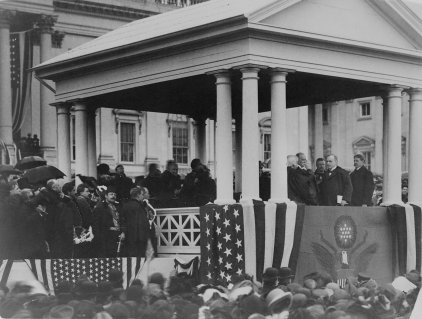
The Plot: Two very short films that capture brief moments from President William McKinley’s second inauguration in March 1901. The first is McKinley taking the oath of office and beginning to give his speech, the second is a glimpse of the procession down Pennsylvania Avenue.

Why It Matters: The NFR calls these shorts “a unique look at one of the seminal events of turn-of-the-20th-Century political history.” More historical context is provided in an essay by a film expert named “Buckey”.

But Does It Really?: I guess, though weirdly this is not the first presidential inauguration to be filmed. That distinction goes to McKinley’s first inauguration in 1897. Why the 1901 film made the list and 1897 didn’t is beyond me.

Everybody Gets One: During his first term, President William McKinley helped America get out of a recession and led the country to a swift victory in the Spanish-American war. He was initially reluctant to have his inaugurations filmed, but his brother Abner talked him into it. Once again, President William McKinley had a brother named Abner. Abner McKinley. That was the name of a real person. Carry on.

Wow, That’s Dated: Horse drawn carriages as a mode of transportation, wearing a formal top hat without being a tap dancer or a magician.

Other notes

  • Do yourself a favor and read Thomas Edison’s descriptions of these two films in the Edison film catalog. He really oversells them. He calls the footage he got of McKinley passing by on his camera “an absolutely perfect photograph”. Not really Tom, not really.
  • The stands seem a bit empty at the beginning of the inauguration. Must…not…make…crowd size joke…
  • The hexagram symbol in front of McKinley is actually made up of 13 smaller stars, representing the 13 colonies. It’s the same design on the back of the dollar bill. Really disappointing, because I was hoping McKinley was our first Jewish president.
  • The procession was filmed on the corner of 15th and Pennsylvania Avenue, right by the current site of the White House Visitor Center.
  • I am always happy to watch a parade without hearing C-list celebrities attempting banter.
  • Why are Buckingham palace guards at this inauguration?
  • No one in this cavalry knows how to ride a horse. Was this really the best we could do for the president?
  • Random Presidential Fact: William McKinley was the first president to ride in an automobile. It was in 1900 when the president rode in a Stanley Steamer (which I assume made his carpets cleaner).

Legacy

  • Six months after the events of these films, while visiting the 1901 Pan-American Exposition in Buffalo New York, President McKinley was shot by anarchist Leon Czolgosz and died eight days later. Theodore Roosevelt succeeded McKinley as our 26th president.
  • Like many presidents, McKinley has his share of memorials, including replacing Lincoln on the $500 bill.
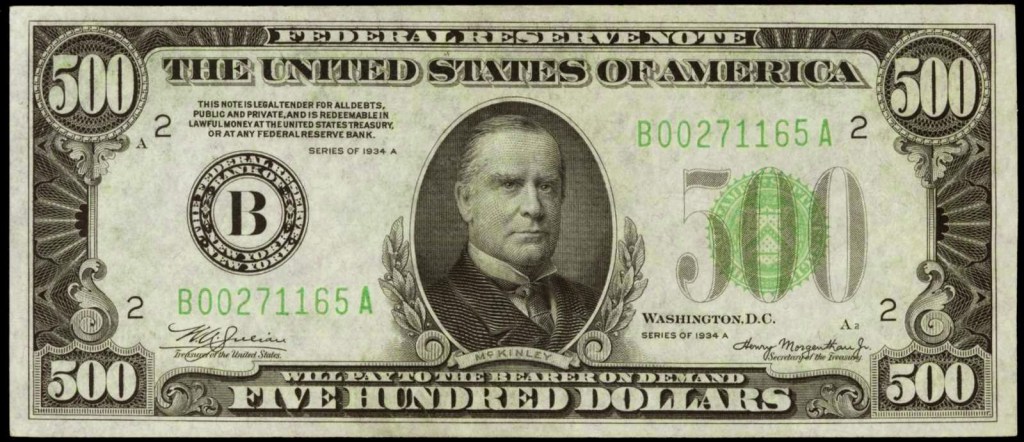
1934 500 Dollar Federal Reserve Note
  • What else can I tell you…um…well, we still film presidential inaugurations, so that’s a cool thing.

Listen to This: McKinley’s opponent during both of his campaigns was former Congressman William Jennings Bryan. McKinley won both elections, but Bryan had The Speech. Bryan’s “Cross of Gold” speech at the 1896 Democratic Convention is still the benchmark for election speeches. Bryan supported the new Silver Standard to replace the Gold Standard and ended his oration by saying Americans would not be crucified “upon a cross of gold”. The Silver Standard never caught on, but boy did he sound great talking about it. While the original speech was not recorded, Bryan did record some excerpts in 1921, just a few years before the other event that keeps him relevant; The Scopes Monkey Trial. Also included is an essay by Professor Robert Cherny from my alma mater, SFSU.
#95) Laura (1944)

laura-1944-poster

#95) Laura (1944)

OR “The Original Gone Girl”

Directed by Otto Preminger

Written by Jay Dratler and Samuel Hoffenstein and Elizabeth Reinhardt. Based on the novel by Vera Caspary.

Class of 1999

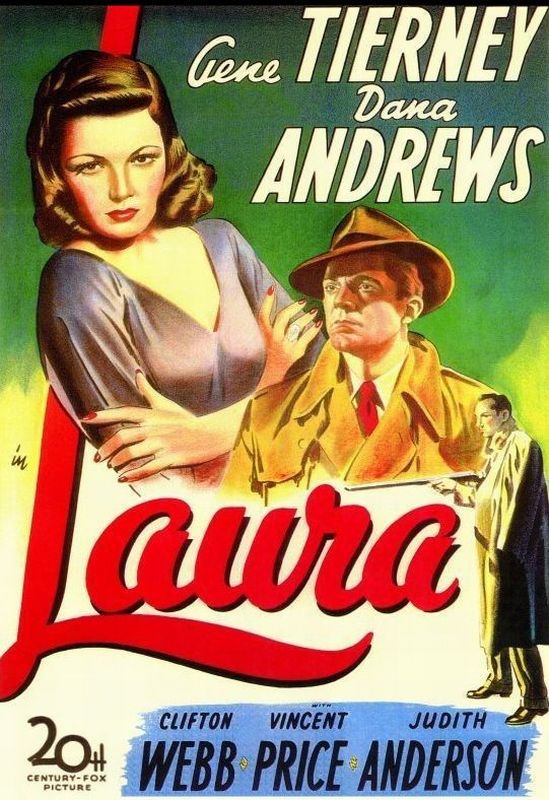
The Plot: Business executive Laura Hunt (Gene Tierney) is murdered and Det. McPherson (Dana Andrews) is brought in to investigate. Among the suspects are her charming fiancé Shelby Carpenter (Vincent Price), her mentor/famous columnist Waldo Lydecker (Clifton Webb), and her socialite Aunt Ann Treadwell (Judith Anderson). As the clues pile up and stories are changed, McPherson finds himself falling for the deceased Laura.

Why It Matters: The NFR calls it “[l]ess a crime film than a study in obsession” and praises Preminger’s direction, as well as the score and cinematography.

But Does It Really?: “Laura” still packs quite the punch over 70 years later. Its style is prime noir and the whole cast plays it in the most wonderfully suspenseful way. At no point are you ever completely sure who killed Laura, and the twists just keep coming. Anyone trying to craft the perfect murder mystery needs look no further than “Laura”.

Everybody Gets One: Title character Gene Tierney**, as well as Clifton Webb and two of the three screenwriters.

Wow, That’s Dated: ‘40s terminology like “dames” and “dolls”, cars with suicide doors, newspaper columnists with any sort of major clout or influence.

Seriously, Oscars?: “Laura” received five Oscar nominations, and took home one for Joseph LaShelle’s black-and-white cinematography. Preminger, Webb and the screenwriters all lost to that year’s feel-good big winner “Going My Way”. “Laura” wasn’t nominated for Best Picture, perhaps to make way for that other, more famous 1944 noir film. More surprisingly, David Raksin was not nominated for film noir’s most iconic score. And this was back when Best Score had 20 nominees. Come on!

Other notes

  • This film stars a man named Dana and a woman named Gene.
  • McPherson’s handheld puzzle game; the Fidget Spinner of 1944.
  • Perhaps the greatest joy of watching this film is seeing young Vincent Price in one of his early films. This film’s second biggest mystery is Vincent’s disappearing/reappearing southern accent.
  • Like so many of the New York elite, Waldo dines at the Algonquin. Do you think he knows Benchley?
  • As is often the case with the great film noir mysteries, so much is conveyed through action and reactions rather than dialogue. And everyone plays it so close to the chest it creates wonderful tension.
  • Shelby briefly mentions hearing Laura’s “mules” across the room. Mule in this case being an old term for slippers. Though the alternative is a fun visual as well.
  • After making a career playing characters like Bessie the maid, Dorothy Adams must have been pissed when Thelma Ritter came along.
  • She doesn’t get much to do, but Gene Tierney has more sex appeal in just a few shots than most actors do in whole films.
  • If the murder described throughout the film was actually that gruesome, then my kudos to the unseen cleanup crew. That apartment is spotless.
  • Waldo quotes Ernest Dowson’s “Vitae Summa Brevis”, which is where we get the phrase “days of wine and roses”.
  • And as always, buy your War Bonds at this theater!

Legacy

  • The film has been remade a few times. In 1955, “Laura” was condensed to an hour-long episode of “The 20th Century-Fox Hour” starring Robert Stack, Dana Wynter, and a well-cast George Sanders as Lydecker.
  • The Germans took a shot at “Laura” (poor choice of words) for television in 1962.
  • The last remake of “Laura” was in 1968, adapted by Truman Capote and starring Lee (younger sister of Jackie) Bouvier. Seeing as how Lee’s acting career never took off, it’s safe to say this version is not very good.
  • Following the popularity of the score, Johnny Mercer wrote lyrics to the “Laura” theme (despite not having seen the film) and created a jazz standard.

Further Viewing: Gene Tierney followed-up “Laura” with “Leave Her to Heaven”, the rare color film noir. Tierney’s femme fatale performance gives her more range to play than her more iconic work in “Laura”, and she received her only Oscar nomination.

** 2018 Update: Gene Tierney now appears on the list in “Leave Her to Heaven”. Hey, that’s this post’s Further Viewing! Who knew I could be so prescient?

#94) The Hitch-Hiker (1953)

the-hitch-hiker-1953

#94) The Hitch-Hiker (1953)

OR “Gas, Grass, or Harass”

Directed by Ida Lupino

Written by Lupino and Collier Young. Adaptation by Robert L. Joseph.

Class of 1998

Defunct Film Company plus Defunct Distribution Studio equals Public Domain Theater!

The Plot: Two buddies from El Centro, California (Edmond O’Brien & Frank Lovejoy) drive to Mexico for a fishing trip in San Felipe. While stopping through Mexicali, they pick up a hitchhiker (William Talman), who turns out to be wanted murderer Emmett Myers. Holding the two men at gunpoint, Myers forces the men to follow his orders and drive to Santa Rosalia, where a ferry (and escape) awaits. Police on both sides of the border try to track Emmett and the men, but will they get to Emmett before he gets to Santa Rosalia?

Why It Matters: Both the NFR write-up and the essay by Film Studies Professor Wheeler Winston Dixon discuss the importance of this being the only film noir directed by a woman.

But Does It Really?: I will say I enjoyed this film quite a bit. “The Hitch-Hiker” is a wonderful example of how you can create a very suspenseful film on a shoe-string budget. The script is very tight, and answers all logical questions that may come up in an exciting and interesting way. The three leads are all well cast, and Ida Lupino proves that good directing is about talent and preparation, and not about gender. It’s not the first on anyone’s top film noir list, but “The Hitch-Hiker” can still more than hold its own over 60 years later.

Everybody Gets One: While making a name for herself as an actor in various studio films of the ‘40s, Ida Lupino paid close attention to the work being done behind the camera, and caught the directing bug. She and then-husband (and “Hitch-Hiker” screenwriter) Collier Young created independent film company The Filmmakers to create more opportunities for Ida when she was between acting gigs. After ghost-directing “Not Wanted” in 1951, “The Hitch-Hiker” was Ida’s first credited film as a director. She helmed a few more films before The Filmmakers ceased production in 1956, but continued to direct (and act) for television well into the early 1970s.

Wow, That’s Dated: Radio as the main news source of the day, “puss” as an alternative to the word “face”. But perhaps most dated is the film’s incredibly lax border patrol.

Seriously, Oscars?: No nominations for “The Hitch-Hiker” at the Oscars or any other awards organization. Not even a Safe Driver Award from the National Safety Council. You try driving that safely while at gunpoint!

Other notes

  • This film is loosely based on the real-life killing spree of Billy Cook. He was in prison when the film was in production, and was executed just three months before “The Hitch-Hiker” was released. Part of this film’s appeal at the time was its “Ripped-from-the-headlines” story that no major studio would dare touch.
  • Surprisingly for one of the few studio films directed by a woman, there are no credited female actors in “The Hitch-Hiker”, and only a few brief uncredited ones that add nothing to the actual story.
  • Ida Lupino and her husband Collier Young divorced just months before production began. Yikes.
  • It took me almost 100 films, but I finally got one of my favorite film tropes; spinning newspaper headlines!
  • William Talman kinda looks like a cross between William Holden and Van Heflin.
  • Of course every time they turn on the radio in this movie it’s a news bulletin about Emmett. Also, that first radio announcer really sounds like Corey Burton.
  • EMMETT IS 28!? Jesus that is a hard 28. For the record, William Talman was 37 during filming.
  • Lifted directly from the real-life Billy Cook, Emmett sleeps with his deformed eye open and it leads to some really suspenseful moments when they camp for the night.
  • How much dramatic tension could have been cut from this film if they had used Google Maps or Siri to give directions?
  • I had never heard of the Chocolate Mountains before this film, but they’re real, and they’re spectacular.
  • This film very briefly features actual Fake News.
  • Jeez, Edmond O’Brien gets knocked out with the slightest tap. I keep expecting a moth to take him down next.
  • A lot of suspense throughout this film, but the climax falls apart just a bit. It doesn’t quite release all of this tension in the right way.
  • While this film doesn’t have a “feminist agenda”, the moral is very clearly “Don’t Lie To Your Wife”.

Legacy

  • As previously mentioned, Ida Lupino continued directing primarily in television. Among her credits are episodes of “The Twilight Zone”, “The Fugitive” and “Gilligan’s Island”.
  • The hitchhiker himself, William Talman found success on the small screen as D.A. Hamilton Burger on “Perry Mason”. After CBS fired him from the show due to his arrest at a party, a surge of fan-mail protest led to him being rehired.
  • I’m going to assume hitchhiking went way down in America after this film came out.

#93) Tulips Shall Grow (1942)

tulips_shall_grow_by_george_pal

#93) Tulips Shall Grow (1942)

OR “Pal the Ally”

Directed & Written by George Pal

Class of 1997

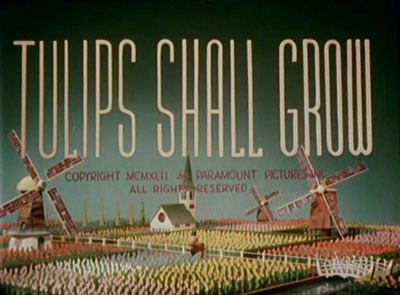
The Plot: Quintessential Dutch tropes Jan and Janette sing and dance together amongst the tulips and windmills of Holland. Their beautiful day is ruined by an invasion from the Screwballs, a group of metallic soldiers that are definitely not Nazis. The Screwballs tear the couple apart, but all hope is not lost in this stop-motion short.

Why It Matters: The NFR’s write-up discusses George Pal and his creation The Puppetoons, while an essay by animator Mark Mayerson gives us the film’s historical context.

But Does It Really?: The Puppetoons were a brief but important moment in film animation. George Pal used the series as a springboard for bigger and better things, but the shorts are still entertaining due to their unique animation style and bold storytelling. “Tulips Shall Grow” is the perfect candidate to represent the Puppetoons in the NFR (a distinction it now shares with “John Henry and the Inky-Poo”).

Everybody Gets One: George Pal spent most of his early adult life moving about Europe in an effort to avoid the Nazis’ continued growth. He lived in the Netherlands for a few years before his visa to the United States was finally granted in 1939. The German invasion of the Netherlands in May 1940 hit George hard, and once Paramount was evicted from Germany a few months later, “Tulips Shall Grow” was rushed into production.

Wow, That’s Dated: I mean, the whole thing has such strong WWII imagery throughout how could it not be 1942?

Seriously, Oscars?: “Tulips Shall Grow” was nominated for Best Short Subjects, Cartoons, one of four nominees that year that tackled the war. The winner was the short that tackled Nazis the hardest: Disney’s controversial “Der Fuehrer’s Face”. This was George Pal’s second of seven unsuccessful Oscar nominations, although the Academy did give him an honorary Oscar the next year for the Puppetoons series.

Other notes

  • The voices of Jan and Janette go uncredited, and many online sources incorrectly list Rex Ingram and Victor Jory as the (nonexistent) narrators. Anyone actually know who the voices are?
  • What makes Puppetoons different from traditional stop-motion animation? In stop-motion a figure has a metal skeleton that can give it a variety of movements. For the Puppetoons, each individual movement has its own interchangeable piece. More time-consuming to be sure, but the end result was three-dimensional figures that appeared to have the fluid movement of two-dimensional drawings.

Legacy

  • George Pal eventually transitioned from animation to live-action, producing many sci-fi classics of the ‘50s. Most notably, “The War of the Worlds”.

Further Viewing: If you can track it down 1987’s “The Puppetoons Movie” is a compilation of the very best of George Pal. Subsequent releases included even more Puppetoon shorts.

#92) The Producers (1967)

producers

#92) The Producers (1967)

OR “Hitler on Ice”

Directed & Written by Mel Brooks

Class of 1996

The Plot: Washed-up Broadway producer Max Bialystock (Zero Mostel) is struck by inspiration when visited by nebbish accountant Leo Bloom (Gene Wilder); he could make more money producing an expensive flop than a cheap hit. After persuading Leo to join him, Max finds “Springtime for Hitler”, an awful and offensive musical by ex-Nazi Franz Leibkind (Kenneth Mars). With the enlisted help of flamboyant director Roger De Bris (Christopher Hewett), beatnik actor Lorenzo St. DuBois (Dick Shawn), Swedish secretary Ulla (Lee Meredith) and a devoted group of little old ladies, what could possibly go right?

Why It Matters: The NFR calls it “an entertaining ride” and commends Brooks for “temper[ing] the over-the-top gags and stereotypical characters with a touch of sweetness”. An essay by Gene Wilder biographer Brian Scott Mednick is an overview of the film’s production that focuses, not surprisingly, on Gene Wilder.

But Does It Really?: Full disclosure: I am a longtime Mel Brooks fan, so this one’s a no-brainer for me. Watching it again, I was amazed just how hard I still laughed at everything. Mostel and Wilder are perfectly cast against each other, and Mel’s script – while not as jaw-droppingly controversial as it was in 1967 – is a solid foundation from which everything is built. It loses a bit of steam towards the end, but “The Producers” is a landmark in film comedy and led the way for the zany masterwork of Mel Brooks.

Shout Outs: A brief mention of “The Wizard of Oz” from Roger De Bris.

Everybody Gets One: Despite Mel’s eventual stock company of actors in later films, this is the only Registry appearance (and only collaboration with Mel) for stars Zero Mostel, Dick Shawn, Lee Meredith and Christopher “Mr. Belvedere” Hewett. Also be on the lookout for Barney Martin (aka Jerry Seinfeld’s Dad) and Renee Taylor (aka Fran Drescher’s Mom) in the “Springtime for Hitler” book scenes.

Wow, That’s Dated: This round of “What’s Playing on Broadway Back Now?” features the short-lived musicals “Hallelujah, Baby!” and “Henry, Sweet Henry”, which puts the film somewhere in fall 1967. Also someone definitely had to explain to me what a Karmann Ghia was. But nothing is more 1967 in this film than Dick Shawn’s performance as flower child Lorenzo St. DuBois (“And what have you done, LSD?”).

Seriously, Oscars?: “The Producers” survived a studio shelving and a critical skewering, but in the end the right people “got it” and Mel managed to win the Oscar for Best Original Screenplay. It would be the only Oscar for any of Mel’s films. Newcomer Gene Wilder was nominated for Best Supporting Actor (despite having as much screen time as Zero Mostel), and lost to Jack Albertson’s more sentimental turn in “The Subject Was Roses”. Wilder would take this out on Albertson three years later.

Other notes

  • Zero Mostel’s real first name is Samuel. He was told that if he didn’t do better in school he’d be a zero. As someone once wrote, children will listen.
  • Wait, this movie said “It’s only a flesh wound” first?
  • I love this movie, but god the opening credits go on forever.
  • The first 20 minutes (essentially just Zero and Gene Wilder) are about as perfect as film comedy gets. Proof that sometimes all you need is the right script with the right actors.
  • When I went to New York for the first time, I made sure to visit the fountain in front of Lincoln Center. Thanks to this film, it’s as iconic as the Statue of Liberty.
  • Kudos to Casting Director (and former Mel Brooks assistant) Alfa-Betty Olsen. This film is populated with some of my favorite bit players in any film, among them Shimen Ruskin as Bialystock’s landlord and Madelyn Cates as the conci-urge.
  • On a less fun note, this film’s jokes on gay stereotypes have aged the poorest.
  • Why does Lorenzo’s band have a saxophone that sounds like a flute on the soundtrack?
  • How do you think “Springtime for Hitler” did at that year’s Tony Awards? I mean, the 67-68 season was known for heralding the end of Broadway’s Golden Age, so “Springtime” could’ve managed a win or two.
  • My favorite line; “You are the audience. I am the author. I outrank you!”
  • Does anyone else notice that LSD completely vanishes from the film after opening night? Same goes for Carmen, with Roger not too far behind.
  • Oh how I wish the song “Springtime for Hitler” had gotten a Best Song nomination at the Oscars. Can you imagine the hoops Mel would’ve had to jump through just to get it on the air?

Legacy

  • Mel referenced “The Producers” in almost all of his subsequent films.
  • The film finally made it to Broadway in 2001 with a stage musical that, while never beating the original for its perfect timing, is a delightful old-fashioned book musical.
  • The “Producers” musical got its own film version in 2005. It…is a film version of the musical and falls flat on almost every level.
  • U2’s Achtung Baby
  • The entire fourth season of “Curb Your Enthusiasm” involved Larry playing Max in the aforementioned musical version of “The Producers”. Mel and his wife Anne Bancroft cameoed in the finale with their own little “Producers” twist.

Further Viewing: A expertly researched and impeccably pointed video essay by Lindsay Ellis (who has really blossomed since breaking out of the “Nostalgia Chick” mold) focuses on “The Producers”, its specific kind of satire, and why it’s okay for Mel Brooks (and not you) to make fun of Hitler.

Listen to This: Before he was a legendary filmmaker, Mel Brooks was 2000 years old. Based on a bit Brooks and Carl Reiner did to entertain each other while writing “Your Show of Shows”, “2000 Years with Carl Reiner and Mel Brooks” was the surprise comedy album hit of 1961, earning the two a Grammy and eventually a place in the National Recording Registry.