
#104) Sergeant York (1941)

f1b24a5cf2436da4c9e9dfcf7e5a3957

#104) Sergeant York (1941)

OR “The Original American Sniper”

Directed by Howard Hawks

Written by Abem Finkel and Harry Chandlee & Howard Koch and John Huston. Based on “Sergeant York: His Own Life Story and War Diary” by Alvin York. Edited by Tom Sheyhill.

Class of 2008

The Plot: Gary Cooper is Alvin York, the most decorated American soldier during World War I. The film chronicles his humble beginnings in Pall Mall, Tennessee, helping his mother (Margaret Wycherly) tend to the farm and wooing the wholesome Gracie Williams (Joan Leslie). When America enters the Great War, York declares himself a conscientious objector, since the Bible teaches him not to kill. His request is denied, and York learns to fight for his country while fighting his own morality.

Why It Matters: The NFR calls it “a stirring bit of Americana” that inspired this country as it entered World War II. There is also an essay by Donna Ross, who manages the NFR’s website. I guess everyone else called out sick that day.

But Does It Really?: Historically yes. Donna Ross correctly predicted that I would find it “hokey” without the correct context, but ultimately you have a reserve a space on the Registry for “Sergeant York”. Cooper’s affable performance helps smooth some rough patches, and the film’s release in summer 1941 helped boost the morale of a nation that was just about to be dragged into another Great War. If nothing else, the film is a memorial to a real-life American hero, and shows that some of our nation’s greatest are just regular people like you or me.

Wow, That’s Dated: Mainly just the assumption that an audience would have a passing knowledge of Alvin York to begin with.

Title Track: Turns out the title is a spoiler; Alvin York isn’t promoted to Sergeant until about two hours into the film!

Seriously, Oscars?: “Sergeant York” was the highest-grossing picture of 1941 and led the pack at the 1942 Oscars with 11 nominations. It lost Best Picture (and several other awards) to “How Green Was My Valley”, but did manage to snag Best Actor for Gary Cooper (his first) and Best Editing for William Holmes (on his first and only nomination). Most noteworthy among its other nominations; “Sergeant York” lost Original Screenplay to “Citizen Kane”, and despite a career helming some of the greatest films ever, Howard Hawks received his only Best Director nomination (and only nomination, period) for this film.

Other notes

  • How did the king of screwball comedy end up directing “Sergeant York”? Hawks got the job not only because of a push from Gary Cooper (They had worked together in the 1933 drama “Today We Live”), but also because every other major director turned it down.
  • The real-life Alvin York finally relented to release the film rights to his story in order to build a Bible school in Tennessee. He publicly approved of Cooper’s portrayal of him. In addition, his mother, Mary York, was still alive at the time of the film’s release.
  • In response to some of the film’s inaccuracies, York would later comment, “Well, let’s put it this way – I supplied the tree and Hawks put the leaves on it.” That’s actually the best way to describe this film; it gets the major events correct, it just fabricates some of the smaller details.
  • Gary Cooper was about 10 years older than Alvin York was when he fought in World War I, but who care when you got “Rural Jimmy Stewart” to play this part?
  • All of this aside, it’s hard for me to take a film seriously when its lead character is named “Alvin”.
  • Geez, Pastor Pile has more plant metaphors than Chance the Gardener.
  • While watching this I couldn’t help but notice the parallels between this and “Yankee Doodle Dandy”. Both are stories about real men who serve their country during WWI in films made during WWII. Plus they’re both Warner Bros. films that feature Joan Leslie as the love interest and won their lead actors the Oscar.
  • Gary Cooper was 39 during filming. Joan Leslie was 15. [Extended Shudder]
  • Oh man I don’t know how much more of this thick Appalachian dialect I can take. I need a translator!
  • Lord the first half of this film takes forever. Isn’t there a war at some point?
  • Tompkins’ beard is best described as “Modern Hipster”.
  • York’s spiritual awakening is good stuff, but I can’t stand it when people clap on 1 and 3 during a song instead of 2 and 4.
  • The film’s comic relief “Pusher” is played by George Tobias, aka Abner Kravitz from “Bewitched”. As soon as he started talking about the subway I couldn’t wait for him to be a casualty.
  • Speaking of “Bewitched”, this film shares a title with my screenplay about the bitter (and completely fabricated) rivalry between the two Darrins: “Sargent/York”. I’m pitching it to Ryan Murphy next week as a season of “Feud”. Wish me luck.
  • So York gets over his pacifist views by pretending the Germans are turkeys?
  • Rounding out the cast are recognizable faces like Howard “Mr. Franklin” Da Silva and June “Mother Robinson” Lockhart. Lockhart plays York’s younger sister Rosie and is the film’s last surviving cast member.

Legacy

  • “Sergeant York” boosted morale during WWII (the film was still playing when Pearl Harbor was attacked), and the legend goes that men would often go to enlist as soon as they finished watching the film.
  • Gary Cooper would play another WWI figure in “The Court-Martial of Billy Mitchell”.
  • The real-life Alvin York continued to raise money for charitable causes for the rest of his life, particularly during his time with the Army Signal Corps in World War II. Despite eventually rising to the rank of Major (as well as Colonel in the Tennessee State Guard), this film’s popularity ensured he would always be referred to as Sergeant York.
#103) Now, Voyager (1942)

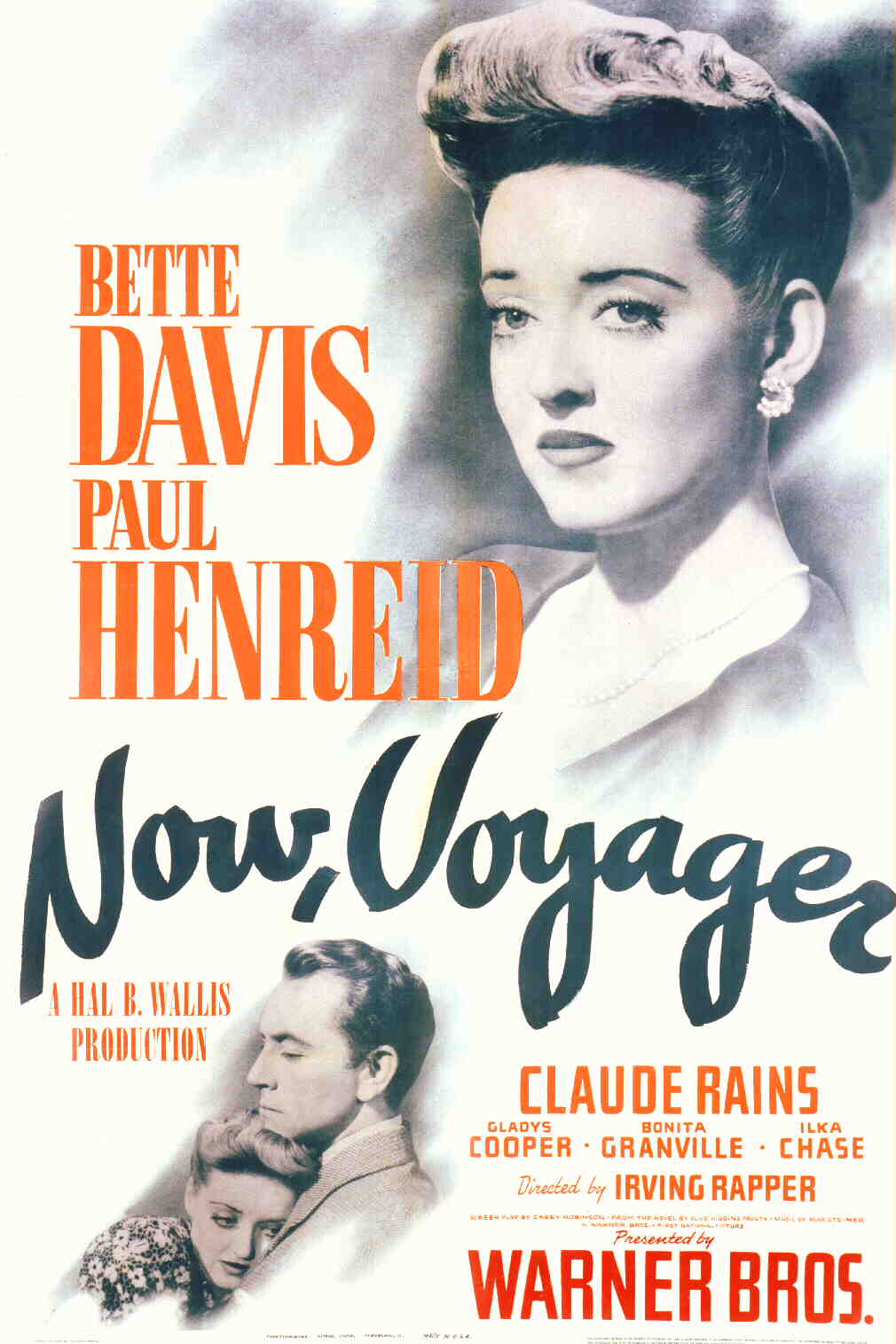
NOW,VOYAGER_00272249_1010x1515_092120061402

#103) Now, Voyager (1942)

OR “How Charlotte Got Her Groove Back”

Directed by Irving Rapper

Written by Casey Robinson. Based on the novel by Olive Higgins Prouty.

Class of 2007

The Plot: Charlotte Vale (Bette Davis) is a spinster living with her domineering mother (Gladys Cooper). Her family suspects she is on the verge of a nervous breakdown, so she is sent to a local sanatorium, where kindly Dr. Jaquith (Claude Rains) helps Charlotte become rehabilitated. Feeling liberated, she takes a cruise to Brazil where she meets and falls for the handsome Jerry Durrance (Paul Henried). He is married with children, so their love can never be, but that doesn’t stop Charlotte from finally starting to live her life.

Why It Matters: The NFR calls it “[a] resonant woman’s picture” and gives special mention to “one of the most famous endings in romantic cinema”. Film historian (and former Library of Congress employee) Charlie Achuff makes a strong case for the film in his essay.

But Does It Really?: One of the reasons I selected this film is because I had gone this far in the blog without watching a Bette Davis film. And I’m glad I started with “Now, Voyager”. Most of Bette Davis’ current legacy is devoted to her later career, where she played essentially a campier version of her screen persona. But “Now, Voyager” shows us why we should remember Bette Davis in the first place; the consummate actor, the radiant screen presence, and a complete understanding of a character that is 180 degrees away from the other “bitchier” roles we associate her with. “Now, Voyager” may not be the most romantic or dramatic film ever, but Bette Davis is the glue that holds it together, and you root for Charlotte the whole time.

Everybody Gets One: Director Irving Rapper started off as an assistant director and dialogue coach at Warner Bros. Having worked together on a few films, Bette Davis handpicked Rapper to direct “Now, Voyager”, though Rapper learned too late that this was a tactic on Davis’ part to maintain control of the film. After a lifetime on the stage, Gladys Cooper** turned to more film work, finding steady employment as everyone’s socialite mother. I remember her best in two musicals she appeared in during the ‘60s, “My Fair Lady” (where she doesn’t sing) and “The Happiest Millionaire” (where she does).

Wow, That’s Dated: Rear projection, pay phones, and the lost art of weenie roasts. But perhaps the film’s most famous dated quality is that it allows cigarette smoking to be sexy.

Title Track: Charlotte says “Now, voyager” once about 22 minutes into the film, reading the Walt Whitman poem the film gets its title from.

Seriously, Oscars?: While “Now, Voyager” missed out on a Best Picture nomination, it did win an Oscar in the most deserving category; Best Dramatic Score for Max Steiner’s iconic composition. Bette Davis and Gladys Cooper lost to, respectively, Greer Garson and Teresa Wright for their work in 1942’s Best Picture winner, “Mrs. Miniver”.

Other notes

  • “Now, Voyager” is actually the third of five novels that Olive Higgins Prouty wrote about the Vale family. This one is the only novel to center around Charlotte and is based on Prouty’s own experiences in sanatoriums.
  • I get the feeling that the film has deteriorated over time, or that the original print is missing. The credits in the print I watched seemed to be still frames rather than the original cards, and a few shots here and there used freeze-frames with audio over them. Not too conspicuous, I just wonder what happened.
  • The first shot of this film is of a racist lawn jockey. And we’re off and running!
  • God I love Gladys Cooper. It’s a shame she didn’t live long enough to play Madame Armfeldt in “A Little Night Music”.
  • Interesting choice to use page-turning to indicate a flashback.
  • Also note that after Dr. Jaquith breaks Charlotte’s glasses, she never needs them again. Was she near-sighted or far-sighted? I feel like either way this would come up at some point.
  • Co-stars Paul Henried and Claude Rains worked on “Casablanca” immediately after filming wrapped on “Now, Voyager”. And I mean immediately; Claude Rains finished this film and started “Casablanca” the next day.
  • Did we miss a makeover montage for Charlotte? Apparently they did film one, but producer Hal Wallis had it cut at the last minute.
  • While approaching Copacabana, Jerry says “there’s music in the word.” He was on to something. And no, I’m not including a link to that song. Find it yourself.
  • This movie felt it necessary to have not one but two comic relief characters; Frank Puglia as Giuseppe the confused cab-driver, and Mary Wickes as Dora the sassy nurse. Don’t know how I feel about either of them.
  • Jerry first kisses Charlotte while she is asleep. Creepy or charming? You decide.
  • Jerry’s daughter Tina reminds me of another troubled 12-year old Tina.
  • That last line is a classic, and a good reminder of a time when people said “Don’t let’s” instead of just “Don’t”.

Legacy

  • “Now, Voyager” is featured prominently in the coming of age film “Summer of ‘42”. And I swear if the NFR puts it on this list and I have to sit through that boring movie one more time…
  • Five years after the film’s release, Olive Higgins Prouty wrote “Home Port”, which focused on the minor character of Murray. It was written with the intention of making it into a film, but that never happened.
  • The major pop culture takeaway from this film was, of all things, a maneuver. Though he didn’t invent it, Paul Henried definitely popularized the romantic gesture of lighting two cigarettes in your mouth at once and handing one to your partner. Everyone’s done it. I took up smoking once just to do that move.

** 2018 Update: Gladys Cooper has two additional films on the 2018 roster: “Rebecca” and “My Fair Lady”.

#102) The Curse of Quon Gwon (1916/1917)

image-w448

#102) The Curse of Quon Gwon: When the Far East Mingles With the West (1916/1917)

OR “Where’s the Rest of Me?”

Directed & Written by Marion E. Wong

Class of 2006

For some reason this version has music and fake title cards throughout. You can watch the unaltered version on the film’s Wikipedia page.

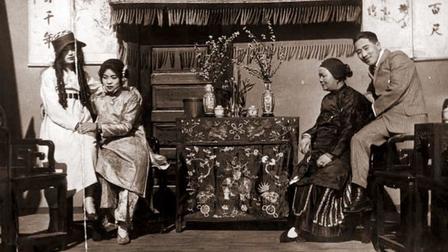
The Plot: This is a tough one. The film begins with text explaining that what you are about to see are the first two reels of an incomplete silent film with missing title cards. As far as I can tell the story concerns a Chinese couple living in America who have started to assimilate to western culture, much to the anger of a statue of a Chinese god, who places a curse on the two. After that, your guess is as good as mine.

Why It Matters: The film’s discovery and restoration are discussed in the NFR’s brief write-up, as well as the film’s claim to some of this country’s earliest ethnic filmmaking.

But Does It Really?: Due to its lost status, I could easily label this a “Belloq film” and move on. But unlike other rediscovered silent films, this one actually has more historical significance behind it. “Curse of Quon Gwon” was written and directed by a Chinese woman, a rarity of both ethnicity and gender. And because this was all done outside of the Hollywood studio system, it’s also one of the first surviving independent films. Check your basements, Oakland. Let’s find those missing reels! Or at least some title cards so I can find out what the heck is happening!

Everybody Gets One: Marion E. Wong created the Mandarin Film Company after visiting China at 16 years old and seeing the stark differences between eastern and western culture for the first time. With financial support from her uncle, Marion wrote, directed, and produced “The Curse of Quon Gwan”. She also designed the costumes and cast her family in various parts, including her sister as the lead. When the film failed to receive a distribution deal after its premiere, Marion shut down her film company and never spoke of the film again. Her children were unaware she had ever made a film until after her death in 1969.

Other notes

  • This may be the only film on the list that mentions its NFR standing in the opening.
  • Despite no title cards, we do get a main title, which predates the “Bonanza” set-your-title-on-fire technique by over 40 years.
  • Pretty sure they dissolve to the same scene at one point.
  • One of the indoor scenes is pretty windy. Obviously this film follows the then-common film practice of shooting sets outside (It saves you a fortune on lighting equipment).
  • Marion E. Wong definitely showed promise as a filmmaker. If nothing else, she understood the power of the close-up.

Legacy/Further Viewing

  • While researching his documentary “Hollywood Chinese”, Arthur Dong came in contact with Marion’s grandchildren, who gave him the surviving two reels of “The Curse of Quon Gwon”. After turning the reels in to the Academy Film Archive, they were restored and featured prominently in Dong’s film.