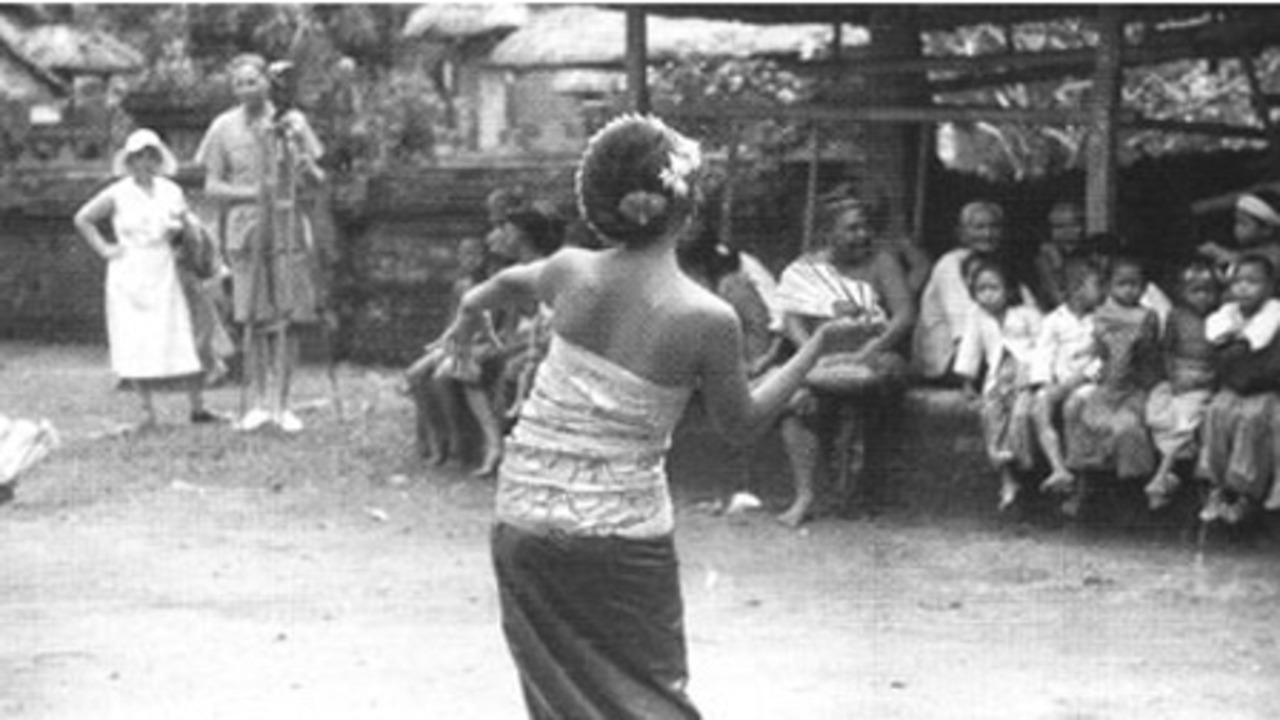
The Plot: Narrated by Margaret Mead, the film is a documentation of a traditional Balinese dance featuring Rangda the witch, Barong the dragon, and several natives in a trance-like state.
Why It Matters: The NFR calls the film “groundbreaking”, and includes a link to the Library of Congress’ digital gallery of Margaret Mead.
But Does It Really?: The film gets a pass for its introduction to Mead and Bateson (but mostly Mead) and its depiction of Balinese culture that, while not completely accurate, is a good starting point for further study.
Everybody Gets One: Both Bateson and Mead were already respected anthropologists by the time they traveled to Bali, their photography evolving into filmed documentation. Margaret Mead was best known for her somewhat controversial study of Samoan sexual orientation, and Gregory Bateson was one of the scientists responsible for the double-blind study.
Seriously, Oscars?: No Documentary Short nomination for “Trance and Dance”. Instead they gave the award that year to the super artsy Canadian film “Neighbours” (which really isn’t a documentary).
Other notes
If nothing else, this film gives you the great SAT word “somnambulistic”.
Wow, so much text before the actual film. This clip needs a lot of set-up.
Why are the witch and the pregnant woman played by men? There are women involved in the rest of the dance, why not here?
The dragon worshipers follow the same rules with the witch as Super Mario does with a ghost; you can only attack when their back is turned.
I love that Margaret Mead always explains when the footage goes to slow-motion. As if no one would know just from watching.
The dancers are great at trances. They must be the best audience for a hypnotist.
This may be the only Registry entry that ends with suggested publications. I assume all of these titles are long out of print.
Legacy
Thanks to the work of Mead and Bateson (among others), Bali became a tourist destination for Western culture. There goes the neighborhood.
Though they were just married during filming, Margaret Mead and Gregory Bateson were divorced by the time “Trance and Dance in Bali” was finally released. The two continued their distinguished work in anthropology (among other fields) until their respective deaths in 1978 and 1980.
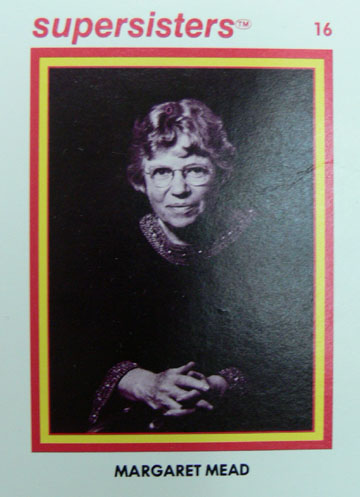
Margaret Mead may be one of the few filmmakers on this list with her own trading card!
Written by…whoops, no credited writers. The only writing credit is “From the celebrated novel by Gaston Leroux”.
Class of 1998
Note: I’m still not quite sure which version I watched. It appears to be the original 1925 version, though the sequence of events seems closer to the 1930 re-release. Regardless, the version I watched seems to be the most common one available today.
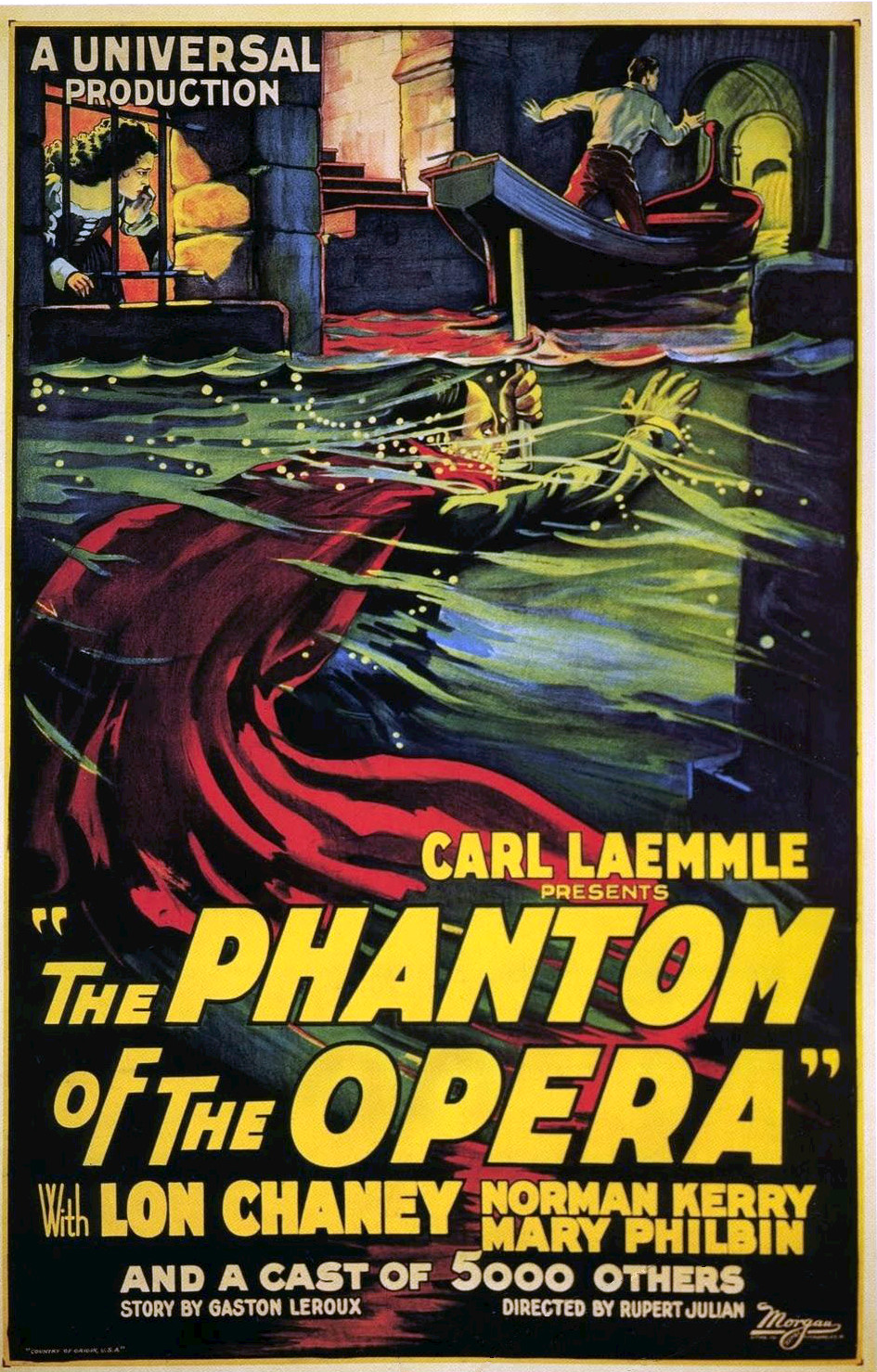
The Plot: Around the turn of the century, the Paris Opera House is said to be haunted by The Phantom (Lon Chaney). He is obsessed with their new singer Christine (Mary Philbin) and insists that she perform instead of the lead soprano. After creating chaos with a falling chandelier, the Phantom brings Christine to his underground lair and makes her promise to be his love, forgoing her relationship with handsome viscount Raoul (Norman Kerry). The classic story you love, but in a Webber-free zone.
Why It Matters: The NFR calls it “a classic horror film” and praises Lon Chaney’s work, particularly his makeup.
But Does It Really?: There are other Phantoms out there, but there’s only one Lon Chaney. His performance still holds up and makes the film worth a watch. The film’s public domain status means there are several cuts out there, but any version you can find is worth your time thanks to Mr. Chaney. This isn’t the definitive film version of the novel, but it’s probably as close as we’ll ever get.
Everybody Gets One: Almost everyone, but the main takeaway is Lon Chaney, the famous “Man of a Thousand Faces”**. Born to deaf parents, Lon learned to communicate physically at a young age, which lent itself perfectly to silent films. A lifetime in the theater made him very adept at makeup, which led to the outstanding creations he applied in his films. Chaney designed the makeup for The Phantom in total secrecy, not revealing it until filming. His version of The Phantom is the most faithful to its description in the original novel.
Wow, That’s Dated: As always, any passing knowledge of opera.
Title Track: Someone actually calls him “The Phantom of the Opera” (as opposed to simply “The Phantom”) just once in the entire film.
Other notes
With the exception of director Rupert Julian and the cast, no one else is credited for their work in this film. Is it any wonder Hollywood would unionize within a decade?
This version begins with a two-minute shot of someone holding a lantern. We get it. Move on, please.
How come the previous theater owners don’t disclose the fact that there’s a phantom until after the new owners have signed? This is stigmatized property, after all.
Beautiful women running in fear because a strange man is wandering around backstage? It might just be our President.
Is Christine playing the Swiss Miss in this opera?
We get the chandelier drop early in the version I saw; about 20 minutes in.
The great thing about a silent film set in an opera is that you don’t have to cast anyone who can actually sing.
I always forget that the Phantom’s real name is Erik. Kinda takes away from the whole mystique. It’s like finding out that Pennywise the Clown’s real name is Bob Gray (which is legitimately canon, by the way).
That mask removal scene is still terrifying. Shout-out to Chaney, as well as the cinematographer and editor, whoever they are.
Cool, the masquerade scene is in color! Apparently more scenes were filmed in early Technicolor, but the ball is all that survives.
Ledoux kind of looks like Martin Landau.
Now the Phantom’s referring to himself in the third person? What a loser.
At one point the Phantom declares, “I will not be cheated of my happiness.” Typical millennial.
Good lord, how far down is the Phantom’s room? Say hi to The Mole People while you’re down there.
It took a while, but I think this is my first film on this blog with a classic angry mob scene.
Wow, after all of that, the ending’s a bit of a let down. It’s a total departure from the novel with no real character payoff.
Legacy
Hmmm, I wonder if there are any other adaptations of this novel out there…
This film launched the Universal Monster Golden Age of the ‘20s and ‘30s. Thanks to this film we get “Dracula”, “Frankenstein”, and “Dracustein” (the latter considered such an embarrassment that in 1996 the NFR voted to have all copies burned).
Lon Chaney died of a throat hemorrhage only five years after the release of “Phantom”. His son Creighton changed his name to Lon Chaney Jr., and continued his father’s makeup work in the original “Wolf Man”.
Universal remade “The Phantom of the Opera” in 1943 with Claude Rains in the title role. They reused the original set, and pretty much threw out the original story.
The Phantom will be included in the upcoming Universal Dark Universe with a remake that….what’s that? “The Mummy”? Oh. Never mind.
I saw Lon Chaney walking with the Queen.
**2017 Update: Lon Chaney now has “HE Who Gets Slapped” on the list. And with a title like that, my interest is piqued.
Written by Pierre Boulle Carl Foreman and Michael Wilson. Based on the novel by Pierre Boulle.
Class of 1997
The Plot: A group of British WWII soldiers led by the militant Col. Nicholson (Alec Guinness) is captured and sent to a Japanese prison camp. The camp’s leader, Col. Saito (Sessue Hayakawa) instructs the new prisoners to help build a bridge from Rangoon to Bangkok. Nicholson refuses to help, and his steely resolve creates tension in the camp. Meanwhile, jaded American prisoner Com. Shears (William Holden) escapes the camp, only to be recruited by British Major Warden (Jack Hawkins) to lead a team back to the camp to blow up the bridge.
Why It Matters: The NFR praises many aspects of the film, though notes it was that film that saw “a shift in Lean’s directorial style from simpler storytelling toward the more bloated epics”. Pretty backhanded if you ask me.
But Does It Really?: It may be a little too epic for its own good, but “Bridge on the River Kwai” is still quite a thrilling experience 60 years later. While I disagree that the film is “bloated”, it definitely could have been, well, leaner. Lean sets the stage for a fascinating character study set against some impressive manpower (after all, they had to actually build the bridge). The film is an excellent study of the rules we cling to in times of chaos, as well as the madness that comes with power.
Everybody Gets One: Despite collaborating with David Lean throughout the ‘50s, this was the final Lean picture (and only NFR entry) for editor Peter Taylor, cinematographer Jack Hildyard, and composer Malcolm Arnold.
Wow, That’s Dated: All of the night scenes are shot “day for night”. It is incredibly obvious during the lengthy scene where they sneak the explosives under the bridge.
Title Track: No one says the title, but Saito does say they will build “a bridge across the river Kwai”. Very close, but the judges are looking for an exact match.
Seriously, Oscars?: In a not-so-competitive year, the Oscars went with the most epic choice, and “The Bridge on the River Kwai” won seven Oscars, including Best Picture. Lean won his first Best Director prize and Alec Guinness won Best Actor. The film also won Best Score, despite the fact that there’s not a lot of actual score and the only part anyone remembers is the preexisting “Colonel Bogey March”. While most of the film’s big wins were justified, it did screw over fellow NFR entry “12 Angry Men”.
Other notes
We’ve come to another film with a nationality dispute. This is really a British film, but because it was financed by an American film company (Columbia under the legendary Sam Spiegel), it qualifies for inclusion on this list.
One of the many ripple effects of the Hollywood Blacklist was original writers Foreman and Wilson going uncredited in favor of the novel’s author Pierre Boulle, who did not speak or write English. The two writers were not properly credited (or awarded their Best Adapted Screenplay Oscar) until the mid-80s.
Kudos to the cinematography in this film. So much storytelling is happening in every shot.
William Holden does jaded American so well. Also, what’s with Holden and his POW films?
How would you like to be in charge of all the extras in this film?
Nope, just ignore the obvious dummy of William Holden falling into the river.
During Nicholson’s speech as they travel across the river (aka the “Jaws” shot), part of his dialogue is obscured by a splash. He originally referred to the Japanese as “barbarians”, but the line was later censored after objections from Japanese communities. Of course, if you went and censored everything offensive about how the Japanese are portrayed here there’d be no movie left.
Also incredibly dated: the rampant sexism in this or any war film. At least this film has a woman in it; “Lawrence of Arabia” has zero.
Jack Hawkins gets the one funny line in the entire film.
Of course, if you only know Alec Guinness from “Star Wars”, be sure to watch his wonderfully restrained work here. Turns out Obi-Wan Kenobi is just a fraction of this guy’s talents.
It takes forever to get there, but that is one hell of an ending. The tension throughout is just great.
Legacy
As previously mentioned, David Lean started his string of epics with this picture. He followed this film up with “Lawrence of Arabia”, like you do.
After the film’s release, tourists flocked to the real Khawe Yai River to see the bridge. Just one problem: there was no bridge on the Khawe Yai River. The real-life inspiration was on the Mae Klong River, which was subsequently renamed Khawe Yai.
Sessue Hayakawa spoofed his own performance in the Jerry Lewis film “The Geisha Boy”.
The Goon Show did their own parody with “The Bride on the River Wye”. Come for Peter Sellers’ spot-on Alec Guinness, leave for the Japanese stereotyping.
The 1989 film “Return From The River Kwai”, which, after some legal dispute, had to add a disclaimer that it is NOT a sequel to this film. Subsequently, it never got released in America.
And of course, this film is the reason I will have the “Colonel Bogey March” stuck in my head for the next several weeks.
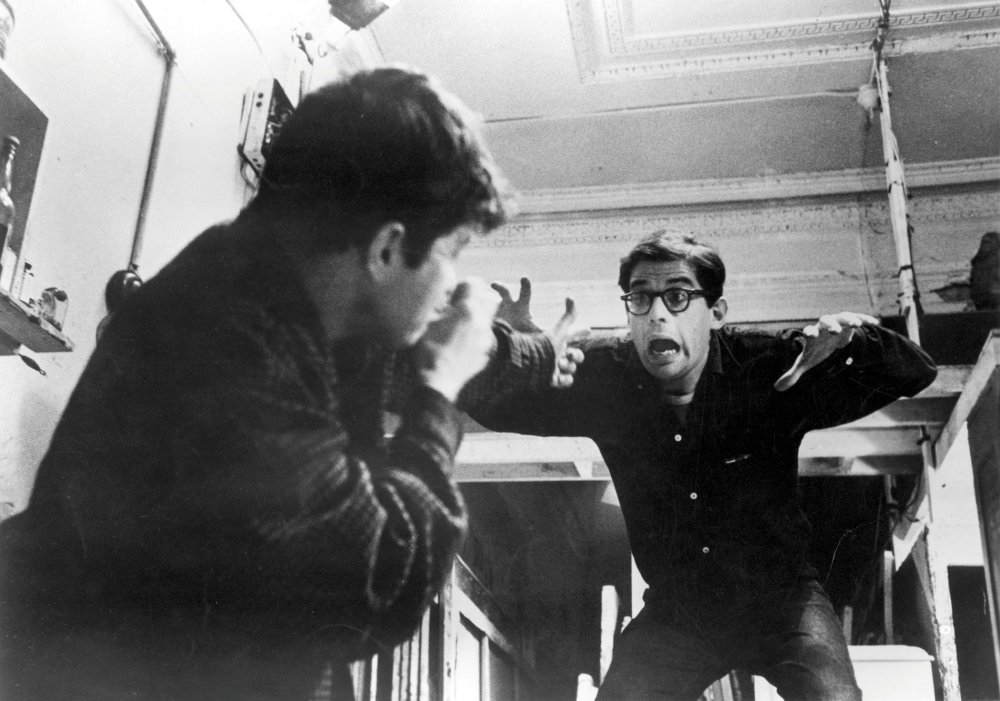
The Plot: The closest this film gets to a plot is a story involving Milo (Larry Rivers), a railroad brakeman who hangs out with his Beat writer friends (Allen Ginsberg, Gregory Corso, & Peter Orlovsky). When Milo’s wife (Delphine Seyrig, aka Beltaine) invites a Bishop (Richard Bellamy, aka Mooney Pebbles) over for dinner, the Beat writers invite themselves over and provide an interesting night for everyone. Jack Kerouac improvises narration alongside the film.
Why It Matters: The NFR calls it an “adroit parody of the beat generation” and reveals that despite it initially being hailed as a piece of cinéma vérité, the whole thing was staged.
But Does It Really?: I freely admit that I don’t get this Beat stuff, but it’s a piece of American culture that should be preserved, and I’m glad someone had a camera handy to capture this group in action.
Everybody Gets One: Robert Frank and Alfred Leslie were, respectively, a filmmaker/photographer and painter who were hanging out with the Beat writers at the time. I am not hip enough to summarize the life and careers of Jack Kerouac and Allen Ginsberg.
Wow, That’s Dated: When your film focuses solely on the beat generation, it could only be 1959.
Title Track: No one says “pull my daisy”, but we do get a title song!
Seriously, Oscars?: Oh, if only this had gotten an Oscar nomination. The Academy would have been scratching their heads so much during those screenings.
Other notes
“A G-String Enterprise”? I like this film already!
Directors Robert Frank and Alfred Leslie don’t have a single last name between them.
We get the word “hipster” thrown out here in its original ‘40s context. Though could you imagine Ginsberg or Corso eating brunch or ironically listening to vinyl?
Are we sure it’s just cigarettes they’re smoking?
Kudos as always to “I’m Not There.” casting director Laura Rosenthal, because David Cross really does look like Allen Ginsberg.
And of course, that’s a young unknown Dustin Hoffman as the bishop. (It’s not really, but at least one of you will read this and think it’s true.)
Why the mini American flag? But then again, why anything in this film?
I want Jack Kerouac to do commentary on every film. Especially the silent ones.
Legacy
Robert Frank did a handful of documentaries, most notably The Rolling Stones’ “Cocksucker Blues”, before returning to photography.
Alfred Leslie returned to painting and charcoal drawing, though sadly most of his work was destroyed in a fire in 1966.
There is no way I can summarize the post-“Daisy” work of Kerouac and Ginsberg in a short blog post. Keoruac alone published more writing posthumously than I will in my entire lifetime.
Listen to This: Perhaps the most famous poem of the Beat Generation, Allen Ginsberg recorded “Howl” in 1959 for posterity, and started one of the great obscenity legal cases of all time. Read more about Howl in this informative essay by Library of Congress employee Cary O’Dell.
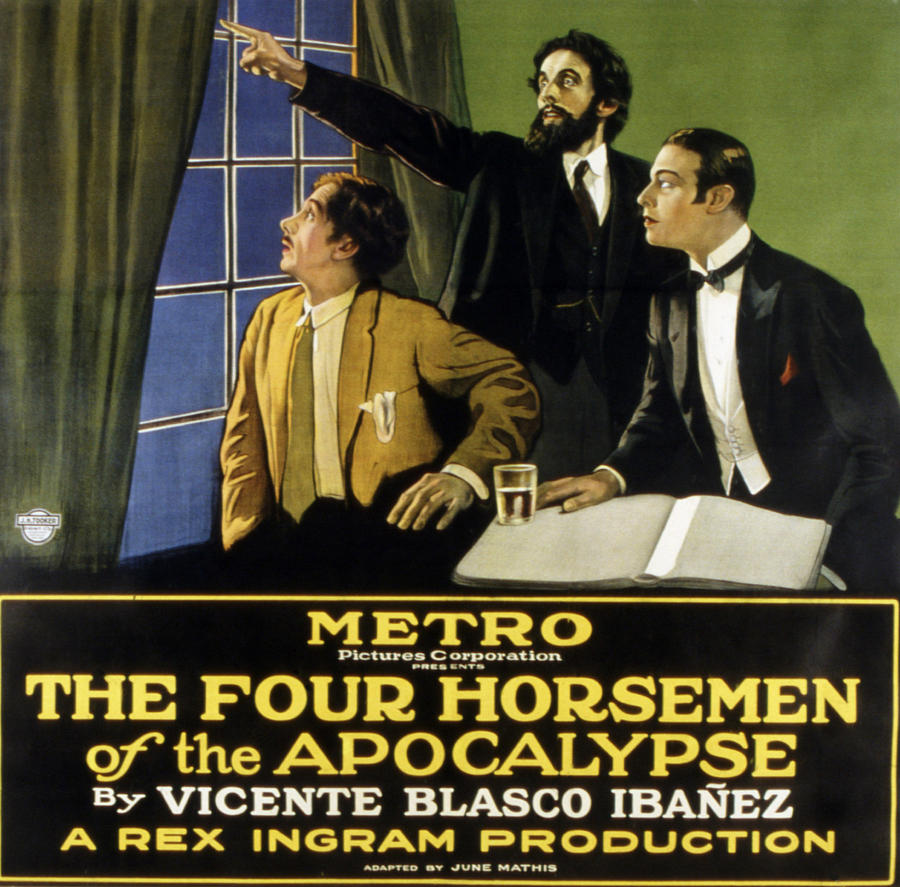
Written by June Mathis. Based on the novel by Vicente Blasco Ibáñez.
Class of 1995
The Plot: A family in Argentina is torn apart following the death of patriarch Madariaga (Pomeroy Cannon). Of his two daughters, Donna Luisa (Bridgetta Clark) moves with her husband Marcelo (Josef Swikard) to his native France, and Elena (Mabel van Buren) moves with her husband Karl (Alan Hale) to his native Germany. When the Great War breaks out, the families find themselves on opposing sides, with an ongoing metaphor involving the Four Horsemen of the Apocalypse. Also the French family’s son Julio is Rudolph Valentino in his breakout role.
Why It Matters: The NFR highlights Valentino’s participation in the film, as well as the film’s successful first run in theaters. There’s also an essay by AMPAS Managing Director of Preservation Randy Haberkamp.
But Does It Really?: Historically sure, but this film is a bit of a drag. It just takes so long to get going, and most of the characters introduced in the first bit of the film completely disappear halfway through. The Haberkamp essay makes a good case for its artistic merit; so I say if you’re going to watch this, make sure it’s a good print so you can actually see the artistry.
Everybody Gets One: We’ll see more of the major players (Particularly Ingram, Valentino, and Mathis) throughout the list. Sadly, most of the supporting cast of this film didn’t make the transition to sound pictures, except for Alice Terry, who met Rex Ingram during filming, and married him shortly thereafter.
Wow, That’s Dated: The last time I watched Wallace Beery in a movie he was playing a Native American, so I’ll just assume no one here is the nationality of the character they’re playing.
Take a Shot: We get a title about halfway through the film. And they are not subtle at all about it being a metaphor for war. Tchernoff literally looks into the camera at the end of the film, as if saying “You knuckleheads getting this? Huh?”
Other notes
This film was produced by Metro Pictures three years before it merged with Goldwyn Pictures and Louis B. Mayer Productions to form…another studio whose name escapes me right now.
Shout-out to screenwriter June Mathis, one of the few female screenwriters of the silent era and second only to Mary Pickford for the title of “Most Powerful Woman in Hollywood”.
The first intertitle actually begins with “In a world”. I guess that’s where Don LaFontaine got it from.
Alan Hale plays Karl. Within days of this film’s release, his wife gave birth to their son, Alan Hale Jr., aka the Skipper from “Gilligan’s Island”.
Oh Rudy. From his first close-up you can see that he has a face for the big screen.
The tango scene was added just to give Valentino, a former taxi dancer, more to do. It’s pointless, but it’s fun.
Illustrated intertitles; a lost art.
“Glass-eyed, carrot-topped sharks” is my new favorite insult.
After a death in the family, I too like to be comforted by my pet monkey.
I like how anything the characters read fades from their native language to English. Well done Ingram.
Tchernoff looks a lot like Rasputin.
I see they blew the budget on the Horsemen. And I’m pretty sure The Beast played Spot on “The Munsters”.
As if the French Army didn’t have enough problems during the Great War. I believe there’s a Colonel Dax who could voice his objections.
Nope, it’s gonna take more than German officers in drag for me to like this film.
It’s okay fellas, I don’t get along with some of my cousins either.
Legacy
This is the film that made Rudolph Valentino a matinée idol. Plus according to at least one Valentino biography, the film led to a brief jump in popularity of the tango and gaucho pants.
The tango scene is spoofed in Gene Wilder’s “The World’s Greatest Lover”.
MGM made another film version of the novel in 1962, with the time period shifted to World War II and with Valentino replaced with an incredibly miscast Glenn Ford.
A remake by legendary producer Stanley Motss was beset with problems during shooting. Motss declared these setbacks as “nothing”.


 The Horse's Head