#164) Born Yesterday (1950)

Nacida_ayer_-_Born_Yesterday_-_tt0042276_-_1950_-_us

#164) Born Yesterday (1950)

OR “Billie’s Holliday”

Directed by George Cukor

Written by Albert Mannheimer (More on that later). Based on the play by Garson Kanin.

Class of 2012

Thanks, Heather

The Plot: Wealthy junk dealer Harry Brock (Broderick Crawford) takes up residence in a Washington D.C. hotel suite while he’s in town to “buy” a senator. He brings along his equally brash fiancée Billie Dawn (Judy Holliday), a stereotypical dumb blonde and former showgirl. Realizing her lack of intelligence could ruin his chances of impressing the political elite, Harry requests Billie be tutored by freelance D.C. reporter Paul Verrall (William Holden). Though initially hesitant, Billie soon finds herself becoming enlightened and more self-assured through her lessons. As time goes on she starts to question the tumultuous relationship (both personal and professional) she has with Harry, and develops feelings for Paul. Hilarity (and political/social commentary) ensues.

Why It Matters: The NFR compliments the script, and calls Judy Holliday’s performance “one of the era’s most finely realized comedy performances.” An essay by film archivist Ariel Schudson gives an overview of production, as well as I’ll assume a mandatory emphasis on the film’s scenes in the Library of Congress.

But Does It Really?: I’m gonna chalk this one up to “minor classic”. It’s good, and still very funny, but the material shows its age in just enough places to prevent full enjoyment. This all being said, Judy Holliday’s performance is worth the trip out. She’s giving easily one of the best comic performances on film. I just wish the movie as a whole matched Judy’s level of comic genius.

Everybody Gets One: Though not a prolific screenwriter throughout his career, Albert Mannheimer got the plum task of adapting the hit Broadway play into a film. After the powers that be were unsatisfied with his screenplay, playwright Garson Kanin was brought in to adapt his own work to the screen. For legal reasons, Kanin remained uncredited, and Mannheimer received an Oscar nomination and an NFR credit, despite very little of his work actually being used.

Wow, That’s Dated: Evening papers, and the stigma associated with wearing glasses (he said while adjusting his glasses). Also pretty dated is the speech about how all senators are honest, hard-working, and not corrupt at all. Uh-huh.

Seriously, Oscars?: In a year dominated by “Sunset Boulevard” and “All About Eve”, “Born Yesterday” managed five Oscar nominations, including Best Picture. With major competition from Bette Davis, Anne Baxter, and Gloria Swanson, Judy Holliday won Best Actress in a victory so surprising even Holliday herself didn’t think she would win. The film lost in all of its other categories to “All About Eve”.

Other notes

  • A few words about Judy Holliday’s performance: For starters, it’s pretty damn perfect. Her Billie is somehow shrill and uneducated without being annoying or one-note. The joy of her performance is watching the gears turn in Billie’s head as she starts to think (or doesn’t) for herself. I suspect her Oscar win is considered an upset because the film is not the classic “Sunset Boulevard” or “All About Eve” is. But Judy is giving a performance that’s just as electric as the work of Swanson or Davis or Baxter. Plus there’s no way the Academy could have known which of these films would become classics. Further proof that awards of artistic merit are, in this film’s parlance, bull.
  • Man, between this and “Sunset Boulevard”, William Holden had a great year. Don’t call it a comeback.
  • If Harry’s looking for a corrupt politician I can think of a Huey Long-esque gentleman that he might get along with.
  • I may need subtitles for Billie.
  • Harry does the Donald Trump power handshake move. So that’s where he got it from!
  • The gin game is pretty hilarious. The dialogue is scarce, but you still learn plenty about the relationship between Billie and Harry.
  • Billie would understand politics a lot better if “Schoolhouse Rock!” was a thing back now.
  • This on-location trip to D.C. takes up a lot of screen time. Are we going to see every historical monument?
  • The concert Billie and Paul attend is at the Watergate steps, which housed outdoor concerts until the mid-‘60s. And yes, they are walking distance from that Watergate.
  • The scene where Harry is abusive to Billie is tough to watch, even though Broderick Crawford is clearly not actually hitting Judy Holliday.
  • “Wouldja do me a favor, Harry? Drop dead.” Classic.
  • Paul pronounces Washington as “Warshington”, a regional pronunciation believed to have its roots in New England, with traces in the mid-west. William Holden was born in Illinois, and had ancestors who emigrated from England to Virginia. Dialects!
  • The cop at the end is definitely played by a different actor in the on-location long shots. A little continuity is all I ask.

Legacy

  • Judy Holliday leveraged the success of this film to sign an exclusive “one film a year” contract with Columbia, allowing her to continue living/performing in New York. She did mostly light comedies throughout the ‘50s, including something with Jack Lemmon called “Phffft!”
  • The role of Lina Lamont in “Singin’ in the Rain” was written with Judy Holliday in mind. When she was unavailable, Stanley Donen cast Jean Hagen, who scored at her audition with a pitch-perfect Judy Holliday impression. Coincidentally, Hagen played Billie Dawn on Broadway after Holliday left the show.
  • George Cukor would direct a similar play-turned-film about a woman who reinvents herself through tutoring: 1964’s “My Fair Lady”.
  • “Born Yesterday” was also performed on live TV in 1956 starring…Mary Martin? Doesn’t quite seem like a match.
  • Don’t worry, they remade this in 1993 with Melanie Griffith. It sucks the life out of everything this play has going for it.
  • “Born Yesterday” has been revived on Broadway twice: in 1989 with Madeline Kahn and Ed Asner, and 2011 with Nina Arianda and Jim Belushi (whom critics were forced to admit was quite good as Harry Brock).

#163) Forrest Gump (1994)

forrest_gump

#163) Forrest Gump (1994)

OR “Boomer Has It”

Directed by Robert Zemeckis

Written by Eric Roth. Based on the novel by Winston Groom.

Class of 2011

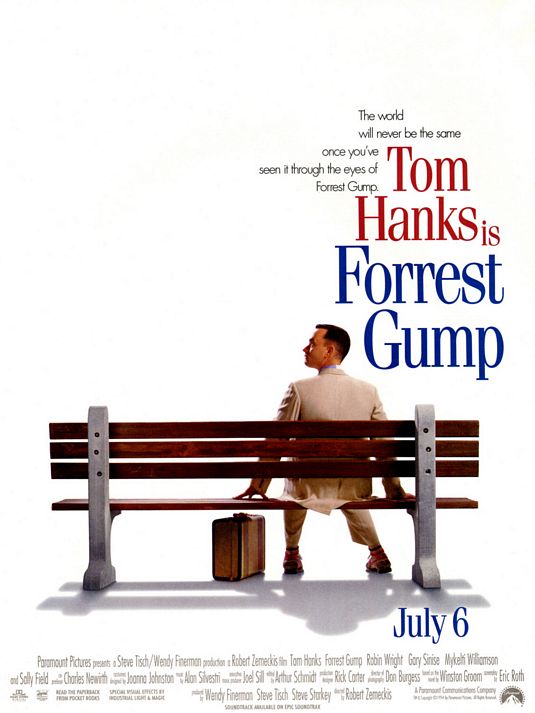
The Plot: Tom Hanks is Forrest Gump, a well-meaning but simple-minded man from Greenbow, Alabama. While sitting on a bus stop bench in 1981 Georgia, Forrest reminisces about his life. From his upbringing with his strong-willed mother (Sally Field), to a stint as an All-American Football player, to his service in the Vietnam War alongside shrimp enthusiast Bubba (Mykelti Williamson), to his business endeavors with embittered veteran Lt. Dan (Gary Sinise), Forrest has worn lots of shoes. Over the years, Forrest has an intermittent relationship with his childhood friend Jenny (Robin Wright), as well as several brushes with history.

Why It Matters: The NFR praises the film’s special effects, in addition to its approach to recent American history that is definitely open to interpretation.

But Does It Really?: “Forrest Gump” is what would happen if “Being There” had a baby with “We Didn’t Start the Fire”. I watched this movie a lot growing up, and as an adult it holds up pretty well. The special effects and historical touchstones are fun, but the key to this film’s success is a landmark performance by Hanks, and a blank-slate approach to modern Americana that, like “Being There” before it, can represent almost anything you want it to. Most of the boomer references may be lost today, and the metaphors are a tad on the nose (Don’t get me started on that damn feather), but ultimately “Forrest Gump” is still an endearing modern classic, with a cultural impact the NFR can’t deny.

Shout Outs: Among the quick cultural references throughout the film are NFR entries “The Graduate”, “Rosemary’s Baby”, “Butch Cassidy and the Sundance Kid”, and “Midnight Cowboy”. Added bonus: digitally altered footage from “The Birth of a Nation”.

Everybody Gets One: The major one is Gary Sinise, plus Haley Joel Osment, though I suspect his other famous film can’t be too far behind.

Wow, That’s Dated: Early CG is really starting to stick out in ‘90s films. It’s especially noticeable in “Gump” when they’re manipulating dead historical figures (LBJ looks like a Conan O’Brien “Clutch Cargo” sketch gone awry).

Seriously, Oscars?: As the L.A. Times predicted leading up to the 1994 Oscars, “When in doubt, go with ‘Gump’”. And the Academy did just that: “Forrest Gump” received 13 nominations (the leading film that year) and won seven, including Best Picture, Director, Adapted Screenplay, and Actor for Tom Hanks – his second consecutive win. The most surprising (but understanding) of its losses was Alan Silvestri’s iconic score losing to the equally iconic work of Hans Zimmer for “The Lion King”. The “Gump” sweep was inevitable, but did screw over fellow NFR entries “Pulp Fiction” and “The Shawshank Redemption”.

Other notes

  • Nothing about the original novel by Winston Groom reads as “Oscar Winning Classic”. Forrest has a cruder personality in the book and his physical appearance is more along the lines of Lenny from “Of Mice and Men”. As for the episodic adventures that didn’t make this adaptation, let’s just say there’s an orangutan in one of them. Eric Roth earned the hell out of his Oscar.
  • As far as metaphors for life go, a box of chocolates is…pretty lame. It sounds great, but what the hell does that mean? Even the assorted boxes give you a general idea of what you get.
  • This film proves how strong Tom Hanks’ goodwill is: He dresses up like a Klansman for one scene and we gave him a second Oscar.
  • Whatever happened to Jenny’s sisters? They’re mentioned once and then never again. Where were they during all of this?
  • Welp, I have now seen almost all of Tom Hanks. I can never un-see that.
  • Forrest and Jenny are contemporaries, but Tom Hanks has 10 years on Robin Wright. Hanks plays his correct age in the bench scenes, Wright is closest during Jenny’s time in L.A.
  • Mykelti Williamson, bless you. If you’re going to be associated with one performance, Bubba is a winner.
  • Tom Hanks tends to lose his Forrest Gump accent whenever he screams.
  • Did Forrest ever notice that Lt. Dan looks a lot like Gov. George Wallace?
  • This film’s stance on Vietnam is pretty vague. The war is a thing that happened that was…bad? It’s certainly the most accessible of filmdom’s Vietnams.
  • Jenny better get used to spending time in our nation’s capital.
  • Just a reminder that Dick Cavett appears in not one, but two Best Picture Oscar winners. Carry on.
  • “If you’re ever a shrimp boat captain, that’s the day I’m respected Apollo 16 crew member Ken Mattingly!” Boy this movie was prescient.
  • Free Bird!
  • Aged-up Sally Field isn’t too drastically different from 24-years-older Sally Field. Well done, make-up team.
  • Forrest says the shrimping business made him “more money than Davy Crockett”. Was Crockett known for being wealthy? Did he get a cut of the coonskin cap sales?
  • Between this and “Cast Away”, Zemeckis loves making Tom Hanks grow his beard out to biblical proportions.
  • My favorite shot in the entire film is Forrest watching the sunset while aboard his shrimping boat. It’s practically a painting.

Legacy

  • Winston Groom wrote a sequel to the book in 1995. “Gump & Co.” follows Forrest through the ‘80s as he meets President Reagan, gets roped into insider trading on Wall Street, inadvertently causes the fall of the Berlin Wall, and runs into the guy from “Big”. A film adaptation currently languishes in development hell.
  • Robert Zemeckis made a few more Oscar-bait movies before spending most of the 2000s in the Uncanny Valley.
  • I have been to the Bubba Gump Shrimp Company here in San Francisco. I did very well at the trivia portion, but could not remember the names of Cunning Carla or Long Limbs Lenore. The food was fine too, I guess.
  • Lt. Dan has inspired the name of Gary Sinise’s U.S.O. band, as well as a flavor of ice cream.
j8ksyqQ
  • Weird Al’s “Gump” is a fun ‘90s throwback (except for the part where he slut-shames Jenny).
  • Everyone has spoofed this movie. Everyone. Just Google it.

Further Viewing: Another “Premake”, this time featuring James Stewart as Forrest, Marlon Brando as Lt. Dan, and Babe Ruth!

Listen to This: Not since “The Big Chill” has a film had such a Baby Boomer soundtrack. Of all of the track listings, the National Recording Registry has selected “Fortunate Son” by Creedence Clearwater Revival and “Respect” by Aretha Franklin.

#162) Grey Gardens (1975)

grey-gardens-movie-poster-1975-1020235434

#162) Grey Gardens (1975)

OR “American Gothic”

Directed by Albert Maysles & David Maysles & Ellen Hovde & Muffie Meyer

Class of 2010

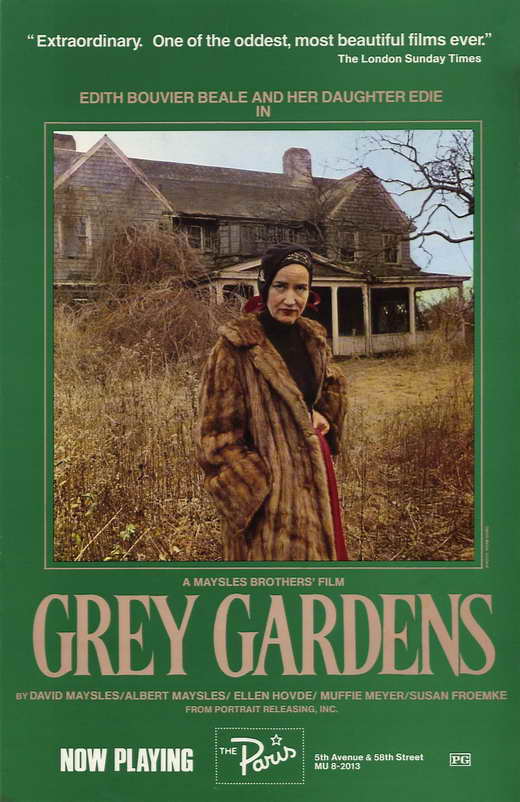
The Plot: Edith “Big Edie” Bouvier Beale and her daughter “Little Edie” were once East Hampton socialites, but a series of misfortunes has led to them living practically penniless in their beachside mansion, a decrepit shell of its former glory. When the Health Department threatens them with eviction, their famous relative Jacqueline Bouvier Kennedy Onassis intervenes and helps finance a major repair on the house. Shortly after, filmmakers Albert & David Maysles start documenting the day-to-day life of the Beales. Most of their time is spent feeding their countless cats (and stray raccoons), reliving past victories and defeats, and endlessly arguing with each other about practically everything. Oh, and there’s a kid named Jerry who helps out around the house. He likes Big Edie’s corn.

Why It Matters: The NFR cites the film’s influence on documentaries, and calls it an “absorbing sometimes disturbing look” at its two leads.

But Does It Really?: Like many of the greats, “Grey Gardens” defies its own genre. Yes it’s a documentary, but beyond that it is a pure gothic horror story and a fascinating character study of a very intense mother-daughter relationship. These are two people whose present life is uninhabitable, leading to the constant hoarding of their past; reliving and revising it until it drives them insane. “Grey Gardens” is a Tennessee Williams drama that could only exist in the movies, yet unfolded in real-time. It is one of the most captivating documentaries ever made. Why it had to wait 21 years to make the list I have no idea.

Shout Outs: Brief references to “A Night at the Opera” and “Salesman” (another Maysles documentary). Little Edie sings “People Will Say We’re in Love” from “Oklahoma!

Everybody Gets One: There is much speculation about what life was like for the Beales prior to the film. Little Edie returned home from New York in 1952, and stayed there for the next 25 years. The death of resident handyman Tom Logan in 1963 and a burglary in 1968 led to the Beale women shutting themselves off from the world. They came to the attention of the Maysles Brothers when a proposed documentary on Lee Radziwill (Jackie Kennedy’s sister) fell through.

Seriously, Oscars?: No Best Documentary Oscar nomination for “Grey Gardens”. That year the Academy voted for “The Man Who Skied Down Everest”, a film about… a man who skies down Everest.

Other notes

  • Every time I watch this film I have to remind myself, “This is real. These are real people. This actually happened.”
  • Amazingly, Little Edie’s horoscope book “It’s All in the Stars” is still in print!
  • Oh Jerry. You just wanted to make some extra cash doing yard work. You weren’t looking for film immortality, it just turned out that way.
  • Speaking of, “The Marble Faun” is definitely not required high school reading any more.
  • Since there’s no real audience surrogate in this film, my loyalty between the two leads shifts with each viewing of “Grey Gardens”. Sometimes I sympathize with Little Edie, never truly free from her mother’s passive psychological grip. But then other times I side with Big Edie, a woman whose sad decline is only exacerbated by her daughter’s frequent dramatics. It’s endlessly complicated, and ultimately sad, but the veil of cinema makes it all slightly more palatable.
  • One of my favorite shots is when the camera pans from the house to the street, where a few cars pass by. The “real” world of 1970s East Hampton is readily available to the Beales at any time.
  • Little Edie is funnier than Judy Holliday? Hold my beer…
  • Is there a greater metaphor for the Beales’ lives than the shot of the cat peeing on Big Edie’s portrait?
  • Oh my god: Other People! Lois Wright was actually a much more prominent figure in the lives of Big & Little Edie, even living with them shortly after filming wrapped. She has written several books (and painted many pieces of art) about the Beales through the years. Very little is known about the other party guest, other than his name: Jack Helmuth.
  • Part of the film’s unreliability is that Little Edie is always aware of the camera and seems to always be “on” for the Maysles. Look no further than her dance number. It’s practically an MGM screen test.
  • This may be one of the few films to offer a correction during the credits. The end crawl includes the correct version of the Robert Frost poem Little Edie tries to recite.
  • The version I saw ends with a delightful audio epilogue of Albert Maysles calling Little Edie towards the end of her life in the early 2000s, when she was residing in Bal Harbour, Florida. 

Legacy

  • After Big Edie’s death in 1977, Little Edie continued to live in Grey Gardens for two years before selling the house to Ben Bradlee (of Washington Post/Watergate fame) and his wife Sally Quinn. The two restored the house over many years, with Quinn eventually selling it in 2017 for $15 million.
  • “Grey Gardens” is one of the rare documentaries to spawn a Broadway musical. The 2006 stage version speculates what life was like for the Beales before and during “Grey Gardens”, and provides a tour-de-force performance for whoever plays young Big Edie/old Little Edie.
  • In 2006, Albert Maysles cobbled together outtakes from “Grey Gardens” to make a second film, “The Beales of Grey Gardens”. It’s the “Wake Up, Ron Burgandy” of documentaries!
  • Similar to the stage version (but with less songs), the 2009 HBO movie “Grey Gardens” examines the Beales over the course of 30 years. This film also reminds us that, with the right material, Drew Barrymore can be a brilliant actor.
  • Jerry Torres still makes appearances at screenings of the film, as well as productions of the stage version, graciously answering questions about his time with the Beales. Fun Fact: At one point he was an assistant for Wayland Flowers and Madame!
  • The internet really wants me to mention Jinkx Monsoon’s performance as Little Edie on “RuPaul’s Drag Race”. “Snatch Game” is always a season highlight, and Jinkx wins this round hands down.
  • “Pitter patter, pitter patter, it’s just my heart, what does it matter…”

#161) Mrs. Miniver (1942)

mrs_miniver_xlg

#161) Mrs. Miniver (1942)

OR “Vicar is Quicker”

Directed by William Wyler

Written by Arthur Wimperis & George Foreschel & James Hilton & Claudine West. Based on the book (and newspaper column) by Jan Struther.

Class of 2009

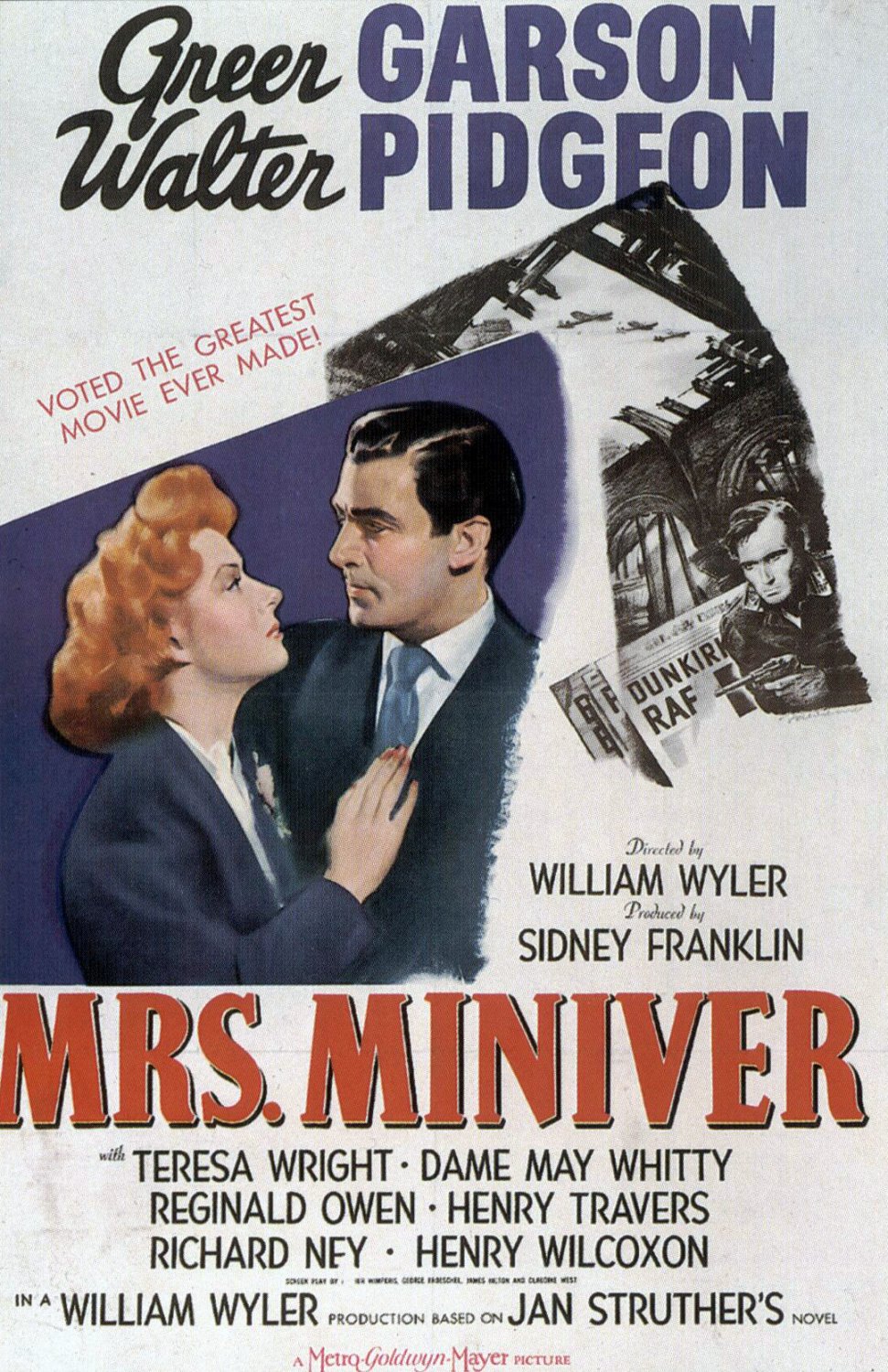
The Plot: The Minivers are an upper class family outside of London. Kay (Greer Garson) runs the household, and hides her expenses from loving husband Clem (Walter Pidgeon). Their eldest son Vincent (Richard Ney) has returned home from Oxford and falls for Carol Beldon (Teresa Wright), the well-off granddaughter of Lady Beldon (Dame May Whitty). But all of this is disrupted by the onset of World War II. Vincent joins the Royal Air Force, Clem volunteers his motorboat for various services, and Kay struggles to keep her family together during the darkest hours. They suffer loss and setbacks, but like the rest of their country, the Minivers never give up hope and keep fighting.

Why It Matters: The NFR calls it “sentimental wartime melodrama”, but praises the leads, director Wyler, and its contributions to the war effort.

But Does It Really?: This is an historical yes. The entertainment value is fine, Garson in particular is giving a wonderfully grounded performance, but my takeaway was a film commenting on World War II while still being in the war. The film’s message of hope and victory is even more inspiring given that there was no guarantee of either in early 1942. It’s propaganda to be sure, but “Mrs. Miniver” is an important document of addressing the war without the blessing of hindsight, as well as highlighting what every citizen could contribute to do their part.

Everybody Gets One: This is Greer Garson’s only NFR appearance! Her star may not shine as brightly as her contemporaries, but in her day she was a box-office sensation, a seven-time Oscar nominee, and one of those actors with that indefinable “star quality”. If you’re going to have one Greer Garson picture on the list, this is the natural choice.

Wow, That’s Dated: This film takes place during that time when a man could spank his wife and we were all okay with it for some reason. Also don’t forget to buy defense bonds and stamps every pay day!

Seriously, Oscars?: A massive hit in both the U.S. and England, “Mrs. Miniver” went into the 1942 Oscars with 12 nominations (a near-record), and took home six, including Best Picture and Director for William Wyler. Greer Garson and Teresa Wright won Best Actress and Supporting Actress, respectively. Both give good performances, but were no doubt aided by their work in other Oscar contenders: Garson with “Random Harvest” and Wright with “The Pride of the Yankees”. Greer Garson may also hold the record for longest acceptance speech, clocking in somewhere in the 5½-6 minute range. There’s no complete footage of that ceremony, so we’ll never know for sure.

Other notes

  • Of the Miniver family, only Greer Garson and Clare Sanders (Judy) were actually British. Richard Ney, Teresa Wright, and Christopher Severn (Toby) were American, while Walter Pidgeon was Canadian, and appears to not be attempting any sort of accent.
  • Greer Garson definitely had “movie star eyes”. So expressive, so full of emotion. You can’t help but watch her.
  • Purely by coincidence, this is my second consecutive film (and third in two months) to feature Henry Travers, a.k.a Clarence in “It’s a Wonderful Life”. If you’ve ever wanted to hear him say “horse manure”, this is your movie.
  • “Fun” Fact: Shortly after the film’s release, Greer Garson married Richard Ney, her on-screen son. Watching the film through that lens gives everything a disturbing Oedipal flavor.
  • Vincent does a lot of mansplaining in his first scene with Carol. And then he fat-shames her! And she’s not even fat!
  • Eddie Izzard was on to something about the Church of England. Spice it up, lads!
  • In one of my favorite Oscar What-Ifs, if “Casablanca” hadn’t missed the 1942 eligibility deadline, would it have beaten “Mrs. Miniver” at the Oscars? Or would it have been the other way around?
  • Toby, Shut. Up. Side note: How Christopher Severn never got cast as Tiny Tim in appalling.
  • Clem volunteers to help at the Dunkirk evacuation. Say hi to Christopher Nolan’s impressive production value for me!
  • The scene where Kay confronts a German soldier is when things really start to pick up for this film. Definitely a highlight.
  • Greer Garson and Walter Pidgeon do have some lovely chemistry. No wonder they made so many movies together.
  • Dame May Whitty’s role would be played today by either Maggie Smith or Judi Dench. I love her scene with Kay regarding Carol’s marriage, which is comprised almost entirely of one uninterrupted take.
  • It’s kind of hard to tell if the gas detector changes color in a black and white movie.
  • It takes forever to get there, but the Vicar’s speech is worth the trip out. Word has it Henry Wilcoxon rewrote his own speech with William Wyler. Well done, team.
  • Aircraft flying in V formations. Subtle.

Legacy

  • Winston Churchill was often quoted as saying “Mrs. Miniver” did more for the war effort than most military action. FDR was so moved by the film’s final speech that he requested it be shipped out to theaters as a separate short.
  • Garson and Pidgeon had already worked together in “Blossoms in the Dust”, but this film led to six more pairings, most memorably in “Madame Curie”.
  • “The Miniver Story” was a 1950 sequel that followed the Minivers in their post-war life. Nothing is said about Vince, who presumably died in the war. And that’s why you don’t marry your leading lady!
  • “Mrs. Miniver” was remade for TV in 1960 starring Maureen O’Hara. [Footage Not Available]
  • Henry Wilcoxon would play another religious figure in… “Caddyshack”?

Further Viewing: A TCM tribute to Greer Garson narrated by Keith Carradine, who I guess is a big fan.

#160) The Invisible Man (1933)

invisible_man

#160) The Invisible Man (1933)

OR “Claude Rains’ Easiest Paycheck”

Directed by James Whale

Written by R.C. Sherriff. Based on the novel by H.G. Wells.

Class of 2008

No original trailer, but here’s a fan-made one.

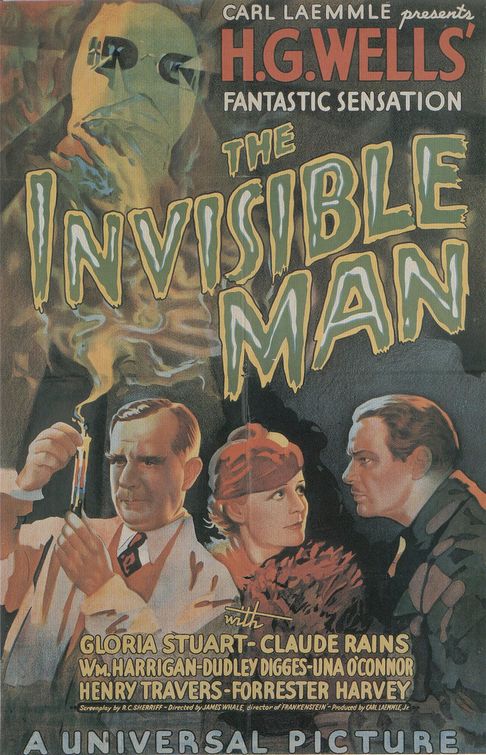
The Plot: In a small pub in Iping in Sussex, a strange man (Claude Rains) arrives, covered in bandages, asking for a room and some privacy. The staff quickly discovers that the bandages are hiding the fact that the man is invisible. We learn that he is Dr. Jack Griffin, a scientist who tested his new invisibility chemical on himself, but could never change back. Griffin forces his old lab partner Dr. Kemp (William Harrigan) to assist him as he goes mad and takes it out on the townsfolk. Griffin’s fiancée Flora (Gloria Stuart) may be the only person who can stop his descent into madness.

Why It Matters: The NFR praises Rains, Whale, and the special effects team, and then goes on to spoil the ending! Jeez, NFR!

But Does It Really?: It’s not one of the main Universal Monster films, but it certainly holds up better than most other monster films of the era. James Whale had a knack for turning low-budget monster movies into films of artistic merit, and “The Invisible Man” is no exception. I give it a pass for its impressive special effects, its ongoing legacy, and the fact that it’s only 70 minutes long.

Everybody Gets One: Screenwriter Robert Cedric “R.C.” Sherriff is best known today as the playwright of the WWI drama “Journey’s End”. The original stage production was directed by James Whale, who didn’t forget about his collaborator when he started directing in Hollywood. Unsatisfied with Universal’s previous attempts at an “Invisible Man” script, Sherriff found the novel in a second-hand bookstore and crafted a screenplay that is quite faithful.

Wow, That’s Dated: This film dates itself to 1933 exactly during the opening credits when Universal declares itself a member of the National Recovery Administration. We do our part…until the Supreme Court tells us we legally can’t!

Take a Shot: This is a good drinking game movie. Most references are to “an invisible man”, but about halfway through the film they start calling him “the invisible man”. Keep your pouring hand at the ready.

Seriously, Oscars?: No Oscar love for “The Invisible Man”. The category for Best Visual Effects wouldn’t exist for another six years.

Other notes

  • The special effects team definitely earned all the praise this film gets. Shout-out to John P. Fulton, Bill Heckler, Roswell A. Hoffman, Frank D. Williams, and John J. Mescall, who seemed to have fun throwing models off of cliffs.
  • It’s weird to think that H.G. Wells was still alive when this film premiered. I guess I associate him more with the late 1800s. For the record, he liked the film, except for some fundamental character changes made with Griffin.
  • Quick question about the Universal logo: how big is that plane?
  • The pub in this film is called The Lion’s Head. Coincidentally, that’s also the name of a film blog by some bloke who’s watching 700 British films. (We watched “Bridge on the River Kwai” together.)
  • Wow, everyone is aggressively British in this film.
  • Very disappointed that we never got the spin-off “Dr. Clarence, AS-2”.
  • Having only been familiar with Gloria Stuart’s work in “Titanic” (when she was 86 years young), it’s astonishing to see her at 23. It needs to be said, however, that she looks nothing like Kate Winslet.
  • Speaking of, the role of Flora is not in the book. In fact, the only female character in the book is Janny Hall (“What, did you grow up in Norman Rockwell painting?”).
  • We don’t get a soundtrack until the very end, but we get to hear every second of Janny screaming her lungs out? Great. Just great.
  • Just a reminder that our main character is nude for most of the film.
  • Some of Griffin’s invisible trickery is physically impossible. One of the shots in the pub would have required him to be standing on the table and on the floor at the same time. Also, that floor is filthy, yet he tracks no footprints. He’s lucky none of this takes place on Crait.
  • So being invisible makes you more of a germophobe than Howard Hughes?
  • “He’s mad, and he’s invisible” There’s your tagline.
  • It seems the only requirements of the Iping Police Force is to have big moustaches and goofy facial expressions.
  • When Griffin starts to go mad, Claude Rains almost does the Nelson laugh.
  • Towards the end, Kemp comes down with a severe case of overacting.
  • That’s Dwight Frye from “Dracula” as one of the reporters. He’s the John Ratzenberger of the Universal monster movies!

Legacy

  • This was Claude Rains’ American film debut, and it set his career off immediately, trading invisible lead roles to visible supporting roles.
  • Like the other Universal monster movies, this one had so many sequels. The higher the sequel number, the further they strayed from the source novel.
  • After almost 20 years of films, the Invisible Man finally met the Kiss of Death…I mean, Abbott and Costello.
  • I don’t care what anybody says, the best sequel is “Son of the Invisible Man”.
  • The film version of “The League of Extraordinary Gentlemen” features AN Invisible Man, but due to copyright issues it is definitely not THE Invisible Man.
  • A TV series adaptation in the early 2000s is notable for a guest appearance by…Gloria Stuart!
  • A loose adaptation starring Kevin Bacon, 2000’s “Hollow Man” was a disappointment for everyone involved, including director Paul Verhoeven. But film critic David Manning called it “one hell of a scary ride!”
  • “Invisible Man” was due to get the Dark Universe treatment with a remake starring Johnny Depp. Perhaps we have been spared.