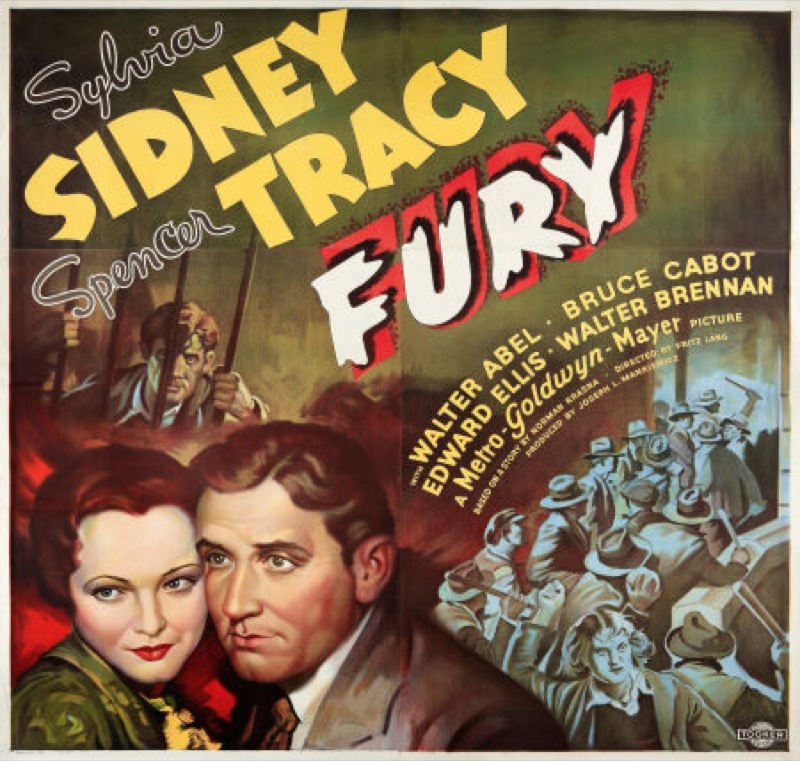
#176) Fury (1936)

full.fury-6sh-20489__78886.1512009103.1280.1280

#176) Fury (1936)

OR “Law & Order: Burn Victims Unit”

Directed by Fritz Lang

Written by Lang and Bartlett Cormack. Story by Norman Krasna.

Class of 1995

The Plot: Loosely based on the real life Brooke Hart murder case, “Fury” is a crime drama with all-around good guy Joe Wilson (Spencer Tracy) at its center. When Joe drives through the small town of Strand on the way to see his fiancée Katherine (Sylvia Sidney) in Capital City, he is pulled over by the police and suspected of being involved in a local kidnapping. He is held in the city jailhouse, and rumors start escalating about Joe and his “crimes”. The town’s citizens get whipped into a frenzy and form a lynch mob, burning down the jailhouse (and presumably Joe) in the process. What they don’t know is that Joe survived and aims to get vengeance on the 22 citizens who incited the mob. Can he get the mob convicted of murder without revealing that he’s still alive?

Why It Matters: The NFR calls “Fury” a “taut drama” with a “gritty story”, and incorrectly states that the film won the Best Original Story Oscar (See, “Seriously, Oscars?” below). Also included is an essay by fellow film blogger Raquel Stecher.

But Does It Really?: As Fritz Lang’s first American film it gets a pass for historical significance. As a drama, “Fury” takes its time getting started, but keeps getting better as it goes along. The film’s take on the American court system and small town mentality is refreshingly unfiltered for a code-era film. It’s not Fritz’s best work, but it’s good enough to earn “minor classic” status and a warranted place on the list.

Shout Outs: No direct references, but one of the guys in the mob does a pretty decent Popeye impression.

Everybody Gets One: Sylvia Sidney spent most of the ‘30s as a leading lady of the studio system, most the ‘40s as fading “box office poison”, and the ‘50s onwards as a successful character actor. Fritz Lang insisted on casting her as Katherine in “Fury”. Sidney is best known today for one of her last roles: Juno the afterlife caseworker in “Beetlejuice”.

Wow, That’s Dated: There’s the standard dated qualities like radio as a primary news source, and the novel idea of using film as courtroom evidence, but we also get enough brief digs at “redskins” to make John Ford proud.

Take a Shot: No one says “fury” at any point in this film.

Seriously, Oscars?: “Fury” received one nomination: Original Story for Norman Krasna. Despite what the NFR’s official write-up says, the film lost to “The Story of Louis Pasteur” (Original story by…God?) Spencer Tracy wasn’t nominated for Best Actor due to already being nominated in that category for “San Francisco” (despite his role in that film being a supporting one). And while he received no praise for his work in this film, Walter Brennan won the very first Best Supporting Actor award that same year for “Come and Get It”.

Other notes

  • The film opens with the “any similarities is purely coincidental” disclaimer we see nowadays during the end credits. Back then basing a film even tangentially on real-life events was risky.
  • Yes, that’s Terry (aka Toto from “The Wizard of Oz”) as Joe’s dog Rainbow. She made this film when she was just 21 years old (in dog years).
  • I love the transition from Joe’s handwritten letters to telegrams. Nice subtle way of saying he’s come into some money.
  • You can see the constraints of the studio system closing in on Fritz Lang. I suspect he would have used a lot more jump cuts if the studio didn’t dictate scene wipes.
  • Hector the barber has some serious Sweeney Todd tendencies there.
  • I don’t mind the game of telephone that goes through the town, but does it have to be primarily busy-body housewives? They even have superimposed footage of hens at one point. This ain’t “Pick-a-Little, Talk-a-Little”.
  • The lynch mob scene is pretty terrifying. Thank god we reserve our national mob mentality to Twitter these days.
  • The first half of the film is kinda slow, but things really pick up once we get to the courtroom. It helps that courtroom proceedings are inherently dramatic.
  • Spencer Tracy is one of my favorite actors, but he’s not quite at his natural Spencer Tracy-ness with this performance. It’s not bad acting, it just doesn’t have the relaxed charm I associate with the man. Put him alongside Katharine Hepburn, see if that helps.
  • My one question: How did the newsreel team get that many angles of the lynch mob?
  • Part of the reason the first half is a bit slow is because it’s mostly set-up. Once the pay-offs start happening in the courtroom, things get exciting. It really showcases how solid the screenplay is.
  • There were some very obvious reshoots for the last scene. Spencer Tracy’s hair and suit continuity is way off.

Legacy

  • Fritz Lang continued making films in Hollywood for another 20 years, although none were as well received as his earlier German expressionism. He did, however, direct another NFR entry, the 1953 film noir drama “The Big Heat”.
  • Another film based on the Brooke Hart murder case was released in 1950, Cyril Endfield’s “The Sound of Fury”, aka “Try and Get Me!”
  • Spencer Tracy once again played a guy named Joe seven years later in… “A Guy Named Joe”.

Further Viewing: Fritz Lang’s early German films that the NFR can’t claim, 1927’s “Metropolis” and 1931’s “M”.

#175) The Apartment (1960)

apartment_xlg

#175) The Apartment (1960)

OR “1BR/1BATH, PERFECT FOR AFFAIRS (Upper West Side)”

Directed by Billy Wilder

Written by Wilder & I.A.L. Diamond

Class of 1994

The Plot: Young go-getter C.C. Baxter (Jack Lemmon) wants to move up the corporate ladder at the insurance company he works for in Manhattan. He achieves this by loaning out his apartment to some of the company managers so they can carry on their extra-marital affairs in secret. This attracts the attention of personnel director J.D. Sheldrake (Fred MacMurray), who not only promotes Baxter, but also insists on exclusive use of the apartment. At the same time, Baxter is trying to woo elevator operator Fran Kubelik (Shirley MacLaine) who, unbeknownst to Baxter, is Sheldrake’s mistress. It’s a complicated love triangle that can only be solved with clever Wilder-Diamond dialogue.

Why It Matters: The NFR calls it a “sardonic, satiric comedy” and praises Wilder, Lemmon and MacLaine. There’s an expanded essay by Northwest Chicago Film Society programmer Kyle Westphal.

But Does It Really?: Full disclosure: This is one of my favorite films. Like, top five. “The Apartment” is the rare film that successfully balances comedy and drama, making a modern film that feels more “real” than others of the era. It has all the hallmarks of a studio release, but with none of the conventions. There’s a lot of taboo (for 1960) subjects being discussed here, marital infidelity being the main topic, but Wilder and Diamond provide a well-crafted, funny script that challenges production codes without being preachy about it. This is all supported by brilliant turns by Jack Lemmon and Shirley MacLaine. Like the script, Lemmon and MacLaine’s performances are equally funny and humane. “The Apartment” is still entertaining and touching after all these years, and the last truly great Billy Wilder film.

Shout Outs: Baxter tries to watch “Grand Hotel” on TV, and catches a glimpse of “Stagecoach” while channel surfing. There’s also an allusion to Wilder’s “The Lost Weekend”. In addition, Wilder has cited “The Crowd” as an influence on “The Apartment”.

Everybody Gets One: Edie Adams is the main one, plus most of the supporting cast, including Johnny Seven (hard to believe, but that’s not his real name).

Wow, That’s Dated: The film’s frequent but casual sexism aside for one moment, “The Apartment” also features topical references to Fidel Castro and Cape Canaveral, as well as a shout-out to “The Untouchables”.

Seriously, Oscars?: Critically divisive but commercially successful, “The Apartment” led the 1960 Oscars with 10 nominations and won five, including Picture, Director, and Original Screenplay (making Wilder one of a handful of people to win three Oscars on the same night). Jack Lemmon – a recent Supporting Actor winner for “Mister Roberts” – lost Best Actor to an overdue Burt Lancaster for “Elmer Gantry”. And despite all bets being placed on Shirley MacLaine to win Best Actress, Elizabeth Taylor’s emergency tracheotomy during the voting period gave her a ton of sympathy press, as well as the award for her work in “BUtterfield 8”. MacLaine would be an Oscar bridesmaid for 23 years and four more nominations.

Other notes

  • Among the screenplays many gifts, it tows the line between airtight and leisurely. This movie takes its time getting started (plot-wise), but you really get to understand the characters of Baxter and Kubelik, and it especially helps you sympathize with their very unsympathetic situation.
  • This film takes place back when spouting random facts was a sign of intelligence, rather than a sign of falling down yet another internet wormhole.
  • Baxter’s rent is $85 a month, roughly $715 today. Which is hilarious because do you know what an apartment in the Upper West Side goes for these days?
  • Who knew Larry Tate was such a shady character? Stephens!
  • Boy when you get Fred MacMurray in the right role, he is a joy to watch on the screen. Sheldrake is such a dark turn for the dad from “My Three Sons”, and MacMurray nails it.
  • The one part of this film that ages the poorest is the scene where Baxter tells Kubelik that he looked up her file and knows everything about her. There’s no way you could pull this scene off today without making him a stalker.
  • On the one hand, my office Christmas parties aren’t this raucous. On the other hand, they’re not this depressing either.
  • My favorite line in the film: “Hey Charlie! Give me a shot of bourbon, and step on it. My sleigh is double parked.”
  • Readers, I give you “Rickshaw Boy”!
  • “The Apartment” is on my “Die Hard” list of great not-Christmas movies. There’s even fruitcake!
  • Jack Kruschen managed an Oscar nomination for Best Supporting Actor as Dr. Dreyfuss. It’s another case of a veteran character actor finally getting their due, and Kruschen is great as the only real “mensch” in the film.
  • Wilder is well aware that you only use close-ups for emotional impact. Most of this film is done in wide shots (natural for widescreen); when they cut to a close-up, it’s because something important is happening.
  • Single living really hasn’t changed since 1960. The main difference is that Jack Lemmon wears a tie even when he’s lounging around the house.
  • Shout-out to King Farouk of Egypt.
  • Edie Adams does not get enough credit for her work in this film. She’s primarily remembered as an entertainer/personality, but she absolutely nails the role of scorned lover.
  • “Shut up and deal”. Wilder was always great at curtain lines.

Legacy

  • Back when musicals based on popular films were less common, “The Apartment” became the 1968 Broadway musical “Promises, Promises”. It never improves upon the film (and mistakenly de-emphasizes Kubelik), but the show does feature a fun score by Burt Bacharach and Hal David, as well as an automatic Tony Award for whoever plays Margie MacDougall.
  • This is the film that helped Jack Lemmon transition from comic star to dramatic actor. He followed this film up with “Days of Wine and Roses”.
  • Wilder, Lemmon, and MacLaine reunited three years later to make another, more farcical comedy, “Irma La Douce”.
  • Besides every TV show having an episode called “The Apartment” at some point, this film’s other major influence was on future Best Picture winner “American Beauty”, particularly Kevin Spacey’s performance. Remember when you could reference “American Beauty” without feeling slightly dirty?

Further Viewing: One more song from “Promises, Promises”.

#174) Magical Maestro (1952)

magical-maestro-movie-poster-1950-1020143813

#174) Magical Maestro (1952)

OR “All My Hexes Are From Tex’s”

Directed by Tex Avery

Written by Rich Hogan

Class of 1993

The Plot: Moments before he is set to perform a concert, opera singer The Great Poochini (as “played” by Butch, voiced by Carlos Julio Ramirez) is solicited by a magician named Mysto (voiced by Daws Butler), who wants to perform his act as Poochini’s opener. After being sharply rejected, Mysto switches places with the conductor, and uses his magic wand to conduct the show/torment and humiliate Poochini. What follows is every gag Tex Avery can throw into a 6 ½ minute short.

Why It Matters: The NFR praises Tex Avery’s “wry sense of humor and sarcasm” (traits I routinely receive “concerns” for), and include an essay by Thad Komorowski, an animation expert who wrote an unauthorized history of “Ren & Stimpy”. Yeah, he’s definitely qualified to discuss Tex Avery.

But Does It Really?: A Tex Avery short absolutely deserves to be on the Registry, and “Magical Maestro” is an obvious choice. The problem with a lot of Tex Avery’s stuff is that so much of his humor (like many other animators of the time) relies on stereotypes, racial and otherwise. While still presented in a relentless parade of jokes and sight gags, your laughter is now mixed with the occasional cringe. We’ll get to some of the specifics later, but this short still has plenty of laugh-out-loud moments to smooth over its increasingly rough edges. Tex Avery is a giant in the field of animation and to overlook his work would be criminal, regardless of the occasional political incorrectness.

Shout Outs: When dressed like Carmen Miranda, Poochini sings “Mamãe Eu Quero”, just like the real Miranda did in “Down Argentine Way”.

Everybody Gets One: Frederick “Tex” Avery moved from his native Texas (natch) to Los Angeles in 1928 with the hopes of being a newspaper cartoonist. His drawing skills led to jobs with pretty much every animation studio in the ‘30s. His time at Warner Bros. was notable for the creation of Looney Tunes (it was Avery who allowed Bugs Bunny to pose the immortal question, “What’s up, doc?”). An offer to direct his own shorts at MGM was too good to pass up, and it was here that Avery did his best-known work, despite his constant clashing with department head Fred Quimby. It was worth the trouble, because this is Fred’s only NFR appearance too.

Wow, That’s Dated: Among Poochini’s transformations throughout the short are a Chinese coolie and a blackface performer: or, as I describe them in my notes, “Ohhhhhhhh god” and “Hnnnngggghhh”.

Seriously, Oscars?: This is more of a “Seriously, Fred Quimby?” Tex Avery did some revolutionary animation under Quimby’s direction at MGM, but Quimby always favored the “Tom & Jerry” shorts by William Hanna & Joseph Barbera when it came to Oscar submissions. Hanna & Barbera’s “Johann Mouse” won Animated Short in 1952, while “Magical Maestro” wasn’t even nominated. That year did see, however, a nomination for a Tex Avery short: the more conventional “Little Johnny Jet”. This and 1942’s “Blitz Wolf” are the only Tex Avery shorts nominated for Oscars.

Other notes

  • Sorry Tex, but that MGM intro has conditioned me to think that a “Tom & Jerry” short is starting.
  • It’s not a cartoon opera without “Largo al Factotum”.
  • The conductor featured in the short is allegedly a caricature of MGM animation composer Scott Bradley. The story goes he and Tex didn’t get along too well.
  • This seems like a particularly odd time to pitch your magic act. And why to an opera singer who’s headlining? Did classical music typically have magicians as their opener?
  • Oh crap, I forgot about the Native American regalia in this. So much cultural appropriation. Can’t we just pretend he turned into one of the Village People?
  • Readers, I give you the finest “hair in the gate” joke in any film.
  • Not that it matters, but Poochini is technically doing an impression of Bill Kenny from the Ink Spots. I am fully aware this information does not help the situation at all.
  • And now the Hawaiian War Chant? I give up. You defend your own jokes, Tex!
  • This guy’s magic wand seems real easy to use. Just flick and it does whatever. You don’t even need to shout one of those Harry Potter faux-Latin commands.

Legacy

  • “Magical Maestro” represents Tex Avery at the end of his MGM years (and his apex). He suffered a nervous breakdown during production of this short, took a yearlong sabbatical, and returned only to be laid off in 1953.
  • Any anarchy within animation can be traced back to Tex Avery. From the aforementioned “Ren & Stimpy” and “Animaniacs” to whatever the hell the kids are watching these days.
  • Tex Avery may be the only animator whose catalog warranted its own TV show. “The Tex Avery Show” played on Cartoon Network for most of the late ’90s.
  • I feel like the Pixar short “Presto” definitely got its inspiration from “Magical Maestro”

Further Viewing: I submitted “Red Hot Riding Hood” to the NFR last year and I’m still waiting. Like “Magical Maestro”, its dated humor can be a bit problematic, but if there’s enough room on the NFR for all those Disney cartoons then surely another Tex Avery short can make the cut.

#173) Within Our Gates (1920)

70a

#173) Within Our Gates (1920)

OR “Don’t Fence Me In”

Directed & Written by Oscar Micheaux

Class of 1992

The Plot: Sylvia Landry (Evelyn Preer) is visiting Boston to raise funds for a school in the south for black children. The white community is divided by the request, and the school’s future is in jeopardy. Along the way, Sylvia finds herself cautiously attracted to Dr. Vivian (Charles D. Lucas), despite having just been jilted by her fiancé Conrad (James D. Ruffin) due to a misunderstanding orchestrated by her cousin Alma (Floy Clements). When Dr. Vivian fails at wooing Sylvia, Alma tells him of Sylvia’s upbringing on a farm, where her father (William Starks) was accused of murdering the town’s most powerful white man (Ralph Johnson). There’s a complex look at African-American life in the 1920s, and a criminal named Larry (Jack Chenault) who’s around for some reason.

Why It Matters: The NFR hails the film as “groundbreaking” and that the movie “effectively confronted racism head on”.

But Does It Really?: “Within Our Gates” is the earliest surviving film to be directed by an African-American. This alone would warrant historical inclusion on the list, but “Within Our Gates” is still an artistic triumph almost 100 years later. There’s some padding here and there and the standard rudimentary style of silent films, but ultimately I cared about Sylvia and her struggles. The film is an honest, unflinching look at how we treated African-Americans during the Jim Crow era, and it serves as a powerful counterpoint to the other, more-stereotypical depictions of African-Americans in white films of the time. “Within Our Gates” is a powerful reminder of how far we’ve come as a nation, and what filmmaking from different voices can accomplish.

Everybody Gets One: Oscar Micheaux was born on a farm in Metropolis, Illinois in 1884, the son of a former slave. His parents’ attempts to send Oscar to a good school were thwarted by their financial struggles. After becoming a successful homesteader and businessman, and losing all of it when his first wife wiped his account clean, he started writing semi-autobiographical novels. His work focused on African-American life in the Jim Crow era and the possibility of a better life. When studios tried to adapt his work for film, he decided to do it himself, becoming the first African-American to write, direct, and produce his own films.

Shout Outs: The film’s title comes from an intertitle in “The Birth of a Nation” stating that blacks must stay “within their gates”. Many historians have claimed that “Within Our Gates” is a direct rebuttal to “The Birth of a Nation”. The NFR seemed to think so; they selected both films for the list in 1992, forever linking them together.

Other notes

  • Most prints begin with a note from the Library of Congress describing the film’s restoration process, including having to recreate the title cards completely from scratch, using cards from a Spanish print, and educated guesses on Micheaux’s prose.
  • Evelyn Preer is credited as “the renowned Negro artist”. Phrasing aside, she was already a well-known singer and stage performer in the 1910s, and had made her film debut in Micheaux’s first film -1919’s “The Homesteader” – earning her the title “The First Lady of the Screen” in the black community.
  • Two minutes in and I already need a flowchart. So many characters and relationships to keep track of!
  • No offense, but James D. Ruffin is not much of an actor. Even by silent movie standards he’s a bit overdramatic.
  • Larry starts coughing and sweating as soon as the detective shows up. He’s not very good at this whole “wanted criminal” thing.
  • Good thing this film is almost 100 years old and we don’t have to worry about black voting rights being revoked nowadays, right everyone? …Dear god, what is wrong with us?
  • $5000 in 1920 is equivalent to about $61,000 today. If this were any other movie, there would be a talent show Sylvia could enter where the grand prize is $5000.
  • Groundbreaking in its production, unique in its storytelling, and it passes the Bechdel test in several scenes! This film is racking up points left and right!
  • The actor playing the Reverend is clearly having fun milking it for the camera.
  • And now Larry’s sneaking around in broad daylight? You are the worst at this. Get it together, Larry!
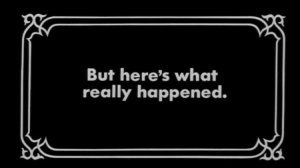
  • I’m enjoying this film’s pre-“Rashomon” technique of recounting events from different points of view. I found another title card they can use.
clue-but-heres-what-really-happened_1050_591_81_s_c1
  • The lynching scenes are tough to watch, but that’s the point. These scenes were a wakeup call to progressive whites of the day (what we would call “woke” now) that this was still happening in our country. These sequences were so controversial in their day some theaters either cut them entirely, or refused to screen the film at all.
  • The film ends with Dr. Vivian telling Sylvia to be proud of her heritage, citing the recent work done by African-Americans in the Second Occupation of Cuba from 1906-1909 and in the Battle of Carrizal in 1916. Michaeux’s work often showed the brutal reality of African-American living, but he always ended with hope.
  • There is still a lot to unpack with this film, and a 1000 word write-up only scratches the surface. There’s a lot of great essays out there about “Within Our Gates” that are worth your time. I’ll get you started with this piece from the American Historical Association.

Legacy

  • Oscar Micheaux continued to make films for 25 years, though none were as successful as “Within Our Gates”. He died in 1951, and is buried by a gravestone reading “A man ahead of his time”.
  • Michaeux has received many posthumous honors over the years, including tributes from the Directors Guild of America and the Producers Guild of America.
  • We’re making very slow progress, but at long last black filmmakers have become a little more commonplace in mainstream Hollywood. At the time of this writing, we’ve seen the release of “Black Panther” by Ryan Coogler, and the upcoming “A Wrinkle in Time” by Ava DuVernay (the first African-American woman to direct a major studio release).

Further Viewing: The 2014 documentary “Oscar Michaeux: The Czar of Black Hollywood” by Bayer Mack finally gives the man his due.

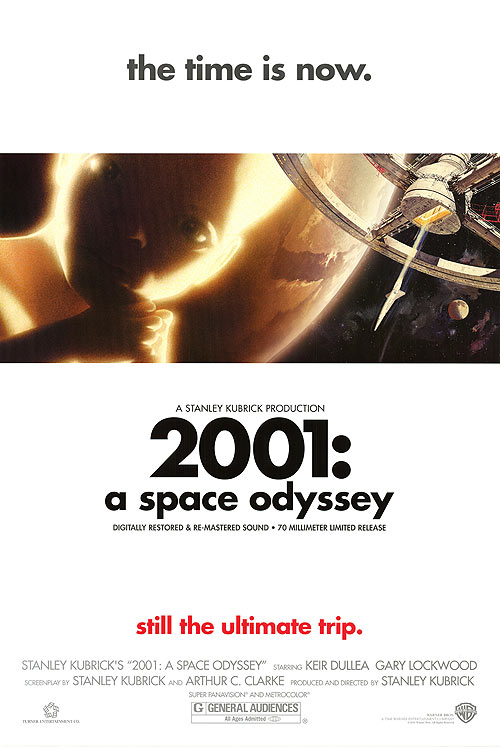
The Legacy of “2001: A Space Odyssey”

MPW-46247

This is a continuation of my “2001” post. You should read that first.

“2001” has such a strong impact on pop culture it warranted a second post. And be sure to keep scrolling for a few of my other “2001” related musings.

Legacy

  • “2001” simultaneously revived and killed the science fiction movement. The film was a triumph in terms of its pure science fiction beliefs, but every film that was influenced by it leaned more towards the visual scope, churning out films more accurately described as “science fantasy” (“Star Wars” being the prime suspect). Who wants to think about our future evolution as a species when there’s cool spaceships flying in hyperspace and gross-looking aliens bursting out of people’s chests? Regardless, that’s still quite a lot of films that got the green light because of “2001”.
  • Arthur C. Clarke wrote several sequels to the original novel, which abandon the first book’s continuity in favor of the film’s. The first follow-up, “2010: Odyssey Two”, was made into a film in 1984 with Roy Scheider and Helen Mirren. “2061” and “3001” have yet to be adapted for film, but Tom Hanks has expressed interest.
  • Effects supervisor Douglas Trumbull was asked by ABC to recreate the “Star Gate” sequence for the introduction of the ABC Movie of the Week. Now viewers could trip out in their own home while watching “Brian’s Song”!
  • Douglas Rain would voice a similarly disturbed computer in Woody Allen’s “Sleeper”.
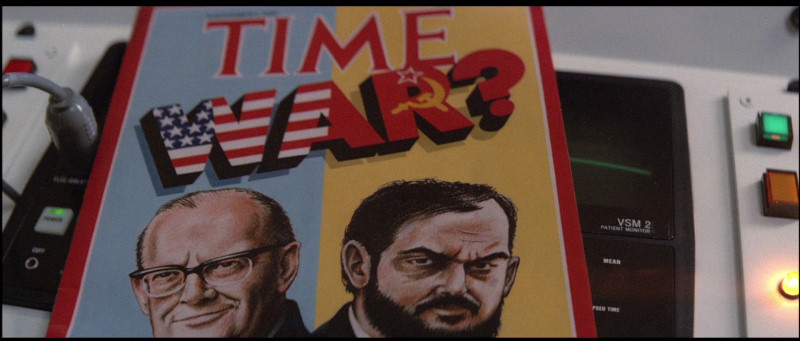
  • Both Clarke and Kubrick made the cover of Time Magazine. Well…sorta.

time-mag-cover-from-film-2010

  • Christopher Nolan made his own technologically impressive, yet somehow more baffling space epic: “Interstellar”. Muuuuurph!
  • Every bit of artificial intelligence since 1968 has been compared to HAL. Watson, Siri, they’re all going to take over one day.
  • A lot of musical influence. For starters, the title of one of the greatest songs ever recorded.
  • If you’re going to make a comeback as the King of Rock and Roll, this is the song to open with.
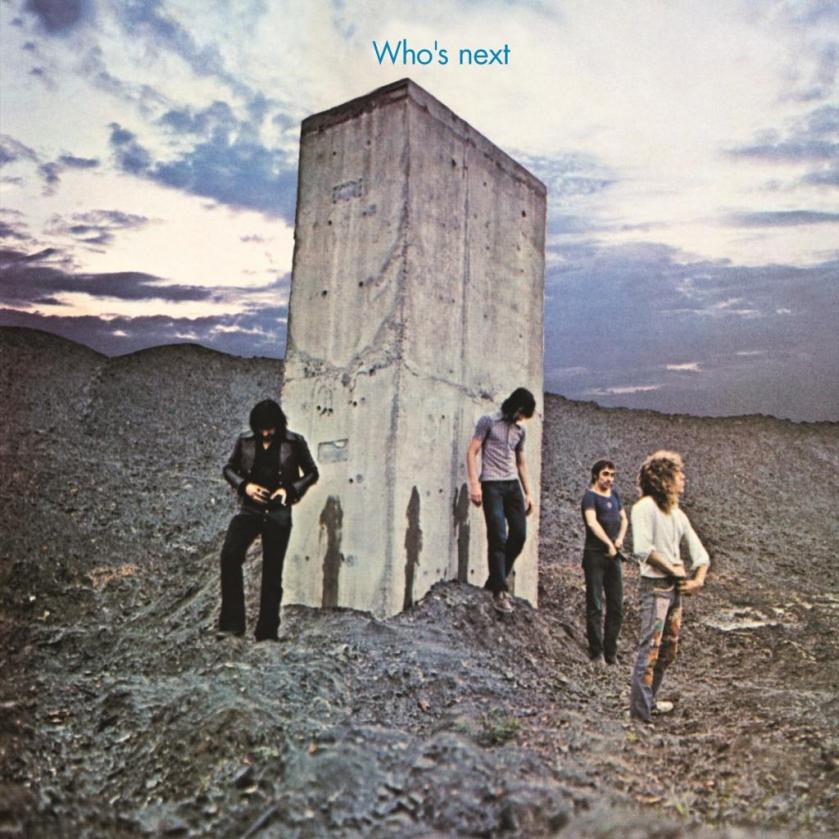
  • The album cover for “Who’s Next”.

who_-_whos_next

  • Is this where John Landis got “See you next Wednesday” from?
  • My beloved MST3K is heavily influenced by “2001”. From the design of the SOL and Gypsy’s all-seeing eye, to “William Sylvester Trivial Pursuit” and the ultimate fate of Dr. Clayton Forrester.
  • “Careful, they’re ruffled!”

Further Viewing: A shameless plug for my own endeavors. I’ve been lucky enough to play a HAL 9000-esque computer in two different parodies: The 2013 short film “Future Toilet” (the only time I’ve ever played the title character in a movie), and a 2015 episode of my short-lived podcast/radio show “Spoiler Alert” where Clay and I pondered what the show would sound like in the futuristic year of 2018!


Things About the Year 2001 I Wish “2001” Had Predicted

  • “Shrek”
  • Smash Mouth
  • That scene in “Shrek” where they play “All Star” by Smash Mouth
  • The Ravens winning the Super Bowl
  • Bjork’s dress at the Oscars
  • Alex Trebek shaving his mustache
  • The ending of “Rat Race” where they play “All Star” by Smash Mouth (Jesus, that song was everywhere)
  • Hot Topic
  • The inexplicable fanbase around “Moulin Rouge!”
  • Dick Cheney
  • Kelly Ripa replacing Kathie Lee Gifford on “Live!”
  • The high school football documentary “Go Tigers!” which features a scene where they play…oh Christ, are you kidding me?
  • Popped Collars
  • And I wish this film had advised me NOT to take Mr. Wehrle’s 2nd period Freshman English class, because he was the only teacher who wouldn’t let us watch the news coverage of the September 11th terrorist attacks while it was happening. Fuck you, Mr. Wehrle.