#262) Safety Last! (1923)

77b92aea2c622f84c27de49636b0180e

#262) Safety Last! (1923)

OR “The Edmund Hillary of Film Comedy”

Directed by Fred C. Newmeyer & Sam Taylor

Written by Taylor & Hal Roach and Tim Whelan

Class of 1994

https://www.youtube.com/watch?v=V-XZWZVVhvQ

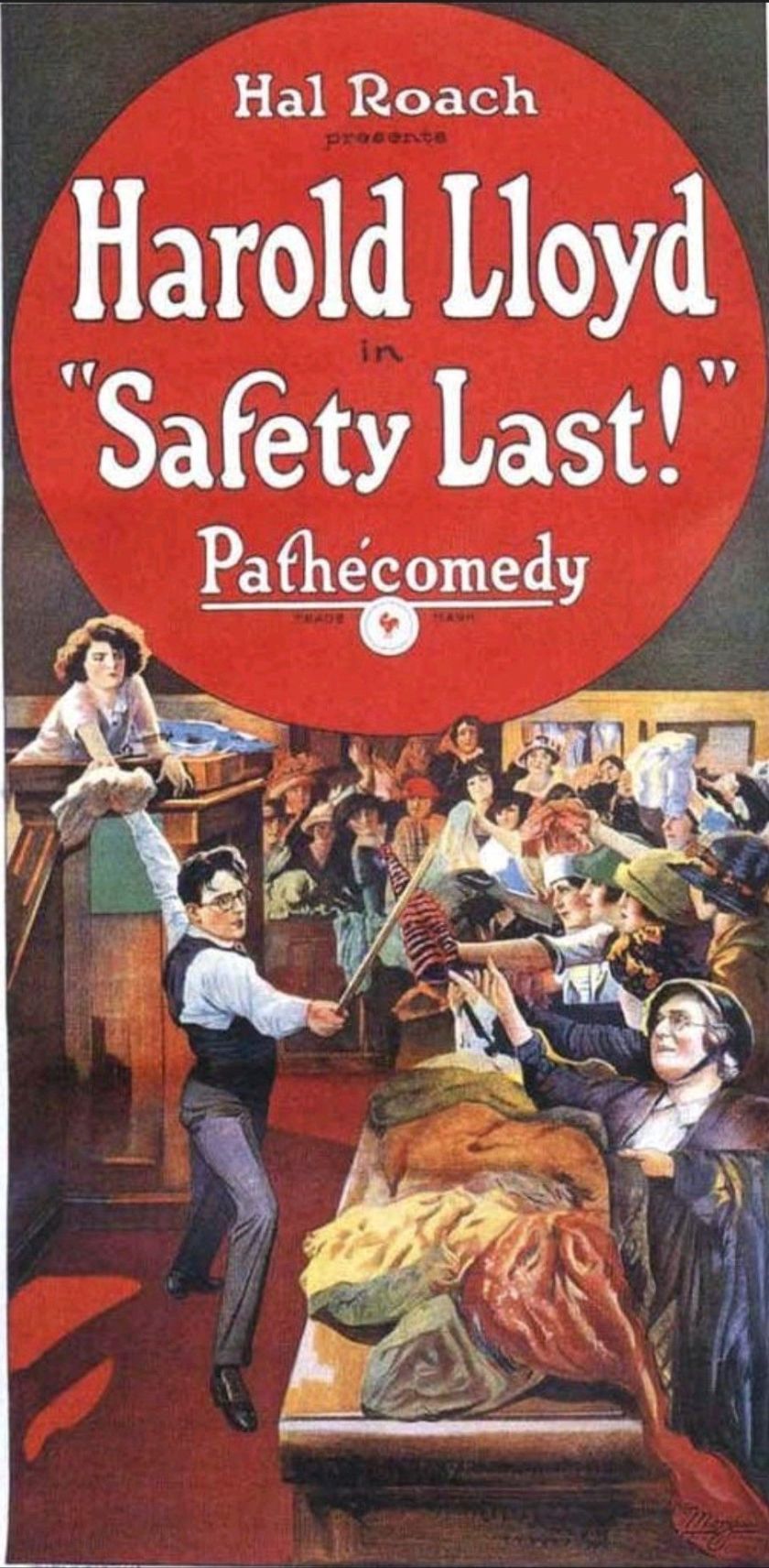
The Plot: Country boy Harold Lloyd (Harold Lloyd) leaves his small hometown of Great Bend to make it big in the city. He ends up selling fabrics at the De Vore department story, but has told his girl back home (Mildred Davis) that he is the store’s general manager. Unable to keep the ruse going much longer, Harold must come up with more money. He learns that his boss (Actor Unknown) is offering $1000 for anyone who comes up with a publicity stunt for the store. Remembering how his friend “Limpy” Bill (Bill Strother) once evaded the police by climbing the side of a building, Harold convinces Bill to repeat the stunt at De Vore’s. After a series of comedic circumstances, Harold must scale the building himself, even if it means iconically hanging from a clock face.

Why It Matters: The NFR calls it “Harold Lloyd’s finest film” and gives a brief description of the production. There’s also an essay by Hal Roach expert Richard W. Bann.

But Does It Really?: I’ve said it before: “Safety Last!” is the definitive Harold Lloyd film. Lloyd tends to get overshadowed by Chaplin and Keaton, but his films are just as entertaining, and best exemplify the energetic optimism of the ‘20s. Most of the jokes in “Safety Last!” still land, and I found myself laughing out loud quite a bit during my viewing – not to mention being on the edge of my seat for most of the third act. Like many of the great silent films, “Safety Last!” is simple, yet effective. Another no-brainer for NFR inclusion.

Everybody Gets One: Most of the supporting cast, notably Bill Strother, whose “human spider” act inspired the film, and Mildred Davis, who shortly after filming became Mrs. Harold Lloyd.

Wow, That’s Dated: The usual ‘20s stuff: trollies, newsies, and the six-day work week, including a half-holiday on Saturday. Plus a shoutout to the Follies!

Other notes

  • Turns out Hal Roach and Harold Lloyd started off as film extras together. When Roach received an inheritance, he started his own production company and made a series of successful “Lonesome Luke” shorts starring Lloyd. “Safety Last!” was one of their first attempts producing a feature film.
  • The cast list is titled “For Your Approval”. Leave it on my desk and I’ll have a decision made by Friday.
  • Readers, I give you “Limpy” Bill!
  • Ah yes, the daily fresh Hell that is working retail.
  • Even Harold Lloyd’s background gags are hilarious!
  • I usually don’t mention a film’s rankings on those AFI lists (they aren’t carved in stone, after all), but it’s interesting that “Safety Last!” made their top 100 most thrilling movies, but not their top 100 funniest. Its spot on 100 Thrills is warranted, but it’s definitely funnier than “The Freshman”.
  • My favorite title card in this movie: “You’re no collar ad yourself.” Zing!
  • It helps that Mildred is incredibly gullible and has no peripheral vision whatsoever. Harold can get away with anything!
  • The $1000 offered for the best idea comes out to over $14,000 today. Man, I want $14,000 for telling someone to climb a building.
  • A simple internet search will reveal many of the tricks Harold Lloyd and his team used to create the illusion of him scaling the building. But it doesn’t matter because it’s still am impressive feat of filmmaking to watch. I got serious chills with every close call.
  • Thanks to its proximity to the International Savings Building, Blackstone’s gets plenty of advertising as “California’s Finest Store”.
  • Very nice of the crowd to ignore whenever Harold stops on a ledge and almost goes into the building. Mildred must have coached them.
  • Were those pigeons about to mate?
  • Perhaps the most amazing thing about Harold Lloyd’s stunts in this film is that he was climbing that building with only eight fingers. He lost two fingers in 1919 when he picked up what he presumed was a prop bomb for a photo shoot. The bomb promptly exploded in his hand, leaving Lloyd permanently deformed.
  • This film’s main premise is basically a reverse-“Vertigo”. A “Reversigo”, if you will.
  • That’s what I love about silent films: They reach their climax and fade to black. No epilogue necessary, we know Harold and Mildred live happily ever after (in the film and in real life!)

Legacy

  • Harold Lloyd and Hal Roach parted ways not too long after “Safety Last!” Lloyd would successfully produce his own movies (including “The Freshman”), and Roach would find success producing shorts starring the likes of Laurel & Hardy and The Little Rascals.
  • The shot of Harold Lloyd dangling from the clock face is arguably the most iconic image in silent film history. Everyone has done their own variation on it, the most famous being another NFR film: “Back to the Future”.
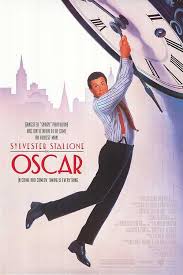
  • Other references to the clock shot include the opening credits of “On Her Majesty’s Secret Service” and the poster for the movie “Oscar”. Seriously, “Oscar”?
Unknown


  • “Hello? Human Fly here!”

#261) Eaux d’Artifice (1953)

4c076bd8de6692a6822906ed95aa821090f10ea9-700

#261) Eaux d’Artifice (1953)

OR “What’s the Frequency, Kenneth?”

Directed by Kenneth Anger

Class of 1993

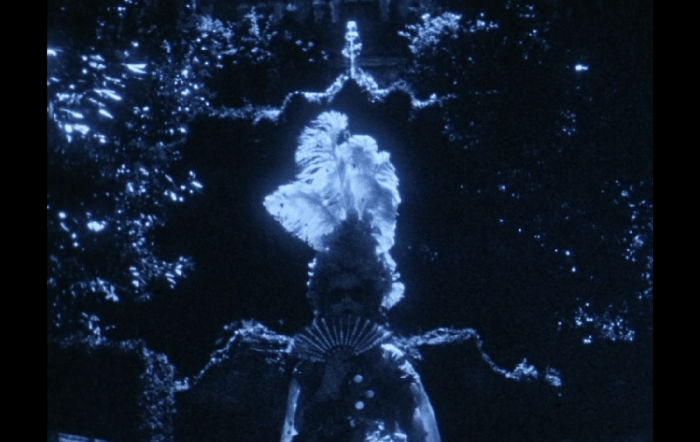
The Plot: With Vivaldi’s “Four Seasons” as its soundtrack, “Eaux d’Artifice” is a short scene of a mysterious woman (Carmilla Salvatorelli) dressed in 18th century garments wandering around the Villa d’Este and its many garden fountains. And then she goes near the water and ends up becoming the water, or something like that.

Why It Matters: The NFR gives a brief synopsis and calls the movie “[o]ne of Anger’s more elemental though highly stylized films”.

But Does It Really?: I didn’t get this one at all, but I’m always willing to give a slight pass to underground filmmakers. Although after doing some research on Kenneth Anger, I wonder why the NFR picked this film over the likes of “Fireworks” or “Lucifer Rising”, which seem to be more representative of Anger’s art and worldview.

Everybody Gets One: One of the first openly gay American filmmakers, Kenneth Anger’s movies covered homosexuality at a time when such displays were deemed “obscene” (though the California Supreme Court deemed “Fireworks” art rather than pornography). Fun Fact: Anger was friends with both Alfred Kinsey and Mick Jagger!

Seriously, Oscars?: No Live Action Short nomination for “Eaux d’Artifice”. Coincidentally, the winner that year also centered around a piece of classical music: “Overture to the Merry Wives of Windsor”.

Other notes

  • We got us another nationality dispute, though this one is a bit more philosophical. If your filmmaker is American, but the entire production was shot in Rome, is it still an American film? (You could also point out the French title, but that reeks more of pretentiousness than actual heritage).
  • Kenneth Anger made it to Europe thanks to his friendship with filmmaker Jean Cocteau, who invited Anger to France to collaborate on a film version of his ballet “The Young Man and Death”. Like many of Anger’s films, “Young Man” ran out of funding and was abandoned. After that, Anger went to Rome to film a short about Cardinal Ippolito d’Este, feeding into his love of the occult. But Anger only managed to film the first scene, which became “Eaux d’Artifice”.
  • Carmilla Salvatorelli was a little person who was hired for this film to make the fountains appear larger. It worked.
  • Uh-oh, we got flooding stairs. Did someone put a stopper in the bathtub?
  • I’m really enjoying this music. Did Vivaldi score any other films?
  • Goddamit, NFR, you tricked me into watching another “staring at water” movie. The only difference between this and the likes of “Study of a River” is how artsy this movie is. That’s all well and good, but I’m still looking at fountains.
  • Nice dramatic close-up on one of the fountain spout faces.
  • Why you runnin’?
  • I guess the shots of the fountain at the end have some sort of homoerotic subtext? I didn’t get any of that. I feel so uncultured.

Legacy

  • Anger is still with us; making the occasional film and putting curses on people who have wronged him. Among his many post-“Eaux” accomplishments is penning “Hollywood Babylon”, the gossip book all other gossip books aspire to be (even though most of the book has been disputed).
  • Antonio Vivaldi’s life story (as well as the creation of “Four Seasons”) was the basis for the musical “Jersey Boys”.
  • As for the legacy of the film itself…I dunno, the fountain show at the Bellagio?

#260) Bonnie and Clyde (1967)

bonnie_and_clyde_xlg

#260) Bonnie and Clyde (1967)

OR “Brother, Can You Spare a Crime?”

Directed by Arthur Penn

Written by David Newman & Robert Benton

Class of 1992

The Plot: Faye Dunaway and Warren Beatty are Bonnie Parker & Clyde Barrow, two Depression-era criminals only partially based on their real-life counterparts. Clyde meets Bonnie while trying to steal her mother’s car, and eventually convinces her to abandon her dead-end life in Dallas to rob banks with him. Joined later by getaway driver C.W. Moss (Michael J. Pollard), Clyde’s brother Buck (Gene Hackman) and Buck’s uptight wife Blanche (Estelle Parsons), the newly-minted Barrow Gang drive around the mid-west committing crimes and shooting anyone in their path. As the legends around them grow, so does Bonnie’s premonition that their infamy will end in tragedy.

Why It Matters: The NFR praises Penn, the screenwriters, Beatty and Dunaway, and says that the movie set “filmmaking and style trends that linger today”. There’s also an essay by film critic Richard Schickel, who takes the time to slam fellow critics Bosely Crowther (who hated the film) and Pauline Kael (who loved it).

But Does It Really?: “Bonnie and Clyde” is the Hollywood movie that dipped its toes into the waters of post-Code anti-heroes. The characters of Bonnie and Clyde were victims of the Depression that rebelled the only way they knew how, by robbing banks, and New Hollywood could finally tell their story in a bold, complex way. By today’s standard the violence is all very tame, but the restraint helps ground the film, as does Arthur Penn’s confident direction and pitch perfect performances from Beatty, Dunaway, and the whole ensemble. Like many in the 1967 roster, “Bonnie and Clyde” helped define a new era of filmmaking, and is a no-brainer for NFR inclusion.

Shout Outs: Bonnie, Clyde, and C.W. hide out in a movie house showing “Gold Diggers of 1933” following their first botched robbery together. The irony of “We’re In the Money” cannot be overstated.

Everybody Gets One: Actors Estelle Parsons, Michael J. Pollard, and Denver Pyle, aka Uncle Jesse from “The Dukes of Hazzard”.

Wow, That’s Dated: Like “The Learning Tree”, “Bonnie and Clyde” is a New Hollywood movie with some of the trappings of an Old Hollywood studio film. Be on the lookout for rear projections and recycled Foley effects.

Seriously, Oscars?: “Bonnie and Clyde” led the Oscar pack (alongside “Guess Who’s Coming to Dinner”) with 10 nominations, including all of the “Big Five” categories. But 1967 was a strong year for movies, and the Academy spread the wealth among fellow NFR entries “The Graduate”, “In the Heat of the Night”, “Cool Hand Luke”, and the aforementioned “Dinner”. “Bonnie” managed two wins: Supporting Actress for Estelle Parsons (Blanche is the most sympathetic of the Barrow gang), and Cinematography for Old Hollywood cameraman Burnett Guffey.

Other notes

  • Among the film’s historical inaccuracies (or oversimplifications): Clyde was not impotent (nor was he bisexual, as some have claimed), C.W. Moss is a fictional amalgamation of several fringe members of the Barrow gang, and Bonnie received third-degree burns from a car accident that permanently damaged her legs. But it’s the real Blanche Barrow who suffers the most. Unlike her film counterpart, Blanche was fully aware of her husband’s criminal record and was a more active participant in the robberies. Blanche lived long enough to see the film and famously griped that Estelle Parsons’ performance “made me look like a screaming horse’s ass.”
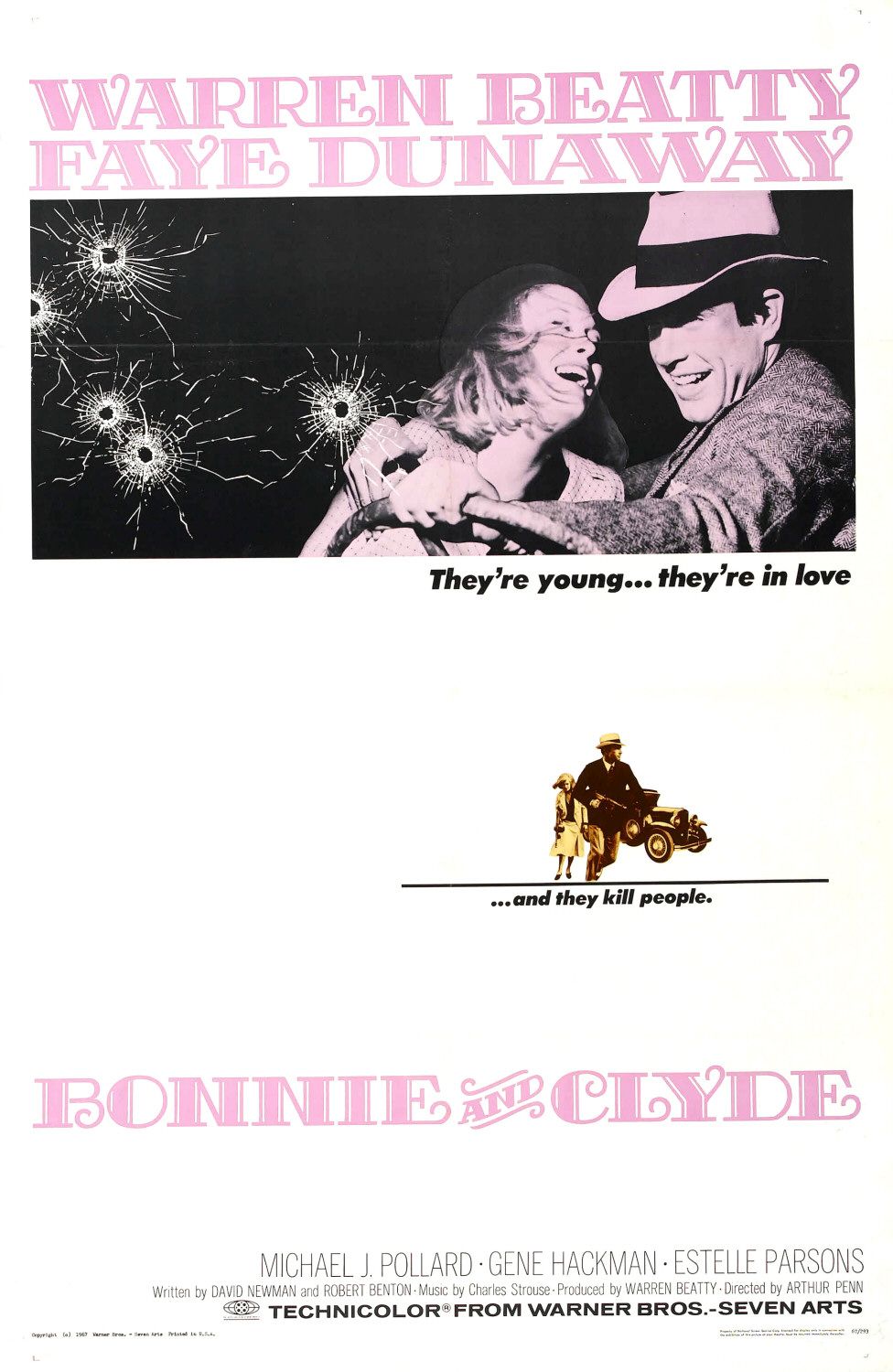
  • This film has one of my all time favorite taglines: “They’re young…they’re in love…and they kill people.”
  • Right off the bat you’re rooting for these two. Beatty and Dunaway’s natural chemistry is aided by some very smart screenwriting. These aren’t two historical figures spouting off researched facts, these are two screwed-up people trying to get their lives together.
  • Michael J. Pollard definitely took his Strother Martin lessons. I presume Pollard was a winner of the Truman Capote lookalike contest.
  • This has got to be one of the rare movies where all five of the lead actors are still with us 50 years later. I will of course use this platform to urge Gene Hackman to make one more movie. Do you really want your swan song to be “Welcome to Mooseport”?
  • What’s louder in this movie: the gunplay or Estelle Parsons?
  • Pretty amazing that the Barrow Gang never runs out of gas during their getaways.
  • The best line in the movie: “And I’m bringing me a mess of flowers to their funeral”.
  • Oh Gene Wilder. Even in your film debut your screen persona is in full bloom (“Step on it, Velma!”).
  • The Parker family reunion scene was allegedly filmed with a window screen to give it a nostalgic filter. One of the locals gathered to watch the filming was Texan schoolteacher Mabel Cavitt, who was cast on the spot as Bonnie’s mother.
  • I have to say, for notorious bank robbers, Bonnie & Clyde don’t rob a lot of banks. If anything they should have gone down for their chronic carjacking.
  • One of the film’s more commendable aspects is that it manages to be a realistic love story without being too romantic or sensual. Any chance of this film being a conventional movie romance is deflated (for lack of a better term) early on, but ultimately these are two people who genuinely care about each other and accept their unified fate.
  • Man, that ending is something else. So much storytelling happening in such quick cuts. It’s brutally tragic. Or is it tragically brutal? Regardless, A+ everyone.

Legacy

  • “Bonnie and Clyde” was buried in limited release by Warner Bros., but resurrected by critics and audiences (including such new young voices as Roger Ebert and Pauline Kael) to become one of the top-grossing hits of 1967. This success jump-started the careers of everyone involved in the film.
  • Many have tried to do a more accurate biopic of Bonnie & Clyde (including a recent TV miniseries), and while they are more factual, they’re just not as exciting.
  • Perhaps my favorite spin-off from this film’s popularity: the short-lived Warner Bros. cartoon series “Bunny and Claude”. They rob carrot patches.
  • But the greatest robbery Warren Beatty and Faye Dunaway ever pulled was robbing “Moonlight” of its Best Picture glory.

Listen to This: “Foggy Mountain Breakdown”, everybody! Lester Flatts and Earl Scruggs’ quintessential reckless car chase banjo music was added to the National Recording Registry in 2004, thanks in part to its anachronistic inclusion in “Bonnie and Clyde”.

#259) I Am a Fugitive From a Chain Gang (1932)

iamafugitive3

#259) I Am a Fugitive From a Chain Gang (1932)

OR “Orange Is the New Black & White”

Directed by Mervyn LeRoy

Written by Howard J. Green & Brown Holmes. Based on the autobiography by Robert E. Burns.

Class of 1991

The Plot: James Allen (Paul Muni) has just returned home from World War I, and declines a desk job at the family business to pursue his dream of being a civil engineer. He travels the country for employment, but work is hard to come by, and soon he is out of money. After being arrested during a robbery he was forced to participate in, James is sentenced to a chain gang, where he endures hard labor for months on end. After a year, James escapes to Chicago and makes himself a successful engineer/model citizen. But will his past come back to haunt him?

Why It Matters: The NFR praises Muni and director LeRoy, and cites the film’s influence on the prison genre.

But Does It Really?: “Chain Gang” is another one of those movies that I’ve heard of, but couldn’t tell you why it’s a classic. It turns out the film’s slip from the shortlist of classics isn’t necessarily its own fault. There’s nothing wrong with the film; it’s quite good actually. It’s just been eclipsed over the years by better movies: “The Great Escape”, “The Shawshank Redemption”, and the definitive chain gang film: “Cool Hand Luke”. There’s some great work being done throughout, especially by Paul Muni, but there have been so many other classics in the last 85 years that this movie gets lost in the shuffle. “Chain Gang” is worth a watch, but definitely not as a double feature with “Cool Hand Luke”. Give it a chance to work on its own.

Everybody Gets One: The film’s main takeaway is the man himself: Robert Elliott Burns. “Chain Gang” is very faithful to his real life story. Like James Allen, Burns was a WWI veteran who couldn’t find work, was caught up in a diner robbery, and escaped from a chain gang. He became the editor of Greater Chicago Magazine and started publishing a serial that would become his memoir “I Am a Fugitive From a Georgia Chain Gang!” After his second escape, Burns spent a few weeks in Burbank helping Paul Muni prepare for the film, and even contributed some dialogue to the screenplay.

Wow, That’s Dated: Chain gangs, that’s your big one. Chain gangs were commonplace in the South for most of the late 1800s/early 1900s, but were eventually phased out by the mid-‘50s. Alabama, however, tried to bring back chain gangs in the ‘90s, which means it’ll probably come back again soon. Stupid cyclical nostalgia trends.

Seriously, Oscars?: “Chain Gang” was nominated for three Oscars at the 6th Academy Awards. Paul Muni lost Best Actor to Charles Laughton in “The Private Life of Henry VIII” (the first instance of an Oscar going to a foreign film) and Best Picture that year went to “Cavalcade”. You know, that classic. Most bizarre is the film’s third nomination: sound engineer Nathan Levinson faced such competition as…himself for “42nd Street” and…himself for “Gold Diggers of 1933”. But the winner for Sound Recording turned out to be the only non-Levinson: Franklin Hansen for Paramount’s “A Farewell to Arms”.

Other notes

  • Having clips of your cast during the opening credits is a massive spoiler. Great, now I know this movie has a judge, a warden, AND a Texan!
  • Another pre-code gem: the Texan says someone’s gonna be “S.O.L.” if they mess with him. And he ain’t talking about the Satellite of Love.
  • Who dreams of getting into construction work? What are you, one of the Village People?
  • While James is riding the rails, he should say hi to those Wild Boys of the Road.
  • This movie got me to wondering when we switched prison uniforms from black and white stripes to orange jumpsuits. Turns out we were already phasing out the stripes around the time of this film, with the intention of making the uniforms more rehabilitative than punishing. At one point we tried out denim, as seen in “Cool Hand Luke”.
  • Mervyn LeRoy seems to be having fun cutting from the prisoners to the horses. Nice metaphor.
  • James’ escape is still pretty suspenseful and exciting to watch. But why the occasional under-cranking? Could Paul Muni not run?
  • At one point James is reading “Civil Engineering” by J.J. Robertson. Any relation to J.K. Robertson? Is he a team player?
  • So much of this film’s transitions are paperwork. Newspapers, contracts, letters. Is this movie applying for a Real ID?
  • Paul Muni kinda looks like Glenn Ford.
  • “How do you live?” “I steal.” Great final exchange, but like the film in general, its standing as one of the great film endings has been surpassed by many later films.
  • The moral of this movie: Never turn down a desk job. Your dreams will lead to nothing but a life of crime.

Legacy

  • The success of the movie (as well as the book) led to the eventual abolition of the chain gang system in America. Robert Burns was pardoned in the state of Georgia in 1945.
  • Robert Burns’ real story was made into the 1987 TV movie “The Man Who Broke 1,000 Chains”. Apparently the 1987 equivalent of Paul Muni was Val Kilmer.

#258) Primary (1960)

Coin Toss Before Presidential Debate

#258) Primary (1960) 

OR “The Dairyland Diaries”

Directed & Written by Robert Drew

Class of 1990

The Plot: It’s 1960 and the White House is up for grabs in the upcoming presidential election. Minnesota Senator Hubert Humphrey is the presumed front-runner for the Democratic nomination, but Senator John Kennedy from Massachusetts thinks he can rock the vote. After easily winning the New Hampshire primary, Kennedy challenges Humphrey in the Wisconsin primary of April 1960 to prove he can carry the kind of mid-west state that Humphrey prides himself on having a connection with. Humphrey pounds the pavement: shaking hands, kissing babies, pledging to look out for the average farmer once elected. Kennedy, along with his glamorous wife Jackie and the rest of his famous family, sets out to prove that his Catholic upbringing is nothing Protestant America needs to fear. And in the midst of all of this, filmmaker Robert Drew is using the proceedings to create a new kind of documentary.

Why It Matters: The NFR calls the film “new territory in documentary film making” and states that “[m]odern political and news reporting owes much to the audacity of this film’s invasive technique.”

But Does It Really?: Oh of course. “Primary” was a game-changer for documentaries. Long before we had wall-to-wall news coverage of every political movement, “Primary” was a rare glimpse at what it takes to run for president in this country, and the toll it takes on anyone who thinks they’re up to the task. The film is engaging, surprisingly suspenseful (considering that you know how it ends), and worth a watch for its artistic merits as well as for its historical significance. Plus it’s less than an hour long. Any filmmaker who can make that big an impact in only 53 minutes is worthy of recognition.

Everybody Gets One: This isn’t his only NFR appearance, but attention must be paid to Robert Drew. Drew was a writer for Life magazine and had a Nieman Fellowship at Harvard when he started to focus on filmmaking, specifically asking the question, “Why are documentaries so dull?” He founded Drew Associates, hired a murderers’ row of future notable filmmakers, and in the process created what we now know as Direct Cinema. Minimal narration, no forced storylines, just a camera covering real life in real time. What it all means is left up to you, the audience.

Wow, That’s Dated: Kennedy’s campaign song was a rewritten version of the then-current hit song “High Hopes”.

Seriously, Oscars?: I’m not sure if “Primary” premiered in theaters or on television in 1960, but the Oscar winner that year for Best Documentary was “The Horse with the Flying Tail”. So to answer your question: no, the Oscars weren’t quite ready to embrace direct cinema in 1960. Robert Drew was never nominated for an Oscar, but he did win an Emmy in 1969 for a documentary about choreographer Edward Villella. So that’s something.

Other notes

  • Yes yes, I am aware that the photo I used for this post is from the West Virginia primary a month after the events of this film. But hey, it’s the best photo I could find.
  • The cameramen used for the film were all employees of Robert Drew’s film company Drew Associates. Among them, future documentarians Richard Leacock, Albert Maysles, and D.A. Pennebaker.
  • Part of me says we should bring back campaign songs, and part of me definitely does not want that.
  • Remember the film professor I mentioned who always name-dropped Errol Morris? Apparently he’s one of the younger volunteers for the Kennedy campaign in this movie. He brought that up a lot too. Weirdly, he always referred to Jackie Kennedy as “Jackie O”, even though she didn’t get that nickname until she married Aristotle Onassis in 1968.
  • Speaking of, I hate when people get their kids involved in campaigning. I know it’s important to teach your kids about democracy, but I’m not voting for Kennedy just because your daughter thinks he’s “dreamy”.
  • Don’t know a lot about Hubert Humphrey, other than he was Johnson’s VP and lost to Nixon in ’68, but he seems like everyone’s uncle. I suspect like Adlai Stevenson before him, Humphrey didn’t cut it because he wasn’t “exciting” enough.
  • Say what you will about Kennedy, he knew how to work a crowd.
  • Does anyone know the Polish phrase that Jackie says? Subtitles only tell me that it’s “Non-English Speech”. Real helpful.
  • Man, I knew Kennedy’s Catholicism was an issue in his campaign, but I did not realize just how big an issue it was. Some people were worried Kennedy would take his orders from the Pope. A president being controlled by a foreign leader? What a ridiculous thing that’s actually happening.
  • Jeez after all of that, they’re “about where they stood before the primary”? Democracy sucks.

Legacy

  • Every documentary made since 1960 can trace its lineage back to “Primary”. Not that’s a legacy.
  • Although Kennedy defeated Humphrey in the Wisconsin primary, it was by such a small margin (in a predominantly Catholic state) that Humphrey stayed in the race. He eventually dropped out when Kennedy won the West Virginia primary in May 1960.
  • Also in the running for the 1960 election was Senate Majority Leader Lyndon B. Johnson of Texas. Kennedy selected Johnson as his running mate shortly after clinching the party nomination.
  • Robert Drew got access to the Kennedy White House in fellow NFR documentary “Crisis: Behind a Presidential Commitment”.

Further Viewing: The 1960 presidential election was the first to feature televised debates. Kennedy faced Republican nominee Richard Nixon on four separate occasions, with Nixon learning about how to appear “TV friendly” along the way.

Listen to This: “The First Family” was a gentle satirizing of JFK and his time in the White House. The album was a surprise runaway hit, led by comedian Vaughn Meader’s pitch-perfect impression of Kennedy. As quickly as he rose, however, Meader’s star plummeted following Kennedy’s tragic assassination. While largely forgotten now, “The First Family” was a breakthrough for comedy albums, and proof that sketch comedy wasn’t just relegated to the sanitized airwaves of broadcast television. For the record: Kennedy thought the lampooning was hilarious and allegedly gave out copies of the album as Christmas gifts.