
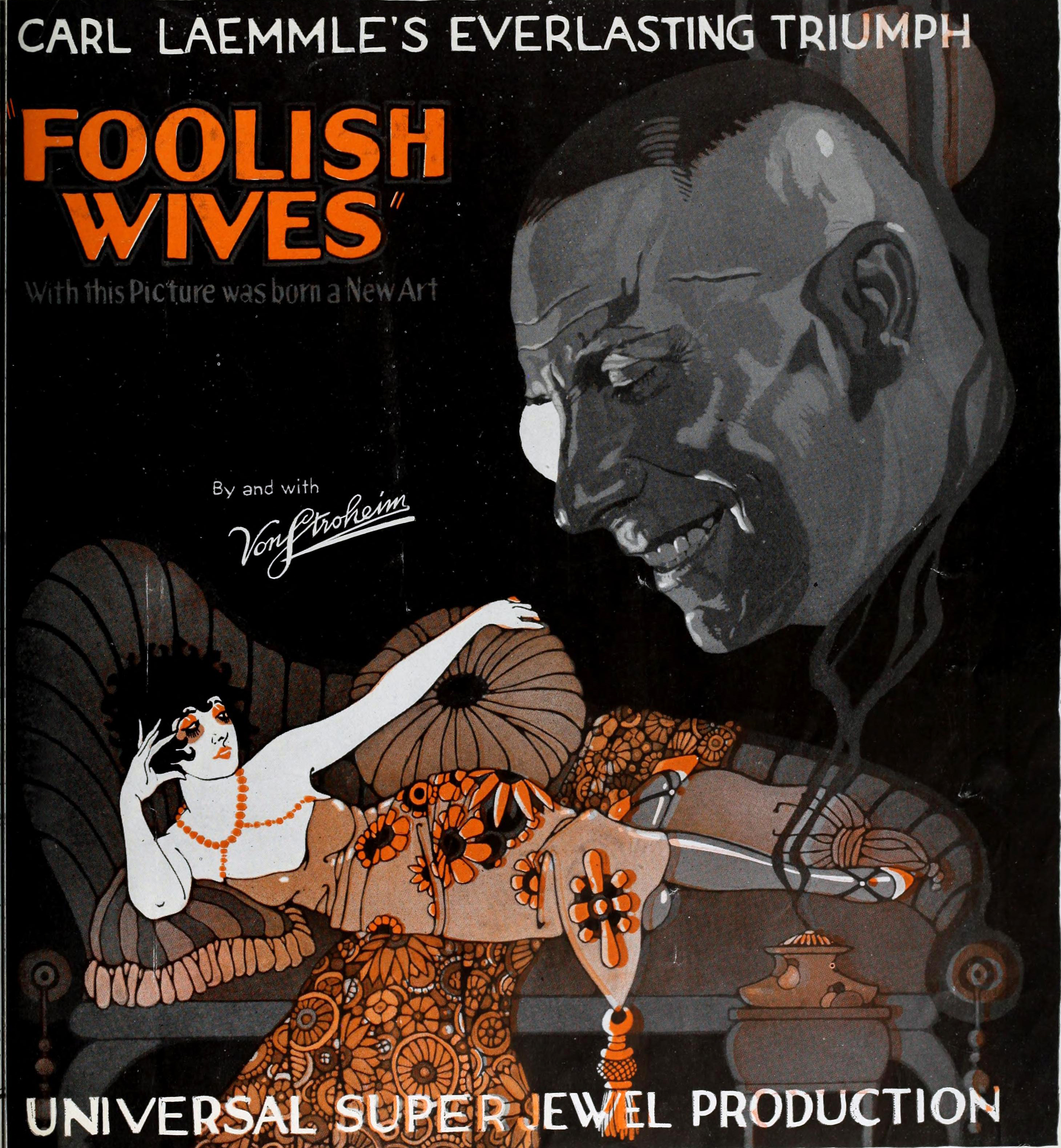
#365) Foolish Wives (1922)
OR “You Can Count on Me”
Directed & Written by Erich von Stroheim
Class of 2008
The Plot: A trio of con artists (Erich von Stroheim, Maude George, Mae Busch) arrive in Monte Carlo posing as aristocracy. “Count Sergius Karamzin” is tasked with their next target: Helen Hughes (Miss DuPont), the young, gullible wife of American Monaco Envoy Andrew Hughes (Rudolph Christians). The Count seduces Helen, as well as the hotel’s maid Maruschka (Dale Fuller) and Marietta (Malvina Polo), the handicapped daughter of one his associates (Caesare Gravina). If nothing about this plot sounds redeeming, don’t worry, it gets worse.
Why It Matters: The NFR calls the film “brilliant and, at the time, controversial”, plus gives a quick mention to von Stroheim’s “challenging” reputation. There’s also an essay by silent film expert Daniel Eagan, who wrote the book on the National Film Registry (literally).
But Does It Really?: When I started this blog, a friend asked if I was going to watch these films in chronological order. When I said no, he replied, “Good call. You’d never make it past von Stroheim.” And now I know what he meant. “Foolish Wives” is a cut above the average silent film, but man what a slog it is. While I admire the film’s scope, as well as von Stroheim’s justified place in film history, nothing about “Foolish Wives” needs to be 2 ½ hours, or longer (more on that later). “Foolish Wives” is excess for the sake of excess, and while deserving of NFR recognition, this one may just be for the film buffs.
Everybody Gets One: Many of the creatives behind “Foolish Wives” would be back for von Stroheim’s other NFR titles: “Greed” and “The Wedding March”. Special mention to model Miss DuPont (who summed up her time with von Stroheim by stating, “Put not your trust in directors.”) and actor Rudolph Christians, who died seven months into the film’s extensive production and was replaced with a double.
Wow, That’s Dated: The unfortunate standard gender politics I’ve come to expect from this era. Sergius has to borrow money from a woman? Scandalous!
Title Track: Well here’s an odd one for you: a book called “Foolish Wives” pops up throughout the movie. Its author: Erich von Stroheim. And the weirdest part? This is an original screenplay; there is no novel of “Foolish Wives”!
Other notes
- A quick word on the film’s length. Erich von Stroheim’s original cut was allegedly anywhere from 6 to 10 hours long! Universal cut the film down to a more manageable 3 ½ hours for its premiere, but various state censor boards objected to the subject matter, and by the time “Foolish Wives” had its general release, the film was running 2 hours (in some states, 75 minutes). Needless to say, von Stroheim hated these shorter prints. Currently, the most readily available version is a 2003 restoration that reinstates as much footage as possible, with a runtime of 140 minutes. Cuts and re-cuts will become a recurring theme with von Stroheim’s other NFR entries.
- After seeing the establishing shots of Monte Carlo, I presumed they were filmed on location. It turns out, however, that Monte Carlo was a set recreation on the Universal lot. It was the most expensive and detailed set at the time, costing over $420,000 (roughly $6.4 million today). It’s an impressive undertaking, and the most obvious influence from von Stroheim’s mentor: D.W. Griffith.
- While we’re on the subject, part of von Stroheim’s temperamental attitude came from his insistence on accuracy. His actors wore real clothes (not costumes), drank real champagne and ate real caviar. He even had real French money printed, to the point where he was briefly arrested for counterfeit! Von Stroheim justified his obsessive attention to detail by saying “the camera will know the difference”. Is it any wonder the film went over budget?
- The sense I’m getting here is that “Foolish Wives” is the ‘20s version of “Dirty Rotten Scoundrels”, only not as funny and much, much longer.
- This is one of the few movies on this list that openly acknowledges its Michael Douglas Scale readout. Hughes and Helen reveal they are 20 years apart. In real life, these two actors were 25 years apart. Yeesh.
- Ooh, cool lightning effect during the storm. I’m always surprised when silent movies have special effects.
- I can see why the censors had issues with “Foolish Wives”: the Count is not only unlikable, but quite salacious with the women in his life. That story again: this movie’s writer, director, and star spends most of his screentime staring at and groping women. You need help, Erich.
- There’s an extended sequence where Helen, on her way out of the hotel, sees a WWI veteran with no arms (presumably lost in the war). She has an empathetic moment with him while “Over There” and “My Country Tis of Thee” play in the background. Pretty heavy-handed stuff, but the Great War had only been over for less than four years. The scene is a thoughtful inclusion, but it has nothing to do with anything.
- There’s a poignant moment where the camera moves in on Maruschka from a medium shot to a close-up. Did von Stroheim just invent the zoom? Or at least the idea that you can move the camera in a shot?
- Sergius tells someone to “Go to hell”. Pretty strong language by 1922 standards. I presume many a pearl necklace was clutched during screenings.
- [Spoilers] And then our auteur is murdered and his body dumped into a sewer; which is kind of what happened to von Stroheim in Hollywood if you think about it.
Legacy
- “Foolish Wives” was the first film to be made for over $1,000,000, and was advertised as such. While the film was a hit, its price tag guaranteed it wouldn’t make a profit. At the same time, word had gotten out about von Stroheim’s reputation of being tyrannical and going over-budget, and his directing opportunities dwindled. Von Stroheim eventually transitioned into acting, and is best remembered for his performance in “Sunset Boulevard” as – what else – a former silent film director.
- Erich von Stroheim and Carl Laemmle appear as characters in an episode of “The Young Indiana Jones Chronicles”. Turns out Indy was an uncredited PA on “Foolish Wives”.
 The Horse's Head