#620) Solomon Sir Jones Films (1924-1928)

#620) Solomon Sir Jones Films (1924-1928)

OR “OK By Me”

Directed by Reverend Solomon Sir Jones

Class of 2016

This post would not have been possible without these films being made available on Yale’s Beinecke Rare Book & Manuscript Library website. I thank them for their research and cataloging of the Solomon Sir Jones films. 

If you don’t have seven-plus hours to devote to watching these films, this eight minute overview from the Oklahoma Historical Society will do in a pinch.

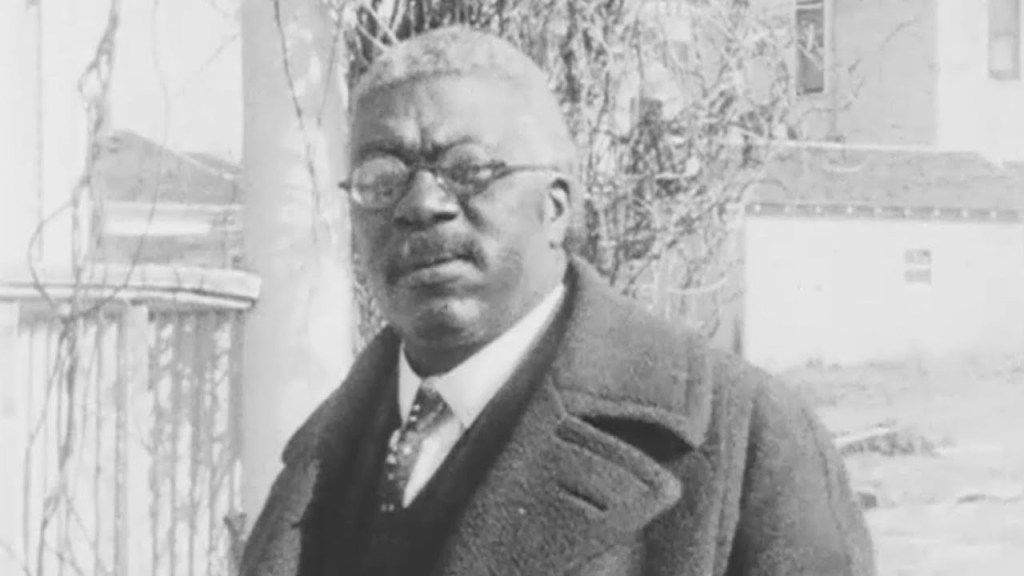
The Plot: Armed with one of the first commercial Bell & Howell Filmo cameras, Oklahoma minister Solomon Sir Jones spent almost four years documenting anything and everything in such towns as Tulsa, Muskogee, and Bristow. In the process of chronicling major events in these communities (baptisms, funerals, parades, sporting events, etc.), Jones paints a vivid portrait of Black life in the 1920s at the beginning of the Great Migration, as well as in the aftermath of the 1921 Tulsa Race Massacre. In total, the Solomon Sir Jones films are comprised of 29 reels of film, culminating in 7 hours and 15 minutes of footage. And you better believe I watched the whole damn thing.

Why It Matters: The NFR gives some background information on Solomon Sir Jones and his films, and includes a quote from IndieWire about their historical significance as a record of African-American lives in the south during the 1920s.

But Does It Really?: I’ve been watching these films and writing this post on and off for the last 2 1/2 years (!), but thankfully it was always worth it. The Solomon Sir Jones films are the most thorough documentation of this era and community you could hope for. Depictions of African-Americans in the 1920s are typically reduced to their offensive stereotypes in White films of the day. But in a similar vein to what Oscar Micheaux was doing with narrative films at the time, Reverend Jones is showcasing the authentic variety of ways that African-Americans dressed, worked, lived, and interacted with the world. As a whole these films present a complexity of living that is too big to be ignored, and I’m glad the NFR found a place for them as a significant piece of American history.

Everybody Gets One: Shoutout to this article by Martin L. Johnson from the Center for Home Movies website; from which most of my information on Reverend Jones and the films comes from. Born in Tennessee and the son of former slaves, Solomon Sir Jones traveled to the then-Oklahoma Territory at age 20 as a missionary for his Baptist church. Jones lived in Oklahoma the rest of his life, settling down in Muskogee and devoting the next five decades to supporting countless Black institutions and businesses throughout Oklahoma. In 1924, Reverend Jones was one of four religious leaders voted to travel to Europe and the Middle East in a contest run by the Madam C. J. Walker Company. Before departing on the three month trip in early 1925, Jones purchased a 16mm camera, and used the subsequent footage from his trip during his sermons. Jones then proceeded to record as much of his surroundings as possible, spending the next three years filming and sharing his community with his congregations.

Other notes

  • I’m sure the historians who worked on cataloging these films appreciated that Jones had the foresight to label each scene as he went along on a pushpin letter board. That must have saved them hours of time.
  • I’m enjoying the shots of children playing. Typically any documentation of children from this era is them standing sadly amongst their dustbowl era setting, so it’s nice to see that even kids in bleak 1920s farmland were capable of happiness.
  • It’s always awkward when people film funerals. Should I be watching this?
  • Ah, straw boaters. Everyone looks good wearing one; they make you look super fancy and/or like you’re gonna start singing.
  • One of the early highlights is Muskogee’s Turkey Day parade on Thanksgiving 1925. This is followed by a lengthy football game between MTH Muskogee and BWH of Tulsa, complete with leather helmets! Where’s John Facenda?
  • What’s the point of filming a marching band when your film has no sound?
  • Hey, a fashion show! Jones covers Elliott Furnishings’ 1926 Spring Style Show in Muskogee, a rare glimpse at some of Oklahoma’s finest attire. The Beinecke Library mentions that T.J. Elliott was the only place in East Oklahoma to sell Stetson hats, and one of the rare desegregated businesses of the era.
  • There’s a Juneteenth parade from 1925! I feel like Juneteenth is only now getting more national recognition, so it’s comforting to see footage of a celebration from almost 100 years ago.
  • In the midst of all of this, Jones captures a brief moment with one of Muskogee’s Indigenous people. Even in these fleeting moments, this anonymous man subverts a 1920s White audience’s expectations of Native Americans (for starters, he carries a rifle). Side note: Muskogee is named after the Indigenous tribe (spelled “Muscogee”) that was among the “Five Civilized Tribes” victimized by the Indian Removal Act of 1830
  • As these films are not presented in chronological order, Jones’ international trip that inspired this whole endeavor shows up around the halfway point. Among the places Jones visits are a church in Paris, and the holy sites of Israel, Egypt and Galilee. For the latter, Jones himself makes a Hitchcock cameo in a few shots.
  • We get a glimpse at the Madam C. J. Walker Company southwest headquarters in Oklahoma. C. J. Walker was the first American woman (Black or otherwise) to become a self-made millionaire, in this case through her line of cosmetics and hair products for Black women. Walker had passed a few years before this film, but the company continued production until 1981.
  • One of my favorite recurring bits in this movie: People posing for the camera as if it were a photograph. Been there.
  • Thanks to a scene of schoolchildren decorating their Christmas tree, the Solomon Sir Jones films qualify for my Die Hard Not-Christmas list.
  • Here’s a weird one: In Reel #17 there’s an insert of two travelogue shorts from Bell & Howell. I doubt Reverend Jones had anything to do with “Capturing Big Fish in Pacific Waters” and “Whaling in the South Pacific”. Maybe this reel was accidentally mixed in with his films over the years? Regardless, there’s some whale skinning that makes this the kind of animal snuff film I try to avoid on this list.
  • One of the more sobering moments from these films is when Reverend Jones visits Tulsa, Oklahoma a few years after the 1921 race riot that killed anywhere from 30 to 200 Black lives. A photo is shown of Mount Zion Baptist Church immediately after it was totally destroyed in the riot, as well as footage of the rubble that still surrounded the site (the church would not be rebuilt until 1952). As with the earlier Juneteenth parade, these home movies preserve a significant amount of Black history that were all but erased in a White supremacist system.
  • Seeing footage from inside a shoe shop and a bakery reminds me: Now is always the best time to support your local Black businesses!
  • I’m a sucker for ’20s cars. They look so cool! Even in this silent footage you can practically hear the “aaoooga” of the horn.
  • Jones visits a Baptist Church convention that wins for best slogan: “All the Word for All the World”.
  • Near the end, Jones films animals at an unspecified zoo, in which we get actual footage of lions and tigers and bears.
  • Watching all these hours of footage, I got a genuine feeling of community. Not just images of people and places, but a real sense of what life was like in this neighborhood. I look at all these people and I recognize that they are all long gone by now, but I hope that despite what the next century of American history has in store for African-Americans, they all lived long, satisfying lives.

Legacy

  • According to the aforementioned Johnson article, Solomon Sir Jones would play these films “for public exhibition in churches, civic halls, and schools” – though hopefully not all 29 in one sitting. Following Reverend Jones’ death in 1936, the films seemingly disappeared, eventually being rediscovered 70 years later by a local antiques dealer in the walls of one of his properties in Tulsa. Oklahoma historian Currie Ballard recognized the films’ value and purchased them along with Jones’ projector and screen. In 2009, Ballard sold the films to Yale University, which began their preservation and eventual NFR induction.
#619) Return of the Jedi (1983)

#619) Return of the Jedi (1983)

OR “The Good, the Bad, and the Furry”

Directed by Richard Marquand

Written by Lawrence Kasdan and George Lucas. Story by Lucas.

Class of 2021

As with my write-ups of “Star Wars” and “The Empire Strikes Back“, this is based on my viewing of the original theatrical version of “Return of the Jedi”.

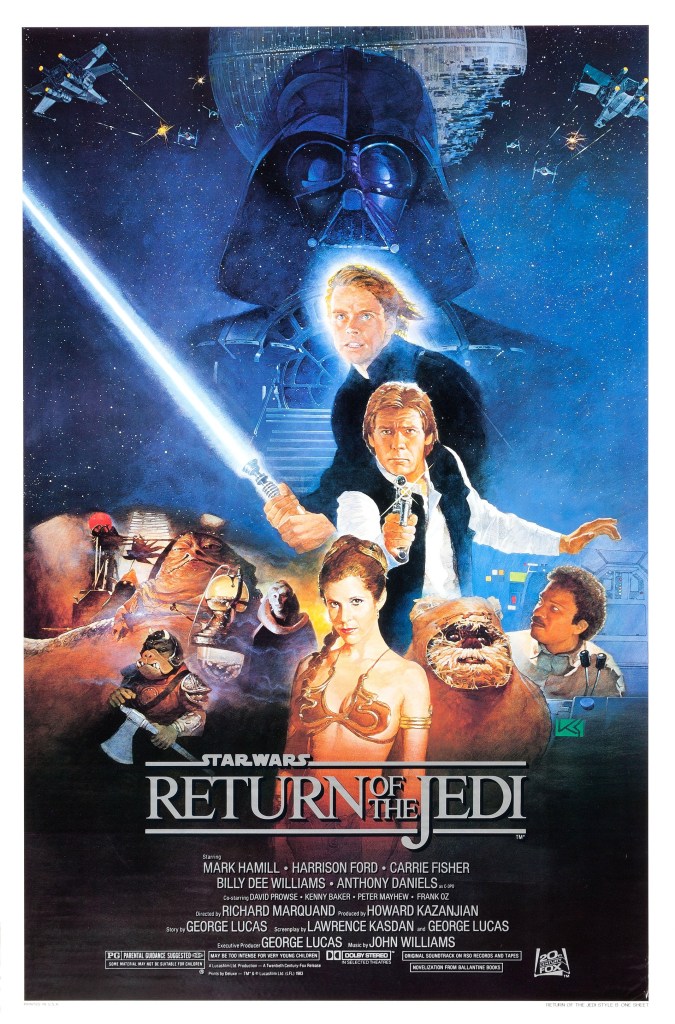
The Plot: An even less long time ago in a galaxy far, far away, the evil Empire plans to destroy the Rebel alliance once and for all with a new, more powerful Death Star. Meanwhile, Luke Skywalker (Mark Hamill) leads a rescue mission to save Han Solo (Harrison Ford) from the slimy crime lord Jabba the Hutt. Following that success, our heroes lead a Rebel ground crew to the forest moon of Endor, with Leia (Carrie Fisher) befriending a race of teddybear-esque Ewoks. As the Rebels gear up for their final battle with the Empire, Luke must confront Darth Vader (David Prowse, voiced by James Earl Jones), who is determined to deliver Luke to Emperor Palpatine (Ian McDiarmid) and the Dark Side of the Force.

Why It Matters: While the NFR admits that “Jedi” is “not quite up to the lofty standards of its two predecessors”, they praise the film’s “intriguing new characters” and declare it “an unquestioned masterpiece of fantasy, adventure and wonder.” There’s also a link to a brief video clip of Mark Hamill discussing the film’s importance.

But Does It Really?:  Sure, “Return of the Jedi” doesn’t hold a candle to the previous installments, but while the first two were allowed to be fun adventures, “Jedi” has the unenviable task of being The Conclusion, and it takes a while for the movie to find its footing and start wrapping things up. There’s a bit of padding and a lack of the fun repartee between the main characters, but ultimately the film succeeds as the exciting final chapter in an adventure serial geared towards kids. Packed with its share of iconic characters and moments, “Return of the Jedi” more than earns its spot as the first “threequel” in the NFR.

Shout Outs: Among the films cinematic influences are NFR entries “The Adventures of Robin Hood“, “The Day the Earth Stood Still“, and “The Godfather“, plus be on the lookout for a “THX 1138” reference.

Everybody Gets One: Welsh director Richard Marquand was hired to helm “Jedi” after impressing George Lucas with his WWII drama “Eye of the Needle” (it helped that Marquand was not a member of the DGA, whom Lucas recently had a falling out with). Accounts of Marquand’s on-set behavior differ depending on who you ask, with rumors that Lucas took over most of the film’s directing himself. Marquand’s side of the story wasn’t well-documented before his unexpected death in 1987, apart from his oft-repeated quote comparing filming while George Lucas is hanging around to “trying to direct King Lear with Shakespeare in the next room.”

Wow, That’s Dated: I don’t care how much “Lapti Nek” sticks out for its pure ’80s-ness, I still like it better than “Jedi Rocks“.

Title Track: Famously, “Return of the Jedi” was original titled “Revenge of the Jedi”, but was changed to “Return” five months before the film’s release, causing the already-printed “Revenge” posters to increase significantly in value. 2005’s “Revenge of the Sith” takes its title from this.

Seriously, Oscars?: The biggest hit of 1983, “Return of the Jedi” received four Oscar nominations in various tech categories. While the film lost these awards to “The Right Stuff” and “Fanny and Alexander”, it did win a Special Achievement award for its Visual Effects.

Other notes 

  • Following the success of “Empire Strikes Back”, George Lucas was able to pay off his bank loans and achieve total financial freedom for “Return of the Jedi”. Lucas wrote the first draft himself, alternating subsequent drafts with “Empire” and “Raiders” writer Lawrence Kasdan, who had recently found success directing his screenplay “Body Heat” and had started work on his sophomore effort “The Big Chill”. While Lucas came up with the original story beats, many of the details were fleshed out during two weeks of story conferences with Lucas, Kasdan, Marquand, and producer Howard Kazanjian. Allegedly, Lucas forbid any of the main heroes from being killed off or denied a happy ending in order to help boost merchandise sales.
  • I never realized how slow the first chunk of this movie is. I’m loving the aesthetic of Jabba’s palace (and his puppet work is genuinely impressive), but you have to wait a while for Luke et al to show up, leading to an unusually long amount of screentime for C-3PO, R2-D2, and a bunch of puppet aliens we’ve just met.
  • Shoutout to Femi Taylor as Jabba’s ill-fated dancing girl; the only woman of color in this film, and the only actor from the original films to reprise their role for the Special Edition.
  • Oh god, I forgot about the metal bikini they make Leia wear in this. Like we need another reminder about how creepy Star Wars nerds can be. Move along, you pervs.
  • I’m glad they thawed out Han Solo, because Harrison Ford’s wryness is helping make up for the plodding first act. This is also a good time to remind readers of my fan theory that Han Solo hallucinated both “Raiders of the Lost Ark” and “Blade Runner” while in carbonite.
  • Both the Rancor and Sarlaac pit action scenes are fun, but ultimately seem like a bit of milling about while we wait for the actual story to begin. And yes, Boba Fett goes out like Wile E. Coyote, but if Disney Star Wars teaches us anything, no one in this galaxy actually dies when you think they do.
  • Wow, Yoda’s puppetry is amazing in this. I just watched a puppet walk across a room and get into bed in a single take. Frank Oz, you’ve done it again!
  • Ian McDiarmid is clearly having a blast playing the embodiment of all evil, even if it’s at the expense of Vader holding that title. The Emperor’s scenes begin the kind of retconning the prequels were famous for, and the catch-all excuse of (sing it with me) “It’s been Palpatine all along”.
  • Speaking of retcons, poor Sir Alec Guinness spends his only scene spouting dialogue that totally contradicts his character from the first film. And while we’re on this scene (mini-spoiler) how the hell did Luke deduce that Leia was his sister? Another point in the “This trilogy was not mapped out ahead of time” argument.
  • I always thought that the Endor scenes were filmed in Marin, but actually they were shot much further north in Smiths’ River and Crescent City, California, right near the Oregon border. It was during the Endor shoot that the film utilized its infamous working title “Blue Harvest”, posing as a low-budget horror film to detract unwanted attention from fans and price-gouging from local businesses.
  • Hot take: I actually like the Ewoks, or least I don’t mind them as much as others do. Yes, they are cuter (and more toyetic) than your average “Star Wars” characters, but it’s a fun bit of levity in an up-to-then slow, meandering film. And while some are critical of the Ewok vs. Stormtrooper battle at the end, I actually enjoyed watching these little guys pummel stormtroopers with their spears and rocks. Those furballs are out for blood!
  • Wow, Leia really gets nothing to do in this movie. I love Carrie Fisher, but this movie gives us none of her natural warmth and spunk. In fact, other than Mark Hamill, none of the major human leads get much to do. Harrison Ford just stands around smirking, and Billy Dee Williams is completely wasted in a thankless supporting role. At least Leia and Han got more character development in “Force Awakens”.
  • “Jedi” finally picks up when it arrives at the third act, now juggling three storylines and regaining some of the frenetic energy of the first two films. After 90 minutes of worrying that this movie doesn’t hold up as well as I remember, along comes the finale to get me excited again.
  • [Spoiler] I’ve seen it 1000 times, I knew it was coming, but Darth Vader’s redemption at the end is just fantastic. You genuinely don’t know until the last moment whether or not Darth/Anakin can go through with it, and I suspect many a theater broke into applause when he turns on Palpatine.
  • I’ll go into my thoughts on the Special Edition in a bit, but I have to say watching the original ending this time was a satisfying conclusion to the film. Yes, it’s a little cheesy with the Ewoks singing “Yub Nub” (Harrison Ford once called that ending “the teddy bear picnic”), but I actually got a little choked up watching the ghosts of Obi-Wan, Yoda, and Hayden Christensen Sebastian Shaw appear together.

Legacy 

  • “Return of the Jedi” opened in theaters six years to the day of the original “Star Wars” premiere, and was an immediate hit, grossing over $300 million in its initial U.S. run. While some critics bemoaned this film’s emphasis on effects over characters, others praised the film’s entertainment value. Look no further than this clip of Siskel & Ebert teaming up to debate boorish misogynist/film critic John Simon. Seriously, fuck that guy.
  • A preview screening of “Jedi” in a theater with inadequate sound equipment encouraged George Lucas to create THX, now the gold standard for movie theater sound quality. The company has changed hands a few times (they separated from Lucasfilm in 2002), but almost 40 years later, the audience is still listening.
  • In the immediate aftermath of “Jedi” and its success, Lucasfilm doubled down on the Ewoks, producing an animated series and two made-for-TV movies centering around the creatures. Either I saw the Ewok movies when I was very young, or I had a series of fever dreams that were similar.
  • In addition to the Ewoks, other characters introduced in “Jedi” that have endured in our pop culture include Emperor Palpatine (the McDiarmid version), Jabba the Hutt, and Admiral Ackbar, whose line reading of “It’s a trap!” became one of the internet’s early viral memes.
  • Along with “Star Wars” and “Empire”, “Jedi” returned to theaters in 1997 as the Special Edition, with restored picture quality and new special effects. While most of the additions are justifiably criticized (especially the changes made to the ending), I admit that some of them don’t bother me as much. I actually think Oola’s additional scene and the new Sarlaac effects are a genuine improvement.
  • Despite rumors of another trilogy or two in the future, “Jedi” stood as the “Star Wars” saga’s definitive conclusion until 2015, when the Disney-produced sequel trilogy premiered. The films reunited many of the creative talents behind the original trilogy, and were well-received with zero complaints from their non-toxic fanbase. Moving on…
  • Chronologically, the direct follow-up to “Jedi” is “The Mandalorian”, set in the lawless galaxy following the Empire’s downfall. There’s also “The Book of Boba Fett”, which revives the series’ iconic bounty hunter, does virtually nothing with him, and then just becomes another season of “The Mandalorian”.
  • “Jedi” is also responsible for easily the greatest Yule log in all of holiday history.
  • And finally, because I had to sneak it in somewhere: the next big “Star Wars” endeavor post-“Jedi” was the Disneyland attraction “Star Tours”. God, I loved that ride.

Further Viewing: If you can’t get enough “Star Wars” trivia and/or anecdotes about creative problem solving, look no further than “Light & Magic”, Lawrence Kasdan’s six-part documentary about Industrial Light & Magic. Come for the “Star Wars” footage, stay for Phil Tippet making you feel all the feels.