The National Film Registry Class of 1990: Nothing Compares 2 U

On October 19th, 1990, the National Film Registry unveiled another crop of 25 films selected for preservation, bringing their total up to an even 50. Cut to 33 years later, when yours truly has finished watching all 25. To refresh your memory, here once again is the NFR Class of 1990, accompanied by my thoughts from my original write-ups:

Having gotten the impossible task of compiling the initial 25 films out of the way, the NFR can start having some fun, and the Class of 1990 is a mix of the kind of classics you expect from the list, plus a few welcomed surprises. While most of the 1990 roster reads like a runner-up list (I’m still baffled that “Godfather” and “It’s a Wonderful Life” didn’t make the ’89 cut), we get a large number of recent (by 1990 standards) films, plus the list’s first female directors (congratulations Maya Deren and Barbara Kopple!). The appearance of “Killer of Sheep” once again proves that this list isn’t just the preordained classics, and that people of color will be represented, as well as smaller films waiting to be discovered by movie lovers.

Looking back on my initial posts, I was all over the map with these movies. While most of them I deem iconic and important, there’s quite a few that didn’t hold up for me. I start seeing one of my go-to phrases in these write-ups: “lost in the shuffle”. These are films that were undisputed classics in 1990 that I suspect would have a harder time getting on the NFR if it was starting today. Still, I’m able to justify the importance of each one, never doubting their rightful spot on the list, even if a few of them feel like they cut the line to make the top 50.

Other notes

  • When the NFR Class of 1990 was announced, future NFR entries “Goodfellas” and “To Sleep with Anger” were playing in theaters, while “Paris Is Burning” was playing the festival circuit. Also in theaters was “Fantasia” as part of its 50th anniversary re-release, the first evidence in my theory that Disney occasionally sways the NFR to induct one of their movies as a bit of free publicity. And number one at the weekend box office was the Steven Seagal movie “Marked for Death”, which may be the first time I’ve ever mentioned a Steven Seagal movie on this blog.
  • The most amazing coincidence of all: The day the Class of 1990 was announced was the exact same day that “Dances with Wolves” held its premiere in Washington D.C. before playing a wide-release the next month. I’m sure nobody at that premiere could have predicted “Wolves” would make the NFR 17 years later…except maybe Costner in a bit of prophetic ego-stroking.
  • Among this year’s “double-dippers” are character actors Eric Blore, Ward Bond, Barry Fitzgerald, Walter Huston, and Charles Ruggles. Behind the cameras we get director/producer Howard Hawks, producer Darryl F. Zanuck, costume designer Edith Head, and a trio of legendary composers: Alfred Newman, Max Steiner, and Dimitri Tiomkin.
  • Thematic double dips: Rivers (be they “Red” or just “The”), coal miners and their hazardous work environments, European escapism, unhappy families in 1970s Los Angeles, Italian lowlifes in 1940s New York, dinosaurs, Disney cartoon characters, unsupportive studio bosses, and Eric Blore’s flawless reactions.
  • Favorites of my own subtitles: The New College Try, Say the Secret Word and Democracy Comes Down, Venice Match, Commie Dearest, A Little Mice Music, The Chaos Theory Holiday Special, Rat Baxter, and Angst for Nothing.
  • And finally, a special shout-out to Mario Puzo, who wrote in his novel “The Godfather” about the graphic decapitation of a Hollywood mogul’s prized horse. This of course led to the iconic moment in the film adaptation, which in turn gave me the name of the blog. I’m grateful every day that I went with “The Horse’s Head” and not my first idea: “Windmills on Film”. What the hell does that even mean?
#657) Killer of Sheep (1978)

#657) Killer of Sheep (1978)

OR “Watts Going On?”

Directed & Written by Charles Burnett

Class of 1990

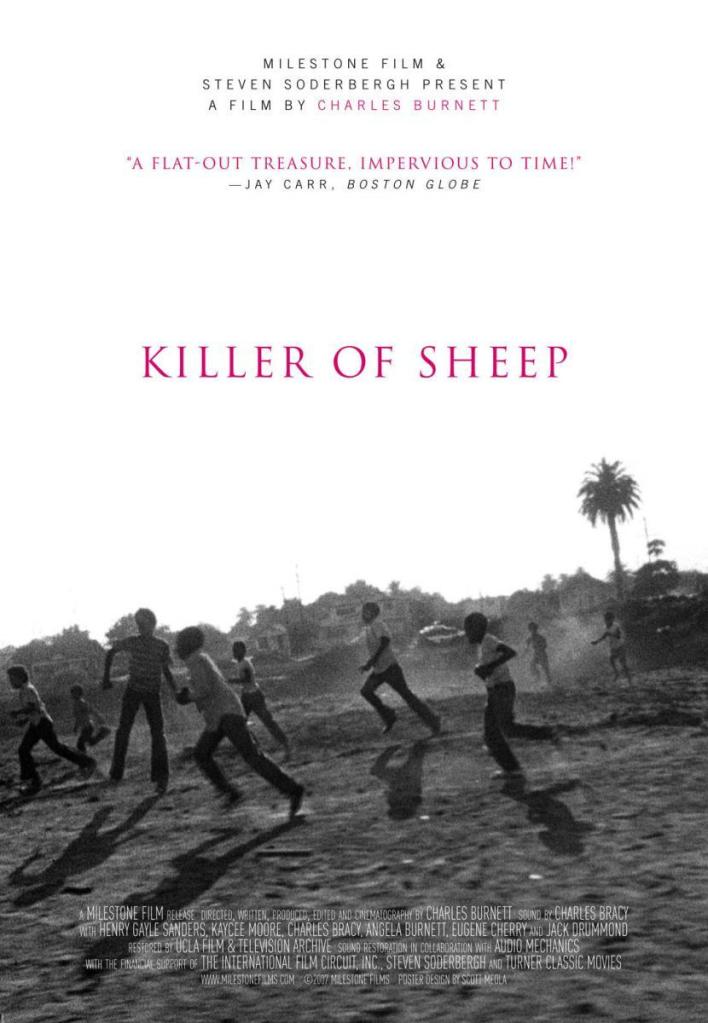
Both the poster and trailer are from the film’s 2007 release (the trailer even mentions the film’s NFR standing). More on that later.

The Plot: Stan (Henry G. Sanders) lives in Watts, Los Angeles with his wife (Kaycee Moore) and children, earning a living by working at a slaughterhouse. Stan’s work has made him disillusioned with life as he becomes more despondent and unhappy. And if you’re wondering what is the inciting incident that kicks of the real plot of this movie, I’ve got some bad news for you.

Why It Matters: The NFR calls the film “simultaneously naturalistic and poetic, witty and heartbreaking”, praising its “sympathetic yet clear-eyed portrait of a community”.

But Does It Really?: Full disclosure: My first attempt to watch “Killer of Sheep” ended 10 minutes into the movie when I realized I was not in the right mood to watch it. Cut to a week later and a full viewing of the film, and I still don’t think I was in the right mood. I’m glad there are people out there who love and champion “Killer of Sheep” (though the comparisons to neorealism make my eyes glaze over), and I’m glad the NFR had the foresight to induct it so early into their run, but it’s just not for me. Maybe it’s the lack of story, maybe it’s the overall bleakness, but even at 80 minutes “Killer of Sheep” was a slog to watch. Still, you got to hand it to Charles Burnett for devoting nearly a decade to get this movie made, as well as to everyone who has helped keep this film in the conversation of great movies. Of course “Killer of Sheep” is deserving of its NFR status, but one viewing is enough for me.

Shout Outs: Perhaps the most obscure NFR shout-outs on this list: One of the songs on the “Killer of Sheep” soundtrack is Paul Robeson’s cover of “The House I Live In”, the title number from the Frank Sinatra short of the same name.

Wow, That’s Dated: The main giveaway of the film’s ’70s setting is all the afros and jive talk. Other than that, a depressingly large amount of this movie doesn’t feel dated at all.

Seriously, Oscars?: Fun Fact: In order to be eligible for an Oscar, you need a theatrical run. We’ll get into the interesting theatrical history (or lack thereof) of “Killer of Sheep” in a second, but for now I’ll say that outside of a prize at the 1981 Berlin International Film Festival, “Sheep” didn’t pick up any awards until its 2007 “re” release.

Other notes 

  • Charles Burnett was part of the L.A. Rebellion, a group of Black UCLA film students in the late 1960s/early 1970s, fueled by political and social movements of the day, and irked by the popular wave of Blaxploitation films hitting theaters, to create more realistic films about their Black experience. “Killer of Sheep” was inspired by the people in Burnett’s life from growing up in Watts, and was Burnett’s thesis film to get his Master’s degree. “Sheep” was filmed on a budget of $10,000 on weekends across 1972 and 1973, with some additional scenes shot in 1975. A majority of the film was shot in and around Watts with a cast of non-actors (including Burnett’s daughter Angela as Stan’s daughter).
  • One of the films few professional actors, Henry G. Sanders was cast as Stan when Burnett’s first choice for the role didn’t make parole in time (!). Sanders does a good job of playing the character’s melancholia without making him too down or depressing. Since “Killer of Sheep”, Sanders has continued to grace our screens, working in film and plenty of episodic television.
  • Oh yeah, this is definitely one of those films you think about when you think of arthouse independent cinema: the black-and-white cinematography, the real-life locations, the less-than-stellar sound mix (there were scenes where I could hear a chair creaking better than I could the dialogue).
  • This is another NFR movie where I didn’t take a lot of notes. Unfortunately it’s not because I was so enthralled with the movie, it’s because nothing happens! Did I catch these people at a bad time? Should I come back later?
  • If nothing else, this film as a good soundtrack. Burnett wanted the film’s soundtrack to be “an aural history of African-American popular music”, which explains the presence of such greats as Scott Joplin, Paul Robeson, Louis Armstrong, and Earth, Wind & Fire. It helps break up the movie for me.
  • While researching this post, I re-read my write-up on “Bless Their Little Hearts“, a film by Burnett’s UCLA colleague Billy Woodberry and written by Burnett. Like “Sheep”, “Bless” also chronicles a working class Black man trying to raise a family and make ends meet in Watts. Both films have a slice of life “nothing happens” vibe to them, and yet something in “Bless” worked for me in a way “Sheep” didn’t. Maybe it’s the dramatic moments in the third act of “Bless” that have stayed with me. They at least gave me the sense that all of the previous scenes were building to something. The argument could be made that “Killer” also builds to something in the final moments, but I wasn’t entirely sold on that. It doesn’t help that the original song for that scene – Dinah Washington’s rendition of “Unforgettable” – was the only one that could not be cleared for the film’s eventual release, and replaced with Washington’s “This Bitter Earth” (played earlier in the film). Though seemingly inconsequential, this change of music alters how we perceive the final scene, ending on a slightly more optimistic note (if you will).

Legacy 

  • “Killer of Sheep” had its premiere in November 1978 at the Whitney Museum of American Art in Manhattan (appropriately enough, in Manhattan’s Meatpacking District). The film would play its share of festivals, but because Charles Burnett never planned to give his student film a theatrical release, he never paid the pricy licensing fees for the soundtrack, which became an issue years later. In the ensuing decades, “Killer of Sheep” would build up its reputation as an arthouse masterpiece (helped in part by its NFR induction) and play the occasional festival or museum exhibition. It was not until 2000, when the UCLA Film & Television Archive restored the film on 35mm, that talk of an official theatrical release began in earnest. Nearly six years was spent on maintaining the music rights to the soundtrack ($142,000 in total, paid in part with a generous donation from Steven Soderbergh) before “Killer of Sheep” finally got a proper theatrical release in spring 2007.
  • Charles Burnett’s next film was 1983’s “My Brother’s Wedding”, which had its own share of production woes and subsequent re-evaluations. His third movie, 1990’s “To Sleep with Anger”, found its way into the National Film Registry, as did the aforementioned “Bless Their Little Hearts”.
  • “Killer of Sheep” gets referenced from time to time, mainly in conjunction with other films by members of the L.A. Rebellion. A still frame from the scene of neighborhood kids jumping across rooftops was tinted red and used as the cover for the 2009 album “The Ecstatic” by Yasiin Bey (formerly Mos Def).

#656) Allures (1961)

#656) Allures (1961)

OR “1961: A Space Novelty”

Directed by Jordan Belson

Class of 2011

I normally don’t include warnings, but if you plan on watching “Allures”, the film contains a lot of flashing lights. I don’t consider myself to be photosensitive, but even for me it was a lot.

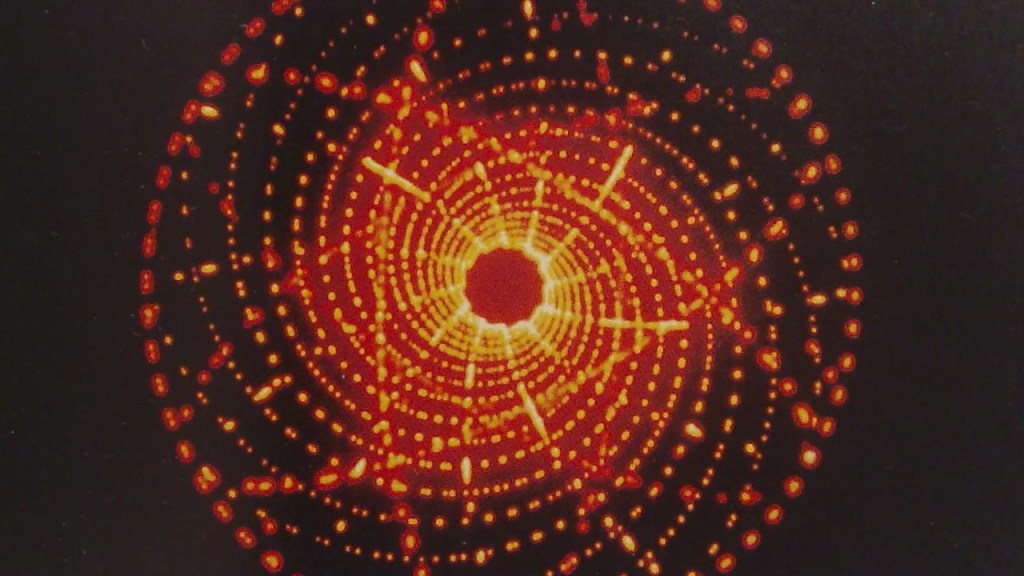
The Plot: There’s a couple of ways to look at “Allures”. On first viewing, I saw the film as a series of geometric patterns creating a cosmic experience when married to its electronic soundtrack. Filmmaker Jordan Belson described the film as “a combination of molecular structures and astronomical events mixed with subconscious and subjective phenomena – all happening simultaneously.” But of course, I prefer this quote from Belson which he used for his entire filmography: “It’s a glorious thing if you don’t expect an explanation.”

Why It Matters: The NFR gives a run-down on Jordan Belson, calling him “the master of ‘cosmic cinema'”. The write-up also includes another Belson quote about the film, which he called “probably the space-iest film that had been done until then.”

But Does It Really?: We have a lot of avant-garde filmmaking and abstract animation on the NFR, which makes it harder for a film like “Allures” to stand out among the crowd, which thankfully it does. I will say “Allures” is definitely ahead of its time, with this kind of space-age “trip” becoming common place in films made over a decade later, but totally revolutionary in 1961. “Allures” is very much what the kids would describe today as “no thoughts, just vibes”: Don’t overthink it, just let the sight and sounds wash over you. A pass for “Allures” as representation of abstract filmmaker Jordan Belson, and for giving me an excuse to not overanalyze another movie on this list and just enjoy it as intended.

Everybody Gets One: Jordan Belson was born in Chicago, but moved to California to study painting at UC Berkeley. While in the Bay Area, Belson was inspired to become a filmmaker by the San Francisco Museum of Modern Art’s “Art in Cinema” series (curated by fellow NFR filmmaker Frank Stauffacher). In the late ’50s, Belson began a collaboration with sound artist Henry Jacobs which became the Vortex Concerts; a series of light and sound shows projected inside the Morrison Planetarium at the California Academy of Sciences. “Allures”, as well as most of Belson’s subsequent filmography, is a direct continuation of his light show presentations: a series of images set to an electronic soundscape.

Title Track: “Allures” gets its name from “Etude aux allures”, a 1958 electronic music composition by Pierre Schaeffer that Belson had intended to use for one of his Vortex Concerts before the Morrison Planetarium abruptly ended the series in 1959. Although the name “Allures” remains, none of the Schaeffer soundtrack was used in the final film; the score is an original composition from Henry Jacobs.

Seriously, Oscars?: No Oscar nods for “Allures” or Jordan Belson. For the record: 1961’s Best Animated Short Oscar winner was the Yugoslavian film “Surogat” (aka “Ersatz”), which I learned today was used as inspiration for the “Worker and Parasite” segment on “The Simpsons”. It’s all connected!

We come to my favorite segment of the blog: instead of Other notes it’s time for Things I Thought I Saw During “Allures”.

  • A spirograph
  • A Magic Eye poster
  • The Warner Communications logo from the ’70s
  • The intro to “Family Affair”
  • Kirby?
  • Rover from “The Prisoner”
  • The seizure I’m about to have. Enough with the flashing lights!
  • Outtakes from “Off/On“.
  • Constellations (makes sense)
  • Fireworks
  • A plasma orb
  • My old Lite-Brite! Has my childhood Rosebud finally revealed itself?
  • A very bloodshot eye
  • More flashing lights! This is worse than “Pokémon”!
  • Glinda the Good Witch
  • The Janus Films logo. Oh wait, that’s the end of the movie.

Legacy 

  • Jordan Belson continued to create experimental shorts for the rest of his life, though his output diminished as he became more reclusive and began removing his films from circulation. Belson also provided special effects for the space-orbiting sequence in “The Right Stuff“, and his final film was 2005’s aptly named “Epilogue”. Jordan Belson died in September 2011 at age 85, with “Allures” making the National Film Registry three months later.

#655) Dixon-Wanamaker Expedition to Crow Agency (1908)

#655) Dixon-Wanamaker Expedition to Crow Agency (1908)

Directed by Joseph and Roland Dixon

Class of 2018

2025 UPDATE: The original version of this post was based on 3 ½ minutes of “Dixon-Wanamaker” I was able to find online. Another 45 minutes has recently resurfaced, and I’ve updated my thoughts on the film based on that. Thanks as always to Benjamin Wilson for finding this footage.

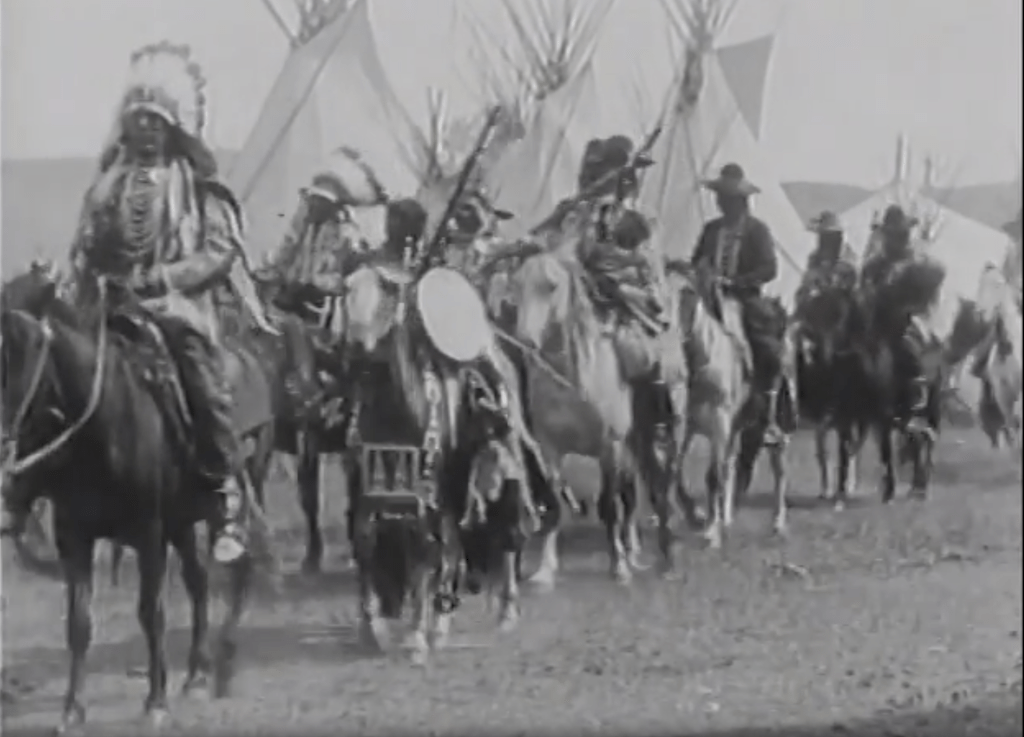
Around the turn-of-the-century, Indigenous tribes were considered a “vanishing race” by White America, and efforts were made to assimilate the tribes into quote-unquote American culture. Part of this effort was a series of expeditions led by pastor and self-ascribed Native American expert Joseph Dixon. Funded by department store magnate Rodman Wanamaker, the first Dixon-Wanamaker expedition in 1908 travelled to Crow Agency, Montana to meet with and document the Crow tribe. An avid photographer, Dixon and his son Roland took thousands of pictures (and of course film) of the tribe and their customs. Although Dixon’s intention was to present their lives “without any hint of the white man’s foot”, most of the results were staged for the camera and deemed by historians as “romanticized and commercialized”. This footage was projected at the Wanamaker’s flagship store in Philadelphia as part of an exhibition on Native Americans.

The available “Dixon-Wanamaker” footage is a seemingly random collection of shots, including various members of the Crow tribe and a handful of their customs. While there isn’t much to gauge about the Crow people in this footage, there is no doubt about this film’s historical significance. Of course the customs of any Indigenous tribe should be lived and practiced by their people rather than observed and studied by the likes of me, but the fact that any of this was documented and has survived is a mini-miracle and worthy of NFR induction.

Why It Matters: In keeping with the “historical significance” argument, the NFR’s write-up has no superlatives, only giving us an academic paragraph about the film’s production and preservation.

Other notes 

  • The additional 45 minutes I have seen are pretty much more of the same from the 3 ½ minute version, just longer. Why watch 10 seconds of a large caravan parading across the camera when you can watch 2 minutes?
  • To the best of my knowledge, most of this footage comes from one of the first Crow Fairs. Started in 1904 to celebrate the Crow people and their customs (which were in danger at the time of being wiped out completely), the Crow Fair is still an annual tradition, and the footage here includes many elements of the Fair that continue to this day, including a parade and a rodeo. Watching the Crow ride bucking broncos circa 1908 is interesting given that for some, this may in fact have been their first rodeo.
  • The notion that this film is from the Crow Fair would also explain the large group of White people appearing in these early shots. And I assume that’s Dixon trying to get onlookers to move out of the frame so the camera can get an unobstructed view.
  • Of course, any footage of the Crow in this era is good to have, but this all feels so staged. Other than the performative events of the Crow Fair, I’m not getting a sense of actual culture and traditions. I don’t walk away from this knowing anything about the Crow and their centuries long struggle to survive. Maybe the shoppers watching this at the Wanamaker’s display got more context, but then again maybe not.
  • Why are there nuns in this? So much for the whole “no White influence” credo. Why do Catholics have to spoil everything?
  • Towards the end we spend a lot of time at a memorial in the Crow reservation for members of the 7th Cavalry Regiment who died in the Battle of the Little Bighorn, aka Custer’s Last Stand. Much like the Crow people and their history, the Battle of Little Bighorn is too monumental to cover here (and I have no memory of how it’s portrayed in “Little Big Man”), but it is noteworthy as part of the Great Sioux War of 1876, the culmination of decades of fighting by the Crow to protect their land from the encroaching Sioux and Lakota tribes.

Legacy 

  • The first Dixon-Wanamaker expedition was successful enough to warrant two more. The 1909 expedition returned to Crow Agency, and a recreation of the Battle of the Little Bighorn was filmed with four Crow tribe members who were part of the original battle. The third and final expedition in 1913 was a nationwide journey to 89 different tribes dubbed an “expedition of citizenship” to support Native Americans becoming recognized as U.S. citizens (a status they would eventually receive in 1924). Despite the good intentions of Dixon and Wanamaker, the 1913 expedition was not well-received by every tribe, particularly those in the Southwest (Navajo, Hopi, Pueblo, etc.)
  • Although the film record of the 1908 expedition seemingly disappeared, the original nitrate was rediscovered in 1982 at a Montana antique store (and I hope some bartering was involved). The film was donated to the Smithsonian Institution’s Human Studies Film Archives, where it has been preserved. Additionally, Dixon’s extensive photography of the expedition has been archived at Indiana University.
  • Joseph Dixon continued to advocate for Indigenous people for the rest of his life, including his efforts to create a National American Indian Memorial, which started construction in 1913 and was never finished. Dixon died in 1926 at age 70, with Rodman Wanamaker passing away three years later at age 65.
  • Though all but forgotten now, Wanamaker’s department store was a major chain in the early 20th century. Although Wanamaker’s no longer exists, their original Philadelphia location was added to the National Register of Historical Places in 1976, and is currently a Macy’s. Fun Fact: Wanamaker’s Philadelphia store was the primary filming location for 1987’s “Mannequin”. Truly, nothing’s gonna stop us now.
  • Because I refuse to end this post with a “Mannequin” reference: the Crow people of Montana are still around and 12,000 strong. If you’re ever visiting Crow Agency in August, be sure to check out their annual Crow Fair!