
#709) Behind Every Good Man (1967)
OR “Ursin Major”
Directed by Nikolai Ursin
Class of 2022
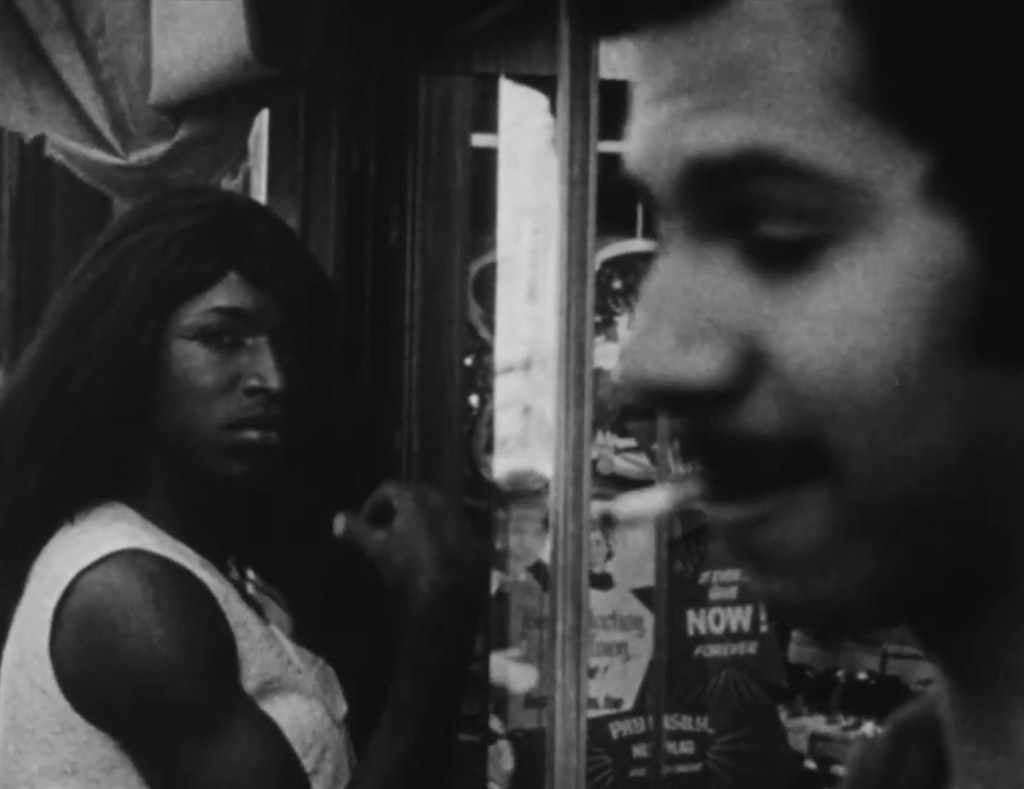
The Plot: This obscure treasure from the UCLA film archive follows an unidentified Black person who we would identify today as transgender, though this film isn’t concerned with labels. We follow our protagonist as she turns a few heads walking down the street, flirts with a man, and gets her apartment ready for a dinner date. Throughout the film, our protagonist narrates their hopes for future relationships, recounts a brief run in with an undercover police officer, and reminds us that behind every good man…there’s a woman.
Why It Matters: The NFR calls the short “stunning”, though skirts around the subject matter, merely stating the film is “pre-Stonewall” and is a portrait of “gender fluidity”.
But Does It Really: This is an interesting one. On the one hand “Behind Every Good Man” is a brief but poignant film shedding a positive light on a topic that was virtually unspoken of at the time. On the other hand, I get the sense that “Behind Every Good Man” was plucked from the obscurity of the UCLA archives for NFR inclusion, removed from its original context to represent a culture that it can only scratch the surface of. To make matters worse, there is little to no information about the film’s production (Nikolai Ursin passed away decades before the film’s NFR induction), so we have no real way of knowing what went into the making of this film or why this particular short has been deemed significant. “Behind Every Good Man” is an interesting time capsule, but I do wish it had delved a little deeper into its subject. I am all for more movies on the NFR about the transgender community, but “Behind Every Good Man” barely justifies its NFR inclusion, and the lack of surrounding context makes for an unfulfilling viewing experience.
Everybody Gets One: The infuriatingly scare information about the film extends to the filmmaker. We know that Nikolai Ursin was a film student at UCLA in the late ’60s and early ’70s. In addition to “Behind Every Good Man”, I found information on one other film Ursin made while at UCLA: 1970’s “Second Campaign”, co-directed by Norman Yonemoto, a documentary short about the People’s Park protest of 1969 in Berkeley. We have zero information about the transgender woman that this film focuses on. Not their name, not what their connection to Nikolai Ursin was, nothing. Whoever they are, I hope they lived (or continue to live) a good life.
Other notes
- Despite my disappointment in trying to do any research for this movie, I did enjoy “Behind Every Good Man”. Our protagonist is lively and candid, and the scenarios, while most likely staged, paint an engaging if fleeting portrait. I was steeling myself for the inevitable downturn when our hero gets harassed or abused, but thankfully that never came. The closest we get is a story about getting questioned by a police officer which ends anticlimactically, and the final shot of our hero accepting that her date is never showing up. I guess witnessing this woman’s heartbreak is all the pain we need to see them go through.
- One other thing I’ll say about this movie: it’s got a good soundtrack. As our hero walks down the street, we get the Dionne Warwick double-header “Reach Out for Me” and “Wishin’ and Hopin’ (the latter of which I’ve had stuck in my head ever sense). The scene in her apartment prominently features The Supremes’ cover of “I’ll Turn to Stone”. For the record, “Behind Every Good Man” is also available for viewing on UCLA’s Internet Archive page, just in case the YouTube upload blocks some of the songs for copyright reasons.
Legacy
- After completing his MFA in film production at UCLA, Nikolai Ursin seems to have taken a direct turn into the adult film industry. Throughout the ’70s and ’80s, Ursin (under the name Nick Elliot) was the cinematographer, camera operator, and occasional director of such titles as “Inch by Inch”, “Skin Deep”, and “Bi-Coastal”. Nikolai Ursin died in 1990 from AIDS-related lymphoma at the age of 48.
Further Viewing: We’re only one year away from “Tangerine” being eligible for the NFR. Sean Baker’s 2015 film still gets shout outs for its respectful, nuanced portrayal of transgender sex workers, and is that one movie you heard about that was filmed entirely on an iPhone 5S.
 The Horse's Head