
#743) The Buffalo Creek Flood: An Act of Man (1975)
Directed by Mimi Pickering
Class of 2005
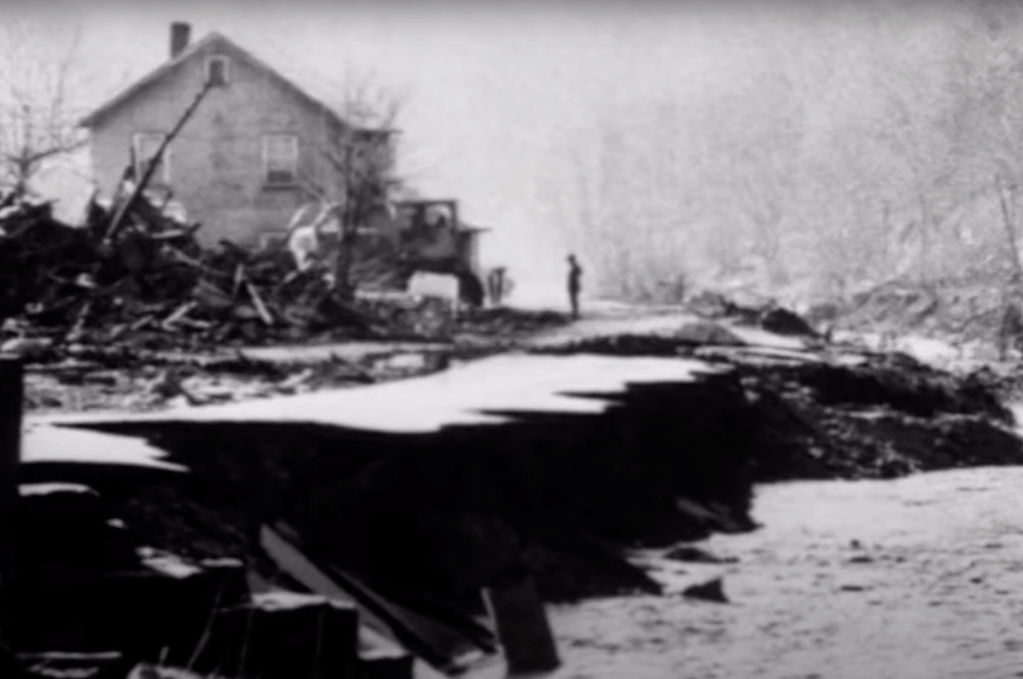
In the early morning of February 26th, 1972, one of three coal slurry dams overlooking the Buffalo Creek tributary in Logan County, West Virginia burst following heavy rainfall. The burst overwhelmed the structure of the other two dams, and the resulting flood unleashed 132 million gallons of contaminated water onto 16 different coal towns in Logan County. In the end, the flood caused 50 million dollars in property damage (over 375 million dollars today) and claimed the lives of 125 citizens. The Pittston Coal Company, owners of the dams, had found the dam to be “satisfactory” in a safety inspection four days before the flood, and claimed no responsibility for the flood’s destruction, calling the event “an act of God”. While a government sanctioned investigation yielded no definitive action, a citizen committee found Pittston to be responsible for the flood, and subsequent lawsuits were settled by Pittston out of court. “The Buffalo Creek Flood” chronicles the surviving citizens in their quest for any sort of resolution, featuring candid interviews with many locals and political non-answers from government officials. Lundale resident Shirley Marcum echoes the sentiment of many survivors when she declares “I don’t believe [the flood] was an act of God. It was an act of man.”
Admittedly I knew nothing about the Buffalo Creek flood before this viewing, and “The Buffalo Creek Flood: An Act of Man” does what many a great film on the NFR does; it shines a light on a subculture in this country that is often overlooked and undervalued. While it’s easy to portray Appalachians as their worst stereotypes (looking at you, “Deliverance”), “Buffalo Creek Flood” shows us this culture’s humanity during one of the region’s most harrowing tragedies. As I watched “Buffalo Creek Flood”, I felt the devastation that these citizens carried with them in the immediate aftermath of the flood, and found myself frustrated with the government’s lack of response and cooperation. “Buffalo Creek Flood” is a touching report of time and place, and you’ll get no argument from me about its inclusion in the NFR.
Why It Matters: The NFR states that the film “represents the finest in regional filmmaking”. An essay by the film’s director, Mimi Pickering, is a recount of her experience making the movie and a plea for safer coal mining practices to avoid another incident like the Buffalo Creek flood.
Everybody Gets One: A graduate of Antioch College, Mimi Pickering joined the Appalachian Film Workshop (now known as Appalshop) in 1971 as a filmmaker. Shortly after the Buffalo Creek flood, Pickering was approached by the Citizen’s Commission To Investigate The Buffalo Creek Disaster to film their hearings. Pickering and her team spent weeks filming these events (as well as the ongoing damage of the flood) using whatever film or video they had at their disposal, and with no budget or funding, only receiving a grant from the Abelard Foundation after filming had wrapped.
Seriously, Oscars?: No nominations for “Buffalo Creek Flood” from the Oscars or any other awards organizations. The 1975 winner for Best Documentary Short Subject was Robin Lehman’s “The End of the Game”, a film about conserving the African savanna and its wildlife.
Other notes
- Because I was primarily focused on getting the facts straight about the flood while watching this film, I don’t have that many other observations, but I did want to highlight one particularly memorable moment. The most moving part of the film for me was one eyewitness to the flood (who unless I missed something goes uncredited) tearing up as he recounts his story of that morning. He personifies the survivor’s guilt felt by many in the community with his closing remark, “I’m sorry that God let me live to see it.”
Legacy
- As of this writing, Mimi Pickering is still with Appalshop, currently listed as the Project Director of their Community Media Initiative. Pickering’s most recent film is 2012’s “Anne Braden: Southern Patriot”, which she co-directed with her longtime collaborator Anne Lewis.
- Mimi Pickering revisited Buffalo Creek in 1985’s “Buffalo Creek Revisited”, which shows the growth and healing of the towns effected by the flood and the rebuilding of their communities 10 years later.
- Appalshop continues to produce films, theater, radio, and other media that paint a positive picture of Appalachian culture. Check them out.
- After decades of decline, the Pittston Coal Company sold its coal mines and changed its name to match its more successful subsidiary: Brink’s. To this day, they have not taken any responsibility for the Buffalo Creek flood.
- Buffalo Creek still exists in Logan County, and within the last few years has seen fish and other aquatic life start to inhabit the water for the first time since 1972. The Buffalo Creek flood still looms large in the towns effected by it, with several holding special gatherings to commemorate the 50th anniversary in 2022.
 The Horse's Head
3 thoughts on “#743) The Buffalo Creek Flood: An Act of Man (1975)”