#388) Planet of the Apes (1968)

MV5BMTg0NjUwMzg5NF5BMl5BanBnXkFtZTgwNDQ0NjcwMTE@._V1_.jpg

#388) Planet of the Apes (1968)

OR “Monkey See, Monkey Doomed”

Directed by Franklin J. Schaffner

Written by Michael Wilson and Rod Serling. Based on the novel “La Planète des singes” by Pierre Boulle.

Class of 2001

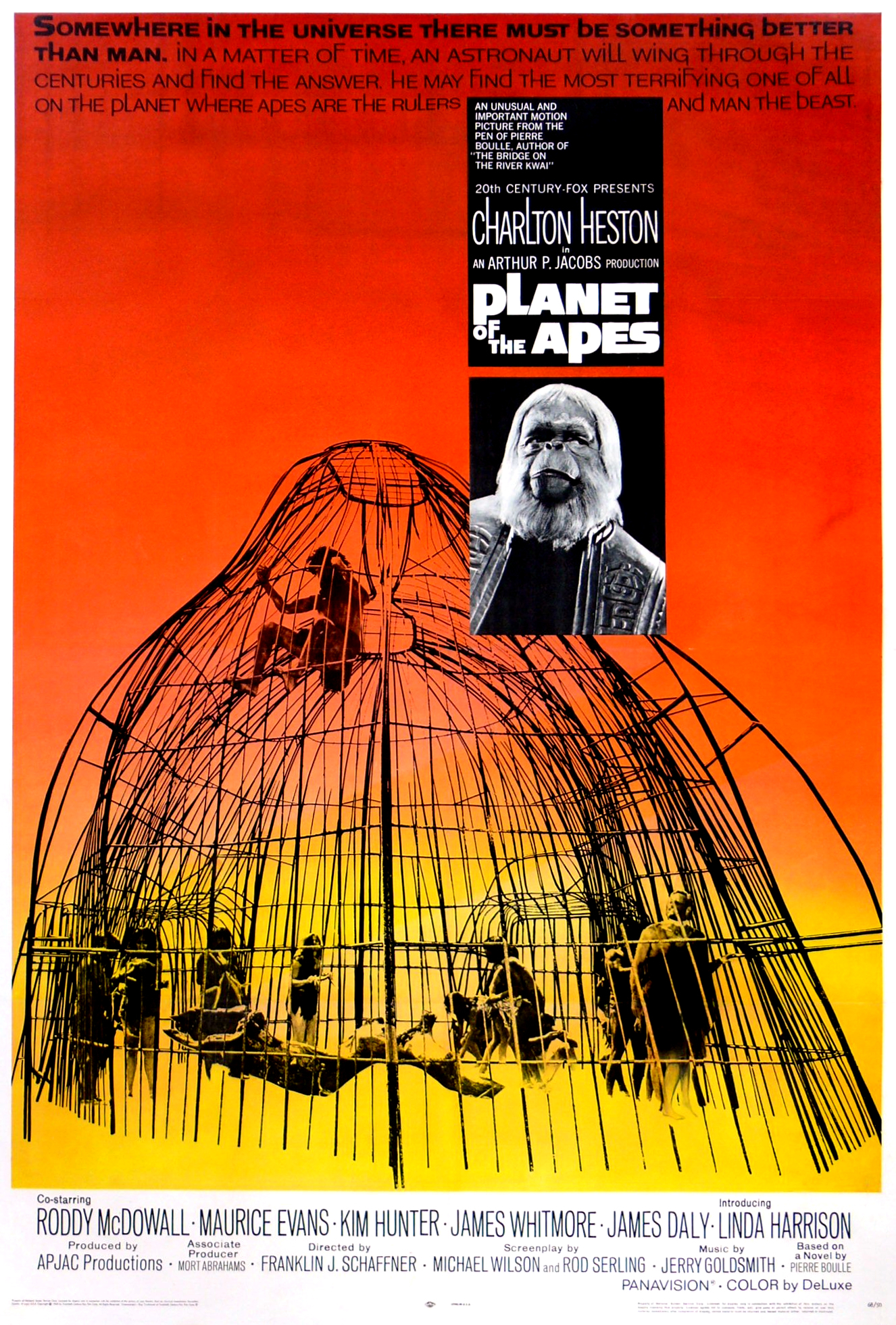
The Plot: Astronaut Taylor (Charlton Heston) and his team crash land on a strange planet over 2000 years after their departure from Earth. After discovering a group of primitive humans, they quickly learn the planet is run by highly evolved apes who have formed their own civilized society. Animal psychologist Dr. Zira (Kim Hunter) and her archeologist fiancé Cornelius (Roddy McDowall) try to prove that Taylor is the missing link proving apes evolved from humans, but science/religious leader Dr. Zaius (Maurice Evans) immediately dismisses the notion. Come for the entertaining examination of basic human rights, stay for the twist.

Why It Matters: The NFR gives no superlatives, just a plot synopsis, a talent roster, and a rundown of the film’s many spin-offs. The essay by author John Wills is also pretty bland. God damn you all to hell!

But Does It Really?: “Planet of the Apes” is one of the best science-fiction movies ever made. Like any great science fiction, its premise is simple enough and executed without getting too preachy or technical. As a film, “Apes” truly stands on its own unique piece of ground, with a ripple effect on pop-culture that can still be palpably felt 50 years later. No argument here for NFR inclusion.

Everybody Gets One: Producer Arthur P. Jacobs secured the film rights to the “Apes” novel before it was even published, and was able to use his good working relationship with Fox VP Richard D. Zanuck to get the film made (Jacobs was also producing “Doctor Dolittle” for Fox at the time). Sadly, Jacobs died of a sudden heart attack in June 1973, less than two weeks after the release of the fifth “Apes” film.

Seriously, Oscars?: One of the most successful films of 1968, “Planet of the Apes” entered the 1969 Oscars with two nominations. Jerry Goldsmith’s score lost to “The Lion in Winter” and Morton Haack’s costume designs to “Romeo and Juliet”, but John Chambers received an honorary award for his creative makeup design (which wouldn’t have its own Oscar category until 1981).

Other notes

  • Original “Apes” author Pierre Boulle also wrote “The Bridge on the River Kwai”, another novel that end with maniacs blowing it all up.
  • The filmmakers rejected “Twilight Zone” creator Rod Serling’s drafts of the screenplay (too expensive), but did retain his twist ending for the final film. Former blacklisted writer Michael Wilson was brought in for rewrites based on Franklin J. Schaffner’s suggestion that the apes’ society be more primitive. A third uncredited (and apparently forgotten) writer did a polish and added several of the movie’s really stupid monkey jokes (“Human see, human do”). You leave those to me, dammit!
  • Just a reminder that John Chambers was involved in the 1979 covert rescue mission that saved six Americans during the Iran hostage crisis, as seen in the movie “Argo”.
  • Some roles fit their actors like a glove, as Taylor does for Charlton Heston. He plays jaded natural leaders so well. Plus he has experience leading a group through an uncharted desert!
  • Shoutout to Jerry Goldsmith, who provides an atonal soundtrack that adds to the disorienting, unfamiliar sense of danger that Taylor et al are experiencing on the planet.
  • The Hays Code is dead! Rear nudity for days!
  • So in the future, apes have evolved into the dominant species, humans are now treated as wild animals, and horses…are still horses. Kind of a raw deal for them, huh?
  • It’s amazing that the likes of Maurice Evans, Roddy McDowall, and Kim Hunter all elevated their film careers by putting on ape suits. All three lend credible gravitas and believability to this crazy concept.
  • Apparently Nova is the Smurfette of the humans. Yeesh. Fox contract player Linda Harrison won the role when the likes of Raquel Welch and Ursula Andress turned it down.
  • “How can scientific truth be heresy?” Crap, this movie may be more prescient than ever.
  • “Take your stinking paws off me, you damn dirty ape!” I believe you mean, “Please take your stinking paws off me, you damn dirty ape”?
  • The scene of the gorillas hosing down Taylor (“It’s a madhouse!”) is the closest this film gets to paralleling the struggles of minorities during the Civil Rights movement of the ‘60s. The apes’ treatment of the humans isn’t too different from how we treated our fellow citizens in this era.
  • The “See No Evil, Hear No Evil, Speak No Evil” gag was improvised on the set during filming. Side note: The saying originated in China and was popularized by the Japanese, who famously characterized the phrase using three monkeys. The Japanese word for monkey, “saru”, is similar to the negative suffix “zaru”, as used in their translation of the phrase. It’s a play on words!
  • Of course Heston wants to bring a gun to the Forbidden Zone!
  • Like many of the greats, the surprise ending was spoiled for me long before I ever saw the movie. During this viewing, however, I found myself unexpectedly stunned by the final shot. Turns out this film was a cautionary tale all along.

Legacy

  • “Planet of the Apes” was a major hit for Fox, who immediately started cranking out the sequels. “Beneath the…” was an immediate follow-up to the original, while the rest chronicled Cornelius’ son Caesar (Roddy McDowall again!).
  • Other immediate follow-ups included TWO TV series! The 1974 show aired on CBS for three months and featured Roddy McDowall as a third character! The 1975 animated series was finally able to showcase the more technologically advanced apes of the original novel.
  • “Planet of the Apes” got a “reimagining” from Tim Burton in 2001, the same year the original film was inducted into the NFR. Both Charlton Heston and Linda Harrison make cameos. Didn’t help.
  • A reboot trilogy started in 2011 gives Andy Serkis another chance to run around pretending to be a mo-cap monkey, and confirms my long-standing theory that the end of human civilization is James Franco’s fault.
  • The original “Planet of the Apes” has been spoofed so many times over the years, primarily its finale, which was exquisitely put to music thanks to Phil Hartman and “The Simpsons”.
  • As for the “Apes” future as a Disney property, they say a fourth Serkis movie is in development, but I don’t like how Disney has been quietly sweeping their new acquisitions under the rug. How about a themed land at Animal Kingdom instead?

Further Viewing: To convince Fox to green light the movie, a $5,000 makeup test was shot featuring Charlton Heston as Thomas (Taylor’s name in the Serling drafts) and Edward G. Robinson as Zaius. Robinson would eventually back out of the film due to health issues and his dislike for the ape prosthetics.

Further Further Viewing: Roddy McDowall filmed some home movies during “Apes” production, chronicling the makeup application process, as well as a behind-the-scenes look at the Forbidden Zone.
#387) Sherman’s March (1986)

NNVG1698

#387) Sherman’s March (1986)

OR “Southern Comfort”

Directed and Written by Ross McElwee

Class of 2000

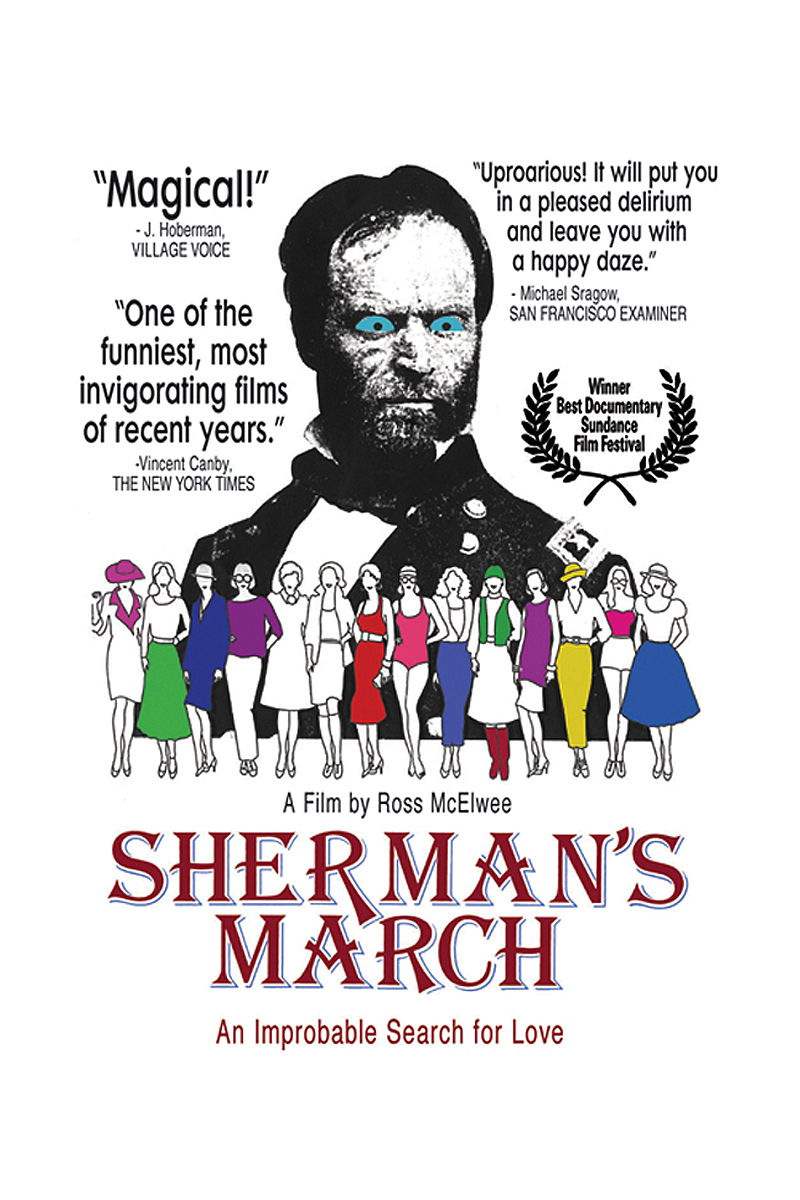
The Plot: Filmmaker Ross McElwee sets out to follow the route of General Sherman’s historic March to the Sea over 115 years later to see its continued impact on Georgia and South Carolina. Shortly before filming, however, Ross’ girlfriend breaks up with him, and Ross finds himself in a despondent, reflective mood. Ross’ sister Dede suggests that he use his camera as a way to meet women, prompting a complete restructure of his movie. Over several months, Ross falls into a pattern of connecting with women, falling in love with them, realizing that love is unreciprocated, and returning to his Sherman’s March movie. That’s all well and good, but 2 ½ hours of this?

Why It Matters: The NFR gives a brief synopsis and a bio on McElwee.

But Does It Really?: Perhaps it’s my disconnect with the time period and/or southern culture, but I could not engage with “Sherman’s March”. It’s obviously a very personal film and tows the line between fact and fiction quite effectively, but ultimately this movie cannot justify why McElwee’s love life is worth 2 ½ hours of my time. I can give “Sherman’s March” a slight NFR pass on my “Everybody Gets One” mandate, but I still question how this movie was deemed worthy of recognition in the same class as “Apocalypse Now” and “Goodfellas”.

Shout Outs: At one point Ross and Pat discuss the Christopher Reeve “Superman” movies, citing how bizarre it is that something from their childhood is getting a reboot. Yes, how odd…

Everybody Gets One: Ross McElwee studied filmmaking at MIT under documentary filmmakers Ed Pincus and Richard Leacock (whose work with D.A. Pennebaker appears elsewhere in the NFR). It was at MIT that McElwee perfected his first-person approach to documentaries, filming his subjects spontaneously and with no additional crew. All of McElwee’s films contain autobiographical elements, primarily his family and roots in North Carolina.

Wow, That’s Dated: As per the film’s subtitle, this movie takes place in “the Era of Nuclear Weapons Proliferation” and McElwee’s fear of an impending nuclear holocaust is a recurring theme throughout the movie.

Seriously, Oscars?: No Best Documentary nod for “Sherman’s March”, but it did win the Grand Jury prize for documentary at the 1987 Sundance Film Festival. Side note: The 1986 Best Documentary category did not suffer from lack of competition, resulting in only the fourth ever tie in Oscar history, shared between Brigitte Berman’s “Artie Shaw: Time is All You’ve Got” and Lee Grant’s “Down and Out in America”.

Other notes

  • “Sherman’s March” was funded by a grant from the National Endowment for the Arts. I’ve never felt the urge to slap an independent federal agency before…
  • Part of my detachment from this movie is that I’ve never been a Civil War buff, so Ross’ musings about the complexity of General Sherman and his effect on Southern culture completely escaped me. Then again, I didn’t grow up in the south, so this history didn’t permeate my formative years the way it did for McElwee. If this movie were about the Junipero Serra trail, however, that’d be a whole other story.
  • I don’t understand why any of these women would talk to a man who constantly has a camera pointed at them. The exception being aspiring actress Patricia Rendleman, who during her time with Ross gets an audition for a Burt Reynolds movie.
  • Shoutout to “The Secret Life of Plants”, the bizarre ‘70s documentary with a Stevie Wonder soundtrack. I love that weird little movie!
  • Another point against this film: I’m getting a genre-blurring “David Holzman’s Diary” vibe from it. Nothing about the rest of this movie shakes off that feeling.
  • Ross looks like a young John Landis. Maybe that was a requirement for all ‘80s filmmakers? And is there a rule that he must be 30 feet away from the camera at all times?
  • Ross’ nuclear paranoia is supported by Bill and Herb, two survivalists building a fallout shelter up in the mountains, complete with…tennis court? “Dr. Strangelove” this is not.
  • “Slavery should not be enforced, it should be a right. If you want to be a slave, be a slave.” Ohhhhhhh boy.
  • We spend an extended amount of time with Wini and Michael on Ossabow island, but the only parts I can remember off-hand are the Spielbergian mirror shot, and the scene where Ross is stung by a bee.
  • And then we get to the real star of the movie: Charleen Swansea, Ross’ friend and former poetry teacher. She plays matchmaker for Ross and is definitely camera-ready. Swansea appeared in several of Ross’ films, including as the subject of Ross’ 1977 doc “Charleen”.
  • I think my main problem with this movie is Ross simultaneously trying to be an outside observer and the movie’s central figure. As he puts it “It seems I’m filming my life in order to have a life to film.” Either you’re the Michael Moore of your documentary or the D.A. Pennebaker, but not both.
  • It occurred to me that very few of my notes are about the actual women, even though Ross documents at least 10 of them throughout the movie. That says a lot about this film’s almost-mechanic repetition of Ross’ love life.
  • I can’t confirm which Burt Reynolds movie was filming in North Carolina circa 1981, but I’m pretty confident it was “Stroker Ace”, the 1983 box-office bomb that Reynolds later said is “where he lost [his fans]”.

Legacy

  • For the record, Ross McElwee did eventually get married to Marilyn Levine, who co-directed and co-wrote 1991’s “Something to Do with the Wall” with Ross, and appears in several of his subsequent films.
  • Ross now teaches filmmaking at Harvard, and still makes semi-autobiographical documentaries, most recently 2011’s “Photographic Memory”, in which Ross attempts to understand his son Adrian, as well as filmmaking’s new digital landscape.

#386) Woman of the Year (1942)

MV5BOWZiNGI3MGUtM2RhZC00MzgxLWE0NDAtMGFmMzA1YWMxZDNhXkEyXkFqcGdeQXVyNjc0MzMzNjA@._V1_

#386) Woman of the Year (1942)

OR “When Tracy Met Hepburn…”

Directed by George Stevens

Written by Ring Lardner Jr. and Michael Kanin

Class of 1999

The Plot: New York Chronicle columnist Tess Harding (Katharine Hepburn) gets into a public feud with sports writer Sam Craig (Spencer Tracy) when she endorses abolishing baseball. When the two finally meet in person, the sparks fly immediately. Their whirlwind romance leads to marriage, but their differences in personalities and cultures begin to clash. Can this sophisticated independent woman make it work with this down-to-earth “man’s man”? It’s Tracy and Hepburn, of course they can!

Why It Matters: The NFR praises the “crackling dialog and strong performances”, as well as director George Stevens and the “natural chemistry” of Hepburn and Tracy.

But Does It Really?: Sorry movie lovers, I couldn’t get into “Woman of the Year”. As the first of the Tracy-Hepburn movies, it earns a spot on the NFR, but overall this film was a slog to get through. The chemistry between the two leads is palpable and endearing given their real-life romance, but those moments are few and far between in a comedy with too many topical jokes and glacially slow pacing. If you’re going to have one Tracy-Hepburn comedy on the list, “Adam’s Rib” is the correct choice, with “Woman of the Year” a distant second.

Wow, That’s Dated: This movie is filled with two things I’ve come to expect from any studio film of the early ‘40s: The war as an ongoing undercurrent, and discussions about the two sexes that, while frank and funny at the time, seems quite antiquated today.

Seriously, Oscars?: A hit for MGM, “Woman of the Year” received two Oscar nominations. Katharine Hepburn lost Best Actress to Greer Garson for that year’s Best Picture juggernaut “Mrs. Miniver”, but writers Lardner and Kanin prevailed when they took home the Oscar for Original Screenplay.

Other notes

  • “Woman of the Year” was written as a vehicle for Katharine Hepburn, who also got to choose her director and co-star. Hepburn wanted to work with Spencer Tracy in “The Philadelphia Story”, but the scheduling didn’t work out. Hepburn selected George Stevens as director so that Tracy would be comfortable with someone “who could talk about baseball”.
  • The story bears repeating of the historic first meeting between Hepburn and Tracy. Hepburn was wearing high heels and said, “I’m afraid I’m a bit tall for you, Mr. Tracy”. Producer Joseph L. Mankiewicz replied, “Don’t worry Kate, he’ll cut you down to size.”
  • This movie begins with two forms of exposition that have gone extinct: Newspaper headlines and impeccably timed radio broadcasts.
  • I’d be a lot more impressed with this movie if Sam was willing to make up with an opinionated woman who didn’t look as glamorous as Katharine Hepburn. Let’s see Spencer Tracy be this playful with Marie Dressler or Una O’Connor.
  • Oh good, a scene where Sam mansplains baseball to Tess. Side note: who knew the A’s were originally from Philadelphia?
  • A departure from his usual macho persona, it’s fun to watch Spencer Tracy be awkward and out of his element, especially in the party scene.
  • Like many a real life couple on screen, you can feel the chemistry between Tracy and Hepburn from the start. They feel so instantly comfortable with each other, and are willing to be vulnerable in front of the other one. You really feel like you’re witnessing the beginnings of something special.
  • Where’s Sam’s family during all of this? We meet Tess’ family (Minor Watson and an underutilized Fay Bainter), but Sam’s oft-mentioned mother is nowhere to be seen. It’s the ‘40s, I thought you people loved mother-in-law jokes.
  • And then there’s the plotline involving Dr. Lubbek, a concentration camp escapee hiding in Tess’ apartment. Was that actually comic fodder back then? I’m compelled to wave the “too soon” flag at this movie.
  • My main problem with “Woman of the Year” is that the further along we go, the less screentime Tracy and Hepburn actually share together. Individually they’re both fine, but that’s not why we’re here.
  • This movie had an alternate ending! Sam and Tess still learn the same lesson as in the final film, but it involved Tess covering a boxing match and Sam trying to learn French and Spanish. This ending went over poorly with test audiences, and the new one with Tess trying to cook was filmed. Neither Hepburn nor the screenwriters were pleased with this new ending.
  • I’m going to give a shoutout to someone not involved with the movie: Louise Treadwell, wife of Spencer Tracy. Tracy and Hepburn moved in together shortly after “Woman of the Year” wrapped, but as a devout catholic Tracy refused to divorce his wife, and the two remained estranged for the rest of their marriage. Louise devoted her life to her nonprofit, the John Tracy Clinic (named after their son John, who was born deaf), which specializes in the oralist method of deaf communication. Treadwell never asked for a divorce, knowing that being Mrs. Spencer Tracy would help raise awareness to the clinic. The Tracy-Hepburn movies are a testament to Spencer and Katharine, but never forget the woman whose marriage this all came at the expense of.

Legacy

  • The film’s main legacy is of course the start of one of Hollywood’s most famous romantic relationships. Spencer Tracy and Katharine Hepburn started their relationship during filming of “Woman of the Year”, and stayed together for 25 years and eight more movies, culminating with 1967’s “Guess Who’s Coming to Dinner” and Tracy’s death shortly after production wrapped.
  • “Woman of the Year” was remade for television in 1976 as a vehicle for real-life couple Renée Taylor and Joseph Bologna. And that’s pretty much the only information out there about it.
  • In the same season “42nd Street” made it to Broadway, “Woman of the Year” also got the musical treatment. Kander & Ebb composed some lovely songs, but why Lauren Bacall? Why not someone who could, ya know, sing?

#385) From the Manger to the Cross (1912)

poster-780

#385) From the Manger to the Cross (1912)

OR “Savior the Moment”

Directed by Sidney Olcott

Written by Gene Gauntier. Based on the New Testament.

Class of 1998

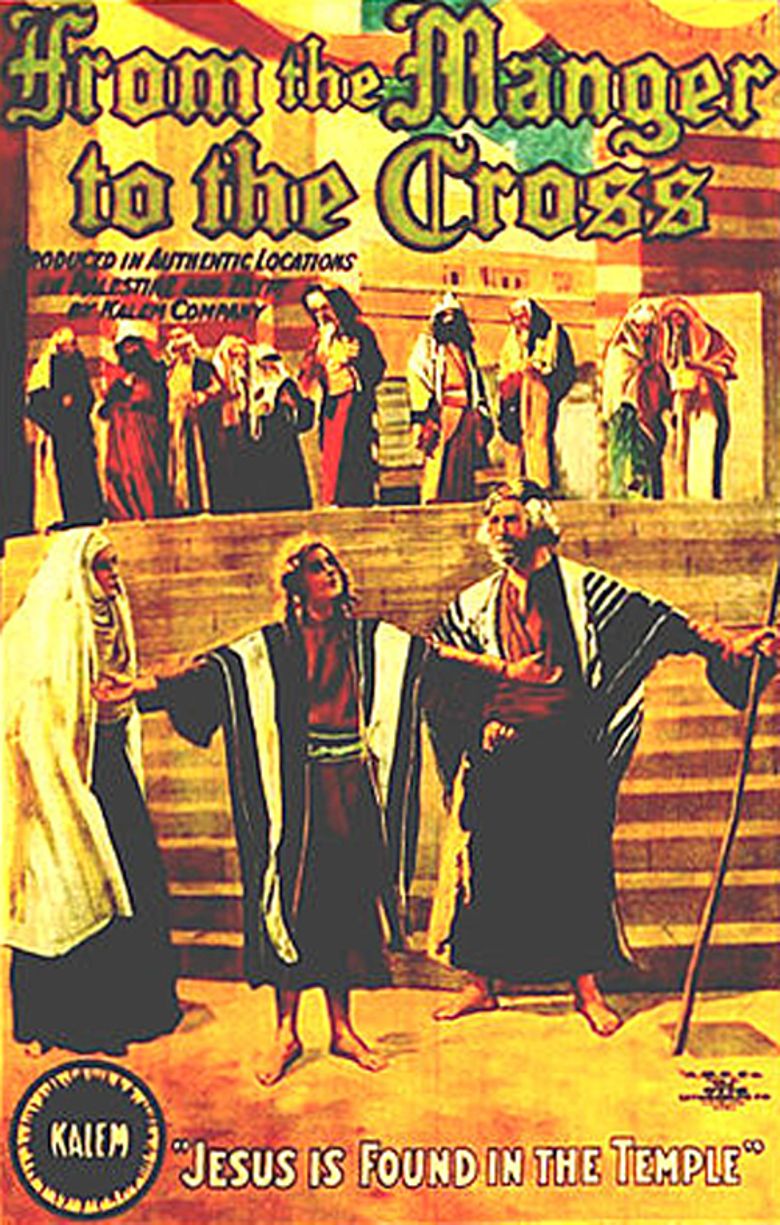
The Plot: As you’d expect from the title, “From the Manger to the Cross” is the life and times of Jesus Christ: Son of God, King of the Jews, Light of the World, Ol’ Blue Eyes. Divided into 10 parts, the film chronicles Jesus’ virgin birth, his penchant for miracles, his ever-growing group of followers, and his ultimate betrayal and crucifixion. All this, plus actual on-location footage from the Holy Land!

Why It Matters: The NFR gives a brief rundown of how novel this film was by 1912 standards, from its on-location shooting to its “innovate camera angles” and extended runtime (70 minutes!). The accompanying essay by author Daniel Eagan corroborates these claims.

But Does It Really?: I can give “Manger” a slight pass for its then-groundbreaking artistic achievements, as well as for its representation of the short-lived film studio Kalem Company. The movie itself is quick and not likely to offend even the most devout followers, and I assume the book is better. Overall, “Manger” is preservation-worthy, but not on the top of anyone’s list.

Everybody Gets One: Kalem Company was founded in 1907 by former Biograph Studio managers Frank Marion and Samuel Long. The duo successfully lured away two of Biograph’s biggest stars, Sidney Olcott and Gene Gauntier. In addition to acting, Gauntier wrote screenplays for the company, while Olcott directed several shorts and features, eventually becoming president of the company. Both Olcott and Gauntier spoke fondly of the creative freedom they were given with Kalem.

Other notes

  • Coincidentally, I watched this movie on a Sunday.
  • “Manger” was noteworthy for its on-location production in Egypt and Palestine. Many Kalem productions were already shooting in Egypt, and Gene Gauntier was inspired by the locations to start writing a film about the life of Jesus.
  • Sidney Olcott makes his director cameo as a Blind Man, while screenwriter Gene Gauntier cast herself as no less than the Virgin Mary. It was during production in Palestine that Gauntier married her husband, actor Jack J. Clark, seen in the film as John the Apostle.
  • Almost every intertitle is lifted directly from a Bible passage. You gotta love a movie that cites its sources. And while we’re on the subject, after 2000 years, is it still really a new testament?
  • How did they divvy up who wrote what section of the New Testament? Did Luke have the best spin on the Nativity?
  • This may be the oldest movie on my “Die Hard” Not-Christmas list.
  • Herod the Great wants Jesus killed, so Mary and Joseph take him to Egypt? Aren’t they big on killing firstborns over there too?
  • Points for this movie’s spectacle. Those are the actual pyramids and sphinx.
  • Boy, Jesus moved around a lot as a kid. It’s impressive he still managed to have so many friends.
  • The story goes that Robert Henderson-Bland won the plum role of Jesus because Sidney Olcott was impressed with how he sounded on the phone. Interesting tactic for casting a silent movie, but go on…
  • Jesus heals a young Rasputin! No wonder it took so long for him to die.
  • Wait a minute, Jesus only turned water into wine to impress people at a wedding reception? That’s not a miracle, that’s just efficient catering.
  • Did Jesus always have a follow spot on him? Whose job was that?
  • We have a “walking on water” shot! It’s an impressive bit of silent movie trickery, and one of the film’s few optical shots.
  • The last third of this movie focuses on the last days of Christ, so basically “Jesus Christ Superstar” without the songs.
  • Wow, Jesus is kicking ass! I didn’t realize he used a whip in the Cleansing of the Temple.
  • In a surprise twist to the story, Judas turns out to be a real Judas.
  • One of the priests that Judas bargains with looks a lot like Santa Claus. I feel he has an ulterior motive to get rid of Jesus…
  • Hey, the Last Supper doesn’t look like the painting at all! There are people on both sides of the table! Blasphemy!
  • I’m a bit confused as to the random italicized words in the intertitles. At first I thought it was just in reference to Christ (“Crucify him”), but it seems more random than that.
  • Fun effects with the earthquake after the crucifixion. I didn’t realize Jerusalem was on a fault line.
  • Interesting that this movie doesn’t chronicle the Resurrection. Sequel?

Legacy

  • “Manger” was a runaway hit for Kalem Company, but Sidney Olcott departed from the studio shortly afterwards when they refused to give him a raise. Gene Gauntier followed suit later to form her own studio, and Kalem suffered financially. Kalem Company was sold to Vitagraph Studios in 1917, which in turn was bought by Warner Bros. in 1925.
  • There have, of course, been several retellings of the life of Christ over the years; told by everyone from Mel Gibson to Mel Brooks.

#384) Motion Painting No. 1 (1947)

image-w1280

#384) Motion Painting No. 1 (1947)

OR “Paint It Bach”

Directed by Oskar Fischinger

Class of 1997

Here’s an odd one: Finding “Motion Painting No. 1” online is nearly impossible. In fact, I couldn’t find a single clip of this movie that could I embed here. So instead, the video below is “An Optical Poem”, one of Oskar Fischinger’s earlier works. Enjoy?

The Plot: Oskar Fischinger shows off his love of oil painting on acrylic glass and creates a series of abstract compositions, all set to Bach’s “Brandenburg Concerto no. 3, BMW 1048”.

Why It Matters: The NFR gives a brief synopsis, and cites Oskar Fischinger’s influence on later filmmakers.

But Does It Really?: I can give “Motion Painting No. 1” a pass based on my previous criteria of accepting short movies that are the sole representation of an artist. You win this round, German artist I’ve never heard of.

Everybody Gets One: An experimental filmmaker/special effects guru in his native Germany, Oskar Fischinger accepted a job offer from Hollywood as a means to escape the Nazis and their constrictions on “degenerate art”. Fischinger was most interested in combining animation with classical music, and even contributed to the “Toccata and Fuge” section of “Fantasia”. Finding his experiences in Hollywood artistically unfulfilling, Fischinger turned to oil paintings. In the mid ‘40s the Guggenheim Foundation commissioned Fischinger to create an animated short, and Oskar opted to film his oil painting process; shooting a frame of film after each brush stroke, and synching the entire process to a piece of Bach he had long wanted to incorporate into a film.

Seriously, Oscars?: No Oscar nomination for “Motion Painting”. The Animated Short winner for 1947 was “Tweetie Pie”, the first of the Merrie Melodies to pair up Sylvester and Tweety. Clearly, the animation branch at the time was looking for something a little different than what Fischinger had to offer.

As always, it’s pointless for me to try to decipher an experimental film, so we’ll move on to my alternate notes section, “Things I Thought I Saw in ‘Motion Painting No. 1’

  • Confetti and streamers
  • Snake eyes (the physical eyes, not the dice)
  • Spirals, lots of spirals. This movie is 90% spirals.
  • A circle in a spiral
  • A wheel within a wheel
  • The windmills of my mind
  • A Hidden Mickey
  • A T-bone steak
  • A map of all US Highways
  • Bricks
  • James Lipton’s pile of note cards from “Inside the Actors Studio”
  • The blueprints to the Winchester Mystery House
  • A topographical map of the Swiss Alps
  • Morse code that roughly translates to “OOOOOOOOOOOOOO”
  • The 3D Pipes screensaver from the ‘90s
  • A Yield sign
  • The treble clef
  • A Navajo rug
  • Some of Oskar’s leftover designs from “Toccata and Fuge”
  • The Looney Tunes logo. That’s all, folks!

Legacy

  • Although “Motion Painting” was one of Oskar Fischinger’s last competed shorts, he continued to experiment with combining music and imagery, including his invention the Lumigraph, a color organ of sorts.
  • The NFR writeup on “Motion Painting” mentions Fischinger’s influence on such experimental filmmakers as Norman McLaren, Jordan Belson, and Harry Smith. I’m embarrassed to admit I don’t know who any of those three are, but we’ll cover Belson’s film “Allures” a little later on the blog. As for the other two, Harry Smith used to host “Biography”, right?