
#317) The River (1938)

1200px-Film_Poster_for_The_River_-_NARA_-_95115895

#317) The River (1938)

OR “A Tribute to Tributaries”

Directed & Written by Pare Lorentz

Class of 1990

The Plot: Narrated by the commanding Thomas Chalmers, and with an epic score by composer Virgil Thomas, “The River” is a documentary about man’s effect on the Mississippi River. Thanks to frequent deforestation along the river, topsoil has travelled down to the Gulf of Mexico, leading to massive flooding. But fear not: the Tennessee Valley Authority is here to provide the Mississippi with dams! Brought to you by your friends at the Farm Security Administration.

Why It Matters: The NFR praises the film’s “artistic and persuasive scenes”, though points out the number of critics who derided its “propagandist approach”. There’s also a detailed essay by Robert J. Snyder, whose father, Dr. Robert L. Snyder, wrote a book about Pare Lorentz.

But Does It Really?: Sure it’s another “staring at water movie”, but “The River” may be THE “staring at water movie”. It’s government propaganda to be sure, but effective nonetheless, and brings up an important issue in a cinematically compelling way. A pass for NFR inclusion from me, but I’ll be curious to see how Lorentz’s other NFR documentary, “The Plow That Broke the Plains”, holds up by comparison.

Everybody Gets One: Most of Lorentz’s team for “The River” was the same collaborators from “Plow That Broke the Plains”, but one of the newcomers was co-cinematographer Stacy Woodard. Prior to “The River”, Woodard and his brother Horace directed and filmed the “Struggle to Live” series for Educational Films. Stacy died of a heart attack at 39 years old, just a few years after “The River”.

Wow, That’s Dated: Steamboats! Plus a shoutout to the Works Progress Administration (WPA), a major player of the New Deal agencies. In fact, this whole thing is pure New Deal propaganda.

Seriously, Oscars?: No Documentary category in 1938, so no nomination for “The River”. The film did, however, win Best Documentary at the 1938 Venice International Film Festival.

Other notes

  • Around the time of the film’s release, Lorentz wrote a complimentary article for “McCall’s”. The article’s prose proved to be popular, and was even nominated for the Pulitzer Prize for Poetry. The winner that year was Marya Zaturenska for “Cold Morning Sky”.
  • “The River” is yet another “staring at water” movie that the NFR loves to induct, but at least this one has narration. Thomas Chalmers was a professional opera singer and stage actor. Fun Fact: He was the original Uncle Ben in “Death of a Salesman”!
  • The print I watched actually changed reels. Seriously, the first reel would play to completion, followed by the very beginning of the second reel, complete with film leader. This may be the only film on this list that is available in a literal uncut version.
  • I’m also enjoying the score abruptly stopping so the next track can play. Was Pare doing the needle lifting on this one?
  • The flood footage is from an actual flood that occurred along the Ohio River in January 1937, shortly after production had wrapped. The aerial shot of an entire town underwater is just devastating.
  • It is mentioned, “Congress appropriated millions to aid the flooded cities and villages, and to rehabilitate the flood victims.” I’m just going to pretend that Congress still does this while I breathe heavily into this paper bag I have at the ready for such occasions.

Legacy

  • Shortly after completion of “The River”, Franklin Roosevelt named Pare Lorentz director of the United States Film Service. The unit only made three films before being discontinued in 1940.
  • After serving in the U.S. Army Air Corps during World War II, Lorentz made perhaps his most impactful movie, 1946’s “Nuremberg”; a government-funded film about Germany’s involvement in the war, culled from thousands of hours of Nazi footage. Successful in Germany, “Nuremberg” was not screened in America until 1979.
  • The Farm Security Administration dissolved in 1946. Various programs were moved to other agencies, and the FSA morphed into what is today the USDA Office of Rural Development.
  • The Tennessee Valley Authority is still going, but not without its share of controversies.
  • Lorentz passed away in 1992, but his films are available for viewing at the Pare Lorentz Center in the Franklin D. Roosevelt Presidential Library.

Further Viewing: The flooding of the Tennessee Valley got the dramatic treatment in the coincidentally titled 1984 film “The River”, starring Mel Gibson and Sissy Spacek. It was Mark Rydell’s first film after “On Golden Pond”. The man loved movies about water, I guess.
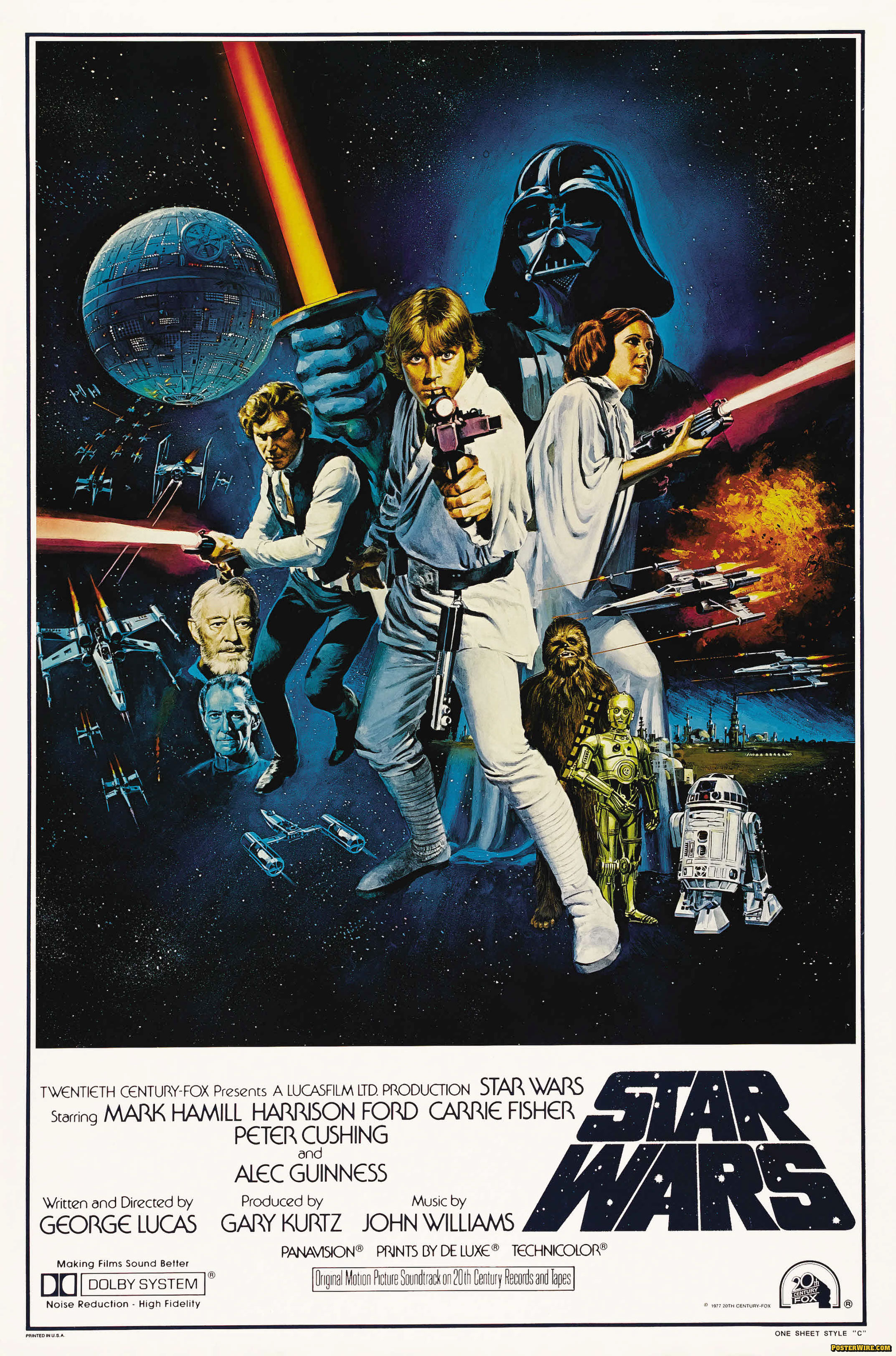
The Legacy of Star Wars

star_wars_style_c

The legacy of “Star Wars” is so extensive that I could devote dozens of posts on the subject, but my goal is to focus on just the facets of our culture impacted by the original 1977 film. Those of you looking for my thoughts on “The Ewok Adventure” will have to look elsewhere.

  • “Star Wars” opened in only 32 theaters, but broke box office records at all of them. During the summer of 1977, the film rolled out to over 1000 theaters across the country and was the runaway blockbuster hit of the year. Along with “Jaws”, “Star Wars” redefined the summer movie season. Once a dumping ground for the studios’ low-budget fare, the summer continues to be the place for big franchise tent poles and movie star action heroes. Great news for studios, terrible news for the New Hollywood scene of the early ‘70s.
  • 20th Century Fox was in danger of going bankrupt for most of the ‘70s, but “Star Wars” revived the studio, and helped turn it into the conglomerate it is today.
  • George Lucas was able to maintain sequel rights in his original “Star Wars” contract, and immediately began work on a follow-up. “The Empire Strikes Back” came out in 1980 and found its own place in the NFR. The trilogy was concluded in 1983 with “Return of the Jedi”. “Empire” is still the gold standard for sequels, while “Jedi”…is fine.
  • While we were eagerly awaiting that first sequel, Lucas decided to keep the franchise alive with a TV special. “The Star Wars Holiday Special” should be viewed at least once by any Star Wars fan, and then never again.
  • Once computer technology caught up with George Lucas’ vision, he re-released the original trilogy in 1997 with revised special effects and new scenes. That’s great George, but we can still get the unaltered versions, right? Right? George where are you going?
  • Always referring to “Star Wars” as a nine or even twelve-part saga, Lucas made the first three episodes (aka “the prequels”) from 1999 to 2005. They were breakthroughs in terms of digital effects, but garbage fires in terms of maintaining the original film’s spirit. Once Lucasfilm was sold to Disney in 2012, a sequel trilogy with the original cast was immediately announced.
  • In addition, Disney has cranked out two anthology films, including “Rogue One”, which occurs literally moments before “Star Wars”. While they’re both totally unnecessary, I will admit to enjoying “Solo”.
  • Mark Hamill, Carrie Fisher, and Harrison Ford all became overnight stars and lifelong icons thanks to “Star Wars”. Ford in particular benefited from George Lucas’ next project with friend Steven Spielberg: “Raiders of the Lost Ark”.
  • Soooooooooo many parodies and spoofs over the years (IMDb alone lists over 4000 movies and TV shows!). We’ll start with the earliest, a sketch from “The Richard Pryor Show” and a musical tribute from “Donny & Marie”. Interesting foreshadowing having the Osmonds play Luke & Leia.
  • The best parody of the original film is still Ernie Fosselius’ “Hardware Wars”. “Spaceballs” is fine as an overall send-up of the original trilogy, but “Hardware” is clearly coming from a place of love.
  • As for more recent fare, “Family Guy” is always hit-or-miss, and their “Star Wars” parody “Blue Harvest” is no exception. Lots of great gags, but Herbert as Obi-Wan? [Shudder]
  • A lot of “Star Wars” knock-offs came our way in the late ‘70s/early ‘80s. Notable entries include “Star Crash”, “The Black Hole”, and ironically, a big-budget adaptation of “Flash Gordon”, which is all Lucas wanted to make in the first place!
  • Every line, scene and character has been referenced in the last 40 years of pop culture. There’s even a dedicated group of fans that remade the entire movie (and no, that’s not a “Force Awakens” joke).
  • Prolific filmmakers from James Cameron and Ridley Scott to Peter Jackson and Kevin Smith have been influenced by “Star Wars”. That’s right, every white male movie nerd owes a debt to “Star Wars”.
  • Did you know the “Star Wars” theme has lyrics?
  • Easily the film’s most ‘70s influence: “Star Wars and Other Galactic Funk” was a disco album by Meco that turned John Williams’ themes into an extended dance mix. The main track, “Star Wars Theme/Cantina Band”, was number one on the Billboard charts for two weeks!
  • Merchandising! My God, the merchandising! The action figures alone have their own Wikipedia pages! Yes, plural!
  • The “Star Wars” comic book series helped boost Marvel’s steadily declining sales. And now the same conglomerate owns them both!
  • There are countless comics, novels, video games, and other stories within the Star Wars Expanded Universe that I’m glad I never got into, because they’re not canon anymore!
  • I’ll tell you what video game is still awesome: Super Star Wars for Super NES!
  • My favorite little piece of non-canonical Star Wars was the NPR radio drama with Mark Hamill and Anthony Daniels reprising their roles. Why is it so impossible to track down? Public radio my ass.
  • Industrial Light and Magic went from a bunch of geeks blowing up model kits in Marin to the industry standard in film special effects thanks to “Star Wars”.
  • Speaking of effects, remember that time CNN used holograms for their 2008 Election coverage? That was weird, right?
  • Today, “Star Wars” has a cult following larger (and louder) than most religions. For the record, I like “Star Wars”…as a movie. If there’s some offshoot of the property I don’t like, I don’t watch it again and move on with my life.
  • And at long last, Chewbacca received his medal at the 1997 MTV Movie Awards.

Further Viewing: “The Hidden Fortress”: Kurosawa’s 1958 samurai film, and a major influence on “Star Wars”. Lucas even sneaks the phrase “hidden fortress” into the dialogue!

Further Further Viewing: There are a LOT of videos out there about the making of “Star Wars”, but as an amateur editor myself, I gravitate towards the expertly researched “How Star Wars Was Saved In The Edit”. The “Star Wars” editing team earned the hell out of that Oscar.

Listen to This: The “Star Wars” soundtrack, featuring John Williams’ instantly iconic score, was added to the National Recording Registry in 2004. The NRR gives the soundtrack its historical context, and states the album “has been credited with reviving symphonic film scores in Hollywood motion pictures”. There’s also an essay by John Williams expert Emilio Audissino, Ph.D.

#316) Star Wars (1977)

IMG_0085

#316) Star Wars (1977)

OR “Monomyth….In….Spaaaaace!”

Directed & Written by George Lucas

Class of 1989

NOTE: This post is about the original 1977 version of “Star Wars”. No “A New Hope” here.

The Plot: A long time ago in a galaxy far, far away, a civil war rages between the indestructible Galactic Empire and the oppressed Rebel Alliance. Princess Leia (Carrie Fisher) has stolen the technical plans for the Empire’s secret “Death Star”, but her attempt to give them to the Rebels is thwarted by the dark lord Darth Vader (David Prowse, voiced by James Earl Jones). Leia hides the plans with droids C-3PO & R2-D2 (Anthony Daniels & Kenny Baker) and sends them to the desert planet of Tatooine. The two droids encounter farmhand Luke Skywalker (Mark Hamill), who stumbles upon a hidden message from the princess. Aided by reclusive Jedi Knight Obi-Wan “Ben” Kenobi (Alec Guinness), rogue smuggler Han Solo (Harrison Ford) and his furry co-pilot Chewbacca (Peter Mayhew), Luke ventures into space to save the princess, learn about the mystical Force, and restore freedom to the galaxy.

Why It Matters: The NFR calls the film “legendarily expansive and ambitious”, praises Lucas, and calls the special effects “effective and intelligently integrated with the story.”

But Does It Really?: There are two eras of filmmaking: pre-“Star Wars” and post-“Star Wars”. A lot of movies on this list were game-changers, but “Star Wars” may be THE game changer. The movie inspired several generations of filmmakers, and its technical breakthroughs changed how movies are made (and marketed). But at its core, “Star Wars” is still a fun, exciting, imaginative film, the perfect blend of every great fairy tale, sci-fi story, and classic movie. The ensuing fandom can be a bit nauseating, but never forget that it all stems from two hours in the ‘70s that ignited the collective imaginations of filmgoers around the world.

Shout Outs: No direct references, but among the countless movies alluded to throughout are NFR entries “The Wizard of Oz”, “Twelve O’Clock High”, “The Searchers”, “Psycho”, “Lawrence of Arabia”, “2001: A Space Odyssey”, Lucas’ own “THX 1138”, and of course, “Flash Gordon”.

Everybody Gets One: Most of the team will return for “The Empire Strikes Back”, but this is the only NFR entry for Peter Cushing. A veteran of Britain’s Hammer horror films, Cushing was cast as the evil Grand Moff Tarkin due to his “lean features”. Cushing enjoyed being in “Star Wars”, though admitted he never understood what a “Grand Moff” was.

Wow, That’s Dated: Luke’s Farrah Fawcett-ian hair is your first clue. And while some of the optical effects have not aged well, I’ll take them over disruptive CG tweaking any day.

Seriously, Oscars?: By the time the 50th Oscars rolled around in 1978, “Star Wars” had already surpassed “Jaws” as the most successful movie of all time. “Star Wars” received ten Oscar nominations (second to the 11 scored by more traditional Oscar fare “Julia” and “The Turning Point”) and won six awards, plus a special Oscar for Ben Burtt’s sound design. “Star Wars” received the most Oscars that year, but the winner in all the major categories was fellow NFR entry “Annie Hall”.

Other notes

  • Now that’s an intro! John Williams hits you over the head with the fanfare, the expository text scrolls by, and suddenly giant spaceships are flying over your head. The beauty of this whole opening sequence is that it gives you just enough information without feeling overwhelmed, and fills in the rest with music and effective imagery.
  • I’ve watched a great deal of ‘70s films for this blog already, and with that context, what a refreshing oddity “Star Wars” must have been in 1977. There really was nothing like this film in the cultural landscape of “Rocky” and “The Godfather”.
  • I miss Carrie Fisher. Not Princess Leia, Carrie Fisher. Rare is the Hollywood star that could be articulate and insightful about their own life, and hilarious to boot.
  • One of the things that sequels inevitably do is remove some of the mystery of the first film. It must have been fun theorizing what was under Darth Vader’s helmet before it turned out to be charbroiled Hayden Christensen.
  • Say what you will about Lucas’ clunky dialogue (and I will), but he is a master world-builder. Even the arid landscape of Tatooine is fun to explore.
  • Mark Hamill never gets the credit he deserves as an actor. Sure, Luke whines a lot, but Hamill gives him a clear character arc and always plays Luke with complete sincerity.
  • Why do 3PO and R2 scream when they’re in danger? Are droids being programmed to emote? What scientific purpose does that serve?
  • I won’t get into it here, but the Obi-Wan scenes are ripe with future continuity errors derived from the prequels. “I don’t seem to remember ever owning a droid.”
  • Speaking of Obi-Wan, stories of Alec Guinness’ displeasure with “Star Wars” are legendary. Yes, he hated the shoot, but according to his voluminous biography, he always hated shooting a film, even “River Kwai”. This all being said, ever the professional, Guinness gives an unsurprisingly nuanced performance.
  • So many Imperial officers in this movie aren’t British. When did Vader change that hiring policy?
  • The Cantina sequence takes the world building to a whole other level. We get all kinds of crazy looking aliens, Harrison Ford gives Han Solo an extra cocky introduction, and the tempo of the film really starts to pick up. My one question: Did Ben and Luke pay their tab?
  • Han shoots alien Greedo to avoid an encounter with crime lord Jabba. What a great demonstration of Han’s character that needs no further meddling.**
  • I do love the grandiose reveal of the Millennium Falcon, followed by Luke’s “What a piece of junk.”
  • While meeting with Tarkin, Leia shows off her disappearing-reappearing British accent. Apparently this was Carrie Fisher’s first day of filming, and the accent was quickly dropped.
  • Man, Cushing’s great in this too. That’s a performance by an actor who knows exactly how his character serves the story.
  • Obi-Wan knows a surprising amount about TIE Fighters for someone who’s been exiled on a desert planet for 20 years. Maybe the Force has great wifi?
  • For me, the film picks up once we get to the Death Star. The first hour is set-up, and now we can watch these strongly defined characters play off each other without rattling off sci-fi mumbo-jumbo.
  • “The Force will be with you. Always.” “And also with you. I mean, and with your spirit”.
  • Once Luke and Han rescue Leia, the dialogue begins to sound fun and natural. I detect the uncredited assistance of “American Graffiti” writers Gloria Katz and Willard Huyck.
  • We have a Wilhelm scream! That stormtrooper did not die in vain.
  • Luke and Leia both handle the deaths of loved ones very quickly. I guess the last stage of grief in this galaxy is shootin’ space Nazis.
  • Somewhat appropriate that the most complex relationship in all of these movies is between two robots.
  • The final battle sequence is a ramped-up variation of every WWII dogfight, and brings the film to a satisfying climax. I still get a chill when Han shows up at the end.
  • Why make Chewbacca take part in the closing ceremony if you’re not going to give him a medal? Did he decline the medal for religious reasons? Is this somehow tied in with Life Day?

The never-ending legacy and impact of “Star Wars” deserves its own post. In fact, this one!

**2019 Update: WHO THE FUCK IS MACLUNKY!!?

#315) Hearts and Minds (1974)

181298-tt0071604

#315) Hearts and Minds (1974)

Directed by Peter Davis

Class of 2018

A modern trailer

As with all the documentaries I’ve covered, this post is a massive over-simplification of the events surrounding the Vietnam War. There is so much information out there about Vietnam, and “Hearts and Minds” is a good starting point, but don’t let this blog be where you get your information.

The Plot: There is no way one movie could distill the complexities of the Vietnam War into two hours. That being said, “Hearts and Minds” makes the best effort by highlighting the viewpoints of as many participants as possible, juxtaposed with footage from the frontlines. Among those interviewed are ex-POW Lt. George Coker, America’s Commander General William Westmoreland, army deserter Edward Sodwers, and the countless Vietnamese citizens whose lives were permanently damaged by the war.

Why It Matters: The NFR quotes praise from authors Frances FitzGerald and David Halberstam, but conversely mentions critics “from both ends of the political spectrum [who] chided [“Hearts and Minds”] as manipulative propaganda that oversimplified complexities.”

But Does It Really?: Manipulative? Sure, but what documentary isn’t to a degree? “Hearts and Minds” will never satisfy everyone’s opinion on Vietnam, but the film succeeds as a document of the moment. What unfolds is a war with no end in sight, but whose participants have enough hindsight to recognize the errors made by America. As a film, “Hearts and Minds” is equal parts captivating and sobering. Those of us who weren’t there will never understand what it was like to live in the chaotic mess of the Vietnam War, but “Hearts and Minds” permanently reminds us of one of the 20th century’s most horrific events. The film’s reportage, as well as its continued controversy, makes it unquestionably qualified for NFR inclusion.

Everybody Gets One: Peter Davis started as a writer/producer for CBS News’ documentary division. He was inspired by the release of the Pentagon Papers (which exposed our decades-long involvement with Vietnam) to make “Hearts and Minds”, his sole directorial effort. Fun Fact: Davis is the son of screenwriters Frank Davis and Tess Slesinger, who wrote the scripts for two NFR entries: “Dance, Girl, Dance” and “A Tree Grows in Brooklyn”.

Take a Shot: The film gets its title from Lyndon Johnson, who said of the Vietnam War, “The ultimate victory will depend on the hearts and minds of the people who actually live out there.”

Seriously, Oscars?: “Hearts and Minds” almost didn’t get released when Columbia Pictures got cold feet. Producer Bert Schneider purchased the film back from Columbia, and secured a one-week Oscar qualifying run in L.A. in December 1974. Just three weeks before the Fall of Saigon, “Hearts and Minds” won the Oscar for Best Documentary. While accepting the award, Schneider read a telegram from Viet Cong Ambassador Dinh Ba Thi that praised the anti-war movement. Later that evening, Oscar co-host Frank Sinatra read a statement from the Academy saying they were “not responsible for any political references on this program”.

Other notes

  • Long story short, America started aiding South Vietnam (then French Indochina) during the first Indochina War in the ‘50s to prevent the spread of Communism. Once Kennedy took office in 1961 he escalated our presence in the war, which Johnson completed in reaction to the Gulf of Tonkin incident of 1964, which may have been exaggerated as an excuse to send more troops. Thanks to an effective montage in the film, we see every U.S. President from Eisenhower to Nixon try to downplay our involvement in Vietnam.
  • Despite his 6-½ years as a POW, Lt. George Coker states several times in the film that he would return to Vietnam to serve his country if asked. As of this writing, Coker is still with us, aiding fellow ex-POWs, and occasionally discussing his time in Vietnam.
  • In a nice little bit of political foreshadowing, Ronald Reagan appears during the montage of Red Scare film clips. There’s also a scene from “My Son John” starting Robert Walker and Helen Hayes, both of whom have yet to make the NFR.
  • One of the things that fascinated me was listening to soldiers and pilots discussing the thrill of fighting and the rush of energy that occurs in the midst of war. It’s a side we rarely hear about from our troops, possibly because we the public don’t want to acknowledge the shades of gray that come with war. This segment is immediately followed by Vo Thi Hue and Vo Thi Tu, two elderly Vietnamese sisters who lost their family and their jobs in the bombings.
  • If nothing else, this film helps illuminate the Vietnamese perspective of the war, especially for us “ugly Americans” who only know the war’s main bullet points. Interviewee Diem Chau refers to Vietnam as not only a civil war, but also “a war against American imperialists.”
  • And now a montage of Hollywood’s horrible mistreatment of Asians and Asian stereotypes. The shrewdest clip is from “Road to Hong Kong” featuring Bob Hope, who shows up later in the film making a tasteless joke during a gala dinner for rescued POWs.
  • Davis not so subtly suggests that American football culture is responsible for our over-enthusiastic pro-war mentality. No amount of verbose John Facenda narration can spin that one.
  • Another gray area: war-profiteers in Vietnam. I did not realize how many American corporations opened branches in Vietnam during the war.
  • Among the anti-war vets interviewed is Robert Muller (no, different spelling), who was left paralyzed during the war. He later founded the Vietnam Veterans of America Foundation.
  • Production of “Hearts and Minds” took place while Nixon was still in office, but released a few months after his resignation in August 1974. I’m sure this gave the film an additional layer during its initial run.
  • I think what I’ll take away from “Hearts and Minds” are the images of the Vietnamese effected by the war: the innocent bystander getting shot in the head by an American soldier, the father clinging to his dead daughter’s shirt, the grieving woman trying to be buried along with a soldier, and actual footage of Phan Thi Kim Phuc, the nine-year-old girl made famous by this intense photo of her being burned by napalm. Miraculously, she survived this, and is still alive, albeit permanently traumatized by those events.
  • Among those credited as part of the film’s sound team is Barbara Kopple, just a few years away from her Oscar-winning, NFR-inducted documentary “Harlan County U.S.A.

#314) HE Who Gets Slapped (1924)

he-who-gets-slapped-movie-poster-md

#314) HE Who Gets Slapped (1924)

OR “Clown-trodden”

Directed by Victor Sjöström

Written by Sjöström and Carey Wilson. Based on the play by Leonid Andreyev.

Class of 2017

No trailer, but here is a clip of HE getting slapped. That’s what you’re here for, isn’t it?

The Plot: Scientist Paul Beaumont (Lon Chaney) is betrayed when his donor Baron Regnard (Marc McDermott) claims Paul’s proven theories as his own. A confrontation at the Academy of the Sciences ends with the Baron slapping Paul in front of the distinguished academics, and then running off with Paul’s wife Marie (Ruth King). Paul takes her cries of “clown” literally, and five years later has become the successful circus clown “HE” with his “HE Who Gets Slapped” routine. HE develops feelings for the show’s new horse rider Consuelo (Norma Shearer), who is in love with fellow performer Bezano (John Gilbert). When the Baron happens upon the circus with his eye on marrying Consuelo, HE/Paul must confront his past and why he has chosen to mask his pain with pratfalls and makeup.

Why It Matters: The NFR write-up lists the film’s historical significance, and praises Chaney, Sjöström, and the film’s “nightmarish vignettes”. They also call the film “[o]ne of the earliest ‘creepy clown’ movies”. I suspect the 2017 NFR board had just come back from a showing of “It” before inducting this film.

But Does It Really?: I don’t know. I enjoyed “HE Who Gets Slapped” quite a bit. It’s a wonderfully weird movie unlike anything else the silent era produced. That being said, its historical significance is more trivial than pivotal (see “Other notes” below), and the film has no real lasting cultural impact. But on the plus side, “Slapped” has aged very well for a 95-year-old movie, and hopefully will get rediscovered by film lovers and clown-fearing citizens alike. The slightest of passes for NFR inclusion.

Wow, That’s Dated: Traveling circuses, as well as a time when clowns were commonly accepted as an embodiment of joy and not, you know, nightmare-inducing.

Take a Shot: The title is actually mentioned once in the intertitles as the name of Paul’s act. And yes, both letters in “HE” are capitalized. Take that, God!

Other notes

  • What is the historical significance of “HE Who Gets Slapped”? It was the very first film produced entirely by MGM following the merger of Metro Pictures, Goldwyn Pictures, and Louis B. Mayer Pictures. It’s also the first MGM movie to open with Leo the Lion, played by Slats, the only Leo that doesn’t roar.
  • Yes, the movie is a bit on the bizarre side, but once you learn it’s an adaptation of a Russian play, suddenly it all makes more sense. What I wouldn’t give to see that production.
  • This is one of several American films where Swedish-born director Victor Sjöström is credited as the Anglicized “Victor Seastrom”. I guess early film typeface didn’t have umlauts.
  • The first shot is a clown spinning a globe while laughing into the camera. Fasten your seatbelts, kids.
  • It quickly occurred to me that I’m only familiar with Lon Chaney as “The Phantom of the Opera”. I had no idea what he actually looked like. Why would you want to hide that face under so much makeup?
  • Is this what the Academy of the Sciences did before the Oscars?
  • Oh I didn’t realize the clowns are here for scene transitions. This is trippy. Visually impressive, but still trippy.
  • Canadian-American actor Norma Shearer is many things, Italian is not one of them.
  • Consuelo takes the time to re-sew the heart on HE’s costume. She’s mending his heart. Get it?
  • How does one get the title “The World’s Quaintest Clown”? Additionally, why would one want said title?
  • “I’m wrong again – the earth is HARD” Rare is the intertitle that actually makes me snort.
  • The nice thing about silent movies is that any modern-day musical type can rescore them. Can you imagine this subject matter set to more experimental music?
  • John Gilbert looks a little like Douglas Fairbanks at times. Is that natural or was it a requirement of every man in the mid ‘20s?
  • Lon Chaney’s performance is an interesting balance of subtle and deranged. HE is so close to being the Joker.
  • Speaking of MGM, this movie features what may be Leo the Lion’s only dramatic role. Slats earned his paycheck that week.
  • The good news about a clown getting hurt: everyone can fit inside the ambulance.
  • The intertitles get real philosophical near the end: “What is Death –? What is Life –? What is Love –?” I can only answer the third question with an obvious “Night at the Roxbury” joke.
  • I don’t mean to nitpick a particularly downer film, but I feel like any other scientist would have just gone back to square one and tried a new thesis. But that’s a far less interesting movie.

Legacy

  • “HE Who Gets Slapped” was a big hit in its day, and helped boost MGM’s standing as a major studio player.
  • I’ll disagree with the NFR: while HE may be a “creepy clown”, I would label this film as the first in the “sad clown” subgenre (aka the “Pagliacci” films). Sometimes they’re about actual clowns, but most of the time they’re biopics about the depressing lives your favorite comedians lived.
  • All of the major creatives behind “Slapped” benefited from this film’s popularity. Victor Sjöström would go on to direct several other successful silent films, including future NFR entry “The Wind”, Norma Shearer became a leading lady almost overnight, and John Gilbert was a little over a year away from his first of many pairings with Greta Garbo.
  • Even Leo the Lion is still going strong almost 100 years later.
  • As for Lon Chaney, he continued his run of a thousand faces, with his most iconic role just around the corner…