#280) Slacker (1990)

MV5BMmVhZDQzZWQtMzZjMS00MTJkLWEyZGYtZjczOWZhMzI2MWE5XkEyXkFqcGdeQXVyNDkzNTM2ODg@._V1_

#280) Slacker (1990)

OR “Before ‘Before Sunrise’”

Directed & Written by Richard Linklater

Class of 2012

The Plot: It’s Linklater, there ain’t no plot. “Slacker” is a single day in 1989 Texas that goes from one group of Gen X misfits to another. Among them, a taxi passenger (Richard Linklater) who contemplates his alternate universe options, a conspiracy theorist (Jerry Deloney) who claims we’ve “been on the moon since the ‘50s”, the film’s literal poster child (Teresa Taylor) pushing a sample of Madonna’s pap smear, a smattering of young filmmakers and artists, and more discussions of presidential assassinations than should be allowed in any movie.

Why It Matters: The NFR hails “Slacker” as “a touchstone in the blossoming of American independent cinema during the 1990s” and says the film has a “considerable quirky charm that has influenced a whole generation of independent filmmakers.”

But Does It Really?: Linklater has done better movies, but “Slacker” is the one that started it all. “Slacker” isn’t just a representation of one director’s work; it expands beyond that to a representation of a whole new genre: the Generation X indie. Using the thread of loosely connected vignettes, Linklater not only shows us a slice of life, but an entire community of modern bohemians. After watching “Slacker” I feel like I have a better understanding of what Richard Linklater was like in his ‘20s, as well as his environment and lifestyle in 1980s Houston. “Slacker” is an engaging film, and I’m glad there’s room for it on the NFR.

Shout Outs: “The Wizard of Oz” comes up in a discussion about Chaos Theory. Featured among the TV screens in Video Backpacker’s apartment are clips from “2001: A Space Odyssey” and…I’m gonna say either “Duck and Cover” or “The House in the Middle”.

Everybody Gets One: Born in Houston, Richard Linklater didn’t get into filmmaking until he was a young adult, when a viewing of “Raging Bull” showed him that film could be an expression of one’s self. Linklater founded the Austin Film Society (which is still going) and honed his craft on short experimental films before making “Slacker” on a budget of $23,000. Also making their sole NFR appearance: literally everyone else in this movie.

Wow, That’s Dated: This may be the definitive Gen X movie. Everyone is fresh out of college, struggling to pay rent, and having philosophical conversations about “Scooby-Doo” and “The Smurfs”. Also on display are an ad for Ron Paul’s 1988 presidential bid, and a slam on then-president George H.W. Bush.

Seriously, Oscars?: No Oscar love for “Slacker”, but the film did receive two Independent Spirit Award nominations: Best First Feature (losing to “Straight Out of Brooklyn”) and Best Director (losing to Martha Coolidge for “Rambling Rose”). The Best Director category also included such future Oscars staples as Todd Haynes and Gus Van Zant.

Other notes

  • This is what I call a “French Braid Movie”: each scene loops into the next. Some of the connective tissue is a stretch, but for this movie it works.
  • Richard Linklater is Owen Wilson-ing so hard in his scene. He’s even got the same haircut.
  • Wow, this movie predicted global warming. We really need to stop ignoring the warning signs.
  • So in Texas, everyone is a twentysomething white male that sounds like a Kyle Mooney digital short?
  • One of the postcards left behind in the co-op features Uncle Fester from “The Addams Family”, as played by Jackie Coogan who, and I can’t stress this enough, was also the kid in “The Kid”.
  • We have a boom mike! Even the greats mess up in the beginning.
  • For those of you like me with zero street cred, Teresa Taylor is the drummer for Butthole Surfers.
  • There’s a lot of mental illness in this film. What was going on in 1989 Texas?
  • I’m just amazed Linklater was able to get this many actors for his first movie. More amazing, none of them are Ethan Hawke, Julie Delpy or Matthew McConaughey.
  • Promotional consideration for “Slacker” provided by Coca-Cola. Can’t beat the feeling!
  • And then we get an extended monologue from the JFK assassination conspiracist. You can practically see the MAGA hat on this guy.
  • I think the alternate title of this movie was “People Getting Out of Awkward Conversations: The Motion Picture”.
  • The Funeral Hitchhiker guy is giving me a real Billy Bob Thornton vibe.
  • In addition to the “Conspiracy-a-Go-Go” discussion, the Old Anarchist mentions the Lincoln and McKinley assassinations. Is anyone else concerned about young Linklater’s mental well being?
  • And now a Hinckley reference? Is this an adaptation of “Catcher in the Rye”?
  • AND footage of the Challenger disaster? You got some issues, Linklater. I know we’re all a little morbid in our ‘20s, but Jesus.
  • Shoutout to cinematographer/editor Lee Daniel (no, not that one). As longtime readers are aware, I’m a sucker for one-take scenes.
  • Uggggh, white dreadlocks. I would not have done well in 1989 Bohemian culture.
  • Can’t you just imagine Quentin Tarantino watching this film in the early ‘90s and saying, “A movie where people over-analyze pop culture references? Hold my beer.”
  • The Anti-Artist admits that all he does is “sleep and eat and watch movies”. And now you understand the life of someone who cranks out three movie blog posts a week.
  • We leave you now with footage of an 8mm camera being thrown off a cliff.
  • “This story was based on fact. Any similarity with fictional events or characters is entirely coincidental.” Nice one, Linklater.

Legacy

  • “Slacker” launched the film career of Richard Linklater. His immediate follow-up was another slice of life called “Dazed and Confused”, and he’s been off and running ever since. My personal favorites of Linklater are “School of Rock” and “Boyhood”.
  • This is the movie that inspired Kevin Smith to become a filmmaker, so that’s something we have to live with.
  • “Slacker” is also responsible for popularizing the term “slacker”, though I believe Principal Strickland was the first person to use the phrase. Regardless, Linklater had hoped that slacker would take on a more positive connotation.
  • Easily one of the best “Simpsons” episodes, “22 Short Films About Springfield” takes its general premise from this film. Mmmmm…steamed hams.
  • And of course, the uninspired drastic departure of a sequel: 2002’s “Slackers”. Oh Jason Schwartzman, how could you?

FilmStruck is Dead, Long Live FilmStruck

filmstruck-1540569329506_1280w

For the better part of a year I’ve been telling people how I could not possibly do this blog without my subscription to the TCM/Criterion Collection streaming service FilmStruck. And now it looks like I’ll have to find a way.

Earlier this morning, FilmStruck announced that on November 29th they will be going the way of Yahoo! Screen. I am, of course, deeply saddened by this news, but also grateful for the time I’ve had with FilmStruck. As of this writing, 46 of the films covered on this blog were viewed using FilmStruck, with a few more coming down the pike in the weeks to come. FilmStruck was a monumental help to me when it came to tracking down some of the NFR’s more obscure entries (Thank god they had “Decasia”), and was an indispensable library of popular titles I’ve just never gotten around to watching (“My Favorite Year”? Fucking hilarious).

So thank you, FilmStruck. Safe travels, and may we film geeks one day get the online platform we so desperately desire. In the interim, I have a month to cram in as many FilmStruck titles as possible! Tell the office I’m dead for a few weeks!

On a related note: anyone got any Criterion DVDs they can loan me? I promise I’ll give them back.

#279) Crisis: Behind a Presidential Commitment (1963)

crisis-1963

#279) Crisis: Behind a Presidential Commitment (1963)

Directed by Robert Drew

Class of 2011

Having effectively covered John F. Kennedy’s 1960 campaign with “Primary”, Robert Drew was granted full access by the Kennedy White House to cover one of the president’s crucial defining moments in “Crisis: Behind a Presidential Commitment”.

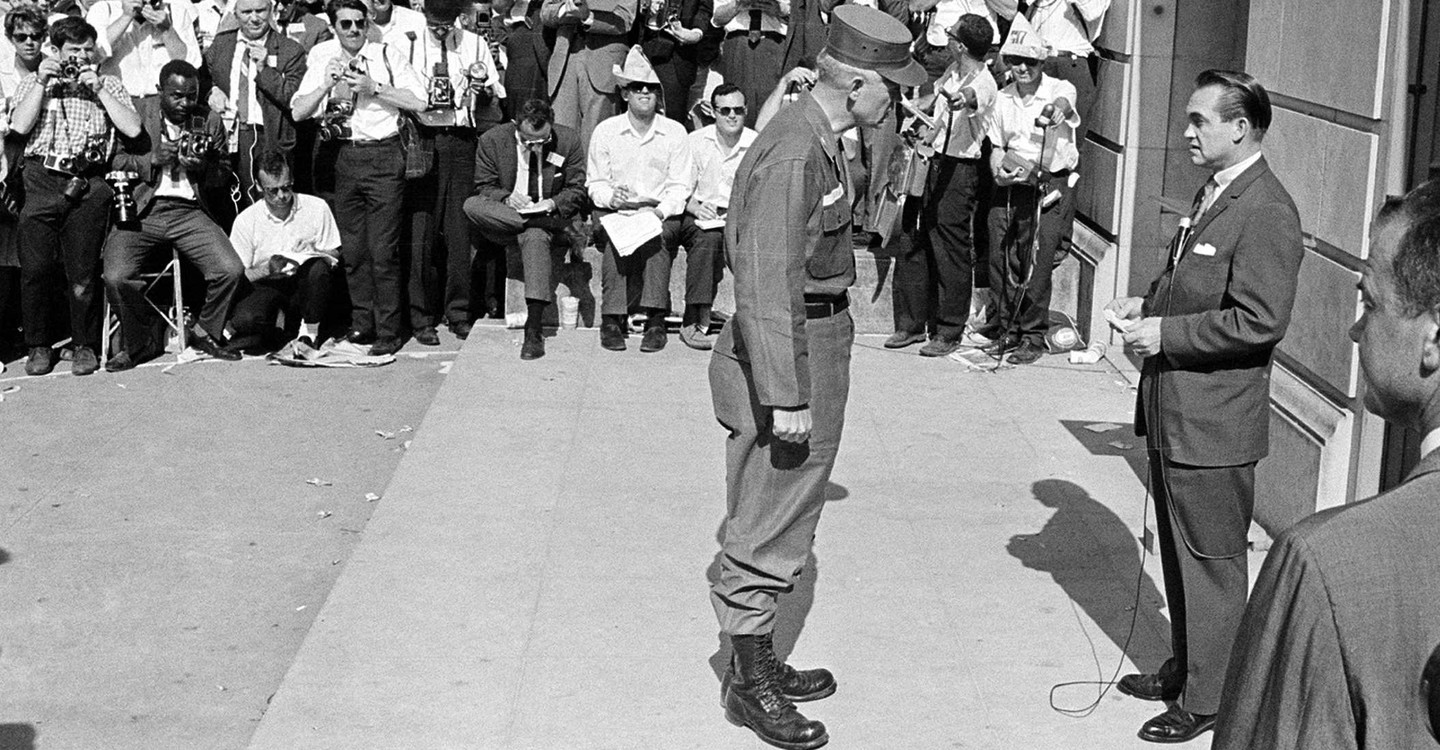
By June 1963 it had been almost a full decade since “Brown v. Board of Education of Topeka, Kansas” declared segregated schools for African-Americans unconstitutional, but that didn’t stop the likes of Alabama and other southern states from denying entry for prospective students. The key holdout was George Wallace, the recently elected Democratic governor of Alabama, who was willing to stand in front of the University of Alabama’s main entrance to prevent Vivian Malone and James Hood from entering the school, and thereby desegregating it. John Kennedy had promoted civil rights during his campaign but, now two years into his presidency, had done very little to keep his promise. Working with his brother, Attorney General Robert Kennedy, the President and his team were faced with the daunting task of finding a solution that would allow Malone and Hood to enter the school without resorting to violence or adding fuel to Wallace’s segregationist fire.

With the aid of Deputy Attorney General Nicholas Katzenbach, a two-fold solution was reached. With federal marshals on site, and with Malone and Hood safely inside a nearby car, Katzenbach gave Wallace one final chance to peacefully step aside and allow entrance for the students (a presidential proclamation calling for Wallace not to interfere had already been issued, Wallace was breaking the law by standing in the doorway). Wallace refused, prompting phase two of the plan: an executive order from President Kennedy that federalized the Alabama National Guard, taking control of the Guard out of Wallace’s jurisdiction and into Kennedy’s. After a reluctant command from Guard General Henry Graham and a face-saving speech from Wallace, the Governor stepped aside, and Malone and Hood entered the University of Alabama without incident. Later that evening, President Kennedy delivered his Civil Rights address on television, and proposed what would eventually become the Civil Rights Act of 1964.

Like many a historical document on this list, it is fascinating to be in “the room where it happens”. To watch Kennedy and his team behind closed doors making the tough calls is a riveting viewing experience, as is watching Wallace’s unwavering determination to maintain his vow of “segregation forever”. Films that capture their specific moment in history are unquestionably worthy of preservation, but can also be depressing given how seemingly small progress has been made in the ensuing years (sure, African-Americans can go to any school in the south, but can they vote?).

Why It Matters: The NFR salutes Drew and calls the film “a uniquely revealing complement to written histories of the period, providing viewers the rare opportunity to witness historical events from an insider’s perspective.”

Seriously, Emmys?: Originally produced for ABC News, “Crisis” was completely snubbed at the 1964 Emmys (ABC was third among the broadcast networks’ news departments at the time). Coincidentally, the winner for Best Documentary was another look at the Kennedy presidency: “The Making of the President, 1960”. The Emmy ceremony was six months after Kennedy’s assassination, and the Television Academy was definitely in the mood to honor the late president, which makes the absence of “Crisis” even more conspicuous.

Other notes

  • For those of you obsessed with timelines, the events of “Crisis” occurred roughly 2 ½ months before the events of “The March”. Summer 1963 must have been unusually tense for America.
  • When your documentary begins with the song “Dixie” and footage of Governor George Wallace, you already know you’re in trouble.
  • There are many fascinating aspects of “Crisis”, one being the rare opportunity to see JFK when he wasn’t “on”.  The charm and charisma is gone, but the commitment you expect from a president remains.
  • I was also fascinated with Vivian Malone and James Hood. They are polished and prepared (with help from Katzenbach and the local NAACP chapter), but you never forget that they are both 20 years old. These two are ordinary young adults thrown into an unordinary experience, but their fear is controlled by their determination. They even manage to crack a joke or two the night before. I wish Drew et al devoted more screentime to these two.
  • Robert Drew is smart enough to know that even in direct cinema, sometimes you need a narrator to clear up a few things. That narrator, by the way, is “Crisis” cameraman James Lipscomb, who went on to film a slew of National Geographic specials.
  • In an adorable moment of levity, Robert Kennedy’s three-year-old daughter Kerry runs through Dad’s office, and takes a phone call with Nicholas Katzenbach. Kerry has continued her father’s legacy and today is a human rights activist.
  • Hats off to Katzenbach. Not only did he help come up with the solution, but he’s also the one who had to tell Wallace to stand down. And talk about grace under pressure; if that were me I would have had a full-Kavanaugh meltdown.
  • It is inconceivable to me that the Attorney General of the United States had these events relayed to him through telephone. I truly don’t understand how our top government officials did anything without cell phones or C-SPAN.
  • Wallace finally acquiesces, but with warning that this will effect the next election. “Whoever the South votes for will be the president.” In 1964, the South voted for Barry Goldwater, and they were pretty much the only ones who did in Lyndon Johnson’s landslide victory.
  • In a final bit of optimism, the last shot of “Crisis” is of Dave McGlathery, the University of Alabama’s third African-American student, who enters the building with no protest or fanfare (albeit with a handful of National Guardsmen in the vicinity).
  • As in “Primary”, future “Dont Look Back” director D.A. Pennebaker is credited here amongst the camera crew.
  • Having now watched the events surrounding the “schoolhouse” incident for the first time, I am really concerned that Robert Zemeckis thought it was funny to have Forrest Gump stumbling around in the background.
  • Speaking of, a more serious recreation of these events is depicted in the 1997 TV movie “George Wallace”, starring “Forrest Gump” alum Gary Sinise.

#278) It’s a Gift (1934)

3141d8020b0f14f59e094db584d25caf

#278) It’s a Gift (1934)

OR “W.C., WTF?”

Directed by Norman McLeod

Written by Jack Cunningham. Based on a story by Charles Bogle (aka W.C. Fields) and the play “The Comic Supplement” by J.P. McEvoy.

Class of 2010

No trailer, so here’s a clip of W.C. Fields trying to eat a sandwich.

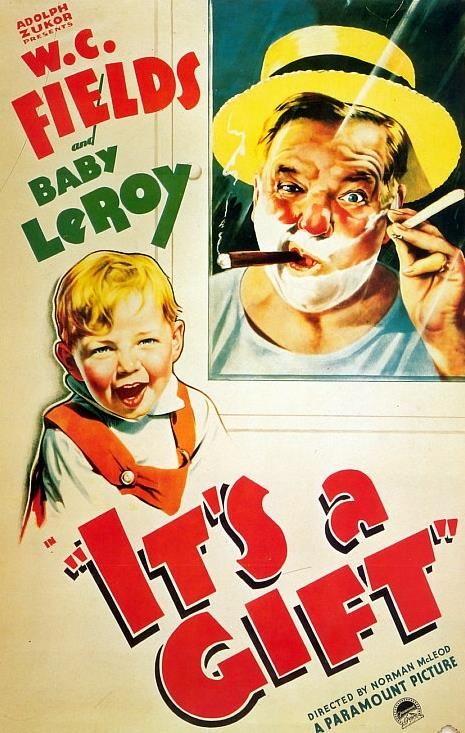
The Plot: Harold Bissonette (W.C. Fields) is a long-suffering husband and father who runs a grocery in Jersey. When his Uncle Bean dies, Harold moves the family to California and buys property to start his own orange grove. And that’s it plot-wise. The rest of this movie is populated by one W.C. Fields bit after another.

Why It Matters: The NFR calls Fields “one of the greatest American comedians of the 20th century” and gives special mention to the “sleeping on the back porch” comic set-piece.

But Does It Really?: Am I missing something with W.C. Fields? I’ve always heard what a landmark comedian he is, but I gotta say, so far he’s not impressing me. “It’s a Gift” is several of Fields’ vaudeville routines strung together into a film. This, of course, was more than enough entertainment value in 1934, but unfortunately the bits suffer today from a deadly combination of dated and slow. I may have to retract my post about “So’s Your Old Man” not being Registry-worthy: at least it attempted a plot. “It’s a Gift” gets a slight pass from me on its reputation, but “The Bank Dick” better bring its A-game.

Everybody Gets One: Norman Z. McLeod has directed several comedies I would deem “minor classics” should they ever make the NFR. No one thinks of “Horse Feathers” when you list off the classic Marx Brothers movies, nor “Topper” when talking about great Cary Grant comedies. But the main takeaway from “It’s a Gift” is child actor Ronald Le Roy Overacker, billed as “Baby LeRoy”. He was two years old when he filmed “It’s a Gift”, and was the youngest person ever signed to a studio contract. Baby LeRoy squared off with W.C. Fields in three films, and apparently Fields actually didn’t like working with his two-year-old co-star.

Wow, That’s Dated: In addition to the very dated comedy bits about a henpecked husband and his shrewish wife, we get the lost profession of grocer, plus married couples with separate twin beds.

Other notes

  • Why do comedians always have such domineering wives in the movies? You know what, don’t answer that. I think I know why, I just don’t want to admit it.
  • Speaking of, Kathleen Howard (Amelia) was an opera singer in the 1910s, and “It’s a Gift” was one of her earliest film roles. It shows. You can clock her stage background from a mile away.
  • Is there any greater comedy word than “kumquat”? It has two K sounds!
  • Oh man, this film is so grating. The kids are annoying, Fields can be a lot, even the guy shouting “kumquat” gets old.
  • Uncle Bean died from choking on an orange. Was he in “The Godfather”?
  • And then we get to the comic set-piece of Fields trying to sleep on the back porch of his housing unit. It’s so…long. Part of that is the extended pauses, because films were edited to give large theater audiences time to laugh. Watching this film by myself 84 years later, the delayed timing dragged down the comedy.
  • Everyone in this movie hates each other and has no redeeming qualities whatsoever. I don’t need to sympathize with film characters, but I do need a reason to keep watching.
  • Once the family moves to California things pick up. The trouble is there’s only about 20 minutes left in the movie. I suspect Fields’ work would be better off being divvied up into shorts, but I can’t fault him for wanting to be a movie star.

Legacy

  • Fields’ next role would be one of his most acclaimed: that of Wilkins Micawber in MGM’s film version of “David Copperfield”.
  • Not necessarily connected to “It’s a Gift”, but it bears repeating: In 1939, comedy writer Leo Rosten was a speaker at a tribute to W.C. Fields, and summed Fields up by saying “any man who hates dogs and babies can’t be all bad.” This has evolved over the years to the nonexistent W.C. Fields quote “Never work with animals or kids.”

#277) The Muppet Movie (1979)

MV5BMGQ0OGM5YjItYzYyMi00NmVmLWI3ODMtMTY2NGRkZmI5MWU2XkEyXkFqcGdeQXVyMzI0NDc4ODY@._V1_

#277) The Muppet Movie (1979)

OR “Heart Felt”

Directed by James Frawley

Written by Jerry Juhl and Jack Burns. Songs by Paul Williams and Kenny Ascher.

Class of 2009

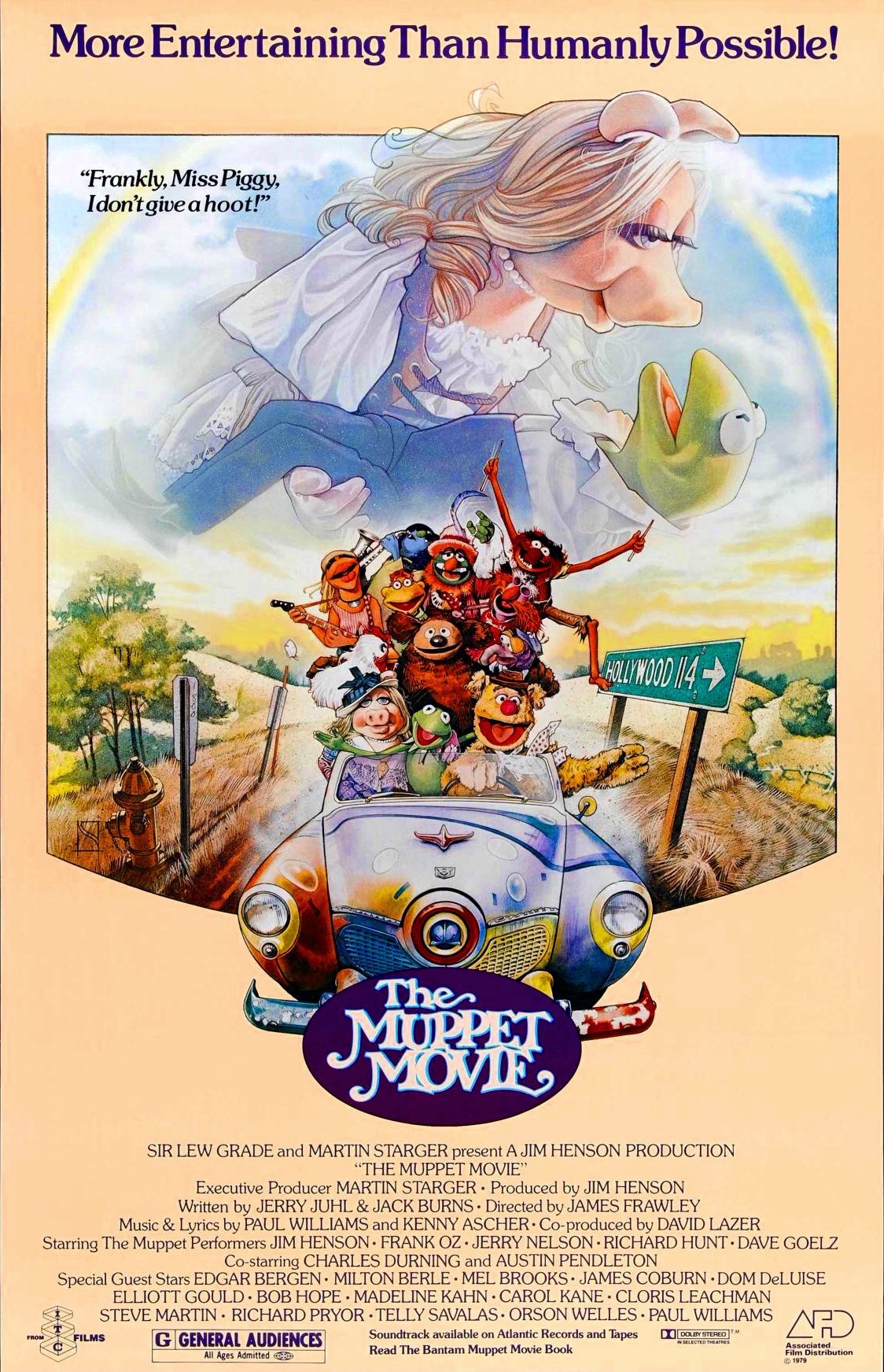
The Plot: While singing and playing his banjo in a swamp, Kermit the Frog (Jim Henson) is approached by a Hollywood agent (Dom DeLuise), who encourages him to go into show business. Kermit is motivated when he realizes he can fulfill his dream of “making millions of people happy”. En route to Hollywood, he meets struggling comedian Fozzie Bear (Frank Oz), eccentric weirdo Gonzo (Dave Goelz), love-struck diva Miss Piggy (Frank Oz), and a whole gang of lovable marionette/puppet hybrids. As Kermit gets closer to the end of his rainbow, Doc Hopper (Charles Durning) and his assistant Max (Austin Pendleton) are right behind, scheming to make Kermit the spokesfrog for Doc’s frog legs restaurant chain. There’s music, mayhem, and a plethora of celebrity guest stars in the Muppets’ first theatrical outing.

Why It Matters: The NFR praises Henson and Oz for “immers[ing] their characters into a well-crafted combination of musical comedy and fantasy adventure.” “Rainbow Connection” also gets a shoutout.

But Does It Really?: I realized about three minutes in there was no way I could objectively watch “The Muppet Movie” for this blog. These characters and songs (as well as those from the other Muppet movies) are inseparable from my childhood, which is a pretty good legacy for any movie. I will argue that “The Great Muppet Caper” is the best of the original Henson Muppet films, but “The Muppet Movie” is the correct choice for the NFR. The film has a timeless quality, an unapologetically goofy sense of humor, and one of the biggest hearts of any quote-unquote family movie ever. Plus it has “Rainbow Connection”, that’s vault-worthy right there.

Shout Outs: Brief references to “King Kong”, “Gone with the Wind”, and “High Noon”.

Everybody Gets One: Jim Henson was tired of his puppetry being pigeonholed as children’s entertainment a la “Sesame Street”, and pitched “The Muppet Show” as a more adult oriented TV series. All of the American networks passed, but British producer Lew Grade was able to sell the show to the syndicated markets. Jerry Juhl and Jack Burns were both veteran “Muppet Show” writers, while James Frawley was a television director who never worked with Jim Henson before or after “The Muppet Movie”.

Everybody Gets One – Bonus Round!: Of the film’s special guests stars, this is the only NFR appearance for Telly Savalas, Paul Williams, Milton Berle, and Edgar Bergen & Charlie McCarthy. And although he is one of the co-writers for “Blazing Saddles”, this is Richard Pryor’s only on-screen appearance on the list.

Wow, That’s Dated: A running gag about the Hare Krishna movement, and let us not forget the ‘70s throwback that is the Muppets’ house band: Dr. Teeth and the Electric Mayhem.

Seriously, Oscars?: One of the top 10 hits of 1979, “The Muppet Movie” received two Oscar nominations. Williams and Ascher’s songs lost Best Adaptation Score to “All That Jazz”, while “The Rainbow Connection” lost Best Song to…the song from “Norma Rae”? That doesn’t seem right…

Other notes

  • Contrary to popular belief, the Muppets were never intended to be enjoyed solely by children. That’s a myth. Myth!
  • To give you an idea of how fast the Muppet star was rising in the late ‘70s, every major Muppet character (except Kermit and Rowlf) was created specifically for “The Muppet Show”, so they had only been around for about three years when “The Muppet Movie” was released.
  • I’ve been compared to Statler & Waldorf many times in my life, and I always take it as a compliment.
  • I’m already crying at “Rainbow Connection”. It’s a straightforward, beautiful song with a powerful message. Plus I’m a sucker for sweeping orchestrations.
  • The thing that The Muppets lost when Jim Henson died was the impetus to advance the art of puppetry. Even in a deceivingly simple film like this, there are several shots where you see the Muppets’ full bodies, including a scene where Kermit rides a bike!
  • Madeline Kahn’s doing her Lily Von Shtupp voice! I definitely didn’t get that reference as a kid!
  • If Kermit won’t do commercials for Doc Hopper, what about for Wilkins?
  • “You don’t go to Bombay to be a movie star.” Shows what you know, Fozzie.
  • Legendary ventriloquist Edgar Bergen passed away shortly after filming his cameo. Jim Henson cited Bergen as an inspiration to go into puppetry, and the film is dedicated to his memory.
  • My favorite part of “Never Before, Never Again” is imaging quiet, reserved Frank Oz in the recording booth giving this song his all as Miss Piggy.
  • I forgot how leisurely paced “The Muppet Movie” is. Everybody assumes the Muppets were a rapid-fire joke machine, but Henson et al gave a damn about character development. That’s the biggest puzzle piece missing from the later films.
  • Steve Martin’s cameo as the waiter is very…Steve Martin. Kudos to Martin, plus David Odell, who helped rewrite the cameo roles to suit the specific guest stars.
  • God how I love the Swedish Chef.
  • Snake Walker (the frog hunter) was supposed to be Clint Eastwood, right? Eastwood had just finished co-starring with an orangutan; surely the Muppets would have been a step up.
  • “I’m Going To Go Back There Someday”. And I’m crying again.
  • Without planning it, this is Orson Welles’ first appearance on this blog. Forget “Citizen Kane” or “Touch of Evil”, this is Orson Welles’ definitive performance!
  • The closing shot of the finale features 250 Muppet characters, performed by 137 puppeteers, including a young Tim Burton.

Legacy

  • The Muppets film series is…still going? This film’s direct follow-ups are still the best: “The Great Muppet Caper” and the underrated “The Muppets Take Manhattan”. The post-Henson films have their plusses, but they never quite capture the alchemy that made the first few movies special.
  • Henson and Oz learned their lesson from the experience of hiring an outsider, and directed the subsequent Muppet movies themselves. This would lead to such non-Muppet films as “The Dark Crystal” and “Little Shop of Horrors”.
  • Despite the positive collaboration, Paul Williams wouldn’t compose songs for another Muppet movie until 1992’s “The Muppet Christmas Carol”.
  • Producer Lew Grade parlayed the success of “The Muppet Movie” to start his own film distribution company, but then… “Can’t Stop the Music” happened.
  • “It’s called ‘A Salute to All Nations, But Mostly America!’”

Further Viewing: Easily the best “Muppet Show” skit. You earn that EGOT, Rita Moreno!