#271) The Son of the Sheik (1926)

936b8229da0812a0dac8c4d835596572

#271) The Son of the Sheik (1926)

OR “Rudy’s Last Ride”

Directed by George Fitzmaurice

Written by Frances Marion and Fred de Gresac. Based on the novel by Edith Haul.

Class of 2003

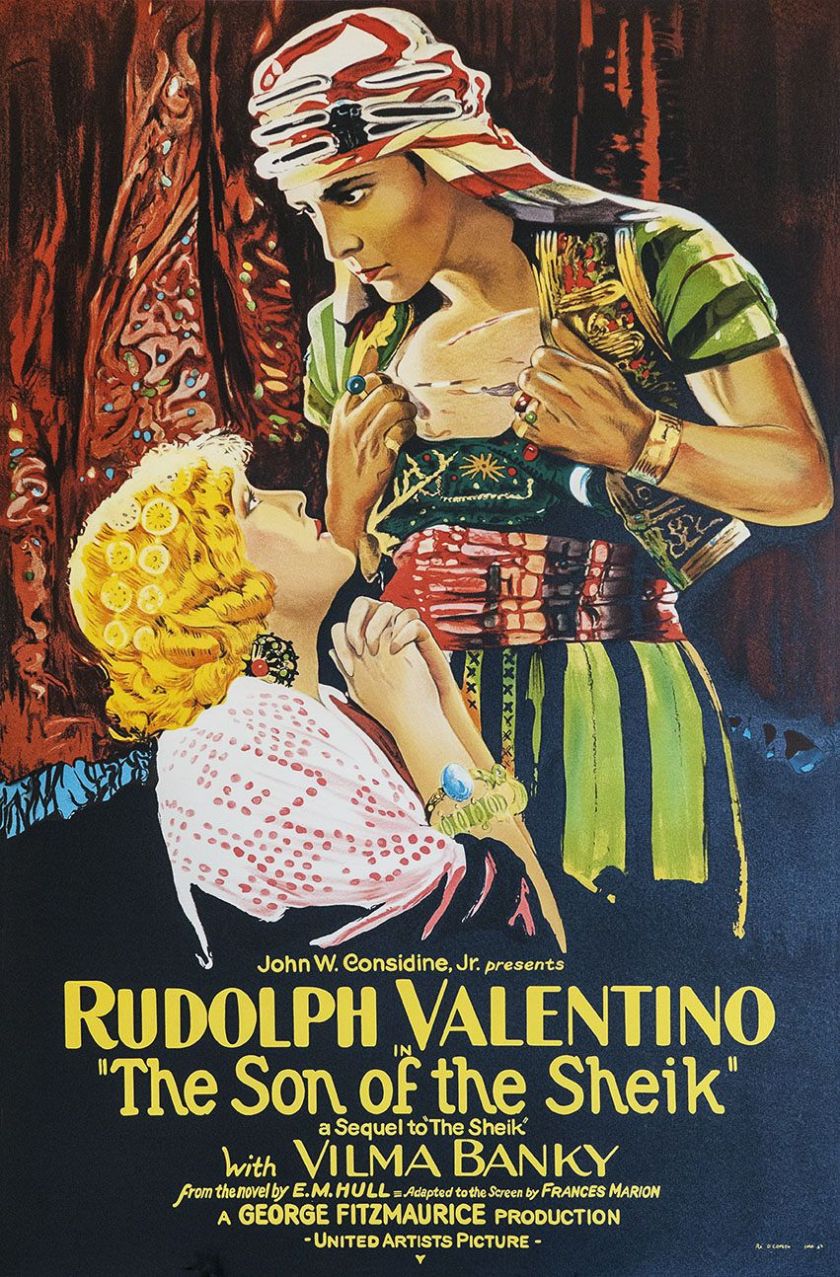
The Plot: Rudolph Valentino is Ahmed, son of the legendary Sheik (also Rudolph Valentino), the hero in another, very popular movie. While travelling across the Algerian Desert, Ahmed becomes entranced with Yasmin (Vilma Bánky), a dancer whose performance is a front for her father Andre (George Fawcett) and his gang of thieves. Ahmed and Yasmin fall for each other: she not knowing his true identity, and he not knowing that she is betrothed to Ghabah the Moor (Montagu Love). There’s action, romance, and some really impressive split-screen work in Valentino’s swan song.

Why It Matters: The NFR calls the film a “slightly tongue-in-cheek adventure-romance” and brings up the film’s main talking point: this was Rudolph Valentino’s final film, sent into wide release just a few weeks following his death. There’s also a loving essay by Valentino expert Donna Hill.

But Does It Really?: I understand the significance of  “The Son of the Sheik”, I just don’t get why the NFR didn’t induct “The Sheik” first (and as of this writing, still hasn’t). “The Son of the Sheik” is Valentino at the end of his career, attempting a comeback with a sequel to the role that made him famous, so why not include the movie that made him famous (and no, “The Four Horsemen of Apocalypse” doesn’t count; that’s an ensemble)? This whole situation is akin to adding “The Empire Strikes Back” but still not including “Star Wars”. It don’t make no sense. That being said, you should have no problem watching this movie if you haven’t seen “The Sheik”. The NFR’s inclusion of “Son of the Sheik” is justifiable, acceptable, but still quite the head-scratcher nonetheless.

Shout Outs: You’d think this is where I would mention “The Sheik”, but again, still nowhere to be seen on this registry. Of course when it is finally added this whole post will need to be completely retooled.

Everybody Gets One: To appease their new star, United Artists gave Valentino final approval over both his director and leading lady. For the former he chose George Fitzmaurice, whose work he admired and who he had initially wanted for 1922’s “Blood and Sand”. For the latter he picked his previous co-star from “The Eagle”, Vilma Bánky (aka The Hungarian Rhapsody).

Wow, That’s Dated: “The Son of the Sheik” may be the ultimate poster child for whitewashing in film. If this cast were any whiter it would include Scarlett Johansson.

Other notes

  • Why was Rudolph Valentino the “Latin Lover”? His father was Italian, his mother was French, and he was raised in Italy. I guess in the ‘20s we favored good alliterations over cultural accuracy.
  • Screenplay by Frances Marion? The Swamp Fox?
  • I love when movie credits become unintended trivia items. “Agnes Ayres has courteously consented to resume her original role of Diana, wife of the Sheik — as a favor to Mr. Valentino and this picture.” That’s a lot of info the average filmgoer does not need.
  • One of Andre’s henchmen says of his wife, “When I want her, I whistle.” He must be married to Lauren Bacall.
  • Valentino’s screen appeal is on full display in this picture. The key to his success is, unlike most silent film actors, Valentino knows that less is more. He underplays, rather than overacts, making his romantic scenes appear more intimate, especially if you’re watching him on a big screen. Rudolph definitely knows how to “make love to the camera”, whatever that means.
  • Surprise guest star Grandpa Potts!
  • One of the characters is named Ramadan? Is that a common name amongst devout Muslims, or did these writers refuse to do any research?
  • The desert scenes were shot in Yuma, Arizona, with temperatures well into the 100s. According to the diary entries of prop master Irving Sindler, Valentino never complained about the working conditions and seemed to enjoy riding his horse across the desert in his downtime.
  • Our hero: a man who kicks sand into the face of his enemies, and brings a gun to a swordfight.
  • “Nay, my mother was no owl — only a little cuckoo!” Ba-dum cha!
  • Shoutout to cinematographer George Barnes. He’s getting real artsy with some of these shots.
  • The “romantic” relationship between Ahmed and Yasmin is real hard to justify nowadays. Lots of forced kissing going on.
  • Oh the sad irony of Rudolph Valentino in old age makeup. That being said, Rudy is clearly having a blast playing dual roles, especially when he’s his own scene partner. And the split-screen effects are pretty great too. I had a legitimate “How’d they do that” moment.
  • “Remember your own fiery youth, dearest — what you wanted, you took–” Gee, what a great lesson to pass on to your son.
  • Everyone in this movie sucks at throwing daggers. They always miss.
  • Entire production filmed on location at Aladdin’s Oasis in Disneyland.
  • The climactic fight scene involves sword fighting on horseback. That’s pretty badass.

Legacy

  • Rudolph Valentino died of sudden peritonitis when he was 31 years old, two weeks before the wide release of  “The Son of the Sheik”. The film was a box office hit, as were several of his earlier films rereleased shortly thereafter.
  • “The Son of the Sheik” also helped crack open the Pandora’s Box of Hollywood making formulaic sequels to their earlier hits.

Prior Viewing: “The Sheik”. I gotta start pushing for that movie in my annual NFR submission.
The NFR Class of 2018: My Ballot

 blindfolded-man-throwing-darts-55974411-5a24778fbeba33003715f4b5

It’s that time of year again: time to submit my list of 50 movies I consider worthy of NFR recognition. Dwindling the list down from thousands of films to just 50 is daunting, but I’m happy with my choices this year. Here are my picks for the 2018 National Film Registry, in no particular order:

How Are These Not on the List Yet?: Big (1988), A Clockwork Orange (1971), Creature from the Black Lagoon (1954), Jurassic Park (1993), The Lord of the Rings: The Fellowship of the Ring (2001), Poltergeist (1982), The Shining (1980), The Sixth Sense (1999), What Ever Happened to Baby Jane? (1962), When Harry Met Sally… (1989)

Movies I’d Give a Pass To: Dirty Dancing (1987), Return of the Jedi (1983), The Seven Year Itch (1955), Speed (1994), To Have and Have Not (1944)

I Went Crazy and Submitted a Bunch of Disney Movies: Cinderella (1950), Finding Nemo (2003), Lady and the Tramp (1955), The Little Mermaid (1989), The Nightmare Before Christmas (1993)

Comedies!: Arsenic and Old Lace (1944), Best in Show (2000), 9 to 5 (1980), The Odd Couple (1968), The Player (1992)

Musicals!: Anchors Aweigh (1945), Grease (1978), Hedwig and the Angry Inch (2001), The King and I (1956), On the Town (1949)

Thrillers! (Not to Be Confused with “Thriller”, Which Is Already on the List):Carrie (1976), Gaslight (1944), The Man Who Laughs (1928), Rope (1948), Terminator 2: Judgment Day (1991)

Because At Least One Movie with Smash Mouth’s “All-Star” Should Be In the NFR: Shrek (2001)

More Recent Fare: Boogie Nights (1997), The Truman Show (1998), Eternal Sunshine of the Spotless Mind (2004)

Favorites That Probably Won’t Make the List: Anchorman (2004), It’s a Mad, Mad, Mad, Mad, World (1963), Labyrinth (1986), Mrs. Doubtfire (1993), Mystery Science Theater 3000: The Movie (1996), Pee-Wee’s Big Adventure (1985), The Poseidon Adventure (1972), The Sandlot (1993), A Thousand Clowns (1965)

And Let’s Get the Ball Rolling on the Most Recent Eligible Films:The Dark Knight (2008), Wall-E (2008)

Last year, four of my 50 made the Registry; not too shabby considering the thousands of eligible films. As always, you can nominate up to 50 films every year for consideration. The 2018 deadline has passed, but you can get a head start on 2019 with this list of eligible films. Films #726-#750 will be revealed in December.

#270) Punch Drunks (1934)

x1080-GGL

#270) Punch Drunks (1934)

OR “Million Dollar Curly”

Directed by Lou Breslow

Written by Moe Howard, Larry Fine, Jerry Howard and Jack Cluett

Class of 2002

A quick preview

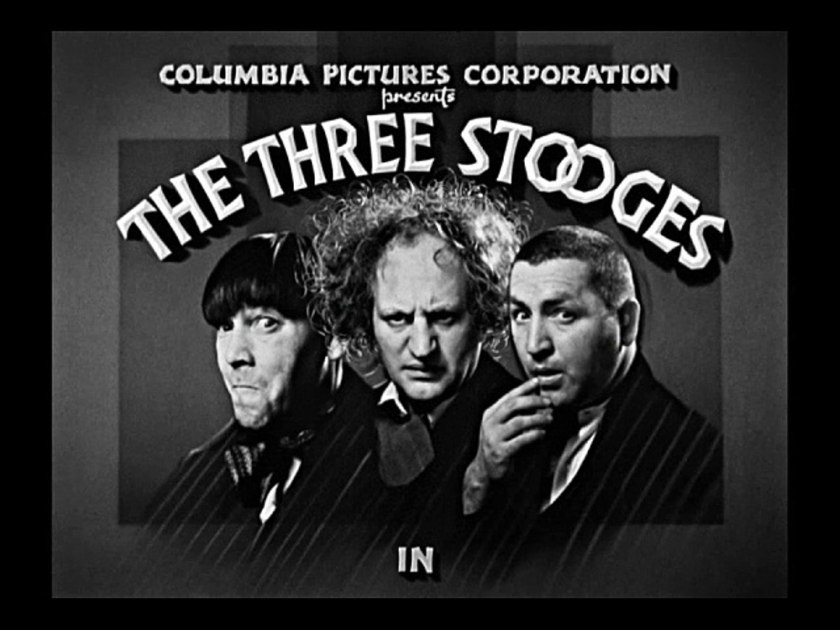
The Plot: Boxing manager Moe (Moe Howard) is in need of a new fighter. While having lunch with his associates, he witnesses his waiter Curly (Curly Howard) go into a violent trance when violinist Larry (Larry Fine) plays “Pop Goes the Weasel”. Under the name “K.O. Stradivarius”, Curly goes undefeated leading up to the Championship match with Killer Kilduff (Al Hill). But on the day of the big match, Curly accidentally breaks Larry’s violin. What hilarious, violent hijinks will the Stooges get into now? Oh, and there’s a woman (Dorothy Granger), because there’s always a woman.

Why It Matters: The NFR gives some historical background, incorrectly states that this short is “scripted solely by the trio”, and praises the short’s boxing backdrop as perfect for “the Stooges’ trademark super violent, cartoonlike slapstick.”

But Does It Really?: Well it took long enough to get the Stooges on the Registry. Like the “Popeye” short on this list, “Punch Drunks” checks all the boxes you want from a Stooges short: eye-pokes, Curly noises; the only thing missing is a wrench to the nose. The slapstick is a bit excessive, but “Punch Drunks” is still fun and never takes itself seriously, which is the primary reason for the Stooges’ longevity. A Three Stooges short isn’t the first film that springs to mind for preservation, but no film history would be complete without one, and “Punch Drunks” is the perfect representation of Larry, Moe, & Curly.

Everybody Gets One: From 1922 to 1933, Moses Horwitz (Moe Howard) and his brother Samuel (Shemp) were the comic foils in the vaudeville act “Ted Healy and His Stooges”. Louis Feinberg (Larry Fine) joined the group in 1928, and the trio perfected their comedy routines on the stage. When the Stooges signed with MGM in 1933, Shemp left the group and was replaced by his brother Jerry (Curly). When their yearlong contract expired, the Stooges parted ways with the consistently difficult Ted Healy and were almost immediately snatched up by Columbia. “Punch Drunks” was the Three Stooges’ second short with the studio.

Wow, That’s Dated: This thing is very Movie ‘30s; people talking fast and calling each other “mugs”. Speaking of, who knew “toots” was gender neutral?

Seriously, Oscars?: Only one Three Stooges short was ever nominated for an Academy Award: 1934’s “Men in Black” (No, not that one, but there’s an idea!) After that, Columbia head Harry Cohn downplayed the Stooges’ popularity so that he wouldn’t have to renegotiate their contracts, and I suspect the Stooges never re-entered the Oscar race for that reason. The Comedy Short winner of 1934 was “La Cucaracha”, which probably won because it was in color and more expensive than the average two-reeler.

Other notes

  • Despite the opening credits, the screenplay was entirely by contract writer Jack Cluett. Moe submitted the initial story, and credited the other two Stooges in the interest of fairness. What a guy.
  • Look out; the Columbia lady has a sparkler!
  • Ah yes, back in the days when you could slap your employee. This union just ain’t cutting it.
  • We have an eye poke! Followed immediately by some Curly noises! It’s an embarrassment of riches!
  • This is the first of the Stooge shorts where Curly claims to be “a victim of soycumstances!”
  • I know I’ve seen the Three Stooges before, but man are these things violent. No wonder parents were up in arms.
  • Speaking of, shoutout to whoever did the Foley on these shorts. How much meat was slapped to get those punching noises?
  • The women in these shorts are always some pleasant young blondes that didn’t do anything before or after their work with the Stooges. Just once I want to see Katharine Hepburn or Marlene Dietrich get mixed up with these guys.
  • This short repeats the age-old adage, “_________ and women don’t mix.”
  • When you rear project your background extras, it just looks like they’re trapped in an alternate dimension.
  • One of the extras flips off the camera. He was the “Guy who exposes himself in ‘Teen Wolf’” of his day.
  • A radio station is playing “Pop Goes the Weasel”? Man, it was a lot easier to entertain back in the ‘30s. I guess that was the first pop station. Thank you!
  • Have you ever actually thought about the lyrics to “Pop Goes the Weasel”? Why is that monkey chasing a weasel around a cobbler’s bench? And why did the weasel go pop? Did it internally combust? Whatever the reason, I blame “America Sings”.
  • You know, before “Raging Bull” came along, “Punch Drunks” was the definitive boxing movie.

Legacy

  • In total the Stooges made 190 shorts for Columbia from 1933 to 1957. After Curly left the group in 1946 following a stroke, Shemp returned and stayed until his death in 1955. The series ended with Joe Besser as the third Stooge, but by then the group found a second life in TV reruns. They’ve never been off the air since.
  • Curly’s “woop-woop-woop-woop” heard in this film was reused in several subsequent Stooges shorts.
  • “Punch Drunks” was remade in 1945 as “A Hit with a Miss”, with Shemp taking over Curly’s role.
  • After the deaths of Moe and Larry (both in 1975), the Stooges lived on in new incarnations. Follow-ups have included several animated series (including one where the Stooges are robots?), a video game, a TV movie documenting their behind-the-scenes struggles, and a full-length movie that just…why?
  • Did you know there’s a Three Stooges museum? Founded by Larry Fine’s grandnephew-in-law, the Stoogeum (yep) is in Spring House, Pennsylvania. Road trip, anyone?
  • And now, for your viewing pleasure, The Curly Shuffle.

#269) Jaws (1975)

jaws_xlg

#269) Jaws (1975)

OR “Shark From Adversity”

Directed by Steven Spielberg

Written by Peter Benchley and Carl Gottlieb. Based on the novel by Benchley.

Class of 2001

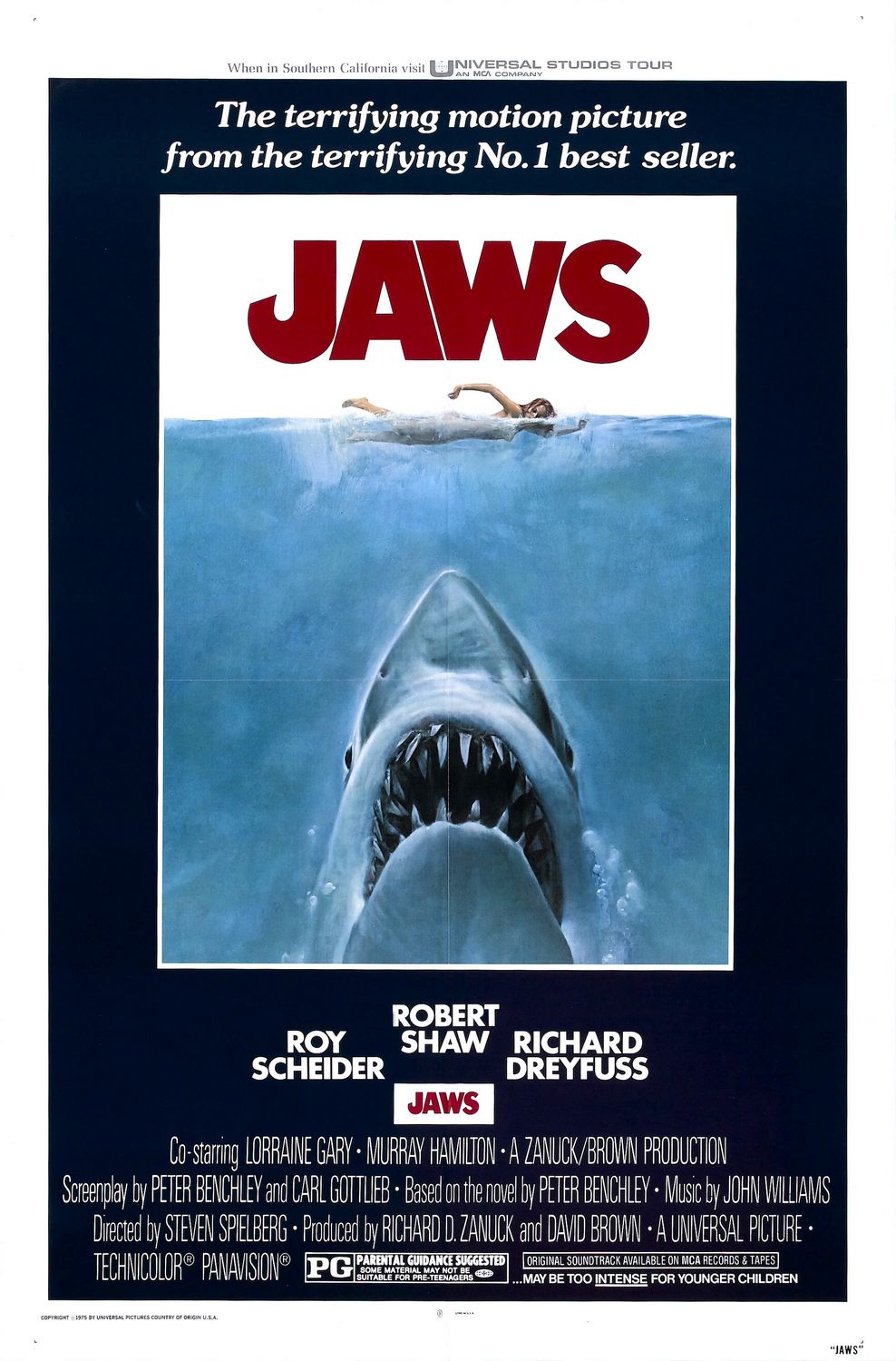
The Plot: The sleepy New England town of Amity Island is suddenly a hive of activity when a great white shark (Bruce) starts eating people along the beach. The town’s new police chief, city-transplant Martin Brody (Roy Scheider) wants to close the beaches, but is overruled by Mayor Vaughn (Murray Hamilton) who fears a beach closure will damage Amity’s profitable summer tourism. With the help of oceanographer Matt Hooper (Richard Dreyfuss) and eccentric shark hunter Quint (Robert Shaw), Brody is determined to prove the shark’s existence, find it, and kill it. And behind the camera, a young director is second-guessing his decision to film on location.

Why It Matters: The NFR calls the film a “now-classic thriller”, and praises John Williams’ score. They do, however, go on to state that the film is “expertly, if manipulatively, crafted” by Spielberg. Did the NFR include “Jaws” just to get that dig in?

But Does It Really?: It may have ruined movies forever and killed New Hollywood, but “Jaws” is still one of the best crafted action movies ever made and a landmark in film history. Like Hitchcock before him, Spielberg knows that simplicity (whether intentional or not) is key. The film preys on a primal fear, strips the novel down to its core elements, and is presented in Spielberg’s trademark “simple-yet-effective” filmmaking style. In the hands of a lesser director, “Jaws” would have been cheesy and formulaic, but a young Spielberg showcases his masterful storytelling, as well as his ability to roll with the punches whenever Mother Nature fights back. You may find Spielberg and his movies overrated, but you cannot deny the long-lasting impact and sheer entertainment value of “Jaws”.

Shout Outs: I can’t confirm that this movie’s iconic dolly zoom shot is an intentional “Vertigo” reference, but I can’t not confirm it either.

Everybody Gets One: Actor Lorraine Gary (as well as the countless Martha’s Vineyard citizens cast in bit parts), screenwriters Benchley and Gottlieb, and of course, Bruce.

Wow, That’s Dated: This film as a whole has that mellow post-Vietnam, post-Watergate vibe of the mid-‘70s. Plus we’re in the era when you had to specify you wanted a “color TV”.

Take a Shot: No one says “jaws”, but everyone just assumes it’s the name of the shark.

Seriously, Oscars?: The biggest hit of 1975 (or any year up to that point), “Jaws” was nominated for four Oscars, including Best Picture -which ended up being the only category it didn’t win (This was the year of the “One Flew Over the Cuckoo’s Nest” sweep). “Jaws” took home the prizes for its Score, Sound, and Editing, but Spielberg in particular was pissed that the film wasn’t nominated in any other categories.

Other notes

  • Let’s acknowledge the great white shark in the room: this film’s chaotic production is as legendary as the film itself. The script was constantly being re-written, Shaw and Dreyfuss were regularly butting heads, and Spielberg’s insistence on filming in the actual ocean caused delay after delay; to say nothing of how often the mechanical sharks broke down.
  • Chrissie picked a lovely day-for-night to go skinny dipping.
  • You know what never gets the praise it deserves in this film? The cinematography. There are some lovely compositions that never detract from the film. Hats off to Bill Butler, plus the live shark footage of Ron and Valerie Taylor.
  • Shoutout to Robert Shaw, whose Quint not only gets one of the best intros of any film character, but also two of the best film monologues.
  • This movie is a lot quieter than I remember it being. There are still plenty of “volume up, volume down” moments, but for the most part there’s a lot of silence. Nice restraint, Spielberg and Williams.
  • What happened to the mayor’s anchor jacket? Does the Smithsonian have it?
  • “Peter Benchley, Channel 5 News, Amity.”
  • The production setbacks really were a blessing. You can’t imagine the shark appearing before it finally does.
  • I knew it was coming, but that first overhead shot of the shark underwater always gives me chills. Seriously, during this viewing I went from the edge of my bed to the wall in a matter of seconds.
  • The one shot that baffles me is the shot in the estuary where the camera glides towards Michael. Is it from the fin’s POV or is the shark flying?
  • Typically when a movie spawns a famous line, everyone involved tries to take credit, but by all accounts, “You’re gonna need a bigger boat” belongs to Roy Scheider.
  • How did the actual survivors of the USS Indianapolis feel about their tragedy being used in this movie? Especially considering how many of the facts Quint gets wrong, including the date of the actual sinking.
  • Oooh, a shooting star! I bet everyone wished for production to wrap soon!
  • Jeez, that ending is brutal. It’s a wonder the PG-13 rating wasn’t created right then and there.

Legacy

  • In a bold marketing strategy, “Jaws” opened on over 450 screens on opening day (films typically opened in a handful of major venues before “rolling out” to the rest of the country), and spent most of its advertising budget on TV ads (another unheard-of move). The gambit worked, “Jaws” was a smash, and thus the summer blockbuster was born.
  • Sequels. So many sequels. But no matter how many they made, the shark still looked fake.
  • Knock-offs. So many knock-offs. “Orca” and “Piranha” being the most notorious culprits.
  • A “Jaws” inspired shark attack is still part of the Universal Studios Hollywood tram tour. The Orlando park expanded this sequence into a full ride, but encountered just as many technical difficulties as the original film. The ride still exists, however, at Universal Studios Japan.
  • John Williams’ score is responsible for every jerk that’s ever hummed those two notes in a swimming pool. It’s not funny, Jeremy!
  • “That’s some bad hat, Harry.”
  • Jeffrey Voorhees and Lee Fierro (Alex and Mrs. Kintner, respectively) still live on Martha’s Vineyard. Voorhees manages a pub called “The Wharf”; try the Alex Kitner Burger!
  • But perhaps the film’s largest influence: people are terrified of sharks, even though less than 1% of all sharks are actually harmful to humans. It makes the argument for their preservation as a species a lot harder.

Further Viewing: The other great recut trailer of the mid-‘00s: the romantic comedy “Must Love Jaws”.

#268) A Star is Born (1954)

5da596a34e4c608e0b1ed9a81f2272ba

#268) A Star is Born (1954)

OR “Judy, Judy, Judy”

Directed by George Cukor

Written by Moss Hart. Based on the 1937 film: screenplay by Dorothy Parker & Alan Campbell & Robert Carson, story by Carson and William A. Wellman.

Class of 2000

Note: The only readily available version of “A Star is Born” is a 1983 restoration of the original premiere runtime. About 30 minutes of footage is reinstated, forming an inarguably stronger picture. For scenes where only the audio survived, still photos and outtake footage are used.

The Plot: At a Hollywood benefit, over-the-hill movie star Norman Maine (James Mason) meets struggling singer Esther Blodgett (Judy Garland). Maine is bowled over by Blodgett’s talent and uses his clout to get her a screen test. After some initial setback, Esther – now “Vicki Lester” – lands the lead in a big Hollywood musical. The film is a hit, and a star is…christened. But as Esther’s star begins to rise, her now-husband Norman’s free-falls into decline, leading to his relapse into alcoholism. It’s the ultimate Hollywood tragedy, and the rare time a film remake is superior to its original.

Why It Matters: The NFR praises Judy, director Cukor, and the song score by Harold Arlen and Ira Gershwin.

But Does It Really?: As a film, “A Star is Born” is entertaining, albeit a bit bloated. But any flaws this film possesses are instantly forgiven by Judy Garland’s performance. Quite simply, this is the role Judy was born to play. You can see her pouring everything into Esther, to the point where it gets difficult differentiating character from actor. She is grounded by James Mason’s wonderful work, as well as by George Cukor’s intelligent direction. This is Judy’s movie, but she is surrounded by the best of the best, and “A Star is Born” is more than worthy of preservation.

Shout Outs: Norman references “An American in Paris” while discussing Vicki’s “Someone to Love” number.

Everybody Gets One: Producer Sidney Luft was the third Mr. Judy Garland and father of Lorna and Joey.

Wow, That’s Dated: So much cultural appropriation in this film. Exhibit A: [Deep Exhale] “Swanee”.

Seriously, Oscars?: “A Star is Born” failed to receive a Best Picture or Director nod, and lost all of its six nominations. Most egregious: In what Groucho Marx called “the greatest robbery since Brink’s”, Judy Garland lost the Best Actress Oscar to Grace Kelly in “The Country Girl”.

Other notes

  • Since this film is one of the rare remakes to make the NFR before its predecessor, I screened the 1937 “A Star is Born” along with the 1954 version. It’s no contest: 1954 wins hands-down. The remake retains the same story, but is far less melodramatic and makes smarter overall choices in its directing and acting.
  • This material really doesn’t need the expansive CinemaScope format, but cinematographer Sam Leavitt makes the film spacious without seeming epic. It feels like a standard widescreen film with some breathing room. And on top of that, most scenes are comprised of long single takes. I’m always down for that.
  • Movies are moments. Our memories of films erode to one or two moments: a scene, a line, a performance, etc. Few movies are perfect from beginning to end, but many have at least one of those perfect moments captured on film. “The Man That Got Away” is a prime example.
  • One of my favorite choices is having Esther already somewhat jaded when we meet her. The 1937 film has Janet Gaynor fresh off the farm and 100% optimistic. It loses steam fast, while with Judy you see the continuous struggle between her dreams and her reality. It’s the stronger choice.
  • Don’t let Judy’s work eclipse James Mason. You’re only as good as your scene partner, and Mason crafts a wonderful character arc while simultaneously setting Garland up for success. Any of the countless stars that turned down Norman (from Cary Grant to Frank Sinatra) couldn’t have done it better than Mason.
  • There’s a lengthy deleted sequence early on that is reconstructed using audio and photos. It’s a huge chunk to cut so early in your film, and its removal hurts Norman’s characterization a bit. I’m just glad someone took all those photos.
  • This movie blesses us with the Wilhelm Scream. Twice!
  • “Born in the Trunk” is this movie’s “Broadway Melody”: it serves no plot purpose but boy is it great to look at. And for those of you taking notes: that’s a flashback within a movie within a movie.
  • What a weird place to put your intermission. It’s immediately after “Born in the Trunk”, which is not a climactic moment. I would have put it after “It’s a New World”; a number with more weight to it, plus you get a better sense of Esther and Norman’s impending woes.
  • Once we hit the second half of the film, there are several scenes in which the dialogue from the 1937 version is left almost entirely intact. If it ain’t broke…
  • “Someone to Love” is the number responsible for “the Judy hands”, as immortalized on the poster. Side note: Why is she dressed like Elaine Stritch in this scene?
  • Oh the sad irony of Judy winning an Oscar in this movie.
  • They cut “Lose That Long Face”? No wonder Judy lost the Oscar: they cut the character’s heart out!
  • Here’s another one for my “Die Hard” Not-Christmas list!
  • Whoops, the ocean rear projection just looped. That’s gonna mess up the tides real bad.
  • Tommy Noonan is not up for the dramatic weight he has to carry in his big scene. Unsurprisingly, Judy wipes the floor with him.
  • “Hello everybody. This is Mrs. Norman Maine”. God that stings.

Legacy

  • Thanks to studio interference, “A Star is Born” wasn’t the comeback vehicle Judy wanted it to be. She focused on live performances and stayed away from the movies until 1961’s “Judgment at Nuremberg”.
  • “A Star is Born” has been remade two more times: the 1976 Barbra Streisand vanity project, and the Bradley Cooper/Lady Gaga update that’s being released this week! I swear I did not time it out this way.

Further Viewing: Anything that needs to be said about the Garland/Kelly Oscar race is summed up in this expertly researched video from “Be Kind Rewind”. A must-view for any Oscar buff.

Listen to This: Seven years after “A Star is Born”,  “Judy at Carnegie Hall” covered Garland’s debut at the iconic venue in what has been described as “the greatest night in show business history”. After years of scandal and heartbreak, “Judy at Carnegie Hall” is the apex of an unparalleled show business career.