#228) Casablanca (1942)

casablanca

#228) Casablanca (1942)

OR “Citizen Blaine”

Directed by Michael Curtiz

Written by Julius J. Epstein and Philip G. Epstein and Howard Koch. Based on the play “Everybody Comes to Rick’s” by Murray Burnett and Joan Alison.

Class of 1989

There’s no way I could condense “Casablanca” down to 1000 words, so buckle up for a Horse’s Head Super-Sized Two-Parter!

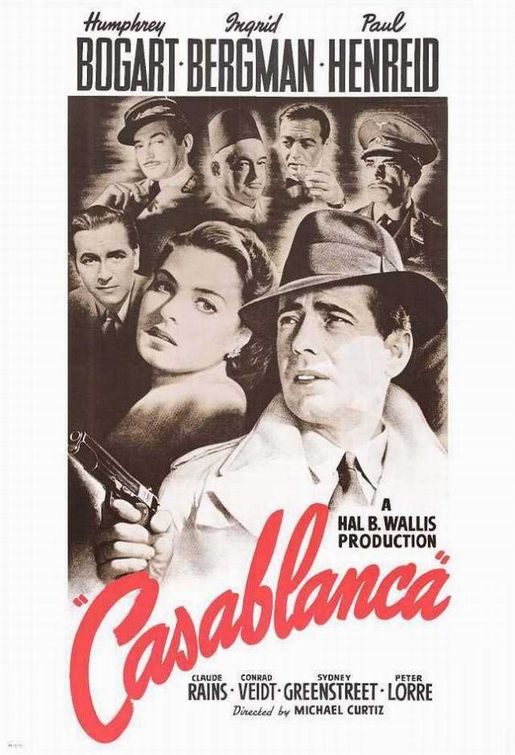
The Plot: It’s December 1941 and Casablanca, Morocco is a wartime limbo for those seeking escape from the Nazis while awaiting passage to the still-neutral United States. Most of these European refugees spend their days at Rick’s Café Américain, owned by jaded expat Rick Blaine (Humphrey Bogart). He keeps his politics to himself, but will serve drinks to anyone, and keeps corrupt Vichy police captain Louis Renault (Claude Rains) on his payroll. One eventful day at Rick’s sees the appearance of two “letters of transit” stolen by criminal Ugarte (Peter Lorre) that can guarantee safe passage to America, as well as the arrival of Resistance leader Victor Laszlo (Paul Henried) and his wife Ilsa (Ingrid Bergman), whom Rick had a lost weekend with in Paris during the Battle of France. Will Rick use the papers to aid the Allied cause for Victor and Ilsa? Or will he rekindle his feelings for Ilsa and run off with her? And will someone please let Sam (Dooley Wilson) play a different song?

Why It Matters: The NFR calls it “[o]ne of the most beloved of American films”, though admits that the script is “often lacking logical cohesion”. An essay by film critic Jay Carr isn’t so much an appreciation of “Casablanca”, but rather an examination of the power that movies have on our lives and our culture.

But Does It Really?: “Casablanca” has something for everyone, and is the rare film that succeeds on each front. It’s the prime example of a movie that favors emotions over logic: the plot has a few holes in it (there’s no such thing as a “letter of transit”), but who cares when Bogart and Bergman look into each others’ eyes while Max Steiner’s score swells in the background? Like so many of the greats, “Casablanca” defies its own genre; labeling it as good drama would deny the script’s brilliantly funny dialogue, and hailing it as a classic romance would ignore the film’s dark look at two continents escaping Nazi persecution. For a film that deals with a very specific time in world history (they had to change the timeframe once America entered the war), “Casablanca” is effortlessly timeless. It’s the perfect doomed romance, mixed with a crucial historical backdrop, eye-pleasing locales, and some of the greatest characters committed to celluloid. To call “Casablanca” overrated or unworthy of recognition is downright un-American.

Everybody Gets One: Julius and Philip Epstein were twin brothers from New York hoping to make it as Hollywood screenwriters. They clashed with Jack Warner (who didn’t?), but when assigned to adapt an unproduced play set in a Moroccan nightclub, they solidified their place in film lore, although Julius always said they were just “making a living”. The brothers left halfway through writing to work with Frank Capra on his “Why We Fight” films, leading to production delays.

Wow, That’s Dated: Ilsa calls 56-year-old Sam “the boy”. Even the all-time classics have their unfortunate signs of the time.

Title Track: Not only is Casablanca referenced throughout the movie, but Louis even manages to sneak in the play’s original title, telling Major Strasser “Everybody comes to Rick’s”.

Seriously, Oscars?: Although released in late 1942 to capitalize on the recent Allied invasion of French North Africa, “Casablanca” didn’t play Los Angeles until January 1943, and was therefore eligible for the 1944 Oscars. The film didn’t receive the most nominations or win the most awards (both of those distinctions went to “The Song of Bernadette”), but “Casablanca” took home the three big ones: Adapted Screenplay, Director, and Best Picture. Bogart’s iconic performance lost Best Actor to Paul Lukas in the more personal wartime film “Watch on the Rhine”, while Claude Rains’ morally ambiguous work lost to the more lovable Charles Coburn in “The More the Merrier”. When “Casablanca” was announced as Best Picture, producer Hal Wallis started to get up, but Jack Warner rushed the stage and accepted the award. This led to Wallis’ resignation from Warner Bros. after 21 years with the studio.

Other notes

  • One of the things I enjoy most about this blog is researching famous Hollywood stories to see if they actually happened. More often than not, the claims are half-truths that depend on perspective rather than out-right falsehoods. Ronald Reagan may have been considered for Rick, but Humphrey Bogart was everyone’s first choice. And although the script was being rewritten throughout production, the ending (which is faithful to the original play) was established in early drafts, so it’s more likely that Ingrid Bergman was confused over who Ilsa truly loved rather than who she would ultimately end up with.
  • There’s something special about “Casablanca” from the very beginning. The film is neither groundbreaking nor revolutionary, it just had the right people in the right roles at the right time. A+ talent, mixed with serendipity.
  • The best line no one ever quotes, “I like to think you killed a man. It’s the romantic in me.”
  • Also making his sole appearance on the NFR is Conrad Veidt as Major Strasser. Veidt was a silent film star in his native Germany and, like many “Casablanca” cast members, fled to America to escape the Nazis.
  • In addition to this movie’s mix of genre, it has a perfect blend of romanticism and cynicism. The love story is romantic and emotional, but Rick’s general wryness helps keep things grounded.
  • Like you need me to tell you how good Bogart and Bergman are in this film. He’s wonderfully complex and she’s masterfully cryptic. Both of them inhabit their characters so naturally is it any wonder they are forever associated with Rick and Ilsa?
  • Shoutout to Paul Henried, fresh off his romantic turn in “Now, Voyager”, playing filmdom’s greatest third wheel. He knew he was playing a “stiff” and he allegedly didn’t get along with anyone, but Henried successfully lobbied for above-the-title billing and received film immortality for his troubles.
  • The Blue Parrot is the “Gary’s Old Towne Tavern” to Rick’s “Cheers”.
  • Speaking of, Sydney Greenstreet is not very convincing as an Italian who has embraced the Moroccan culture. Anyone can wear a fez.
  • Rick is a perfect example of a character that is defined by his actions rather than his words. There’s the occasional piece of expositional dialogue (like his pseudo-catchphrase “I stick my neck out for nobody.”) but the key moments of understanding Rick’s character come in moments of silence; his non-reaction to Ugarte’s arrest, his nod to the band, etc.
  • Oh no, it’s the “Le Marseillaise” scene. I’m not crying you’re crying.
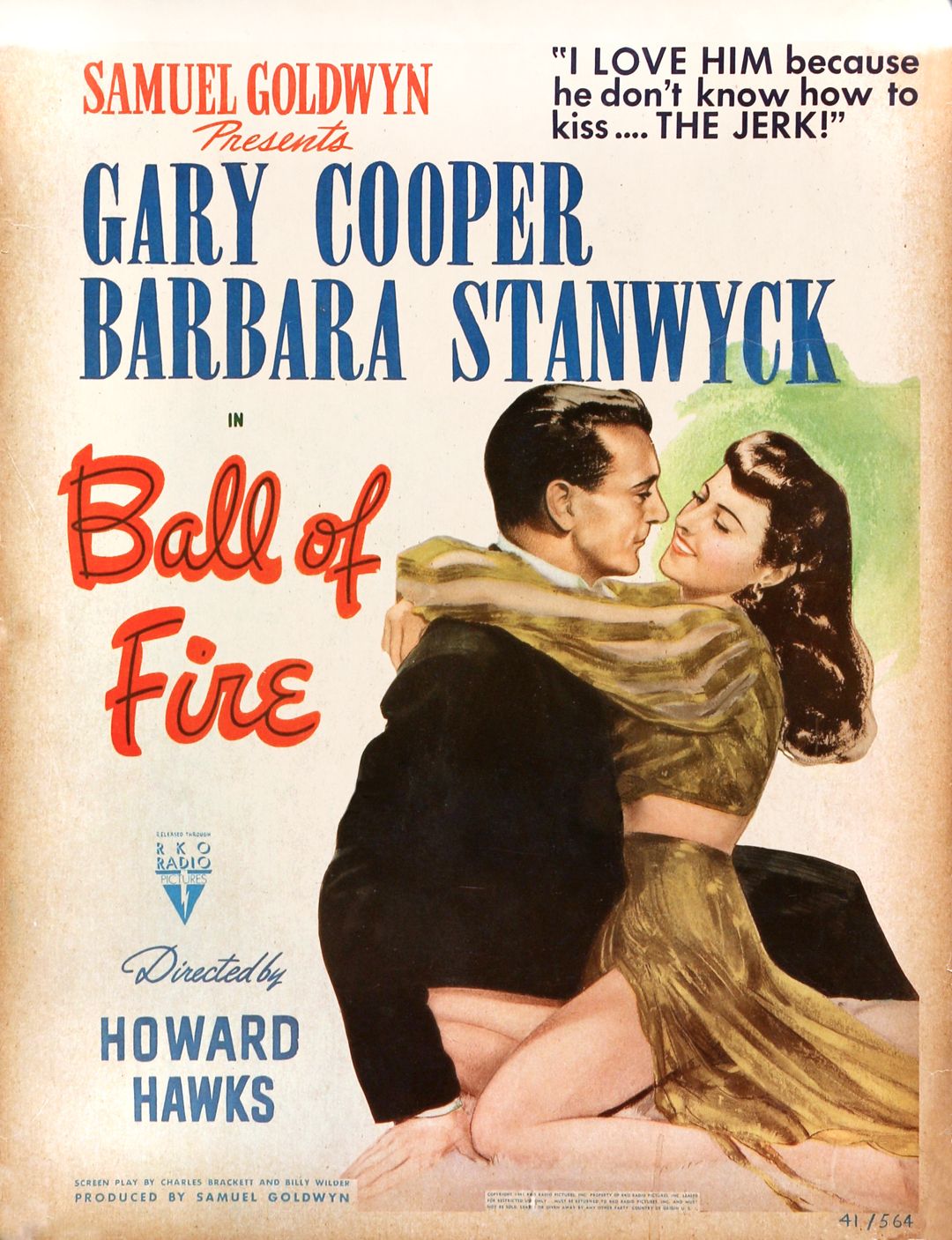
  • This happens every once in a while: the same character actor appears in two films I’ve covered in the same week. This time it’s jolly Hungarian actor S.Z. Sakall (erroneously credited here as S.K. Sakall) as Rick’s headwaiter Carl. He’s one of the professors in “Ball of Fire”.
  • I forgot how many of the iconic lines come in the last 10 minutes; “We’ll always have Paris.”, “Here’s looking at you, kid”, “Louis, I think this is the beginning of a beautiful friendship”, “I drink your milkshake!” You’d think these lines would be distracting due to their oversaturation, but if anything, hearing them again in their proper context makes them stronger.
  • They should never end up together and there should never be a sequel. There, I said it.
Click here for Part 2 and the Legacy of “Casablanca”!

#227) Field of Dreams (1989)

field_of_dreams_xlg

#227) Field of Dreams (1989)

OR “Eight Men In”

Directed & Written by Phil Alden Robinson. Based on the novel “Shoeless Joe” by W.P. Kinsella.

Class of 2017

The Plot: Native New Yorker Ray Kinsella (Kevin Costner) lives on a farm in Iowa with his wife Annie (Amy Madigan) and their daughter Karin (Gaby Hoffmann). He’s an avid baseball fan who never made peace with his late father John (Dwier Brown). One day in the cornfield Ray hears a mysterious voice telling him “if you build it, he will come”. He decides the “it” is a baseball diamond, and the “he” is the ghost of disgraced White Sox player “Shoeless” Joe Jackson (Ray Liotta). Soon the ghosts of Jackson’s teammates come to the field, but the voice keeps giving Ray more instructions. After encounters with reclusive author Terence Mann (James Earl Jones) and former Major League-hopeful “Moonlight” Graham (Burt Lancaster), Ray learns the true reason why he had to build the field…of dreams. 

Why It Matters: Too lazy to come up with their own justification, the NFR cribs from Leonard Maltin, who says “Field of Dreams” is “in the tradition of the best Hollywood fantasies with moments of pure magic.”

But Does It Really?: Despite a father who loved baseball and a mother who loves movies, I’ve never seen “Field of Dreams” until now. And for obvious, perhaps genetically ingrained, reasons, I liked it quite a bit. Its iconic status was going to place it on here sooner or later, and I feel that’s justified. Yes, the film is sentimental and a bit hokey, but it’s all done in such a masterful way you don’t really care. In fact, it’s these slightly outdated factors that help the film age well. “Field of Dreams” is a baseball movie that isn’t just for baseball fans, and the rare successful modern-day fantasy.

Shout Outs: Brief references to “The Wizard of Oz”, “Citizen Kane” and “The Godfather”.

Everybody Gets One: Almost everyone, most notably Phil Alden Robinson, Amy Madigan, and thirtysomething Timothy Busfield.

Wow, That’s Dated: A quick joke about Shirley MacLaine’s New Age beliefs (a go-to punchline throughout the ‘80s) and something called a “home computer”.

Seriously, Oscars?: A hit with critics and audiences, “Field of Dreams” snagged three Oscar nominations. The film lost Picture and Adapted Screenplay to “Driving Miss Daisy”, while James Horner’s score lost out to “The Little Mermaid”. That being said, “Field of Dreams” is the first of the five 1989 Best Picture nominees to make the Registry.

Other notes

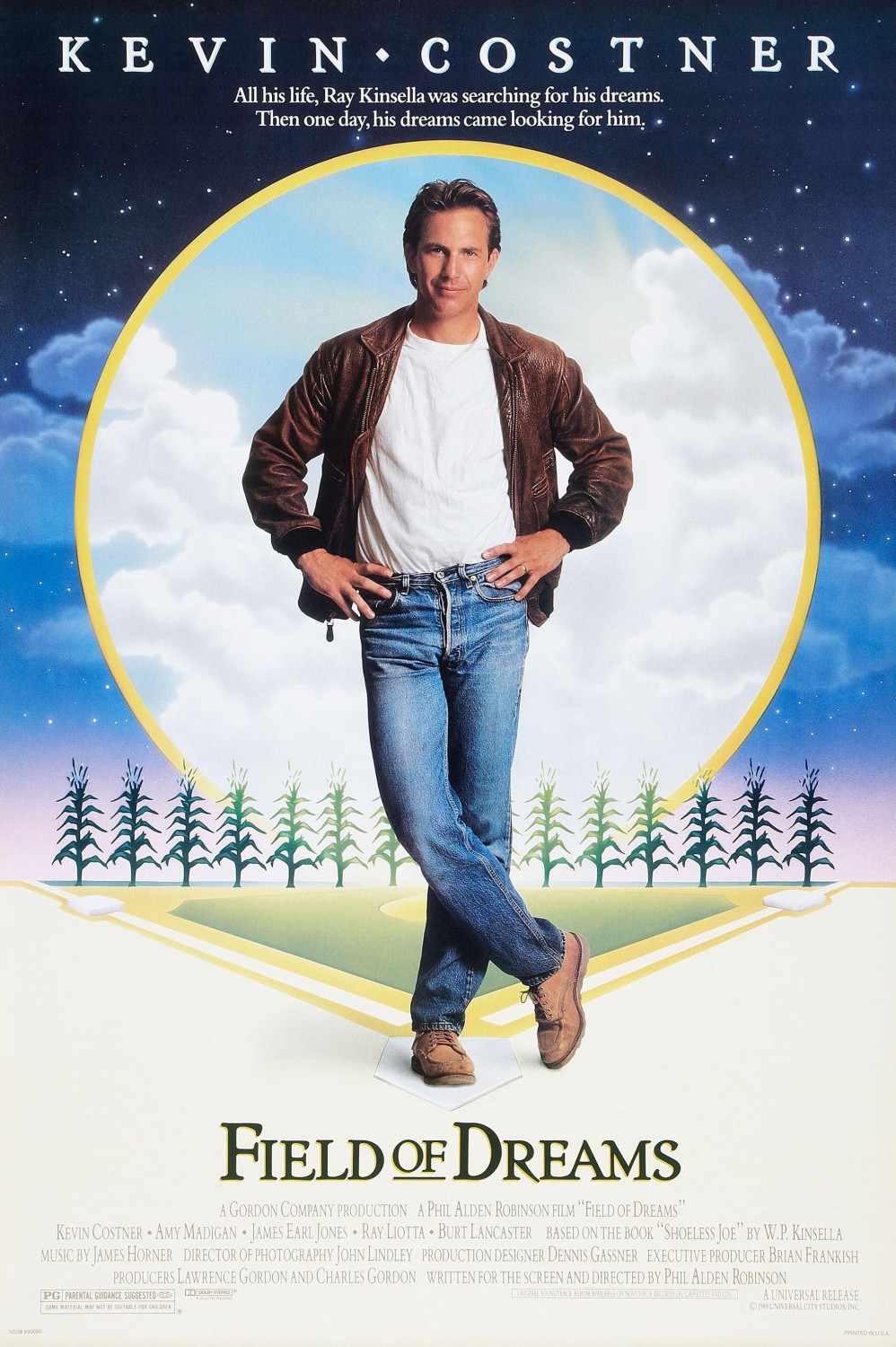
  • This is one of those movies where the poster really doesn’t tell you anything about the actual film. But it’s got Kevin Costner and baseball, and you liked “Bull Durham” didn’t you?
  • Ray says that until he built the diamond he had “never done a crazy thing in [his] whole life.” Moving across the country to Berkeley and marrying someone you have zero in common with are both pretty crazy if you ask me.
  • It’s not that Kevin Costner’s a bad actor, it’s just that his range is a bit limited. When the film gives him moments that play to his natural charisma, he’s very charming on-screen. Anything else just kind of sits there, especially when the likes of James Earl Jones and Burt Lancaster show up.
  • You see their adorable daughter Karin? That’s Gaby Hoffmann from “Girls” and “Transparent”. Cool, right?
  • Who is The Voice? The internet seems to believe it’s Ed Harris (Amy Madigan’s husband), but I like the mystery.
  • Shoutout to “Harvey”, a classic movie yet to make it on the Registry.
  • “Crazy”? Really, movie? Weirdly, it’s not the Patsy Cline version, but rather the Beverly D’Angelo as Patsy Cline version from “Coal Miner’s Daughter”. Both films are Universal pictures.
  • Thanks to one brief shot, this film makes my “Die Hard” not-Christmas movie list.
  • Presumably all those baseball players were teleported to the cornfield by a young Billy Mumy.
  • Ah yes, the ghosts can’t leave the diamond due to Arbitrary Ghost Rules.
  • Kudos to Amy Madigan (as well as Phil Adlen Robinson). Unlike most movie wives, Annie is immediately supportive of Ray and continues to be so through the whole film.
  • In the original novel, Ray tracks down real-life reclusive author J.D. Salinger. To avoid Salinger’s litigious wrath, the part was rewritten to the fictional Terence Mann: author and outstanding Javert.
  • James Earl Jones is just lovely in this film. He should have gotten an Oscar nod for his delivery of “piss off” alone.
  • Among the extras at the Fenway Park game are young Ben Affleck and Matt Damon. Damon’s also in “Saving Private Ryan”, so technically this is Affleck’s “Everybody Gets One”. Anyone know if you can see them in the final film?
  • Burt Lancaster is perfectly cast as “Moonlight” Graham. His status as a Hollywood icon lends itself well to the emotional weight this brief role requires. Plus I always get a kick out of his very crisp delivery.
  • Ray is impressed with Archie’s knowledge of when towns would get aspiring baseball players day jobs. Check out the big brain on the guy who played Brett.
  • Robinson loves his dolly zooms. I see where he’s going, but I found them all a bit distracting.
  • Slam on Ty Cobb outta nowhere (The Georgia Peach, not the other one).
  • Timothy Busfield is Richard Dreyfuss-ing all over the place in this film.
  • It’s fitting that the last shot of Burt Lancaster in his final Hollywood film is him walking off into the cornfield. I’m not crying, you’re crying.

Legacy

  • “Field of Dreams” is responsible for one of the most misquoted lines in film history. “If you build it, he will come” is referenced throughout popular culture as “If you build it, THEY will come.” So close.
  • Phil Alden Robinson has been steadily writing and directing over the last 30 years. Among his post-“Field” credits are “Sneakers” and “The Sum of All Fears”, starring extra-turned-leading man Ben Affleck.
  • The state of Iowa used “Is this Heaven? No, it’s Iowa.” as a slogan for its tourism in the early ’90s.
  • James Earl Jones would appear as another reclusive baseball fan in 1993’s “The Sandlot”. Art LaFleur (Chick Gandil) makes a cameo as Babe Ruth, and has the best line in the movie.
  • The actual baseball diamond built for the film in Dubuque County, Iowa is still in operation to this day. My parents visited the field in 2006 (back when the land was split between two separate families) and Mom took the obligatory photo of Dad walking into the cornfield.
DSC00244
Photo courtesy of Ann Cirimele. Thanks Mom!

#226) Ball of Fire (1941)

7268ec658d39ee3b2bb948294803b5d5

#226) Ball of Fire (1941)

OR “Trying Hard to Book Like Gary Cooper”

Directed by Howard Hawks

Written by Charles Brackett and Billy Wilder. Based on the story “From A to Z” by Wilder and Thomas Monroe.

Class of 2016

The Plot: Nightclub singer Sugarpuss O’Shea (Barbara Stanwyck) has to hide out while her mobster boyfriend Joe Lilac (Dana Andrews) is under investigation. She ends up in a Manhattan residence with Professor Bertram Potts (Gary Cooper) who, along with his seven colleagues (Oskar Homolka, Henry Travers, S.Z. Sakall, Tully Marshall, Leonid Kinskey, Richard Hayden, Aubrey Mather) is editing an encyclopedia and could use Sugarpuss’ expertise on modern slang. Potts and O’Shea start to fall for each other, but Lilac isn’t too far away to spoil the fun. It’s “Snow White” with a boogie rhythm.

Why It Matters: The NFR says the film “captures a pre-World War II lightheartedness” and praises Hawks, Wilder and Brackett. They also call Gene Krupa’s cameo a highlight. Nothing about Stanwyck or Cooper, but how about that Gene Krupa?

But Does It Really?: This is definitely a “minor classic”. Cooper and Stanwyck have better movies from 1941 alone (“Sergeant York”, “The Lady Eve”, and non-entry “Meet John Doe”), and Wilder has his whole career following this movie. “Ball of Fire” can be fun at times, but it’s never quite the comedy bull’s-eye it should be. Nevertheless, the film has historical significance for igniting Wilder’s transition to directing, and it has a reputation as the last great screwball comedy, so it was going to make this list eventually.

Shout Outs: The film is of course a modern update of “Snow White and the Seven Dwarfs”. There’s also a quick allusion to “Sergeant York”, and Sugarpuss’s concern that Potts has “a slight case of Andy Hardy”.

Everybody Gets One: Screenwriter Thomas Monroe doesn’t have a lot of credits to his name, but he was the man who helped Billy Wilder translate and Americanize his story “From A to Z” from its original German.

Wow, That’s Dated: It’s about encyclopedia writers trying to decipher boogie-woogie slang; this thing is 1941 down to its marrow.

Title Track: Legendary character actor Charles Lane says the title about 90 minutes in, as part of a newspaper headline regarding Sugarpuss.

Seriously, Oscars?: “Ball of Fire” got four Oscar nominations, but got lost in the shuffle of a lineup that included “Citizen Kane”, “How Green Was My Valley”, and “Sergeant York” (the latter of which garnered nominations for Hawks and Cooper). Stanwyck lost Best Actress to Joan Fontaine in Hitchcock’s “Suspicion”, and Wilder & Monroe lost Original Story to “Here Comes Mr. Jordan”.

Other notes

  • Wow, look at those credits! Hawks, Wilder, producer Sam Goldwyn, cinematographer Gregg Toland, composer Alfred Newman, costumer Edith Head; all of the heavy hitters came out for this one.
  • Richard Haydn was 36 when he played the elderly Professor Oddley. Whether you know him as the Caterpillar in “Alice in Wonderland” or Max Detweiler in “The Sound of Music”, you can clock that voice in a second.
  • Sooooo much ‘40s slang. What is everyone saying?
  • I don’t know how I feel about Barbara Stanwyck in this film. Of course she’s incapable of giving a bad performance, but I would argue she’s miscast as Sugarpuss. Stanwyck is many things as an actress – tough yet vulnerable, a confident combination of sultry and wisecracking – but is she more hip than Gary Cooper? Original choices Carole Lombard and Ginger Rogers would have been better options.
  • For those of you keeping score, that’s two movies written by Billy Wilder that feature a singer named Sugar.
  • There are several “pan-and-scan” shots throughout. Toland recognized the difficulty of getting eight or more people in the same shot.
  • Speaking of, Gregg Toland photographed “Ball of Fire” immediately following his work on “Citizen Kane”.
  • Sudden slam on “The Daily Worker”.
  • This film is not without its faults, but Cooper and Stanwyck do have excellent chemistry together. Cooper in particular is quite good playing a reserved intellectual in love.
  • Sugarpuss’ nickname for Potts is “Potsie” after, of course, Potts’ favorite “Happy Days” character.
  • Before starting this blog, Dana Andrews wasn’t really on my radar. I have now seen four of his movies and I gotta say he’s severely underrated. He can be the relatable lead in “The Best Years of Our Lives” and the heavy in this, both effectively.
  • This film takes a while to get started, but like so many of the great film comedies, the first half is set-up, and the second half’s payoff more than makes up for lost time.
  • While never on anyone’s list of greatest movie quotes, the best line in the movie is Sugarpuss’ mini-monologue about Potts: “I love him because he doesn’t know how to kiss, the jerk.”
  • The script is filled with the kind of smart one-liners we associate with Billy Wilder (as well as Charles Brackett), but Hawks likes his lines coming fast and furious, so a lot of the dialogue gets thrown away, a Wilder no-no. Is it any wonder he wanted to direct?
  • Look out, Clarence has a gun! He will earn his wings if he has to take everyone with him!

Legacy

  • This film’s main takeaway was Billy Wilder deciding he needed to direct his own scripts to ensure minimal studio interference. Hawks allowed Wilder to study his directing style on the set, and Wilder took the wheel for his next screenplay, “The Major and the Minor”. Wilder remembered Barbara Stanwyck’s ability to handle ‘40s slang when he wrote “Double Indemnity”.
  • Samuel Goldwyn remade “Ball of Fire” with 1948’s “A Song is Born”. The leads were Goldwyn favorites Danny Kaye and Virginia Mayo, but both films have the same producer, director, cinematographer, and Miss Totten.

#225) Portrait of Jason (1967)

poj023_wide-307ee14b01e14512643614694cc1e6c93a7a94f8-s900-c85

#225) Portrait of Jason (1967)

OR “Carrying the Torch Song”

Directed by Shirley Clarke

Class of 2015

A modern trailer of the film’s restored print

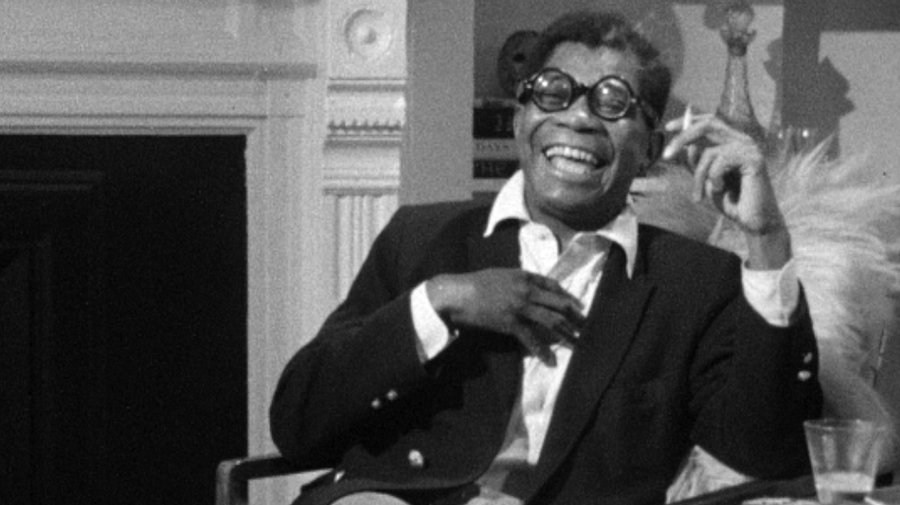
The Plot: Filmed over the course of one 12-hour night in Shirley Clarke’s penthouse at the Hotel Chelsea, “Portrait of Jason” is an extended interview with Jason Holliday, a Black, openly gay hustler and would-be performer. With drink and joint in hand, Jason recounts his life, personal struggles, romantic past, showbiz dreams, and everything in between. As the night turns into morning, Jason becomes more revealing, and the off-screen assistance from Shirley Clarke and actor Carl Lee gets a bit hostile.

Why It Matters: The NFR calls the film “one of the first LGBT films widely accepted by general audiences” (and by “general” they mean New York film festival attendees). The write-up also describes the film’s production and later restoration.

But Does It Really?: “Portrait of Jason” has been earning its indie film street cred thanks to its recent restoration, and for the most part it is deserving. If you have the patience to watch a movie that is just one man talking for two hours, it pays off. Jason Holliday can be engaging, and the backdrop he paints is a pivotal one for both Black and gay history. It’s also fascinating to watch him peel away more layers as the night wears on. The film gets a pass on its historical merit, but I will recommend you do a little research before watching “Portrait of Jason”. Read up on Jason himself, Shirley Clarke, and the circumstances that led to this film to give you more context and (hopefully) more entertainment value. (See “Other Notes” below for a good starting point)

Shout Outs: Among the films Jason references in his nightclub act are NFR entries “Gone with the Wind” and “Carmen Jones”. He also quotes the “Bar None” line from “Gilda”. Honorable Mention: Jason sings “The Music That Makes Me Dance”, a song from the stage version of “Funny Girl” that didn’t make it to the film.

Everybody Gets One: Very little is known about Jason Holliday’s early life, other than he was born Aaron Payne and met Shirley Clarke through her partner Carl Lee, who studied at the American Academy of Dramatic Arts alongside Holliday. Jason and Shirley had not seen each other in a while, when a chance meeting on the streets of New York led to Clarke choosing Jason as her next subject. We’ll see more of Shirley Clarke and Carl Lee in their earlier film, “The Cool World”.

Wow, That’s Dated: All kinds of hip ‘60s slang from Jason like “cats” and “flunkie” and “hang-up”.

Seriously, Oscars?: No LA release for “Jason”, so it wasn’t eligible for the Oscars that year. Can you imagine the 1967 Academy voting for a film with an openly gay Black lead? They were still warming up to “Guess Who’s Coming to Dinner”, baby steps please.

Other notes

  • If you want to know anything (and I mean anything) about the making of this film, look no further than this press release for the film’s 2013 restoration. It even comes with a handy glossary of all the slang Jason uses.
  • It took me a while to get accustomed to the film’s use of going out of focus for transitions. I was convinced it was the crew’s first time handling the equipment, which I suspect was one of the many ways Shirley Clarke tried to make this seem like discarded footage.
  • Jason spent some time in San Francisco, and it’s a treat to get brief recollections of the city from 50-plus years ago. He mentions Aquatic Park, which is still a lovely, quiet spot in San Francisco, and one of the few that isn’t swarming with hipsters or techies.
  • Jason is very candid about his homosexuality on camera. Pretty ballsy for the pre-Stonewall Riots era.
  • Jason seems pleased with being recorded, stating; “This is a picture I can save forever.” The NFR had the same idea, apparently.
  • Jesus, that is some strong weed. He gets incredibly stoned in about three minutes. Pass that around, man.
  • Jason has no problem saying “fuck”, “cunt” and “twat” multiple times, but tiptoes around directly mentioning his genitalia, referring to the area only as “it”.
  • The Mae West/Victor McLaglen film Jason is thinking of is 1936’s “Klondike Annie”. Mae’s “peel me a grape” line is from “I’m No Angel”.
  • Don’t think I didn’t catch you reversing the film to elongate that pause, Shirley! The smoke going back into the joint is the giveaway.
  • Are there any other NFR entries that mention “golden showers”? I can only think of this and “Bambi”.
  • Who were Shirley Clarke’s downstairs neighbors during all of this? I don’t know why but I hope it was William S. Burroughs. Or Eloise.
  • Rare is the documentary where one of the filmmakers is outwardly antagonistic towards the subject. Carl grilling Jason about a time he was rude to Shirley is up there with Michael Moore’s awkward Charlton Heston interview in “Bowling for Columbine”.
  • Overall this film reminded me of all the great, candid late night conversations I’ve had while drunk and sleep deprived. Good times.
  • Among those who helped fund this film’s restoration are director/choreographer Jo Andres, and her husband, that one guy. You know, the guy who’s in everything.

Legacy

  • After the success of “Portrait of Jason” in the New York film festival circuit, Jason Holliday…stayed pretty much where he was. Nothing life-changing happened to Jason due to this film, and he continued to languish in obscurity up to his death in 1998.
  • The original print was deemed lost until it showed up at the Wisconsin Center for Film and Theater Research in 2013. This lead to a thorough restoration from UCLA.
  • The making of “Portrait of Jason” is fictionalized in the 2015 film “Jason and Shirley”. I think it was filmed on my dad’s camcorder from the ‘90s.

#224) The Power and the Glory (1933)

MV5BZDAzZWFlOTctMzk2Mi00NjYxLWI4MzYtNWJjOWNlMTA4ODU3XkEyXkFqcGdeQXVyMjUxODE0MDY@._V1_

#224) The Power and the Glory (1933)

OR “A Rosebud By Any Other Name”

Directed by William K. Howard

Written by Preston Sturges

Class of 2014

Wow, a historic first: I can’t find a single clip of this movie on YouTube. There’s a bunch on TCM’s website, but I like embedding something, so here’s a YouTube video that is the film’s Wikipedia article made audible for the visually impaired.

The Plot: Railroad magnate Tom Garner (Spencer Tracy) has died, and many speak ill of his life decisions. But Tom’s oldest friend Henry (Ralph Morgan) defends him by telling Tom’s life story with the help of some inventive flashback techniques. In no particular order we see Tom and Henry’s childhood meeting, Tom’s courtship with schoolteacher Sally (Colleen Moore), his rise to prominence in the railroad industry, his estranged relationship with Tom Jr. (Philip Trent), and the union dispute that almost ended his career. It’s a movie about the life of a cryptic tycoon told through flashback and other creative devices which, now that I think about it, sounds a lot like another, exponentially more famous movie on this list…

Why It Matters: The NFR calls the film “a haunting tragedy” and cites the film’s main talking points: It was Preston Sturges’ first screenplay and it may or may not have influenced “Citizen Kane”. The essay by Fox expert Aubrey Solomon says more or less the same thing.

But Does It Really?: The Sturges and “Kane” connections are pretty much what this film has going for it. “The Power and the Glory” isn’t bad, it’s merely fine. The revolutionary use of flashback seems tame by today’s standards, and Spencer Tracy is good, but you’ve seen him (and Preston Sturges) do better. “The Power and the Glory” is essentially what “Citizen Kane” would have been with half the budget and no “Rosebud” mystery. I would be much more agreeable to this movie’s NFR inclusion if there was proof that Orson Welles was influenced by it, or heck, if he even saw it at all. If anything, this induction is more a point in favor of “Citizen Kane”, whose reputation is stringing “The Power and the Glory” along 80 years later.

Everybody Gets One: Technically, director William K. Howard has 1½ entries in the NFR. He directed this, and was the original director on “Knute Rockne, All American”, before being replaced following a disagreement with Warner Bros. His career never recovered and he directed B pictures for the rest of his life.

Wow, That’s Dated: Look no further than Henry’s narration during the first flashback: “When I was a kid, we didn’t have radio or moving pictures or automobiles and all those like the kids have today.”

Title Track: Ever the devout Catholic, Spencer Tracy says the title while reciting the Lord’s Prayer following the birth of his son.

Seriously, Oscars?: No nominations for “The Power and the Glory”. Fox’s main Oscar contender that year was “Cavalcade”, which consistently ranks among the least memorable Best Picture winners in Oscar history.

Other notes

  • “Power” is noteworthy as Preston Sturges’ first screenplay, but the deal Sturges made with the studio should also be mentioned. Rather than give Fox a treatment, Sturges went ahead and submitted a full screenplay. Producer Jesse L. Lasky called it “the most perfect script I’d ever seen” and offered Sturges a percentage of the grosses, rather than the flat-fee screenwriters traditionally got. It set a precedent going forward, and gave Sturges his start in Hollywood.
  • Like many films from Fox’s pre-merger days, the original print of “The Power and the Glory” was destroyed in the 1937 Fox fire. What survives is a print that appears to have been used for TV broadcasts in the ‘50s. The film was restored in 2015 using available materials, but the version I watched was this early print. I admit it made my viewing a bit difficult.
  • In addition to being the first president of the Screen Actors Guild, Ralph Morgan is the older brother of Frank Morgan, aka “The Wizard of Oz”.
  • This movie’s choice of flashback dissolve: Pan and zoom during a dissolve.
  • Billy O’Brien plays Tom as a child, and he is no actor. Not surprisingly, his film career didn’t last too long after this movie.
  • Spencer Tracy is one of the few actors who knows how to subtly play older. He doesn’t talk in a different voice or exaggerate any creakiness; he’s just a bit slower in those scenes.
  • These flashbacks are pretty sophisticated for the ‘30s. Forget Orson Welles, maybe Christopher Nolan was the one this movie influenced.
  • So unique was this film’s nonlinear storytelling that Fox coined a new word to describe it in press material: “narratage”. Didn’t stick.
  • Nope, that’s a real train way in the background outside of Sally’s window. Definitely not a model train a few feet from the window. I presume it’s going to the Neighborhood of Make Believe.
  • You can see flashes of brilliance in Sturges’ writing, and the germ of what would eventually become Struges’ trademark dialogue, but this is a screenplay where the structure outshines the words.
  • Colleen Moore’s quite good as Sally. It’s a nice change of pace from the ‘20s flapper girls she was most associated with (see “Ella Cinders”).
  • The Hays Office threw a fit at the implication that Tom Jr. was having an affair with his stepmother, and was alluded to be the father of her child. There were edits and reshoots, but it’s definitely still what’s going on between the lines.
  • “Blonde Angel”, wasn’t that a Jean Harlow movie?
  • We have yet another movie that just sorta ends. Henry finishes his flashback, his wife silently leaves the room, and that’s it. Cool story, bro.

Legacy

  • News on the March! “Citizen Kane”: a cinematic triumph with an influence so big it can never be catalogued or appraised. Championed by millions of Americans, hated by as many more. Famed in American legend is the origin of the “Kane” story. But where does “The Power and the Glory” play into the works of Welles and Mankiewicz? No man can say.

2020 Update: Just completed my “Citizen Kane” post. I have spent countless hours researching the film and reading a wide array of essays about it, and while some of the film’s contemporary reviews noted parallels between “Kane” and “The Power and the Glory”, I could not find ONE GODDAMN PIECE OF PROOF that “Kane” was directly influenced by “Power”. That’s one more point in favor of “Kane”, and one more point deducted from “Power” and its NFR standing.