#92) The Producers (1967)

producers

#92) The Producers (1967)

OR “Hitler on Ice”

Directed & Written by Mel Brooks

Class of 1996

The Plot: Washed-up Broadway producer Max Bialystock (Zero Mostel) is struck by inspiration when visited by nebbish accountant Leo Bloom (Gene Wilder); he could make more money producing an expensive flop than a cheap hit. After persuading Leo to join him, Max finds “Springtime for Hitler”, an awful and offensive musical by ex-Nazi Franz Leibkind (Kenneth Mars). With the enlisted help of flamboyant director Roger De Bris (Christopher Hewett), beatnik actor Lorenzo St. DuBois (Dick Shawn), Swedish secretary Ulla (Lee Meredith) and a devoted group of little old ladies, what could possibly go right?

Why It Matters: The NFR calls it “an entertaining ride” and commends Brooks for “temper[ing] the over-the-top gags and stereotypical characters with a touch of sweetness”. An essay by Gene Wilder biographer Brian Scott Mednick is an overview of the film’s production that focuses, not surprisingly, on Gene Wilder.

But Does It Really?: Full disclosure: I am a longtime Mel Brooks fan, so this one’s a no-brainer for me. Watching it again, I was amazed just how hard I still laughed at everything. Mostel and Wilder are perfectly cast against each other, and Mel’s script – while not as jaw-droppingly controversial as it was in 1967 – is a solid foundation from which everything is built. It loses a bit of steam towards the end, but “The Producers” is a landmark in film comedy and led the way for the zany masterwork of Mel Brooks.

Shout Outs: A brief mention of “The Wizard of Oz” from Roger De Bris.

Everybody Gets One: Despite Mel’s eventual stock company of actors in later films, this is the only Registry appearance (and only collaboration with Mel) for stars Zero Mostel, Dick Shawn, Lee Meredith and Christopher “Mr. Belvedere” Hewett. Also be on the lookout for Barney Martin (aka Jerry Seinfeld’s Dad) and Renee Taylor (aka Fran Drescher’s Mom) in the “Springtime for Hitler” book scenes.

Wow, That’s Dated: This round of “What’s Playing on Broadway Back Now?” features the short-lived musicals “Hallelujah, Baby!” and “Henry, Sweet Henry”, which puts the film somewhere in fall 1967. Also someone definitely had to explain to me what a Karmann Ghia was. But nothing is more 1967 in this film than Dick Shawn’s performance as flower child Lorenzo St. DuBois (“And what have you done, LSD?”).

Seriously, Oscars?: “The Producers” survived a studio shelving and a critical skewering, but in the end the right people “got it” and Mel managed to win the Oscar for Best Original Screenplay. It would be the only Oscar for any of Mel’s films. Newcomer Gene Wilder was nominated for Best Supporting Actor (despite having as much screen time as Zero Mostel), and lost to Jack Albertson’s more sentimental turn in “The Subject Was Roses”. Wilder would take this out on Albertson three years later.

Other notes

  • Zero Mostel’s real first name is Samuel. He was told that if he didn’t do better in school he’d be a zero. As someone once wrote, children will listen.
  • Wait, this movie said “It’s only a flesh wound” first?
  • I love this movie, but god the opening credits go on forever.
  • The first 20 minutes (essentially just Zero and Gene Wilder) are about as perfect as film comedy gets. Proof that sometimes all you need is the right script with the right actors.
  • When I went to New York for the first time, I made sure to visit the fountain in front of Lincoln Center. Thanks to this film, it’s as iconic as the Statue of Liberty.
  • Kudos to Casting Director (and former Mel Brooks assistant) Alfa-Betty Olsen. This film is populated with some of my favorite bit players in any film, among them Shimen Ruskin as Bialystock’s landlord and Madelyn Cates as the conci-urge.
  • On a less fun note, this film’s jokes on gay stereotypes have aged the poorest.
  • Why does Lorenzo’s band have a saxophone that sounds like a flute on the soundtrack?
  • How do you think “Springtime for Hitler” did at that year’s Tony Awards? I mean, the 67-68 season was known for heralding the end of Broadway’s Golden Age, so “Springtime” could’ve managed a win or two.
  • My favorite line; “You are the audience. I am the author. I outrank you!”
  • Does anyone else notice that LSD completely vanishes from the film after opening night? Same goes for Carmen, with Roger not too far behind.
  • Oh how I wish the song “Springtime for Hitler” had gotten a Best Song nomination at the Oscars. Can you imagine the hoops Mel would’ve had to jump through just to get it on the air?

Legacy

  • Mel referenced “The Producers” in almost all of his subsequent films.
  • The film finally made it to Broadway in 2001 with a stage musical that, while never beating the original for its perfect timing, is a delightful old-fashioned book musical.
  • The “Producers” musical got its own film version in 2005. It…is a film version of the musical and falls flat on almost every level.
  • U2’s Achtung Baby
  • The entire fourth season of “Curb Your Enthusiasm” involved Larry playing Max in the aforementioned musical version of “The Producers”. Mel and his wife Anne Bancroft cameoed in the finale with their own little “Producers” twist.

Further Viewing: A expertly researched and impeccably pointed video essay by Lindsay Ellis (who has really blossomed since breaking out of the “Nostalgia Chick” mold) focuses on “The Producers”, its specific kind of satire, and why it’s okay for Mel Brooks (and not you) to make fun of Hitler.

Listen to This: Before he was a legendary filmmaker, Mel Brooks was 2000 years old. Based on a bit Brooks and Carl Reiner did to entertain each other while writing “Your Show of Shows”, “2000 Years with Carl Reiner and Mel Brooks” was the surprise comedy album hit of 1961, earning the two a Grammy and eventually a place in the National Recording Registry.
#91) The Last of the Mohicans (1920)

Last-mohicans-1920

#91) The Last of the Mohicans (1920)

OR “Seven Years’ Bore”

Directed by Maurice Tourneur and Clarence Brown

Written by Robert A. Dillon. Based on the novel by James Fenimore Cooper.

Class of 1995

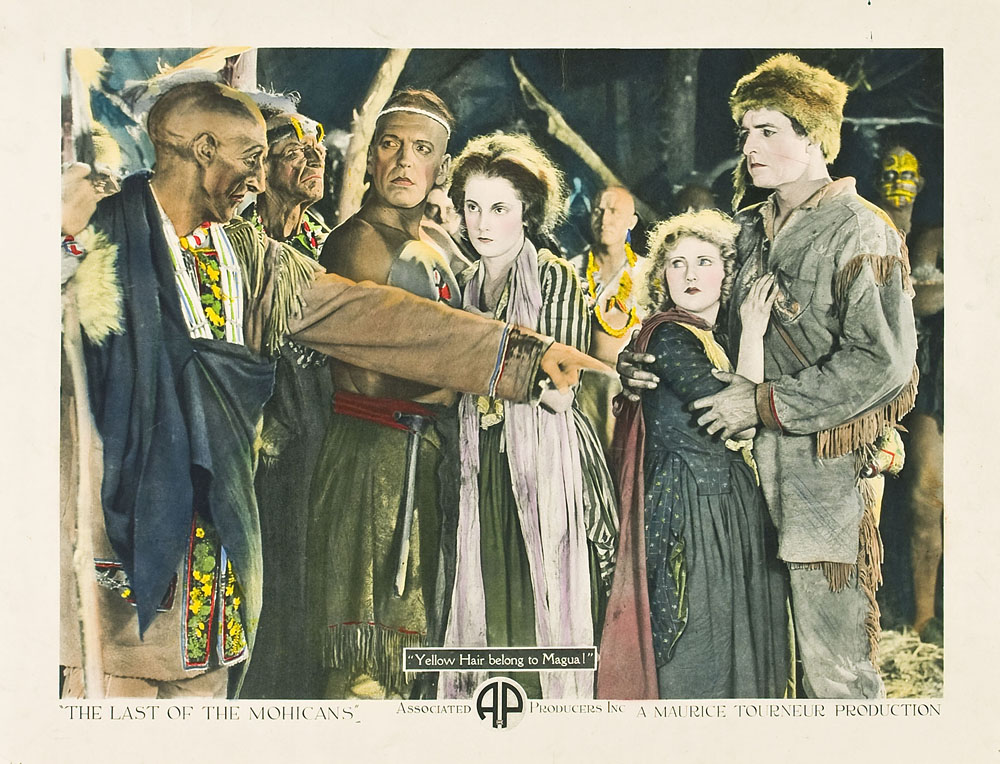
The Plot: In the midst of the French and Indian War, title character Uncas (Alan Roscoe) and a white man raised by the Mohicans named Hawkeye (Harry Lorraine) are sent by the English to escort Cora and Alice Munro (Barbara Bedford & Lillian Hall) to their father (James Gordon) at Fort William Henry. They are thwarted along the way by Cora’s jilted suitor Captain Randolph (George Hackathorne) and Huron Indian Chief Magua (Wallace Beery), an ally of the French Army. In the middle of all of this, Cora starts to fall for Uncas.

Why It Matters: The NFR says that the film “astutely balanced the romantic angle with plenty of action sequences, albeit often stereotypical and brutal.” Their description also mistakenly identifies director Maurice Tourneur as his son (and fellow film director) Jacques Tourneur. Whoops.

But Does It Really?: Many (including Cooper himself in his later years) called the novel unreadable, and this film adaptation, while not unwatchable, is a real slog. I can’t tell if it’s just the limitations of the silent film medium, or if the film as a whole just hasn’t aged well. Regardless, I really can’t find a compelling argument to preserve this film. There are other film versions of this novel (see “Legacy” below) and other opportunities to preserve the works of this cast and crew. I suspect it’s on here due to a restoration of the film in 1993, two years prior to its induction, which was probably only initiated because of the success of the 1992 film version. Who knows?

Everybody Gets One: Barbara Bedford and Alan Roscoe were married not too long after working together on this film. They divorced, but re-married two years later and stayed together until Roscoe’s death in 1933.

Wow, That’s Dated: You mean besides having all of the Native Americans played by white people in redface? I feel like we should just focus on that one.

Other notes

  • Director Maurice Tourneur also directed the fantasy film (and fellow NFR entry) “The Blue Bird”. An injury on the set of this film led to his assistant Clarence Brown taking over the picture, and a 32-year directing career began.
  • Barbara Bedford has a face for silent movies. She may be the only actor in this film aware that the audience has to be able to see your face.
  • Why would you invite along someone who admits he is just going to sing psalms the whole time?
  • The action scenes help pick things up a little bit, but they are few and far between. And how many of these scenes are going to end with two people rolling down a hill?
  • As with a lot of silent films based on novels, this film really doesn’t know how to adapt to a different medium. So much of the visual translation is muddled, and so little of the pertinent text from the book is displayed as title cards.

Legacy

  • The novel has been remade several times over the years, most notably a 1936 version starring Randolph Scott as Hawkeye, and the 1992 version with Daniel Day-Lewis in the role.
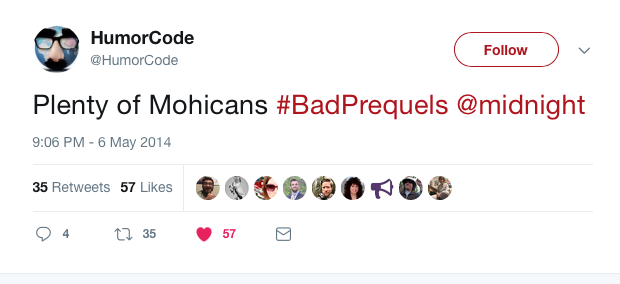
  • This prequel

Screen Shot 2017-08-06 at 11.49.12 PM

  • Bonus Clip: Perhaps the best line reading in film history.

#90) Snow-White (1933)

bettyboopcvr

#90) Snow-White (1933)

OR “Brothers Grimm Via Brothers Fleischer”

Directed by Dave Fleischer

Class of 1994

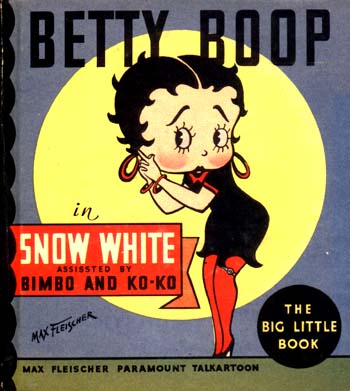
The Plot: Very, very loosely based on the fairy tale, Betty Boop (voice of Mae Questel) is Snow White, the “fairest in the land” much to the chagrin of her evil stepmother the Queen (possibly also voiced by Questel). Snow White is sentenced to death, but is rescued by Koko the Klown & Bimbo the Dog (voices of Cab Calloway & Billy Murray, respectively) as well as seven indistinguishable dwarfs.

Why It Matters: Despite being the only “Betty Boop” cartoon on the Registry, the NFR listing includes no specific reasons why this short was chosen.

But Does It Really?: Hey kids, wanna see the weirdest cartoon ever? I guess I’ve never really seen a lot of Betty Boop cartoons, because this one took me by surprise. Apparently adult-oriented surreal animation and Cab Calloway music were staples of the series? Regardless, a Betty Boop cartoon should be included on the Registry, and I guess this one will do. But be warned, there are no amount of recreational drugs that can prepare you for this animation.

Everybody Gets One: The real star of this film is animator Roland Crandall. The story goes that the Fleischer Brothers gave Crandall carte blanche on this short’s animation as thanks for all his hard work on previous shorts. He did not disappoint.

Wow, That’s Dated: Fleischer Studios’ hallmark of rotoscoping performers (in this case Cab Calloway) for Koko’s dance movements.

Seriously, Oscars?: Despite being eligible in the relatively new “Best Short Subjects, Cartoon” category, “Snow-White” was snubbed in favor of more sophisticated, less racy fare like “The Three Little Pigs”. No Betty Boop cartoon ever received an Oscar nomination.

Other notes

  • But seriously, are we sure Salvador Dalí didn’t have a hand in animating this?
  • The Queen in this version is not too far removed from Mae Questel’s other great Fleischer character: Olive Oyl.
  • Both Koko and Bimbo were stars of their own cartoon series in the ‘20s. Their waning popularity mixed with Betty’s rising star led to them becoming supporting characters in her series.
  • The film diverges from the fairy tale in a lot of places, but I’ll take a Cab Calloway number over “Love’s First Kiss” any day of the week.

Legacy

  • This short was released just before the Hays Code went into effect, ending the risqué version of Betty as we know it. Attempts to keep Betty going in a more conservative fashion ended poorly.
  • Work’s been kind of slow for Betty since cartoons went to color. But she’s still got it, Eddie!
  • Four years later, Walt Disney would try his hand at telling the Snow White fairy tale in animation. Folly, I tell you!

#89) An American in Paris (1951)

american_in_paris_xlg

#89) An American in Paris (1951)

OR “Song & France”

Directed by Vincente Minnelli

Written by Alan Jay Lerner

Class of 1993

The Plot: Jerry Mulligan (Gene Kelly) is a former GI now living in Paris as a struggling painter. He falls for lovely young French woman Lise (Leslie Caron) who it turns out is dating his mutual friend, performer Henri Baurel (Georges Guétary). At the same time heiress Milo Roberts (Nina Foch) takes interest in Jerry’s art, and possibly a whole lot more. But all of this is just the wall from which to hang some classic Gershwin tunes and some of the best dance numbers captured on film.

Why It Matters: I get the feeling whoever had to do the “American in Paris” NFR write-up didn’t like the film. They call the plot “thinnish”, point out that George Guétary didn’t become the film’s break-out star, and highlight the two numbers that Gene Kelly isn’t in. Was no one else in the office that day?

But Does It Really?: By comparison my thoughts are practically gushing. It may fall apart under scrutiny, but “An American in Paris” is one of the most romantic, feel-good musicals ever made. I dare you to not grin from ear to ear while watching it. This is the film in which Gene Kelly finally broke through as a true artist, and everything around him from the songs to the set help amplify that artistry. If forced to choose I’d still say “Singin’ in the Rain” is the quintessential Gene Kelly film, but “An American in Paris” is a worthy close second.

Everybody Gets One: Of the credited cast, Georges Guétary is the only actor with one film on the Registry. Among the uncredited masses is Noel “Lois Lane” Neill**.

Wow, That’s Dated: A quick shout-out to Hopalong Cassidy, plus some very obvious Chroma key outlining during any scene in a car.

Seriously, Oscars?: “An American in Paris” won six Oscars, including a surprise win for Best Picture (most people were backing either “A Streetcar Named Desire” or “A Place in the Sun”). Despite not being nominated for Best Actor, Gene Kelly did take home an honorary Oscar for his contributions as a choreographer. It was Kelly’s only Oscar during his 50-year showbiz career.

Other notes

  • This was Leslie Caron’s first film. Like her character, Leslie was 19 when she filmed this. Gene Kelly was literally twice her age during filming.
  • Hope you enjoyed those establishing shots, because that’s all you’re seeing of the real Paris for the next two hours!
  • Five minutes in and we get three different narrators, a device we never see or hear again. What gives?
  • A bed that hangs from the ceiling. That’s what I need!
  • Yes, modern girls were definitely still doing The Charleston in 1951.
  • Among the great things about this film is that many of the scenes (musical or otherwise) are presented in just a handful of continuous takes. It gives the whole film a wonderful energy about it.
  • By many accounts he was a taskmaster and not the nicest person, but on screen Gene Kelly is effortlessly charming. And he’s great with kids, that’s always a plus.
  • Having never seen this film before, I was not expecting it to be so funny. Kudos to Alan Jay Lerner, and special kudos to actor Oscar Levant, who hits most of those lines out of the park.
  • Always great to see Dr. Bellows in a movie.
  • Oh I really like Nina Foch in this film. It’s a character we don’t get in a musical too often and she nails it. I wish she could’ve gotten an Oscar nomination.
  • Ah yes, that classic movie romance where he’s aggressive and a borderline stalker but she’s okay with it because it’s…charming?
  • How come the only thing Adam can compose are Gershwin songs?
  • Nice split-screen work during Adam’s dream number. Very “Parent Trap”.
  • Ooh, a joke about Hitler only six years after the war. Quite ballsy.
  • The lead-up to “’S Wonderful” is brilliant. There are three different narratives happening in the same shot, and two of them continue into the song. Perfect.
  • So if my math is right, Lise was 8 to 13 years old when she stayed with Henri during the war. And now they’re engaged. …Okay then.
  • Seeing Gene Kelly in those tight pants I suddenly understand why every woman I’ve ever met wants to climb him like a tree.
  • That ending ballet is great and all, but isn’t it just a rip-off of the ending of “La La Land”?

Legacy

  • Boy, when Gene Kelly does an encore…
  • Many of the artists involved in “An American in Paris” would continue their collaboration throughout the ‘50s musicals that comprise MGM’s “Freed Unit”. This era hit its peak with 1958’s similarly veined “Gigi”.
  • “Love Is Here To Stay” went from second-tier Gershwin to American standard thanks to this film.
  • We get a “new” Gershwin musical every decade or so, so it was only a matter of time before “An American in Paris” made its way to Broadway. Thankfully, it’s a perfect match.

Listen to This: The best Gershwin composition not in this film, George’s “Rhapsody in Blue” was first recorded in 1924. George played piano with Paul Whiteman as conductor. The recording was among the first 50 in the NRR’s inaugural class of 2002.

** 2017 Update: Speaking of, Ms. Neill has a cameo in new NFR entry “Superman”.

#88) Annie Hall (1977)

untitled-2

#88) Annie Hall (1977)

OR “What’s It All About, Alvy?”

Directed by Woody Allen

Written by Allen and Marshall Brickman

Class of 1992

The Plot: Woody Allen-esque comedian Alvy Singer (Woody Allen) has just turned 40 and is starting to wonder where his life went wrong. Most especially, he is trying to pinpoint why his relationship with aspiring singer Annie Hall (Diane Keaton) eventually broke down. Through comic analysis and plenty of Fourth Wall breaking, Alvy looks at his unhappy childhood, his two previous marriages, and his love of New York vs. his hatred of L.A., but he ultimately keeps coming back to everything he had with Annie. Oh, and there’s a large vibrating egg at one point.

Why It Matters: The NFR calls it “Allen’s most mature and personal film” and includes an essay by Boston Globe film critic Jay Carr.

But Does It Really?: As difficult as it is for me to separate the art from the artist, I have always thought that “Annie Hall” is a great film. It may in fact be Woody’s best film, the perfect melding of his “early, funny” films and his later, more sophisticated films. It is an artist’s self-analysis without being egotistic, and a romantic comedy without being sappy or predictable. Keaton and Allen anchor the film with their performances; she is endearing, he is surprisingly charming, and you never lose sight of why these two love each other. Woody has done some bad things in his day, but “Annie Hall” is not one of them.

Shout Outs: Quick references to “The Godfather” and “The Wizard of Oz”, plus an animated parody of “Snow White and the Seven Dwarfs” (though I don’t recall the Evil Queen having see-through nipples).

Everybody Gets One: Legendary stage actor Colleen Dewhurst, as well as fellow theater people Tony Roberts, Janet Margolin and John Glover. And of course, Marshall McLuhan.

Wow, That’s Dated: Such ‘70s things as EST, Uri Geller, and casual coke habits. Plus a joke about Annie’s rent being an astronomical $400 definitely doesn’t land today.

Seriously, Oscars?: In a head-to-head competition with “Star Wars”, “Annie Hall” took home four Oscars in four major categories; Best Picture, Director, Original Screenplay, and Actress for Keaton. The only category they lost was Best Actor for Woody, who still won two Oscars he couldn’t care less about. The film received no technical nominations, meaning no love for editor Ralph Rosenblum and (of course) cinematographer Gordon Willis.

Other notes

  • First off, a shout-out to the great film editor Ralph Rosenblum. If you can track it down I recommend his book “When the Shooting Stops…The Cutting Begins: A Film Editor’s Story”. Rosenblum relates the individual challenges that he encountered while editing such films as “The Pawnbroker”, “A Thousand Clowns” and many of Woody’s early films. Most of what we know now as “Annie Hall” was found in the cutting room.
  • This is one of the first films to include the standard “Woody Allen Opening Credits”: white Windsor typeface against a black backdrop. Later films will include the now-required ‘40s mood music.
  • No Alvy, the worst thing I can say about you isn’t “balding”.
  • For the record, everything said by the man on line at the movie theater is everything this blog is against. No film snobbery or mansplaining here, I can promise you that.
  • It’s fun to see Carol Kane in a role as far removed from “Unbreakable Kimmy Schmidt” as possible. Run Lillian!
  • Oh, Janet Margolin. She was Woody’s leading lady in “Take the Money and Run” and is seen here as Alvy’s second wife. She is best remembered for her brief role as the prosecuting attorney in “Ghostbusters II”. She left us much too soon.
  • But seriously, how could you not fall in love with Annie Hall? Diane Keaton’s performance is pretty damn flawless in this film.
  • I’ve gotten a lot of mileage out of the line “That’s okay, we can walk to the curb from here.” I am also 12 and greatly enjoy the phrase “quietly humping”.
  • Can anyone confirm that that really is Truman Capote?
  • For those of you unfamiliar with Diane Keaton’s actual singing abilities, she was in the original Broadway cast of “Hair”.
  • Christopher Walken man. Christopher Walken. To see the birth of his film persona is always a thing of beauty. And to think they almost cut this scene.
  • Geez, even in people’s dreams Sinatra is a jerk to women. Are we sure that this wasn’t the dream of Sinatra ex/future Woody ex Mia Farrow?
  • Did Paul Simon just name drop Jack Nicholson and Anjelica Huston?
  • This film accurately portrays what Christmastime is like in Southern California.
  • So Rob acts and produces this sitcom? I guess they never explicitly say what he does out in L.A.
  • Quick shout out to Masters and Johnson before they were Michael Sheen and Lizzy Caplan.
  • That “dead shark” line man. Woody was right on the money with that one. I’m surprised that’s not the line people quote from “Annie Hall”.
  • Rob is upset because he was going to make it with two 16 year-olds. WOODY WAS TRYING TO WARN US THIS WHOLE TIME!
  • This film is a buffet of “Before They Were Famous”. Jeff Goldblum is the partygoer who forgets his mantra, Beverly D’Angelo is the actress in Rob’s sitcom, and Sigourney Weaver is Alvy’s date at the very end. And THAT’S why the Oscars should have a Casting category.

Legacy

  • Diane Keaton (and possibly Ralph Lauren) created a late ‘70s fashion trend with Annie Hall’s clothing.
  • “When Harry Met Sally…”: Homage, disciple or carbon copy? You be the judge.
  • And of course, every Woody Allen film since this one. Most notably, the one where Woody and Diane get back together to solve a murder!