#397) Make Way for Tomorrow (1937)

e0db1527c46987f5759251e91aa89f4a

#397) Make Way for Tomorrow (1937)

OR “What a Drag It Is Getting Old”

Directed by Leo McCarey

Written by Viña Delmar. Based on the novel “Years Are So Long” by Josephine Lawrence and the play by Helen and Nolan Leary.

Class of 2010

The Plot: Barkley and Lucy Cooper (Victor Moore and Beulah Bondi), announce to four of their grown-up children (Thomas Mitchell, Elisabeth Risdon, Minna Gombell, Ray Meyer) that the bank has foreclosed on their home, and they must vacate immediately. With their fifth child unable to take them both in for three months, George (Mitchell) agrees to take in Mother, while Cora (Risdon) will house Father. Both parents become an instant burden on their children’s home, spouses, and lifestyles. It’s a reflection of complex family dynamics and ageism in America, courtesy of one of the Dream Factory’s more depressing trips to reality.

Why It Matters: The NFR praises the film for “[c]hallenging the tried-and-true conventions of late-‘30s films”, and gives specific mention to McCarey, screenwriter Delmar, and lead performers Bondi and Moore.

But Does It Really?: “Make Way for Tomorrow” isn’t an iconic classic, nor does it reach any technical or cultural milestones, but it does stand on its own piece of ground: a family drama that opts for a realistic, downbeat approach over the more audience-friendly optimistic style of the time. And it’s this against-the-grain take on the material, as well as its influence on future filmmakers, that allows “Make Way for Tomorrow” a slight pass for NFR inclusion. That being said, I highly advise you do your homework beforehand and know what you’re getting into.

Shout Outs: When the movie usher brings Rhoda up to speed on the movie she dropped Lucy off at, she mentions there being a newsreel and a “Betty Boop”.

Wow, That’s Dated: The film’s depression era definitely colors in most of this movie’s aesthetic. Also, our treatment of the elderly, while still not perfect, has definitely improved in the last 80 years. And by improved I mean sometimes we let them curse in movies.

Seriously, Oscars?: “Make Way for Tomorrow” was not successful with either critics or audiences in 1937, but Leo McCarey stood by the film, calling it his best. Upon winning the Oscar for Best Director for his other 1937 NFR entry, “The Awful Truth”, McCarey allegedly told the audience that he was receiving the award for the wrong movie.

Other notes

  • Leo McCarey was inspired to make “Make Way for Tomorrow” after two life-changing incidents: a near-death experience after becoming ill from contaminated milk, and the death of his father Thomas, whom he was very close to. McCarey stuck to his guns on this movie, refusing several pleas from Paramount to make something with a more traditional happy ending.
  • McCarey makes his thesis clear right from the beginning, with the giant title card “Honor Thy Father and Thy Mother”.
  • Beulah Bondi, Thomas Mitchell; did Frank Capra loan out his entire stock company for this movie?
  • If something seems off, that’s because both Victor Moore and Beulah Bondi are too young to be playing a couple in their early ‘70s; Moore was 61 in 1937, while Bondi was 48! She’s two years younger than Cora! That being said, Beulah Bondi was one of those actors who always played old.
  • It’s explained that Bark and Lucy’s fifth child, Addie, is not present at the beginning because she’s “way up there in California.” Up there? Where are they, Panama?
  • Once Ma moves in with George and Anita, I started to pick up on this movie’s vibe. This is not a family that will grow stronger through a series of comic episodes; this is a family whose failure to communicate will be their undoing. Seriously, the Coopers have the most uncomfortable family dynamic this side of “Ordinary People”.
  • Three years after her wonderful turn in “Imitation of Life”, Louise Beavers is back to playing the lead character’s maid who has little to do with the plot. Damn you, Hollywood.
  • Also dated: movie ushers actually doing their job.
  • Shoutout to Maurice Moscovich, giving a lovely performance here as Max Rubens, Bark’s only friend in Cora’s town.
  • Is it just me or does everyone in this movie hate each other?
  • There’s something you never see anymore: a “Man Wanted” sign, as opposed to a “Help Wanted” sign.
  • Bark says he and Lucy have been married 50 years. Which means they got married when Lucy was -2 years old! This is the first readout that has caused my Michael Douglas Scale to self-destruct.
  • It takes a while to get there, but Bark and Lucy’s goodbye at the train station is possibly the saddest such scene in history. These two are saying goodbye potentially for the last time, and they know it. I was not expecting this movie to stir up so much emotion in me.
  • Ultimately, that’s what I appreciated about this movie. Despite being a largely forgotten 82-year-old movie, it still managed to engage with me in a way many modern films can’t. I found myself sympathizing with almost every character, even during moments of conflict. This movie does not shy away from the topic of aging and how we all cope (or don’t) with it. These complex emotions run deep in everyone, therefore ensuring a film’s enduring legacy, even if it’s not one of the quote-unquote classics.

Legacy

  • “Make Way for Tomorrow” came and went in 1937, but its biggest fans included the likes of John Ford, Jean Renoir, and Orson Welles, who listed it among his influences for “Citizen Kane”.
  • Another admirer of “Make Way for Tomorrow” was Japanese filmmaker Yasujirô Ozu, who used this film as inspiration for his 1953 classic “Tokyo Story”.
  • Following the initial failure of “Make Way for Tomorrow” (and his refusal to take notes from the bosses), Leo McCarey was let go from Paramount. He bounced back at Columbia with “The Awful Truth”.


#78) Newark Athlete (1891)

maxresdefault.jpg

#78) Newark Athlete (1891)

OR “Somebody Didn’t Skip Arm Day”

Directed by William K.L. Dickson

Class of 2010

This is the revised and expanded version of my original “Newark Athlete” post, which you can read…you know what? Screw it. I’m not linking to the original post. It sucked. 

The Plot: Trucker Lincoln Hawk (Sylvester Stallone) has a strained relationship with his 10-year-old son Michael (David Mendenhall). In an attempt to prove to his son that he can be supportive, Hawk enters the World Armwrestling Championship in Las Vegas, where he must…oh, never mind; that’s the plot of “Over the Top”. Which one is “Newark Athlete”? A 20 second silent clip of a kid swinging Indian clubs? You sure you don’t wanna watch “Over the Top” instead?

Why It Matters: The NFR write up is a brief description of the film’s historical significance, and a shoutout to Dickson and cameraman William Heise.

But Does It Really?: Once again, we have a film that is on here for what it represents rather than for what it is. By itself, “Newark Athlete” is a brief, confusing snippet of seemingly nothing, but in a historical sense, it’s a single piece to the larger puzzle of early American film. It’s a puzzle we will never fully complete, but films such as “Newark Athlete” add more detail to the picture. “Newark Athlete” is nowhere near the untouchable essentials on this list, but its inclusion (and the subsequent research the inclusion inspires) helps us further understand what the likes of Edison, Dickson, and Heise were trying to accomplish with this new technology.

Everybody Gets One: Both Dickson and Heise are represented elsewhere on this list for their contributions to early film, including “The Kiss” and “The Dickson Experimental Sound Film”. This is, however, the only NFR appearance for the Newark athlete himself. There are no records of who this kid was or how he was selected to be filmed, but I’m gonna go ahead and assume that Edison paid him in experience. I can just imagine Edison telling him, “We can’t pay you, but you can use this in your demo reel, a concept which I patented earlier this morning.”

Wow, That’s Dated: Indian clubs were all the rage in the Victorian era; back when exercising meant donning a striped singlet and lifting comically large barbells. Club swinging was even an Olympic sport in 1904 and 1932! Their popularity waned in by the 1920s, but apparently Indian clubs are making a comeback as a martial art?

Other notes

  • The Library of Congress states that “Newark Athlete” was filmed in either May or June of 1891, making it the oldest film on the National Film Registry.
  • Filming occurred at the Edison Laboratory in West Orange, New Jersey (just a few miles from Newark).
  • No shockers here; Indian clubs originated in India as early as the 1600s. Also not surprisingly, they became popular once British soldiers started using them for military exercises and brought them back to England. Stupid colonialism.
  • Apparently the point of Indian clubs is to help increase mobility in the upper body, as well as to strengthen your hands. But what do I know; I spend my free time lounging about watching movies by people who died decades ago.
  • “Newark Athlete” was intended to be viewed on Edison’s Kinetoscope, which in terms of film technology was somewhere between an advanced zoetrope and a primitive projector. Unlike the later industry-standard film stock, Kinetoscope film was developed on a horizontal strip rather than a vertical one.
  • As far as film quality, this one definitely shows its age. Sure, it’s been preserved, but the permanent distortion on the actual film makes “Newark Athlete” look like an acid trip.

Further Viewing: It’s nearly impossible to detail the legacy of a film with purely historical significance and no direct homages or references in future films, so instead please enjoy the trailer to Sylvester Stallone’s “Over the Top”! Winner takes it all!

#396) Scratch and Crow (1995)

image-w1280

#396) Scratch and Crow (1995)

OR “We Need to Talk About Helen”

Directed by Helen Hill

Class of 2009

The Plot: Helen Hill’s abstract animation shows a surreal account of a chicken’s life span, from being hatched by a cat, to its death in some sort of teakettle, to its ascension into the sky as a flying egg.

Why It Matters: The NFR calls the film “poetic and spiritual”, and praises its “vivid color” and “light sense of humor”. The write-up also includes a link to Helen Hill’s official Vimeo page.

But Does It Really?: I am all for the NFR including animated shorts on the list, especially shorts by the underrepresented population of female animators, and especially if said female animator’s life was tragically cut short. Thank you NFR for preserving a film by Helen Hill, and ensuring that her sadly silenced voice has a place to be heard.

Everybody Gets One: Helen Hill made her first animated film, “The House of Sweet Magic”, when she was 11 years old, inspired by a presentation filmmaker Stan Woodward made to her class. After graduating from Harvard as an English major, and marrying classmate Paul Gailiunas, Hill pursued her passion for animation and received an MFA at CalArts. “Scratch and Crow” was her thesis project.

Seriously, Oscars?: No Oscar love for Helen Hill’s animation. For the record, 1995’s Best Animated Short winner was the Wallace & Gromit cartoon “A Close Shave”.

Other notes

  • “Scratch and Crow” was inducted into the NFR in the same class as “Little Nemo”, “Quasi at the Quackadero”, and “The Red Book”. Someone in the 2009 committee really pushed for experimental animation.
  • Based on this film, chickens are hatched by either giant gray cats or the Putty Patrollers from “Mighty Morphin Power Rangers”.
  • Does anyone know where the text comes from? Did Helen write that as well?
  • After the umpteenth shot of a flying egg, I’m beginning to think that this film’s depiction of the chicken life cycle might not be scientifically accurate.
  • Like many of Helen’s films, the final message is an uplifting one, with the faith that we are all “good chickens”.

Legacy

  • After graduating from CalArts, Helen Hill moved to New Orleans and continued making animated shorts. Sadly, Hill lost most of her possessions in Hurricane Katrina, and was displaced from her home for over a year. Less than five months after returning to New Orleans, Helen was murdered by an unidentified intruder in her home. She was 36.

Further Viewing: In addition to Helen Hill’s NFR recognition, her filmography has been preserved by the Harvard Film Archive, and is available to view on her official Vimeo page, monitored by her husband Paul Gailiunas.

#395) Flower Drum Song (1961)

da4825f2ed41d2a2908a3dd623cb1f83

#395) Flower Drum Song (1961)

OR “Chinatown Presents ‘Guys and Dolls’”

Directed by Henry Koster

Written by Joseph Fields. Based on the musical by Fields and Oscar Hammerstein II, and the novel by C.Y. Lee. Songs by Richard Rodgers & Oscar Hammerstein II.

Class of 2008

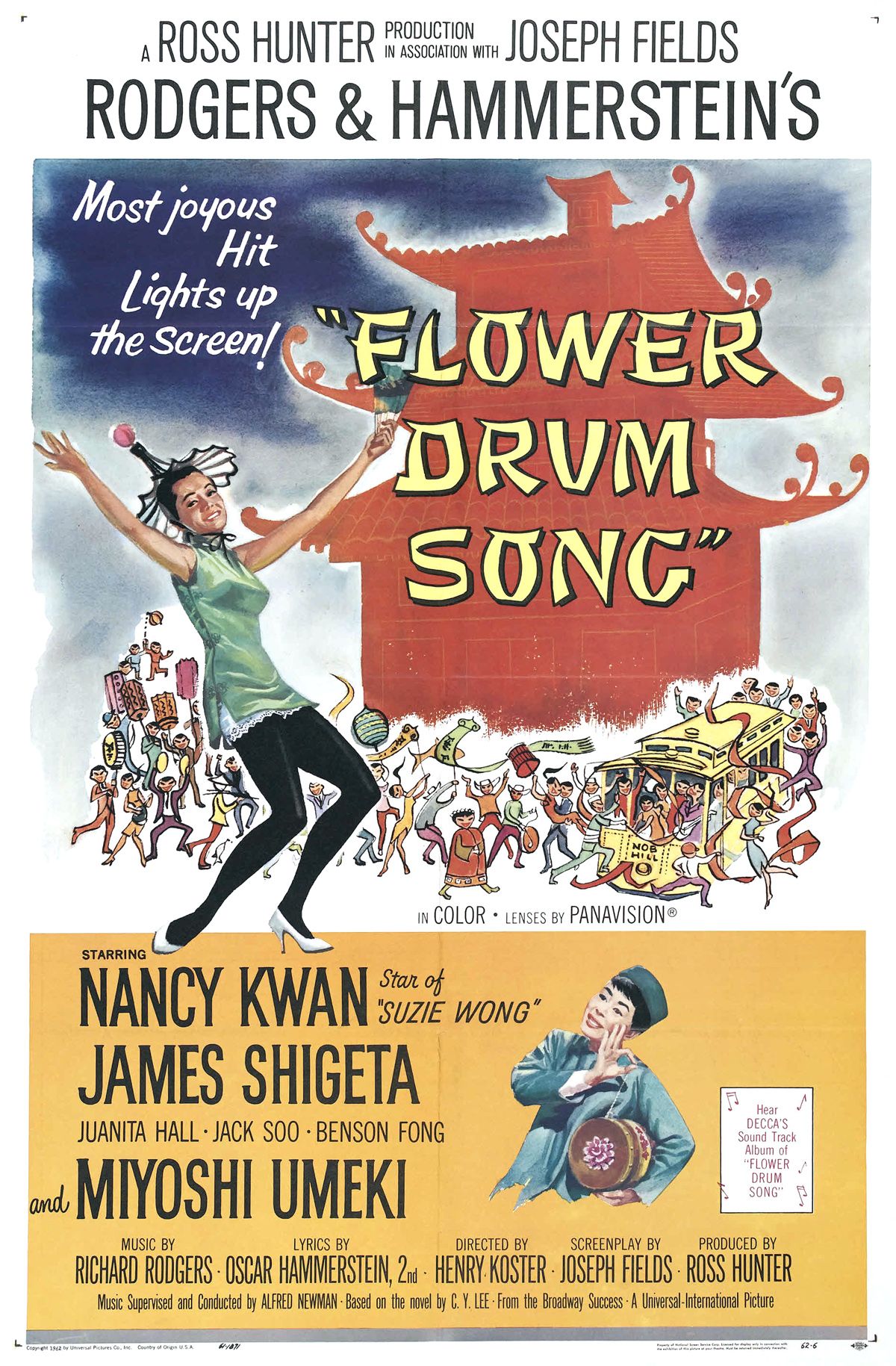
The Plot: “Flower Drum Song” highlights the lives and loves of several residents in San Francisco’s Chinatown. Mei-Li (Miyoshi Umeki) arrives from China for her arranged marriage to nightclub owner Sammy Fong (Jack Soo). Sammy is already in a relationship with showgirl Linda Low (Nancy Kwan), so he attempts to pawn Mei-Li off on Wang Ta (James Shigeta), who also has a crush on Linda. The plot thickens from there, as does the dissection of an ever-changing Chinese American culture. Oh, and it’s a musical from the white men who brought you “South Pacific” and “The King and I”!

Why It Matters: The NFR calls the film a “milestone” that “presented an enduring three-dimensional portrait of Asian America”.

But Does It Really?: This is a tough one. On one hand, it’s a second-rate film adaptation of a second-rate Rodgers and Hammerstein musical, and its depiction of Chinese Americans, while always respectful, is nevertheless misguided and culturally inappropriate. On the other hand, it’s the only major Hollywood movie of the era with a predominantly Asian cast, playing a variety of dimensional, mostly stereotype-free characters. “Flower Drum Song” has its problems, but it’s enjoyable and progressive enough to not warrant any major cringing. A slight pass for NFR inclusion; this one is definitely on here for its representation rather than any artistic merits.

Everybody Gets One: Miyoshi Umeki originated the role of Mei Li on Broadway, fresh off her Oscar-winning turn in 1957’s “Sayonara”. Umeki is still the only Asian woman to win an acting Oscar. Nancy Kwan became an overnight star with 1960’s “The World of Suzie Wong”, and while her career peaked with “Flower”, she’s still a vocal activist for Asian actors, as well as for AIDS awareness.

Wow, That’s Dated: Despite several progressive leaps towards diverse representation of Chinese and Chinese American people, most of the major players are not of Chinese descent. Among them: Miyoshi Umeki and Jack Soo (Japanese) Reiko Sato and James Sigeta (Japanese-American) and, in the film’s only case of YELLOWFACE WARNING, Juanita Hall (African-American and Irish).

Seriously, Oscars?: Despite good-but-not-great reception from critics and audiences, “Flower Drum Song” received five Oscar nominations in various tech categories. The film lost all five awards to that other movie musical based on a hit Broadway play: “West Side Story”.

Other notes

  • Surprisingly, this was the first movie musical for director Henry Koster, screenwriter Joseph Fields, and producer Ross Hunter.
  • I can’t put my finger on it, but “A Hundred Million Miracles” (aka the actual Flower Drum Song) sounds so…Rodgers & Hammerstein.
  • Jack Soo has a connection to another NFR entry: He and his family were forced to stay in the Japanese internment camp in Topaz, Utah. Hats off to anyone who survived that and decided to go into show business.
  • Shoutout to actor James Hong, seen here as the Celestial Gardens’ head waiter, and also seen in every movie you’ve ever watched; and he’s still going at 90 years old! Hong is perhaps best remembered as the maitre’d at another Chinese restaurant.
  • Yes, Madame Liang is played by a light-skinned African American in yellowface, but Juanita Hall was not the first choice. Anna May Wong was originally signed to play the part, but died of a sudden heart attack six weeks before principal photography began. Hall was cast on short notice, having originated the role on Broadway.
  • “The Other Generation” is somewhere between “Kids” and “How Do You Solve a Problem Like Maria”. It goes on too long, but at least Hermes Pan had some fun with the choreography.
  • Despite its increasingly problematic context, “I Enjoy Being a Girl” is the highlight of the film. There’s some inventive split-screen effects, and Nancy Kwan is an engaging performer, although her singing is dubbed by white backup singer B.J. Baker. Was Marni Nixon out of town?
  • “Chop Suey” is the most troubling number in the show: a song written by white men about a Chinese woman appropriating American culture. Also, it turns out not a lot of words rhyme with “Chop Suey”.
  • It was around the time of Nancy Kwan’s fan dance routine that I started wondering, “Wasn’t this a Miyoshi Umeki vehicle? Isn’t she the star?” This film isn’t quite sure which of the four lovers it wants to focus on, but also never fully commits to being an ensemble piece. It’s weird.
  • “Love Look Away” is Helen’s only chance to shine in the movie, but then she disappears. In the original novel Helen committed suicide, but this ending was removed, leaving her plot thread dangling.
  • “Sunday” is a sweet number, but two dream ballets in one movie? You’re already in enough trouble as it is, R&H.
  • I wasn’t expecting one of the 700+ movies on this list to prominently feature Jack Soo as a song-and-dance man, but damn it, this was worth the trip out. Thanks, NFR!
  • The ending is a clever workaround to the double-wedding we all knew was coming. But for god’s sake, stop saying “wetback”! You’re making it worse!
  • And they all got married and had a stereotypically large amount of children. Good night, white America!

Legacy

  • “Flower Drum Song” was well-liked in its day, but in light of the Civil Rights movement of the early 1960s, the popularity of both film and play dropped considerably. A revival of the stage version came to Broadway in 2002, retaining the songs, but with a drastically overhauled book by playwright David Henry Hwang.
  • “I Enjoy Being a Girl” is one of those songs that you know, but weren’t aware was from a show. Free of its original context, the song is performed today mostly as a light-hearted pre-feminism anthem, or as an ironic drag number.

Further Viewing: It would be another 32 years before the next major Hollywood movie with a predominantly Asian cast: Wayne Wang’s adaptation of Amy Tan’s “The Joy Luck Club”. Not so coincidentally, “Joy Luck” also features “I Enjoy Being a Girl” on its soundtrack.

#394) The Women (1939)

MV5BMjk2NzU4ZTQtYmYxZi00ZjI0LWEzZDMtZDY4OGY2YTI2MDcxXkEyXkFqcGdeQXVyMTMxMTY0OTQ@._V1_

#394) The Women (1939)

OR “Hollywood’s Ladies Night”

Directed by George Cukor

Written by Anita Loos and Jane Murfin. Based on the play by Clare Boothe Luce.

Class of 2007

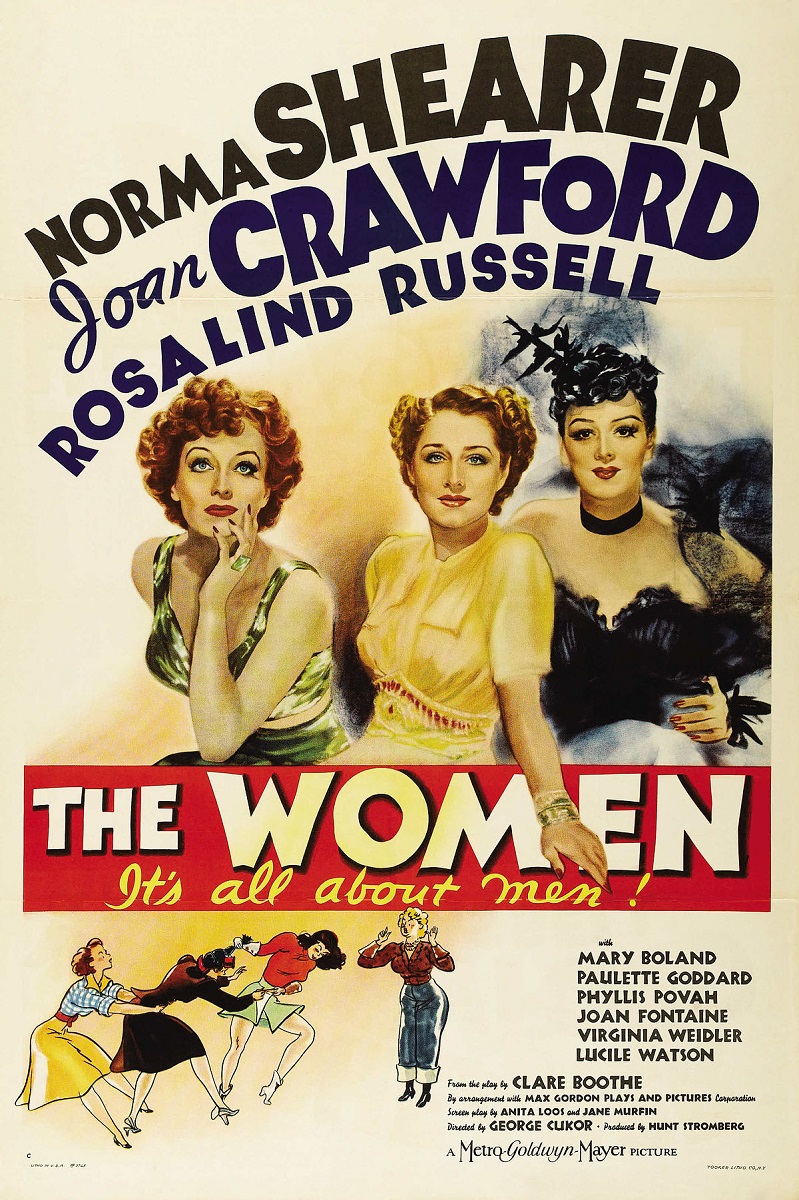
The Plot: Mary Haines (Norma Shearer) is a Manhattan socialite content with her marriage, until she learns from her busybody cousin Sylvia (Rosalind Russell) that her husband is having an affair with counter girl Crystal Allen (Joan Crawford). After a series of catty encounters with Crystal and other society women, Mary travels to Reno for a quickie divorce, where she bonds with fellow divorcees (Mary Boland, Paulette Goddard and Joan Fontaine). Over the next two years, Mary grows from the experience, and learns to fight for what she truly wants. Featuring a cast of 130 speaking roles, all of them women.

Why It Matters: The NFR cites the film’s bevy of leading ladies, as well as its historical significance due to “explor[ing] the new options open to women with the possibility of divorce”. The write-up also praises George Cukor and “his reputation as a woman’s director”.

But Does It Really?: This movie is definitely a minor classic. “The Women” works as a time capsule of gender politics of the ‘30s, and boasts a legendary roster of talent (most of them put to good use), but overall the film shows its dated qualities more than its timelessness. Trapped in the male-dominated classic Hollywood studio system, “The Women” is by no means a bad movie by today’s standards, but does pale in comparison to the more liberated female-driven films that have come in the last 80 years.

Everybody Gets One: Playwright Clare Boothe Luce first gained recognition in 1931 for writing the short story anthology “Stuffed Shirts”. This led to freelance magazine work, editing Vanity Fair for a time, and a series of successful plays, including “The Women”. Her post-“Women” career focused on her conservative politics, becoming a congresswoman for Connecticut’s 4th District, and eventually the U.S. Ambassador to Italy under Dwight Eisenhower.

Wow, That’s Dated: Despite an all-female cast, the poster still exclaims, “It’s all about the men!” The film’s overall attitude towards women and their toxic friendships was considered sexist and misogynistic even in 1939!

Seriously, Oscars?: “The Women” did well with critics, but only okay with audiences, not making a profit until its 1947 re-release. Like many of the second-tier 1939 films on this list, “The Women” received zero Oscar nominations.

Other notes

  • Noted “woman’s director” George Cukor became available to helm “The Women” a month before filming began, when he was infamously fired from “Gone with the Wind” (frequent clashing with David O. Selznick, possibly Clark Gable too).
  • The film begins with a reference in the credits to the original Broadway production’s “triumphant run” of 666 performances! This is followed by each of the main characters being depicted as various animals: Mary’s a fawn, Crystal’s a leopard, Sylvia’s a cat, etc. We’re three minutes in and I’m already calling this movie’s female agenda into question.
  • Rosalind Russell is definitely auditioning for “His Girl Friday”. Her Sylvia shoots out pithy quips like a machine gun.
  • Norma Shearer was one of the few silent film stars to make the transition to sound, and “The Women” is her only sound film on the Registry. Shearer is mostly forgotten today, but was one of the biggest movie stars of the 1930s, and is a confident, engaging central figure in this ensemble.
  • Sadly, Virginia Weidler does not get to spout too many sassy one-liners as Mary’s daughter, but she’s only one year away from playing Katharine Hepburn’s feisty kid sister in “The Philadelphia Story”.
  • I don’t care for this movie’s attitude on infidelity. “It comes to most wives.” In fact, this whole movie’s attitude towards women in general is concerning. Every woman in this movie is either manipulative and catty, or virginal and defenseless. And this is coming from a female playwright and two female screenwriters!
  • Obviously Joan Crawford’s the woman Stephen’s having the affair with: she’s the only one of the perfume girls who gets a closeup.
  • This is Butterfly McQueen’s film debut! “The Women” premiered just three months before “Gone with the Wind” and McQueen’s public declaration of midwifery inexperience.
  • The fashion show sequence was originally filmed in black & white (like the rest of the movie), but MGM insisted on reshooting the sequence in color to cash in on the Technicolor craze. George Cukor hated these reshoots and successfully got the sequence removed from rereleases. The original footage has since been restored, and the change to color makes the scene more acceptable as what it is: superfluous, aesthetically pleasing spectacle.
  • It’s great seeing Joan Fontaine in a role where she’s not a victim of gaslighting. She even gets to do some physical shtick with Rosalind Russell!
  • Having no men in the cast feels very organic, except for the scene in which Mary and Stephen have their final argument and decide to divorce. There’s a clever workaround with the Haines’ domestics eavesdropping on the conversation, but it’s very much a scene in which the drama is told rather than shown.
  • Also dated: ‘30s divorce proceedings in which “children must go with their mothers”. It’s a long time until “Kramer vs. Kramer”.
  • Reno, Nevada gained notoriety in the ’30s for its very liberal divorce laws, making it the most popular “divorce mill” in the country. Eventually, the rest of the country caught up to Reno’s divorce standards, but the Biggest Little City in the World maintained its popularity thanks to its other ‘30s revolution: legalized gambling.
  • This is the movie where Paulette Goddard and Rosalind Russell catfight. That must do it for someone.
  • As we all know, Joan Crawford is great with kids.
  • Gossip columnist Dolly Drupuyster is played by Hedda Hopper, less than two years into her 30 year reign as one of Hollywood’s legendary gossip columnist.
  • Most of the film’s Production Code workarounds are harmless and par for the course, but Crystal’s final tell-off of the women packs a much appreciated punch: “There’s a name for you ladies, but it isn’t used in high society…outside of a kennel.”

Legacy

  • There have been two film remakes of “The Women”. The 1956 musical “The Opposite Sex” stars June Allyson and makes the mistake of featuring the male characters. Diane English’s 2008 remake modernizes the story, and did well with audiences, despite being a critical disaster.
  • The original play of “The Women” has returned to Broadway twice: a 1973 revival with Kim Hunter and Myrna Loy, and a 2001 production starring Cynthia Nixon. The latter was filmed for PBS.