#15) Matrimony’s Speed Limit (1913)

MATRIMONYS-SPEED-LIMIT

#15) Matrimony’s Speed Limit (1913)

OR “Alice in Movieland”

Directed (and possibly Written) by Alice Guy-Blaché

Class of 2003

This is a revised and expanded version of my original post on “Matrimony’s Speed Limit”, which you can read here.

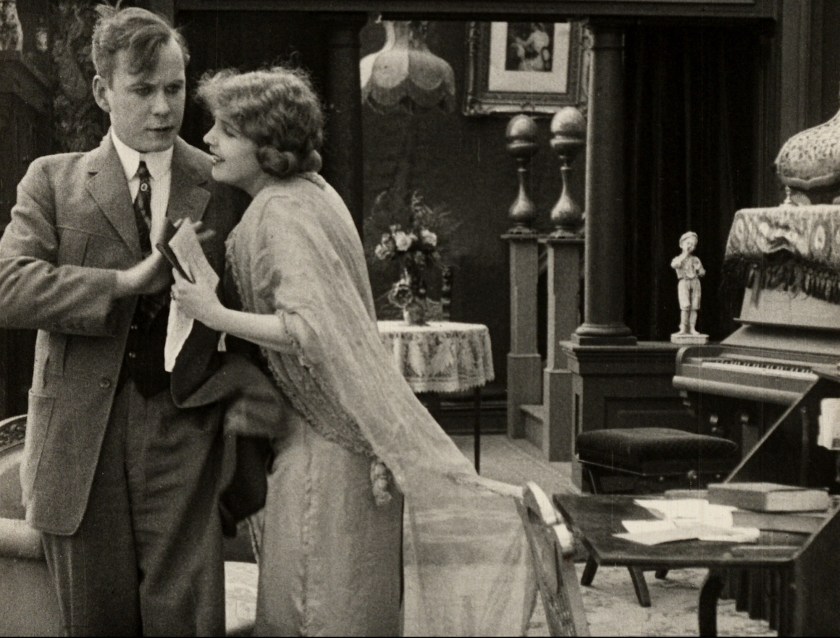
The Plot: Fraunie (Fraunie Fraunholz) refuses to accept money from his girlfriend Marian (Marian Swayne), even after his fortune takes a dive in the stock market. Tired of waiting for his proposal, Marian sends Fraunie a fake telegram stating he will inherit his late aunt’s fortune if he marries by noon that day. It’s a mad comic dash as Fraunie proposes to every woman he runs into, and Marian grabs a Justice of the Peace (Actor Unknown) to perform an impromptu wedding.

Why It Matters: The NFR praises both the “deft, ironic” film as well as “[p]ioneering woman filmmaker” Guy- Blaché. There’s also an essay by film professor Margaret Hennefeld, whose “research focuses on issues of comedy, gender, [and] silent film history”, making “Matrimony’s Speed Limit” a direct bull’s-eye in her niche Venn diagram.

But Does It Really?: This film is definitely on here for what it represents rather than what it is. “Matrimony’s Speed Limit” is a dated piece of light comedy that, while not very entertaining today, is one of a handful of surviving films from Alice Guy-Blaché, who is among the first (if not the first) female directors in film history. Honestly, researching Alice Guy and her amazing film career was more interesting than rewatching this movie. A slight pass for “Matrimony’s Speed Limit”, but a definite yes to Alice Guy-Blaché.

Everybody Gets One: In 1894, 21-year-old Alice Guy was hired at L. Gaumont et Cie (later the Gaumont Film Company) as a secretary. Guy was in attendance at the Lumière Brothers first demonstration of film (1895’s “Workers Leaving the Lumière Factory”), and recognized that film could be used as a creative storytelling medium, rather than just reportage of daily life. Within a year, Guy directed her first short film (See “Further Viewing”). In 1907, Guy and her newlywed husband Herbert Blaché moved to the U.S. and founded Solax Studios in Flushing, New York, with Herbert as production manager and Alice the creative director. Over the next decade Alice directed hundreds of film, all the while experimenting with such then-revolutionary techniques as synchronized sound and interracial casting.

Wow, That’s Dated: Well for starters, the societal norms of the day surrounding gender roles and marriage (A woman who takes the initiative in her relationships!? Scandalous!) You also get standard ‘20s fare like telegrams and ticker tape, plus “hilarious” jokes about miscegenation and suicide.

Other notes

  • “Matrimony’s Speed Limit” was filmed in Fort Lee, New Jersey. Fort Lee became the new home of Solax Studios when their operation became too big for their New York offices. Sadly, a fire in 1919 destroyed the Solax film laboratory and with it, a majority of its library.
  • I am well aware that my modern lens prohibits me from viewing this film as originally intended, but I got a lot of problems with “Matrimony’s Speed Limit”. For starters, at no point does Marian’s telegram give the name of Fraunie’s aunt, the dollar amount of the fortune, where or when he can receive it, or how exactly it can be determined that Fraunie did indeed get married before noon.
  • And while we’re at it, why only give Fraunie 15 minutes to run and find a bride? Why not give him an extra hour or, hell, an extra day? Maybe that extra time would help him come to his senses and propose to his long-suffering girlfriend. Why must you rush things for comic effect, Marian?
  • Okay, one more nitpick: How close/far away is the distance between Marian’s house and Fraunie’s office? It takes Fraunie five seconds to run over to her place, but it takes Marian the whole movie to drive to him. Was Fort Lee designed by M.C. Escher? But then again, I’m poking holes in a 106-year-old film whose sole purpose was to entertain. Kicks just keep getting harder to find.
  • And now we get to the “Wow” in “Wow, That’s Dated”. Fraunie proposes to a woman wearing a veil and gloves. She is receptive, and lifts her veil to reveal that she’s black. Sure, miscegenation was still quite taboo in 1913, but that joke does not age well at all. And this comes after Alice helmed the first movie with an African-American cast: 1912’s “A Fool and His Money” (great title, by the way). Surely she would have known better.
  • I feel like finding someone who would immediately marry a stranger is far easier nowadays, what with the dating apps and all. In fact, is there an app for that? If not, I call dibs on the copyright! 

Legacy

  • By the end of the 1910s, moviemaking had started migrating to Hollywood, and Alice Guy-Blaché found her film career (and her marriage) at an end. Alice sold the remains of Solax Studios to stave off bankruptcy, and never made another movie. Her sole return to public life came with the publishing of her memoirs in the late 1940s, to ensure that her place in film history would be well documented.
  • With the exception of a few lifetime achievement honors in her native France, Alice Guy-Blaché did not receive any recognition of her film work during her lifetime. This changed in the 2000s, when her work was resurrected and reappraised thanks to extensive film preservation efforts. Alice was posthumously inducted into the Directors Guild of America in 2011, and is the subject of the 2015 biography & 2018 documentary “Be Natural: The Untold Story of Alice Guy-Blaché”

Further Viewing: While Alice Guy-Blaché’s original 1896 version of “La Fée aux Choux” has disappeared, her remake from 1900 survives, and is considered the earliest known film directed by a woman. Literally translated to “The Cabbage Fairy”, the short is based on the European fantasy that children are born in cabbage patches. And now you know where the concept behind Cabbage Patch Kids comes from. You’re welcome.

The Legacy of “Psycho”

psycho_ver2_xlg

This is Part II of my “Psycho” write-up. Part I is here! Keep reading for some bonus musings, but please do not divulge the surprise ending.

Legacy

  • “Psycho” was a megahit, and thanks to his distribution deal with Paramount, Hitchcock received the lion’s share of the profits. Following this film, Hitchcock jumped ship to the more supportive Universal Studios (they were also producing “Alfred Hitchcock Presents”), and spent the rest of his filmmaking career there, starting with 1963’s “The Birds”.
  • Sure, in hindsight “Psycho” was the apex of both Anthony Perkins and Janet Leigh’s filmographies, but they both worked steadily for the rest of their lives, and were always quick to acknowledge how much the film did for their careers.
  • “Psycho” is considered the first of the slasher sub-genre of horror. Slashers have maintained their popularity over the last 60 years, from immediate follow-ups like Polanski’s “Repulsion” to De Palma’s “Dressed to Kill” to whatever slasher films from the ‘70s and ‘80s are being remade today. Honorable mention to fellow NFR entry “Halloween”, starring Jamie Lee Curtis, daughter of Janet Leigh.
  • Shortly after Hitchock’s passing, Universal started cranking out sequels to “Psycho”. Despite a very game Anthony Perkins returning for all of them (and even directing “III”), the “Psycho” sequels are the textbook example of diminishing returns.
  • On a related note, Robert Bloch wrote a few sequels to the original novel that are in no way connected to the film sequels.
  • Perkins played a Norman Bates-type in a 1990 commercial for Oatmeal Crisp. That brings a whole new meaning to “Kid Tested, Mother Approved”.
  • The Bates Motel and house are still a staple of the Universal Studios Hollywood tour. The set on the Orlando tour were created specifically for the sequel-prequel “Psycho IV: The Beginning”.
  • There are countless books devoted to Hitchcock and the making of “Psycho”. One in particular, Stephen Rebello’s “Hitchcock and the Making of ‘Psycho’”, spawned the 2012 movie “Hitchcock” with Anthony Hopkins. Turns out even a fascinating story like Hitch putting his artistic integrity on the line to make “Psycho” can be bogged down in rudimentary Biopic 101 trappings.
  • IMDb lists over 1700 films and TV shows that have referenced, parodied, or featured “Psycho” over the years. Among the oddities: Martin Balsam spoofing his own performance in something called “The Silence of the Hams”.
  • Everyone has spoofed the shower scene, including this very forced homage from “High Anxiety!”.
  • The shower sequence is so iconic it has its own documentary! “78/52” spends 91 minutes dissecting the 45 second sequence. Now that’s a legacy!
  • You may recall the “Bates Motel” series on A&E a few years back, but did you know there was an unsuccessful “Bates Motel” pilot back in the ‘80s with Bud Cort? Oh, you did? You read the Wikipedia page too, huh? …I see.
  • “Psycho” has even inspired art exhibitions! Douglas Gordon’s “24 Hour Psycho” drastically slows down the film’s framerate and asks the question “What if ‘Psycho’ had been directed by Andy Warhol?”
  • “Chubby Checker, ‘Psycho’, Belgians in the Congo, we didn’t start the fire…”
  • Last, and definitely least, the 1998 shot-for-shot remake by Gus Van Sant. It hurts my soul so very, very much.

Other Other Notes

  • Janet Leigh is from my hometown of Stockton, California! Well, she’s not actually from there; she was born in Merced, but spent most of her childhood in Stockton. She even went to UOP…to study music and psychology. She didn’t get into acting until after she left Stockton. But hey, my hometown will take what it can get.
  • I was a bit tough on John Gavin’s performance last time, but I will say his work as Sam didn’t bother me as much now. He’s not great, but part of that is all the clunky dialogue Sam gets. That’s a lot of exposition for a character who really doesn’t matter in the long run. In fact, pretty much everyone’s expositional backstory can be categorized as “MacGuffin”.
  • Best exchange in the movie; “I declare!” “I don’t; that’s how I get to keep it.”
  • Apparently Norman is munching on candy corn throughout the movie. He truly is evil!
  • “You see, if it doesn’t jell it isn’t aspic, and this ain’t jelling.” Well you don’t hear that phrase a lot anymore. Or ever.
  • At one point when Lila is exploring the house, there’s a cut to a close-up of her face that made me jump. And I knew nothing was going to happen in that scene! When a movie you’ve seen before can make you shiver like that, you know you’ve got a classic.

Other Notes From the Original Post That I Felt Deserved Another Chance

  • This movie got the green light when Audrey Hepburn bowed out of Hitch’s proposed courtroom drama “No Bail for the Judge” due to pregnancy. So congratulations, Sean Hepburn Ferrer, you are indirectly responsible for one of the greatest American films ever!
  • That’s future “Mary Tyler Moore” star Ted Knight as the policeman outside of Norman’s cell. And here I thought it all started for him at a 5000-watt radio station in Fresno, California.

Further Viewing: Hitchcock was obsessed with preserving the secrets to “Psycho” for first-time viewers, and launched a unique publicity campaign for the movie. He barred Perkins and Leigh from making the talk-show rounds, crafted a trailer that has zero footage from the final film, banned critics from seeing the film until it had opened, and gave theaters explicit instructions not to permit audience members into the theater once the film began. He even produced a short film to tell theater owners how to enforce his policies.

Further Further Viewing: Norman Bates sings! An accomplished musical theater performer (even receiving a Tony nomination for Frank Loesser’s “Greenwillow”), Anthony Perkins got to show off his pipes to a national audience in 1966’s “Evening Primrose”, which plays like a lost “Twilight Zone” musical episode.

#32) Psycho (1960)

psycho_xlg

#32) Psycho (1960)

OR “Oedipal Arrangements”

Directed by Alfred Hitchcock

Written by Joseph Stefano. Based on the novel by Robert Bloch.

Class of 1992

This is a revised and expanded version of my original “Psycho” post, which you can read here.

Also, I can’t discuss “Psycho” without mentioning the film’s major plot twists, so spoilers ahead!

The Plot: Marion Crane (Janet Leigh) can’t afford to marry her long-distance boyfriend Sam (John Gavin), so she impulsively steals $40,000 cash from her job and drives from Phoenix to Fairvale to be with Sam. After a tense drive, Marion checks into the Bates Motel, run by the earnest Norman Bates (Anthony Perkins) and his distant yet domineering mother (Voiced by Virginia Gregg/Paul Jasmin/Jeanette Nolan). After dinner with Norman, Marion is murdered by Mother in the shower before she has the chance to return the money. Once Marion goes missing, her sister Lila (Vera Miles) becomes determined to find her. This leads everyone back to the Bates, where the mother of all surprises awaits.

Why It Matters: The NFR calls the film “suspensefull [sic]” and praises Bernard Herrmann’s “spine-tinglingly [sp?] unforgettable” score. They also, however, detail how Perkins and Leigh’s future work was overshadowed by “Psycho”. In addition, an essay by film critic Charles Taylor digs a little too deeply into the film’s symbolism.

But Does It Really?: No surprises: “Psycho” is on my list of truly untouchable great films. I have seen “Psycho” several times over the years, and I was well aware of the film’s twists prior to my first viewing, but I’ll be damned if this movie still can’t scare the crap out of me every time. “Psycho” certainly isn’t the taboo-busting pulp thriller it was in 1960, and it’s dated and sexist as all hell by today’s standards, but Hitchcock’s polished, confident directing, plus a cast and crew at the top of their game, ensures the film’s longevity. A game changer for the thriller genre as well as for all of moviedom, “Psycho” has endured, and will continue to do so for the foreseeable future.

Everybody Gets One: Film and stage actor Anthony Perkins was always Hitchcock’s first choice to play Norman Bates, his “boy-next-door” good looks being a departure from the character’s shorter, cruder description in the book. Although he was seemingly typecast for the rest of his career, Perkins often spoke fondly of his time making “Psycho”. That being said, upon his passing, his urn was inscribed, “Don’t Fence Me In”.

Wow, That’s Dated: I’ll assume the original title of this movie was “Issues with Women: The Motion Picture”. Jeez Louise is this thing sexist (It should be noted that both director and screenwriter were coping with their own mother issues during production). On a less depressing note, the $40,000 Marion steals would be roughly $346,000 today.

Seriously, Oscars?: “Psycho” opened to mixed critical reviews, but strong word of mouth made the film a worldwide box office sensation. At the 1961 Oscars, “Psycho” managed four nominations, but zero wins. Janet Leigh lost Best Supporting Actress to Shirley Jones in “Elmer Gantry”, and Hitch lost his fifth (and final) Best Director nod to that year’s big winner: Billy Wilder for “The Apartment”. For those of you keeping track, “Psycho” received no nominations for Picture, Actor, Adapted Screenplay, or Original Score.

Other notes

  • Although serial killer Ed Gein was the primary inspiration for Norman Bates, “Psycho” author Robert Bloch was unaware of the specifics of Gein’s crimes until he had almost completed the manuscript, and was amazed at how close he was. Call it the most perverse parallel thinking that ever happened.
  • Expecting another big-budget thriller a la “Vertigo” or “To Catch a Thief”, Paramount rejected the “Psycho” screenplay, calling it “too repulsive for films”. Undeterred, Hitchcock financed the film himself, shooting on the Universal lot with his TV crew from “Alfred Hitchcock Presents” to keep “Psycho” under-budget. Paramount still distributed the picture, but ultimately sold their cut of the film back to Hitchcock.
  • Those credits, man. Only Saul Bass can take a series of lines and make them suspenseful. Special mention to Bernard Herrmann, whose score so impressed Hitchcock, he doubled Herrmann’s salary.
  • While reviewing the establishing shots of Phoenix filmed by the second unit, Hitchcock noticed that Christmas decorations were visible on the streets. Rather than reshoot, Hitch added text stating the film begins on “Friday December the Eleventh”, making “Psycho” the least Christmas-y Christmas movie this side of “Die Hard”.
  • We get TWO Hitchcock cameos in this movie! Hitch makes his usual appearance at the beginning (but why the cowboy hat?), followed immediately by his daughter Patricia in the brief role of Marion’s co-worker Caroline.
  • Wow, Tom Cassidy is the tip of this movie’s sexist iceberg. Who knew Sam Wainwright was such a creep? Hee-haw!
  • Before we get to the actual scares, Hitch keeps the suspense going with good old-fashioned paranoia; the nosy cop, the pushy car-dealer, the voices in Marion’s head. The Bates Motel sign signals a (ultimately false) sense of security.
  • Perkins is wonderfully sympathetic as Norman, but he’s also giving you plenty of red flags. The taxidermy? “A boy’s best friend is his mother”? Marion, you in danger girl.
  • This film’s other watershed moment: it was the first mainstream movie to feature a flushing toilet. The production code allowed it because Marion flushes away evidence, thereby making the action integral to the plot.
  • This whole post could be me dissecting the shower sequence (God knows everyone else has). In a film that has taken its time edging towards suspense, the shower murder is a full-on cathartic barrage of cuts and close-ups and Bernard Herrmann’s stringed staccatos. What a shocking experience this unfettered violence/sexuality must have been to 1960 audiences. The shower scene may be the definitive demonstration on the power that film has on our collective psyche. Kudos to everyone involved…except you, Saul Bass. You know what you did!
  • This legendary moment is immediately followed by a step-by-step tutorial on how to clean up a murder scene and dispose of the body. I feel very prepared if I ever find myself in this situation.
  • Vera Miles doesn’t get much to do in this movie, but I appreciate Lila taking command of this situation. I sense this is as strong-willed a female lead as Hitchcock would allow in one of his movies.
  • As much as I love Martin Balsam, no one ever needs to be that close to his face.
  • The one thing I never understood regarding the Norman/Mother dichotomy: When Arbogast goes to the house to interrogate Mother, how did Norman get from the motel to the second floor of the house without Arbogast seeing him AND while also managing a quick-change into his mother costume? Color me impressed.
  • Once we reach the climax, we get an extended scene of a psychiatrist explaining Norman’s condition to Lila & Sam, and it really doesn’t mesh with the rest of the movie. It doesn’t help that Simon Oakland, the actor playing Dr. Richman, is a bit too slick for this film. It’s a weird performance in an unnecessary scene at the end of an otherwise superb film.
  • Although several actors shared the voice-over duties as Mother Bates, radio actor Virginia Gregg is the sole voice of Norma during the final “She wouldn’t harm a fly” monologue. It’s perfection.
  • This will sound weird, but with this viewing I recognized what a bizarre little movie this is. “Psycho” is so steeped in our culture that it’s easy to forget that the movie kills off its quote-unquote lead 45 minutes in, and then reveals that our new sympathetic lead is the murderer. The unorthodox plotting has become less conspicuous the more the film is referenced and studied, but if you really try to forget everything you know about “Psycho”, you’ll realize just how unconventional this film was in 1960 and still is today.

There’s so much more to talk about, so read about the legacy of “Psycho” here.

#8) The Graduate (1967)

graduate_xlg

#8) The Graduate (1967)

OR “Ben of Iniquity”

Directed by Mike Nichols

Written by Calder Willingham and Buck Henry. Based on the novel by Charles Webb.

Class of 1996

This is a revised and expanded version of my original “Graduate” post, which you can read here.

The Plot: Benjamin Braddock (Dustin Hoffman) returns home to suburban Los Angeles after graduating from an eastern college. At a party thrown by his parents, Ben attracts the attention of Mrs. Robinson (Anne Bancroft), the wife of his father’s business partner. Unsure of his future and doing nothing with his present, Ben awkwardly accepts Mrs. Robinson’s offer of a sexual tryst. The affair continues throughout the summer, but complications arise when Mrs. Robinson’s daughter Elaine (Katharine Ross) returns home and starts dating Ben. Strap in for one of filmdom’s most bizarrely iconic love triangles.

Why It Matters: The NFR praises Nichols, Hoffman, Bancroft and Henry for “concoct[ing] a funny and satirical look at a certain slice of Americana”, though admits that the film “doesn’t capture the ‘60s as well as the edgier ‘Easy Rider’”. Ouch. An essay by film critic Jami Bernard is a celebration of the film’s visual style, and a disapproval of the pan-and-scanned TV version (which dates this essay quite a bit).

But Does It Really?: While “The Graduate” might not capture the zeitgeist of the late ‘60s, its examination of young adulthood’s uncertainties is timeless. The successful adaptation from page to screen is supported by Nichols’ inventive directing, as well as pitch perfect performances from Hoffman and Bancroft. “The Graduate” isn’t as groundbreaking or taboo at it once was, but its universality, A+ craftsmanship, and ongoing legacy has ensured its place in film history.

Everybody Gets One: After an unsuccessful string of B-pictures for Fox in the early ‘50s, Anne Bancroft returned to her native New York to study at the Actors Studio (among other places). Bancroft had a string of successful stage performances on Broadway, including Annie Sullivan in “The Miracle Worker”, a role she reprised for the Oscar-winning film version. She won the role of Mrs. Robinson after every actress of a certain age from Patricia Neal to Ava Gardner turned it down.

Wow, That’s Dated: Many have commented on the film’s failure to capture 1967 America, but there are flashes of the youth counterculture when Nichols’ guerilla filmmaking takes to the streets of Berkeley. Also dated: bossa nova mood music, and couples needing to take a blood test before getting married.

Seriously, Oscars?: A critical and commercial success, “The Graduate” entered a very crowded Oscar race with seven nominations, including Best Picture. Despite losing to fellow NFR entries “Bonnie and Clyde”, “Guess Who’s Coming to Dinner” and “In the Heat of the Night”, the film did manage one win: Best Director for Mike Nichols. To date, “The Graduate” is the most recent film to only win an Oscar for its director.

Other notes

  • “The Graduate” was originally going to be Mike Nichols’ film directing debut, but production was delayed so that Nichols could helm the sought-after film version of “Who’s Afraid of Virginia Woolf?
  • Veteran screenwriter Calder Willingham and TV comedy writer Buck Henry penned separate drafts of “The Graduate”, with Henry’s script being the final version. When word got out that Henry would receive sole credit, Willingham successfully lobbied to have his name on the credits as well, pointing out that both drafts crib large selections of the book’s dialogue verbatim.
  • Shoutout to cinematographer Robert Surtees. “The Graduate” is the rare film that successfully translates the verbal storytelling of the novel into the visual storytelling of the movies. Surtees’ compositions illustrate the isolation felt not only by Benjamin, but by practically every other character as well.
  • Feeny! Fe-he-he-heeny!
  • Walter Brooke had been acting in the movies for 25 years when he was cast as Mr. Maguire, but he finally achieved film immortality with just one word…
  • Bancroft is relishing the opportunity to play against type as an assertive, yet equally vulnerable seductress. Bancroft/Robinson knows what she is doing at all times.
  • Apparently there’s a “Bewitched” convention at the Taft Hotel; complete with Esmeralda and Aunt Clara!
  • Dustin Hoffman was an unconventional choice for Ben (Warren Beatty and Robert Redford tested for it), but his depiction of the character’s awkwardness and uncertainty is flawless. Now if only Hoffman didn’t become an alleged chronic sexual predator after this…
  • Today’s revelatory backstory brought to you by Ford Motors: You’re ahead in a Ford!
  • The last time I covered this film I gave Elaine flack for being “underwritten”. Obviously, I wasn’t paying attention. Elaine might not be a perfect match for Benjamin, but she is definitely a kindred spirit who identifies with his confusion and suppression from the older generation. This is aided by the lovely subtleties Katharine Ross brings to the part. Her Elaine is definitely her mother’s daughter.
  • Is it only raining on Benjamin’s car? I didn’t realize he was driving an Alfa Romeo Eeyore.
  • As a Bay Area resident, it’s my obligation to point out that when Ben drives over the Bay Bridge to Berkeley, he’s going the wrong way. He should be driving on the less cinematic lower level.
  • Norman Fell as a skeptical landlord? Quick, someone give him a sexually repressed wife!
  • One of Ben’s fellow tenants is a young unknown Richard Dreyfuss. His character is studying oceanography at Berkeley, and will one day convince Mr. Robinson to close the beaches!
  • Simon & Garfunkel’s music was originally a placeholder before “The Graduate” was scored, but Nichols liked it and convinced the duo to write/perform more songs for the soundtrack. After Nichols rejected Simon’s first two compositions, Simon pitched a half-finished song about Eleanor Roosevelt. “Mrs. Roosevelt” became “Mrs. Robinson”, Simon’s ad-libbed “dee-dee-dees” stayed in, and behold, a classic.
  • The final lingering shot of Ben and Elaine letting their new reality sink in on the bus is a fine example of New Hollywood-style storytelling. The only thing that mars the ending is the obvious dubbing in the Mrs. Robinson-Elaine exchange, “It’s too late.” “Not for me.” Other than that, great movie.

Legacy

  • Everyone benefited from the success of “The Graduate”. Hoffman and Ross became movie stars, Nichols spent the next 40 years as a film director, and Anne Bancroft continued being an in-demand character actor for the rest of her life, albeit with a new following of sexually awakened younger fans.
  • Author Charles Webb hesitated to pen any sequels to “The Graduate”, knowing they could be adapted into a film without his involvement. Webb finally relented following some financial hardships, and 2007’s “Home School” was roundly panned by critics and readers alike.
  • As for film sequels, the closest we ever got was this pitch from Buck Henry in the opening shot of “The Player”.
  • A stage adaptation of the novel played New York and London in the early 2000s, meaning a significant number of theatergoers have been in the same room as a naked Kathleen Turner.
  • The cultural references to “The Graduate” continue to this day, but as always, classic-era “Simpsons” leads the way. Here’s someone named Sam Etic doing a spot-on Dustin Hoffman.

Listen to This: Simon & Garfunkel’s 1966 album (and 2012 NRR entry) “Sounds of Silence” features two songs from the “Graduate” soundtrack; “April Come She Will” and, of course, “The Sound of Silence”. The completed “Mrs. Robinson” would appear on their album “Bookends”, released three months after “The Graduate”.

A Horse’s Head Update? Yeah, Baby!

splash_powers_-_h_2017

Hey there, Readers!

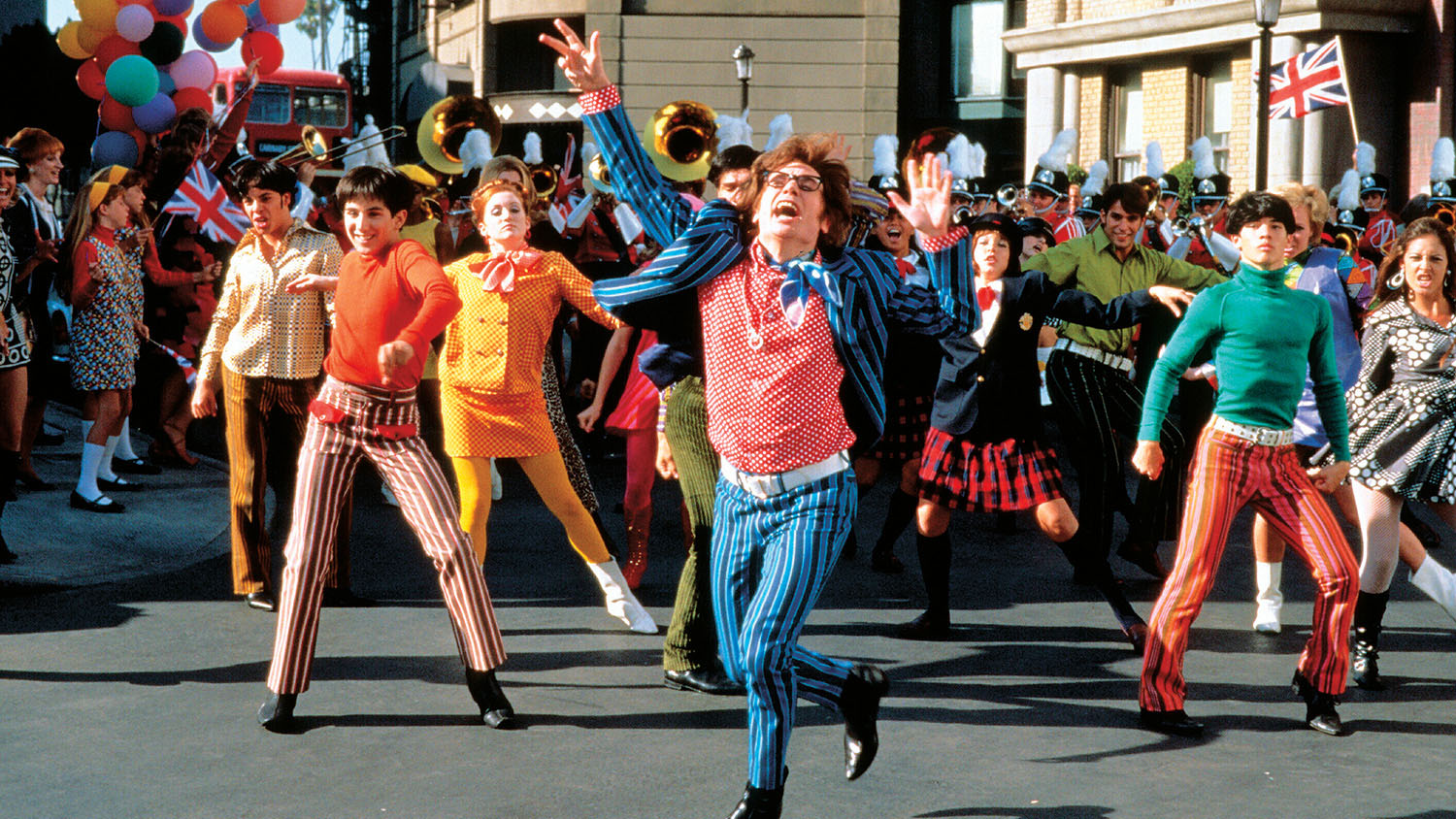
First off, a shameless plug: I was a guest on a podcast! The good people at “Bring Your Own Movie” invited me on to dissect a non-NFR movie near and dear to my heart: “Austin Powers: International Man of Mystery”. You can listen to our increasingly drunken conversation here! A big thank you to Tonya, Sam, Ryan and Laura for a great film discussion and free Guinness!

If you’re a longtime reader of this blog, you’re probably wondering, “Where are the new posts? You used to crank out three of these a week! How dare you deprive me of free online content!” First of all, that’s a bit harsh. Secondly, to answer your question: after I reached the official halfway point of the NFR list, I did some self-reflection and came to one conclusion: I’m very tired. I decided to take the summer off, but rest assured “The Horse’s Head” will resume in the fall, as I am still determined to finish what I have started. In the meantime, there’s plenty of older posts in the backlog to keep you entertained.

And as always, feel free to reach out if you have any comments/requests/well-wishes.

Happy Viewing,

Tony