#259) I Am a Fugitive From a Chain Gang (1932)

iamafugitive3

#259) I Am a Fugitive From a Chain Gang (1932)

OR “Orange Is the New Black & White”

Directed by Mervyn LeRoy

Written by Howard J. Green & Brown Holmes. Based on the autobiography by Robert E. Burns.

Class of 1991

The Plot: James Allen (Paul Muni) has just returned home from World War I, and declines a desk job at the family business to pursue his dream of being a civil engineer. He travels the country for employment, but work is hard to come by, and soon he is out of money. After being arrested during a robbery he was forced to participate in, James is sentenced to a chain gang, where he endures hard labor for months on end. After a year, James escapes to Chicago and makes himself a successful engineer/model citizen. But will his past come back to haunt him?

Why It Matters: The NFR praises Muni and director LeRoy, and cites the film’s influence on the prison genre.

But Does It Really?: “Chain Gang” is another one of those movies that I’ve heard of, but couldn’t tell you why it’s a classic. It turns out the film’s slip from the shortlist of classics isn’t necessarily its own fault. There’s nothing wrong with the film; it’s quite good actually. It’s just been eclipsed over the years by better movies: “The Great Escape”, “The Shawshank Redemption”, and the definitive chain gang film: “Cool Hand Luke”. There’s some great work being done throughout, especially by Paul Muni, but there have been so many other classics in the last 85 years that this movie gets lost in the shuffle. “Chain Gang” is worth a watch, but definitely not as a double feature with “Cool Hand Luke”. Give it a chance to work on its own.

Everybody Gets One: The film’s main takeaway is the man himself: Robert Elliott Burns. “Chain Gang” is very faithful to his real life story. Like James Allen, Burns was a WWI veteran who couldn’t find work, was caught up in a diner robbery, and escaped from a chain gang. He became the editor of Greater Chicago Magazine and started publishing a serial that would become his memoir “I Am a Fugitive From a Georgia Chain Gang!” After his second escape, Burns spent a few weeks in Burbank helping Paul Muni prepare for the film, and even contributed some dialogue to the screenplay.

Wow, That’s Dated: Chain gangs, that’s your big one. Chain gangs were commonplace in the South for most of the late 1800s/early 1900s, but were eventually phased out by the mid-‘50s. Alabama, however, tried to bring back chain gangs in the ‘90s, which means it’ll probably come back again soon. Stupid cyclical nostalgia trends.

Seriously, Oscars?: “Chain Gang” was nominated for three Oscars at the 6th Academy Awards. Paul Muni lost Best Actor to Charles Laughton in “The Private Life of Henry VIII” (the first instance of an Oscar going to a foreign film) and Best Picture that year went to “Cavalcade”. You know, that classic. Most bizarre is the film’s third nomination: sound engineer Nathan Levinson faced such competition as…himself for “42nd Street” and…himself for “Gold Diggers of 1933”. But the winner for Sound Recording turned out to be the only non-Levinson: Franklin Hansen for Paramount’s “A Farewell to Arms”.

Other notes

  • Having clips of your cast during the opening credits is a massive spoiler. Great, now I know this movie has a judge, a warden, AND a Texan!
  • Another pre-code gem: the Texan says someone’s gonna be “S.O.L.” if they mess with him. And he ain’t talking about the Satellite of Love.
  • Who dreams of getting into construction work? What are you, one of the Village People?
  • While James is riding the rails, he should say hi to those Wild Boys of the Road.
  • This movie got me to wondering when we switched prison uniforms from black and white stripes to orange jumpsuits. Turns out we were already phasing out the stripes around the time of this film, with the intention of making the uniforms more rehabilitative than punishing. At one point we tried out denim, as seen in “Cool Hand Luke”.
  • Mervyn LeRoy seems to be having fun cutting from the prisoners to the horses. Nice metaphor.
  • James’ escape is still pretty suspenseful and exciting to watch. But why the occasional under-cranking? Could Paul Muni not run?
  • At one point James is reading “Civil Engineering” by J.J. Robertson. Any relation to J.K. Robertson? Is he a team player?
  • So much of this film’s transitions are paperwork. Newspapers, contracts, letters. Is this movie applying for a Real ID?
  • Paul Muni kinda looks like Glenn Ford.
  • “How do you live?” “I steal.” Great final exchange, but like the film in general, its standing as one of the great film endings has been surpassed by many later films.
  • The moral of this movie: Never turn down a desk job. Your dreams will lead to nothing but a life of crime.

Legacy

  • The success of the movie (as well as the book) led to the eventual abolition of the chain gang system in America. Robert Burns was pardoned in the state of Georgia in 1945.
  • Robert Burns’ real story was made into the 1987 TV movie “The Man Who Broke 1,000 Chains”. Apparently the 1987 equivalent of Paul Muni was Val Kilmer.

#258) Primary (1960)

Coin Toss Before Presidential Debate

#258) Primary (1960) 

OR “The Dairyland Diaries”

Directed & Written by Robert Drew

Class of 1990

The Plot: It’s 1960 and the White House is up for grabs in the upcoming presidential election. Minnesota Senator Hubert Humphrey is the presumed front-runner for the Democratic nomination, but Senator John Kennedy from Massachusetts thinks he can rock the vote. After easily winning the New Hampshire primary, Kennedy challenges Humphrey in the Wisconsin primary of April 1960 to prove he can carry the kind of mid-west state that Humphrey prides himself on having a connection with. Humphrey pounds the pavement: shaking hands, kissing babies, pledging to look out for the average farmer once elected. Kennedy, along with his glamorous wife Jackie and the rest of his famous family, sets out to prove that his Catholic upbringing is nothing Protestant America needs to fear. And in the midst of all of this, filmmaker Robert Drew is using the proceedings to create a new kind of documentary.

Why It Matters: The NFR calls the film “new territory in documentary film making” and states that “[m]odern political and news reporting owes much to the audacity of this film’s invasive technique.”

But Does It Really?: Oh of course. “Primary” was a game-changer for documentaries. Long before we had wall-to-wall news coverage of every political movement, “Primary” was a rare glimpse at what it takes to run for president in this country, and the toll it takes on anyone who thinks they’re up to the task. The film is engaging, surprisingly suspenseful (considering that you know how it ends), and worth a watch for its artistic merits as well as for its historical significance. Plus it’s less than an hour long. Any filmmaker who can make that big an impact in only 53 minutes is worthy of recognition.

Everybody Gets One: This isn’t his only NFR appearance, but attention must be paid to Robert Drew. Drew was a writer for Life magazine and had a Nieman Fellowship at Harvard when he started to focus on filmmaking, specifically asking the question, “Why are documentaries so dull?” He founded Drew Associates, hired a murderers’ row of future notable filmmakers, and in the process created what we now know as Direct Cinema. Minimal narration, no forced storylines, just a camera covering real life in real time. What it all means is left up to you, the audience.

Wow, That’s Dated: Kennedy’s campaign song was a rewritten version of the then-current hit song “High Hopes”.

Seriously, Oscars?: I’m not sure if “Primary” premiered in theaters or on television in 1960, but the Oscar winner that year for Best Documentary was “The Horse with the Flying Tail”. So to answer your question: no, the Oscars weren’t quite ready to embrace direct cinema in 1960. Robert Drew was never nominated for an Oscar, but he did win an Emmy in 1969 for a documentary about choreographer Edward Villella. So that’s something.

Other notes

  • Yes yes, I am aware that the photo I used for this post is from the West Virginia primary a month after the events of this film. But hey, it’s the best photo I could find.
  • The cameramen used for the film were all employees of Robert Drew’s film company Drew Associates. Among them, future documentarians Richard Leacock, Albert Maysles, and D.A. Pennebaker.
  • Part of me says we should bring back campaign songs, and part of me definitely does not want that.
  • Remember the film professor I mentioned who always name-dropped Errol Morris? Apparently he’s one of the younger volunteers for the Kennedy campaign in this movie. He brought that up a lot too. Weirdly, he always referred to Jackie Kennedy as “Jackie O”, even though she didn’t get that nickname until she married Aristotle Onassis in 1968.
  • Speaking of, I hate when people get their kids involved in campaigning. I know it’s important to teach your kids about democracy, but I’m not voting for Kennedy just because your daughter thinks he’s “dreamy”.
  • Don’t know a lot about Hubert Humphrey, other than he was Johnson’s VP and lost to Nixon in ’68, but he seems like everyone’s uncle. I suspect like Adlai Stevenson before him, Humphrey didn’t cut it because he wasn’t “exciting” enough.
  • Say what you will about Kennedy, he knew how to work a crowd.
  • Does anyone know the Polish phrase that Jackie says? Subtitles only tell me that it’s “Non-English Speech”. Real helpful.
  • Man, I knew Kennedy’s Catholicism was an issue in his campaign, but I did not realize just how big an issue it was. Some people were worried Kennedy would take his orders from the Pope. A president being controlled by a foreign leader? What a ridiculous thing that’s actually happening.
  • Jeez after all of that, they’re “about where they stood before the primary”? Democracy sucks.

Legacy

  • Every documentary made since 1960 can trace its lineage back to “Primary”. Not that’s a legacy.
  • Although Kennedy defeated Humphrey in the Wisconsin primary, it was by such a small margin (in a predominantly Catholic state) that Humphrey stayed in the race. He eventually dropped out when Kennedy won the West Virginia primary in May 1960.
  • Also in the running for the 1960 election was Senate Majority Leader Lyndon B. Johnson of Texas. Kennedy selected Johnson as his running mate shortly after clinching the party nomination.
  • Robert Drew got access to the Kennedy White House in fellow NFR documentary “Crisis: Behind a Presidential Commitment”.

Further Viewing: The 1960 presidential election was the first to feature televised debates. Kennedy faced Republican nominee Richard Nixon on four separate occasions, with Nixon learning about how to appear “TV friendly” along the way.

Listen to This: “The First Family” was a gentle satirizing of JFK and his time in the White House. The album was a surprise runaway hit, led by comedian Vaughn Meader’s pitch-perfect impression of Kennedy. As quickly as he rose, however, Meader’s star plummeted following Kennedy’s tragic assassination. While largely forgotten now, “The First Family” was a breakthrough for comedy albums, and proof that sketch comedy wasn’t just relegated to the sanitized airwaves of broadcast television. For the record: Kennedy thought the lampooning was hilarious and allegedly gave out copies of the album as Christmas gifts.

#257) Intolerance (1916)

intolerance

#257) Intolerance: Love’s Struggle Throughout the Ages (1916)

OR “Four of a Kind”

Directed by D.W. Griffith

Written by Everybody, all of them uncredited

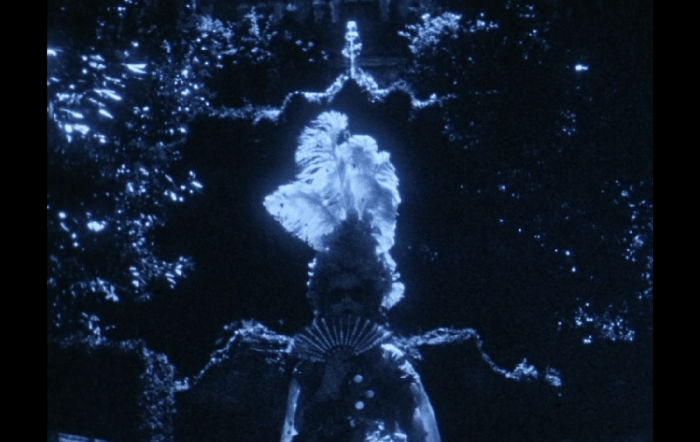
The Plot: As Eternal Motherhood (Lillian Gish) rocks the cradle of each passing generation, four stories of intolerance play out over four different historical eras. The religious conflict between Prince Belshazzar and Cyrus the Great (Alfred Paget and George Siegmann) leads to the fall of Babylon. The compassionate teachings of Christ (Howard Gaye) are ignored by the people of ancient Judea, and the man is crucified. Another religious battle leads to the St. Bartholomew’s Day Massacre of 1572, led by Queen-mother Catherine de Medici (Josephine Cromwell) to wipe out the Huguenots from Catholic France. And a modern (1916) story of a poor young woman (Mae Marsh) and her hardworking husband (Robert Harron) whose lives are oppressed by a group of social elites promoting upright values. All this, plus the kind of epic filmmaking that only D.W. Griffith could provide.

Why It Matters: The NFR calls the film no less than “one of the masterpieces of the silent era” and praises Griffith’s technological breakthroughs. In addition, there’s an essay by Benjamin Schrom, who is referred to as “an avid film fan and product manager for Google Education.” Come on! Every other movie gets a film scholar but this one gets some guy from Google? Hell, by that standard I’m more qualified to write one of these things (and I wouldn’t say no, NFR).

But Does It Really?: I’m gonna chalk this one up to historical significance. “Intolerance” is definitely worthy of early inclusion on this list, if just for its monumental undertaking and effective juxtaposition between its four storylines. Entertainment-wise it’s…fine. I found myself in awe of the production value and not necessarily involved in the stories. Griffith’s grandiose technical side always outshined his oversimplified storylines. “Intolerance” is worth a watch for all you serious film buffs, but once is enough.

Wow, That’s Dated: The “modern” story deals with pre-union American labor, the stigma of fatherless children, and the common punishment of hanging criminals. Plus there’s a reference to the relatively current song “In the Good Old Summer Time”.

Other notes

  • The films alternate subtitle is “A Sun-Play of the Ages”. Does anyone know what a Sun-Play is? The internet says it’s an online swimming pool supply warehouse, but I have my doubts that was Griffith’s intention.
  • Pretty ballsy to make “The Birth of a Nation” and then immediately follow up with a movie called “Intolerance”. The story goes that Griffith made this film in response to those who were critical of “Birth of a Nation”. Yeah, people who disapprove of a movie that glorifies the Klan are so intolerant. Are we sure Griffith doesn’t have a Twitter account?
  • Lillian Gish plays the Eternal Mother, in what must have been her easiest paycheck ever: sit there, rock a cradle, and enter film immortality. Side note: The title cards in these sequences have lines lifted from “Out of the Cradle Endlessly Rocking” by…Walt Whitman! Look at that handsome undercover Mark Twain.
Walt_Whitman_-_George_Collins_Cox
  • The intertitles have footnotes! Griffith shows off his historical accuracy with information dispersed throughout the film. This may be the only movie on the list with an appendix.
  • Griffith clearly blew the budget on the Babylon set, and he makes sure to include plenty of shots showing it off.
  • I was following everything just fine up until the 1572 scenes. Someone get me a flow chart!
  • Nice touch having different backdrops for each era’s intertitles.
  • Thanks to the headbands, everyone in the Babylon scenes looks like an ‘80s rocker.
  • To this day, most labor disputes are still settled using cannons. I’m just glad my union has health care.
  • Mae Marsh is the Sandy Dennis of the silent era: so many tics.
  • Shoutout to assinu, the androgynous servants of Ishtar.
  • Not only does actor Howard Gaye portray Jesus in this film, but he was also Robert E. Lee in “Birth of a Nation”. How many actors can say that?
  • We need to bring back the adjective “Christly”. “Everyone applauded Jane for her Christly charity work.”
  • “Intolerance” isn’t so much four stories as it is two with special guest appearances. Griffith clearly favored the Babylon and modern stories, with the Christ plotline being used mostly as a linchpin. The St. Bartholomew scenes feel like an afterthought; they are to this movie what “The Watch” is to “Pulp Fiction”.
  • Wow, the fall of Babylon is epic. This alone is worth the price of admission. Blink and you’ll miss a man get decapitated!
  • In another moment of keen cinematic foresight, you can see Griffith futzing with aspect ratio. Certain shots would fit on today’s widescreen TVs, and a few others look like they were filmed portrait style on someone’s phone.
  • The modern scenes feel a lot like “Musketeers of Pig Alley: Part 2”. For those of you who remember that post, that’s not necessarily a compliment.
  • Yeah, Griffith definitely had issues with women. In every era of this movie the women are either victims, property, or unjustifiably evil.
  • The intercutting between the four stories at the climax must have been an intense viewing experience 100 years ago. It’s pretty much the same template intercutting has followed ever since.
  • Eternal Mother’s been rocking that cradle for three hours. Is that kid ever going to sleep?

Legacy

  • “Intolerance” was not the box office bomb some have labeled it as. The film made a lot of money, but since Griffith backed most of the movie he suffered financially for the rest of his life, even with hits like “Broken Blossoms” and “Way Down East”.
  • Griffith knew he had enough footage on his hands for more than one movie, and in 1919 he used that material to create two new films: “The Fall of Babylon” and “The Mother and the Law” (the latter being the working title for “Intolerance”). Griffith’s one mistake: he used the original negative for “Intolerance”, making future restorations nearly impossible.
  • Buster Keaton spoofed the film’s overall concept with 1923’s “Three Ages”.
  • The elephants on the Babylon set were recreated for the Hollywood and Highland Center, and the former Hollywood Pictures Backlot at Disney’s California Adventure.
  • I’m gonna blame this film for every movie that covers a central theme over different eras; such notable examples being “The Hours”, “If These Walls Could Talk”, and…uh…. “If These Walls Could Talk 2”?

#256) Ace in the Hole (1951)

MV5BNDUzZjlhZTYtN2E5MS00ODQ3LWI1ZjgtNzdiZmI0NTZiZTljXkEyXkFqcGdeQXVyMjI4MjA5MzA@._V1_

#256) Ace in the Hole (1951)

OR “The Big Carnival” (Seriously, that’s the films other title)

Directed by Billy Wilder

Written by Wilder & Lesser Samuels & Walter Newman

Class of 2017

The Plot: Down on his luck reporter Chuck Tatum (Kirk Douglas) has been fired from a big New York paper and has landed at the much more rural Albuquerque Sun-Bulletin. After a year of small town news, Chuck learns about local man Leo Minosa (Richard Benedict) trapped in a nearby cave. Although a quick rescue is being planned, Chuck is able to delay things in order to play up the story in the newspaper. Chuck manages to corrupt Leo’s wife Lorraine (Jan Sterling) and the town sheriff (Ray Teal) in the process, the Sun-Bulletin’s circulation skyrockets, and a pickup from the Associated Press leads to the cave site being visited by thousands of onlookers. Is all of this journalistic aggrandizement worth the life of one man?

Why It Matters: The NFR spends most of the write-up on a plot synopsis, but does call the film “[a] deeply cynical look at journalism” and “a scathing tale of media manipulation”.

But Does It Really?: Hmmm…how did a movie about sensationalizing the news make the NFR in 2017? I wonder….

“Ace in the Hole” is one of those “wasn’t that already on the list” kinda movies; you know it’s regarded as a classic, but it’s not on the top of anyone’s list. “Ace” is definitely a minor classic compared to Wilder’s other work, but should absolutely be commended for its prescient takedown of yellow journalism and the public that eats it up. For all of this film’s pros (and there are plenty), it never fires on all cylinders the way you want a classic to. Wilder had just ended his writing partnership with Charles Brackett, and the screenplay suffers a bit from this new collaboration. “Ace in the Hole” is sub-par Wilder, but that’s still better than most directors’ best. Worth a watch, but as its belated NFR induction indicates, it’s not appointment viewing.

Shout Outs: Federber works for Pacific All-Risk, the same insurance company from “Double Indemnity”.

Everybody Gets One: Walter Newman was relatively new to screenwriting when he worked with Wilder on “Ace”, while Lesser Samuels was coming fresh off of his Oscar-nominated work penning the social drama “No Way Out”. Jan Sterling’s career was just taking off when she played Lorraine Minosa, and she was a few years shy of her Oscar-nominated performance in “The High and the Mighty”.

Wow, That’s Dated: Quick references to Life and Look Magazine, plus a meditation on the lost culture of Roadside America. On a more upsetting note, this movie has enough casual racism towards Native Americans to make John Ford blush.

Take a Shot: Chuck says the title just once when talking up the story to Sheriff Kretzer. I like to think they dubbed over the line when they changed the title. “What’d you have, pair of deuces? This is better; here we’ve got an [The Big Carnival].”

Seriously, Oscars?: Well, something had to follow “Sunset Boulevard”. “Ace in the Hole” didn’t go over well with either critics or audiences, but did manage one Oscar nomination for its screenplay, losing to “An American in Paris”. No one was ready to praise a movie that, as the Hollywood Reporter put it at the time, “is nothing more than an uncalled-for slap in the face of two respected and frequently effective American institutions – democratic government and the free press.” Wow, that’s dated.

Other notes

  • Here’s a rarity amongst NFR films; “Ace in the Hole” has a second title. Shortly before the film’s release, Paramount renamed it “The Big Carnival”. Wilder disapproved and eventually got “Ace in the Hole” restored, but TV prints carried the “Carnival” name for several decades.
  • “Ace in the Hole” was inspired by two real-life events: the Floyd Collins entrapment of 1925, and the similar Kathy Fiscus rescue of 1949. Both events received a massive amount of media attention, simultaneously demonstrating the mass power and exploitation of anyone making national news.
  • If you’re going to replace Charles Brackett, why pick one of the Lesser Samuels?
  • Between this and “The Bad and the Beautiful”, Kirk Douglas loves playing unapologetically assertive characters. I haven’t seen “Lust for Life”, but was Van Gogh like this?
  • If the copy boy at the beginning looks familiar, it’s because he saw you litter.
  • Oh Leo, how dumb are you? And while you’re down there, can you tell The Goonies “Hey you guuuuuys!
  • Yeah, there’s something missing from this script. If nothing else, this film is concrete evidence of what the likes of Charles Brackett and I.A.L. Diamond contributed to a Billy Wilder movie.
  • Best line in the movie: “I don’t go to church. Kneeling bags my nylons.”
  • The carnival that sets up near the cave is provided by “The Great S&M Amusement Corp.” Phrasing.
  • Every character in this film falls for the old movie trope of repeating everything in a phone conversation for exposition.
  • Chuck says his journalism isn’t “below-the-belt” but rather “right in the gut”. Well, in the ‘50s everyone wore their belts higher up, so two things can be true.
  • Character actor Porter Hall plays Sun-Bulletin editor Mr. Boot, and it may be his finest film performance. He adds a brief touch of humanity to the proceedings.
  • How did “We’re Coming, Leo” not get a Best Song nomination? I still have it stuck in my head!
  • Well that ending took a turn.

Legacy

  • This movie’s legacy definitely got off on the wrong foot. Wilder was sued for plagiarism by a screenwriter named Victor Desny, who claimed he had pitched a Floyd Collins movie to Wilder in 1949. The court ruled in favor of Wilder, but an appeal led to Wilder settling with Desny in 1956.
  • “Ace in the Hole” was Wilder’s first flop with critics and audiences, but he bounced back with his next picture: 1953’s “Stalag 17”.
  • Wilder didn’t work with either of his “Ace” screenwriters again. Walter Newman would continue writing screenplays, among them “Cat Ballou” and “The Magnificent Seven”, while Lesser Samuels’ only major screenplay after “Ace” was “The Silver Chalice”, which is notorious for how bad it is.
  • “Radio Bart” takes a lot from “Ace in the Hole”, right down to the inspirational song.

#255) The Decline of Western Civilization (1981)

tumblr_osymqiZIjh1u4wuupo1_1280

#255) The Decline of Western Civilization (1981)

OR “What’s the Matter With Kids Today?”

Directed by Penelope Spheeris

Class of 2016

The Plot: It’s 1980 and the L.A. rock scene has evolved into the first wave of hardcore punk. Filmmaker Penelope Spheeris chronicles the era on and off-stage with such notorious bands as Black Flag, Germs, Catholic Discipline, X, Circle Jerks, Alice Bag Band, and Fear. Each band’s anarchic attitude towards music, L.A., and even their own fans is on full display. Also featured are the owners of L.A. clubs Masque and Club 88 coping with their new clientele, the bands’ fans articulating their devotion to this scene, and the editors of “Slash”, the first punk rock zine. Come for the insight into this burgeoning subculture, stay for the kick-ass soundtrack.

Why It Matters: The NFR calls it “a bracing historical and musical record” of the L.A. punk rock scene.

But Does It Really?: Maybe it’s because I’ve spent the last year and a half watching classic Hollywood fare, but “The Decline of Western Civilization” was a breath of fresh air for me. Despite what others might say, punk rock was the music that actually broke all the rules, and this film covers the chaotic energy of early punk perfectly. At no point does Spheeris attempt to explain or contextualize the music; she lets her subjects be their unapologetic selves. “Decline” is a documentary where the cameras were rolling at the perfect moment, and a welcome addition to the Registry.

Shout Outs: Black Flag lead Ron Reyes sings a snippet from “America” from “West Side Story”.

Everybody Gets One: Director Penelope Spheeris spent most of her childhood travelling the country with her father’s carnival, leading to her lifelong understanding of people on the margins of status quo. Spheeris was inspired to become a filmmaker by her cousin, Costa Gavras of “Z” and “Missing” fame. “Decline” was her feature debut.

Wow, That’s Dated: Besides the obvious dissection to the punk rock scene, this film references such ‘80s things as mullets, arguments about nuclear power, and the ancient art of editing a physical magazine.

Seriously, Oscars?: No Best Documentary nomination for “Decline”. The winner that year was “Genocide”, a film about the Holocaust. No room for mosh pits and atonal screaming at the 1982 Oscars.

Other notes

  • Full disclosure: The only bands I was familiar with prior to my viewing were Circle Jerks and Fear, and even then, I was aware of them in name only.
  • The lyrics for some of these songs appear on screen. Everybody sing along!
  • I learned about the punk dance craze pogo from, of all things, an episode of “Pee-wee’s Playhouse”. And who said that show wasn’t educational?
  • How many of these bands hated this movie?
  • Sadly, the main takeaway from this film is Germs lead Darby Crash, who died of an intentional heroin overdose at age 22. The film’s literal poster child passed away seven months before the film’s release, and the final cut is a telling look at the end of a tragic life.
  • Germs had been banned from practically every L.A. club by the time filming began. Penelope Spheeris had to rent a studio to film their performance.
  • Darby’s going for a Mick Jagger vibe, right?
  • Either fashion has not changed in the last 35 years, or the early ‘80s punk look is making a comeback nowadays.
  • Not a lot of screentime devoted to Catholic Discipline; probably because the group had already disbanded by the time the film was released. Also gone before the production wrapped was the fan zine “Slash”, which folded after their Summer 1980 issue.
  • Of all the featured groups, X seems like the most approachable band. They’re rebelling against everything, but you can still come over to their place for a beer. Lead vocalists John Doe and Exene Cervenka were married (and divorced) shortly after the film was made.
  • The club security meeting captured on camera is a bit rough, especially when they try to differentiate moshing with fighting. “She may be crying, but she may be into it.” Yikes.
  • No matter how you slice it, punk rock is still 90% white people trying to dance.
  • How cool can you really be when your name is Eugene?
  • This film is delightfully bookended by Wayne Mayotte, then owner of Club 88, trying to explain what punk is. It’s like watching your parents describe flossing.
  • The climax of the film is the Fear performance. They are every intense aspect of punk rock pushed up to 11.
  • After an hour and change of these bands screaming their vocals, it turns out Fear lead Lee Ving can actually sing! Side Note: You know Lee best as Mr. Boddy in the film version of “Clue”, where he was dubbed for some reason.

Legacy

  • Right off the bat, this film was causing problems. Fights between fans broke out at early screenings, prompting LAPD Chief of Police Darryl Gates to ban future screenings.
  • This is the first in a trilogy! “Part II” covers L.A.’s heavy metal scene in 1988, and “Part III” looks at homeless teens in the punk rock scene of 1998. Penelope Spheeris helmed all three, and was inspired during the third one to adopt one of the teens featured in the film.
  • I cannot stress enough that Penelope Spheeris went on to direct the film versions of “Wayne’s World”, “The Beverly Hillbillies”, and “The Little Rascals”.
  • Fear found a new fan in John Belushi thanks to this film. Belushi even managed to get them a gig at his old job, “Saturday Night Live”. Their infamous performance led to them being banned from SNL.
  • The filming of the Germs’ performance was recreated for the Crash Darby biopic “What We Do Is Secret”. Shane West’s performance as Crash led to him touring with the surviving members of Germs in 2006.
  • Of the featured bands, X and Fear are the only ones still performing with no interruptions. In addition to the aforementioned end of Catholic Discipline, Germs and Alice Bag Band both ended within a few years of this film’s release, Black Flag has reunited a few times, and Circle Jerks have been on hiatus since 2010.

Listen to This: None of the bands featured in this movie have made the National Recording Registry yet. Write to your congressperson.