#121) The Bridge on the River Kwai (1957)

bridge_on_the_river_kwai_xlg

#121) The Bridge on the River Kwai (1957)

OR “A Passage to Bangkok”

Directed by David Lean

Written by Pierre Boulle Carl Foreman and Michael Wilson. Based on the novel by Pierre Boulle.

Class of 1997

The Plot: A group of British WWII soldiers led by the militant Col. Nicholson (Alec Guinness) is captured and sent to a Japanese prison camp. The camp’s leader, Col. Saito (Sessue Hayakawa) instructs the new prisoners to help build a bridge from Rangoon to Bangkok. Nicholson refuses to help, and his steely resolve creates tension in the camp. Meanwhile, jaded American prisoner Com. Shears (William Holden) escapes the camp, only to be recruited by British Major Warden (Jack Hawkins) to lead a team back to the camp to blow up the bridge.

Why It Matters: The NFR praises many aspects of the film, though notes it was that film that saw “a shift in Lean’s directorial style from simpler storytelling toward the more bloated epics”. Pretty backhanded if you ask me.

But Does It Really?: It may be a little too epic for its own good, but “Bridge on the River Kwai” is still quite a thrilling experience 60 years later. While I disagree that the film is “bloated”, it definitely could have been, well, leaner. Lean sets the stage for a fascinating character study set against some impressive manpower (after all, they had to actually build the bridge). The film is an excellent study of the rules we cling to in times of chaos, as well as the madness that comes with power.

Everybody Gets One: Despite collaborating with David Lean throughout the ‘50s, this was the final Lean picture (and only NFR entry) for editor Peter Taylor, cinematographer Jack Hildyard, and composer Malcolm Arnold.

Wow, That’s Dated: All of the night scenes are shot “day for night”. It is incredibly obvious during the lengthy scene where they sneak the explosives under the bridge.

Title Track: No one says the title, but Saito does say they will build “a bridge across the river Kwai”. Very close, but the judges are looking for an exact match.

Seriously, Oscars?: In a not-so-competitive year, the Oscars went with the most epic choice, and “The Bridge on the River Kwai” won seven Oscars, including Best Picture. Lean won his first Best Director prize and Alec Guinness won Best Actor. The film also won Best Score, despite the fact that there’s not a lot of actual score and the only part anyone remembers is the preexisting “Colonel Bogey March”. While most of the film’s big wins were justified, it did screw over fellow NFR entry “12 Angry Men”.

Other notes

  • We’ve come to another film with a nationality dispute. This is really a British film, but because it was financed by an American film company (Columbia under the legendary Sam Spiegel), it qualifies for inclusion on this list.
  • One of the many ripple effects of the Hollywood Blacklist was original writers Foreman and Wilson going uncredited in favor of the novel’s author Pierre Boulle, who did not speak or write English. The two writers were not properly credited (or awarded their Best Adapted Screenplay Oscar) until the mid-80s.
  • Kudos to the cinematography in this film. So much storytelling is happening in every shot.
  • William Holden does jaded American so well. Also, what’s with Holden and his POW films?
  • How would you like to be in charge of all the extras in this film?
  • Nope, just ignore the obvious dummy of William Holden falling into the river.
  • During Nicholson’s speech as they travel across the river (aka the “Jaws” shot), part of his dialogue is obscured by a splash. He originally referred to the Japanese as “barbarians”, but the line was later censored after objections from Japanese communities. Of course, if you went and censored everything offensive about how the Japanese are portrayed here there’d be no movie left.
  • Also incredibly dated: the rampant sexism in this or any war film. At least this film has a woman in it; “Lawrence of Arabia” has zero.
  • Jack Hawkins gets the one funny line in the entire film.
  • Of course, if you only know Alec Guinness from “Star Wars”, be sure to watch his wonderfully restrained work here. Turns out Obi-Wan Kenobi is just a fraction of this guy’s talents.
  • It takes forever to get there, but that is one hell of an ending. The tension throughout is just great.

Legacy

  • As previously mentioned, David Lean started his string of epics with this picture. He followed this film up with “Lawrence of Arabia”, like you do.
  • After the film’s release, tourists flocked to the real Khawe Yai River to see the bridge. Just one problem: there was no bridge on the Khawe Yai River. The real-life inspiration was on the Mae Klong River, which was subsequently renamed Khawe Yai.
  • Sessue Hayakawa spoofed his own performance in the Jerry Lewis film “The Geisha Boy”.
  • The Goon Show did their own parody with “The Bride on the River Wye”. Come for Peter Sellers’ spot-on Alec Guinness, leave for the Japanese stereotyping.
  • The 1989 film “Return From The River Kwai”, which, after some legal dispute, had to add a disclaimer that it is NOT a sequel to this film. Subsequently, it never got released in America.
  • And of course, this film is the reason I will have the “Colonel Bogey March” stuck in my head for the next several weeks.
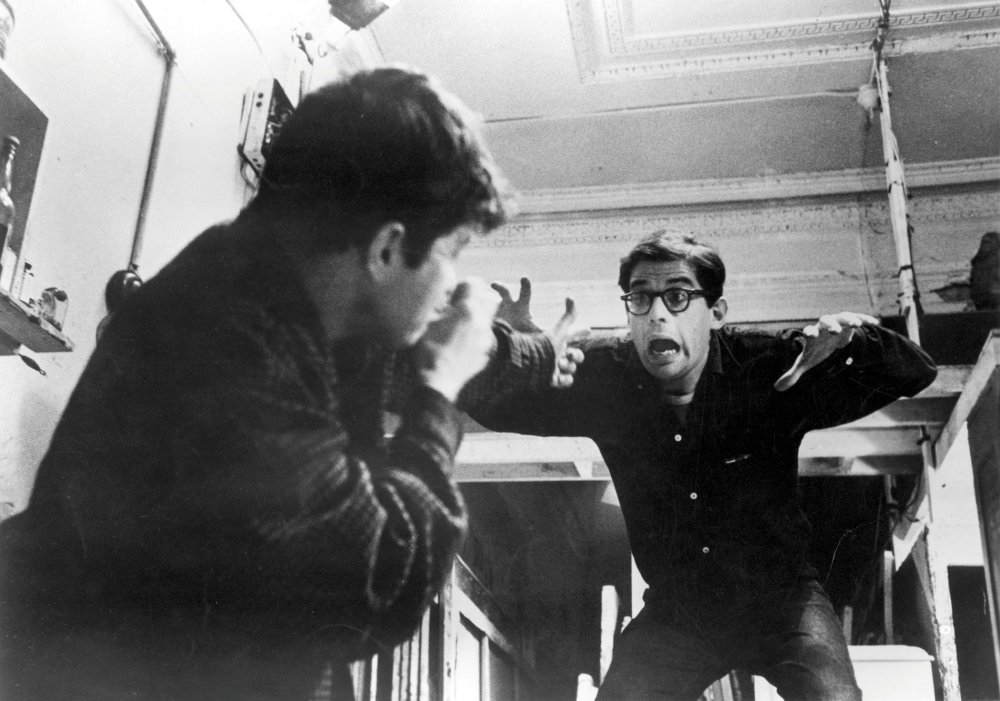
#120) Pull My Daisy (1959)

pull-my-daisy-1959-001-00n-9ir-ginsberg-corso-goofing

#120) Pull My Daisy (1959)

OR “That’s Not Filming, It’s Typing”

Directed by Robert Frank & Alfred Leslie

Written by Jack Kerouac

Class of 1996

The Plot: The closest this film gets to a plot is a story involving Milo (Larry Rivers), a railroad brakeman who hangs out with his Beat writer friends (Allen Ginsberg, Gregory Corso, & Peter Orlovsky). When Milo’s wife (Delphine Seyrig, aka Beltaine) invites a Bishop (Richard Bellamy, aka Mooney Pebbles) over for dinner, the Beat writers invite themselves over and provide an interesting night for everyone. Jack Kerouac improvises narration alongside the film.

Why It Matters: The NFR calls it an “adroit parody of the beat generation” and reveals that despite it initially being hailed as a piece of cinéma vérité, the whole thing was staged.

But Does It Really?: I freely admit that I don’t get this Beat stuff, but it’s a piece of American culture that should be preserved, and I’m glad someone had a camera handy to capture this group in action.

Everybody Gets One: Robert Frank and Alfred Leslie were, respectively, a filmmaker/photographer and painter who were hanging out with the Beat writers at the time. I am not hip enough to summarize the life and careers of Jack Kerouac and Allen Ginsberg.

Wow, That’s Dated: When your film focuses solely on the beat generation, it could only be 1959.

Title Track: No one says “pull my daisy”, but we do get a title song!

Seriously, Oscars?: Oh, if only this had gotten an Oscar nomination. The Academy would have been scratching their heads so much during those screenings.

Other notes

  • “A G-String Enterprise”? I like this film already!
  • Directors Robert Frank and Alfred Leslie don’t have a single last name between them.
  • We get the word “hipster” thrown out here in its original ‘40s context. Though could you imagine Ginsberg or Corso eating brunch or ironically listening to vinyl?
  • Are we sure it’s just cigarettes they’re smoking?
  • Kudos as always to “I’m Not There.” casting director Laura Rosenthal, because David Cross really does look like Allen Ginsberg.
  • And of course, that’s a young unknown Dustin Hoffman as the bishop. (It’s not really, but at least one of you will read this and think it’s true.)
  • Why the mini American flag? But then again, why anything in this film?
  • I want Jack Kerouac to do commentary on every film. Especially the silent ones.

Legacy

  • Robert Frank did a handful of documentaries, most notably The Rolling Stones’ “Cocksucker Blues”, before returning to photography.
  • Alfred Leslie returned to painting and charcoal drawing, though sadly most of his work was destroyed in a fire in 1966.
  • There is no way I can summarize the post-“Daisy” work of Kerouac and Ginsberg in a short blog post. Keoruac alone published more writing posthumously than I will in my entire lifetime.

Listen to This: Perhaps the most famous poem of the Beat Generation, Allen Ginsberg recorded “Howl” in 1959 for posterity, and started one of the great obscenity legal cases of all time. Read more about Howl in this informative essay by Library of Congress employee Cary O’Dell.

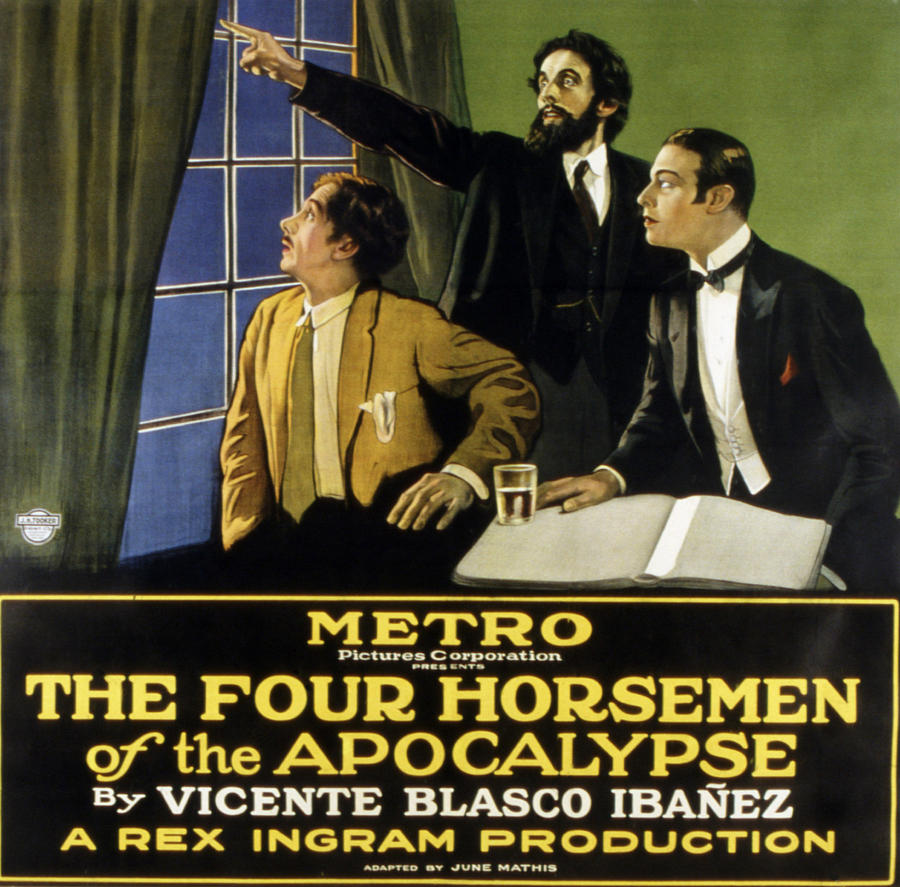
#119) The Four Horsemen of the Apocalypse (1921)

the-four-horsemen-of-the-apocalypse-everett

#119) The Four Horsemen of the Apocalypse (1921)

OR “Me and Julio Down by the Front Line”

Directed by Rex Ingram

Written by June Mathis. Based on the novel by Vicente Blasco Ibáñez.

Class of 1995

The Plot: A family in Argentina is torn apart following the death of patriarch Madariaga (Pomeroy Cannon). Of his two daughters, Donna Luisa (Bridgetta Clark) moves with her husband Marcelo (Josef Swikard) to his native France, and Elena (Mabel van Buren) moves with her husband Karl (Alan Hale) to his native Germany. When the Great War breaks out, the families find themselves on opposing sides, with an ongoing metaphor involving the Four Horsemen of the Apocalypse. Also the French family’s son Julio is Rudolph Valentino in his breakout role.

Why It Matters: The NFR highlights Valentino’s participation in the film, as well as the film’s successful first run in theaters. There’s also an essay by AMPAS Managing Director of Preservation Randy Haberkamp.

But Does It Really?: Historically sure, but this film is a bit of a drag. It just takes so long to get going, and most of the characters introduced in the first bit of the film completely disappear halfway through. The Haberkamp essay makes a good case for its artistic merit; so I say if you’re going to watch this, make sure it’s a good print so you can actually see the artistry.

Everybody Gets One: We’ll see more of the major players (Particularly Ingram, Valentino, and Mathis) throughout the list. Sadly, most of the supporting cast of this film didn’t make the transition to sound pictures, except for Alice Terry, who met Rex Ingram during filming, and married him shortly thereafter.

Wow, That’s Dated: The last time I watched Wallace Beery in a movie he was playing a Native American, so I’ll just assume no one here is the nationality of the character they’re playing.

Take a Shot: We get a title about halfway through the film. And they are not subtle at all about it being a metaphor for war. Tchernoff literally looks into the camera at the end of the film, as if saying “You knuckleheads getting this? Huh?”

Other notes

  • This film was produced by Metro Pictures three years before it merged with Goldwyn Pictures and Louis B. Mayer Productions to form…another studio whose name escapes me right now.
  • Shout-out to screenwriter June Mathis, one of the few female screenwriters of the silent era and second only to Mary Pickford for the title of “Most Powerful Woman in Hollywood”.
  • The first intertitle actually begins with “In a world”. I guess that’s where Don LaFontaine got it from.
  • Alan Hale plays Karl. Within days of this film’s release, his wife gave birth to their son, Alan Hale Jr., aka the Skipper from “Gilligan’s Island”.
  • Oh Rudy. From his first close-up you can see that he has a face for the big screen.
  • The tango scene was added just to give Valentino, a former taxi dancer, more to do. It’s pointless, but it’s fun.
  • Illustrated intertitles; a lost art.
  • “Glass-eyed, carrot-topped sharks” is my new favorite insult.
  • After a death in the family, I too like to be comforted by my pet monkey.
  • I like how anything the characters read fades from their native language to English. Well done Ingram.
  • Tchernoff looks a lot like Rasputin.
  • I see they blew the budget on the Horsemen. And I’m pretty sure The Beast played Spot on “The Munsters”.
  • As if the French Army didn’t have enough problems during the Great War. I believe there’s a Colonel Dax who could voice his objections.
  • Nope, it’s gonna take more than German officers in drag for me to like this film.
  • It’s okay fellas, I don’t get along with some of my cousins either.

Legacy

  • This is the film that made Rudolph Valentino a matinée idol. Plus according to at least one Valentino biography, the film led to a brief jump in popularity of the tango and gaucho pants.
  • The tango scene is spoofed in Gene Wilder’s “The World’s Greatest Lover”.
  • MGM made another film version of the novel in 1962, with the time period shifted to World War II and with Valentino replaced with an incredibly miscast Glenn Ford.
  • A remake by legendary producer Stanley Motss was beset with problems during shooting. Motss declared these setbacks as “nothing”.

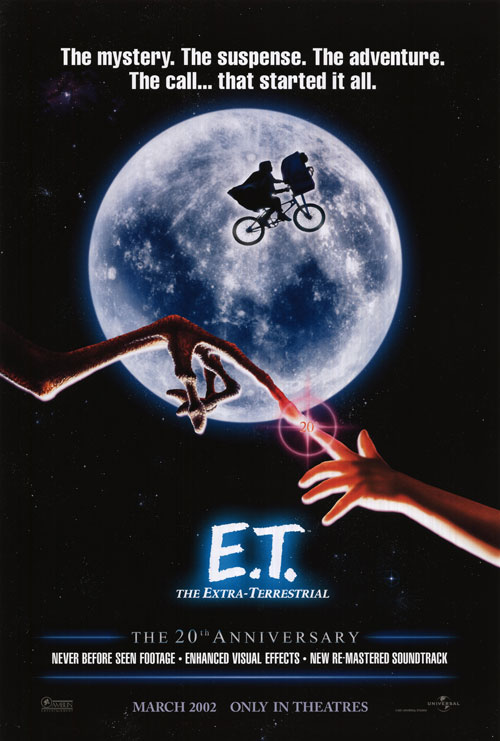
Second Screening: E.T. the Extra-Terrestrial (2002 Special Edition)

A70-13550

“Second Screening” is devoted to watching alternate versions of NFR entries and determining which version is most worthy of preservation. Today we look at the 20th anniversary special edition of “E.T. the Extra-Terrestrial”. You can read my thoughts on the original film here.

Full Disclosure: I actually saw the 20th anniversary in the theater (alone, for some reason), and I own the original DVD release that includes both versions of the film.


What’s Different?: Spielberg’s intention with this version was to tweak some shots that always bothered him, either due to the technical limitations of 1982 or changing tastes over the previous 20 years. Most notable are some cleaned up special effects shots, particularly involving E.T. itself. The alien’s facial expressions have been enhanced, and scenes of E.T. moving now show that it uses its arms to propel itself. Two scenes have been added; one involving Elliott trying to give E.T. a bath on his sick day, and another in which Mary finds Michael and Gertie on Halloween.

But perhaps the most controversial alterations are the ones deemed too politically correct. Mary’s objection to Michael dressing as a “terrorist” for Halloween is changed to “hippie”. And during the final chase scene, the guns wielded by government agents have been changed to walkie-talkies. This change was expertly lampooned on the “South Park” episode “Free Hat”.


Does It Help?: Not really. I understand the logic behind changing the guns, but it still looks clunky. The only takeaway from the reinstated scenes is that Elliott learns of E.T.’s neck stretching abilities a few scenes earlier. Really the most insulting change is all the cosmetic updates to E.T.’s performance. The original team of puppeteers did a fine job creating E.T.’s character, conveying everything you need to know about E.T. and its thought process. Adding digital facial expressions and movements just spells out everything, leaving less to the viewer’s imagination. Overall, I can’t say any of these changes improve upon the original film.

The Verdict: Even Spielberg says to stick with the original 1982 version. They should take all copies of the Special Edition and bury them next to the E.T. Atari game.

#118) E.T. the Extra-Terrestrial (1982)

et--the-extra-terrestrial-movie-poster-1982-1020141470

#118) E.T. the Extra-Terrestrial (1982)

OR “Fly Me Near the Moon”

Directed by Steven Spielberg

Written by Melissa Mathison

Class of 1994

The Plot: An alien (voiced by Pat Welsh) is stranded on Earth after government agents discover its species’ ship. The alien flees the scene and finds itself in the backyard of a suburban home. A boy named Elliott (Henry Thomas) befriends the alien and they form a special bond. With the help of his siblings (Robert MacNaughton and Drew Barrymore), Elliott helps the alien (dubbed “E.T.”) with its mission to “phone home”.

Why It Matters: The NFR praises the film’s “masterful blending of hopeful innocence with excitement and humor”. There’s also a very loving essay by David Gibson, whose work for the Library of Congress includes preserving film as well as video games. This naturally leads to a shout-out to the infamous E.T. Atari game.

But Does It Really?: What am I, made of stone? “E.T.” is still as warm and as exciting a film as it was when it came out. Melissa Mathison’s screenplay is flawless, and Spielberg keeps the direction simple but powerful. “E.T.” works on every level and leaves you with hope every single time. I won’t try to break it down any further (Christian allegories be damned), but “E.T.” is about as perfect as filmmaking gets.

Shout Outs: Elliott shows E.T. his “Star Wars” action figures, Yoda is one of the Halloween costumes, and there is an extended tribute to “The Quiet Man”.

Everybody Gets One: Pretty much everyone involved except Spielberg and John Williams. Most notable are Drew Barrymore and ‘80s staple C. Thomas Howell.

Wow, That’s Dated: Polaroid cameras, ‘80s computers the size of a washer/dryer unit, casual references to terrorists, and of course, the classic Speak & Spell.

Take a Shot: No one says the full title, but as always the real drinking game with a Spielberg film is “Shots of People Looking Meaningfully at Something Off-Camera”.

Seriously, Oscars?: While “E.T.” did win four technical Oscars (Sound Mixing, Sound Editing, Original Score, and Visual Effects), it lost Best Picture, Director, and Original Screenplay to “Gandhi”, a slight that was even acknowledged by “Gandhi” director Richard Attenborough. Spielberg held no grudges; casting Attenborough in “Jurassic Park” and “Gandhi” lead Ben Kingsley in “Schindler’s List”.

Other notes

  • While I was not alive for the original release of “E.T.”, my parents saw it at a drive-in with my newborn brother. Dad fell asleep during it, a tradition he continued every time he tried to watch the film.
  • That alien ship is easily a cousin of the “Close Encounters” ship.
  • Hmmm, ‘80s kids playing D&D? Oh my god, don’t go through the woods!
  • I’m convinced that Elliott lives in the same neighborhood as the “Poltergeist” family. Don’t forget to move the bodies.
  • Ah yes, the film that brought us the great insult “penis breath”.
  • Aliens, absent fathers, a score by John Williams, the aforementioned looking off-camera…hey I just won Spielberg Bingo!
  • E.T. runs like a ‘40s cartoon character; quickly and with doors swinging in its wake.
  • That puppet work on E.T. is amazing. Shout-out to the whole team. No amount of CG can improve upon that.
  • Elliott doesn’t seem to have any of the major “Star Wars” action figures. Did he never turn in his Kenner Early Bird certificate?
  • One of the great things about this film is that the kids are allowed to be kids. They’re not adults trapped in kids bodies, they talk like kids talk. It keeps everything fresh.
  • Hey, don’t throw your gender constructs on E.T., Elliott!
  • Okay, Spielberg, enough with the “Vertigo” zoom effect. It’s giving me a headache.
  • Between “The Quiet Man” and “This Island Earth”, is every channel TCM? (Side Note: This is the closest Tom & Jerry have gotten to being on the NFR so far.)
  • Bonus Clip: Melissa Mathison’s then-husband Harrison Ford filmed a scene as Elliott’s principal that was eventually cut. It was made available only on the film’s laserdisc release.
  • Oh Drew Barrymore, you are adorable. And to think one day you’ll grow up to briefly marry Tom Green.
  • Good for E.T.; English is a tough second language to learn.
  • At one point Mary reads “Peter Pan” to Gertie. Now don’t you get any ideas, Spielberg.
  • Halloween in the movies: where no one goes as a copyrighted character unless it’s somewhere in the conglomerate (or you’re friends with George Lucas).
  • That bike flying scene gave me all of the chills.
  • Elliott is supposed to be dressed as a hunchback? That does not come across.
  • It needs to be said that when government vans start showing up, your Neighborhood Watch program has failed you big time.
  • Shout-out to Peter Coyote as “Keys”. He could have been the bad guy, but Coyote (as well as Mathison) make him human. And props to Dee Wallace as Mom. She adds a lot to a character that has surprisingly little to do.
  • You’d think the aliens would invent a better ramp system. It takes E.T. a while to get up to the ship.

Legacy

  • “E.T.” was the hit of the year and spawned countless merchandise and pop culture opportunities. To name just a few:
  • The short-lived knock-off craze of films where a kid befriends an alien. The go-to examples are “Los Nuevos Extraterrestres” (aka “Pod People”) and the incredibly awful “Mac and Me”.
  • Reese’s Pieces saw their stock go up thanks to an appearance in this film, leading to many more product placements in film.
  • The aforementioned Atari game that is so awful they buried unsold copies in a New Mexico landfill.
  • A ride at Universal Studios, which is the closest we’re ever getting to a sequel.
  • The logo for Spielberg’s production company Amblin.
  • The long running TV spin-off
  • And perhaps most interestingly, Neil Diamond was inspired by this film to write the song “Heartlight”. Try listening to these lyrics without thinking of E.T.

Further Viewing To Avoid At All Costs: I have some thoughts on the 20th anniversary version of “E.T.” You can read them here.