This is typically the point in the year where the Library of Congress announces its 25 newest inductees to the National Film Registry and I take a closer look at which movies I’ll be forcing myself to watch over the next few years. Unfortunately, in keeping with how the rest of 2025 has gone, things are a bit different this year.
It was revealed last week at the annual Associate of Moving Image Archivist conference (AMIA 2025) that the next NFR announcement has been delayed until late January 2026 due to the ongoing impact of the federal government shutdown. While I find this very disappointing, at least it’s a confirmation that there will in fact be an NFR announcement, and we all just have to wait a little longer.
So what does that mean for The Horse’s Head? Last week’s “Purple Rain” post was always meant to be my final regular post of the year, and I’ll be taking my usual time off for the holidays. The Horse’s Head will return in January, but in lieu of the Class of 2025 I’ll be posting some write-ups that are already “in the can” (including one of the NFR’s most elusive titles). Once the Class of 2025/2026 is announced, I’ll start adding these new movies into the rotation. So…business as usual I guess.
That all being said, this is my last update to the blog for 2025, so I will take this time to thank all of you for making this hands-down the most successful year in The Horse’s Head’s nine year history. I still think of this blog as something I write just to entertain myself, so seeing other people discover and share my work is an honor I don’t take for granted. Very special thanks to the Knights of the NFR: finders of obscure films and authors of the never-ending email thread. Always a pleasure seeing that new message in my inbox.
One more thing before I go: As some of you may know, the National Film Preservation Act (the laws that make the NFR happen) is currently set to expire at the end of FY26. While it has always been renewed in years past, I don’t need to remind you that we are living in very different times. I’m choosing to stay optimistic, but as a precaution please consider reaching out to your local member of Congress to make sure they help continue this nearly 40 year tradition of honoring significant American films. I know it’s not the most important item on anyone’s list, but whenever art of any kind is celebrated, everyone wins. Fingers crossed we’ll be gathered here this time next year to talk about the Class of 2026, with many more to come.
Thank you, happy viewing, and please keep taking care of each other,
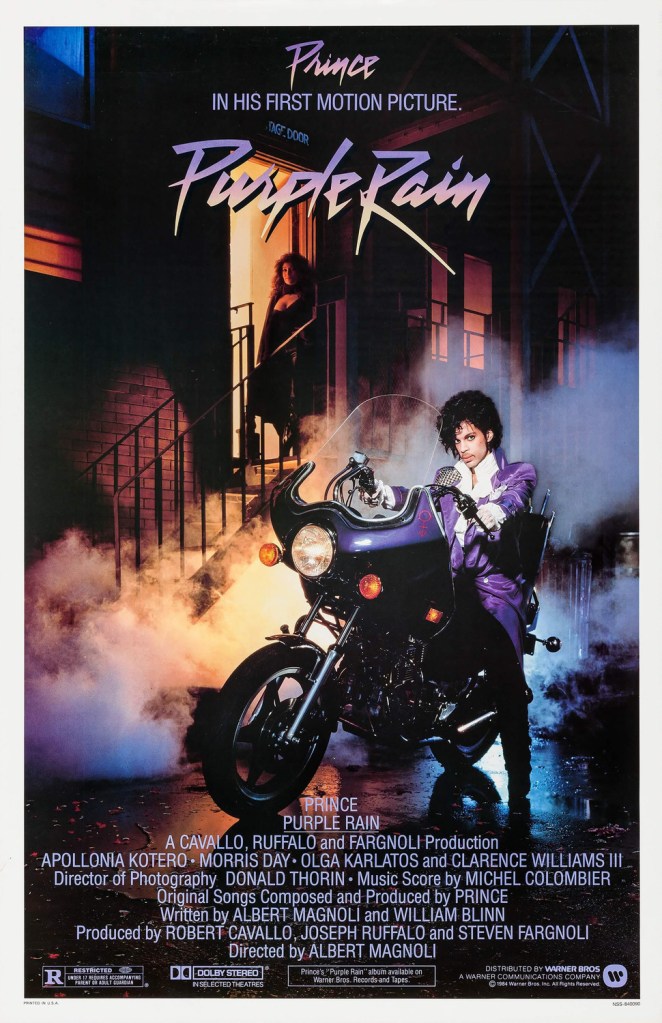
Written by Magnoli and William Blinn. Original songs by Prince, Morris Day, Jesse Johnson, Dez Dickerson, John L. Nelson, Wendy & Lisa, and Apollonia 6.
Class of 2019
The Plot: The Kid (Prince) performs with his funk rock band The Revolution nightly at the First Avenue club in Minneapolis. One night, he meets aspiring performer Apollonia (Apollonia Kotero) and after some initial resistance, the two begin a romantic relationship. Apollonia is also being wooed by Morris Day (Morris Day), the lead singer of rival group The Time who wants Apollonia for a girl group that can take over The Revolution’s house band slot at First Avenue. As working relationships within The Revolution become strained, Prince struggles to come up with a new song while simultaneously dealing with his new relationship and the escalating fights between his parents (Clarence Williams III & Olga Karlatos). And if none of that interests you, there’s still plenty of prime Prince music to hold your attention.
Why It Matters: The NFR gives “Purple Rain” its proper historical context, calling it the film that “secured [Prince’s] place as a movie star and entertainment legend.”
But Does It Really?: Sometimes I have to remind myself that the NFR’s criteria is films that are “culturally, historically or aesthetically significant”. Nowhere does it say that these films need to be good; such is the case with “Purple Rain”. As a narrative feature it’s a mess, impeded by Prince’s stilted acting and some increasingly problematic story beats. But “Purple Rain” didn’t make the NFR based on its strength as a film, but rather as representation of Prince: one of the most prolific, influential artists of this or any time. If you’re a Prince fan, “Purple Rain” is a perfect ‘80s time-capsule, and while the film itself is far from essential, Prince’s sheer star-power makes “Purple Rain” an undeniably iconic moment in pop culture.
Everybody Gets One: Easily the least mid-western person to ever come out of Minnesota, Prince Rogers Nelson was named after his father John L. Nelson’s stage name from his jazz pianist days – Prince Rogers. Prince started writing music and playing guitar in his childhood, and by 19 his demo recordings landed him a contract with Warner Bros. Records. By the early ‘80s, Prince (with his band The Revolution) had scored such hits as “I Wanna Be Your Lover”, “1999”, and “Little Red Corvette”, and made it known to his management that he wouldn’t renew his contract unless he could star in a movie. Prince wrote the initial treatment himself before handing it off to screenwriter William Blinn, whose screenplay was originally titled “Dreams”.
Title Track: “Purple Rain” was conceived as a country song Prince would co-write with Stevie Nicks. When Nicks backed out, Prince collaborators Wendy & Lisa gave it a more rock ballad feel, and the rest is history. As for the title, Prince’s description is a continuation of his religious influence, with a blue sky turning red ahead of Judgement Day, creating purple rain.
Seriously, Oscars?: Although none of the individual songs in “Purple Rain” received an Oscar nomination, Prince won an Oscar in the category of Original Song Score. Side note: The Song Score category technically still exists, now known as Best Musical, and is only presented when enough original musicals are released in a calendar year for the Academy’s music branch to “activate” the category. 1984 was the last year this award was handed out, and given the dearth of original movie musicals in the last 40 years, “Purple Rain” is most likely the category’s final recipient.
Other notes
James Foley was originally approached to direct “Purple Rain”, but when he turned down the offer, he recommended his editor Albert Magnoli. In addition to directing the film, Magnoli co-edited with Michel Colombier, and made substantial enough changes to William Blinn’s original script to warrant a co-writing credit.
Admittedly, my dislike of “Purple Rain” comes from my own biases towards Prince. I have nothing against the Purple One, in fact I like a lot of his songs, but I’ve never been fanatic about him. I also didn’t grow up with his music, so I have no nostalgic connection to boost my entertainment value. Prince fans can more easily forgive this movie’s setbacks, but if you don’t have that pre-built love for Prince going in, this is a tough watch.
Oh boy the acting in this movie. With the exception of Apollonia and the Kid’s parents, everyone is played by non-actors, and it shows. Prince can’t quite meet the demands of his character, but that makes sense once you learn he was the muscle behind the movie. The Kid is how he wants to be perceived on screen: an aspirational character rather than one written around his strengths and natural qualities. I’ll give Prince this though: he’s quite agile, contorting himself onstage with a seemingly infinite amount of energy, and I guess that’s where it counts the most. Ultimately, Prince is like Elvis in “Jailhouse Rock”; lively and engaging while performing a song, rigid and unconvincing everywhere else.
The Kid’s leading lady was originally written for Prince’s then-girlfriend Vanity, but once they broke up she turned down the part, leading to the casting of unknown model/TV actress Apollonia Kotero. She doesn’t get much to do, but she looks great watching from the audience as the Kid performs onstage. Side note: Apollonia is Kotero’s middle name, and she went professionally by Patty Kotero before switching to Apollonia for “Purple Rain”.
While there are many biographical elements in “Purple Rain”, I can’t find anything suggesting that Prince’s home life was as horrendous as depicted here. Shoutout to Clarence Williams III for proving there’s life after “Mod Squad”.
And then Apollonia proves her devotion to the Kid but stripping down and cleansing herself in Lake Minnetonka. Maybe I’ve been too hasty condemning this movie…
Prince’s cold working relationship with band members Wendy & Lisa is not too far from real life, with Prince more-or-less firing the two when he dissolved The Revolution in 1986. Although Wendy Melvoin and Lisa Coleman are no longer romantically involved with each other, they continue to collaborate on their music to this day.
If you haven’t picked up on it yet, this movie has some serious issues with women: Spousal abuse, verbal harassment, plus the scene where Morris’ assistant Jerome throws a woman in a dumpster! Many critics have complained about this film’s misogynistic streak since its release, with a recent article for Far Out Magazine suggesting the film should be removed from the NFR! While this point is well taken, I’m here to tell you: If you removed every movie on the NFR with this much mistreatment of women, there’d only be about three movies left. I’m not saying that any of this is acceptable, but it is an unfortunate part of our cultural heritage and a reminder that we can and must do better.
Random thing I found in my research: Replicas of that weird cone puppet Prince talks to/for were sold exclusively during the “Purple Rain” tour in 1984-1985, with one recently selling on eBay for $4000!
This is what it looks like when montages cry. Turns out this film’s random mid-movie montage is carrying on a long-standing film tradition: montages made up of scenes cut from the movie. Prince wrote “When Doves Cry” to cover the montage, which explains the song’s vague movie-related lyrics (“Maybe I’m just like my father”). Astonishingly, “When Doves Cry” was the breakout single of the “Purple Rain” album upon its release.
“Darling Nikki” is easily the dirtiest song in the movie, and had an unintentional impact on our culture. In 1985, future second lady Tipper Gore heard her 11 year old daughter Karenna listening to this song, and long story short, records now have the “Parental Advisory” sticker for explicit content.
Apollonia’s solo number “Sex Shooter” is definitely the film’s low-point, but it’s an appropriate time to point out that “Purple Rain” is one of two NFR movies to receive a Razzie nomination (the other is “The Shining”). Apollonia Kotero was nominated for Worst New Star, and “Sex Shooter” was up for Worst Song. While it lost both categories, I won’t disagree with these nominations.
Prince clearly has a penchant for capes; both he and Apollonia wear them at different points in the movie. Is it any wonder he did the songs for “Batman”?
Yes, the performance of “Purple Rain” is iconic, but at this point in my viewing I was ready for it to all be over. Prince follows up “Purple Rain” with two encores, some sort of phallic guitar hose, the mandated freeze-frame ending all good ‘80s movies have, and credits that feature the entire album on shuffle.
Legacy
“Purple Rain” the album was released in June 1984, with “Purple Rain” the film hitting theaters that July. Both were bona fide hits, with Prince simultaneously having the number one movie, album, and single (“When Doves Cry”) in America.
Prince’s fascination with being a movie star didn’t end with “Purple Rain”. Over the next decade Prince would star in and direct four films, including this movie’s sequel “Graffiti Bridge”. While none of his subsequent films were as well received as “Purple Rain”, his screwball comedy homage “Under the Cherry Moon” has gotten a reevaluation in recent years.
There’s no way I can cover all of Prince’s post-“Purple Rain” career in a brief paragraph. Suffice it to say he continued being an untouchable rock icon until his unexpected death in 2016, leaving behind a legacy of music and more unfinished projects than Orson Welles. The NFR induction of “Purple Rain” is just one of countless posthumous honors Prince has received.
Although Albert Magnoli only directed a handful of movies in his career, his work on “Purple Rain” kept him in Prince’s orbit through the rest of the ‘80s; directing some of his music videos, ghost-directing his concert film “Sign o’ the Times”, and even serving as his manager for a few months in 1989!
Tangentially related, but worth a mention: During a contractual dispute with Warner Bros. in the early 1990s, Prince refused to perform under his stage name, opting instead for the unpronounceable “Love Symbol” and being referred to as “The Artist Formerly Known as Prince”. Late-night comedians had a field day with that one.
While “Purple Rain” still gets referenced throughout pop culture, I would argue it’s the album and not necessarily the movie that’s getting the nod. The legacy of “Purple Rain” was summed up best by Agent Mulder in a 1997 episode of “The X-Files”: “Great album. Deeply flawed movie, though.”
Listen to This: The “Purple Rain” album made the National Recording Registry in 2011, with the NRR calling it “provocative and controversial”. Guest essayist Eddie Santiago provides a thorough write-up on the production and impact of “Purple Rain”.
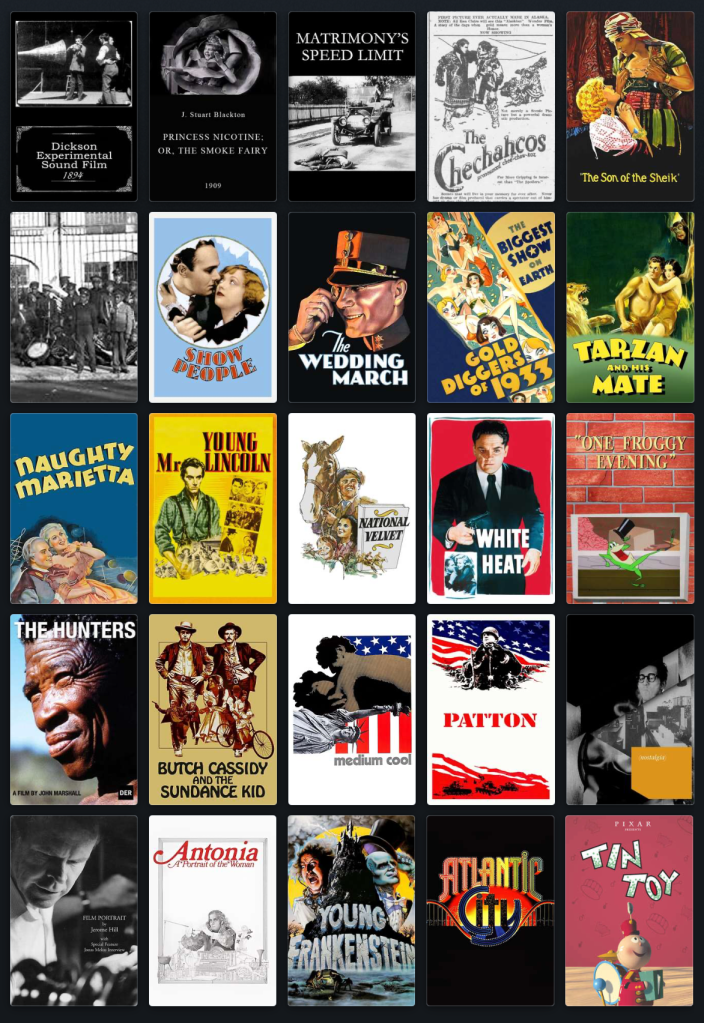
December 16th, 2003: Before heading off to midnight screenings of “Return of the King”, the Library of Congress throws 25 more movies into the National Film Registry, bringing the grand total to 375 films. I’ve just finished watching all 25, and here is my regular recap. In chronological order, here’s the Class of 2003:
Matrimony’s Speed Limit (1913): “not very entertaining today…[but] is one of a handful of surviving films from Alice Guy-Blanché”
The Chechahcos (1923): “Its Alaskan production claim might be this film’s sole reason for making the NFR”
The Son of the Sheik (1926):“I just don’t understand why the NFR didn’t induct “The Sheik” first (and as of this writing, still hasn’t).” “It don’t make no sense.”
Naughty Marietta (1935):“the kind of escapist romantic movie musicals that delighted Depression-era audiences.”
Young Mr. Lincoln (1939):“As a biopic it’s a bit on the nose…[a]s courtroom drama it’s a bit more engaging…[a]s a classic film worthy of preservation, I have my doubts”. [Note from the future: Jeez, that was harsh. I don’t remember hating this film that much, or at all.]
Tin Toy (1988):“an important stepping stone movie in the history of Pixar”.
Other notes
The big news at the time was the reauthorization of the National Film Preservation Act in November 2003 (cutting it a little close for that December announcement, but it all worked out). There weren’t too many amendments this time, other than language to encourage public accessibility to Registry titles, as well as their inclusion in the collection at the National Audio-Visual Conservation Center in Culpeper, Virginia. Also, in a surprising move, Congress actually gave the National Film Preservation Board more money! Appropriations to the NFPB at the time were $250,000 a year, with the reauthorization allotting $500,000 annually to the Board in 2004 and 2005, and then up to $1,000,000 a year through 2013. While those figures would get lowered again in a 2008 amendment, they wouldn’t be lowered to pre-2003 amounts, so that’s still a win for everyone.
The NFR Class of 2003 is a continuation of the “minor classic”/“what isn’t on the list yet” path the Registry traveled for most of the 2000s. A few iconic titles are here, but mostly encores from artists already represented (another Cagney gangster pic, another Busby Berkeley backstage musical, another Mel Brooks comedy, etc). The Class of 2003 checks off a few more missing bits of American film history with a Tarzan movie, an Eddy/MacDonald musical, a Rudolph Valentino vehicle (though arguably the wrong one), and the first Pixar short on the list. In addition, the NFR still made room for films by such lesser-known filmmakers as Hollis Frampton, as well as unique titles like “Princess Nicotine” and “The Chechahcos”.
My posts on these 25 films can be summed up in two words: “I guess.” There’s only a handful of these films that I unconditionally support for NFR inclusion in these write-ups, and the rest are a series of passes I gave for historical or cultural significance, with one or two whose inclusion I questioned outright. Once again: I don’t recall hating “Young Mr. Lincoln” that much, but that post was pretty early in my run so perhaps a re-watch is in order.
Side note: In my “Atlantic City” post I slam anti-vaxxers a full year before the COVID-19 pandemic. I am nothing if not consistent.
Shoutout to 1894’s “The Dickson Experimental Sound Film”, which at the time was the earliest film on the Registry. It would hold this distinction for seven years before being supplanted by the current record-holder: 1891’s “Newark Athlete”.
At the time of the NFR announcement, “The Last Samurai” was number one at the U.S. box office. No current NFR titles were playing in theaters, but the sequel to one was: “The Matrix Revolutions”. Other notable titles in theaters included “Elf”, “Somethings Gotta Give”, “Master and Commander”, “School of Rock”, and “Love Actually” (which is mercifully ineligible for the NFR).
Quite a few Double-Dippers in the Class of 2003. Among them: actors Peter Boyle, Cloris Leachman, and Kenneth Mars, art directors Cedric Gibbons and A. Arnold “Buddy” Gillespie, editor John C. Howard, and possibly Robert Z. Leonard (he has a cameo as himself in “Show People” and was the original director of “Naughty Marietta” for literally one day).
Thematic double-dippers: Portraits (Both “Film” and “of the Woman”), historical biopics, extraordinary animals, unhappy engagements/arranged marriages, train robberies with explosives, the descendants of more famous characters, gold diggers both literal and figurative, entries set/filmed in Africa, pie fights, films made explicitly to test new technology, and the song “Ah! Sweet Mystery of Life”
Favorites of my own subtitles: Fear and Loathing in Los Anchorage, Polly Parker Pranks a Pair of Pickled Patrons, Strong Arm of the Ma, Ol’ Blood and Guts is Back, Burn After Filming, and A Movie-able Feast.
As always, I’m at a loss for how to end these recaps, so here’s Michigan J. Frog! It was either him or the “Tin Toy” baby, so consider yourself lucky.
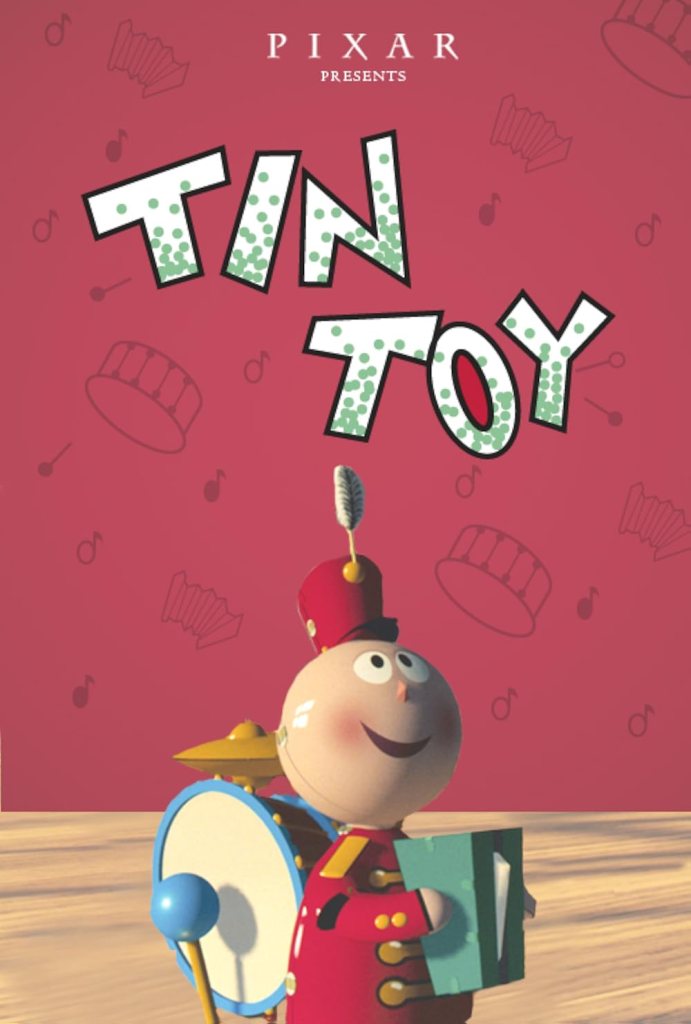
The Plot: Tinny is a small one-man-band toy excited for playtime, until he sees that the child who wants to play with him is a slobbering infant whose idea of playing involves putting toys in his mouth and throwing them across the room. Tinny tries to hide from the baby, but soon showcases the first instance of Pixar asking the question, “What if toys had feelings?”
Why It Matters: The NFR hails the film as “one of Pixar’s best short subjects” despite its “clunky foray into human characters”. I’ve read some backhanded compliments from the NFR in my time, but this one takes the cake. You never want an organization like the NFR to use the word “clunky” when describing your contribution to American culture.
But Does It Really?: If it’s 2003 and Pixar is in its creative prime and “Toy Story” isn’t NFR eligible for another two years, then “Tin Toy” is a natural choice to represent Pixar on the list. Like “Luxo Jr.” before it, “Tin Toy” is an important stepping stone movie in the history of Pixar. The technology is crude by modern standards (and don’t worry, we’ll get to the baby), but the film serves as an incubator for the kind of heartfelt, original storytelling the studio would later perfect in its features. A pass for “Tin Toy” on the NFR.
Shout Outs: Look quickly for a picture of Luxo Jr. hanging on the wall. Because who doesn’t have a framed photo of a lamp hanging in their living room?
Seriously, Oscars?: In 1989, “Tin Toy” won the Oscar for Best Animated Short, the first computer-animated short to take home the prize. The clip below not only includes the presentation for Best Animated Short (and the acceptance speech by co-producers John Lasseter and William Reeves), but also for Best Live-Action Short, which went to “The Appointment of Dennis Jennings”, produced by Dean Parisot and Steven Wright. Yes, that Steven Wright.
Other notes
In the late 1980s, Pixar was still a struggling independent company that only made animated shorts to serve as demonstrations of its computer technology. “Tin Toy” was conceived as a test for their PhotoRealistic RenderMan, a software program that helps speed up the rendering process for 3D animation (which they still use to this day). Producer William Reeves pitched a CG render of a baby to test the software, and John Lasseter came up with the story of “Tin Toy” after watching his infant nephew put any toy within reach in his mouth, and imagining the scenario from the toy’s point of view. Pixar was on shaky financial ground in 1988, and there was talk of eliminating the animation department entirely, but “Tin Toy” was allowed to proceed after an impassioned pitch from Lasseter to Pixar chairman Steve Jobs, who invested $300,000 of his own money into the film.
My god that is one creepy looking baby. It’s like a cross between a possessed baby doll and a raisin. It’s so horrifying it distracts from the short’s otherwise excellent animation, especially Tinny’s characterization. In all fairness, Pixar wasn’t pleased with the baby’s final look either. The limited production timeline of “Tin Toy” prevented Pixar from perfecting some of the baby’s details (primarily its movement, which is very stiff in the final film), though believe it or not they were able to refine its face, which apparently looked even worse in the beginning. Also in everyone’s defense, it would take about another decade before computer-animation technology could handle more realistic human characters.
The short makes up for its anticlimactic ending with some interesting credits. Several longtime Pixar employees get mentioned here, as does a “Very, Very Special Thanks” to Steve Jobs. There’s also a section called “Babies John Looked at a Lot”; which definitely could use a retitling. It’s also worth freeze-framing the legal disclaimer at the end for such extra details as “Seatbelts save lives”, “This bag is not a toy”, and an addendum to the standard no illegal reproduction disclaimer: “or we won’t be your friends anymore.” Even with their hectic production schedule, its nice to see the Pixar team retained its sense of humor.
Legacy
A work-in-progress version of “Tin Toy” premiered at the SIGGRAPH conference in Atlanta in August 1988, and received positive feedback even in its incomplete form. In the ensuing months, the completed film played the animation film festival circuit, as well as an Oscar-qualifying theatrical run, with its subsequent win helping cement the validity of computer-animation as an art form.
The success of “Tin Toy” led to Pixar forming a deal with Disney to produce computer-animated films. Initially hesitant to make the leap from shorts to features, Pixar proposed a TV special that would serve as a sequel to “Tin Toy”. Plans for “A Tin Toy Christmas” were cancelled due to budget issues, and Disney encouraged Pixar to start working on a feature. Some elements from “A Tin Toy Christmas” evolved into the plot and characters in Pixar’s eventual first feature: “Toy Story”.
Pixar has made a few references to “Tin Toy” in their subsequent work over the years, most notably Tinny’s cameo in “Toy Story 4”. While a harmless nod to Pixar’s own history, this easter egg has led to the fan theory that “Tin Toy” is a “Toy Story” prequel and that the baby is actually Andy. Please people, not everything is connected in a cinematic universe.
“Tin Toy” is one of the first in a long line of memorable Pixar shorts. Personal favorites include “Geri’s Game”, “Bao”, “Presto”, and that “Toy Story” short at the fast-food restaurant with the very random “Condorman” reference. I can’t believe anyone remembers “Condorman”.
Written by Tom Rickman. Based on the memoir by Loretta Lynn with George Vecsey
Class of 2019
The Plot: Sissy Spacek IS Loretta Lynn: singer, songwriter, and the First Lady of Country Music. In 1948, a young Loretta Webb lives in Butcher Hollow, Kentucky with her family. One day she meets Oliver “Doolittle” Lynn (Tommy Lee Jones), and their whirlwind romance leads to them getting married one month later. Although their marriage is tumultuous from the start, Doolittle encourages Loretta’s singing talents, having her perform at local honky-tonks and recording a demo for radio stations. By 1960, her first single “I’m a Honky Tonk Girl” is a hit, earning Loretta a spot on the Grand Ole Opry radio program, and a tour with country music legend Patsy Cline (Beverly D’Angelo). But all this fame takes it toll on Loretta’s well-being (and her marriage) in this intelligent, straightforward biopic.
Why It Matters: The NFR salutes the film for “help[ing] set the standard for every musical biography that has followed it” and praises Spacek’s “deeply heartfelt and true-to-life performance”.
But Does It Really?: I’m not a fan of country music or musical biopics, but I must admit to enjoying “Coal Miner’s Daughter”. A lot of that is the lead performances of Spacek and Jones, but it’s also because of the very wise decisions made by this movie’s direction and screenplay. “Coal Miner’s Daughter” feels more like a real movie than a musical biopic, largely avoiding the cliches and story beats of many similar movies in the last 45 years, focusing on our two leads and treating them like the real people they are. While “Coal Miner’s Daughter” isn’t the first movie people think of when it comes to iconic biopics, it still works as an engaging retelling of Loretta Lynn’s story, and its NFR inclusion is surprising but welcome.
Everybody Gets One: Born in Buckinghamshire, England, Michael Apted got his start as a researcher at Granada Television. One of his first assignments was assisting director Paul Almond with his documentary “Seven Up!” which chronicled 14 seven-year-olds in their daily lives, and spawned several follow-up films directed by Apted. In addition to documentaries, Apted began directing feature films, and the success of 1979’s “Agatha” got him hired to direct “Coal Miner’s Daughter” following the departure of original director Joseph Sargent (more on this later). Both Loretta Lynn and Sissy Spacek praised Apted for his commitment to portraying Southern culture authentically, devoid of any prejudice towards “hillbillies” an American director might have included.
Title Track: In addition to being the name of the movie and the memoir it’s based on, “Coal Miner’s Daughter” is a song written by Loretta Lynn that appeared on her 1971 album of the same name. The song appears in the movie, but you have to wait for it.
Seriously, Oscars?: A hit upon release, “Coal Miner’s Daughter” received seven Oscar nominations, including Best Picture. While the film lost in most categories to “Ordinary People” and “Raging Bull”, it won the category that mattered most: Best Actress for Sissy Spacek, which she accepted with a beaming Loretta Lynn in attendance. Spacek also received a Grammy nomination for her performance in the film’s soundtrack album, losing to Anne Murray for “Could I Have This Dance”.
Other notes
Loretta Lynn selected Sissy Spacek to play her after seeing her photo, knowing nothing about her films or acting abilities. Spacek was torn between making this film or the psychological drama “Bad Timing” with Nicolas Roeg, and while she was deliberating, “Coal Miner’s Daughter” started playing in her car radio, which she took as a sign. Original director Joseph Sargent disagreed with Lynn’s choice of Spacek (he wanted Cristina Raines), which led to his dismissal (or resignation, sources vary) and being replaced by Michael Apted.
“Coal Miner’s Daughter” was filmed in several locations across Kentucky and Virginia, making this one of the more Appalachian-y movies on the NFR, and that’ssaying something. Local residents were cast in bit parts, especially during the opening scenes set in Butcher Hollow, making it seem like Loretta grew up in a town of Boomhauers.
Loretta’s parents are played by two non-actors with previous NFR documentary appearances. Phyllis Boyens can be heard singing with her father in “Harlan County U.S.A.”, and Levon Helm was the drummer for The Band, featured prominently in “The Last Waltz”.
The thing I most appreciate about this film is its aversion to musical biopic cliches. If you didn’t know anything about Loretta Lynn going in, you would safely assume this movie was solely about Loretta and Doolittle’s relationship, with the country singer plotline coming seemingly out of nowhere. It’s a tribute to this film’s clever storytelling skills: there’s no mythologizing or unsubtle foreshadowing, and everything is treated with authenticity.
I never realized Tommy Lee Jones was ever young. At this point in his career, 33-year-old Jones had a few co-lead roles in “Eyes of Laura Mars” and a couple TV movies, but “Coal Miner’s Daughter” was his breakout performance. Joe Don Baker and Harrison Ford were both early contenders to play Doolittle, but Jones is the right choice. If nothing else, you can tell he’s hungry for the kind of substantial role Dolittle provides him. My only complaint is that Dolittle dominates most of the film’s first half, making Loretta/Sissy seem like a supporting character in her own movie.
It is pointed out several times in this movie that Loretta was 13 when she met and married Doolittle. Lynn states this in her memoir, and this was accepted as fact until 2012 when Loretta Lynn’s birth certificate was unearthed, revealing that she actually got married at age 16 (the legal marrying age in Kentucky at the time). Lynn never commented on this embellishment in her lifetime, but I do wonder why she felt she needed the child bride aspect in her self-mythologizing. It certainly makes for an uncomfortable movie-watching experience.
I know it’s true to life, but Doolittle turns into a major asshole once he and Loretta get married. The wedding night scene in the motel is especially unpleasant. Though given how charming he was in his first few scenes I really should have seen this coming. Why doesn’t Loretta use her telepathic powers and set him on fire or something?
One surprising fact I learned in my research is that one of Loretta Lynn’s younger sisters is Crystal Gayle, who grew up to become a famous country singer in her own right. Gayle wasn’t born until after Loretta got married and left the house, so her absence here is understandable. In a lesser movie Crystal would have made an appearance with at least one passing reference to her hair. Coincidentally, when Spacek was nominated for Best Female Country Vocal Performance at the Grammys for “Coal Miner’s Daughter”, Gayle was one of her fellow nominees.
Several real-life country singers appear as themselves when Loretta makes her debut at the Grand Ole Opry. The most notable of these is Ernest Tubb, singing his hit “Walking the Floor Over You”, introducing Loretta on the show, and dressing more or less like Cal Worthington. Also on hand is Minnie Pearl, singer and “Hee Haw” regular, wearing her trademark straw hat complete with price tag. How-dee!
The movie picks up steam when Beverly D’Angelo shows up as Patsy Cline. As presented here, Patsy is Loretta’s fairy godmother, helping her gain more confidence and take more control of her career and image. D’Angelo is giving a very self-assured, fun performance, and she could have easily gotten a Supporting Actress Oscar nod if Patsy had stuck around longer. Spoiler: How many more NFR movies do I have to watch in which a real-lifefigure dies in a plane crash?
The film’s second half follows the “What goes up must come down” law of musical biopics, but again it’s all done subtly enough that you don’t mind. Loretta’s Valium addiction is touched upon, and the jury’s still out over whether or not she had a nervous breakdown during one of her concerts as depicted here. This may be the only time I wish people had their phones out during a concert.
It takes almost two hours, but we finally get the title song! Holding off until the end for “Coal Miner’s Daughter” is a smart choice, with the lyrics receiving extra emotional weight after we experience Loretta’s highs and lows alongside her. That being said, these are some of the slantiest slant rhymes I’ve ever heard, with Loretta rhyming “daughter” with “holler” and “yard” with “tired”. If you keep stretching like that you’re going to hurt something.
Another thing I appreciated about this movie: no epilogue text telling you what happened to everyone. If you want to learn about Loretta Lynn following the events of this movie, look it up yourself. Or just read the “Legacy” section below.
During the end credits, we get the interesting note “All songs sung by Sissy Spacek & Beverly D’Angelo”. Both actresses were singers before their acting careers, and more than up to the challenges of this film, with Spacek spending time with Loretta Lynn to study her cadence and guitar playing skills. The rest of the end credits play over a semi-hasty medley of Spacek’s songs from the movie. It plays almost like a victory lap now that you know she did her own singing.
Legacy
“Coal Miner’s Daughter” was released in March 1980, and would go on to be one of the highest grossing films of the year. The film spawned a number of country-themed films (some also starring Sissy Spacek), and got the ball rolling on the modern musical biopic.
Michael Apted’s subsequent filmography includes “Gorillas in the Mist”, “Nell”, “The World Is Not Enough”, and eight installments in the “Up” series. Apted died in 2021, shortly after completing “63 Up”, though it has been confirmed that the series will continue with “70 Up” in 2026.
“Coal Miner’s” producer Bernard Schwartz followed up with “Sweet Dreams”, a 1985 Patsy Cline biopic starring Jessica Lange. Although Lange received an Oscar nomination for her performance, she was criticized for lip-synching to Cline’s original recordings rather than doing her own singing. Adding insult to injury: Loretta Lynn does not appear as a character in “Sweet Dreams”. Ouch.
In the years following “Coal Miner’s Daughter”, Loretta Lynn continued recording albums and receiving every lifetime achievement award a country singer can get. She also wrote her second autobiography, 2002’s “Still Woman Enough”, which sadly was never turned into a sequel to this film. Despite the marital difficulties depicted in the film, Loretta and Dolittle stayed together until his death in 1996. Loretta Lynn died in 2022 at age 90, a year and a half after the release of her 46th and final album.
Listen to This: Both Loretta Lynn and Patsy Cline were inducted into the National Recording Registry within its first decade: Cline’s “Crazy” in 2003, and Lynn’s “Coal Miner’s Daughter” in 2009. NRR stalwart Cary O’Dell wrote an essay on “Coal Miner’s Daughter”, while special guest essayist Douglas Gomery penned this one about “Crazy”.


 The Horse's Head