#17) Fast Times at Ridgemont High (1982)

#17) Fast Times at Ridgemont High (1982)

OR “The Teen’s Gambit”

Directed by Amy Heckerling

Written by Cameron Crowe. Based on his book.

Class of 2005

This is a revised and expanded version of a previous post, which you can read here.

The Plot: “Fast Times at Ridgemont High” is a year in the life of six students at a southern California high school. Stacy Hamilton (Jennifer Jason Leigh) is starting to date and learn about sex, getting most of her information from the more experienced Linda Barrett (Phoebe Cates). Stacy’s brother Brad (Judge Reinhold) tries to hold down unfulfilling weekend jobs to pay off his car. Awkward Mark Ratner (Brian Backer) wants to ask out Stacy, getting advice from ladies’ man Mike Damone (Robert Romanus). And stoner extraordinaire Jeff Spicoli (Sean Penn) stumbles through the year, clashing with U.S. History teacher Mr. Hand (Ray Walston). All of this featuring a kick-ass ’80s soundtrack and a cast on the verge of superstardom.

Why It Matters: The NFR calls the film “[a]mong the best teen comedies” and a “cultural icon”, praising the “hilarious performances” by “an appealing mix of soon-to-be-famous young talent”, most notably Sean Penn.

But Does It Really?:  Maybe I was in a bad mood last time, but I really enjoyed “Fast Times” this go-round. Sure, it’s a dirty teen movie, but it’s a well made dirty teen movie that’s both truthful and funny (I laughed out loud quite a bit). “Fast Times” is an important movie for a specific generation of American youth, but I suspect the John Hughes oeuvre has eclipsed this movie in our national depiction of ’80s teenagers. Regardless,”Fast Times” is an iconic slice of ’80s pop culture that is worth remembering.

Shout Outs: Damone hums a bit of the “Jaws” theme while swimming in Stacy’s pool.

Everybody Gets One: After a five-year stint as Rolling Stone‘s youngest contributor, Cameron Crowe had the idea to pose as a high school senior and write a book about it. “Fast Times at Ridgemont High: A True Story” came out in 1981, and the film rights were immediately snatched up by Universal. The screenplay was selected by Amy Heckerling, a recent AFI graduate, to be her feature film debut. Among the cast members making their sole NFR appearance are Sean Penn, Jennifer Jason Leigh, Phoebe Cates, Judge Reinhold, Nicolas Cage, Forest Whitaker, and Jerry Mathers as The Beaver (via archival footage).

Wow, That’s Dated: Everything. This movie highlights when America was firmly in the mall-trekking, Rubiks Cube-solving ’80s, with a few feathery hair remnants of the late ’70s. And I will agree with a piece of graffiti at The Point: Disco sucks.

Title Track: Two songs titled “Fast Times” appear on the soundtrack: one by Billy Squier and one by Sammy Hagar.

Other notes 

  • First off, shoutout to casting director Don Phillips for finding a cast of new talent that includes three future Oscar winners and one nominee, among countless other accolades between them.
  • Sean Penn in this movie is like Steve McQueen in “Magnificent Seven“: used sparingly for maximum effect. Watching Penn channel his acting intensity into a surfer dude is a delight.
  • Blink and you’ll miss Nicolas Cage (billed here as Nicolas Coppola) as one of Brad’s buds. Also appearing on the sidelines are Anthony Edwards and Eric Stoltz as Jeff’s stoner pals (I didn’t recognize the former with hair).
  • You’d think going from Broadway and “The Apartment” to a raunchy teen comedy would be slumming, but Ray Walston was delighted to take on a role that would end his typecasting from “My Favorite Martian“. This is also a reminder to myself that Ray Walston and Hume Cronyn are two different people.
  • This movie follows the film cliché of classes that are only 10 minutes, and everyone gets saved by the bell.
  • Hey, another “Die Hard” Not-Christmas movie, complete with Darlene Love!
  • Every line from Judge Reinhold is pure comedy gold, top among them: “Mister, if you don’t shut up I’m gonna kick one hundred percent of your ass!”
  • The Brad subplot is a reminder of how awful customer service is, and how much nicer rude customers become once the manager shows up.
  • Jennifer Jason Leigh and Brian Backer are both great in this, especially when conveying the awkwardness of a first date. I got intense second-hand embarrassment just watching them.
  • Obviously, Amy Heckerling does not represent all women, but it is interesting to watch how a teen sex comedy differs when directed by a woman. There’s still plenty of toxic masculinity and objectifying of women, but you get a far more balanced perspective from the female characters.
  • I refuse to dwell on it, but I am obligated to mention the iconic fantasy sequence where Phoebe Cates takes off her binki top. Move along, you pervs.
  • The late great Taylor Negron shows up as the pizza delivery guy. Weirdly, he is credited at the end as playing “Himself”. This scene has the perfect button of Spicoli’s wounded puppy look as Mr. Hand gives away his pizza.
  • I forgot how funny the Stacy/Damone sex scene is. Originally, both actors were filmed showing full-frontal nudity, but the threat of an X rating led to a few strategic trims, much to the dismay of Heckerling and Leigh (Robert Romanus was allegedly relieved by the cut).
  • All the characters in this movie would do better dealing with their issues if they had parents. Seriously, everyone’s parents are “out of town” in this movie. Go home and hug your kids!
  • No movie that ends with a funny epilogue explaining what happened to everyone and/or an Oingo Boingo song over the credits can be completely bad.

Legacy 

  • Lacking faith in the movie, Universal intended to give “Fast Times at Ridgemont High” a limited release, then banish it to cable. The film, however, became a sleeper hit thanks to strong word of mouth, with its eventual home video and TV appearances making “Fast Times” a cult classic.
  • Amy Heckerling would go on to direct “National Lampoon’s European Vacation”, “Look Who’s Talking”, and another classic slice of teen life, “Clueless”.
  • The success of “Fast Times” encouraged Cameron Crowe to pursue his own film career, directing such hits as “Say Anything…”, “Jerry Maguire”, and “Almost Famous”.
  • “Fast Times” got a TV spin-off series, with Ray Walston and Vincent Schiavelli reprising their roles from the film. Heavily sanitized for network television, “Fast Times” aired on CBS for seven episodes in the spring of 1986.
  • References to the film nowadays are relegated to the title, Sean Penn’s performance, and parodies of Phoebe Cates’ pool scene.
  • Among the many Zoom gatherings that occurred during the 2020 COVID shutdown was a reading of the “Fast Times” screenplay by an all-star cast including Jennifer Aniston, Brad Pitt, and Julia Roberts. The only thing more entertaining than Shia LeBeouf’s interpretation of Spicoli is Sean Penn’s amused reaction to it.

Listen to This: In the original post I mentioned that none of the artists on the “Fast Times” soundtrack had made the National Recording Registry. Four years later, the NRR has added Jackson Browne (“Late for the Sky“), Don Henley (“Eagles: Their Greatest Hits (1971-1975)“, Stevie Nicks (“Rumours“), and Donna Summer (“I Feel Love“). Still absent are The Go-Gos, Jimmy Buffet, Led Zeppelin, Oingo Boingo, and Tom Petty.
#561) Monterey Pop (1968)

#561) Monterey Pop (1968)

OR “Cannery Rock and Row”

Directed by D.A. Pennebaker

Class of 2018

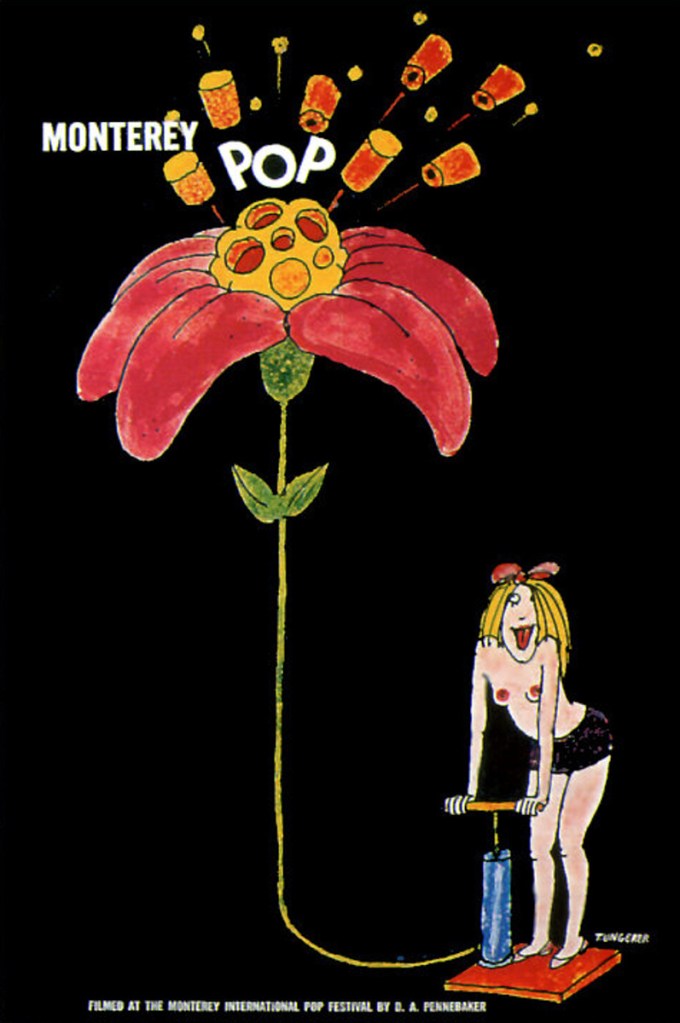
The Plot: The Summer of Love got off to a good start with the Monterey International Pop Music Festival on June 16th-18th, 1967. One of the first music festivals to prominently highlight rock bands, Monterey Pop featured such established stars as the Mamas and the Papas, Jefferson Airplane, and Simon & Garfunkel, along with such up-and-coming groups as The Who, The Jimi Hendrix Experience, and Big Brother and the Holding Company. Luckily, documentarian D.A. Pennebaker and his usual murderers’ row of cameramen were on-hand to record the proceedings.

Why It Matters: The NFR calls it a “seminal music-festival film” that “established the template for multi-camera documentary productions”, praising the “superb camerawork” of Pennebaker and his crew.

But Does It Really?: As much as I enjoyed this movie (as I have most of the “concert features” on this list), I questioned the standing of “Monterey Pop” on the NFR, considering how much overlap it has with “Woodstock“. My research has made a compelling argument for perseveration of the Monterey Pop Festival, and its significance in the history of rock. Plus, I’m a sucker for anything by D.A. Pennebaker (and so help me I will get “Original Cast Album: Company” on this list). I’ll give “Monterey Pop” a pass, but I still think it treads too much of the same water as “Woodstock”.

Wow, That’s Dated: While the focus of “Monterey Pop” is primarily on the performers, you do get several snapshots of the burgeoning youth culture of the late ’60s. Though it is fascinating to note how many hipsters I know that dress exactly like these boomers. Some things never go out of style.

Seriously, Oscars?: No nomination for “Monterey Pop”. Despite being one of the most influential documentarians in film history, D.A. Pennebaker received only one nomination in his career for 1993’s “The War Room”. The Academy finally gave Pennebaker an Honorary Oscar in 2012.

Other notes 

  • The Monterey Pop Festival was organized with the intention to legitimize rock music with something similar to Monterey’s annual jazz festival. The entire festival was paid for by The Foundation, a non-profit that gave grants to young musicians. All acts were compensated for travel and accommodations, and performed for free (except Ravi Shankar, who must have had a great manager).
  • The film opens with a montage of various hippie-types coming to the festival, set to Scott McKenzie’s “San Francisco (Be Sure to Wear Flowers in Your Hair)“. Turns out that song was written specifically to promote the festival, and to ease an anxious Monterey about the potentially unruly turnout.
  • It’s nice to hear the Mamas and the Papas live, especially “California Dreamin'”, whose recorded version has been needle-dropped in way too many movies.
  • Hugh Masekela’s performance reminds me that while there are some people of color in the line-up, there are virtually none in the audience (I counted three). But hey, that’s Monterey’s demographics for you.
  • No offense to any of these performers, but I’m watching the likes of Jefferson Airplane and The Who and thinking, “I just saw them in ‘Woodstock’. Why am I watching this?” But then again, I’ve spent the last four years obsessing over a list of movies chosen by different people over the course of 32 years, so maybe I should just relax or go outside or something.
  • The most conspicuous absence in “Monterey Pop” is The Grateful Dead, who performed the last night of the festival. The band felt that the film was too commercial (this is back when the footage was going to be used for a TV special) and refused to be filmed.
  • Big Brother and the Holding Company also initially refused to participate in this movie, and boy am I glad they had a change of heart. Janis Joplin is a force to be reckoned with singing “Ball and Chain”. This is aided by a reaction shot of Cass Elliott in the audience, her jaw practically on the floor in awe and respect for Joplin.
  • This was one of the first American outings for The Who, and their performance of “My Generation” ends with Pete Townshend smashing his guitar and knocking over speakers. Look closely for event stagehands rushing the stage to save the rest of their equipment.
  • Otis Redding was just making a name for himself when he played Monterey, his first major concert for a White audience. Sadly, Redding’s newfound fame was short-lived; he died six months later in a plane crash.
  • And now we come to the scene that I think clinched the NFR preservation: after his electrifying performance of “Wild Thing”, Jimi Hendrix sets his guitar on fire, smashes it, and throws the remnants into the audience. I did not realize how sexual the whole thing was; Hendrix practically dry-humps his guitar during the act. I’m also curious what happened to that guitar. There’s a souvenir for a lucky fan.
  • The movie’s finale is Ravi Shankar’s 18 minute performance of “Dhun”, which for me is the highlight of the movie, and a truly riveting performance by Shankar and his group. The only thing that would have made it better is if Shankar lit his sitar on fire and smashed it.

Legacy 

  • The Monterey Festival was a massive hit, with an estimated attendance of 60,000 people a day (the actual performance area sat 7,000). Janis Joplin, Jimi Hendrix, Otis Redding, and the Who all become overnight stars thanks to the festival.
  • Initially filmed for a one-hour special, D.A. Pennebaker’s footage was rejected by ABC (one executive saw the Hendrix footage and yelled “Not on my network!”), and was ultimately distributed theatrically by Pennebaker himself. The film helped solidify the event’s legacy as a formative moment in rock history.
  • When Joel Rosenman was approached about financing a recording studio in Woodstock, New York, he had just seen “Monterey Pop” the day before, which inspired him to counter-propose a rock festival in the Woodstock area. And the rest is history that completely overshadowed this movie.
  • Any plans to make the Monterey Pop Festival an annual event were immediately shot down by the city. There was, however, a 50th anniversary festival in 2017 at the Monterey Fairgrounds. Eric Burdon & the Animals returned, and among the headliners was Norah Jones, daughter of Ravi Shankar.
  • Not to dwell on how many of these performers died tragically young, but I want to reiterate that Cass Elliot died of heart failure in her sleep, and not from choking on a ham sandwich. A partially eaten sandwich was found in Elliot’s room when she died, and initial speculation in the press has unfortunately stuck around long after the official autopsy.
  • Not surprisingly, D.A. Pennebaker had hours of outtakes from “Monterey Pop”, much of which has appeared as bonus material. Pennebaker also used the footage to make two films in 1986: “Jimi Plays Monterey” and “Shake! Otis at Monterey”.

Listen to This: Among the “Monterey Pop” artists on the National Recording Registry are Simon and Garfunkel (“Sounds of Silence“), Janis Joplin/Big Brother and the Holding Company (“Cheap Thrills“), The Who (“My Generation“), Otis Redding (“I’ve Been Loving You Too Long“), Booker T and the MG’s (“Born Under a Bad Sign“, “Soul Man“, “Green Onions“), and The Jimi Hendrix Experience (“Are You Experienced“). Still waiting on Jefferson Airplane and the Mamas and the Papas to make the cut.

#560) Gentleman’s Agreement (1947)

#560) Gentleman’s Agreement (1947)

OR “Green’s New Deal”

Directed by Elia Kazan

Written by Moss Hart. Based on the novel by Laura Z. Hobson.

Class of 2017 

The Plot: Journalist Philip Schuyler Green (Gregory Peck) moves to New York to work for Smith’s Weekly, where his first assignment is an article about anti-Semitism. As a gentile, Green does not feel he is up to the challenge, but comes around when he decides to pose as a Jewish person. Under the name Phil Greenberg, Green discovers how prevalent anti-Semitism is in society, from being banned from “restricted” hotels, to passive remarks from his seemingly liberal circle, including his fianceé Kathy (Dorothy McGuire). “Gentleman’s Agreement” isn’t a takedown of the kind of vicious anti-Semitism the Nazis displayed during the war, but rather the more subtle prejudices that everyday people express, consciously or not.

Why It Matters: The NFR states that the film was “considered daring at the time” and praises Elia Kazan for “masterfully craft[ing] scenes that reveal bigotry both overt and often insidiously subtle.”

But Does It Really?: “Gentleman’s Agreement” was certainly an Important Movie of its day: the first major Hollywood movie to tackle anti-Semitism. But beyond that, it’s just fine. It has no memorable lines or iconic moments, and beyond how it propelled Kazan’s career in Hollywood, it has had no real impact on the movies. Like Stanley Kramer’s oeuvre of the next 20 years, “Gentleman’s Agreement” is a movie of its time that has never fully graduated to classic status. The film’s now antiquated stance on anti-Semitism is worth a modern viewing, and its standing as a Best Picture winner no doubt helped garner its eventual NFR inclusion, but I wouldn’t consider “Gentleman’s Agreement” an essential in film history.

Wow, That’s Dated: The film calls out three public figures known for their open racism and anti-Semitism by name: Senator Theodore Gilmore Bilbo of Mississippi, Representative John E. Rankin (also of Mississippi), and Gerald L.K. Smith, founder of the Christian Nationalist Crusade. Smith attempted to sue the film for libel, but the case was eventually dismissed. As for the film’s other major issues, keep reading.

Title Track: Dorothy McGuire utters the title once, referencing that while her Connecticut neighborhood isn’t openly anti-Semitic, there is a “gentleman’s agreement” between neighbors not to sell or rent to anyone Jewish.

Seriously, Oscars?: “Gentleman’s Agreement” led the Oscar pack with eight nominations. The Oscars were pretty evenly handed out that year, with “Gentleman’s” tying “Miracle on 34th Street” for the most wins of the year with three: Best Picture, Director, and Supporting Actress for Celeste Holm. Gregory Peck lost his third consecutive Best Actor nod to overdue veteran Ronald Colman in “A Double Life”.

Other notes 

  • Darryl Zanuck was inspired to purchase the film rights to “Gentleman’s Agreement” after he was refused membership to the Los Angeles Country Club (they assumed Zanuck was Jewish, he wasn’t). Many studio heads urged Zanuck not to make the movie and risk a rise in anti-Semitism, and Gregory Peck’s agent told him taking the lead role would be career suicide.
  • While there are a handful of early Hollywood movies that touch upon Judaism (see “Humoresque” and “The Jazz Singer“), the religion more or less disappeared from the movies once the Production Code was in place. Part of this was in response to Hitler’s rise to power in Europe, with the predominantly Jewish studio heads not wanting to draw attention to their “otherness”. With the war over and knowledge of Hitler’s concentration camps more widespread, the time was right to discuss anti-Semitism without repercussion.
  • Green’s son Tommy is played by a young Dean Stockwell. It’s so crazy to think that this adorable nine-year-old boy would grow up to become the skirt-chasing, cigar-chomping hologram from “Quantum Leap”.
  • The cast is…fine. Gregory Peck gives his standard Gregory Peck performance (though he later felt he was miscast), Dorothy McGuire does alright as the love interest, and Anne Revere provides some much needed humanity as Green’s mother. Unfortunately, this is one of those movies where the subject matter overshadows the individual elements.
  • There’s a lot to unpack with Green’s attempt to go “undercover” as a Jewish person. First of all, everyone refers to him simply as a “Jew”, which is just shy of politically incorrect these days. But my main issue with this whole premise is that Green doesn’t really do anything to understand Judaism, other than say he’s Jewish. There’s no scenes of him learning Jewish traditions or visiting a synagogue or consulting with a Rabbi. It’s clear that this Hollywood production would rather play it safe by simply mentioning Judasim than showing any explicit part of it. There’s not even a single Star of David in sight! We are a long way from “Fiddler on the Roof”.
  • In the brief yet important role of Green’s secretary Elaine is June Havoc, whose childhood in vaudeville is depicted in the musical “Gypsy” (which, for the record, she hated).
  • John Garfield was fresh off his performances in such films as “The Postman Always Rings Twice” and, coincidentally, a remake of “Humoresque” with Joan Crawford. The child of Russian-Jewish immigrants, and subject to anti-Semitism himself, Garfield agreed to take the supporting role of Green’s Jewish friend Dave because he believed in the project so much. Despite his lack of screentime, Garfield still got paid his usual star salary.
  • Also dated: the agreed-upon notion that being Anti-Semitic is Anti-American. Oh, to live in a time before cable news and social media.
  • As fashion editor Anne Dettrey, Celeste Holm spends most of the movie cracking wise with the main characters, and I questioned how she got an Oscar out of this. Thankfully, her big (and justifiable) Oscar moment comes towards the end, when she lets Phil really know how she feels about Kathy and “all the Kathys” of the world.
  • I think my main problem with this movie is: it’s not really a movie. Each individual scene works, but strung together they don’t make a satisfying cinematic experience. The camera doesn’t help tell the story, it just points at the story. There’s no artistic license. As it stands, “Gentleman’s Agreement” plays less like a film and more like a mouthpiece for liberal Hollywood (back when they were the outliers).

Legacy 

  • While “Gentleman’s Agreement” received glowing reviews upon release, the film’s controversy has died down over the years. Interestingly enough, two of the film’s biggest critics were Elia Kazan and Gregory Peck. Kazan admitted he wasn’t fond of the film, feeling it “lacked passion”, while Peck felt the concept “seems a little dated”, and both agreed that their on-set differences led to an inferior performance from Peck.
  • There was some worry that “Gentleman’s Agreement” would perpetuate the rumor that linked “Jewish-friendly” media with Communism. Unfortunately, many involved with the film would be called to testify for HUAC in a few years, with stars Anne Revere and John Garfield being blacklisted. Kazan, however, managed to remain unscathed…
  • Oh, how I wish I could say that anti-Semitism has faded into obscurity. Thankfully there’s plenty of ways to fight anti-Semitism both big and small these days. You can start by checking out and supporting such organizations as the Anti-Defamation League and Jewish Voice for Peace. Neither organization is fully without their share of controversy, but it’s a start.

#559) Thelma & Louise (1991)

#559) Thelma & Louise (1991)

OR “Weekend Getaway”

Directed by Ridley Scott

Written by Callie Khouri

Class of 2016

The Plot: Thelma Dickinson and Louise Sawyer (Geena Davis and Susan Sarandon) are two friends in Arkansas who take a long weekend up to an acquaintance’s fishing cabin. While stopping at a roadhouse, Thelma spends the night flirting with a stranger (Timothy Carhart), who later attempts to rape her in the parking lot. Louise stops him before anything happens, then fatally shoots him. Thelma & Louise spend the rest of the trip driving across country in Louise’s Ford Thunderbird convertible evading the police, led by Det. Hal Slocumb (Harvey Keitel). Along the way, Thelma has a dalliance with charming robber J.D. (Brad Pitt), Louise has a surprise encounter with her boyfriend Jimmy (Michael Madsen), and the two women finally free themselves from their trapped lives and significant others to become truly independent.

Why It Matters: The NFR calls the film “a feminist manifesto and a cultural flashpoint”, praising Sarandon, Davis, and the film’s “unforgettable climax”.

But Does It Really?: Oh yes. Having been whelmed (neither over nor under) with Ridley Scott’s other NFR entries (“Alien” and “Blade Runner“), I’m happy to say I thoroughly enjoyed “Thelma & Louise”. Some will argue if the lead characters’ actions do more harm than help for the women’s movement, but honestly I just enjoyed spending time with these two. Davis and Sarandon give such dimensional, entertaining performance I was rooting for these two from frame one. Mixed with a fine supporting cast, a fun script, and confident direction, you get a Ridley Scott movie so good there’s no need for any alternate cuts. “Thelma & Louise” is an important film in the history of women in the movies, and a no-brainer for NFR inclusion.

Everybody Gets One: In the late 1980s, Callie Khouri was working as a music video producer, and had just started considering writing when she was struck by the idea of “two women going on a crime spree”. Khouri initially intended to direct “Thelma & Louise” herself as a small indie movie, but the script found its way to Mimi Polk Gitlin at Ridley Scott’s production company, and eventually to Ridley Scott himself, who bought the script for $500,000. This is also the only NFR movie for actors Michael Madsen, Christopher McDonald, and most surprisingly, Brad Pitt.

Wow, That’s Dated: “Thelma & Louise” contains such now-dated bits of Americana as pay phones, having to wire for money, and smoking in restaurants. Plus a quick reference to Geraldo Rivera’s long-gone daytime talk show.

Seriously, Oscars?: The surprise hit of summer 1991, “Thelma & Louise” missed out on a Best Picture nomination, but still received six Oscar nods (including Ridley Scott’s first Best Director nod!). The big winner that night was “The Silence of the Lambs“, but Callie Khouri took home the prize for Best Original Screenplay.

Other notes 

  • As with many a classic, neither Geena Davis nor Susan Sarandon were the first choices for Thelma or Louise. Khouri wrote the script with Holly Hunter and Frances McDormand in mind, but Ridley Scott initially cast Michelle Pfeiffer and Jodie Foster, who both eventually bowed out after production delays. Meryl Streep and Goldie Hawn considered taking over, but chose to make “Death Becomes Her” instead. Geena Davis was cast as Thelma after lobbying for almost a year, and Susan Sarandon was cast late in pre-production.
  • I do not envy 1992 Oscar voters and the “Sophie’s Choice” of voting for either Geena Davis or Susan Sarandon (with Jodie Foster as Clarice Starling also in the mix). Who can truly say that one is better than the other? They’re both perfect. Davis has the flashier role with the more prominent character arc, but Sarandon grounds the movie with her performance. Even in the film’s darker moments, you can see these two actors really enjoying their time as these characters. Damn you, vote splitting!
  • This is one of the quickest Chekhov’s gun payoffs in film history; it’s fired 20 minutes after its reveal. The attempted rape scene leading up to it is uncomfortable, but that’s the point. And Louise quickly becomes my favorite movie character.
  • My one question about this movie: Why didn’t they ditch the Thunderbird for a less conspicuous car, like Marion in “Psycho“? Even Louise points out that the car makes them stand out.
  • Of course the main thing this movie has going for it is the complex female relationship at its center, and the fact that you have two female lead characters with strong arcs. Some critics dismissed the film as a form of wish fulfillment feminism, but if Stallone and Schwarzenegger could shoot the bad guy and sleep with a sexy young model, surely there can be a movie where women do the same. ….oh right, double standards.
  • Also coming under fire when this film came out: its one-dimensional portrayal of the male characters. Oh boo hoo. Not so fun on this side, is it? That being said, I’ll argue that Keitel is adding some shading to Hal, already subverting tropes by being sympathetic towards the criminals he’s trying to catch.
  • Both Harvey Keitel and Michael Madsen were less than a year away from “Reservoir Dogs”, where Madsen would achieve his most iconic film moment: slicing a guy’s ear off while dancing to Stealers Wheel.
  • This is one of three movies on the NFR to feature Stephen Tobolowsky. Bing!
  • 27 year old unknown Brad Pitt got the role of J.D. when practically every other Hollywood pretty boy turned it down. It’s his breakout performance, and I suspect we will see more of Mr. Pitt on this list in the coming years.
  • The scene in the motel diner is great, and the subsequent discovery in the hotel room is gut-wrenching. If you didn’t feel for either Thelma or Louise up to this point, this scene will hook you. This leads to the fun dynamic shift where Thelma becomes the more assertive leader of the two and Louise becomes the follower.
  • It’s so interesting to watch this movie 30 years later, when the conversation about sexual assault and its survivors has evolved quite a bit. The fact that both Thelma and Louise know that no one will believe their story about attempted rape is a gut-punch, and I wish I could say it still wasn’t an up-hill battle today.
  • On top of its entertainment value, “Thelma & Louise” is a very cathartic movie. It’s satisfying to watch these two forge their own path, especially in the scene where they blow up a trucker’s fuel tanker.
  • For those of you disappointed in seeing a “chick flick”, hang on until the third act when there’s car chases and ‘splosions and other cool stuff.
  • Wow, what an ending. Given its iconic nature, this ending was spoiled for me a long time ago, but it still holds up in its original context. Just don’t think about what happens after the fade to white.

Legacy 

  • “Thelma & Louise” was a hit with audiences and most critics (interestingly enough, most of the film’s more vocal opponents were men). Some even went as far as to say that the film was the beginning of a new era for more progressive films for women. That…did not happen.
  • Both Geena Davis and Susan Sarandon are thankfully still gracing our screens with their talents. Sarandon finally won her Oscar for 1995’s “Dead Man Walking”, and Davis’ 1988 Supporting Actress trophy for “The Accidental Tourist” was recently joined by her Jean Hersholt Humanitarian Award.
  • While Callie Khouri’s subsequent screenwriting career isn’t as iconic as “Thelma & Louise”, she did give us “The Divine Secrets of the Ya-Ya- Sisterhood” and the TV show “Nashville”. Fun Fact: Ms. Khouri is married to T Bone Burnett.
  • Everyone has spoofed or referenced this movie; god forbid you have two strong female characters in your movie without evoking these two. The film’s finale is parodied a lot, most memorably in this classic “Simpsons” episode. Great, now I have “Sunshine, Lollipops and Rainbows” stuck in my head.

#558) The Story of Menstruation (1946)

#558) The Story of Menstruation (1946)

Directed by Jack Kinney

Class of 2015

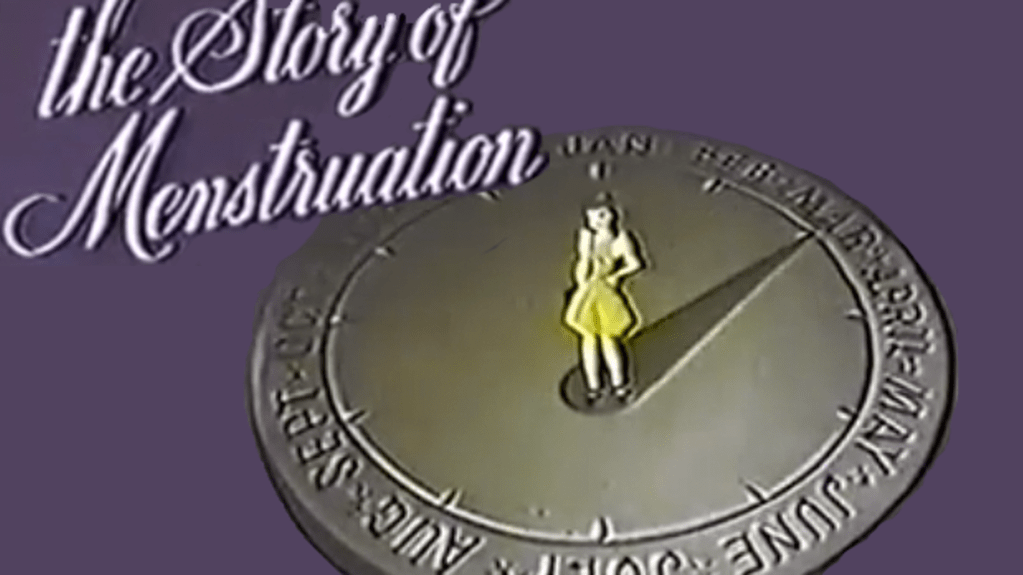
This is another film with a subject matter I am definitely not qualified to discuss at length: the female menstrual cycle. As always, I am just here to watch the movie, and comment on the information as presented, which in this case is a streamlined, simplified version of the process geared towards young girls.

The Plot: Narrated by Gloria Blondell, “The Story of Menstruation” is a straightforward presentation of what young women can expect when their bodies start developing and they experience their monthly menstrual cycle. Great lengths are taken to remind female viewers that this is a normal, natural part of life, and nothing to be embarrassed or ashamed about, nor should it prevent you from your everyday activities. Sponsored by Kimberly-Clark (the makers of Kotex), and produced by…Walt Disney Productions!? Well this just got a whole lot more interesting.

Why It Matters: The NFR mentions the film’s “friendly Disney-style characters and gentle narration”, but is also quick to quote from film scholars who “take issue” with the film’s approach to such a delicate subject.

But Does It Really?: A tip of my hat to whoever got this little gem out of the Disney Vault and into the NFR. Disney is always quick to sweep anything that contradicts their current image under the rug, so I’m thrilled that this short has not only been salvaged, but placed on a historical list ahead of many of Disney’s better known classics. “The Story of Menstruation” makes the NFR thanks to its sensitive take on its subject matter, as well as for its standing as one of Disney’s more unique and obscure treasures.

Everybody Gets One: Like her sister Joan, Gloria Blondell was a performer, though she was typically relegated to such minor roles as “Secretary” and “Lady Bill Collector”. “Menstruation” was not Ms. Blondell’s first foray with Disney; she occasionally voiced Daisy Duck when the character spoke without her partner’s famous impediment. Fun Fact: Gloria Blondell was briefly married to Albert Broccoli, about 15 years before he started producing the James Bond film series.

Wow, That’s Dated: My assumption was that some of this movie’s science would be incorrect or antiquated, so I watched a YouTube video of an OB-GYN reacting to this short. Turns out that the science is accurate (albeit simplified), making the only thing truly dated about the film the belief that a woman still needs to look her best during her period in order to feel better. Screw that: you do you.

Seriously, Oscars?: Unfortunately, no theatrical release, and therefore no Oscar love for “The Story of Menstruation”. Disney’s nominee at the 1946 Oscars was the far more conventional Mickey and Pluto short “Squatter’s Rights“, which lost to Tom and Jerry’s “The Cat Concerto“. I will point out, however, that “The Story of Menstruation” received the Good Housekeeping Seal of Approval.

Other notes

  • So how did a family-friendly image-conscious company like Disney end up making a short about periods? It’s important to remember that in 1946 Disney was far from the mega conglomerate it is today, and WWII depleted a lot of their funds. Disney spent most of the ’40s digging itself out of financial debt, mainly by producing sponsored shorts for various companies. Other Disney shorts of the era include “The Building of a Tire” for Firestone, “The ABC of Hand Tools” for General Motors, and “Bathing Time for Baby” for Johnson & Johnson. 
  • I appreciate that Disney does not shy away from using the actual biological terminology. Some film buffs cite “The Story of Menstruation” as the first film in history to use the word “vagina”.
  • Perhaps the film’s most controversial artistic choice, the animation of the menstrual blood leaving the uterus is colored white instead of red.
  • As someone who has never experienced a period, anyone who can carry on their life under those circumstances has my respect.
  • While this film does put certain rumors to rest (such as the falsehood that you can’t bathe or exercise while on your period), it does add its own share of problems, like suggesting you shouldn’t throw off your cycle by being “emotionally upset” or “catching cold”. Again, I’m no expert, but surely that can’t be right.
  • As this film was commissioned by Kimberly-Clark, I kept waiting for “the hard sell” about Kotex. While there’s no obvious product placement in the short, there is mention of the booklet “Very Personally Yours“, which the narrator encourages young ladies use to track their periods. In addition to a mini-calendar, the inside of the booklet contained, you guessed it, ads for Kotex.
  • Every character in this short looks like a cross between a Precious Moments figurine and a Margaret Keane painting.
  • And they say “rectum” too? Wow, Disney must have been really strapped for cash.
  • This short really goes out of its way to refer to the menstrual cycle as a “normal and natural” part of life. The phrase “normal and natural” gets repeated a lot. I assume previous discussions of the menstrual cycle were either nonexistent or filled with shame.

Legacy

  • “Menstruation” was one of the last educational shorts Disney was commissioned to make. A series of cheaper animated films (the “package features”) helped bring in money for the studio, with financial gamble “Cinderella” being the hit that got Disney out of the red.
  • Following its run in schools up through the early 1960s, I assume “The Story of Menstruation” settled down in a cozy corner of the Disney Vault, locked away next to “Song of the South” and the WWII propaganda. 

Further Viewing: Disney’s other long-gone journey into the uterus: “The Making of Me”, which played at EPCOT’s Wonders of Life Pavilion from 1989 to 2007. You get a cartoon sperm courting a cartoon egg, as well as Martin Short giving the vaguest description of “making love” that could be uttered in a theme park.