#57) Nanook of the North (1922)

Nanook_of_the_north

#57) Nanook of the North (1922)

OR “50 Words for ‘Staged’”

Directed & Written by Robert J. Flaherty

Class of 1989

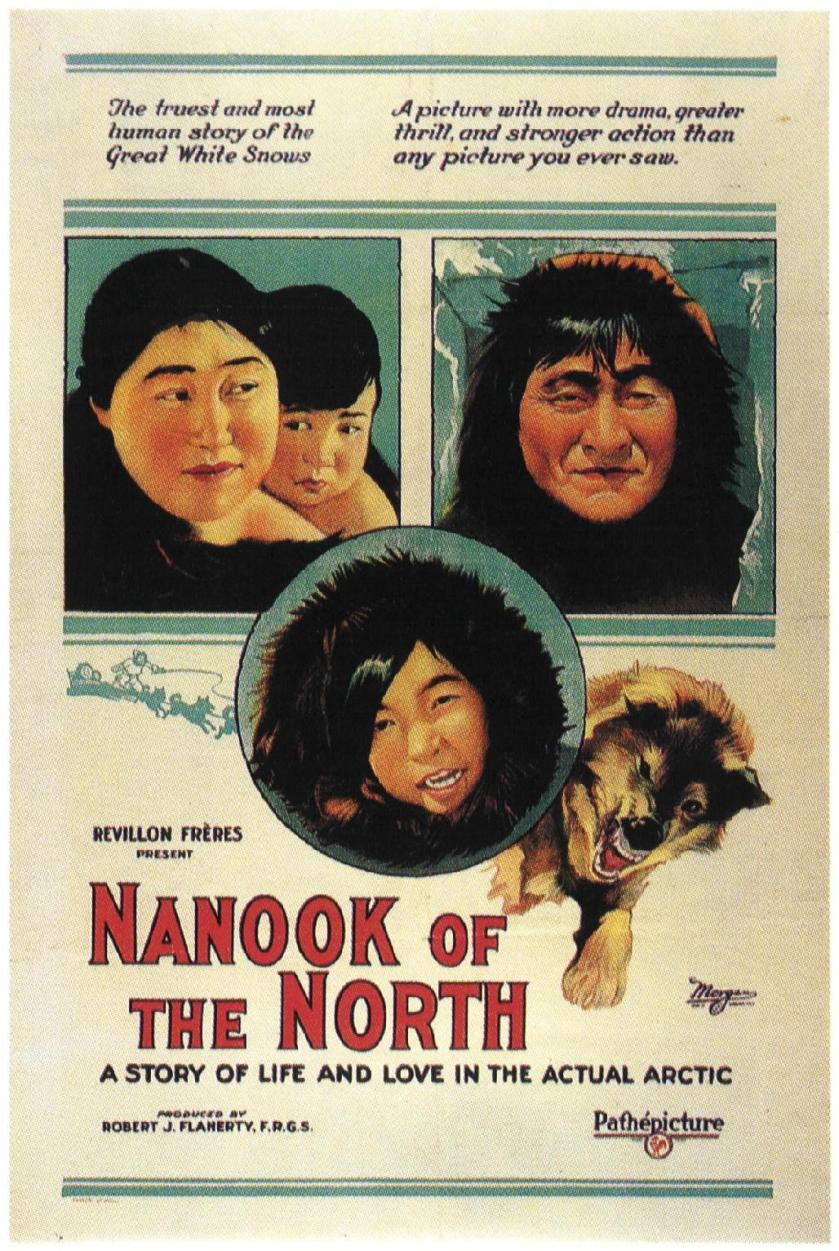
The Plot: Presented as a realistic slice of life (though with many scenes staged for the camera), an Inuit named Nanook (Allakariallak) and his tribe travel the frozen tundra of Port Harrison (now Inukjuak) Quebec, hunting wildlife and seeking shelter from the cold. Oh, and if you like shots of different animals being killed and skinned on camera, this film has got you covered.

Why It Matters: The NFR sums up all you need to take away from this film with the following passage; “Though Flaherty’s authenticity has since been called into question, its emotional impact and artistic style still resonate.” There’s also a pretty academic essay by Patricia R. Zimmermann and Sean Zimmermann Auyash.

But Does It Really?: The aforementioned NFR selection says it all. The film blurs the line between fiction and reality in a highly questionable way, but “Nanook” wrote a lot of the rules that documentaries still follow. As with other docudramas of the era (see “In the Land of the Head Hunters”), I’m not quite sure whether to chalk this one up to informative or entertaining (infotainment?). Regardless, take what you will from this landmark film, and keep at least one critical eye open.

Everybody Gets One: Among the many myths of this film, the unfortunately true one is that Allakariallak (the real Nanook) died two years after filming. Despite the opening title, his death was most likely due to tuberculosis, rather than starving. We’ll see more of explorer-turned-filmmaker Robert Flaherty when I take a look at “Tabu”.

Wow, That’s Dated: Gramophones, castor oil as a cure-all. Also, jury’s still out on whether or not “Eskimos” is an acceptable term. Just play it safe and say “Inuit”.

Other notes

  • Nope, nothing stagey about a scene where everyone pops out of a kayak like it’s a clown car.
  • Why is Nanook bartering for candy? WE NEED REAL FOOD!
  • Some of these hunting scenes are a bit much. This may be the first snuff film.
  • Speaking of hunting, the Inuit had moved on to rifles at this point, but Flaherty insisted on more primitive hunting methods. I imagine this was Nanook’s personal “The 1900 House”.
  • Thanks to some quick Googling I learned that the collective noun for walruses is herd. Some search results also accept a pod, a huddle, or an ugly of walruses.
  • Geez intertitles, don’t tell me when “the suspense begins”. Not exactly Hitchcock, are we?
  • Walruses are “the tiger of the north”?
  • Staged or not, it’s still pretty cool to watch someone actually build an igloo.

https://www.youtube.com/watch?v=LFswUeom96A

  • The film takes a moment to point out that the “blubber eating Eskimo” is a misconception. Really Flaherty, that’s the one rumor you want to clear up?
  • Wow, I don’t remember this film being such a downer at the end.

Legacy

  • 1994’s “Kabloonak” is a fictionalized account of the making of “Nanook”. That’s right, a fictional version of a true story about making a fictional version of a true story.

https://www.youtube.com/watch?v=ZcIMcWwKOZQ

  • The documentary “Nanook Revisited” helps dispel some of the myths this film generated.
  • Speaking of, it was only a matter of time before “Documentary Now!” got a shout-out here.

https://www.youtube.com/watch?v=b1wspbvQrN4

  • Frank Zappa once dreamed he was Nanook.
https://www.youtube.com/watch?v=mpNn1nht0_8

#56) East of Eden (1955)

#56) East of Eden (1955)

OR “Cal’s State”

Directed by Elia Kazan

Written by Paul Osborn. Based on the novel by John Steinbeck.

Class of 2016

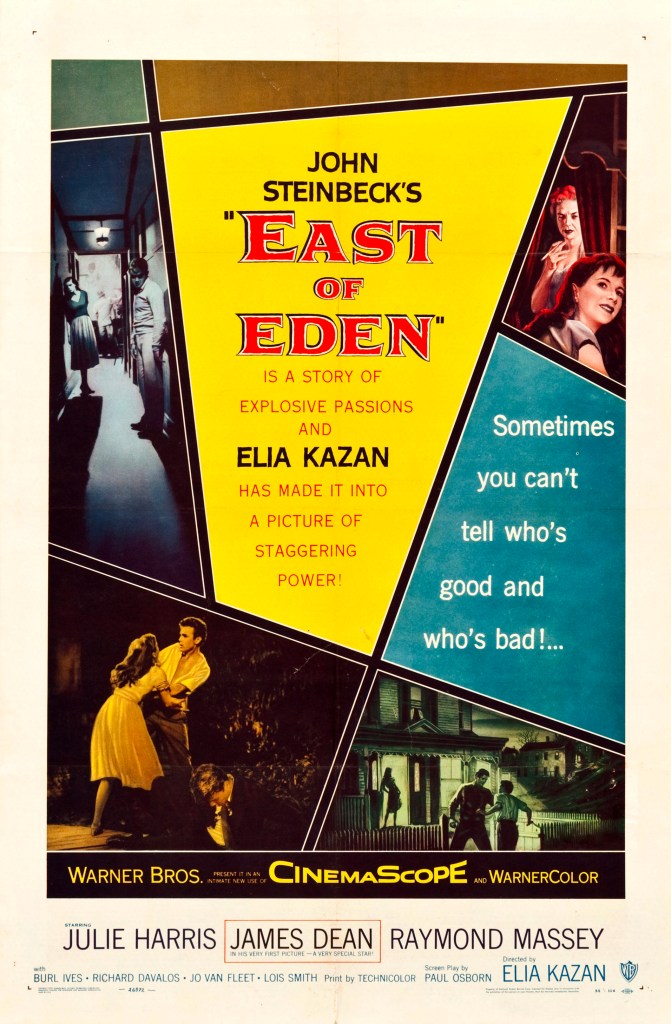
The Plot: Set in the towns of Salinas and Monterey, California just before World War I, “East of Eden” is the story of twin brothers; troubled Cal (James Dean – in his first starring film role) and do-right Aron (Richard Davalos). They work on the farm of their father Adam (Raymond Massey), who clearly favors Aron over Cal. Aron is intent on marrying his long-time girlfriend Abra (Julie Harris), but as they grow apart Abra finds herself attracted to Cal. Meanwhile, Cal learns that his thought-to-be-dead mother Kate (Jo Van Fleet) is alive and the madam of a nearby brothel. And this family just gets more messed up from there.

Why It Matters: Most of the NFR’s praise goes to Osborn and Kazan for adapting Steinbeck’s novel into “the teen angst theme popular in the ‘50s”. The rest of their description goes to a Kazan quote about how he did nothing to stop the off-screen tension between Dean and Massey. A dick move to be sure, but hey it worked.

But Does It Really?: Of the three films in which James Dean is credited, this was the first to be released, but the last to make it onto the Registry (“Rebel Without a Cause” made it on the second round in 1990, “Giant” followed in 2005). I suspect the film, while still very good, is on the list to “complete the trilogy” if you will. “Rebel” will always be the essential James Dean film, but “East of Eden” is the overlooked one with a fine breakthrough performance by the 23-year-old newcomer, to say nothing of the excellent work being done by everyone else.

Everybody Gets One: Legendary stage actress Julie Harris, and that “big, bearded potato full of song” himself, Burl Ives.*

Wow, That’s Dated: This is from that point in time when some films were shot in epic widescreen lenses like CinemaScope, but really didn’t need to be.

Title Track: Burl Ives says “East of Eden” once, towards the end. And yes, I only mentioned Burl Ives again so I can link to another one of his songs.

Seriously, Oscars?: Though it missed out on a Best Picture nod, “East of Eden” did manage four nominations, including Director, Adapted Screenplay, and a posthumous Best Actor nod for James Dean. Jo Van Fleet won Best Supporting Actress, boosted by her work in two other Oscar contenders that year; “The Rose Tattoo” and “I’ll Cry Tomorrow”.

Other notes

  • James Dean died six months after the film’s release. It was the only one of his three starring roles that he got to see completed. “Rebel Without a Cause” was released just one month later.
  • The Overture is giving me “13 Lakes” flashbacks.
  • Say what you will about James Dean, he does teen angst very well. And look at those puppy dog eyes of his. Who could resist them?
  • Shout-out to Lois Smith, who plays Anne, the servant at Kate’s place. She is the film’s last surviving cast member and still a major player on the New York stage at 86!
  • Why the crooked angles during dramatic moments between Cal and Adam? Is the house sinking?
  • Adam says he got his shoulder injury during the “Indian campaign”. How old is he?
  • In addition to Dean’s starring debut, this is Jo Van Fleet’s first film, and boy does she hit it out of the park.
  • The photo of young Adam and Kate must be the first instance of Photoshop in a film.
  • Quick appearance by the Michelin Man on a poster. Turns out he’s been around since 1894!
  • Seems like Cal and Abra make the most of being stuck on a janky carnival ride. Wait until OSHA hears about this one.
  • Abra suggests that Cal go with her to a 5 & 10. I say he should come back to the 5 & Dime, Jimmy Dean, Jimmy Dean.
  • Dean’s good, but you can definitely see the Brando influence. Apparently, so could a lot of 1955 film critics.
  • Geez Burl, just spell out the film’s biblical metaphor for everyone. Good thing he wasn’t in “The Lion, the Witch, and the Wardrobe”.

Legacy

  • Seeing as how this film covers only the second half of Steinbeck’s epic novel; a more all-encompassing remake was inevitable. In 1981 “East of Eden” got the TV miniseries treatment starring Jane “Dr. Quinn” Seymour.
  • I guess they’re remaking it again with Jennifer Lawrence? What say you, readers from the future?
  • And like so many great pieces of literature, “East of Eden” was turned into a mediocre Broadway musical. “Here’s Where I Belong” opened and closed on the same night in 1968.

Further Viewing: Couldn’t find anything from “Here’s Where I Belong” so…one more Burl Ives song?

*UPDATE: I stand corrected – Burl Ives also makes a cameo in Kazan’s “A Face in the Crowd“. Guess I’ll just have to link to another song.

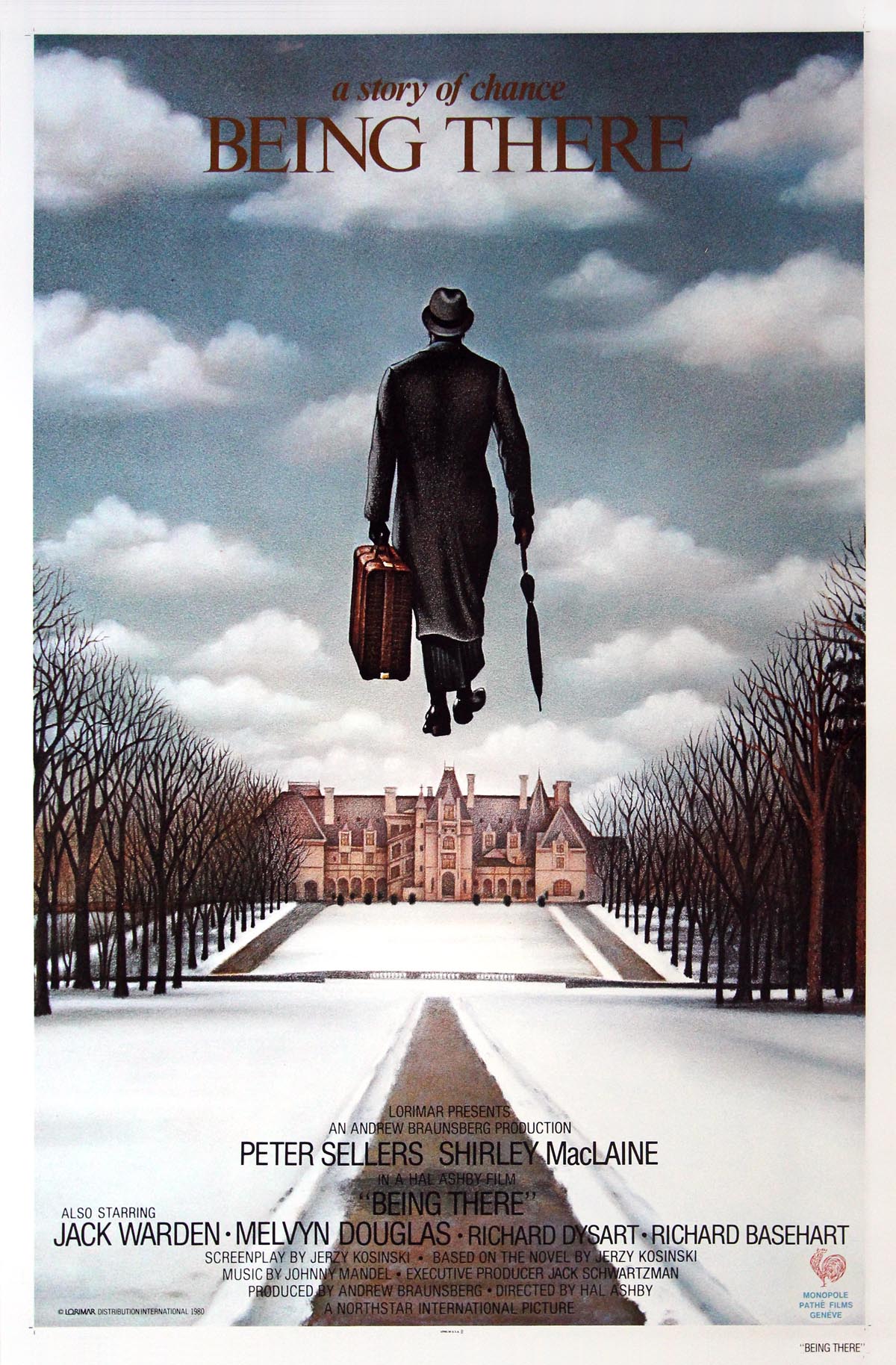
#55) Being There (1979)

being-there

#55) Being There (1979)

OR “Chance Fever”

Directed by Hal Ashby

Written by Jerzy Kosinski. Based on his novel.

Class of 2015

The Plot: Simple-minded gardener Chance (Peter Sellers) has lived in his boss’ estate his entire life and knows only two things: gardening and what he sees on TV. When the old man dies, Chance is sent out into the real world of Washington D.C. Through a series of circumstantial events he is befriended by elderly tycoon Ben Rand (Melvyn Douglas) and his younger wife Eve (Shirley MacLaine). Chance’s simple statements about gardening are misconstrued as profound pieces of advice, which propels him into the inner circles of the political elite. This does not go unnoticed by the President (Jack Warden) and a small group of others who begin to investigate this mysterious man.

Why It Matters: The NFR calls it “a philosophically complex film that has remained fresh and relevant.” The work of Ashby, Kosinski, and particularly Sellers are singled out.

But Does It Really?: Oh yes. “Being There” is another one of those films where everything just works. It has a very simple charm to it and never betrays that simplicity. Due to the ever-changing political landscape I’m not quite sure if the satire packs quite the same punch, but it’s still quite enjoyable watching Chance get to where he ends up. “Being There” might not be the first film you’d think about including on the Registry, but once the title comes up you think “Of course”.

Shout Outs: Among the films Chance sees on TV are NFR entries “Little Caesar” and “Jezebel”.

Everybody Gets One: Actors Richard Baseheart and David Clennon, plus James Noble, who was concurrently holding fake political office himself as the Governor on “Benson”.

Everybody Gets One (Via Archival TV Footage): ‘70s TV staples Paul Lynde, Ray Jay Johnson, Bob Barker, Fred Rogers, Jon “Bowzer” Bauman, and Mumbly the Dog all appear on TV in this film at some point.

Wow, That’s Dated: All that TV Chance watches, plus a fleeting reference to our nation’s bicentennial.

Seriously, Oscars?: Only Sellers and Douglas ended up getting nominated, leaving no room for the likes of MacLaine, Ashby, or Kosinski. Melvyn Douglas won Best Supporting Actor, partly due to his work in this and 1979’s “The Seduction of Joe Tynan”, and partly because like his character, he too was dying. And while Peter Sellers won much acclaim for his work here, he lost to fellow overdue veteran Dustin Hoffman for his more emotive performance in “Kramer vs. Kramer”.

Other notes

  • I am watching a movie about a man watching TV.
  • In praise of Peter Sellers; “Strangelove” aside, this is his finest performance. Like Chance himself, you can read almost anything you want in the character. A difficult feat, but Sellers pulls it off without showing any of the inner work.
  • It needs to be said that the ‘70s were an awful decade for television.
  • This is the second best use of “Also Sprach Zarathustra” in a film.
  • I do love films that include the term “honky”.
  • Ladies and Gentlemen, Basketball Jones.
  • Shirley MacLaine does not get enough credit for her work in this film. She has a very clear character arc that’s happening off-camera, so when she runs into these scenes with Chance with her emotions already at a 10, it’s hilarious.
  • I have a lot of questions about Jack Warden’s presidency. What platform did he run on? Does he replace Jimmy Carter in our timeline? What fellow 70s character actor was his running mate? Did he wipe the floor with Gerald Ford during the debate?
  • Does anyone else get the sense that Ben caught on to who Chance really is, but just didn’t say anything?
  • Director Hal Ashby gives himself a Hitchcock cameo as some guy just hanging out at The Washington Post, like you do.
  • Jerome Hellman plays the host of the talk show Chance appears on. This is his only acting appearance. He was mainly a producer, having just produced Ashby’s most recent film, “Coming Home”.
  • What is Ben talking into towards the end? Is it the fanciest Speak & Spell ever?
  • Yes, yes, there’s a scene where Shirley MacLaine masturbates. Move along, you pervs.
  • The outtakes over the end credits are funny, but don’t belong in this film. It doesn’t give you time to sit and dwell on that last shot.
  • Also what’s with some of these credits? “Boom Operator (and then some)”? Is there something you’d like to share with the rest of the class, Mr. Ashby?

Legacy

  • Sellers’ struggle to get this film made is pretty much the last third of “The Life and Death of Peter Sellers”.
  • While profiling “Forrest Gump” for its 20 Most Overrated Movies list, Premiere Magazine quipped “’Being There’, done that.”
  • Where some would say “rip-off”, “Arrested Development” says “homage”.
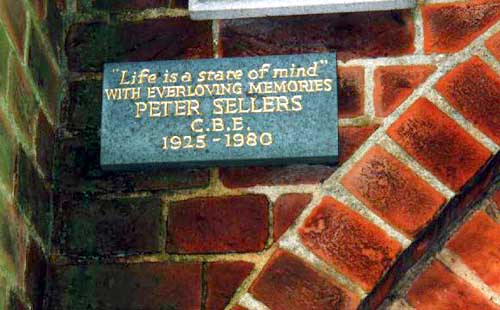
  • Peter Sellers died seven months after the release of “Being There”, and seems to have taken the film’s spirit to heart.

sellerspeter2

#54) 13 Lakes (2004)

les-marques-aveugles-02

#54) 13 Lakes (2004)

OR “The Lake Takes”

Directed, Written, Produced, Filmed, & Edited by James Benning

Class of 2014

The Plot: 13 identically framed 10-minute shots of 13 different American lakes. That’s it. That’s the film.

Why It Matters: The NFR compares Benning’s “moving landscape paintings” to the works of Monet! I go back and forth on whether you should read Scott MacDonald’s essay on the film before or after your viewing.

But Does It Really?: At first I thought, “Oh boy, hunker down, this one’s going to be a long one.” But then I got into it and, well it won me over. This film makes you stop and think about the world around you, which is what any good movie should do. The difference is, this film is making you think about the physical world around you. How are lakes the same? How are they different? What do we as people use lakes for? How does one little sound or movement affect its flow? What’s that thing in the background? I found myself being saddened when a shot ended, as I wasn’t ready to leave that place yet. Each shot allows the viewer to just sit and be alone with their thoughts and come to their own conclusions about nature.

Everybody Gets One: James Benning started out going to school on a baseball scholarship, but the political climate of the late ‘60s led to him dropping out and becoming an activist. He started making films around that time and eventually got his MFA from the University of Wisconsin. He has spent the better part of 35 years teaching film at various colleges, and when your film professor has work in the National Film Registry you better take good notes.

Wow, That’s Dated: This one left me hanging, what with nature being timeless and all. Umm…well, it was made on film at a time when most movies were converting to digital. There’s that.

Seriously, Oscars?: I mean, you could try to sneak this film into the Documentary category, but the Oscars would never go for it.

Other notes

  • Did anyone else see the title and just assume this was a horror film?
  • As of this writing, “13 Lakes” is the most recent film to appear on the Registry, and one of only three films from the 21st century to be preserved. “13 Lakes” is also one of the few films to be inducted on the list after the minimum 10-year eligibility period.
  • They forgot Lake Wobegon.

Legacy

  • Jackson Lake: Left the lake business to become a successful real estate agent.
  • Moosehead Lake: Rode success of “13 Lakes” to Hollywood, currently has three-picture deal with Paramount.
  • Salton Sea: ‘66. Editor, National Lampoon Magazine.
  • Lake Superior: Joined a convent, is now Mother Superior Lake Superior.
  • Lake Winnebago: Married Wendy Peffercorn. They have nine kids!
  • Lake Okeechobee: Future site of Camp Anawanna.
  • Lower Red Lake: Regrets their participation in “13 Lakes” and did not respond to my emails.
  • Lake Pontchartrain: Took the Midnight Pontchartrain to Georgia.
  • Great Salt Lake: Caught in political scandal, demoted to “Just Okay Salt Lake”.
  • Lake Iliamna: Occasionally hosts Turner Classic Movies, and has led several panel discussions on women in film. [Sorry, that’s Illeana Douglas.]
  • Lake Powell: Whereabouts unknown.
  • Crater Lake: Will be back in “You Only Lake Twice”.
  • Lake Oneida: Currently on the faculty of CalArts.

Further Viewing: You can find a lot of James Benning’s work online. I recommend this film’s companion piece, “10 Skies”.

#53) Ella Cinders (1926)

ella-cinders-ad

#53) Ella Cinders (1926)

OR “Funnies Girl”

Directed by Alfred E. Green

Written by Mervyn LeRoy and Frank Griffin. Based on the comic strip by William M. Conselman and Charles Plumb.

Class of 2013

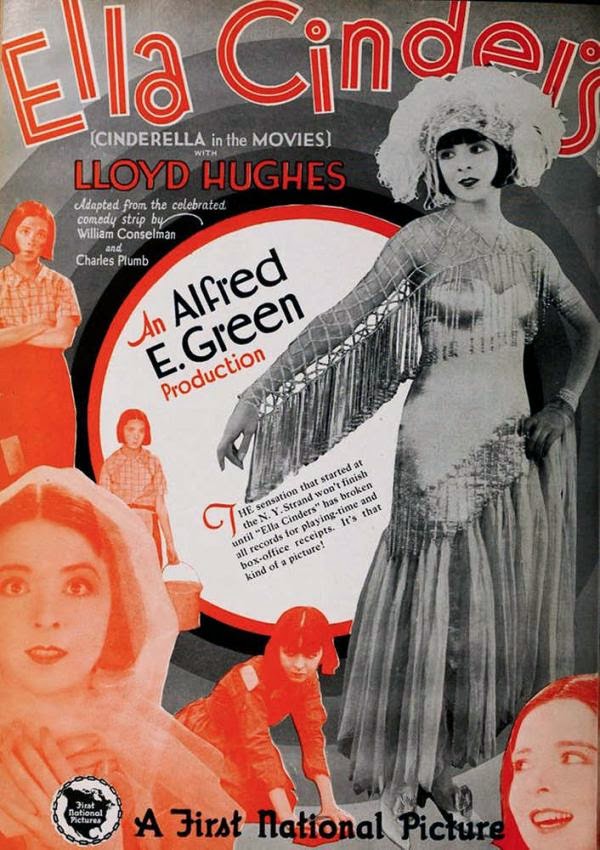
The Plot: Ella Cinders (Colleen Moore) is a beautiful young woman treated unfairly by her stepmother and two step sisters (get it?). When a Hollywood studio announces a contest to become their next big star, Ella leaps at the chance and does her darndest to win. It gets very ‘20s from there.

Why It Matters: The NFR calls the film “an archetype of 1920s comedy” and praises Moore’s performance as well as her place in flapper girl history. Moore would eventually be eclipsed in fame and ‘20s influence by Clara Bow, who had a certain….je ne sais quoi, if you will.

But Does It Really?: I say, “Hey why not?” “Ella Cinders” is a very fun comedy featuring an endearing and energetic performance by Moore. And as far as Cinderella films go, I like this Cinderella a lot. No fairy godmother for her, if she wants something she goes out and actually works to get it. Right on, flapper woman!

Everybody Gets One: We get another Colleen Moore film once she converts to sound pictures, but this is her one representation at her peak as a silent film star. Along with her talent and choice of characters that helped revolutionize women in film, Moore helped popularize the famous flapper bob. Moore retired not too long after sound pictures came along, but invested wisely in the stock market and lived comfortably into her late ‘80s.

Wow, That’s Dated: The profession of Iceman, the term “sharpers”, mood music on film sets, photography that still required a sheet covering.

Other notes

  • The first title card calls the town of Roseville the place “where the first bowl of wax bananas appeared on an American sideboard.” I’m already so very lost.
  • That cross-eyed scene has some pretty amazing split-screen work. For a moment I thought Moore was really talented.
  • Could Chaplin have sued this film for the “Gold Rush”-esque bit Ella does for the kids?
  • Despite its association with the 1920s, the bob haircut works in any era.
  • “Wimmin”? Was that ever an acceptable way to spell “women”?
  • Apparently at least one of those actors on the train was actually Native American, so that’s good.
  • Then they call Hollywood “the knicker district of Los Angeles – seat of the bosom heaving industry of America.” Title writer George Marion Jr. has an odd way of describing cities.
  • And then he slams Armenian picnics outta nowhere! You’ve gone too far, Marion!
  • That chase through the studio is hilarious. Take note, “Pee-wee’s Big Adventure”.
  • That’s Mack Sennett clown Harry Langdon playing himself during the chase scene. You can see why he was paired with Oliver Hardy at one point.
  • I assume that lion escaped from the MGM lot. Thank you!
  • Oh come on, movie! She has to give up film stardom to marry what’s-his-name? Can’t she have both, like the contrived ending of “La La Land”?

Legacy

  • Ella Cinders the comic strip continued until 1961. The Hollywood plotline from the film gave way to lots of other adventures.
  • The Cinderella fairy tale has been told on film many many times over the years. But will any version be able to top “Caddyshack”?
  • I’m gonna go ahead and blame this film for all films based on comic strips. We’ll start with “Garfield” and go from there.