#267) Master Hands (1936)

maxresdefault

#267) Master Hands (1936)

OR “Chevy-Handed”

Directed by Jam Handy

Class of 1999

The Plot: Sponsored by General Motors, “Master Hands” is a documentary-style look at the manufacturing of a Chevrolet automobile. From the casting of the chassis from raw material, to the ignition of the final product, the creation of your Chevrolet is documented with an emphasis on the assembly worker as a crafter, a true artist and definitely not someone working in an extremely hazardous work environment. But hey never mind all that, isn’t the cinematography impressive?

Why It Matters: The NFR cites Jam Handy’s influence over the promotional short genre, and singles out composer Samuel Benavie and cinematographer Gordon Avril. There’s also an essay by Professors Richard Marback and Jim Brown, who devote a lot of the write-up to a project/discussion they ran about the film. Way to pat yourselves on the back.

But Does It Really?: I give “Master Hands” a pass for its representation of not only Jam Handy Productions, but also for the automobile assembly line of the early ‘30s. Plus I’m a sucker for a good promotional short.

Everybody Gets One: Henry Jamison “Jam” Handy started off as an Olympic swimmer, winning the bronze at the 1904 and 1924 games. After stints in journalism and advertising, Handy became interested in what motivated people to buy products. He founded Jam Handy Productions and helped oversee the creation of over 7,000 educational and industrial shorts.

Wow, That’s Dated: A pre-union assembly line. Somewhere Henry Ford is smiling.

Take a Shot: The opening text praises “the skilled craftsmen whose master hands command the great machinery of production.”

Seriously, Oscars?: It’s a safe bet that educational shorts weren’t eligible for Oscars. If “Master Hands” had competed, it would have lost to a gritty crime short called “The Public Pays”.

Other notes

  • “Master Hands” sounds like it should have been the working title for “Manos”, doesn’t it?
  • The opening text says that there are 25 million drivers in America. Modern statistics show that that number has increased tenfold.
  • For a brief moment, we have a narrator. I can’t find a definite credit for who it is, but he sounds like Criswell in “Plan 9 from Outer Space”.
  • I am so lost. I know nothing about cars; I couldn’t even tell you which part of the car is being made at any given moment.
  • That score sounds like “Flight of the Bumblebee” is going to start at any moment.
  • Did Benevie only compose five minutes of music that they played on an endless loop? I suppose it’s meant to represent the monotony of an assembly line, but jeez Louise did it drive me nuts. Okay, I’ll talk, just stop playing that music!
  • My god, the work accidents that must have happened on that assembly line. If these walls could talk, am I right?
  • To the best of my knowledge, that car in the final shot is a 1936 four-door Master Sedan.

Legacy

  • The good news: They made a sequel. The bad news: It’s “Roger & Me”.

Further Viewing: So many Jam Handy shorts to choose from, but I’m of course naturally drawn to the ones featured on MST3K. Jam Handy did a short on how to sell Chevrolets called “Hired!”, and gave us the definitive look at a world with no springs.
#266) 42nd Street (1933)

forty_second_street_xlg

#266) 42nd Street (1933)

OR “The Deuce is Loose!”

Directed by Lloyd Bacon. Musical numbers staged by Busby Berkeley.

Written by Rian James and James Seymour. Songs by Al Dubin & Harry Warren. Based on the novel by Bradford Ropes.

Class of 1998

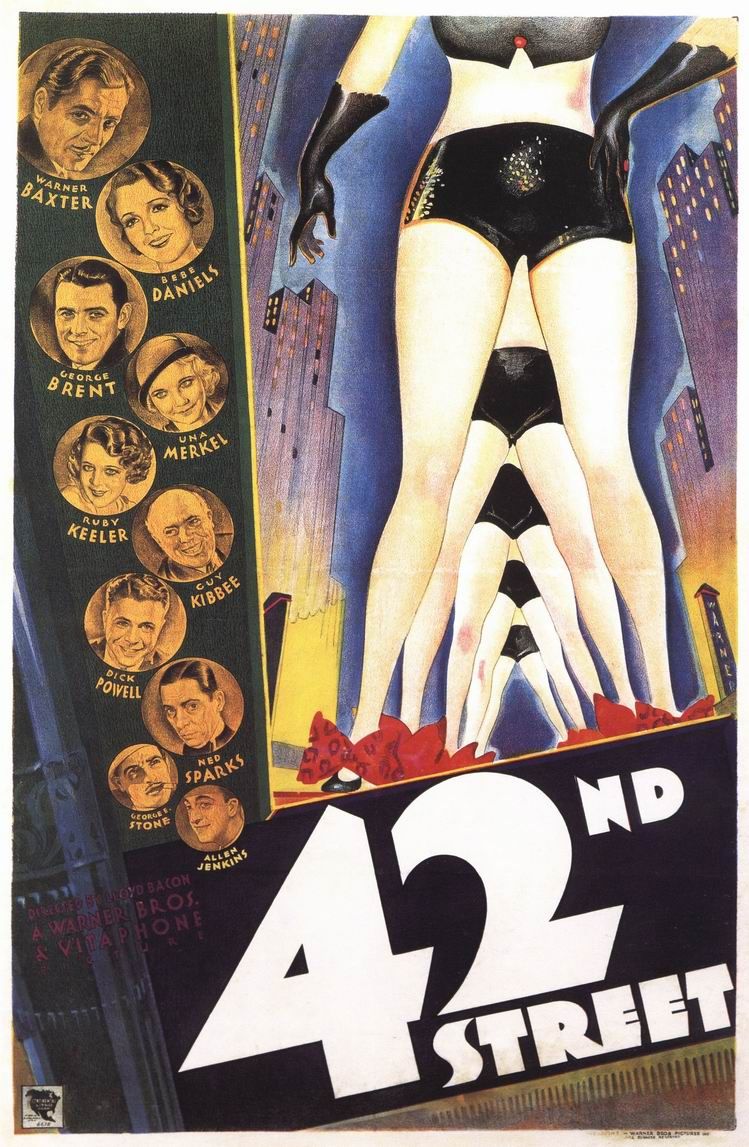
The Plot: “Pretty Lady” is the latest Broadway musical from director Julian Marsh (Warner Baxter), who is putting his financial standing and physical health on the line to make this show a smash. There are further complications when the show’s lead actress, Dorothy Brock (Bebe Daniels) is cheating on producer Abner Dillon (Guy Kibbee) with her old dance partner Pat Denning (George Brent). Denning is also involved with fresh-faced chorus girl Peggy Sawyer (Ruby Keeler) who’s been flirting with juvenile lead Billy Lawler (Dick Powell). To make matters worse, Dorothy breaks her ankle the night before the show’s out-of-town opening, and Julian chooses Peggy to take her place. That’s a lot of plot resting on a handful of musical numbers.

Why It Matters: The NFR calls it “a fast-moving picture that crackles with great dialogue” and goes on to praise Busby Berkeley and the song score. Weirdly, the only actor who gets a superlative is the “adorable” Toby Wing, who has a non-speaking part in one number.

But Does It Really?: I had never seen “42nd Street” prior to this viewing, and I got to say I was a bit underwhelmed. For the first “backstage musical” this one hits the “backstage” part a lot harder than the “musical”. There are only five songs, and most of them are at the end. The film is justifiably iconic and entertaining enough, but I think “Gold Diggers of 1933” does everything this movie does more successfully. “42nd Street” is on the NFR for its historical significance more than its entertainment value.

Everybody Gets One: Oscar winner Warner Baxter, and Bebe Daniels who, while mostly forgotten today, had her heyday in the silent era. Unfortunately, most of her films have been deemed lost. Check your attics.

Wow, That’s Dated: Lots of Depression talk in this one, plus attitudes towards women in the theater that would not survive the #MeToo environment.

Take a Shot: We get easily one of the top five title numbers of all time. It’s just a shame you have to sit through the rest of the movie to get to it.

Seriously, Oscars?: A hit that helped Warner Bros. get through the Depression, “42nd Street” received two Oscar nominations: Best Picture (losing to “Cavalcade”) and Sound Recording (losing to “A Farewell to Arms”). There was no Best Song category yet, but Warren & Dubin would win in 1935 for “Lullaby of Broadway”.

Other notes

  • The film was originally slated to be directed by Mervyn LeRoy, but delays in “I Am a Fugitive From a Chain Gang” caused him to be replaced by Lloyd Bacon. LeRoy did, however, get one of his casting choices into the final film: his then-girlfriend Ginger Rogers.
  • I don’t know if you’ve heard, but Jones and Barry are doing a show.
  • Boy the exposition in this movie is not subtle. Surely even Depression era audiences could put two and two together on their own.
  • Ginger Rogers’ character is “Anytime Annie”? I guess the writers were having one last hurrah before the Production Code got implemented.
  • Best line in the movie: “Must’ve been tough on your mother not having any children.”
  • Although many sources state this is Ruby Keeler’s film debut, she has a cameo in 1930’s “Showgirl in Hollywood” alongside her real-life husband Al Jolson.
  • As shown in the film, “It Must Be June” was cut during rehearsals, to be replaced with something about Joan?
  • Oh Ned Sparks, how I’ve missed you and your deadpan demeanor.
  • My god, this is one intense rehearsal process. “They Shoot Horses, Don’t They?” was more humane to its dancers.
  • Ah the gentle punching of 1930s cinema. Just lightly tap your opponent’s face with your fist and we’ll Foley in the rest later.
  • So much talking. More musical numbers, please!
  • Well, I got my wish with “You’re Getting to Be a Habit With Me”, but is the guy at the end supposed to be dressed like Gandhi? BROWNFACE WARNING, everyone!
  • Andy looks like he should be starring in “The Young Walt Disney Chronicles”.
  • Tap-dancing in heels will never not be impressive. Get it, Ruby Keeler!
  • Claudette Colbert: THAT’S who Bebe Daniels reminds me of! It’s been driving me crazy this whole movie!
  • Did “Pretty Lady” not have a tech rehearsal before opening night?
  • “Sawyer, you’re going out a youngster, but you’ve got to come back a star! But no pressure, just remember to have fun out there!”
  • The first Busby Berkeley trademark overhead shot doesn’t happen until 83 minutes into the movie. It’s worth the wait.
  • The title number finale is lively and rightly remembered, but once again I must ask how any of this would fit on a real theater stage. Now Busby, we’ve talked about this.
  • Did we need the final scene of Marsh sulking by the stage door? We couldn’t have ended on a literal high note?

Legacy

  • “42nd Street” launched a series of backstage musicals, many of them featuring Busby Berkeley’s innovative choreography. “Gold Diggers of 1933” was already in production when “42nd Street” was released, but does feature many of the same cast and creatives. The success of “42nd Street” did, however, help increase the budget on Warner Bros.’ next backstage musical: “Footlight Parade”.
  • After seeing his work on “42nd Street”, Warner Bros. hired Busby Berkeley full-time. His influence on the movie musical can still be felt 85 years later.
  • Cashing in on the ‘20s and ‘30s nostalgia craze Broadway was experiencing throughout the ‘70s, David Merrick produced a stage version of “42nd Street” in 1980 that was a runaway hit. The show incorporated many songs from the…oh my god, Gower Champion died!
  • The “legs shot” from the “Young and Healthy” number has been spoofed over the years, most memorably in “The Big Lebowski”.
  • Cool, I can reference “The Drew Carey Show”!
  • Many performers have had their own “42nd Street” moment where they were plucked from the chorus to play the lead and became a star overnight. Catherine Zeta-Jones had her moment during a production of…“42nd Street”!

#265) Mean Streets (1973)

ONESHEET184-2

#265) Mean Streets (1973)

OR “Let’s Get This Marty Started”

Directed by Martin Scorsese

Written by Scorsese and Mardik Martin

Class of 1997

The Original Theatrical Trailer – It’s gnikcuf great.

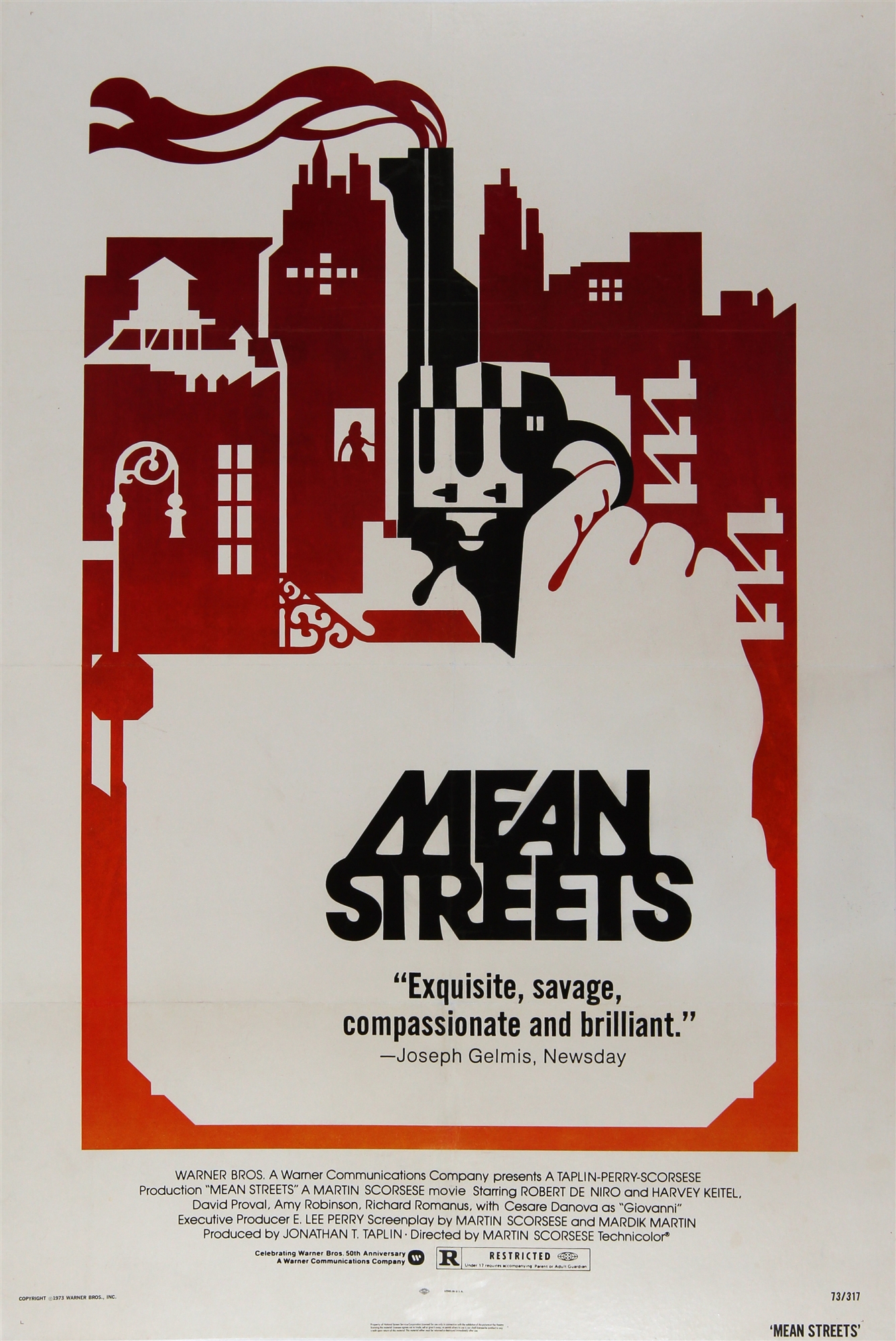
The Plot: Based on Scorsese’s upbringing in Little Italy, “Mean Streets” is the story of Charlie (Harvey Keitel), a man torn between his devout Catholic upbringing, and his life as a debt collector for his Uncle Giovanni (Cesare Danova). Charlie spends most of his time hanging out at the bar owned by his friend Tony (David Proval), maintaining a somewhat difficult relationship with Teresa (Amy Robinson), and looking after Johnny Boy (Robert De Niro), who is constantly in debt to Giovanni. It’s a tale of Italian-American lowlifes, in conflict with their Catholicism and the crime world they currently inhabit and…Bingo! I got Scorsese Bingo!

Why It Matters: The NFR praises Scorsese to the hilt, calling his filmmaking “original, volatile, personal, and brilliant”. Props are also given to Keitel and De Niro.

But Does It Really?: It’s not perfect, but I get why this film is on the list. “Mean Streets” isn’t at the masterpiece level of “Raging Bull” or “Taxi Driver”, but we wouldn’t have either of those movies without this little gem. Very few directors can get away with getting their stepping stone movie on the NFR list, but Scorsese is definitely one of them, and no study of his filmography would be complete without “Mean Streets”.

Shout Outs: Brief clips are featured from “The Searchers” and “The Big Heat”, plus a poster for “Point Blank”.

Everybody Gets One: Amy Robinson’s acting career didn’t last too much longer after “Mean Streets”, but she has had a successful career as a producer, including Scorsese’s “After Hours”.

Wow, That’s Dated: Ah yes, the sexism and racism that permeates a lot of Scorsese’s early work. Marty was fighting a lot of demons in the ‘70s.

Take a Shot: Originally titled “Season of the Witch”, Scorsese’s mutual friend/future “Gangs of New York” screenwriter Jay Cocks suggested “Mean Streets”, based on a line from Raymond Chandler’s “The Simple Art of Murder”.

Seriously, Oscars?: Warner Bros. was busy pushing “The Exorcist” for Oscar consideration, so “Mean Streets” was left out to dry. Critics, however, were kinder, with both the National Society of Film Critics and the New York Film Critics Circle giving their Best Supporting Actor prizes to Robert De Niro. The WGA nominated the film’s screenplay for Best Drama Written Directly for the Screen, but “Mean Streets” lost to “Save the Tiger”.

Other notes

  • Scorsese’s biggest inspiration for “Mean Streets” was John Cassavetes. Scorsese had just finished filming “Boxcar Bertha” for Roger Corman when Cassavetes commented, “You’ve just spent a year of your life making a piece of shit.” This led to Marty’s films leaning more towards his own life and experiences.
  • Full disclosure: For years I have always gotten this film mixed up with “Badlands”. In fact, when I picked “Badlands” for this blog, I thought it was “Mean Streets”. It wasn’t until Sheen and Spacek appeared on my screen that I realized my merry mix-up. Still liked “Badlands”, though.
  • Oh hello, Martin Scorsese doing a voiceover.
  • Is this what De Niro is going to look like in “The Irishman”?
  • We have the Stones! “Tell Me” has the distinction of being the first Rolling Stones song featured in a Martin Scorsese film.
  • And “Jumpin’ Jack Flash” too? This film must be super expensive to broadcast. The story goes that half of the film’s budget went to music rights.
  • It’s weird watching De Niro play the group fuck-up. This is the Scorsese role that Joe Pesci typically played.
  • Shoutout to cinematographer Kent Wakefield. This movie pretty much defined the gritty shaky-cam of ‘70s cinema.
  • Scorsese’s one of the few film directors whose characters go to the movies on a regular basis.
  • “What’s a mook?” Boy, that escalated quickly.
  • This movie has not one, but two Carradines! David Carradine was one of the leads in “Boxcar Bertha”, and makes a cameo here as a drunk. His half-brother Robert plays the boy hiding in the bar. I didn’t realize this film was a prequel to “Kill Bill” (Vol. 0?).
  • Amazingly, there’s full-frontal nudity in this film and it’s not Harvey Keitel.
  • Huh, no overly angelic blonde leading lady in this one. Nice restraint, Marty.
  • Love the steady-cam shot of Charlie getting intoxicated. And if this blog brought anything into my life, I’m glad it was “Rubber Biscuit”.
  • That’s Martin’s mom Catherine Scorsese as the old lady who helps Teresa with her epilepsy.
  • I would pay good money to watch this cast go to Brooklyn and beat the crap out of Tony Manero.

Legacy

  • And we are off and running into the gritty, violent, profane, semi-improvised world of Martin Scorsese.
  • Speaking of, at one point “Mean Streets” held the record for most utterances of “fuck” in the movie. There’s only about 50 here, a record broken by Scorsese again and again…and again…
  • It was a screening of “Mean Streets” that got Scorsese his next directing gig: “Alice Doesn’t Live Here Anymore”.
  • Pretty much everyone’s first movie is their own “Mean Streets”. Autobiographical, low-budget, a bit telling of your director’s issues.

Listen to This: “(I Can’t Get No) Satisfaction” was the Rolling Stones’ first hit in America, and was added to the National Recording Registry in 2006. Everyone’s covered it, but no one can get near the original.

#264) Frank Film (1973)

mouris_frank-film

#264) Frank Film (1973)

OR “The F Words”

Directed by Frank & Caroline Mouris

Written by Frank Mouris

Class of 1996

The Plot: Animator Frank Mouris narrates his life story while at the same time a second recording plays of Frank delivering a stream-of-consciousness series of words, most of them beginning with F. As both recordings play, a split-second barrage of found images associated with the narrations flash across the screen. Co-directed by his wife Caroline, and featuring a soundtrack by Tony Schwartz, Frank Mouris found a way to make people actually want to hear your life story.

Why It Matters: The NFR gives a synopsis and mentions the film’s standing as an Oscar winner, and that’s it.

But Does It Really?: Oh alright, but just barely. Watching it will give you a bit of a headache, but “Frank Film” is entertaining and just as worthy of NFR recognition as any of the other crazy shorts on this list.

Shout Outs: A brief mention is made to “Frankenstein” with Boris Karloff’s version of the monster making a quick appearance.

Everybody Gets One: Everything you need to know about Frank Mouris he tells you in the movie. Composer Tony Schwartz’s best known work is his contribution to the Lyndon Johnson “Daisy” campaign ad.

Wow, That’s Dated: Are collages dated? I feel like the art of gathering photos and rearranging them as art has gone digital.

Seriously, Oscars?: “Frank Film” is one of only six Best Animated Short Oscar winners to appear on the NFR. Due to Oscar eligibility guidelines of the time, only Frank received the award, and I’m sure Caroline never let him hear the end of that.

Other notes

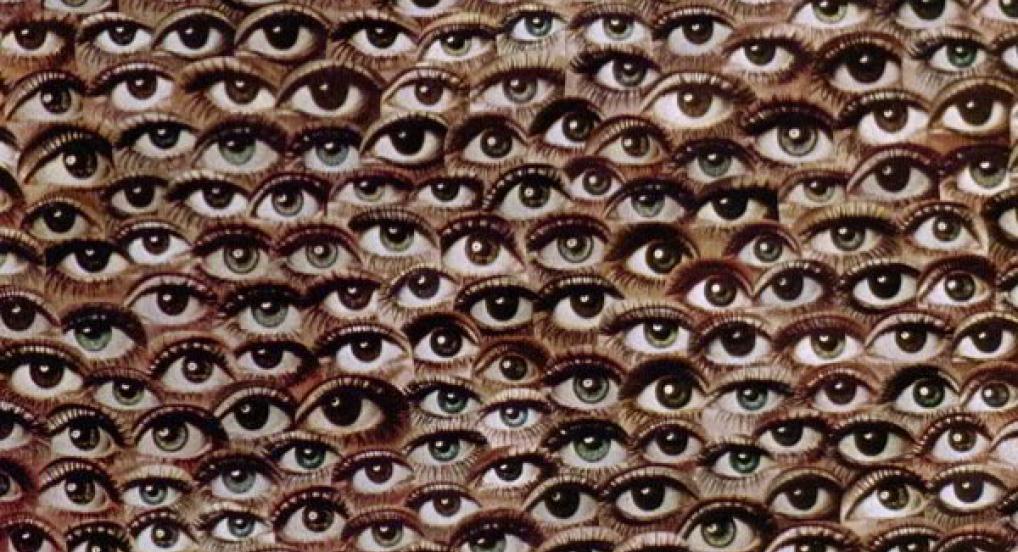
  • Did Frank know he needed the visuals to spice up his story?
  • During one of the film’s alliterative runs, Frank says “Phi Beta Kappa”. Foul!
  • This is one of the few movies to correctly predict its own Oscar win.
  • I just still can’t get over the fact that one man collected all of these photos. There must be thousands in this short alone. Well, I guess everyone has a hobby. Some people cut out magazine photos, some people blog about their movie-watching experience…

Legacy/Further Viewing

  • Frank and Caroline Mouris have made several animated shorts together, including the 1998 follow-up “Frankly Caroline”.

#263) North by Northwest (1959)

north_by_northwest_xlg

#263) North by Northwest (1959)

OR “Did Somebody Say MacGuffin?”

Directed by Alfred Hitchcock

Written by Ernest Lehman

Class of 1995

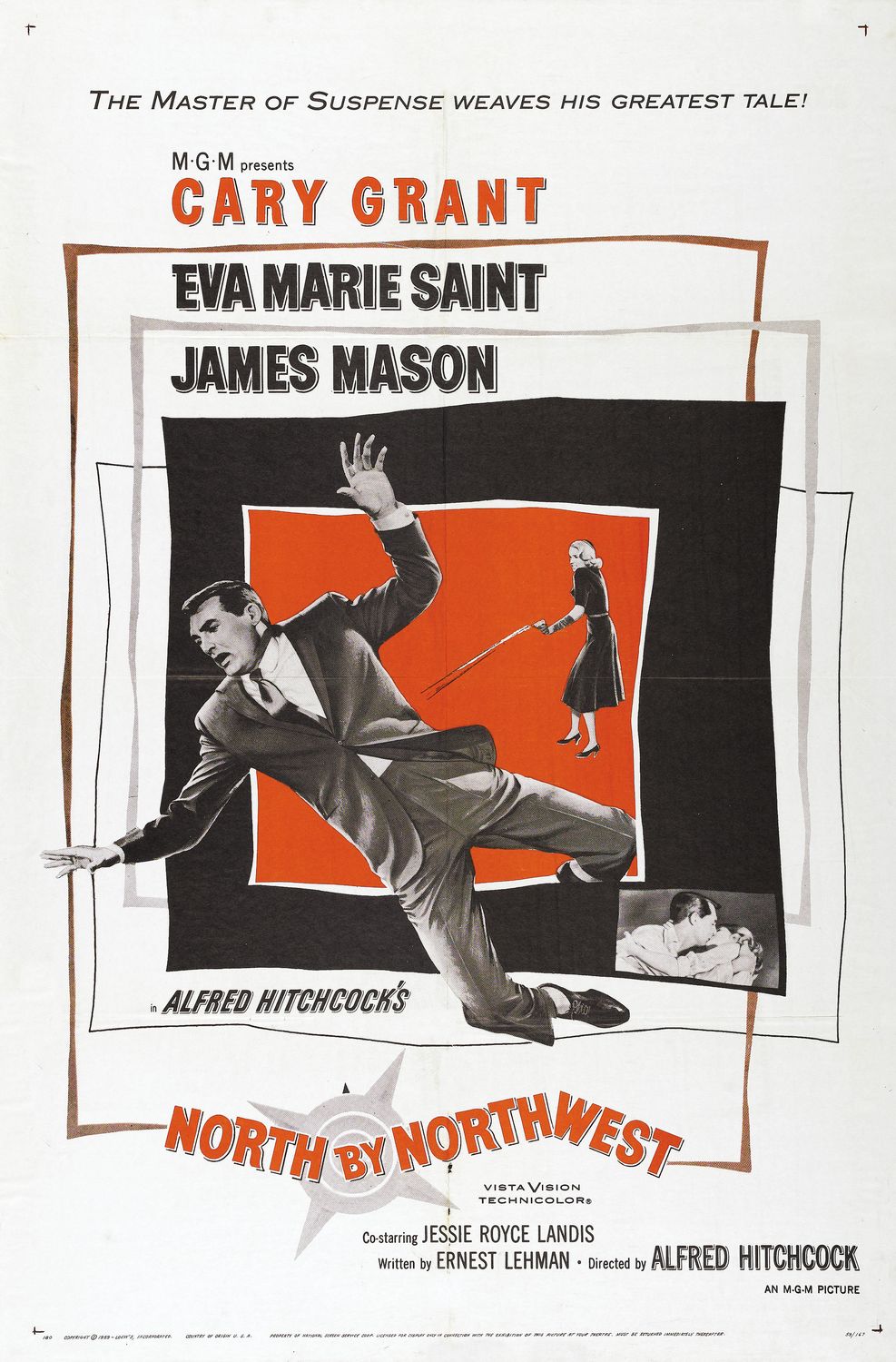
The Plot: Madison Avenue exec Roger O. Thornhill (Cary Grant) leads “too dull a life” until the day he is abducted by two thugs who think he’s FBI agent George Kaplan, hot on the heels of their boss, Phillip Vandamm (James Mason). After thwarting Vandamm’s attempt on his life, Thornhill vows to find the elusive Kaplan to set everything straight. Thornhill’s cross-country travels involve a murder at the United Nations, a train rendezvous with the seemingly innocent Eve Kendall (Eva Marie Saint), a brush with a deadly crop-duster, and a very intimate tour of Mount Rushmore.

Why It Matters: The NFR calls the film “one of [Hitchcock’s] most stylish and entertaining thrillers”, praising Hitch, Ernest Lehman, and Bernard Herrmann along the way. There’s also an essay by Hitchcock expert Thomas Leitch.

But Does It Really?: Lehman set out to write “the Hitchcock picture to end all Hitchcock pictures” and that’s exactly what he did. “North by Northwest” is everything you want from a Hitchcock thriller: big stars, great dialogue, wonderful action, and plenty of memorable moments. It’s not as artsy as “Vertigo” or as thrilling as “Psycho”, but “North by Northwest” is prime classic Hitchcock, and a no-brainer for NFR inclusion.

Shout Outs: Not necessarily a reference, but Thornhill whistles “Singin’ in the Rain” while in the shower, and this is an MGM movie after all.

Everybody Gets One: Future Oscar Winner Martin Landau opted to subtly play henchman Leonard as gay, a choice supported by Hitchcock and Lehman, who added Leonard’s line “Call it my woman’s intuition.”

Wow, That’s Dated: References to the Cold War and Frank Lloyd Wright architecture, plus a shout-out to Charles Addams before the Addams Family was known outside a New Yorker subscription.

Take a Shot: No one says the title, nor does it have any connection to the events in the film (Thornhill’s overall route is more west-southwest). Hitchcock and Lehman intended “North by Northwest” to be a working title until they came up with something better.

Seriously, Oscars?: Like many a Hitchcock film before and after, “North by Northwest” lost all three of its Oscar nominations. Art Direction and Editing went to that year’s juggernaut “Ben-Hur”, while Lehman’s Original Screenplay nod went to…“Pillow Talk”? This is why we can’t have nice things.

Other notes

  • Saul Bass, you’ve done it again! Those credits are perfection, and the Bernard Herrmann score is the icing on the cake.

https://www.youtube.com/watch?v=xBxjwurp_04

  • Sorry Hitch, this bus is for non-creeps only.
  • Cary Grant is just so natural on screen. No wonder he never won an Oscar; you can’t “see” the acting.
  • It’s a Most Unusual Day”? Real subtle, everyone.
  • Most of this write-up will just be me praising the screenplay. Lehman wastes no time getting to the first plot point. You meet Thornhill, get a minimum amount of exposition, and then you’re thrown right into the action.
  • Hitch finally took the suggestion from “Rope” and cast James Mason as the bad guy. Vandamm doesn’t have a lot of screen time, but Mason’s established screen persona carries most of the weight.
  • Thornhill never says the name of the show he has tickets for, but in the summer of 1958 the Winter Garden was housing “West Side Story”. Get it?
  • Why is Roger the same age as his mom? Hitchcock!
  • Kaplan has dandruff.
  • The UN forbade Hitchcock from filming on their premises, so the shot of Thornhill walking up the front steps was filmed discreetly from a van parked across the street. Look closely for one pedestrian who recognizes Cary Grant.
  • The 20th Century Limited is still running back now! Say hi to Carole Lombard for me!
  • We got us another readout on the Michael Douglas Scale. Cary Grant was 20 years older than Eva Marie Saint, though Grant would later admit to being embarrassed about getting the girl in his older age.
  • The censors had problems with Leonard’s very understated homosexuality, but kept most of Roger and Eve’s (hetero)sexually charged dialogue intact. Aren’t double standards great?
  • Best line in the movie: “It’s going to be a long night, and I don’t particularly like the book I’ve started.”
  • Eva Marie Saint should have been the sexy lead in a lot more movies. Hell, she’s still going strong, let’s make it happen!
  • The crop-duster scene is iconic for a reason. In addition to the brilliantly suspenseful silence leading up to the moment, the stunt itself still resonates because it’s actually happening. That’s really Cary Grant running away from a real biplane. The movies don’t get much better than this.
  • Was Cary Grant the first person to walk away from an explosion in a movie?
  • Vandamm suggests the FBI needs more training from the Actors Studio. Perhaps Eve and Leonard can help.
  • The Professor refers to Vandamm as an “importer-exporter”. Like Art Vandelay!
  • Why is Lincoln so far removed from the other three presidents on Mount Rushmore? And when are they gonna finish that damn thing?
  • Everyone’s favorite child extra: In the Mount Rushmore cafeteria, watch for the kid who covers his ears before the gun goes off. He was paying attention during rehearsal; he knows what’s up.
  • Why are Roger and Eve meeting up on the “Sound of Music” set?
  • Despite all of this film’s positive attributes, the climactic chase across Mount Rushmore loses something for me. I think it’s the obvious matte paintings and set pieces that detract from my enjoyment.
  • And we end on what can only be described as the ultimate Hitchcock shot: An ordinary object turned into one giant innuendo. Goodnight, everybody!

Legacy

  • That crop-duster scene, man. Everyone has referenced it. When it’s done well it’s an homage, when not it’s a rip-off.
  • In addition to the film’s iconic imagery, Cary Grant’s gray suit was called the most influential suit in film history by a 2006 GQ.
  • Released three years before “Dr. No”, “North by Northwest” has been viewed as a template for the early Bond films. Yeah, that makes sense.
  • The only reference to this movie in “High Anxiety” is a joke about the main character’s middle name. “High Anxiety” just isn’t the bulls-eye it should have been.
  • The South by Southwest music festival got its name from this film.
  • The biopic “Hitchcock” implies that it was at the premiere of “North by Northwest” that Hitch realized his films were becoming formulaic, leading him to make “Psycho” as his next picture.
  • There’s a stage version? How?