
#284) A Walk in the Sun (1945)

MV5BMGQ1OGRhMTItYjUxOC00OGE0LTlmNDMtZmJhN2EwYTdhNmE4L2ltYWdlL2ltYWdlXkEyXkFqcGdeQXVyNjc1NTYyMjg@._V1_

#284) A Walk in the Sun (1945)

OR “The Italian Job”

Directed by Lewis Milestone

Written by Robert Rossen. Based on the novel by Harry Brown.

Class of 2016

The Plot: “A Walk in the Sun” is a fictional account of the 36th Infantry Division during the Allied Invasion of Italy in September 1943. With a sudden overturn in leadership, the platoon lands on a beach in Salerno with one objective: to capture a farmhouse taken over by Nazis. Among the men are de facto leader Sgt. Tyne (Dana Andrews), Sgt. Potter (Herbert Rudley), who is on the verge of a complete breakdown, seen-it-all Pvt. Archimbeau (Norman Lloyd), mid-west farmer Sgt. Ward (Lloyd Bridges), and a complex group of men who know that this “walk in the sun” will forever define their wartime experience.

Why It Matters: The NFR praises the “excellent” script, particularly its emphasis on character over action, thus separating it from other war movies of the era.

But Does It Really?: I…don’t know. The NFR make a good case, but I’m not sure about “A Walk in the Sun”. Like “Twelve O’Clock High”, this is one of the first war movies that emphasized character over action. Also like “Twelve O’Clock High”, this movie is a bit of a slog. There’s some lovely character work throughout, and this film’s non-propaganda stance on the war must have been revolutionary in 1945, but there have been so many war movies in the last 70 years that have eclipsed “A Walk in the Sun” on the character study front. I’m glad the film is being rediscovered, but is it really preservation worthy in the same class as “The Birds” or “Funny Girl”?

Everybody Gets One: The main one here is the film’s original producer Samuel Bronston who, due to financial issues, had to give up the film rights to “A Walk in the Sun” and hand them over to Lewis Milestone’s Superior Productions. But one lawsuit later, Bronston still managed to receive 21% of the film’s profits. Bronston was eventually taken down by three little words: Swiss bank account.

Wow, That’s Dated: Lots of ‘40s jargon in this one, and plenty of slurs against the “Eye-ties”.

Take a Shot: This is another movie I was not expecting to have a title song. Sung by opera bass-baritone Kenneth Spencer, the song “A Walk in the Sun” serves as a common thread throughout the film, commenting on these men and their actions.

Seriously, Oscars?: “A Walk in the Sun” was completed just before World War II ended, and was shelved until 1946. The film received zero Oscar nominations, probably due to its lack of a solid studio to campaign it, as well as competition from that other Dana Andrews introspective war movie: “The Best Years of Our Lives”.

Other notes

  • Director Lewis Milestone is perhaps best remembered for his take on World War I: 1930’s “All Quiet on the Western Front”.
  • This is one of the weirdest opening credits of any movie. That being said I’d like Burgess Meredith to narrate my life.
  • Lloyd Bridges! Looks like I picked the wrong week to quit making lazy “Airplane!” references.
  • “A Walk in the Sun” was shot on location at the 20th Century Fox Movie Ranch. You know it best from “Planet of the Apes” and the “M*A*S*H” TV series.
  • I don’t trust a war movie where the soldiers don’t curse.
  • As the platoon’s first aid man Pvt. McWilliams, this may be Sterling Holloway’s finest live-action performance. Or at least the one where he gets the most screen time.
  • Shoutout to Norman Lloyd, character actor/director/living centenarian (He turns 104 this week!). It’s crazy to think that one of the actors in this movie is also in “Trainwreck” with Amy Schumer.
  • Weirdly enough, this movie predicted smell-o-vision. And to an extent, AromaRound.
  • Archimbeau predicts that in 1956 we’ll be fighting a war in Tibet. Off by a few years and 2400 miles.
  • Never say “over my dead body” in a war movie.
  • Oh those are some very obvious studio reshoots. It’s the only rear projection in a movie filmed entirely on location.
  • During the climax, one of the soldiers exclaims, “Mary and Joseph!” You forgot one.

Legacy

  • Nothing too much in terms of a legacy, but shortly after “A Walk in the Sun”, screenwriter Robert Rossen pivoted towards directing, helming future NFR entries “All the King’s Men” and “The Hustler”.
#283) Ghostbusters (1984)

81Pz44xom+L._SL1500_

#283) Ghostbusters (1984)

OR “Zuul Me Once, Shame On You”

Directed by Ivan Reitman

Written by Dan Aykroyd and Harold Ramis

Class of 2015

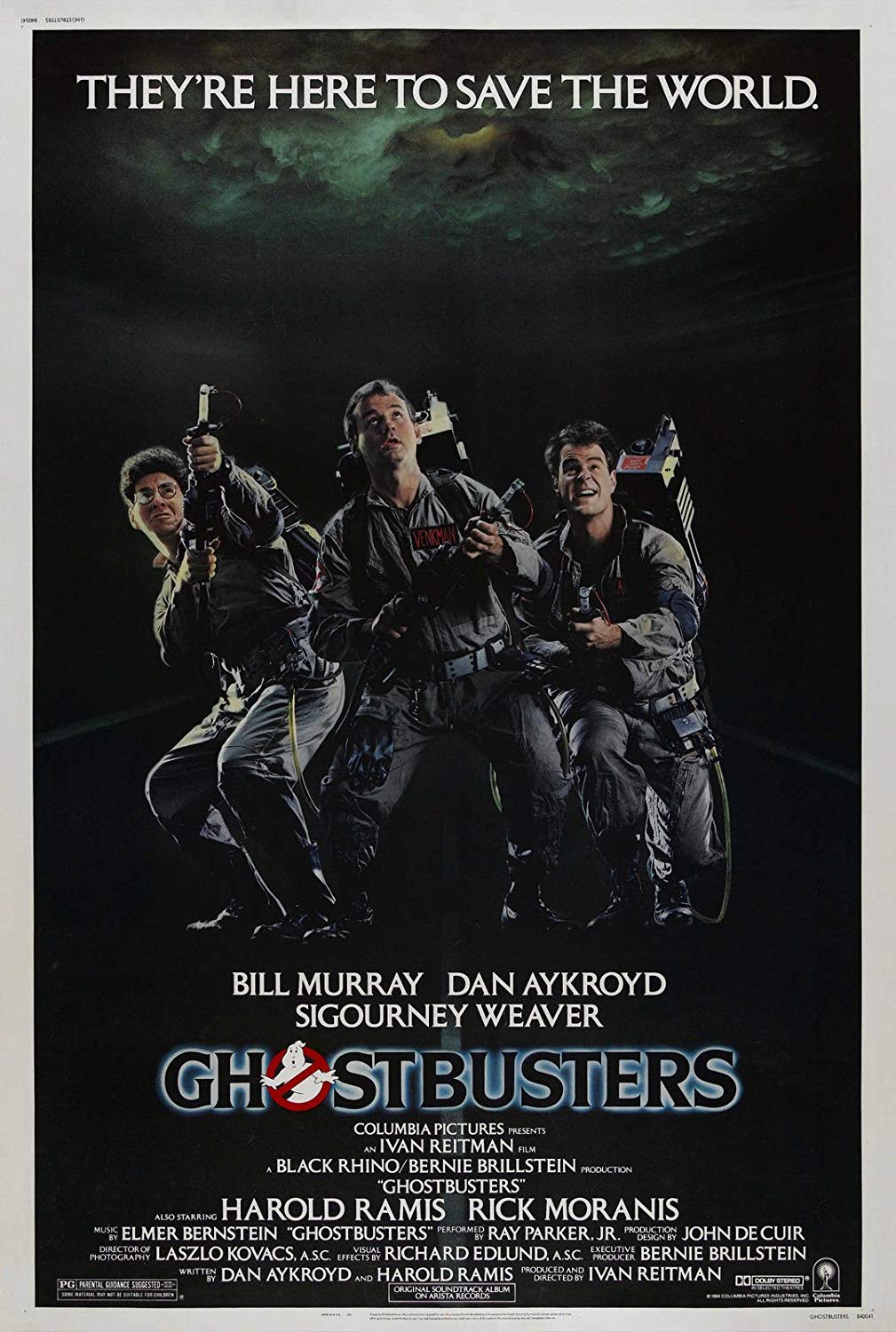
The Plot: New York City is swarming with ghosts, and only disgraced scientists Peter Venkman, Raymond Stantz, & Egon Spengler (Bill Murray, Dan Aykroyd, & Harold Ramis, respectively) can stop them. After being evicted from Columbia University, the trio rent an abandoned firehouse and creates the “Ghostbusters” business. Peter tries to woo client Dana (Sigourney Weaver), who is at risk of being possessed by ancient demigod Zuul and signaling the end times (“Dogs and cats living together, MASS HYSTERIA!”). Joined later by the severely underwritten Winston Zeddemore (Ernie Hudson), this team ain’t afraid of no ghosts.

Why It Matters: The NFR calls the film “One of the most popular, quotable films from the past three decades” and praises Murray as well as the film’s “infectious insanity”. There’s also a reverential essay by filmmaker Adam Bertocci, whose webpage “Overthinking Ghostbusters” ultimately led to the film’s NFR inclusion. Truly, Adam is the change he wants to see in the world.

But Does It Really?: Readers, it’s time you learned the truth: I like but don’t love “Ghostbusters”. It’s funny – at times even hilarious – and I am 100% behind its NFR inclusion, but overall the movie just doesn’t click for me. Dan Aykroyd wrote an overcomplicated ghost movie that Harold Ramis had to drastically edit, and Bill Murray was given free rein to Bill Murray all over it. In fact, I’ll argue that the movie wouldn’t work without Murray as the audience surrogate. I can hear your cries of heresy already, so I’ll conclude by saying that “Ghostbusters” is a good movie and deserving of preservation, it’s just not a personal favorite. See, internet? Sometimes other people don’t like the same movies you do, and that’s okay.

Everybody Gets One: Dan Aykroyd, Rick Moranis, songwriter Ray Parker Jr., Casey (and Jean) Kasem, and #MyTwoCents author Larry King.

Wow, That’s Dated: The non-Elmer Bernstein parts of the soundtrack are very ‘80s. Plus, this is a movie that showed just how far visual effects could go without computers. Matte paintings, stop motion, this movie throws in everything.

Title Track: Four words: Who ya gonna call?

Seriously, Oscars?: Second only to “Beverly Hills Cop” at the box office, “Ghostbusters” was nominated for two Oscars. The film lost Special Effects to “Indiana Jones and the Temple of Doom”, and the title number lost Original Song to “I Just Called to Say I Love You” from…you can’t name the movie can you? I bet you didn’t even know it was from a movie.

Other notes

  • This opening scene at the New York Public Library is a good reminder: Please support your local library. In this post-FilmStruck world I’m forced to live in, the DVD/Bluray selection of my library is indispensable.
  • Is the title “Ghostbusters” or “Ghost Busters”? Am confused. But hey, at least they’re not tacking on “Answer the Call” after the fact.
  • “Back off, man. I’m a scientist.” That line kills me every time.
  • Dana and Louis reside at New York’s famous Matte Painting Towers.
  • Dear Rick Moranis, I know you don’t like making movies anymore, but you are missed.
  • Oh god, Venkman and Dana have one of those “He’s stalking me but we’ll still end up together” romances. Ugh.
  • I appreciate that this film doesn’t fall into the “there’s no such thing as ghosts” cliché. While they may not believe in ghosts, most of their clientele admit that the apparitions are real.
  • So there’s plenty of paranormal activity in New York, but the Ghostbusters are the only business in town? Surely rival ghost businesses would follow shortly. Why couldn’t “Ghostbusters II” have been about that?
  • Shoutout to Annie Potts as receptionist Janine Melnitz. That may be the best line reading of “Whaddya want?” in any movie.
  • Keep your hands where I can see them, Zuul! Don’t you be feeling up Sigourney Weaver!
  • The scene where Dana levitates was an on-set practical effect that Ivan Reitman picked up from directing the Broadway musical “Merlin”. Some good came from that train wreck after all.
  • William Atherton as Peck is the kind of movie douchebag that only existed in the ‘80s. He is perfection, much to that actor’s future detriment.
  • That Zuul theme sounds like Elmer Bernstein is getting ready for “The Black Cauldron”.
  • Everyone loves the Stay-Puft Marshmallow Man, but they couldn’t get an actual food mascot for this scene? Was the Pillsbury Doughboy too expensive?
  • You know what? I would have given this movie the Special Effects Oscar. The effects never get in the way of the comedy, and they hold up surprisingly well. Hats off to Richard Edlund, John Bruno, Mark Vargo, Chuck Gaspar, and the whole effects team that Columbia didn’t credit to save money.
  • Wow, this movie really doesn’t give a shit about Winston. His screentime was greatly reduced once Eddie Murphy turned the part down, and Ernie Hudson gets 8th billing in the credits. 8th! And he’s a Ghostbuster! That’s gotta hurt.
  • I must confess that at the end of the day, bustin’ makes me feel good.

Legacy

  • “Ghostbusters” was an instant hit in summer 1984, with merchandise sprouting up everywhere. The film’s classic status has only grown over the years, with hardcore fans dubbing themselves…“Ghostheads”. Side note: Like “-gate” in a scandal, not every fandom needs the suffix “-head”. It worked for The Grateful Dead because, you know, it rhymed.
  • While the filmmakers initially refused to do a sequel, they eventually relented with 1989’s “Ghostbusters II”. It’s…the first movie again.
  • A third movie has been stuck in Development Hell for almost 30 years. The plotline was eventually recycled into the “Ghosbusters” 2009 video game.
  • There have been two animated series based on the movie. The immediate follow-up “The Real Ghostbusters” made a star out of Slimer, while “Extreme Ghostbusters” lasted three months in 1997.
  • Not every movie on this list inspires an Improv Everywhere stunt. Just this and “The Deer Hunter”.
  • “Who ya gonna call? Someone else.”
  • Firehouse, Hook & Ladder Company 8 has become a popular destination for Ghostheads (still sounds weird). It was saved from closure in 2011, and is currently undergoing a two-year renovation.
  • And last but not least, an all-female reboot in 2016 that DID. NOT. RUIN. ANYONE’S. CHILDHOOD. Get a life, you damn misogynists!

Further Viewing: Another premake! This one takes its cue from the countless, largely forgotten ghost comedies that preceded “Ghostbusters”.

#282) Felicia (1965)

nFpQO.So.156

#282) Felicia (1965)

Directed by Bob Dickson, Alan Gorg, Trevor Greenwood

Class of 2014

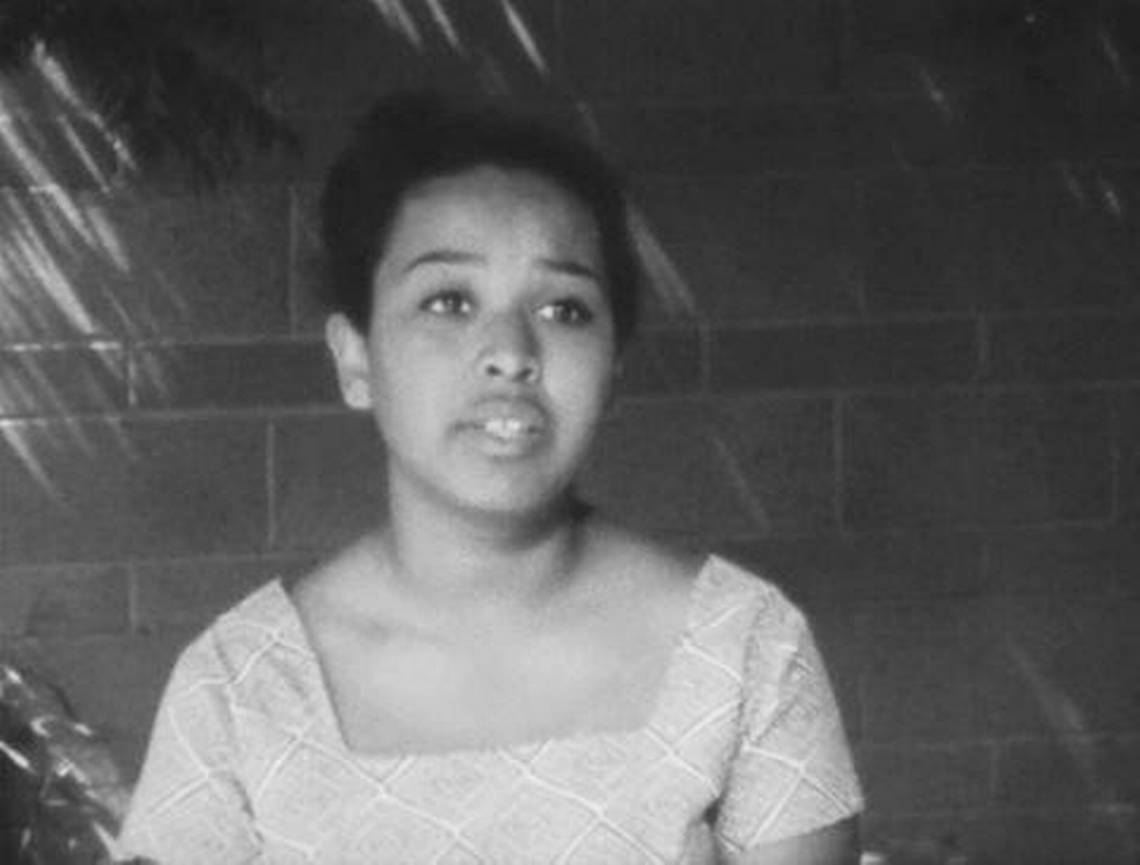
In 1965, UCLA students Bob Dickson, Alan Gorg, and Trevor Greenwood were all active in the civil rights movements of the time; Gorg in particular was a member of the Congress of Racial Equality (CORE). It was through CORE that he met a teacher at Jordan High School who introduced him to Felicia Bragg, a 15-year-old student living with her mother and her siblings in Los Angeles’ Watts neighborhood. In an attempt to show white audiences that African-Americans were not the stereotypes they had been portrayed as in film and TV, the three filmmakers chose Felicia as their subject for a documentary.

“Felicia” is a short chronicling an average day in Felicia’s life. She talks candidly about her family’s daily struggles, her experience at the predominantly African-American Jordan High, and her belief that Watts can only improve if people stay and “build it up”. Felicia herself is remarkably mature and composed for a teenager, with an optimistic outlook on her future that makes her wise beyond her years. This look at 1965 Watts had an unexpected layer added when the Watts riots occurred shortly after filming. It was the largest civil unrest in L.A. until the Rodney King verdict 25 years later, and “Felicia” is a reflective counterpoint to those events.

Over the last 50 years, “Felicia” has been shown in schools across the country not only as a time capsule of 1965 L.A., but also as a demonstration of effective documentary film making. For these reasons, “Felicia” is a welcome addition to the National Film Registry.

The NFR write-up for “Felicia” includes two essays: one by film professors Marsha Gordon and Allyson Nadia Field, and a recollection of the production by co-director Alan Gorg.

P.S.: To the best of my knowledge Felicia Bragg is still alive and living in Los Angeles. Does anyone know anything else about her? There’s very little information out there, though I suspect that if Ms. Bragg wanted to publicly talk about the film, she would have by now.