#311) Willy Wonka & the Chocolate Factory (1971)

willy_wonka_and_the_chocolate_factory_xlg

#311) Willy Wonka & the Chocolate Factory (1971)

OR “Candy Savage”

Directed by Mel Stuart

Written by Roald Dahl. Based on his novel “Charlie and the Chocolate Factory”. Songs by Leslie Bricusse and Anthony Newley.

Class of 2014

The Plot: Charlie Bucket (Peter Ostrum) lives in poverty with his family near the mysterious chocolate factory of reclusive Willy Wonka (Gene Wilder). One day, Wonka announces he will open up his factory to anyone who finds a golden ticket in their Wonka Bar. Charlie is one of the lucky recipients, and he and his Grandpa Joe (Jack Albertson) are given a tour of the factory by Wonka. Also on hand are the gluttonous Augustus Gloop (Michael Bollner), the gum-chewing Violet Beauregarde (Denise Nickerson), the spoiled Veruca Salt (Julie Dawn Cole), and the irritating Mike Teavee (Paris Temmen). Will the bad children get their comeuppance? Will Charlie live happily ever after? And what’s with the little orange guys?

Why It Matters: The NFR calls the film “surreal, yet playful at the same time”, praising Wilder, composers Bricusse and Newley, and production designer Harper Goff. Not surprisingly, the accompanying essay by Gene Wilder biographer Brian Scott Mednick focuses on Wilder’s participation in the film.

But Does It Really?: This is another film that’s too close to my childhood to be viewed objectively. “Wonka” is one of those movies where the imagery stays with you forever: from the bright, colorful chocolate room to the dark, creepy boat tunnel. Aided by some catchy songs and an iconic Gene Wilder performance, this film has endured year after year thanks to its inspired imagination and unapologetic weirdness. What took you so long, NFR?

Everybody Gets One: Director Mel Stuart had collaborated with producer David L. Wolper primarily on documentaries; his 1964 film “Four Days in November” about the Kennedy assassination earned him an Oscar nomination. It was Stuart’s daughter Madeline who suggested that he and “Uncle Dave” should turn “Charlie and the Chocolate Factory” into a movie.

Wow, That’s Dated: The film mostly succeeds at being timeless, but there are some very ‘70s hairstyles throughout (looking at you, Wilder), plus usage of the term “freakout” and a reference to the then-current moon landing.

Seriously, Oscars?: A decent but not runaway hit with audiences and critics, “Wonka” received an Oscar nod in the now-defunct category “Best Scoring: Adaptation and Original Song Score”. Bricusse and Newley (and orchestrator Walter Scharf) lost to John Williams for his adaptation of “Fiddler on the Roof”.

Other notes

  • A quick word on the film’s ownership: “Wonka” was originally released by Paramount, but the rights were co-owned by Wolper Productions and Quaker Oats (Wolper had convinced the food company to finance the film and release their own Wonka Bar for promotional synergy). When neither the film nor the candy bar met their expectations, Quaker sold their share back to Wolper, whose company was purchased by Warner Bros. in 1977, making “Wonka” a Warner picture.
  • Most of “Wonka” was shot in and around Munich, so that American audiences wouldn’t recognize the setting and accept the film as fantasy. This all makes for an excellent game of Punch Buggy.
  • “The Candy Man” is a lovely song sung by the affable Aubrey Woods, though I would never have guessed that Sammy Davis Jr. would one day make it part of his act.
  • The interludes about the worldwide search for Wonka Bars are all individually funny, but totally unnecessary. That being said, my favorite line reading in the entire movie is the very German “Shut up, Hofstedder, and tell me where the ticket is!”
  • “Cheer Up, Charlie”, aka “The Fast Forward Song”. Sorry Mrs. Bucket, but you’re keeping me from the chocolate factory.
  • Günter Meisner – Germany’s go-to movie Nazi – plays Slugworth. Like many of the film’s German day players, his voice was dubbed in post-production.
  • Jack Albertson lends a nice fairy-tale quality to Grandpa Joe, and “I’ve Got a Golden Ticket” lets him show off some of his old vaudeville moves.
  • Right out the gate (literally) Gene Wilder captures Wonka’s combination of warmth and mystique. You cannot imagine any other actor in the part.
  • “Pure Imagination” is another lovely song, aided by the film’s well-orchestrated reveal of The Chocolate Room.
  • The Oompa Loompas are definitely memorable, and entertaining enough that you forget they are an evacuee race doing free labor for an eccentric millionaire.
  • I just realized how little I’ve written about Charlie, the presumed main character. No knock against Peter Ostrum, but Charlie is such a cipher.
  • I hope the child labor people were on set the day Augustus Gloop was nearly drowning in the chocolate river. No wonder that kid quit acting.
  • That tunnel scene, man. You want to know why my generation is messed up? Because we all watched a chicken get decapitated for no reason in a kids movie!
  • I never noticed how many of the effects in this film are practical. With the exception of one process shot, Violet’s transformation into a blueberry is done entirely in camera.
  • Of all the kids, why does only Veruca get a solo? Even Charlie has to share his song with Grandpa Joe.
  • It seems like it takes more effort to make a giant chocolate bar and then shrink it down through TV then to just, ya know, make a regular sized chocolate bar.
  • Gene Wilder always played manic well, but Wonka’s outburst at the end takes the cake. Also, is this where “I said ‘good day’!” comes from?
  • So the moral is surround yourself with horrible people and you’ll seem great by comparison? What a weird little movie.

Legacy

  • For the record, Roald Dahl hated the film (which was drastically re-written without his approval) and denied Wolper the film rights to its sequel, “Charlie and the Great Glass Elevator”.
  • “Wonka” didn’t become a classic until it was rediscovered in the ‘80s thanks to video rentals and frequent television airings.
  • Everyone has spoofed this movie. There was even a point where every animated show did a “Wonka” episode: from “Family Guy” to “Futurama” to “Dexter’s Laboratory”.
  • The original promotional Wonka bars never made it to the shelves, but an endeavor from Nestlé in the mid-90s was more successful, giving us Nerds, SweeTarts, Laffy Taffy, and at long last, the Everlasting Gobstopper.
  • 2005’s “Charlie and the Chocolate Factory” is a more faithful adaptation of the book; well…up until Tim Burton starts manifesting his daddy issues. The typically private Gene Wilder was quite public about his dislike of the remake.
  • The stage versions are their own re-telling of the book, but have relented to including the film’s songs for brand recognition.
  • Of the five main children, only Julie Dawn Cole continued acting into her adulthood, but all five seem happy to reunite every few years to discuss their work on “Wonka”.
  • And of course:

2r24wj

#310) The Daughter of Dawn (1920)

Daughter of Dawn (1920)

#310) The Daughter of Dawn (1920)

OR “Two Guys, a Girl, and the Great Plains”

Directed by Norbert Myles

Written by Myles and Richard Banks

Class of 2013

No trailer, but here’s the first 12 minutes of the film.

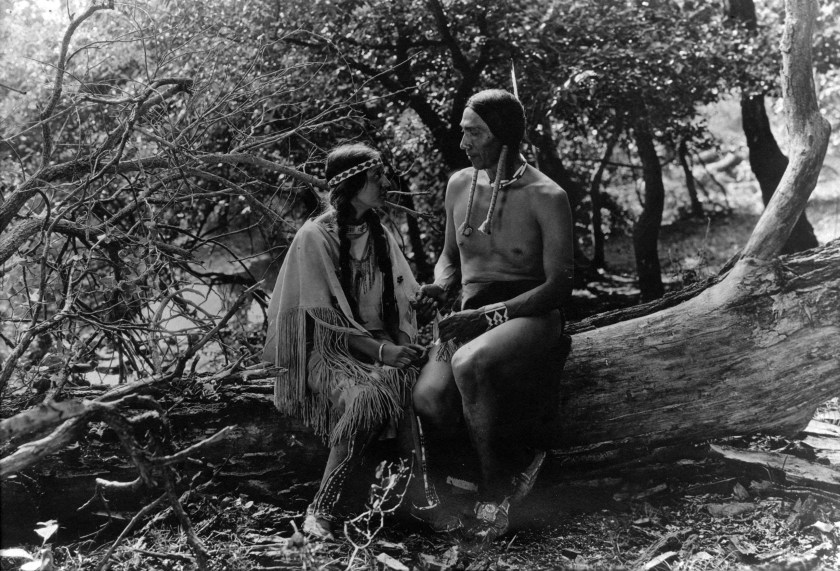
The Plot: Kiowa tribe member Daughter of Dawn (Esther LaBarre) wants to marry the brave hunter White Eagle (White Parker), but her father the Chief (Hunting Horse) wants her to consider the more powerful Black Wolf (Jack Sankadota). When Black Wolf learns that Daughter of Dawn is not interested in him, he plots with the Chief of the Comanche tribe (Belo Cozad) to steal the Kiowa’s horses and women. But this love triangle has four sides, as Black Wolf is oblivious to the adoration fellow Kiowa Red Wing (Wanda Parker) has for him. All this, plus a well-documented look at the Plains Indian lifestyle of the early 20th century, complete with a buffalo hunt!

Why It Matters: The NFR calls the film “a priceless record of Native-American customs, traditions and artifacts of the time” and mentions its then-recent restoration by the Oklahoma Historical Society.

But Does It Really?: This film made it to the NFR the quote-unquote easy way: be a silent film that is presumed lost for decades only to be rediscovered and restored with funding by the National Film Preservation Foundation. The film’s 2012 restoration no doubt led to its 2013 inclusion, but that’s all beside the point: “Daughter of Dawn” would have made the list anyway because of its historical significance. The film is 80 minutes of the Kiowa and Comanche tribes, with a cast comprised entirely of Native Americans, who brought their own clothing and artifacts for authenticity. As a film it’s a bit on the slow side, but at the end of the day you have a decent film and an indispensable historical document. “The Daughter of Dawn” deserves to be on this list, perhaps more so than some of the Registry’s more recognizable titles.

Everybody Gets One: Not a lot of information out there about the cast and crew, but this essay by Oklahoma History teacher Leo Kelley gives a bit of information on writer, director, and “interesting character” Norbert Myles. Myles started off as an actor who worked with practically every major silent film studio before getting “blackballed” from Hollywood for clashing with too many studio heads. In 1919, Myles was persuaded by filmmaker Richard Banks to direct a film for Banks’ Texas Film Company based on a Comanche legend Banks had been told.

Wow, That’s Dated: This whole movie features “women as property” as a major plot point. Also, buffalo! Look at all the buffalo! We screwed that one up for sure.

Take a Shot: Daughter of Dawn gets her name because she was born as the sun rose. By that logic, my name would be “Son of Right-After-Lunch”.

Other notes

  • A quick word about the restored print: either the original intertitles were missing or in poor condition, so they have all been replaced, using text from the shooting script to fill in the gaps. This includes the film’s prologue text, found on the front page of the script, thanking Richard Banks for his “knowledge of the Indian…gained during the twenty-five years that he lived with them”.
  • Not a lot is known about the cast, except that the actors playing White Eagle and Red Wing are the children of Quanah Parker, the “Last Chief of the Comanche”.
  • As for that beautiful landscape, the entire film was shot in the Wichita Mountains of Oklahoma.
  • The Chief is first referenced as being the “Father of Daughter of Dawn”. Any more relatives and we’ll need a flowchart.
  • Why do they keep calling them “ponies”? Those are full-grown horses, and that is false advertising.
  • Nice illustrations; were those part of the original intertitles?
  • Six years after “The Bargain”, the filmmakers of “The Daughter of Dawn” figured out how to film day-for-night: just tint the film dark blue afterwards.
  • Speaking of, I like the golden tint the rest of the movie gets. Gives it a sepia-tone feel, like you’re out in the sun alongside the characters.
  • My god, these intertitles are on screen forever! How slowly did people read back then? This whole movie could have been over in 20 minutes!
  • My favorite part about this movie is there isn’t a single white character. No Kevin Costner to play white savior, and no settlers pillaging the land. The Kiowa and Comanche tribes have enough problems as it is, thank you very much.
  • White Eagle and Black Wolf have to jump off a cliff to prove their love for Daughter of Dawn? Isn’t that the same process the Puritans used to determine who was a witch?
  • Has anyone else noticed that Daughter of Dawn has become a supporting character in her own movie? This movie should have been called “White Eagle and Black Wolf”.
  • “White Eagle’s physical injuries were soon routed by youth, love, and happiness.” Ah yes, back when you could cure a movie character with intertitles.
  • Am I watching the Comanche attack in real time? Pick it up everybody, it’s a movie!
  • “The Daughter of Dawn” is not without its faults, but it’s still better than the silent version of “Last of the Mohicans” on this list.
  • Wow, the credits were able to identify not only the cast, but also many of the allegedly hundreds of extras utilized during production. As I always say, there is no substitute for thorough research. Well done, Oklahoma Historical Society.

Legacy

  • How much of a legacy can a film that went missing for 92 years have? Hopefully the rediscovery is just the beginning of this film’s influence.

#2) The Godfather (1972) – Part II

b51716352822063ed92a43931022f7fd

Previously on #2) The Godfather (1972)… 

Other notes

  • The second half is when James Caan and Robert Duvall really get to shine. Caan has the flashier part, and most of his scenes were cut, but he is a joy to watch as he fully inhabits Sonny. Duvall doesn’t get a lot to do, but he makes the most of it, and the scenes where Tom and Sonny are at each other’s throats feel like a release for the character rather than unnecessary theatrics. The only better performance these two gave was pretending to be happy Joel Grey won their Oscar.
  • The scenes in Sicily offer a literal change of scenery for the film. That being said, Michael and Apollonia have one of the weirder “How We Met” stories. Side note: Simonette Stefanelli was 16 during production. Ick.
  • How long has Connie been pregnant? I’m expecting her to birth an elephant at the end.
  • The scenes of Carlo beating up Connie could not have been fun to shoot, especially if your brother is directing the scene. Thanksgiving at the Coppola household must have been rough that year.
  • And this is why people hate tollbooths. If only Sonny had FasTrak.
  • I think this movie’s alternate title was “A Comprehensive Guide to Ethnic Slurs”.
  • Diane Keaton tries her best, but I just don’t understand why Kay would still want to be with Michael. He’s given her plenty of red flags regarding the family business, and he was back in America for a year before he contacted her. Oh, and HE MARRIED ANOTHER WOMAN. Maybe it’s fleshed out more in the novel, but I question Kay’s motives.
  • Among the film’s other counts of “Seriously, Oscars” are the lack of nominations for Art Direction and Cinematography. Though it turns out that snubbing the brilliant camerawork of Gordon Willis would become an annual tradition at the Oscars (he was only nominated twice – “Zelig” and “The Godfather Part III” – before finally receiving an honorary Oscar in 2009).
  • The juxtaposition between the baptism and the five families being taken out is always a compelling viewing experience. Apparently it didn’t come together until Bach’s “Prelude and Fugue in D major” was added in. Did Bach score any other films?
  • That last shot always gives me chills. There was one final scene in the original cut (Kay praying for Michael in a church, the final scene in the novel), but ending it with the door closing is the perfect choice. Best “Searchers” homage ever.

Legacy

  • “The Godfather” immediately became a runaway hit and a cultural milestone in film. Many filmmakers have cited “The Godfather” as an influence on their careers, but the film did, however, further the stereotype of all Italians being shady mobsters. As someone of Italian descent I am here to tell you; it’s easier to connect me to Kevin Bacon than to the mob.
  • Early response to the film was so strong, a sequel was commissioned before the first one was released. Coppola and Puzo took a subplot from the novel about young Vito’s rise to power, fleshed it out with an original plotline continuing Michael’s dealings in Nevada, and bada-bing, the best sequel ever made.
  • The less said about “The Godfather Part III”, the better.
  • This is the movie that put Francis Ford Coppola on the map, so we have “The Godfather” to blame for “Captain EO”.
  • Everybody’s career benefited from the success of “The Godfather”. Pacino, Duvall, and Keaton all became Oscar winners/screen legends, Caan spent the ‘70s as a movie star and has been in demand ever since, Shire went on to become “Yo, Adrian” in “Rocky”, and Brando…kept on being Brando.
  • Speaking of, Brando rarely talked about his participation in “The Godfather”, but did take the time to spoof his own performance in 1990’s “The Freshman” (not the Harold Lloyd one).
  • “The Godfather” premiered on TV in November 1974, a month before “Part II” hit theaters. In November 1977, both films were re-edited in chronological order with over an hour of additional footage to become the miniseries “The Godfather: A Novel for Television”.
  • Mario Puzo wrote a few follow-up novels that took place in and around the events of the film. The first novel, 1984’s “The Sicilian”, occurs during Michael’s exile in Sicily. The subsequent film version deleted Michael for copyright reasons, and like many a Michael Cimino film, “The Sicilian” was critically savaged, but not without its supporters.
  • For the film’s widespread influence on popular culture, see “Scorsese, The Films of Martin”.
  • Of course without “The Godfather” we wouldn’t have “The Sopranos”. The strip club Tony Soprano conducted business in was called the “Bada Bing”, after James Caan’s line in the film.
  • So many parodies, where to begin? I’ve always been partial to Dom DeLuise’s cameo in “Robin Hood: Men in Tights”.
  • “The Simpsons” has spoofed “The Godfather” many times, including once with special guest star James Caan.
  • One of my personal favorites is this sketch from “Late Night with Conan O’Brien” featuring Robert Duvall and Conan regular Abe Vigoda.
  • Practically every line from “The Godfather” has been quoted and referenced, many of them becoming part of our lexicon. Look no further than 1998’s “You’ve Got Mail”.
  • It amazes me how many films in the Registry inspired video games. “The Godfather” made its way to Xbox and PlayStation 2 in 2006, with Duvall, Caan, Vigoda, and a posthumous Brando all reprising their roles. Both Coppola and the Mario Puzo estate expressed their dislike of the project.
  • And last but not least, the infamous horse’s head (a real head purchased from a dog food company) was auctioned off in 2013 for upwards of $30,000. The photo used for the lot description is the one I use for the blog.

Further Listening: Special mention to “Che La Luna Mezzo Mare”, the song Mama Corleone sings at Connie’s wedding. The Lou Monte recording is the closest I ever got to embracing my Italian heritage as a child. Enjoy.

#2) The Godfather (1972) – Part I

0000293232

#2) The Godfather (1972)

OR “Vito Power”

Directed by Francis Ford Coppola

Written by Coppola and Mario Puzo. Based on the novel by Puzo.

Class of 1990

This is a revised and expanded version of my original “Godfather” post, which you can read here.

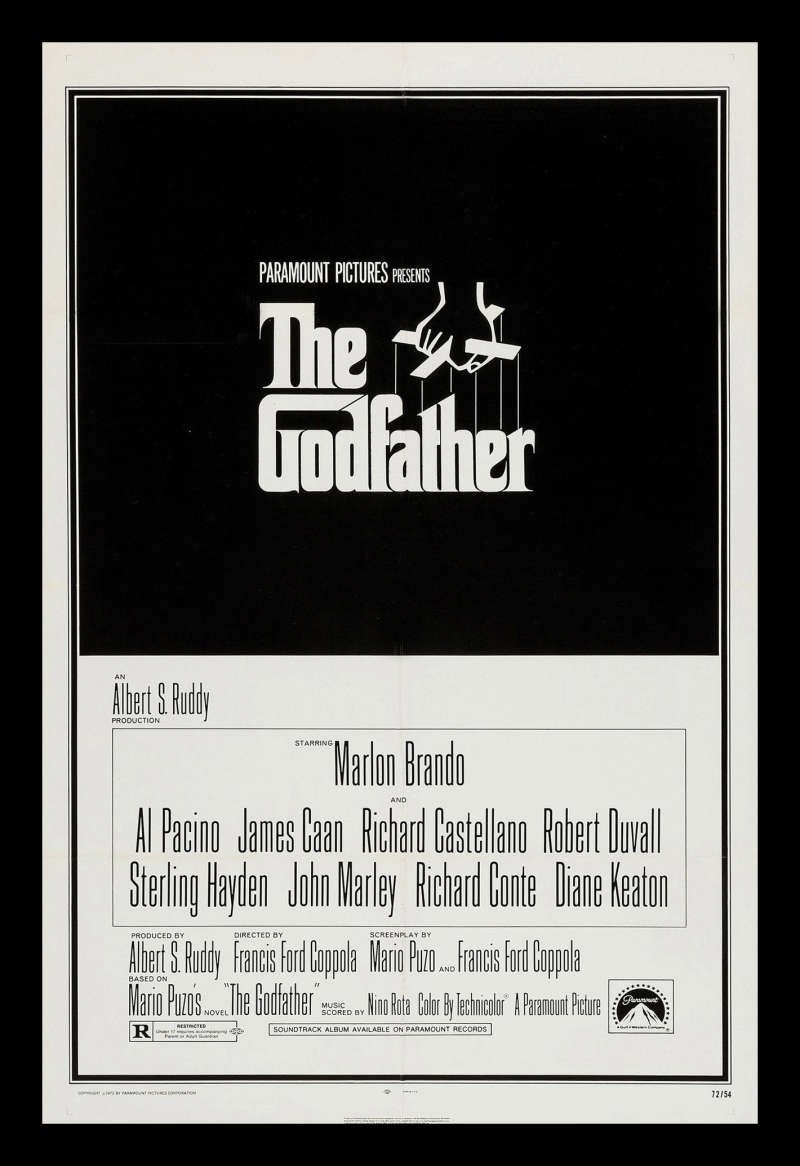
The Plot: Don Vito Corleone (Marlon Brando) is the respected head of a notorious crime family in 1945 New York. After an assassination attempt on Vito, his hotheaded son Santino, aka “Sonny” (James Caan), takes over as Don, and a war between the five major crime families is imminent. Vito’s youngest son Michael (Al Pacino) wants nothing to do with the family business, but just when he thinks he’s out, they pull him back in (never mind, that’s later).  Rounding out the cast are Robert Duvall as family consigliere Tom Hagen, John Cazale and Talia Shire as Corleone siblings Fredo and Connie, and Diane Keaton as Michael’s girlfriend Kay who never learns to not question the business.

Why It Matters: The NFR states that the film “ranks in the highest echelons of filmmaking” and praises Coppola, cinematographer Gordon Willis and composer Nino Rota. An essay by film critic Michael Sragow is a tribute to this film and its sequel.

But Does It Really?: Yes. Moving on to “Shout Outs”…

But seriously, I have nothing to say about this film that you haven’t heard before. “The Godfather” is as perfect as filmmaking gets. Every aspect of this movie is a master class in subtlety. The direction and cinematography never draw attention to themselves, but a change to either would be film blasphemy. Brando’s iconic and easily imitated work is without peer, and it’s remarkable to watch the likes of Pacino, Caan, and Duvall all hold their own with the legend. I can’t throw enough superlatives at “The Godfather”: perfect, engaging, groundbreaking, flawless, and deserving of its reputation as one of the great American films.

Shout Outs: No direct shout-outs, but honorable mention to “The Bells of St. Mary’s”, the sequel to future NFR entry “Going My Way”. A sequel that’s as good as the original? What a ridiculous notion.

Everybody Gets One: Most of the team will be back for “Part II”, but making their only appearance here are actors Richard S. Castellano (“Leave the gun, take the cannoli.”) and Alex Rocco (“I’m Moe Greene!”). Producer Albert S. Ruddy was selected by Paramount due to his track record of bringing films in on time. He didn’t produce “Part II” because he was busy with his magnum opus: “The Longest Yard”.

But Not Everybody Bats 1000: John Cazale only appeared in five films, but all of them have made the NFR (as well as receiving Best Picture nominations): Godfathers 1 & 2, “The Conversation”, “Dog Day Afternoon”, and “The Deer Hunter”. A fitting legacy to an actor who left us much too soon.

Seriously, Oscars?: The most successful film of all time up to that point, “The Godfather” led the Oscar pack with 11 nominations. This was bumped down to 10 when Nino Rota’s Original Score nomination was revoked due to Rota using portions of his score from 1958’s “Fortunella” in “The Godfather”. On Oscar night, “The Godfather” lost in most categories (including Best Director) to Bob Fosse’s equally impressive albeit flashier “Cabaret”. But “Godfather” prevailed in the end, winning Best Picture, Adapted Screenplay, and Actor for Marlon Brando. If I remember correctly, Brando sent a proxy.

Other notes

  • Speaking of the Oscars, both Brando and Pacino are in that gray co-lead area the Oscars have never been good at categorizing. Although newcomer Pacino had more screentime, he was nominated for Supporting Actor (alongside Caan and Duvall), while established star Brando was campaigned as the lead. Pacino disliked this strategy and boycotted the ceremony.
  • Brando was 47 when he filmed “The Godfather”, a tad too young to be playing a man from his mid 50s through his mid 60s. But thanks to Brando’s committed performance after a decade of phoning it in (and the inspired makeup design by Dick Smith and Philip Rhodes), you cannot imagine anyone else playing Vito. The other strong contenders were Laurence Olivier and Ernest Borgnine, whose performance styles would have clashed with the younger, primarily Method actors.
  • The wedding sequence takes its time, but it sets up the rest of the film beautifully. Without too much expository dialogue, Coppola and Puzo establish all the major characters, several of the minor but integral characters, and showcase the importance of family and community within the organization. When dialogue is needed to clarify some points, Diane Keaton’s Kay makes a lovely audience surrogate.
  • It’s easy to cry nepotism when you cast your sister in a movie, but when your sister is as good as Talia Shire it doesn’t matter. Also making appearances throughout the film are Coppola’s father Carmine, mother Italia, wife Eleanor, sons Gian-Carlo and Roman, and daughter Sophia, who was born during the production!
  • Today on “Stating the Obvious”: my god, Pacino’s good in this. Look no further than Michael explaining to Kay how Vito helped Johnny Fontane get out of his recording contract. You can see Michael’s internal struggle in Pacino’s eyes. Brilliant.
  • No wonder “I’m gonna make him an offer he can’t refuse” caught on; they say it like eight times in the movie.
  • What happens to Don Vito’s cat? It disappears after the wedding. Hope it didn’t betray the family. Though I’m sure the cat won’t mind if it “sleeps with the fishes”.
  • 33 minutes in, folks. That’s when the magic happens. Khartoum did not die in vain.
  • Hey, another movie for my “Die Hard” Not-Christmas list!
  • Pacino is so quiet throughout this film. Is that why he yells in all his other movies?
  • Coppola recognizes that the best novel-to-film adaptations can be episodic, as long as each episode builds upon the previous one. In the hands of a lesser screenwriter/director, these would have been unrelated incidents involving the same characters, but Coppola keeps the various character arcs front and center throughout the entire film.
  • Ah yes, Sterling Hayden as Captain McCluskey. No one’s guarding Vito at the hospital because Hayden is busy preserving those precious bodily fluids.
  • Dick Smith, you’ve done it again! Between aging up Brando by nearly 20 years and giving Pacino a realistic broken jaw, I can’t believe the Academy didn’t create the Best Make-up category then and there.
  • Another moment where Pacino’s subtle eye acting comes into play: the restaurant scene where he intends to kill Sollozzo and McCluskey. The tension throughout is brilliantly orchestrated, and Pacino takes it to the next level.

This is where the movie was originally supposed to have an intermission, so this seems like a natural stopping point. Click here for Part II (not to be confused with “Part II”; that’s a whole other post).

#309) They Call It Pro Football (1966)

screen shot 2019-01-24 at 9.08.40 pm

#309) They Call It Pro Football (1966)

OR “Sunday Bloody Sunday”

Directed by John Hentz

Written by Steve Sabol

Class of 2012

The Plot: With the merger between the National Football League and the American Football League on the horizon, the newly formed NFL Films presents this epic look at football. With the dramatic narration of John Facenda and a stirring score by Sam Spence, Steve Sabol highlights the gridiron game with such then-revolutionary approaches as telephoto lenses and slow-motion recaps. There are highlights from the most popular teams, players, and games of the era, and yes, instant replays.

Why It Matters: The NFR calls the film no less than “the ‘Citizen Kane’ of sports movies” and praises the creative team, especially John Facenda’s “commanding cadence”. There’s also an essay by AMPAS documentary curator (and presumably football fan) Ed Carter.

But Does It Really?: “They Call It Pro Football” definitely stands on a piece of ground no other NFR entry can claim. It’s always a treat to watch a film whose groundbreaking techniques are so commonplace today you take it for granted. With wall-to-wall coverage of every sport imaginable at our disposal, it’s fascinating to watch Sobal and company create the look of televised sporting events that is still the gold standard. With a long-lasting cultural impact to go along with its innovative aesthetic, “They Call It Pro-Football” is a natural for NFR inclusion and a cinematic home-run slam-dunk touchdown. Come on, you think the guy with the movie blog knows any of this terminology?

Everybody Gets One: Ed Sabol had just founded Blair Motion Pictures when he was hired to film the 1962 NFL Championship Game. Thanks to the persistence of NFL Commissioner Pete Rozelle, Blair Motion Pictures became NFL Films and signed an exclusive deal with the League to film all of their games. With Rozelle’s encouragement, Sabol was allowed to adopt new filming methods of covering the games (up to then football coverage was mostly newsreel-esque wide shots of the field). Sabol also called on the talents of his son Steve to write the film’s narration, inspired by Steve’s love of Rudyard Kipling.

Wow, That’s Dated: The narration mentions the NFL Championship Games, the precursor to the Super Bowl and the NFL-AFL merger of the late ‘60s.

Seriously, Emmys?: “They Call It Pro Football” premiered on TV as part of the series “NFL Action”. That episode begins with Pat Summerall listing the awards the film has won, including Grand Prize at Cortina Film Festival and First Prize at the International Short Film Festival in Oberhausen, Germany. I could find evidence of “Pro Football” competing in Oberhausen, but nothing about its wins. Seriously, Internet? For the record, televised sports didn’t have their own Emmy ceremony until 1979. Ed and Steve Sabol would both receive Lifetime Achievement Emmys in 2003.

Other notes

  • The narrator is NFL Films’ “Voice of God” John Facenda. A broadcaster and anchorman from Philadelphia, Facenda narrated practically every NFL Films production until his death in 1984. I recognized him from the industrial short “Progress Island U.S.A.” about the booming Puerto Rico economy of the early ‘70s. Progress!
  • For those of us that are a little football-challenged, the film gives a quick recap of the major positions (quarterback, wide receiver, lineman) that’s not condescending to viewers who already know these terms.
  • How are they still the Washington Redskins? Even at the time of this film’s release, there were protests from Native American communities. Didn’t “Kimmy Schmidt” solve this problem once and for all? [UPDATE: As of 2022, the team is now called the “Washington Commanders”.]
  • I was very close to listing a reference to the L.A. Rams under “Wow, That’s Dated”, knowing that they moved to St. Louis in the mid-90s, only to learn that they moved back to L.A. three years ago. Turns out even the little I do know about football is outdated.
  • Among the few players’ names I recognized were Fran Tarkenton (“That’s Incredible!”), Gale Sayers (“Brian’s Song”), Johnny Unitas (“The Simpsons”), and Bart Starr (Again, “The Simpsons”).
  • That’s Vince Lombardi going over his “Packer sweep” maneuver on the chalkboard. I didn’t recognize him without his trademark fedora.
  • You don’t need to follow football to admire the athleticism required. The highlights presented here are still fun to watch.
  • The film showcases my favorite part of football; watching the head coaches cursing on the sidelines.
  • There’s nothing like watching slow-motion instant replay injuries. The games are over 50 years old, but the assailments are still cringe-worthy.
  • While exciting to watch, all of this football seems less intense than today’s game. I wonder how much of that is the presentation rather than the actual game?
  • What is the title of this film in Europe? “They Call It Pro Pseudo-Rugby”?

Legacy

  • The work of both Ed and Steve Sabol, as well as the tireless efforts of Pete Rozelle, helped propel football to become baseball’s rival for America’s pastime. Every dramatized reference to the games and players started with “They Call It Pro Football”.
  • Ed Sabol was inducted into the NFL Hall of Fame in 2011, making him one of the rare non-athletes or coaches to do so.
  • I’m gonna trace this film’s legacy all the way to those “Bad Lip Reading” videos.
  • This film also paved the way for America to look deep within our own national conscience and ask ourselves, “ARE YOU READY FOR SOME FOOTBALL?”