#304) Dance, Girl, Dance (1940)

dance_girl_dance_xlg

#304) Dance, Girl, Dance (1940)

OR “What’s Up, Tiger Lily?”

Directed by Dorothy Arzner

Written by Tess Slesinger and Frank Davis. Story by Vicki Baum.

Class of 2007

No trailer, so here’s Maureen O’Hara and Lucille Ball dancing the hula!

The Plot: Judy and Bubbles (Maureen O’Hara and Lucille Ball) are two chorus girls with aspirations of making it as dancers. Judy is studying to be a ballerina with the esteemed Madame Basilova (Maria Ouspenskaya), but blows a chance to audition for the renowned dance producer Steve Adams (Ralph Bellamy). Bubbles finds success as a burlesque stripper with the stage name “Tiger Lily”, and procures work for Judy. The catch: Judy’s ballet will serve as a stooge for Tiger Lily, with a male audience that will objectify her as she dances. There’s also a subplot about Jimmy (Louis Hayward), a potential suitor for both women, because ‘40s audiences weren’t ready for this much emotional complexity and female empowerment.

Why It Matters: The NFR gives the film (and director Dorothy Arzner) its proper historical context, and calls the film “a meditation on the disparity between art and commerce.” There’s also a thoughtful essay by film critic Carrie Rickey.

But Does It Really?: “Dance, Girl, Dance” is exactly the kind of movie I’m looking for while working on this blog. There are always the indisputable classics, but I love when the NFR makes room for a well-made movie that was ignored in its day. In addition, the film’s NFR induction is a representation of Dorthy Arzner, the only female director in the Hollywood studio system. “Dance, Girl, Dance” is the kind of female-driven character study that was common in the ‘70s and ‘80s, trapped in the cookie cutter production line of a ‘40s studio film. I thoroughly enjoyed discovering this movie, and I’m delighted “Dance, Girl, Dance” has found a place on the list.

Shout Outs: Be on the lookout for a quick shot of “Snow White and the Seven Dwarfs” playing at a Times Square movie house.

Everybody Gets One: Raised in Los Angeles, Dorothy Arzner was familiar with the film industry (her parents’ restaurant was frequented by the likes of Mary Pickford and Mack Sennett), but her career goal was to become a doctor. After a disheartening experience working in an ambulance unit during WWI, Arzner changed course and found a job at the Paramount script department. She worked her way to editor and eventually director with 1927’s “Fashions for Women”. Her being the only female director in a sexist system didn’t seem to matter as long as her films did well at the box office.

Wow, That’s Dated: We have a BLACKFACE WARNING, this is not a drill!  Two of the ballet dancers appear in blackface during the troupe’s first number.

Seriously, Oscars?: Nothing. Not a single nomination. RKO’s big Oscar contender that year was Ginger Rogers’ post-Fred vehicle “Kitty Foyle”. Dorothy Arzner never received an Oscar nomination during her career, but did receive her share of awards and tributes when her work was rediscovered in the ‘70s.

Other notes

  • First things first: that is one misleading title. I went into “Dance, Girl, Dance” assuming it would be a frivolous musical comedy. I’m delighted I was wrong, but still, I can only imagine how misled 1940 audiences must have felt. The film’s working title was the slightly better “Have It Your Own Way”, which I’m claiming for my script about the founding of Burger King.
  • Both of the film’s leading ladies were not the icons they are known as today. Maureen O’Hara had just moved to Hollywood following her breakthrough performance in “The Hunchback of Notre Dame”, and Lucille Ball was an RKO contract player/radio performer trying to catch a break.
  • Lucy’s a natural blonde!? What else from my pop culture knowledge is a lie?
  • Jimmy says Judy looks “like a star. The one that’s shining when the others have all quit.” That may be the best description of Maureen O’Hara.
  • Shoutout to children’s book character/effeminate Disney cartoon Ferdinand the Bull. At the time, Disney features were distributed by RKO, so the plush Ferdinand is nice little piece of synergy.
  • Maureen O’Hara confessed years later that she wasn’t much of a dancer, and it’s pretty obvious that she’s doubled in the wide shots.
  • Dorothy Arzner’s partner Marion Morgan choreographed the dance routines in this film. In an era when homosexuality was never discussed or acknowledged, Dorothy and Marion maintained a 40-year partnership.
  • Lucille Ball is being sexy and I don’t know how I feel about it. Is this why Ricky never let her be in the show?
  • Unsurprisingly, “Dance, Girl, Dance” passes the Bechdel test left, right, and center.
  • American burlesque was on its way out by 1940, “Dance, Girl, Dance” may be its dying breath.
  • Is this what made Lucy think she could do “Wildcat” and “Mame”?
  • Like many proto-feminist films, our two female leads fight over a man. It does take some of the bite out of the film’s proceedings.
  • Jimmy says multiple times that he is enamored by Judy’s blue eyes. Good thing this is a black and white movie: Maureen O’Hara’s eyes are green.
  • For those curious about the film’s progressive viewpoints, look no further than the scene where Judy scolds the primarily male audience for objectifying her. Right on, Maureen!

Legacy

  • “Dance, Girl, Dance” was a critical and commercial flop, and Dorothy Arzner only made one more film, 1943’s “First Comes Courage” before leaving the studio system for good. She divided her time between directing commercials and other short films, and teaching film at UCLA.
  • Fortunately, Dorothy Arzner lived long enough for “Dance, Girl, Dance” to be reappraised by film students during the feminist movement of the early ‘70s.
  • Perhaps the film’s most impactful legacy: it was during production that Lucille Ball met her future husband Desi Arnaz on the RKO lot. Years later, when RKO folded, the sound stages were sold to Lucy and Desi’s production company: Desilu.
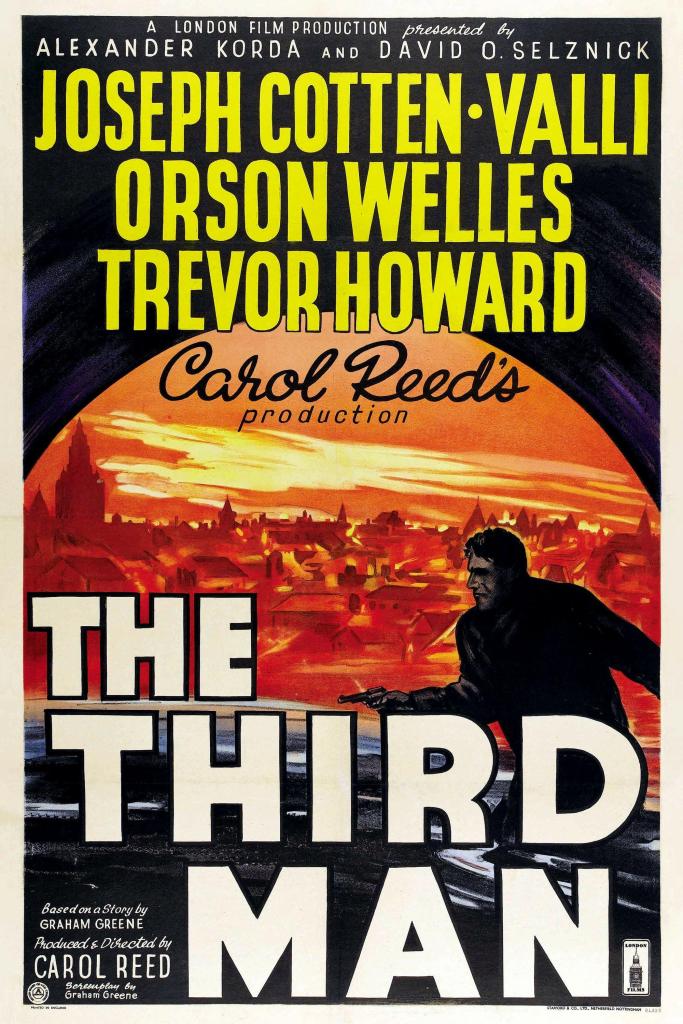
The Third Man (1949)

It’s the two-year anniversary of The Horse’s Head! I’m celebrating with a classic film that, despite being ineligible for the National Film Registry, has somehow made it on to various American Film Institute Top 100 lists. And it’s appropriate that a film with this mystery hanging over it should itself be one of the best mysteries ever made. 

Oh, and spoilers ahead.

mv5byje2otdhmwutogjlmy00zdvilwizzjgtyjzkzgzmmdzjymeyxkeyxkfqcgdeqxvynzkwmjq5nzm@._v1_

The Third Man (1949)

OR “I’m Just Wild About Harry”

Directed by Carol Reed

Written by Graham Greene. Based on his novella.

The Plot: American pulp novelist Holly Martins (Joseph Cotten) arrives in Allied-occupied Vienna to meet childhood friend Harry Lime (Orson Welles) for a job. No sooner does he arrive that Holly learns Harry has been killed in a car accident. Disappointed with the response of British Police Major Calloway (Trevor Howard), Holly decides to investigate Harry’s death himself. He meets Harry’s girlfriend Anna (Alida Valli) and several other associates, all of whom have differing accounts of Harry’s death. The official version has Harry’s body being carried away by two friends, but once Holly learns that there was an unidentified third man at the scene, the mystery begins to unravel. Come for the international intrigue, stay for the zither music.

The mystery of “The Third Man” is so wonderfully atmospheric that I genuinely didn’t know where the film was going. Greene creates an endlessly fascinating mystery, and Carol Reed (along with cinematographer Robert Krasker) adds additional layers that result in a dizzying viewing experience. This attention to detail makes the film endlessly re-watchable, and therefore destined to endure. “The Third Man” is definitely more British than American, but unquestionably a classic.

Everybody Gets One (Even If They’re Not On The List): Carol Reed started in film as a second-unit director for Associated Talking Pictures (now Ealing Studios). One of Reed’s earliest fans was then-film critic/future legendary novelist Grahame Greene, with whom Reed collaborated with on 1948’s “The Fallen Idol”. The film was a hit, and producer Alexander Korda immediately put them to work on what would eventually become “The Third Man”.

Seriously, Oscars?: Academy members were fans of “The Fallen Idol”, and nominated “The Third Man” for three Oscars at the 1951 ceremony. Carol Reed lost Best Director to Joseph L. Mankiewicz for “All About Eve”, while the Editing prize went to “King Solomon’s Mines”, but “Third Man” took home Best Cinematography for Robert Krasker, the first Australian to win in that category. Surprisingly, Anton Karas’ zither score didn’t make the cut.

Other notes

  • A quick word on the nationality of “The Third Man”: It’s a British film, made by a British company, directed and written by Brits. The AFI’s qualifier is that one of the producers was American David O. Selznick, who was responsible for the casting of Cotten and Welles. The NFR will usually give a pass to a movie if an American studio was a co-producer (see David Lean’s entries), but even by that standard, this would be a stretch. Nice try, AFI, but we can’t claim this one.
  • That’s Carol Reed in a voiceover as perhaps filmdom’s most unreliable narrator. Not only does he never show up again, he’s not even in every version of the movie (Joseph Cotten re-recorded the narration for the American release).
  • The zither is an interesting choice for the score. I’m not sure it works for the more dramatic moments, but overall its jauntiness is an excellent counterpoint to the film’s darkness.
  • In addition to the score, Krasker’s cinematography aids in the film’s overall disorienting feeling. Many of the dialogue scenes are filmed with Dutch angles, leaving everything off-center and tilted. Amazingly, it’s never too distracting from the story. Well done Krasker.
  • Pickering! M! This film is a plethora of British character actors!
  • Maybe it’s just the international setting, but Joseph Cotten seems even more American than usual in this film.
  • Alida Valli was cast as Anna at the insistence of Selznick, who thought he had found the next Ingrid Bergman. Valli left Selznick’s domineering grasp shortly after “The Third Man”, and was a successful film star in her native Italy.
  • If nothing else, this film should be all the encouragement you need to learn a second language. How much easier would Martins’ life had been if he spoke German?
  • And then arrives Orson Welles, and one of the best damn introductions in any movie. Welles’ Harry immediately takes over the film – as if he was the main character this whole time – and Welles’ star power carries the limited role’s dramatic weight with ease.
  • The scene on board the Wiener Riesenrad is iconic I’ll grant you that, but for the record, Ferris wheels are the worst.
  • As the Swiss are quick to point out, cuckoo clocks aren’t from Switzerland, but rather the Black Forest of southern Germany. Oh well, it’s still a great speech, and words with k’s are funny.
  • This is another movie that would not hold up well if everyone had cell phones and internet access.
  • The climactic chase through the sewers is wonderfully suspenseful, and makes me glad that smellovision isn’t a thing anymore.
  • The final shot takes its time, but is worth the wait. Graham Greene objected to Carol Reed altering the novella’s ending, but he relented, and eventually agreed that Reed’s decision was “triumphantly right”.

Legacy

  • “The Third Man” was the biggest film of the year in England and a success in the United States as well. Unsurprisingly, Austria didn’t care much for a foreign film that portrays Vienna as a war-torn underworld run by racketeers.
  • Just a reminder that Carol Reed, the director of “The Third Man”, directed “Oliver!”. And he won an Oscar for that, and not “The Third Man”.
  • Relative unknown Anton Karas became a superstar thanks to “The Third Man”, and his “Third Man Theme” became a chart-topper in both England and America.
  • Orson Welles reprised the role of Harry Lime on the radio drama “The Adventures of Harry Lime”. Both this and the subsequent “Third Man” TV series starring Michael Rennie served as prequels to the film.
  • Incidentally, Welles used his “Third Man” paycheck to help finance his film adaptation of “Othello”.
  • “Pinky and the Brain” put Maurice LaMarche’s go-to Orson Welles impression to work in their parody “The Third Mouse”.
  • And of course the film’s greatest cultural impact: Harry Lime is the namesake of Joe Pesci’s character in “Home Alone”.

Two years, over 300 movies, and I’m not even halfway through yet! Here’s to Year Three.

Happy Viewing,

Tony

Further Listening: Ladies and gentlemen, The Beatles!

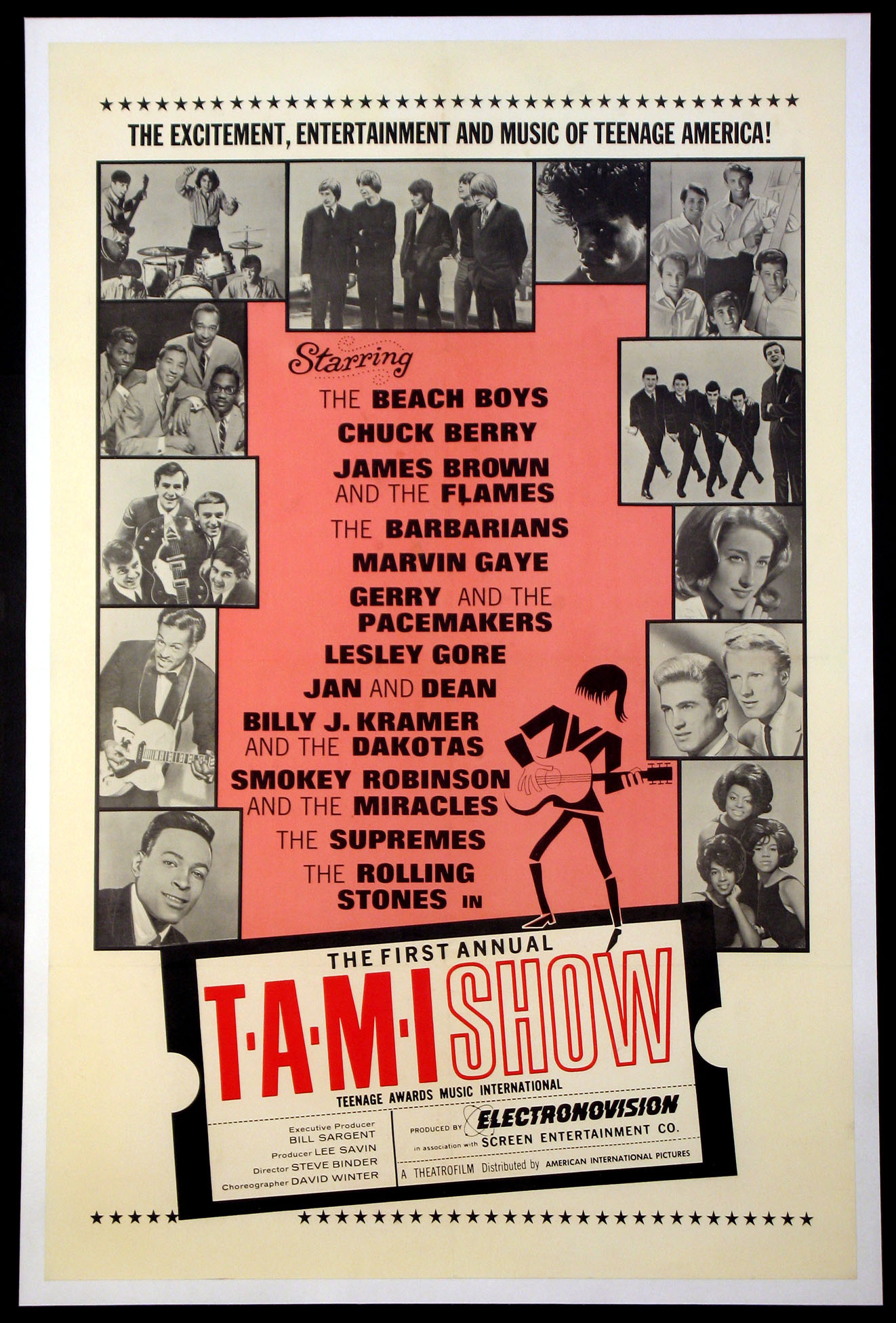
#303) The T.A.M.I. Show (1964)

21062

#303) The T.A.M.I. Show (1964)

OR “American Grandstand”

Directed by Steve Binder

Class of 2006

The Plot: Live on tape from the Santa Monica Civic Auditorium, it’s the biggest concert event of 1964! Filmed with the modern miracle of Electronovision, Teenage Awards Music International presents, in order of appearance: Chuck Berry! Gerry and the Pacemakers! Smokey Robinson and the Miracles! Marvin Gaye! Lesley Gore! Jan and Dean! The Beach Boys! Billy J. Kramer and the Dakotas! The Supremes! The Barbarians! James Brown and the Famous Flames! And The Rolling Stones! It’s the best of the early ‘60s music scene, minus that one band from Liverpool whose asking price is waaaay above this show’s budget!

Why It Matters: The NFR calls it “quite possibly the greatest rock and rhythm-and-blues concert on film”. The essay by rock/film expert David E. James focuses on director Steve Binder and the film’s Civil Rights-era racial unity.

But Does It Really?: “The T.A.M.I. Show” is the rare movie on this list that meets all three NFR criteria: culturally it’s an encapsulation of the Motown/British Invasion/Surf sounds of the ‘60s, historically it’s a representation of Electronovision, and aesthetically it’s just so damn entertaining. In short, “The T.A.M.I. Show” is the greatest American film ever made, and I will fight you on this one.

Everybody Gets One: Ev-er-y-bo-dy. Special Mention goes to future Oscar nominee Diana Ross; though God help us all if “The Wiz” ever makes the NFR cut.

Wow, That’s Dated: Nothing. This ‘60s shindig is as timeless as “Casablanca”.

Seriously, Oscars?: I doubt that “The T.A.M.I. Show” would have been eligible for an Oscar, but coincidentally, the 1964 Oscars were held at the same venue as “T.A.M.I.”: The Santa Monica Civic Auditorium. That’s right, some of these rabid teenagers are sitting in the same seats one day occupied by the likes of Rex Harrison and Julie Andrews.

Other notes

  • “The T.A.M.I. Show” was planned to be the first in a series of concert films whose proceeds would go to providing students with music scholarships. Sadly, that never happened, making the “T.A.M.I.” acronym completely irrelevant.
  • Executive producer Bill Sargent not only came up with the concept of “T.A.M.I.”, but the process of Electronovision as well. In essence, Electronovision was high-definition video that could be instantly converted to film without losing picture quality. Electronovision didn’t catch on, but the technology it inspired endures.
  • Is Chuck Berry up first so that all the other bands know who they’re stealing from? And where’s his cousin Marvin during all of this?
  • From “Maybelline” to Vaseline: what’s with the fuzzy camera lens on Gerry Marsden?
  • Smokey Robinson and the Miracles were famous for a reason. Even in this brief appearance, they know how to put on a show.
  • Among the background dancers are Teri Garr (another future Oscar nominee) and Toni Basil (this show’s assistant choreographer).
  • Marvin Gaye’s post-Motown work is better, but “Can I Get a Witness” is pretty damn flawless.
  • How much hairspray was used in this concert? Lesley Gore alone is probably the reason we’re all doomed.
  • If all of Lesley Gore’s songs are about the same guy, I am very concerned for her well-being. “Maybe I know that he’s been untrue/but what can I do?” Leave his ass, girl!
  • “Sidewalk Surfin’” is about that brand new phenomenon called skateboarding! And yes, it’s “Catch a Wave” with re-written lyrics, but Jan and Dean did so with Brian Wilson’s permission.
  • Of the British groups on the roster, Billy J. Kramer and the Dakotas are the most obvious Beatles copycats. Case in point: Lennon & McCartney wrote three of the songs on their set list.
  • The screaming teenage girls in this audience are experiencing Beatlemania-mania: Not Beatlemania, but an incredible simulation.
  • You can definitely see Diana Ross emerging as the Supremes’ breakout star. There’s even an extended close-up of her during “Where Did Our Love Go”. Did Berry Gordy sneak into the control booth?
  • The Barbarians were the shortest-lived of the groups featured in “T.A.M.I.”, lasting from 1964 to 1967. I guess we weren’t ready to revisit the Dark Ages back then.
  • James Brown’s performance is all the proof you need that he was indeed “The Hardest Working Man in Show Business”. The volcanic energy he possesses in his performance is unparalleled. Plus we get “Please, Please, Please” and his legendary cape routine!
  • The Rolling Stones did not want to follow James Brown, but they make a satisfying conclusion to “T.A.M.I.” nonetheless. You can see Mick and Keith’s appeal from the start: they’re the only Brits on the program not mimicking the Beatles. And 55 years later, time is truly on their side.

Legacy

  • “The T.A.M.I. Show” more or less disappeared after its theatrical run, partly due to copyright issues with the music (notably the Beach Boys). Bootleg copies kept the film’s legacy going, and “The T.A.M.I. Show” finally got a proper DVD release in 2010, four years after its NFR induction.
  • Director Steve Binder became the undisputed king of filmed concerts thanks in part to “T.A.M.I.”. Follow-up specials included “The Elvis ‘68 Comeback Special”, “Diana Ross Live in Central Park” and…“The Star Wars Holiday Special”?
  • American International Pictures made an unrelated follow-up concert film: 1965’s “The Big T.N.T. Show”, featuring an equally impressive line-up of talent. Footage from both films was combined for the 1984 retrospective “That Was Rock”.
  • Every live HD event owes a debt of gratitude to Electronovision. Bill Sargent tinkered with adding color to the process during the ‘70s, and gave us “Richard Pryor: Live in Concert”.
  • I am not chronicling the post-“T.A.M.I.” careers of every performer in this film. Suffice it to say that between them all, these people/groups have broken up, are still touring, died, become international superstars, found Jesus, left the business entirely, and consumed an unfathomable amount of drugs.

Listen to This: I’ve previously covered the Beach Boys’ and Rolling Stones’ NRR entries, but now we can add to that list Chuck Berry’s “Roll Over Beethoven”, James Brown and the Famous Flames’ “Live at the Apollo”, Marvin Gaye’s “What’s Going On”, Smokey Robinson and the Miracles’ “The Tracks of My Tears”, and The Supremes’ “Where Did Our Love Go”. Still suspiciously absent from the Registry is anything by Lesley Gore.

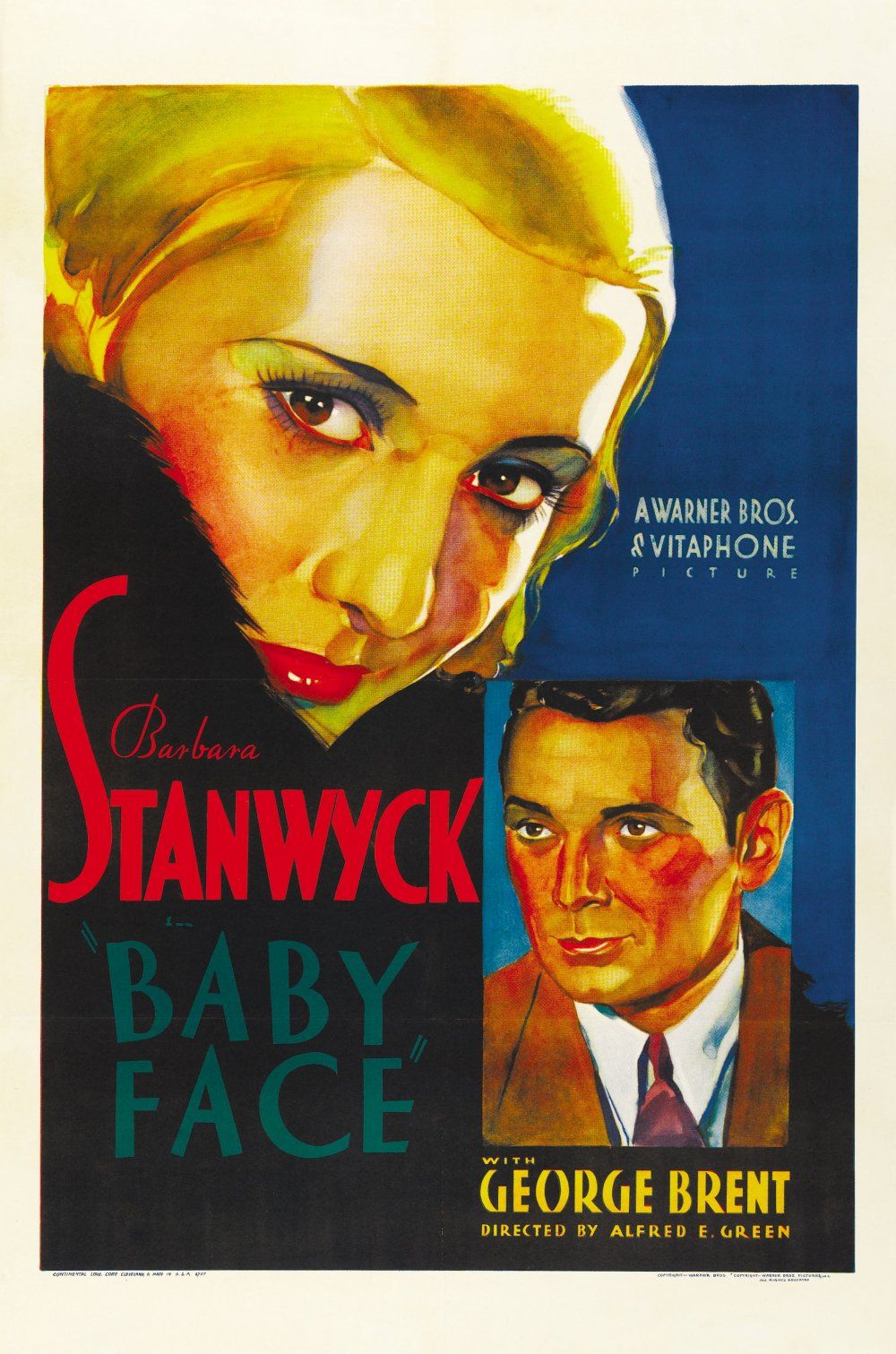
#302) Baby Face (1933)

6e2b7eff037d1d1cb857b01d85656e91

#302) Baby Face (1933)

OR “Cracking the Pre-Code”

Directed by Alfred E. Green

Written by Gene Markey & Kathryn Scola. Story by Mark Canfield (aka Darryl F. Zanuck).

Class of 2005

The Plot: Lily Powers (Barbara Stanwyck) has been subjected to sex with strangers since the age of 14 in order to help out her father’s (Robert Barrat) speakeasy. After his death, Lily is encouraged by her friend Cragg (Alphonse Ethier) and his Nietzschean philosophy to go out and exploit herself in a big city to get what she wants. Lily arrives in New York City and gets a filing job at Gotham Trust, seducing and manipulating every man in the building as she climbs her way to…excuse me, I’ve just been handed something from the New York State Censorship Board. I’ll just read what it…oh dear. Um…forget all of that.

The Plot: Lily Powers (Barbara Stanwyck) has been subjected to very vague abuse from her father (Robert Barret). After his death, Lily is encouraged by her friend Cragg (Alphonse Ethier) to go out and get what she wants by using her strong…morality. Lily arrives in New York City and gets a filing job at Gotham Trust, still seducing and manipulating men, but now there are consequences. After she has met her match in newly elected bank president Courtland Trenholm (George Brent), Lily must heed Cragg’s (recently overdubbed) words that “the price of the wrong way is too great.”

Why It Matters: The NFR calls it “[o]ne of the more notorious melodramas of the pre-Code era” and cites this film as one of the movies that gave us the Production Code. There’s also an informative essay by film professor Gwendolyn Audrey Foster.

But Does It Really?: First off, the main reason this film was inducted was due to the discovery of an original negative of “Baby Face” before it was censored. While a very enjoyable movie, “Baby Face” is on the Registry for what it represents more than for what it actually is. The unaltered version is definitely the superior film, while the cuts and alterations made by Warner Bros. at the behest of the Production Code led to a muddled mess of a film. Luckily, the original cut of “Baby Face” is readily available, and is a hidden gem from the ‘30s whose taboo subject matter and strong lead performance by Barbara Stanwyck can be appreciated generations later. My lingering question: are both versions of this film on the Registry?

Wow, That’s Dated: Your usual ‘30s fare: newsies, telephone operators, the term “permanent” rather than “perm”. But there’s also your usual ‘30s sexism, plus a reference to Chico the maid as “that fantastic colored girl”. Eye-rolls all around.

Take a Shot: A few of Lily’s co-workers refer to her as “Baby Face”, and the 1926 song of the same name plays over the opening credits.

Seriously, Oscars?: No Oscar nominations for “Baby Face” (perhaps due to its censoring). Warner Bros.’ Best Picture contenders that year were fellow NFR entries “42nd Street” and “I Am a Fugitive from a Chain Gang”.

Other notes

  • The whole reason for the film’s editing was that the New York State Censorship Board rejected the film for distribution. Knowing that New York screenings brought in a huge portion of a film’s income, Warner Bros. agreed to alter “Baby Face” to appease the censors. Lily is still quite promiscuous, but now it’s implied she changes because of put-upon morals, rather than natural character development. Also deleted are implications of Lily’s prostitution, and all references to Friedrich Nietzsche. This was the only known version of “Baby Face” until a negative of the pre-release cut was discovered in 2004.
  • Lily sarcastically refers to herself as “a ball of fire”. Not yet, Stanwyck.
  • I’m glad Stanwyck’s performance here is being rediscovered; Lily is an unapologetically strong character (especially for a female lead in the ‘30s) and Stanwyck is clearly relishing the opportunity to hone her “tough-as-nails” screen persona.
  • If you don’t have the time to watch both cuts, all you really need is to watch the two versions of Cragg’s speech. The entire movie is changed in a matter of seconds. You can hear the audio from both in this NPR interview from 2005.
  • Holy crap this train ride scene is steamy. No wonder it got cut.
  • This whole movie has what I call “The GLOW Conundrum”: are Lily’s means for success empowering for women or degrading? A discussion for those far more qualified than I.
  • The other piece of Hollywood lore in this film: a brief appearance by a young John Wayne! It’s interesting to watch the Duke in a performance that’s a far cry from his later, iconic work. And if you ask me, they layered his makeup on pretty thick. He’s practically a ghost.
  • Lily’s rise up the corporate ladder is greatly aided by the fact that every man who works at the bank is an idiotic horndog.
  • Another movie for the “Die Hard” Not-Christmas list!
  • You cannot utter the phrase “a victim of circumstances” without making the Curly noises immediately afterwards.
  • And then Lily gets sent off to Paris and the movie takes a turn. It’s not a bad turn, I guess I just enjoyed Lily manipulating everyone around her so much.
  • A board of directors that take responsibility for their mistakes? Clearly this is a work of fiction.
  • Meanwhile, at a model of Lily’s apartment building…
  • The last bit of censorship comes from a tacked-on “happy” ending. It’s an epilogue from the board of directors (I guess Stanwyck and George Brent were unavailable) reading a telegram about Lily and Courtland starting their new penniless life together in Pittsburgh. Like everything else about “Baby Face”, stick with the original cut.

Legacy

  • While the Motion Picture Producers and Distributors of America had a code of “Don’ts” and “Be Carefuls” at the time of “Baby Face”, films like this one prompted them to create the full Production Code, which would stay in effect until the mid-‘60s. The Code was employed across the country, eliminating the need of censorship on a state-by-state basis.
  • Barbara Stanwyck left Warner Bros. not too long after “Baby Face”, and kept plugging along in film after film until her breakthrough performance in 1937’s “Stella Dallas”.

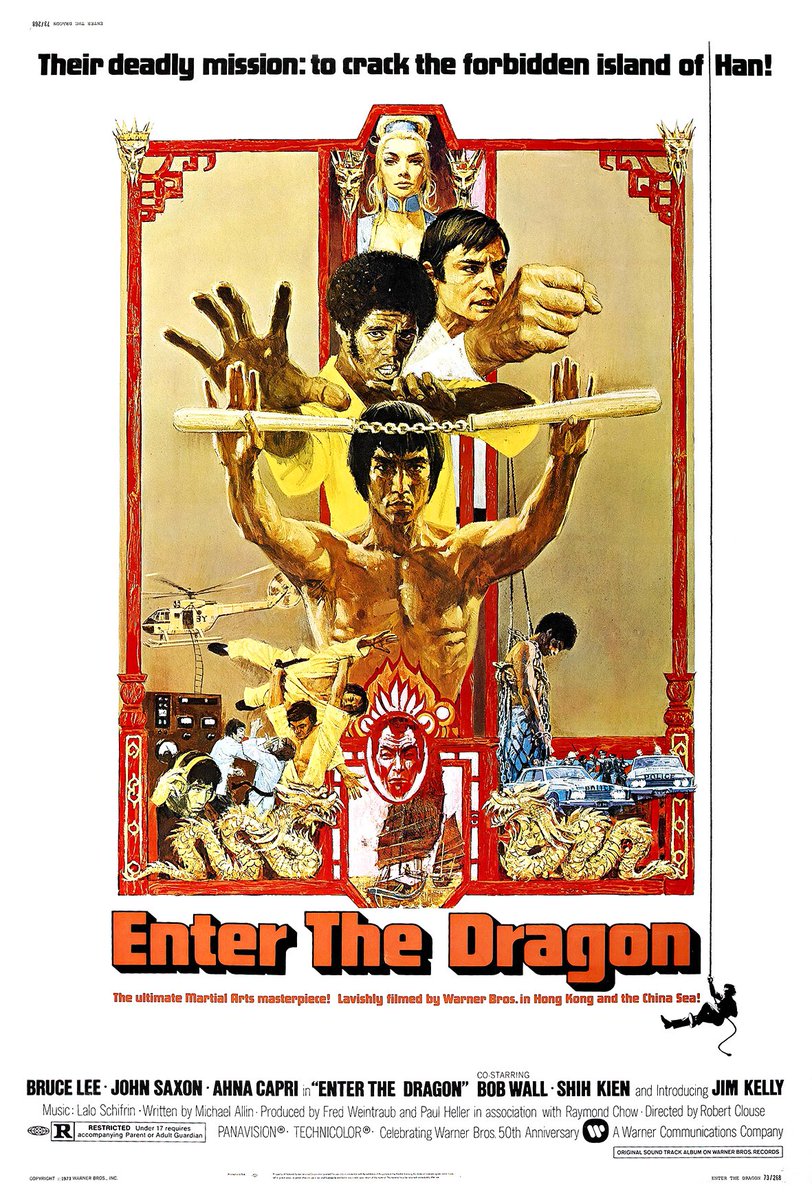
#301) Enter the Dragon (1973)

mv5bngzimtkynzqtmddmzi00zdnklwe4ytatzgnlntizyzqymgm2xkeyxkfqcgdeqxvynjc1ntyymjg@._v1_

#301) Enter the Dragon (1973)

OR “Exit the Legend”

Directed by Robert Clouse

Written by Michael Allin

Class of 2004

The Plot: Shaolin martial artist Lee (Bruce Lee) is approached by British Intelligence to infiltrate the private island of Han (Shih Kien), a suspected drug lord. Han is holding his annual martial arts competition, which in actuality is a front for henchmen recruiting. Along with compulsive gambler Roper (John Saxon) and Vietnam veteran Williams (Jim Kelly), Lee discovers Han’s nefarious deeds, but this entire plot is only here to justify Bruce Lee’s gravity-defying, eye-catching martial art skills.

Why It Matters: The NFR calls the film a “martial arts extravaganza” and praises Lee, as well as the film’s climactic fight scene. An essay by film critic/author Michael Sragow is a love letter to Bruce Lee.

But Does It Really?: Oh yeah. China has the market cornered on the martial arts genre, but thank God “Enter the Dragon” qualifies for NFR inclusion. The plot is thin and the dialogue insipid at times, but who cares when you can watch a true martial arts master at work? Bruce Lee is a legend of 20th century filmmaking, and his brief but monumental film career should be recognized. Hats off to Bruce Lee for putting the “art” in “martial arts”.

Everybody Gets One: Born in San Francisco but raised in Hong Kong, Lee Jun-fan (“Bruce” was a nickname from his mother) started practicing martial arts at the age of 16. Following several fights with alleged Hong Kong organized crime members, Lee moved back to San Francisco and started teaching Jeet Kune Do in Oakland. After a successful stint as Kato on “The Green Hornet”, Lee wanted to be a movie star, and was encouraged to make films in Hong Kong that would showcase his star power to American producers. Films like “Fist of Fury” and “Way of the Dragon” caught the eye of Warner Bros., who agreed to co-finance “Enter the Dragon” with Hong Kong studio Golden Harvest, and Lee’s own production company; Concord.

Wow, That’s Dated: This thing is soooo ‘70s. Special shoutout to cinematographer Gilbert Hubbs for his very ‘70s zoom-ins, and composer/recent Oscar recipient Lalo Schifrin for his “Shaft”-esque score.

Seriously, Oscars?: No nominations (from the Oscars or otherwise) for “Enter the Dragon”, so I’ll take this time to bemoan the continued lack of a stunt coordination category at the Oscars. How many great stunt people/martial artists like Lee deserve recognition for their film work?

Other notes

  • This is another movie with a nationality dispute. “Enter the Dragon” was primarily a Hong Kong production, but Warner Bros.’ participation, as well as its American director and writer, make it NFR eligible. No complaints here: watching a martial arts film after two years of standard studio fare was very refreshing for me. You don’t see a shirtless Bogie kicking his opponents in the face, I’ll tell you that.
  • We’re only five minutes in and this film has already dispensed some excellent life advice. Good thing I’m taking notes.
  • Be on the lookout for a young Jackie Chan in a handful of scenes. I spotted him during the fight between Su Yin and Han’s henchmen.
  • Jim Kelly was a middleweight karate champion who got the role of Williams when Rockne Tarkington backed out at the last minute. He’s clearly not an actor, but he does the best with what he’s given, and managed a brief film career thanks to this movie.
  • In a common practice of the era, “Enter the Dragon” was filmed without sound, with the entire soundtrack being recorded in post. You get used to it after a while, except for the recycling of the exact same sound effect every time a character hits the ground. It drove me nuts.
  • Established actor/former teen heartthrob John Saxon was a black belt in judo and karate, and did most of his own fighting. Not bad for someone two years away from “Mitchell”.
  • Bruce Lee is no Olivier, but he is most effective when you remove the dialogue. Even in scenes where he isn’t fighting, his movements are precise and disciplined.
  • The thugs have to fight each other to keep their jobs? Man, their union is not cutting it.
  • O’Hara is sporting the “Ben Affleck in ‘Argo’” haircut.
  • This film definitely has a Bond influence. Han looks like a cross between Dr. No and Blofeld, complete with cat!
  • Opium: The opiate of the masses.
  • “Enter the Dragon” follows the Standard Movie Fight Procedure: All henchmen attack the hero one at a time.
  • Wait, is Han Dr. Claw? Is THAT what he looks like?
  • The finale in the hall of mirrors is successful and popular enough to be declared an homage to “Lady from Shanghai” rather than a rip-off. Kudos to everyone; that thing must have been a logistical nightmare to shoot.

Legacy

  • A few weeks before the release of “Enter the Dragon”, Bruce Lee died of cerebral edema caused by heat stroke at the age of 32. The film went on to be a massive success in both Hong Kong and the United States, and helped cement Bruce Lee as a film legend.
  • Following Lee’s death, Robert Clouse and Harvest were able to utilize outtake footage of Lee – along with a double – to complete his final film: “Game of Death”.
  • Along with the TV series “Kung-Fu”, “Enter the Dragon” helped popularize martial arts for a western audience. You could, in fact, say that back in the ‘70s, everybody was Kung Fu fighting.
  • Many, many spoofs and homages over the years. We’ll stick with “A Fistful of Yen”, the centerpiece parody of “Kentucky Fried Movie”.
  • There have been threats of a remake for over a decade now, to be helmed at various times by the likes of Kurt Sutter, Spike Lee, and Brett Ratner (who I assume would not have had rehearsals). The ball is currently in the court of stuntman-turned-director David Leitch, so…that’s good at least.

Further Viewing: Several biopics about the life of Bruce Lee: 1993’s “Dragon: The Bruce Lee Story” was based on his widow Linda’s biography, while 2008’s “The Legend of Bruce Lee” got approval from his daughter Shannon.  Also worth a view is the 2000 documentary “Bruce Lee: A Warrior’s Journey”, which includes more outtake footage from “Game of Death”.