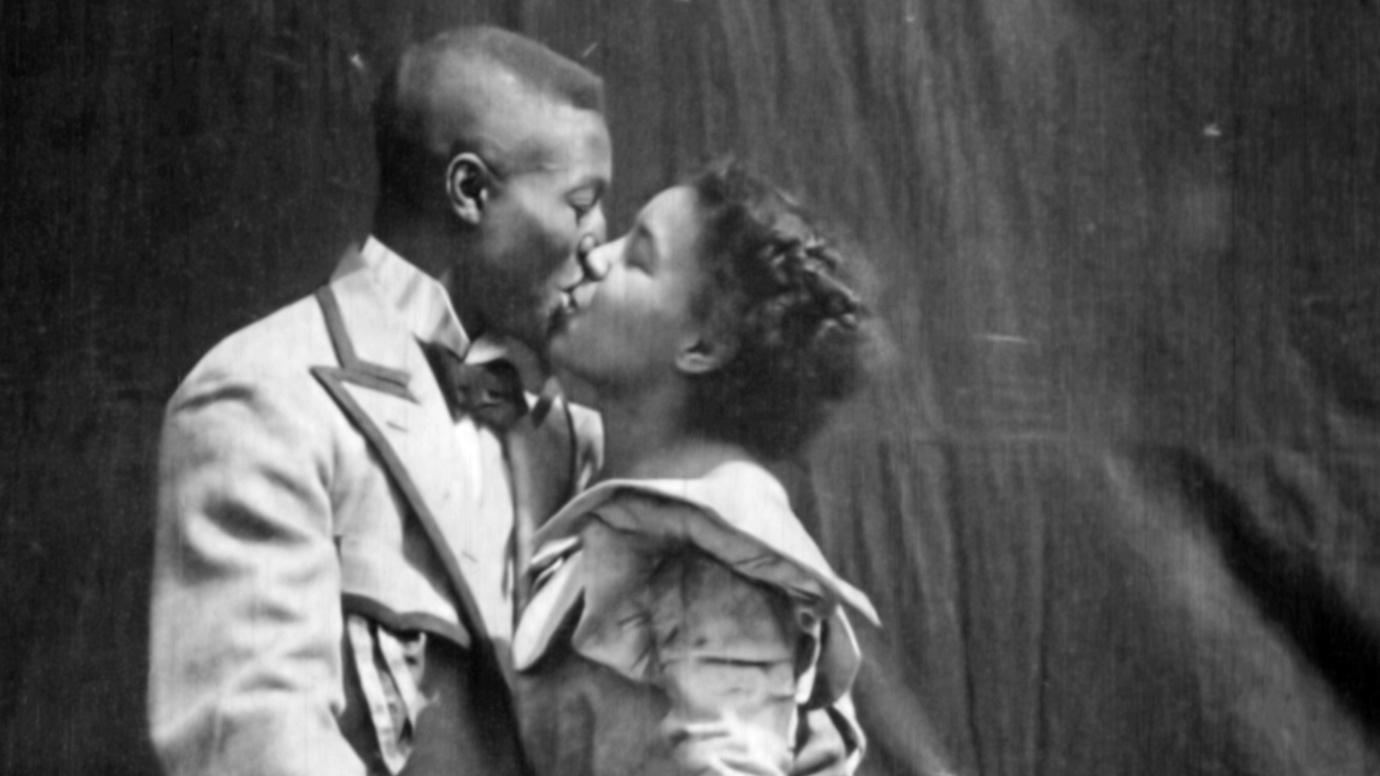
The Plot: Chicago stage performers Saint Suttle and Gertie Brown kiss several times. It’s not this intimate moment that’s groundbreaking, but rather the fact that Suttle and Brown are African-American, showing affection openly and without any reference to minstrel shows or the negative racial stereotypes of the day.
Why It Matters: The NFR’s extended writeup gives a brief overview of the Selig Polyscope Company, the trend of “kissing films” in the late 1890s, and the discovery and restoration of “Something Good”. Dr. Allyson Nadia Field from the University of Chicago calls the short “a landmark of early film history”.
But Does It Really?: Why does the NFR need to oversell me on “Something Good”? In a few brief moments we get quite possibly the first film recording of African-American intimacy in which neither of the participants resort to gross stereotypes. That’s enough for me. Welcome to the NFR!
Shout Outs: As best we know, “Something Good” is intentionally spoofing “The Kiss”, the popular film that spawned the “kissing films” craze.
Everybody Gets One: First of all, shoutout to the aforementioned Dr. Field; everything we know about this movie comes from her research. William Selig was a former vaudeville/minstrel show performer who shifted to producing upon seeing a demonstration of Edison’s Kinetoscope in 1894. He founded the Selig Polyscope Company (one of the first film studios) in Chicago and started filming any local acts he could persuade to appear on camera. Among those performers were Saint Suttle and Gertie Brown, two dancers who may have been at Selig’s studio to perform the then-popular cakewalk dance. It is theorized that Suttle and Brown’s recorded kiss was an afterthought following their dance routine.
Other notes
All I can add is a corroboration of the palpable chemistry between Suttle and Brown. These two are all over each other. Get a room, why don’t ya!
Legacy
Following “Something Good”, William Selig moved his production company to Los Angeles, and did okay until the film industry switched from novelty shorts to full-length features. Selig lost most of his fortune in the Great Depression, but four months before his death in 1948, he was given an honorary Academy Award in recognition of his pioneering film efforts.
Both Saint Suttle and Gertie Brown died in the early 1930s, their vaudeville careers long behind them.
“Something Good” disappeared seemingly forever, until it was obtained by USC archivist Dino Everett from a private film collection in New Orleans in the mid 2010s. Everett immediately contacted Dr. Allyson Nadia Field, and thanks to their extensive efforts, “Something Good” has been recognized for its historical significance and added to the NFR. Unsurprisingly, online viewing of the short skyrocketed upon its NFR designation.
Not really connected, but now I have “Something Good” from “Sound of Music” stuck in my head, which occasionally segues into “I’m into Something Good” by Herman’s Hermits. It’s a rich and full day of earworms for me.
And with that Herman’s Hermits reference, we wrap up Year Three. We’ll be taking a break for the holidays, but we’ll return in 2020 with Year Four and the first of the NFR Class of 2019.
Happy Viewing,
Tony
UPDATE: An alternate version of “Something Good” was discovered in 2021, along with footage from future NFR entry “The Tramp and the Dog“.
The Plot: Wanda Goronski (Barbara Loden) is an aimless woman, newly divorced and newly unemployed. Her endless days of milling about movie theaters and sleeping with any man who’s willing leads to her meeting Norman (Michael Higgins) in a bar. Wanda finds out later that Norman was in fact robbing the bar and is a wanted criminal. With no money or better options, Wanda continues to aid Norman with his crimes while taking his verbal and physical abuse. Not very appealing for sure, but what if I told you this movie was directed and written by its lead actress? How do you like them apples?
Why It Matters: The NFR calls the film an “affecting and insightful character study” and considers it “one of the finest works of independent cinema during the 1970s.”
But Does It Really?: “Wanda” is one of those largely forgotten films that I’m glad the NFR can find space for. It’s by no means a perfect movie, and at times can be downright unpleasant, but “Wanda” possesses the kind of uniqueness I’m looking for in an NFR entry. The film centers around an indifferent, unintelligent character whose flaws are neither condemned nor glorified, in a production whose financial setbacks manage to feel more like cinema-verite than low-budget shlock. And on top of all that, at the helm we have a female independent auteur at a time when that was unheard of. Thanks to Barbara Loden’s distinctive voice, “Wanda” stands out amongst other films of the era and is a harbinger of things to come for both independent movies and female filmmakers.
Everybody Gets One: Barbara Loden started her career as a model, eventually becoming a TV and film actor, appearing in, among others, 1960’s “Wild River” where she met director/future husband Elia Kazan. Loden was often typecast as the blonde bombshell, including in Arthur Miller’s “After the Fall”, for which she won a Tony for playing a Marilyn Monroe-type. Inspired by a “Daily News” article about a woman who was an accomplice in a botched bank robbery, Loden wrote the screenplay for “Wanda”, securing backing from producer Harry Shuster, and a budget of $100,000. Loden directed the film herself because every director offered the film passed, including her husband!
Wow, That’s Dated: Primarily this film’s abusive attitude towards women. Despite being filmed at the very beginning of the Women’s Lib era, Barbara Loden always refuted claims that the film was a feminist piece, considering it a film “about the oppression of women, of people”.
Seriously, Oscars?: “Wanda” never played an Oscar eligible run, but it did, however, play the festival circuit, and won Best Foreign Film at the 1970 Venice International Film Festival (“Wanda” was the only American film in competition).
Other notes
Yes, “Wanda” can be a bit divisive for an audience (Exhibit A: the extended opening sequence of a crying baby), but despite its less appealing qualities, this film immediately communicated to me that Loden has a vision. I was willing to overlook the obviously amateur actors and the extended scenes where “nothing happens” because Loden’s direction instantly conveyed to me that she has a story to tell. Rare is the film that can message that so clearly.
With the exception of Loden and Higgins, every actor in the film is a nonprofessional whose performance comes from a series of loose improvisations. Loden treated her screenplay as a launching pad for whatever she and her fellow actors discovered on the day.
“No smoking in the courtroom.” What? It’s 1970; you can smoke anywhere!
Man, Wanda’s job at the sewing factory dropped her without warning. Where’s Norma Rae when you need her?
The movie Wanda naps through is “El Golfo”, a musical starring Raphael and Shirley Jones. Gotta love a movie that takes a break to watch another movie.
Michael Higgins was a longtime stage actor, best known for his role as the father in the original cast of “Equus”. He continued acting up until his death in 2008, appearing in such films as “The Savages” and “Synecdoche, New York”. This all being said, I never needed to see him in tighty whities.
“Wanda” takes a while to get used to, but ultimately I was fascinated by a movie whose lead character is so passive and a co-lead so abusive. Kudos to both Loden and Higgins for keeping these characters reprehensible but never unwatchable.
Shoutout to the gone but not forgotten religious theme park Holy Land U.S.A.
Ultimately, I think I respect this movie more than I enjoy it. Loden’s confident grip on filmmaking (in her directorial debut, no less) is commendable, but I was reminded of the Gene Siskel quote “Is this film more interesting than a documentary of the same actors having lunch?” In the case of “Wanda”, my answer is “I’ll have what Barbara’s having.”
This all being said, I greatly appreciate that in the end, Wanda doesn’t really learn anything and ends up right where she started. It’s a downer and not very exciting, but hey, that’s life.
Legacy
While “Wanda” was not a success in its day, Barbara Loden continued to direct both short films and Off-Broadway plays throughout the ‘70s. Loden was preparing a film adaptation of the novel “The Awakening” when she was diagnosed with breast cancer, which took her life in 1980 at the age of 48.
“Wanda” stayed in relative obscurity for the next 30 years, but a restoration by UCLA in 2010 led to newfound recognition. Among the film’s supporters are director John Waters and actor Isabelle Huppert.
Not really related, but a sign of our times I felt needed a mention: Number of female directors in this week’s write-ups: 1. Number of female director nominees at this year’s Golden Globes: 0.
Directed by Robert Zemeckis. Animation directed by Richard Williams.
Written by Jeffrey Price & Peter S. Seaman. Based on the novel “Who Censored Roger Rabbit?” by Gary K. Wolf.
Class of 2016
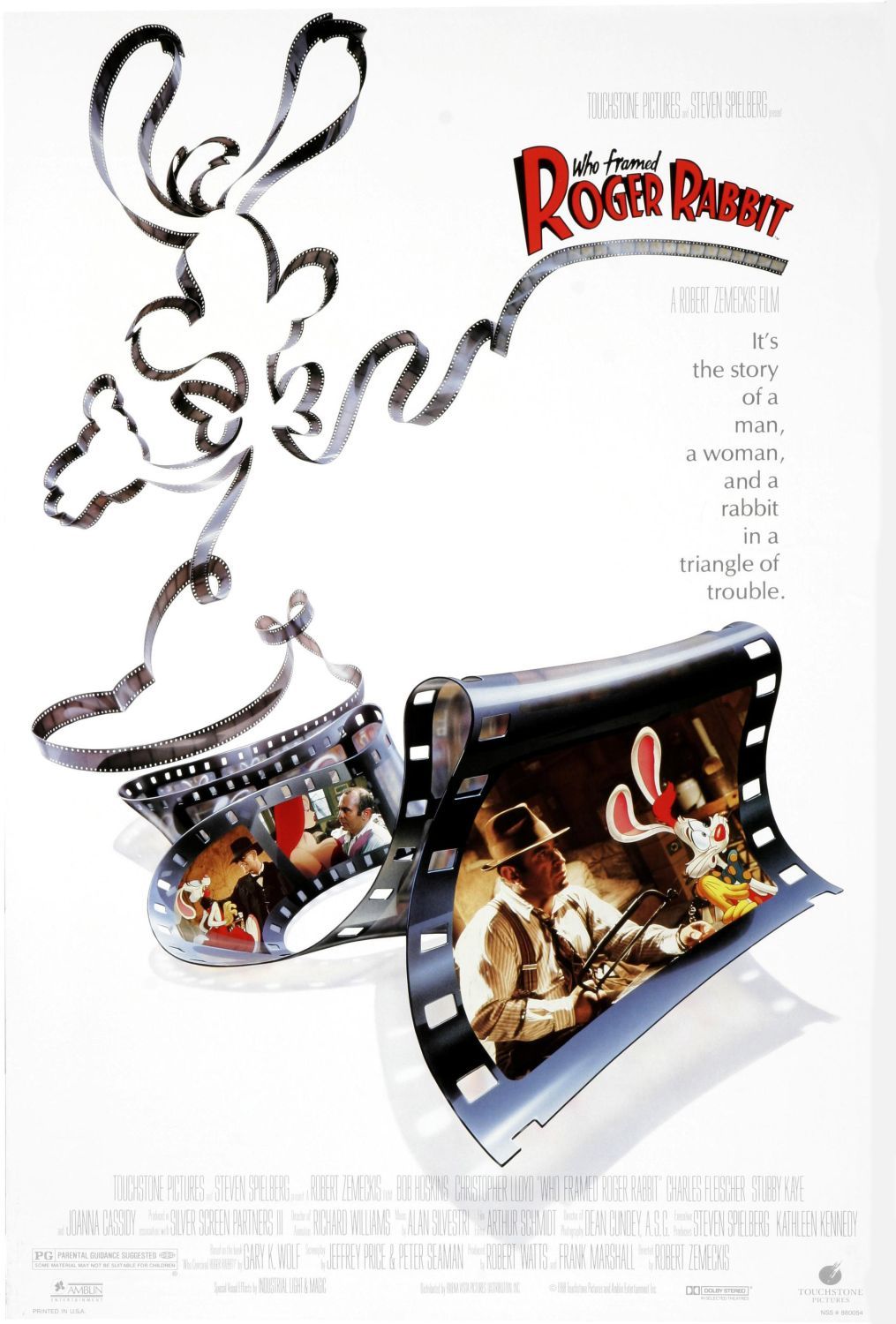
The Plot: In a version of 1947 Hollywood where people and cartoon characters co-exist, detective Eddie Valliant (Bob Hoskins) is hired by cartoon mogul R.K. Maroon (Alan Tilvern) to spy on Jessica Rabbit (voiced by Kathleen Turner), the wife of cartoon star Roger Rabbit (voiced by Charles Fleischer). Valliant takes pictures of Jessica with Toontown owner Marvin Acme (Stubby Kaye), much to Roger’s dismay. The following morning, Acme is found dead, and Roger’s the number one suspect. With Toontown’s new superior court Judge Doom (Christopher Lloyd) hot on their trail, Valliant investigates both Hollywood and Toontown to discover who framed…his client.
But Does It Really?: “Who Framed Roger Rabbit” is a truly unique movie, from its melding of screwball cartoon and film noir, to its breathtaking special effects and once-in-a-lifetime meeting of Golden Age animation characters. Kudos to Zemeckis and Williams for pulling it off, as well as executive producer Steven Spielberg for getting everyone together. “Rabbit” is still a joy to watch 30 years later, and a no-brainer for NFR inclusion.
Everybody Gets One: Actors Bob Hoskins and Charles Fleischer, voice over legends Wayne Allwine, Russi Taylor, and Nancy Cartwright, animation director Richard Williams, and most surprisingly, Kathleen Turner. And Shoutout to veteran Broadway performer Stubby Kaye as Marvin Acme, aka “the vic”.
Everybody Gets One – Toon Edition: “Who Framed Roger Rabbit” is currently the only NFR appearance for such notable cartoon characters as Donald Duck, Goofy, Sylvester & Tweety, Woody Woodpecker, Droopy, Yosemite Sam, Foghorn Leghorn, Road Runner, and Br’er Bear, which is presumably the closest “Song of the South” will ever get to this list.
Seriously, Oscars?: Second only to “Rain Man” at the box office, “Who Framed Roger Rabbit” received six Oscar nominations, and walked away with three: Editing, Sound Editing, and Visual Effects. In addition, the Academy bestowed a Special Achievement Oscar to Richard Williams for his animation direction.
Other notes
The biggest similarities between the film and the novel are three quarters of the title. In the novel, the toons were from comic strips, not movies, and the murder plotline involved dopplegangers and a genie. The film’s plotline is an original story taken directly from the real-life business plot to eliminate L.A.’s public transport to increase car sales.
Oh Bob Hoskins, you are missed. Who would have guessed that a guy from West Suffolk would be such a great American private eye?
This post could just be me praising the animation and special effects team. The animation grounds itself into the reality of its live-action surroundings so effectively you buy into this world instantly. There’s a point where you stop trying to guess how the effects were done, and just sit back in awe of what you are witnessing. That’s real movie magic.
“Who needs a car in L.A.? We have the best public transportation system in the world.” I bet that line always gets a laugh at L.A. screenings.
Donald and Daffy playing “Hungarian Rhapsody” is a highlight, storyboarded by Richard Williams and the legendary Chuck Jones (who renounced his participation after seeing the final film). Side note: Donald says, “You doggone stubborn little…” Nothing else. Moving on.
Shoutout to Mae Questel, reprising her role as Betty Boop for the first time in almost 50 years. She’s still got it, Eddie!
Speaking of, this film is notable for being Mel Blanc’s last performance as many of his iconic Looney Tunes characters.
If anyone tells you that they find Jessica Rabbit sexually attractive, do not let them into your home.
It’s a shame Christopher Lloyd doesn’t get to play the bad guy more often, because he’s perfect as Judge Doom. I’m always amazed when someone who conveys as much warmth as Lloyd does on screen can be equally chilling when the role requires it.
The line “I’m not bad, I’m just drawn that way” is one of a handful of lines that comes directly from the novel.
Kudos to both Bob Hoskins and Joanna Cassidy. Despite being surrounded by wacky cartoons and special effects, these two always play it straight. Both actors take Eddie’s tragic (and ridiculous) backstory and make it sound plausible and heartbreaking. Not an easy task.
My favorite sequence is Eddie’s trip to Toontown, where he must adhere to the logic of the toon world. You get a great cameo by Droopy, fun voice work from the celebrated June Foray, and all the recycled Disney animation you can handle.
Yes yes, there’s a bit of crude animation drawn on Jessica Rabbit for a few frames. Move along, you pervs.
[Spoilers] The movie tries to give a few red herrings, but of course Judge Doom is the bad guy. Sadly, Doom suffers from the standard bad guy defect of holding off on killing the hero for obligatory reasons, allowing the hero extra time to defeat the villain.
The story goes that Tinker Bell flies in at the very end because studio execs refused to release a Disney film where the last line is Porky Pig’s “That’s all, folks!”
Legacy
“Who Framed Roger Rabbit” was a blockbuster hit, and helped revive public interest in animation, inadvertently paving the way for the Disney Renaissance of the 1990s. It’s also directly responsible for [shudders] “Cool World”.
A sequel was in development at Disney for years, but budget concerns, as well as Disney’s intention to replace the hand drawn animation with computer graphics, led to the film’s cancellation. As of 2018, Robert Zemeckis says that there is a script for a sequel, but highly doubts that Disney would ever greenlight the project.
Following the film, Disney really tried to make Roger Rabbit a major character; from the follow-up theatrical shorts to his very own dark ride in the theme parks.
Does anyone remember the Roger Rabbit dance move? How many NFR movies have a dance move named after them?
Further Viewing: Despite his dislike of animation/live-action hybrids, Richard Williams agreed to direct the animation for “Roger Rabbit” on the condition that Disney help distribute his long-gestating animated film “The Thief and the Cobbler”. Disney fell through, and the film was sold to Warner Bros., re-edited without Williams’ involvement, and released as “The Princess and the Cobbler”. Williams disowned the released cut, but a bootleg of his original version is a favorite amongst die-hard animation fans.
Written by Andersen and Fay Andersen and Morgan Fisher
Class of 2015
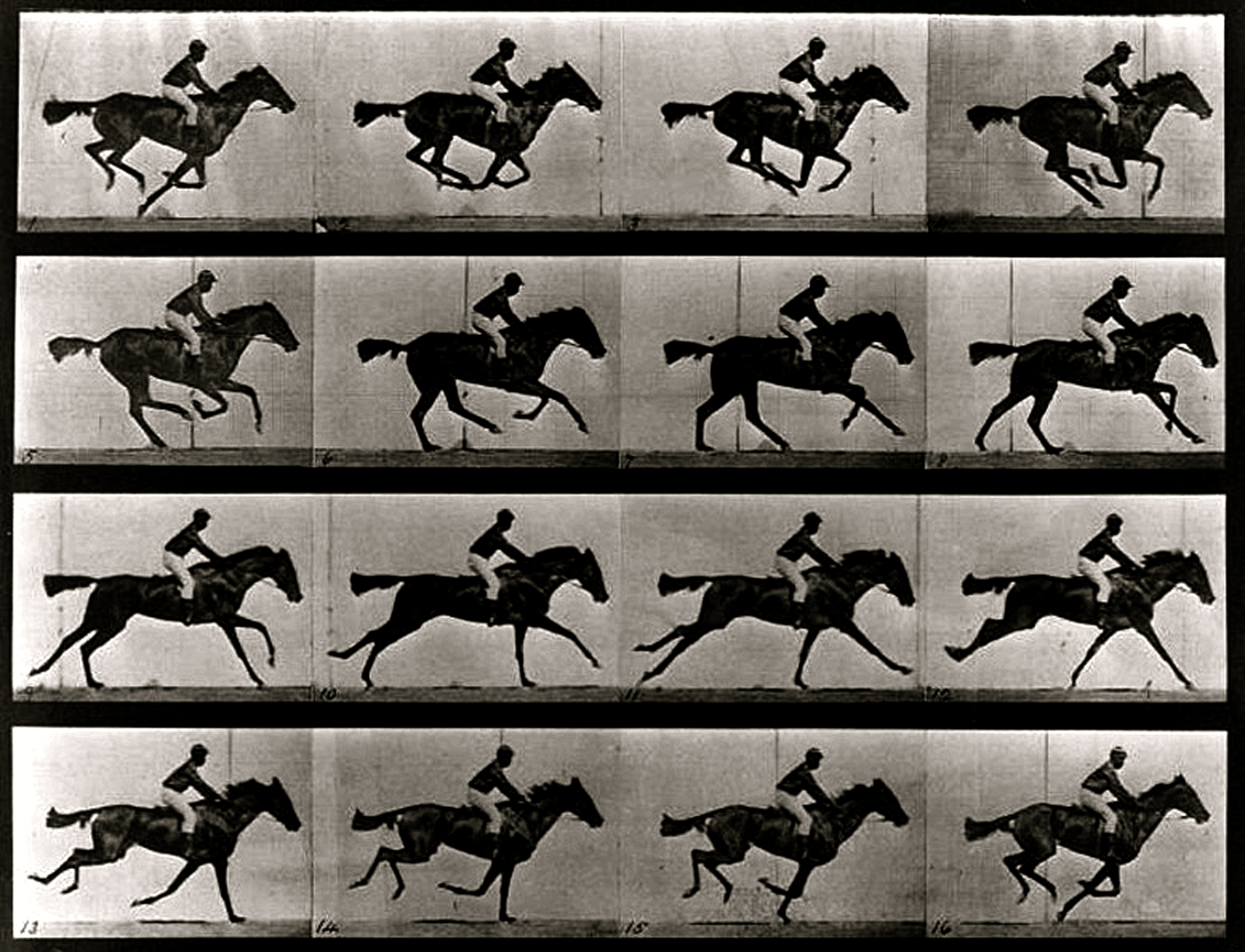
The Plot: Narrated by veteran actor Dean Stockwell, “Eadweard Muybridge, Zoopraxographer” highlights the innovations of Eadweard Muybridge, who, while not the direct inventor of motion pictures, paved the way for the creation of the medium. Throughout the late 1800s, Muybridge took countless stop-motion photos of both animal and human movement, capturing nuances naked to the human eye for the first time (you’re most likely familiar with his “Horse in Motion” series). He displayed his findings on his zoopraxiscope, a spinning disc that was forerunner to the film projector. Director Thom Andersen knows not to get in the way of his subject, and let the man’s life and photos speak for themselves.
Why It Matters: The NFR gives a brief rundown, and charts the film’s path from student film to unaired PBS special to NFR inductee. They also quote film critic Jonathan Rosenbaum’s critique of the film as “[o]ne of the best essay films ever made on a cinematic subject.” Well I’m glad he likes something.
But Does It Really?: Okay, I see what this is: the NFR is killing two birds with one stone. “Muybridge” is not only your standard “Film School Master Thesis” NFR entry, it’s also a way to celebrate Eadweard Muybridge, whose pioneering photography isn’t NFR eligible, but deserves to be mentioned in the history of film. Pretty sneaky, NFR.
Everybody Gets One: A native of Los Angeles, Thom Andersen studied film at both USC and UCLA. “Muybridge” was Andersen’s final project for his Masters’ degree, and when UCLA’s resources ran out (animating Muybridge’s photos maximized his allotted time in UCLA’s processing lab), Andersen got additional funding from LA’s PBS affiliate. When PBS ultimately passed on airing the film, Andersen found a distributor in the now defunct New Yorker Films.
Seriously, Oscars?: No clue if New Yorker Films distributed the film for Oscar eligibility, but for the record: 1975’s Best Documentary winner was “The Man Who Skied Down Everest”. If only PBS had aired “Muybridge”, then we could have done a “Seriously, Emmys?” segment.
Other notes
Fun Fact about Eadweard Muybridge: his birth name is the less complicated Edward Muggeridge. Edward used many variations of his name throughout his career, but settled on Muybridge (pronounced “my-bridge”) around 1867. In 1882, Muybridge returned to his native England and adopted the Old English spelling of his first name. As a testament to his numerous monikers, his tombstone erroneously bares the name “Eadweard Maybridge”.
At this point in Dean Stockwell’s career, his days as a child actor were long over, and he was making the TV guest star rounds and appearing in B-movies like “The Werewolf of Washington”, so narrating a documentary must have been a step up.
Before seeing this documentary, I could not tell you one thing about Muybridge, but it turns out he lived quite an interesting life, and the film spends time on the highlights: from his time photographing the natural wonders of California, to that time he shot and killed his wife’s paramour, and was acquitted on grounds of “justifiable homicide”. Did not see any of that coming.
Muybridge’s famous “Horse in Motion” study came about when railroad magnate Leland Stanford commissioned a study to prove that at some point in its trot, a horse has all four of its hooves off the ground, a belief contrary to the popular opinion of the time. Muybridge set up 12 cameras in a row, each one timed to capture a successive movement in the horse’s trot. Lo and behold, Stanford’s theory was correct.
The bulk of this film is devoted to studying a selection of the literally hundreds of thousands of photos Muybridge took as part of his motion studies. In a complete reversal of the Victorian era customs of the day, almost all of Eadweard’s human models performed their motions in the nude. I guess they all agreed to do it for science, and were confident that these images would not be preserved and reviewed 130 years later. That being said, this film has more full-frontal nudity than any other movie on this list. But it’s tasteful, so they get away with it.
For this film, Thom Andersen uses Muybridge’s notes on camera speed to showcase his motion studies in real time. There’s a significant amount of shuttering during these recreations, leading to an effect akin to a strobe light, but for a fleeting moment you actually feel like you are in the moment with Muybridge and these models. It’s a surprisingly astonishing moment.
Although most of the models featured have remained anonymous over the years, Muybridge did notate details on a few of them, particularly the marital status of his younger female subjects. Gross gross gross.
Turns out Eadweard Muybridge was one of his own motion studies subjects…and was nude for his movement. Did not need to see any of that.
The film ends with the only footage shot specifically for this documentary, a modern recreation of one of Edweard’s motion studies. And of course it’s the one of two nude female models greeting each other and kissing. There’s not a lot of information out there about the models themselves, other than Anje Bos has a few costume design credits to her name, and Sharon Hagen had a brief career as a script supervisor.
Legacy
While Eadweard Muybridge didn’t invent motion pictures, he is certainly an influential figure in their history nonetheless. Without Muybridge’s zoopraxiscope, we wouldn’t have Edison’s Kinetoscope. And without Muybridge’s multi-camera set-up, we wouldn’t have the “Bullet Time” scene from “The Matrix”.
Thom Andersen only has a handful of other film titles to his name, but one of them is cinephile favorite “Los Angeles Plays Itself”. Andersen currently teaches film history at CalArts.
The Library of Congress announced today the 25 films selected this year for the National Film Registry. They are listed chronologically below:
Emigrants Landing at Ellis Island (1903)
Body and Soul (1925)
Employees Entrance (1933)
Becky Sharp (1935)
George Washington Carver at Tuskegee Institute (1937)
Gaslight (1944)
The Phenix City Story (1955)
Old Yeller (1957)
Sleeping Beauty (1959)
My Name Is Oona (1969)
I Am Somebody (1970)
A New Leaf (1971)
Girlfriends (1978)
The Last Waltz (1978)
Coal Miner’s Daughter (1980)
Zoot Suit (1981)
Amadeus (1984)
Before Stonewall (1984)
Purple Rain (1984)
Platoon (1986)
She’s Gotta Have It (1986)
Clerks (1994)
Boys Don’t Cry (1999)
Real Women Have Curves (2002)
The Fog of War (2003)
Devoted readers may notice that something is missing from this list, and that something is ANY of the 50 movies I submitted this year. In fact, only one movie on this list has ever been one of my 50 submissions: “Gaslight” (which I nominated in 2018). As always, the class of 2019 is an excellent mix of classics I look forward to finally watching, favorites I’m delighted to be able to re-watch, and movies I have never even heard of, but will enjoy figuring out what makes them so special. The first post from one of these movies will make its Horse’s Head debut shortly after the New Year. Until then, Happy Viewing.
…Oh for the love of — who put Kevin Smith on the list?



 The Horse's Head