
#414) Woodstock (1970)

MV5BZjBiMDMzYzktOGMzOC00NzczLWE3YmYtZTgwNGIwZDRkYTE4XkEyXkFqcGdeQXVyNjc1NTYyMjg@._V1_

#414) Woodstock (1970)

OR “Farm Out”

Directed by Michael Wadleigh

Class of 1996

NOTE: The most readily available version of “Woodstock” is the 1994 Director’s Cut with 45 minutes of additional footage and performances.

The Plot: On a warm August weekend in 1969, the town of Bethel, New York is inundated with over 400,000 young people eager to attend the Woodstock music festival. Traffic jams, uncooperative weather, and protests from the locals do not stop these three days of peace and music. Orchestrated by filmmaker Michael Wadleigh, “Woodstock” the film captures the event from every angle. In addition to the legendary performances by some of rock’s finest musicians, attention is given to the “younger generation” in attendance, the event organizers caught off-guard by the turnout, the local townspeople who do/do not support the event, and hippies. Lots and lots of hippies.

Why It Matters: The NFR gives a rundown of the bigger names on the roster, and singles out the film’s soundtrack as well as its “innovate use of split frame visuals”.

But Does It Really?: There’s no way one movie could capture the essence of the Woodstock experience, but “Woodstock” comes remarkably close. Wadleigh’s cross-section approach to covering the festival, as well as the aforementioned split frame visuals, makes for an immersive, unforgettable movie about a landmark American event. “Woodstock” is the rare documentary that captures the cultural zeitgeist, and is a no-brainer for NFR inclusion.

Everybody Gets One: Underground film director Michael Wadleigh landed the plum job of covering Woodstock thanks to event organizer Arte Kornfeld, who had persuaded Warner Bros. to finance the documentary. Wadleigh could not afford to pay his film crew, and got them all to agree on a double or nothing contract: double pay if the movie was a hit, nothing if it wasn’t.

Seriously, Oscars?: Despite constant fights between Wadleigh and Warner Bros. over the film’s runtime and distribution, “Woodstock” became one of the highest grossing movies of 1970. At the 1971 Oscars, the film received three nominations (still a record for a documentary), and won Best Documentary. “Woodstock” lost its other two nominations – Editing and Sound – to Best Picture winner “Patton”.

Other notes

  • Woodstock came to be when concert promoters Michael Lange and Artie Kornfeld approached business entrepreneurs Joel Rosenman and John P. Roberts about bankrolling a recording studio in Woodstock, New York. Rosenman and Roberts countered with a concert that would promote artists known to perform around Woodstock (such as Bob Dylan), and the four founded Woodstock Ventures. After the towns of Wallkill and Saugerties emphatically denied Woodstock permits to perform there, the company settled on a dairy farm in Bethel, on the condition that attendance not exceed 50,000. Incidentally, the concert is named after the company, not the town, which was never considered as a potential venue.
  • Shoutout to the film’s editing team, led by the legendary Thelma Schoonmaker. Their use of split-screen helped to retain as much footage as possible after Warner Bros. demanded Wadleigh cut the film down from his intended six hours to three. Fun Fact: One of the assistant editors on this movie was young up-and-comer Martin Scorsese. And now you know the rest of the story!
  • The chronology of the concert is jumbled in the film, but the first day of Woodstock did begin with Richie Havens. The guitarist actually ran out of songs to sing during his set, and improvised “Freedom” on the spot. You are watching a man literally make it up as he goes along.
  • For whatever reason, it tickled me that such a massive event still did loudspeaker announcements. Could anyone beyond the first few rows actually hear anything?
  • Just a reminder that Joan Baez is in three movies on the NFR. Talk about being in the right place at the right time. Joan was six months pregnant with her son Gabriel during Woodstock, and gives a shoutout to her husband David Harris, who was in Federal Prison for draft evasion.
  • The Who’s set consists mostly of music from their album “Tommy” (now a major motion picture). We get a bit of the finale, performed at sunrise, hence the cool “lighting effect” near the end.
  • I assume Sha-Na-Na were the first to capitalize on the ‘50s nostalgia wave that would permeate the 1970s. Can I blame them for “Joannie Loves Chachi”?
  • Joe Cocker’s unhinged performance of “With a Little Help From My Friends” is A-maz-ing. Also, Joe Cocker is British? Lost that bet.
  • What separates “Woodstock” from other “concert movies” is the emphasis on audience as well as performers. We witness the audience as they listen to the music, take shelter from the rain, call friends and family on the available pay phones, skinny dip in the nearby pond, and a variety of other activities. It helps with the overall feeling of actually being at Woodstock.
  • “Woodstock” features an early performance by Crosby, Stills, Nash and…not Young. Neil Young refused to be filmed for the movie, rejoining the group after their acoustic first set.
  • Fact: Jefferson Airplane (later Jefferson Starship) is the only group to perform at both Woodstock and “The Star Wars Holiday Special”. Light the sky on fire, kids!
  • I was surprised when this movie showed me that not only did many Bethel residents on the other side of the generation gap support those attending the concert, but also supplied food and clothing throughout the weekend. Further proof that it’s hard to hate up close.
  • Singer-songwriter John Sebastian happened to be attending Woodstock when he was called up on stage to perform (several acts had not arrived at that point). He’s clearly out of it, but in a sweet (and possibly drug induced) way. I’m just glad he remembered his guitar.
  • Of all the songs in this movie, the one that got stuck in my head was Country Joe McDonald’s “FISH Cheer/Feel-Like-I’m-Fixing-To-Die-Rag”. It may be the catchiest anti-Vietnam song ever.
  • Wow, Santana’s performance is so good the screen goes black for a second. THAT’S a showstopper.
  • Sly and the Family Stone know how to put on a show. Even I was flashing the peace sign during “I Want to Take You Higher”.
  • The exclusion of Janis Joplin from the theatrical cut is an unfortunate bit of shortsightedness; Joplin died only six months after the film’s release.
  • Property owner Max Yasgur gives a brief, endearing speech to the crowd about the success of Woodstock. Side note: I 100% support casting Eugene Levy as Yasgar in 2009’s “Taking Woodstock”.
  • Like the real Woodstock, the film closes with Jimi Hendrix’s iconic performance. Hendrix’s guitar skills are justifiably legendary, but that solo goes on way too long. They even intercut his set with footage of people packing up and leaving. Wrap it up, Hendrix!
  • The final helicopter shot is the only full overview we get of Woodstock, and man is it a sight to behold.

Legacy

  • The original Woodstock festival has, of course, become the quintessential music festival of the 20th century. The founders of Woodstock have attempted reunion anniversary concerts over the years, with the results ranging from forgotten (Woodstock ‘89), to violence/cries of corporate sellouts (Woodstock ‘99), or cancelled (the planned Woodstock 50 of 2019).
  • I am not going to list what happened to every performer/group from “Woodstock”. Suffice it to say that everyone is either tragically dead or miraculously still alive.
  • Despite the film’s success, Michael Wadleigh would not direct another film until 1981’s “Wolfen” starring Albert Finney. Since then, Wadleigh’s only other film ventures have been related to “Woodstock”.

Listen to This: Many of the artists featured in the film are also in the National Recording Registry: Joan Baez (for her self-titled album), The Who (“My Generation”), Arlo Guthrie (“Alice’s Restaurant”), Janis Joplin (“Cheap Thrills“), Jimi Hendrix (“Are You Experienced?”), Sly and the Family Stone (“Stand!”), and Santana (“Abraxas”). Shockingly, the NRR has not inducted CSN&Y or Jefferson Airplane. Why not save time and induct the complete Woodstock recordings? Pretty historically significant if you ask me.
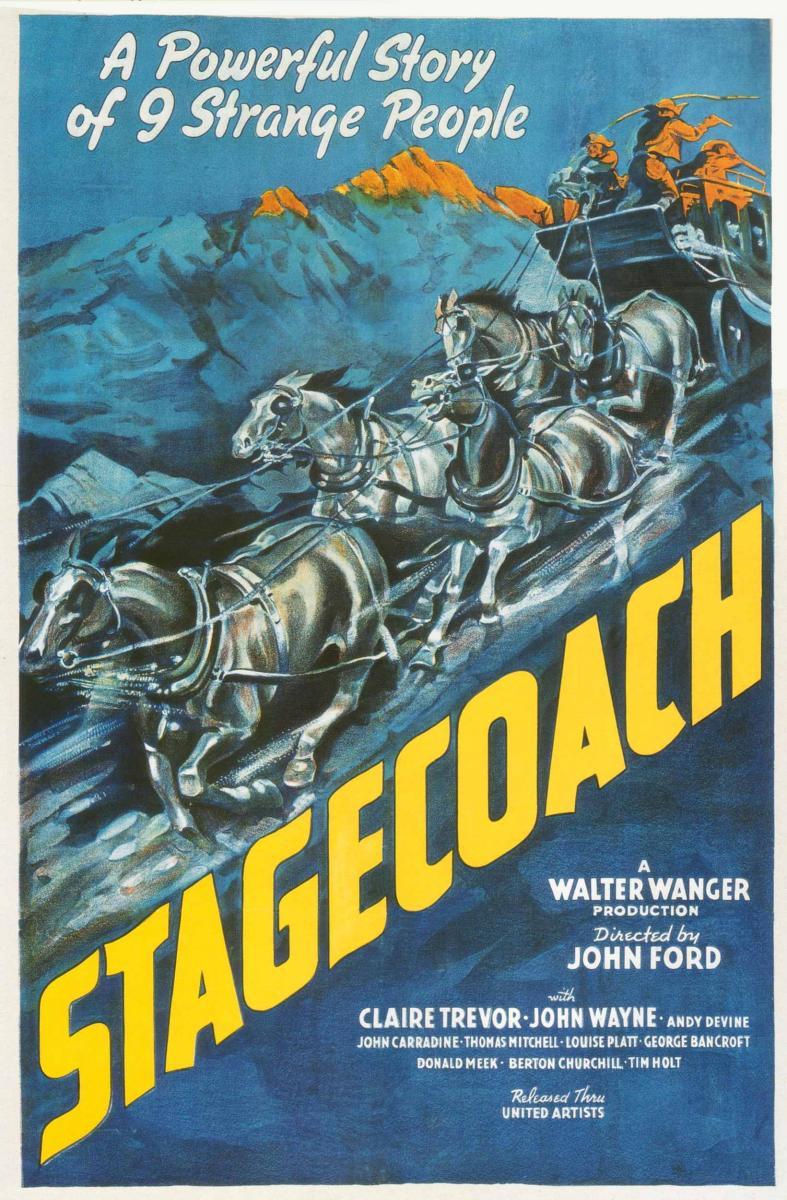
#413) Stagecoach (1939)

Stagecoach-210361225-large

#413) Stagecoach (1939)

OR “Carriage Story”

Directed by John Ford

Written by Dudley Nichols. Based on the short story “The Stage to Lordsburg” by Ernest Haycox.

Class of 1995

The Plot: In 1880, a stagecoach leaves Tonto, Arizona Territory bound for Lordsburg, New Mexico. Among its passengers are ostracized prostitute Dallas (Claire Trevor), alcoholic Doc Boone (Thomas Mitchell), secret embezzler Henry Gatewood (Berton Churchill), Cavalry wife Lucy Mallory (Louise Platt), salesman Samuel Peacock (Donald Meek), and suspicious gambler Hatfield (John Carradine). Along the way, they pick up notorious fugitive The Ringo Kid (John Wayne), recently escaped from prison to avenge the death of his father and brother. It’s a tale about a morally gray outlaw forging the rugged west, including Monument Valley, and…bingo! I got John Ford bingo!

Why It Matters: The NFR can’t heap enough praise upon “Stagecoach”, calling it “a model for Westerns (and film drama as a whole) that would last well into the 21st century”, and praising the “outstanding” performances by Wayne, Trevor, and Mitchell, as well as the “groundbreaking” stunts by Yakima Canutt. There’s also an essay by film historian/writer/Sinatra buff Scott Allen Nollen.

But Does It Really?: “Stagecoach” is one of those pre-ordained “classic” movies that I’m happy to say lives up to the hype. John Ford weaves together all the classic western tropes without resorting to stereotypes (Well…except for one major outlier; see “Wow, That’s Dated”). The wonderful visual storytelling of Bert Glennon’s camera is mixed with the natural beauty of Monument Valley, with a perfectly cast ensemble headed by Wayne and Trevor. “Stagecoach” is not only a quintessential western, but a quintessential movie, period.

Everybody Gets One: Claire Trevor’s star rose pretty quickly in the ‘30s, playing variations of the “bad girl” character. Fresh off her Oscar nominated turn in “Dead End”, Trevor was the biggest name in the “Stagecoach” cast and received top billing over the lesser known John Wayne. Trevor’s career continued in film and television for another 40 years, earning an Oscar for 1948’s “Key Largo”.

Wow, That’s Dated: As always, Ford’s depiction of Native Americans never goes beyond anonymous savages. Sure he hired real Navajo to play the Apache (still off, but closer), and many more were hired as crew members and background extras, but it’s still the kind of culturally insensitive portrayal that would stay with westerns for decades to come.

Seriously, Oscars?: “Stagecoach” was a huge hit upon release, and received seven Oscar nominations, including Best Picture. Unfortunately, this being the greatest year for movies and all, “Stagecoach” lost in all the major categories to “Gone with the Wind”, while Bert Glennon’s outstanding cinematography lost to Gregg Toland’s okay work in “Wuthering Heights”. “Stagecoach” did, however, manage two wins: Original Score, and Thomas Mitchell for Supporting Actor (aided by his work in “Wind” and “Mr. Smith Goes to Washington”).

Other notes

  • John Ford was determined to turn “The Stage to Lordsburg” into a movie, but was rejected by every major studio (westerns had been considered passé since the silent era). Independent producer Walter Wanger agreed to back the film, with a distribution deal from United Artists, on the condition Ford get Gary Cooper and Marlene Dietrich to star. When Ford stood by first choices Wayne and Trevor, Wanger acquiesced, but gave Ford half of his proposed budget as a compromise.
  • The rest of the cast is made up of such Ford staples as John Carradine, Thomas Mitchell, and Andy Devine as the perpetually prepubescent comic relief. All this begs the question: Where’s Ward Bond?
  • Ah yes, back in the days when riding shotgun involved an actual shotgun.
  • Shoutout to cinematographer Bert Glennon, who does an excellent job highlighting the grandeur of the southwest. Rare is the black & white, academy-ratio movie that can present nature in such sweeping compositions.
  • Now THAT’S an intro. John Wayne may get the best intro shot of any movie ever: A long shot to reveal his silhouette and position, quickly turning into a probing close-up of his facial subtleties. Perfect, except for the part where the camera loses focus.
  • Everyone’s great in this movie; John Wayne and Claire Trevor in particular have wonderful chemistry. That being said, I disapprove of Ford being so verbally abusive while directing his actors. Most would talk back (Mitchell would reference recent Ford flop “Mary of Scots”), but Wayne took the abuse, knowing it was what he needed to become a better actor.
  • Stagecoach, horses, cigars: I’m glad this movie’s not in Smell-O-Vision.
  • “What this country needs is a businessman for president.” No. No we do not.
  • What surprised me the most was how much of the dialogue overlaps, making the character interactions seem all the more realistic. Most say it was Altman or Hawks who pioneered this, turns out it was Ford!
  • Just a reminder that if the infant playing Miss Mallory’s baby is still alive, it’d be 81 years old.
  • Those smoke signals either mean that the Apache have planned an attack or elected a new pope.
  • The sequence of the stagecoach crossing the river is impressive, especially the shots with the camera on top of the actual stagecoach. Quite the feat for 1939.
  • One the one hand, the Apache attack is a awe-inspiring feat of filmmaking and stuntwork. It’s a surprise the Oscars didn’t create a stunt category then and there. On the other hand, it’s still very much an offensive depiction of the Apache. Which is a shame, because the whole sequence is one of the best scenes in any movie. I will, however, deduct additional points for the treatment of the horses during production. No PETA disclaimer for you!
  • I was not expecting this movie to have such a happy ending. I suspected the ending would be hopeful, but I didn’t think it’d work out for everyone.

Legacy

  • The success of “Stagecoach” not only promoted John Wayne from B-movie staple to A-list movie star, but also helped revitalize the presumed dead western genre.
  • “Stagecoach” was the first John Ford movie to be shot on location at Monument Valley. Ford became enamored of the spot, and used it in practically all of his subsequent westerns. More recent westerns have also filmed at Monument Valley as a tribute to Ford.
  • “Stagecoach” has received the remake treatment twice. The 1966 version with Ann-Margret and Alex Cord is considered good, but not as great. The 1986 TV movie was an excuse for Willie Nelson, Kris Kristofferson, Johnny Cash and Waylon Jennings to make a movie together.
  • Easily the film’s most significant cultural impact: Orson Welles considered “Stagecoach” to be a textbook example of a perfect movie, and watched it over 40 times while preparing “Citizen Kane”. As Welles would later put it, “It was like going to school.”

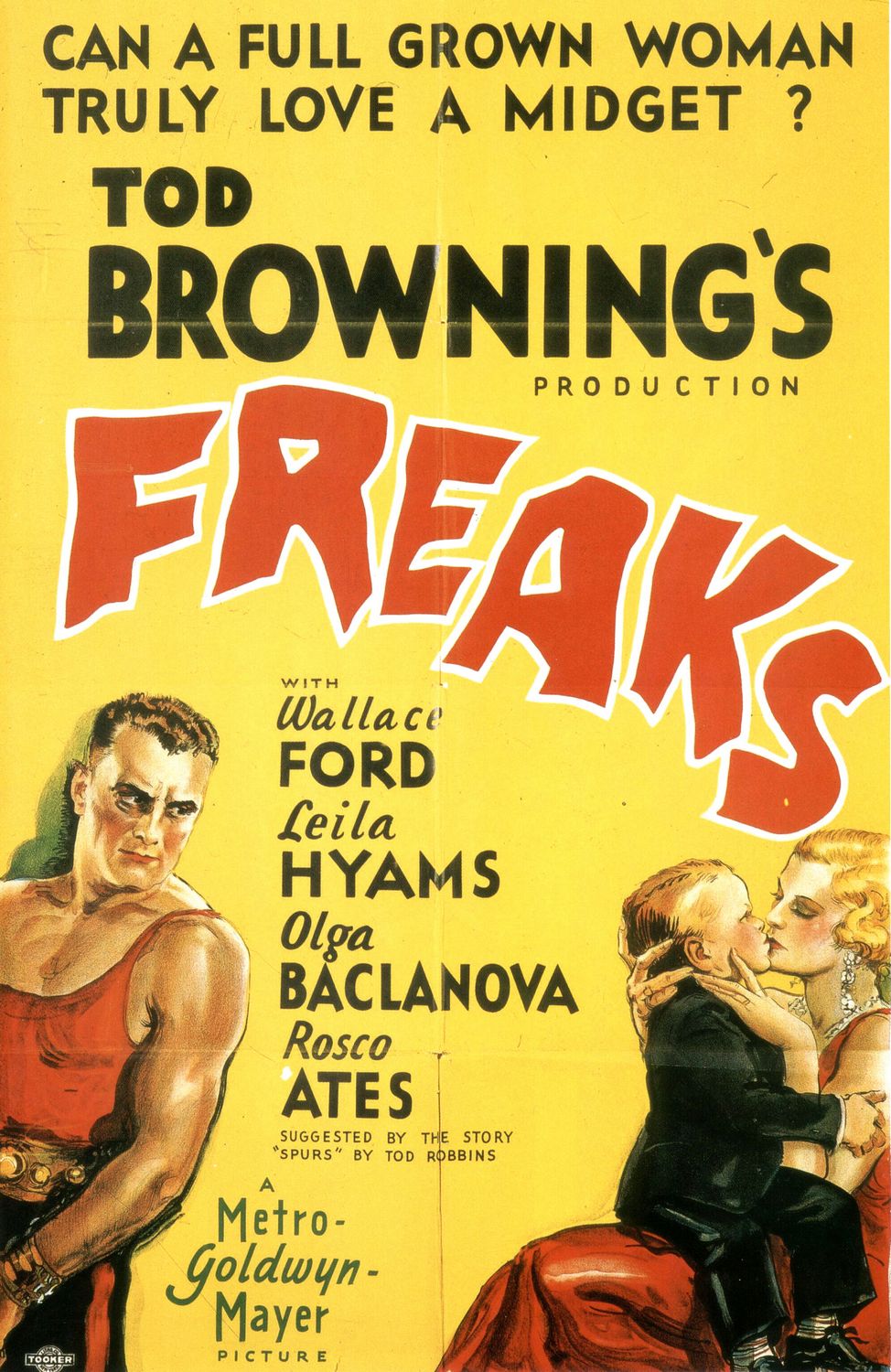
#412) Freaks (1932)

MV5BMjMyYjgyOTQtZDVlZS00NTQ0LWJiNDItNGRlZmM3Yzc0N2Y0XkEyXkFqcGdeQXVyNTA4NzY1MzY@._V1_

#412) Freaks (1932)

OR “Sideshow Hell”

Directed by Tod Browning

Written by Willis Goldbeck & Leon Gordon. Suggested by the short story “Spurs” by Tod Robbins.

Class of 1994

The Plot: Hurr-ay hurr-ay hurr-ay! Step right up, folks, see the movie that had audiences running out of the theaters! Yes, ladies and gents, it’s the one and only “Freaks”! Meet Hans (Harry Earles), the little person with a big inheritance! Witness as Cleopatra the trapeze artist (Olga Baclonova) cons Hans for his fortune with the greatest of ease! But there’s so much more to behold under this big top! See the Siamese Twins! The Human Torso! The Bearded Lady! The Pinheads! And many more who finally get their moment in the center ring! Do you dare peek at what’s inside this movie? Hurr-ay hurr-ay hurr-ay!

Why It Matters: The NFR gives a brief rundown of the film’s content, controversy, cuts and cult. Sorry; still trying to shake off the barker talk.

But Does It Really?: It’s crude and at times difficult to watch, but “Freaks” achieves what every classic film on this list does: it stands on its own piece of ground. For better or worse, there is no other movie like “Freaks”. The film’s bizarre subject matter and unforgettable imagery more than ensure the film’s longevity, though this may be an instance where one viewing is definitely enough. My question: if you’re going to include an oddity like “Freaks” in the NFR, why not also include “Reefer Madness” or the films of Ed Wood?

Everybody Gets One: Most of the cast were real-life sideshow performers who resigned themselves to the reality that the exploitation of their abnormalities were their only source of income. The primary exceptions were Daisy & Violet Hilton, conjoined twins who managed to avoid the sideshow circuit, instead playing vaudeville and burlesque (they were tap dancers and eventually jazz musicians).

Wow, That’s Dated: Circuses in general, sideshows specifically. Once a showcase for the differently abled, sideshows declined in popularity around the early ‘50s; a combination of television’s rise and the passage of laws forbidding such public exploitation.

Other notes

  • Believe it or not, “Freaks” was a passion project for director Tod Browning. At age 16, Browning ran away from home to join the circus (honest!), performing as a clown and occasionally in the sideshow as “The Living Corpse”. Years later, Browning was a successful film director at MGM, and convinced the studio to buy the rights to the short story “Spurs”. “Freaks” was not greenlit until after Browning directed “Dracula” on loan to Universal, and MGM wanted their talent to make them an equally successful horror movie. “Freaks” is not what any of the higher-ups had in mind.
  • The original plan was to cast bigger names like Victor McLaglen, Myrna Loy, and Jean Harlow as the other, non-sideshow characters. Producer Irving Thalberg, who did not want the film to have any stars, nixed this idea. The only one of the eventual leads to continue their film career was Wallace Ford, who spent the next 30 years playing wisecracking tough guys.
  • For the record, the couple Hans and Frieda are played by real life siblings Harry and Daisy Earles. For obvious reasons, their characters’ romance was downplayed. Still, what a weird, unnecessary choice.
  • If “Freaks” seems a little disjointed (and its 62 minute runtime seems a bit odd), you’re not alone. The film was originally 90 minutes, but disastrous test screenings led to MGM cutting a third of the film. As best I can tell, most of these cuts were dialogue that sympathized more with the sideshow performers and vilified the “normal” characters. Some of that commentary comes across, but it is definitely muted.
  • This whole post could be highlighting each cast member. I do, however, want to single out Josephine Waas, aka Josephine Joseph, the Half-Woman Half-Man. Waas highlighted her hermaphrodite biology by splitting her appearance down the middle: male clothing and a hairy leg on one side of her body, female clothing and a shaved leg on the other. There is no evidence to support Waas was a hermaphrodite, and just prior to “Freaks”, her act was prosecuted in England for fraud, with Waas pleading guilty to avoid a trial and medical examination.
  • Today in pre-Code era profanity: upon learning about Cleopatra’s ruse with Hans, Venus refers to Cleopatra as “that big horse”, as opposed to…something else.
  • The acting in this movie is quite stilted. I suspect it’s a 50/50 split of non-professional acting from the sideshow personalities and ‘30s professional acting that seems wooden under a modern lens.
  • Ah, the wedding feast. The sideshow’s initiation of Cleopatra (“We accept her, one of us!”) is a disturbing moment in a movie filled with them.
  • The film’s ending also suffered from cuts. The fate of Hercules the strongman was deleted (hint: he now sings falsetto), and a “happier” alternate ending was shot and inserted into the final cut. Despite their best efforts, these alterations still muddle a movie whose message is seemingly, “freaks are people too, but do not mess with them”.

Legacy

  • “Freaks” was a critical disaster and a box office flop. MGM pulled the film from theaters before it had completed its run (the only film to receive this distinction) and quickly sold the distribution rights to exploitation filmmaker Dwain Esper. Esper re-released the film under such titles as “Forbidden Love” and “Natures [sic] Mistakes”.
  • Following the film’s failure, MGM assigned Tod Browning to B-pictures and never greenlit any of his choices again. Browning only made four films after “Freaks”, retiring after 1939’s “Miracles for Sale”.
  • “Freaks” was rediscovered in the early ‘60s when it played at the 1962 Venice Film Festival, and had its 30-year ban in the UK lifted. The film had several “midnight movie” screenings throughout the ‘70s, and has enjoyed a cult following ever since.
  • Most of the film’s cast disowned their involvement in “Freaks”, the notable exception being Johnny Eck (“The Amazing Half Boy”), who spoke fondly of his experience. Researching what happened to the cast post-“Freaks” (as well as post-freakshows in general) is thoroughly depressing, so let’s focus instead on “Side Show”, the Broadway musical that celebrates the Hilton sisters. Also depressing, but at least there are songs!
  • Easily the most referenced moment from the film is the chant of “One of us! One of us!” Like many classic film moments, this line is so commonplace most people don’t even realize that they’re referencing “Freaks”.

#411) A Night at the Opera (1935)

81gdlQA4r4L._SL1200_

#411) A Night at the Opera (1935)

OR “Don Grouchovanni”

Directed by Sam Wood

Written by George S. Kaufman and Morrie Ryskind. Based on a story by James Kevin McGuinness.

Class of 1993

The film’s re-release trailer. See “Other notes” to learn why it’s important.

The Plot: While in Milan, business manager Otis B. Driftwood (Groucho Marx) convinces dowager Mrs. Claypool (Margaret DuMont) to invest in the New York Opera Company. Driftwood attempts to sign up international tenor Rudolpho Lassparri (Walter Woolf King), but due to a mixup with an agent named Fiorello (Chico Marx), accidentally signs a contract for Fiorello’s friend Ricardo Baroni (Allan Jones). There’s a love story between Baroni and Rosa Castaldi (Kitty Carlisle), the silent antics of Lassparri’s dresser Tomasso (Harpo Marx), a stateroom with 15 people crammed into it, plenty of musical interludes, a sanity clause, and two hard-boiled eggs. [Honk] Make that three hard-boiled eggs.

Why It Matters: The NFR covers the film’s behind-the-scenes story (see “Other notes”) and admits that although this film “signaled [the Marx Brothers’] artistic decline”, it still has “plenty of frenetic fun”, singling out the stateroom scene.

But Does It Really?: Apparently I’m the only person who prefers this movie over “Duck Soup”. Yes, the Ricardo/Rosa subplot slows things down, but ultimately “Night at the Opera” is a more polished, funnier outing for the boys. That being said, both films are laugh-out-loud funny and iconic enough that there is no need to choose one over the other for NFR consideration.

Shout Outs: Groucho quotes another MGM classic by telling Sergeant Henderson “I vant to be alone”.

Everybody Gets One: Director Sam Wood was one of MGM’s workman directors, specializing in dramas like “Goodbye, Mr. Chips” and “The Pride of the Yankees”. Despite directing this and “A Day at the Races”, Wood didn’t get along with the Marx Brothers, who detested his penchant for numerous retakes. After failing to get Groucho to deliver a line his way, Wood allegedly commented “You can’t make an actor out of clay”, to which Groucho retorted “Nor a director out of Wood”.

Wow, That’s Dated: We get such ‘30s things as smelling salts, pageboys in restaurants, and opera as a thing people still go to. And when adjusted for inflation, Groucho’s outrageous $9.40 dinner bill comes to roughly $176.

Seriously, Oscars?: “A Night at the Opera” was completely shut out of the 1935 Oscars. MGM did, however, produce the Best Picture winner; another movie that takes place on a boat: “Mutiny on the Bounty”.

Other notes

  • During production of “Duck Soup”, Chico was playing bridge with his friend, MGM producer Irving Thalberg. Chico expressed the Marx Brothers’ dissatisfaction with working for Paramount, and over the course of the game, Thalberg successfully lured the act to MGM. Thalberg was the Marx Brothers’ key cheerleader at MGM, and got them to reign in their anarchic comedy to something that would appeal to a wider audience. The Marx Brothers (as well as future generations of fans) disapproved of this pseudo-censoring, but Thalberg was vindicated when “A Night at the Opera” became the most successful Marx Brothers movie of their career.
  • You may notice several abrupt cuts throughout the film, including one at the very beginning. At some point after the film’s release, the original negative was trimmed to delete all references to Italy (possibly done in the late ‘30s to appease Mussolini). This included an opening musical sequence establishing the film’s Milan setting, and, for some reason, the original credits which included the Marx Brothers replacing Leo the Lion. While most of this footage has been deemed lost forever, the Leo shots resurfaced in the film’s re-release trailer.
  • Right from the start Groucho is a relentless joke machine. Yes, it’s all scripted, but unlike a Jack Benny or a Bob Hope, Groucho makes it sound spontaneous.
  • Kitty Carlisle looks so familiar. Is she known for her work in the theater? Is she bigger than a breadbox? That’s two down, eight to go…
  • Both Allan Jones and Kitty Carlisle were trained opera singers, and successfully lobbied to do their own singing. Walter Woolf King was also an opera singer, but because his character was a tenor, his natural baritone was dubbed.
  • Once the brothers start interacting with each other on screen, the movie really gets going, as evident in the contract scene between Groucho and Chico. Their timing is flawless.
  • Surprise guest stars ZZ Top as the aviators!
  • Ah, the stateroom sequence. Only the mirror scene in “Duck Soup” rivals it as the Marx Brothers’ signature piece. As always with the boys, the mix of physical slapstick and Groucho’s one-liners gives the scene an “everything but the kitchen sink” quality.
  • This was the first Marx Brothers movie without Zeppo, who quit acting and became a successful agent. Allan Jones makes an acceptable substitute straight man for the group; he’s basically Zeppo with a better singing voice.
  • Things come to a grinding halt for Chico’s piano solo and Harpo’s harp solo, but if nothing else it shows off their versatility.
  • Apparently Harpo did most of his own stunts in this movie, including the several instances where he swings from a rope. Harpo later admitted that at age 47, this was a bad idea.
  • The sequence in which the boys pose as the aviators goes on a bit too long, but it has my favorite line in the movie: “I’m going out to arrange your bail.”
  • Margaret Dumont does not get a lot to do in this one, but at least it’s another classic for her resume.
  • The finale (the actual night at the opera) is worth the wait, with an inspired lunacy that never lets up. It helps that I’m a sucker for any scene where a vendor starts hawking food at a random non-sports related venue.

Legacy

  • As previously stated “A Night at the Opera” was a huge success, and the Marx Brothers followed-up with their very similar 1937 outing, “A Day at the Races”. After Irving Thalberg’s death, the boys lost their main support at the studio, and while they made three more pictures for MGM, even Groucho admitted they weren’t very good. The Marx Brothers ended their act in the late ‘40s, but continued to reunite and reminisce for the rest of their lives.
  • “A Night at the Opera” has been referenced throughout pop culture in the last 85 years. “MST3K” often referenced Groucho’s “make that three hard boiled eggs” line, and Cyndi Lauper (among countless others) paid homage to the stateroom scene in her “Girls Just Want to Have Fun” music video.
  • The band Queen’s fourth studio album “A Night at the Opera” is named in honor of the film. It’s the one with “Bohemian Rhapsody”!

#410) Salt of the Earth (1954)

image-asset

#410) Salt of the Earth (1954)

OR “Black & White and Red All Over”

Directed by Herbert J. Biberman

Written by Michael Wilson

Class of 1992

The Plot: Based on a true story, “Salt of the Earth” is a fictional retelling of the zinc miner’s strike of New Mexico in the early ‘50s. Fed up with their unsafe working conditions and prejudiced treatment by their white or “Anglo” counterparts, the Mexican-American members of the miners union go on strike. The union leader Ramon (Juan Chacón) is met with hostility from his management as well as city officials, and an impasse is reached. As the months drag on Ramon’s wife Esperanza (Rosaura Revueltas) starts to take more of a leadership position, and joins her fellow housewives at the picket line. It’s a progressive tale of the struggles of women, minorities, and blue-collar workers in America, but unfortunately this is the height of the Red Scare, and this movie smells like a big Commie rat.

Why It Matters: The NFR gives a rundown of the film’s troubled history, and mentions “its influence on independent filmmakers”.

But Does It Really?: I knew nothing about “Salt of the Earth” before this viewing, so imagine my surprise when I learned that I was watching the only blacklisted movie in film history. As a historical document, “Salt of the Earth” is not to be ignored. As a film, it’s alright. Yes, its pro-union message can be quite preachy at times, but the earnest performances by the film’s non-actors help make it much more palatable. “Salt of the Earth” is a representation of the times and circumstances that forged this movie into being, with a message that still rings true almost 70 years later. No argument here for “Salt of the Earth” joining the NFR.

Every Independent Film Company Gets One: The Hollywood Blacklist of the 1950s is far too grand a topic to cover here, but suffice to say that a lot of very talented individuals in the entertainment industry were denied work because they may or not have been involved with America’s Communist Party two decades earlier. Independent Productions Corporation was founded by Herbert J. Biberman (one of the Hollywood Ten) and Paul Jarrico to create job opportunities for blacklisted filmmakers. “Salt of the Earth” was the only film produced by the company amidst a lot of backlash. The House Un-American Activities Committee deemed the film “a new weapon for Russia”, New Mexican citizens protested by setting local union halls on fire, and lead actress Rosaura Revueltas was deported back to Mexico during production. An anti-trust suit against various company’s “illegal conspiracy” against the film dragged out for a decade, and IPC folded shortly thereafter.

Wow, That’s Dated: Why everything, obviously. There’s nothing timeless at all about the systemic oppression of women and minorities, or the threats that workers face from management while unionizing. Nope, all relics of the past. [Nervous laughter]

Title Track: Esperanza says the title once at the end of the film. Turns out the “salt of the earth” are the children who will one day inherit the world their parents have made for them. At long last, someone is thinking of the children.

Seriously, Oscars?: Surprise, surprise, a pro-union movie released at the height of McCarthyism and ignored by Hollywood was completely shut-out of the Oscars. The 1954 Best Picture winner was “On the Waterfront”, a movie in which the union is the corrupt force and the man who testifies against them is the hero. Nice try, Kazan.

Other notes

  • The real life Empire Zinc strike of 1951 served as this film’s inspiration. Many of the details are the same, but the film is still a fictionalized account of the strike. “Salt of the Earth” was filmed on location in Grant County, New Mexico (site of the actual strike), and the film’s cast is made up mostly of local, non-professional actors.
  • Not only were many of the creatives involved in production victims of the blacklist, but so was the film’s sponsor. The International Union of Mine, Mill and Smelter Workers had ties to the Communist party that it refused to denounce, causing the union to be expelled from the Congress of Industrial Organizations in 1950. The IUMMSW’s involvement was more fuel for the fire of those in Washington and Hollywood trying to prevent “Salt of the Earth” from being made.
  • Herbert Biberman originally planned on casting his wife, the definitely-not-Mexican Gale Sondergaard, as Esperanza, as well as a white actor as Ramon. Once he realized his own subconscious prejudice against Mexican actors in leading roles, Biberman cast Rosaura Revueltas and Juan Chacón. Revueltas was an up-and-coming star in Mexican cinema, while Chacón was a union local president involved with the real strike.
  • If the town’s sheriff looks familiar, that’s Will Geer, aka Grandpa Walton. Like his fellow cast and crew, Geer was deemed a “hostile witness” by HUAC and blacklisted from Hollywood for a time.
  • As previously mentioned, Rosaura Revueltas was deported during production, allegedly because her passport had not been stamped properly upon arrival. The remainder of her close-ups (as well as her narration) were recorded separately in Mexico City.
  • I don’t have much to say about the film itself; the behind-the-scenes story is infinitely more fascinating than the on-screen one. That being said, Rosaura Revueltas is your MVP, giving Esperanza a very powerful character arc. Her non-professional co-stars more than hold their own, though it helps that they are telling their own story.

Legacy

  • “Salt of the Earth” was purposefully ignored upon its initial US release (some projectionists flat-out refused to even screen it), and received one screening in New York. The film did, however, have a successful European release, winning the grand prize at the Czech Republic’s Karlovy Vary International Film Festival.
  • “Salt” eventually made it back to the states in the mid-60s, playing in union halls and film schools across the country. The film’s reappraisal from Americans was greatly helped in 1982 when the film lapsed into public domain.
  • As expected, few of the film’s blacklisted creatives found work in Hollywood after “Salt of the Earth”. Producer Paul Jarrico and Screenwriter Michael Wilson both moved to Europe and continued their film careers there, while Herbert Biberman didn’t work again until 1969’s “Slaves”, shortly before his death.
  • The making of “Salt of the Earth” was made into a documentary with 1984’s “A Crime to Fit the Punishment”. Online clips are hard to come by, but you can find it on archive.org! Thanks internet nerds!
  • The film’s production is also a major plotline in the 2000 movie “One of the Hollywood Ten”, starring Jeff Goldblum as Herbert Biberman.