#480) Let’s All Go to the Lobby (1957)

#480) Let’s All Go to the Lobby (1957)

OR “Snacks Haven”

Directed by Dave Fleischer

Song Lyrics by Jack Tillar

Class of 2000 

The Plot: You’re at the movies circa the late ’50s-early ’60s and you still have some time to kill before the main feature. What do you do? Well, these four singing concessions have a great idea: Let’s all go to the lobby and get ourselves a treat! Why these four are encouraging you to eat their own kind I don’t know, but how about that song!

Why It Matters: The NFR calls it “probably the best known ‘snipe’ or theatrical movie trailer ever produced”. There’s also an essay by animation expert Thad Komorowski.

But Does It Really?: “Let’s All Go to the Lobby” is not the first (or in the NFR’s case, 300th) American film that comes to mind when you think “preservation-worthy”, but once it does, it’s an obvious choice. “Lobby” doesn’t so much represent the movies as it does the movie-going experience. Seeing this film immediately brings to mind images of the popcorn and hot dogs in a classic movie palace lobby, and settling in for your feature presentation. Part of preserving art is preserving how that art was viewed, and “Let’s All Go to the Lobby” equals (and in some cases surpasses) the cultural importance of its fellow NFR entries.

Every Chicago-Based Company Gets One: Very little is known about the production of “Lobby” (even the 1957 release date is debatable), but we do know it was made by Chicago’s Filmack Trailer Company. Founded in 1919 by Irving Mack, Filmack specializes in making “snipes”: the short scenes that play before a movie, such as courtesy slides or commercials for the theater. Although Filmack faced some tough times when theaters started converting to digital projectors, the company is still going over 100 years later! That being said, their website is in desperate need of an update. It might as well be on GeoCities.

Title Track: No incredible masterstrokes of genius here; as composer Jack Tillar recalled years later, “I [wrote the song] in about five minutes”. The reason that jingle is so catchy is because you already know it: it’s “For He’s a Jolly Good Fellow” (or “The Bear Went Over the Mountain”, if you prefer).

Other notes 

  • “Let’s All Go to the Lobby” was one of a series of shorts commissioned by Filmack to advertise a theater’s concession stand (the film’s official title is “Technicolor Refreshment Trailer No. 1”).
  • As best we can tell, “Lobby” was directed by Dave Fleischer, who directed many of the Betty Boop and Popeye cartoons of the 1930s. After resigning from Fleischer Studios in 1941, Dave worked at various other studios’ animation departments, and found himself moonlighting at Filmack in the early 1950s, where he made “Lobby”. Fleischer ended his career as a “Technical Specialist” at Universal.
  • I have a bone to pick with the Komorowski essay. At one point Thad mentions that after writing this film’s song, Jack Tillar went on to “a brilliant career that earned him an Oscar, an Emmy, and a Grammy”. I cannot find a single other source that could confirm any of these wins. Sure, information regarding local or regional Emmys can be hard to find, but it’s a lot trickier to fake an Oscar or Grammy win. What’s your source, Komorowski?
  • There’s a dispute over what exactly the concession on the far left is. Some (including the NFR) say it’s chewing gum, other say it’s a candy bar. The concession’s label is mostly incomprehensible, but it could easily read “Candy Bar” if you want it to. Whatever that giant box contains, it is clearly the group’s leader.
  • I couldn’t find definitive information about how much movie theater concessions cost in 1957, but according to this article, you have always been overpaying for movie popcorn. (Appropriately enough, the article begins with a GIF of a scene from “Lobby”!)
  • Can you imagine this playing during the intermission of some prestige roadshow picture like “Lawrence of Arabia” or “2001“? It would definitely “break the spell” of those movies.

Legacy 

  • Filmack estimates that over 80% of all movie theaters have shown “Let’s All Go to the Lobby” at one time or another over the last 60 years.
  • Given its catchy song and cheap animation, “Let’s All Go to the Lobby” is easy to reference and parody. Geico made an updated version a few years back, there was a recent quarantine-specific remake about going to your kitchen, and yes, even a classic “Simpsons” had Mr. Burns warble the tune.
  • Snipes are still commonplace in the movie-going experience (provided the movie-going experience resumes at some point). Everything from trailers to Maria Menounos to the M&M’s telling you to silence your phone are part of this film’s cultural lineage.
  • For the record: my favorite movie snacks are Red Vines and Reese’s Pieces. And if I’m going with another person, I’m willing to split a large thing of popcorn. My movie beverage of choice is Dr. Pepper, but the key is to use the bathroom before sitting in a room for 2 1/2 hours.

Further Viewing: Filmack’s other famous snipe – “Variety Show” – is a ten-minute intermission countdown featuring all the wonderful food you can buy at the concession stand! You may recognize the somewhat suggestive “hot dog jumping into a bun” sequence from its appearance in “Grease“.
#479) Night of the Living Dead (1968)

#479) Night of the Living Dead (1968)

OR “Brains Supreme”

Directed by George Romero

Written by Romero & John Russo

Class of 1999

Thanks to my friend Ryan for sharing his zombie knowledge with me. Go check out his art!

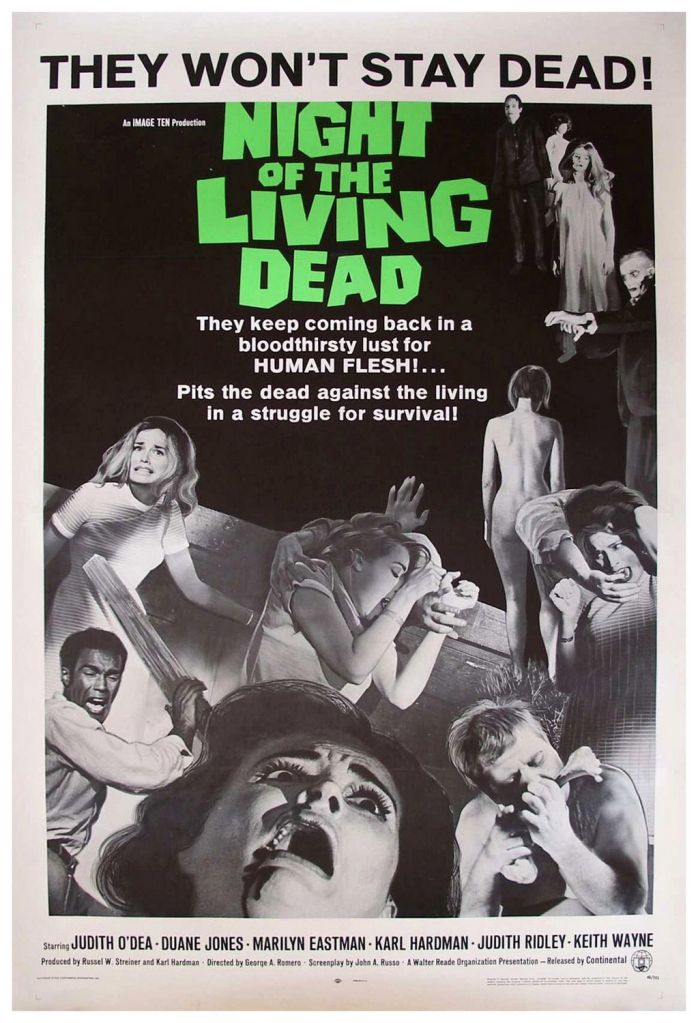
The Plot: While visiting their father’s grave, siblings Barbra and Johnny (Judith O’Dea and Russell Streiner) are attacked by a stranger. Barbra escapes, and takes refuge in a seemingly abandoned house. Also hiding there is Ben (Duane Jones), recently attacked by people who, like Barbra’s assailant, feast on human flesh. Ben and Barbra discover another group (Karl Hardman, Marilyn Eastman, Keith Wayne, Judith Ridley, and Kyra Schon) hiding in the cellar, and together they try to fight off these “ghouls” – revealed to be the recently deceased, returning to life to eat the living. And from this little movie from Pittsburgh stems one of the most successful horror genres of all time.

Why It Matters: The NFR praises the film for “usher[ing] in an entire entertainment industry – the zombie film.” The write-up goes on to praise the film’s “tight editing”, its “unapologetically matter-of-fact approach” to the gore, and its “sociopolitical commentary”. There’s also an essay by horror expert/former “Miami Vice” writer Jim Trombetta.

But Does It Really?: I’m not a horror movie person, but I respect “Night of the Living Dead” for its effective presentation and its contributions to popular culture. Like many a classic low budget fare, “Night” makes up for its lack of funds with plenty of creativity, with Romero and his team using inventive cinematography and practical effects to sell their vision. With an endless cycle of zombie movies still being made today, “Night of the Living Dead” has more than proven its legacy and impact on American films.

Everybody Gets One: A lifelong film fanatic, George Romero got his start making industrial films and TV commercials with his production company The Latent Image. Yearning to do something more creative, Romero, along with his partners John Russo and Russell Streiner, came up with the idea of a low-budget horror film about “flesh-eaters”. The team pitched the idea to producer Karl Hardman, and together they raised $114,000 for the film’s budget.

Wow, That’s Dated: Radio as a primary news source, and TVs with “rabbit ears”. Also, a zombie attack would play out very differently in the age of smart phones and cable news.

Title Track: Originally produced as “Night of the Flesh Eaters”, Romero et al were having difficulty finding a distributor who wouldn’t demand a neutering of the film’s carnage. The Walter Reade Organization agreed to distribute the film as is, on the condition the title be changed to “Night of the Living Dead”. While making a new title card for the opening, the film’s copyright notice was accidentally removed. Under copyright laws of the day, “Night” inadvertently fell into the public domain.

Other notes 

  • Everyone in this movie pulls double duty. Producer Karl Hardman played Harry Cooper, and also helped with the film’s makeup and still photography. In addition to playing Helen Cooper, Marilyn Eastman was the film’s makeup supervisor, and plays the zombie who eats a bug off a tree. Producer Russell Streiner also plays Johnny, and delivers the classic line “They’re coming to get you, Barbra.”
  • Also aiding in the film’s budget: the film’s main setting was an abandoned house set to be demolished, giving the filmmakers carte blanche to destroy it however they needed to.
  • The first zombie attack is exciting, although Barbra does trip over her own heels, proving once and for all that heels are the worst invention ever.
  • The role of Ben was not written to be African-American, but Romero cast Duane Jones because he gave the best audition. Although Ben’s racial background is never explicitly stated or addressed in the film, Duane Jones was able to change Ben’s dialogue and overall characterization to make him a more positive, intellectual depiction of an African-American.
  • Barbra’s near catatonic shock may be realistic, but it does make her one of the less active female leads of any major movie.
  • My god, stop the incessant cricket noises! This is worse than the zombies.
  • Romero was also the film’s cinematographer, and his unconventional camera work lends itself well to the film’s unfamiliar, off-putting presentation.
  • A national emergency with no government strategy? And everyone needs to stay inside? When did this movie become so prescient?
  • The good news about all these TV reports: this is all before the removal of the FCC fairness doctrine. You can actually trust the news!
  • There’s a lot of inertia with these characters standing around the house talking about possible escape plans, but the eventual attacks made me tense, so this movie is doing something right.
  • The dead are being reanimated because of nuclear radiation? When did the zombies become Godzilla?
  • Wow, kids are the worst. The scene of Karen killing Helen with a garden trowel is one of filmdom’s watershed moments in terms of gore, despite being incredibly tame by today’s standards.
  • After completing the final cut of the film, George Romero and John Russo immediately took the finished reels and drove to New York in the hopes of a screening. During their drive, the two heard the news of Martin Luther King’s assassination, giving their film’s ending – in which Ben is mistaken for a zombie and shot by the police – a level of unintentional social commentary that continues to stay with the film.
  • Let this be a reminder: Always cremate your dead.

Legacy 

  • “Night of the Living Dead” opened in October 1968, one of the last unrated films before the MPAA rating system took effect. Despite initial controversy over its graphic violence, the film was a hit, earning more than a 100 times its budget at the box office (though it was the distributors, not the filmmakers, who took in most of that profit). The film’s accidental public domain status helped the film find a cult following on television and home video long after its theatrical release.
  • After a dispute between George Romero and John Russo over the direction of the sequels, the two agreed to make their own sequel franchises, both dealing with the aftermath of the first film’s events. Romero’s “…of the Dead” series has had five entries, with first sequel “Dawn of the Dead” achieving a cult status on par with the original film. Russo’s “Return of the Living Dead” series also consists of five films, and is overall more heightened and less grounded in reality than its Romero counterparts.
  • There have been countless remakes of the original film, most notably Tom Savini’s 1990 version, which amps up the bloodshed and makes Barbra a more active protagonist. These remakes also come with their share of unofficial sequels, prequels, spin-offs and rip-offs. If only they had remembered the copyright notice.
  • George A. Romero’s son – George C. Romero – has written a prequel to his father’s original film called “Rise of the Living Dead”. There was a successful Indiegogo campaign in 2014, but the film has yet to be made.
  • “Night of the Living Dead” has not only been a major influence on the horror genre, but also helped usher in the zombie subgenre that’s still going strong 50 years later. Zombie movies aren’t really my thing, but I did enjoy “Shaun of the Dead”.

#478) The Lost World (1925)

#478) The Lost World (1925)

OR “The Land During Time”

Directed by Harry O. Hoyt

Written by Marion Fairfax. Based on the novel by Arthur Conan Doyle.

Class of 1998

There are multiple cuts of “Lost World” out there on the internet, and this post is based on my viewing of the 2016 restoration by Lobster Films.

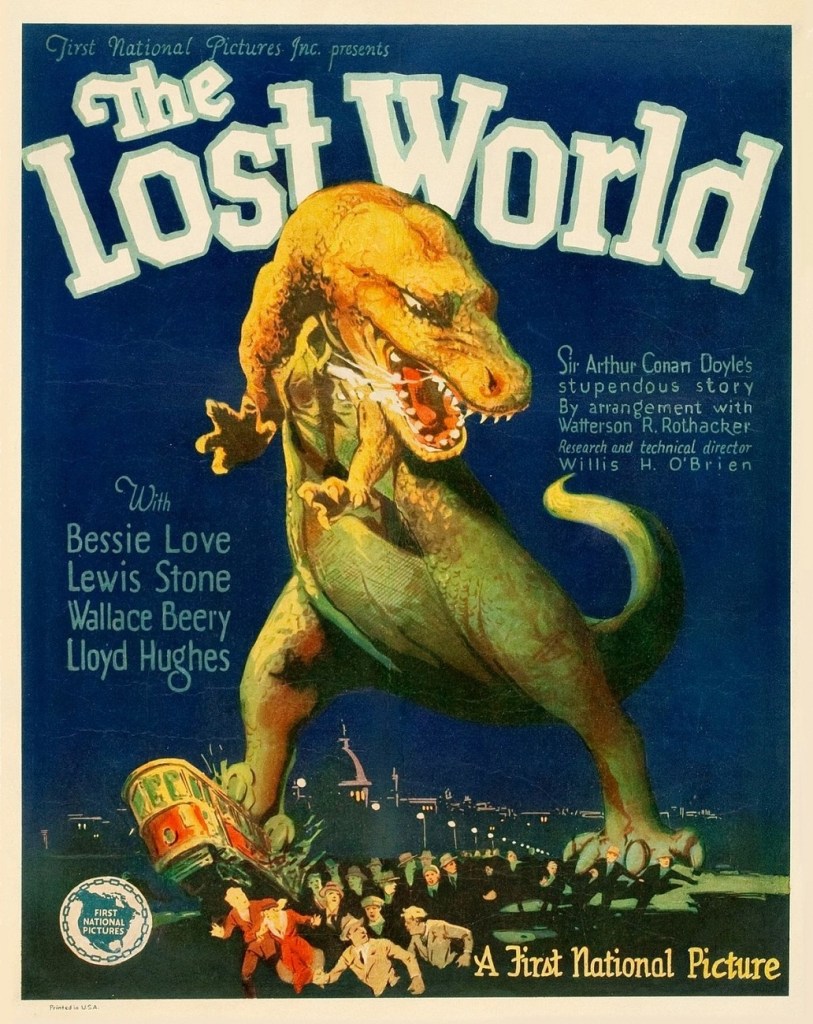
The Plot: Reporter Edward Malone (Lloyd Hughes) wants to prove to his fiancée Gladys (Alma Bennett) that he can be adventurous. After attending a lecture by controversial Professor George Challenger (Wallace Beery), Edward volunteers to join the explorer on an expedition to South America in search of living dinosaurs. Joined by hunter Sir John Roxton (Lewis Stone), and Paula White (Bessie Love), the daughter of a missing explorer, the team arrive in the Amazon, and find stop-motion dinosaurs roaming the earth. Their discovery is tremendous, but can they survive the perils of the jungle and get their findings back to London?

Why It Matters: Sometimes the NFR hands me a freebie in their write-up: “The Lost World” is historically significant in that it was one of the first full-length feature films to include stop motion model animation. Thanks! There’s also an essay by film and science-fiction expert Brian Taves.

But Does It Really?: “Lost World” is what I would call a “stepping stone” movie. It’s by no means a revered classic, but it paved the way for science-fiction in film, as well as the evolution of stop-motion animation. The film can be a bit stilted and dated, but the effects by Willis H. O’Brien are worth the trip out. No argument for NFR inclusion.

Everybody Gets One: Like many early movie screenwriters, Marion Fairfax was an established Broadway playwright that heeded Hollywood’s call. Deemed “always a winner” by one of her studio bosses, Fairfax cranked out hit script after hit script, including a 1922 adaptation of another Arthur Conan Doyle classic, “Sherlock Holmes” with John Barrymore. At the height of her Hollywood career, Fairfax operated her own studio and was working on up to five projects simultaneously. Information on Marion Fairfax is scarce after 1926, when she retired from screenwriting (possibly due to ongoing health issues) and disappeared from the public eye.

Wow, That’s Dated: BLACKFACE WARNING: One of the expedition team’s guides is played by a white actor in blackface. To make matters worse, the intertitles make him sound like Stepin Fetchit.

Other notes 

  • Shoutout to the team behind the 2016 restoration, which brings the film back to its original runtime for the first time in almost 90 years. The final results look terrific.
  • Arthur Conan Doyle is one of those authors whose timeline I always associate with the pre-film era. Not only was Doyle alive for this film adaptation of “The Lost World”, he actually appears in it! In fact, it was Doyle’s endorsement of Willis O’Brien’s early stop-motion tests that spurred this movie’s development.
  • Wallace Beery IS Emile Zola. And while we’re talking about Professor Challenger: a controversial public figure who makes unsupported claims and is antagonistic towards the press; where have I seen this before?
  • There is no love interest in the original Doyle novel, but practically every major film adaptation has added one. This version gives us Paula, as played by future Oscar nominee Bessie Love.
  • Lewis Stone was not on my radar before starting this blog, and between this movie, “Grand Hotel“, and “Love Finds Andy Hardy“, he has a diverse group of classics on his resume.
  • Once we get to the Amazon, this movie picks up and makes room for the real star: the special effects. Sure it’s all primitive by today’s standards, but when you’ve watched as many silent films as I have you recognize what an innovative step forward this movie was.
  • Also revolutionary was the film’s use of split screen technology, allowing the live actors to appear on screen alongside the dinosaurs.
  • Excuse me, but you cannot wear a deerstalker cap in a Doyle adaptation without some obvious comparisons being made.
  • 37 minutes in and we finally have our first dinosaur, an unfriendly pterodactyl. This is followed up by Gertie the Dinosaur in her first dramatic role.
  • Once the dinosaurs show up, the plot takes a backseat to the spectacle, but the magic of practical effects are so impressive you don’t care, especially once the Allosaurus starts attacking the Triceratops. Take that, “Rite of Spring“!
  • Speaking of, most of these dinosaur set pieces look like I’m going through the Primeval World exhibit at Disneyland.
  • In addition to recreating the color tinting effect common in most silent films, the restored version of “Lost World” includes the Handschiegel process, which added color to specific elements of a shot. In the case of “Lost World”, Handschiegel is used to highlight the fire, adding a wonderful sense of danger you don’t get in a standard black-and-white outing.
  • All I want during these dinosaur attacks is one intertitle that says “Roar!”
  • Wasn’t that apeman in the Laurel & Hardy “Babes in Toyland”?
  • Edward uses the old “out of continent” excuse to cheat on his fiancée. But then again, no one in this movie cares about Gladys. She’s not even in every cut of this movie!
  • My favorite attention to detail; the movement of the brontosaurus’ stomach to indicate breathing.
  • Once we get to the finale, the film turns into a precursor to the Godzilla movies, with the escaped Brontosaurus on a rampage through London. My favorite moment is when the Brontosaurus knocks down a statue, which by 2020 standards is very progressive. Damn Gertie, you’re woke AF.

Legacy 

  • “The Lost World” was one of the biggest hits of the year, and helped revive public interest in dinosaurs and science-fiction films. Perhaps the film’s biggest influence was its depiction of dinosaurs as cunning predators, rather than simple-minded evolutionary mistakes, as was the common theory of the time.
  • Willis O’Brien would further perfect his stop-motion creatures with his landmark work in “King Kong“.
  • Surprisingly, Arthur Conan Doyle deemed Professor Challenger his favorite character, not Sherlock. In fact, short stories about Challenger’s further discoveries were among the final pieces Doyle wrote before his death in 1930.
  • “The Lost World” has been adapted to the screen multiple times over the years, and while the first “Jurassic Park” sequel is not a direct remake, it shares a subtitle, as well as a few story points.
  • For many years the only available version of “The Lost World” was an hour-long cut made after the film lapsed into public domain. As more of the lost “Lost” footage has resurfaced over the years, there have been at least five different restorations of the film to incorporate the latest discoveries.

#477) Republic Steel Strike Riot Newsreel Footage (1937)

#477) Republic Steel Strike Riot Newsreel Footage (1937)

by Paramount News

Class of 1997

Trailer 

There are lots of different YouTube videos out there with this footage, and I’ll always recommend the raw footage, as some of these clips include the actual audio from the day. I also recommend this film by the Illinois Labor History Society featuring commentary by Sam Evett, a union organizer and witness to the riot.

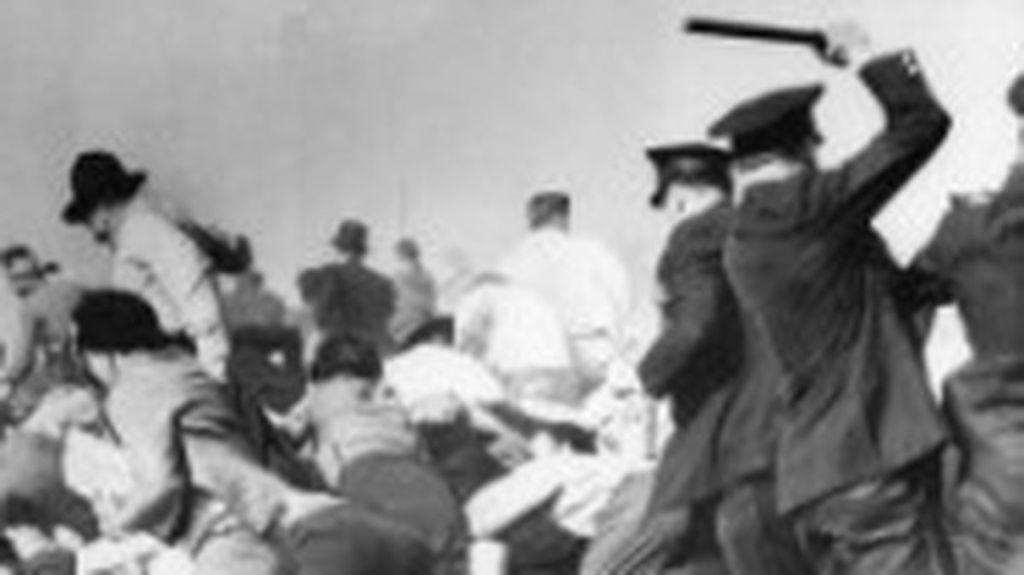
On May 26th, 1937, after failing to make a negotiation with Republic Steel for better working conditions, the Steel Workers Organizing Committee (SWOC) went on strike. Organized by the Congress of Industrial Organizations (CIO), the strike also included workers at Inland Steel and Youngstown Sheet and Tube (known collectively with Republic as “Little Steel”), amounting to 67,000 total steel workers on strike.

On the morning of Memorial Day (May 30th), a crowd of striking workers and sympathizers gathered in the field in front of Republic Steel in Chicago. They were met by a large group of Chicago policemen, armed and prepared to break up any protests. After a few minutes, things escalated into a riot, with the police firing shots at the crowd, as well as throwing tear gas and beating strikers with their clubs. When the dust settled, four civilians were immediately dead, six more died of complications in the ensuing days, and at least 67 were wounded or suffered head injuries. This event would become known as the “Memorial Day Massacre“, and its show of violence was one of many the strikers would face in the next few months.

Tipped off about the protest, Paramount News was at the scene documenting the entire event with their cameras. The Chicago police initially banned Paramount from releasing the footage publicly, fearing “mass hysteria”. The footage did, however, make an appearance in a 1938 Senate investigation, in which it was used to prove that the policemen had incited the riot, and that their gear was provided to them by Republic Steel. Despite this evidence, no police arrests were ever made.

Like much of the historical films on this list, the Memorial Day massacre newsreel footage is indeed worthy of NFR preservation. In addition to its sudden, unsettling view of the day, the film’s historical significance lies in its documentation as well as its role in the subsequent investigation. Sadly, with the rise in police brutality that we see in our modern, deeply-divided world, the Republic Steel Strike footage has proven just how little we have evolved as a nation.

Legacy

  • While the strike ended five months later in a sound defeat for SWOC, these events led to the creation of the United Steel Workers of America (now United Steel Workers), and a contract with Little Steel in 1942.
  • Republic Steel saw a slow decline, and by the 1980s had been bought and merged with other companies, though it would regain its Republic Steel name in 2011.
  • United Steel Workers is still going, 860,000 members strong. The USW’s former union hall in Chicago now features a plaque memorializing the Memorial Day massacre, and the 10 union members who were killed.

#476) Broken Blossoms (1919)

#476) Broken Blossoms (1919)

OR “I Love Lucy”

Directed & Written by D.W. Griffith. Based on a short story by Thomas Burke.

Class of 1996

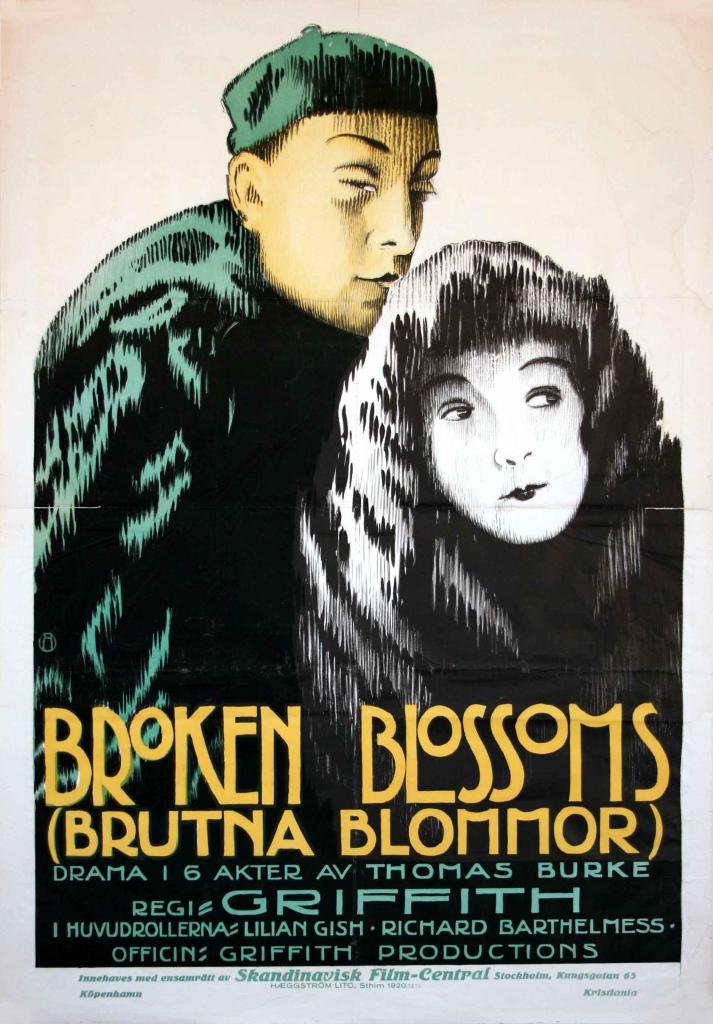
The Plot: In London’s seedy Limehouse district, Chinese immigrant Cheng Huan (Richard Barthelmess) arrives to teach the word of Buddha, but becomes increasingly disillusioned with the world and ends up as a curio store proprietor and opium addict. His faith is restored when he crosses paths with Lucy (Lillian Gish), a young lady escaping from her abusive father, the boxer Battling Burrows (Donald Crisp). Having admired her from afar, Cheng Huan takes Lucy in and keeps her safe. When Battling Burrows gets word of Lucy’s hideout, things take a tragic turn. It’s a story of racial tolerance from…the director of “Birth of a Nation“!? Oh dear.

Why It Matters: The NFR cites “Broken Blossoms” as an example of Griffiths’ “smaller films that struck a chord with silent era audiences.” The write-up also states that the film “entreats audiences to denounce racism and poverty”. …Huh. Also on hand is an essay by film critic/Slant Magazine co-founder Ed Gonzalez.

But Does It Really?: Call me Ingrid Bergman, because someone’s gaslighting me. Everything I’ve read about “Broken Blossoms” talks about its intimate beauty and its message of racial tolerance. You know, that movie starring a white man in yellowface from the director who helped revive the Klan. Have we all gone insane? Maybe I’m watching this too soon after “Birth” to be totally objective, but I really can’t cut this movie any slack. I’ll be nice and designate “Broken Blossoms” as “historically significant” (it was the first movie released by United Artists), but anyone who says this plodding, insensitive story is one of the greatest films ever made needs to get their head examined.

Wow, That’s Dated: Once again, we have a massive YELLOWFACE WARNING front and center. White actor Richard Barthelmess plays Cheng Huan, allegedly with a tight rubber band under his hat to stretch his facial features. Not exactly “The Joy Luck Club”, is it?

Other notes 

  • According to the credits, Richard Barthelmess appears “courtesy of Dorothy Gish”. Anyone know what that’s in reference to? Obviously she’s Lillian’s sister, but I can’t find any evidence that Dorothy and Richard worked together, at least not in the capacity that these credits imply.
  • Right from the start, Griffith uses the intertitles to preach racial tolerance, asking us to be aware of our own “unkind words and deeds”. Well Mr. Pot, how would you describe Ms. Kettle?
  • Yellowface aside, Griffith goes out of his way to make Cheng Huan (and the other Chinese characters) stereotypes in the opposite direction of “Birth of a Nation”. Cheng et al are wise, kind, and practice tolerance to all around them. Nowhere near as derogatory as the African-Americans of “Birth”, but still an extreme.
  • At least because it’s a silent film we don’t have to sit through anyone’s atrocious or offensive accents.
  • And if this movie didn’t have enough problems, let’s throw in some child abuse for good measure. The film never condones these actions, but I still have to witness it.
  • Donald Crisp kinda looks like James Cromwell. It should be noted that Crisp was also a director, and filmed his scenes for “Blossoms” at night because he was directing during the day (most likely either “Something to Do” or “Putting It Over”).
  • All I knew about “Broken Blossoms” before this viewing is the iconic moment where Lillian Gish pushes her lips up with two fingers to evoke a smile. I did not realize this was in the context of appeasing her abusive father. So much for Precious Images. While we’re on the subject, the two finger move can definitely be misconstrued today.
  • Once Lucy escapes from Battling and stays with Cheng, things are still uncomfortable. Cheng basically lusts after her from a distance; never taking advantage of her, but definitely creeping me out over here. I know that this is all supposed to be a charming respite from her father, but this movie is so slow these scenes are mainly boring.
  • It was around this point that I wondered if the movie’s source material was a short story. Turns out I was right. If your short story doesn’t lend itself to a full-length feature, why not pull a “Big Sleep” or “Short Cuts” and combine a few? Thomas Burke had plenty of material to draw from, much of it also set in the Limehouse district.
  • My other gripe with this picture: No one calls Cheng Huan by name, resorting to certain epithets I’d rather not mention.
  • I always find it amusing when a silent movie’s story hinders on someone hearing something, in this case Lucy breaking a teapot in the back room. I guess I’ll take your word for it, movie.
  • Griffith’s movies can be quite problematic but I have to hand it to him, the man knew the power of the close-up.
  • For me “Broken Blossoms” is best summed up by Griffith himself. According to Richard Schickel’s biography, Griffith had difficulty editing “Blossoms”, stating, “I can’t look at the damn thing; it depresses me so.” Well said.

Legacy 

  • “Broken Blossoms” was originally produced by Famous Players-Lasky (now Paramount), but producer Adolph Zukor hated the final film. Griffith bought the film from Zukor for $250,000 and released it through his newly formed studio United Artists. “Broken Blossoms” was a hit, and made over $600,000 at the box office.
  • “Broken Blossoms” was the first film released by United Artists (though the first one actually produced by them was Douglas Fairbanks’ “His Majesty, the American”). Over the years United Artists has risen and fallen, been bought and sold, merged and rebranded. The United Artists name still exists, though it is primarily a distribution company (they release the Bond movies), with its last co-production being 2015’s “Creed”.
  • Although D.W. Griffith was a founding member of United Artists, and “Broken Blossoms” was a hit for the studio, his next few films faltered, and in 1924 Griffith left the studio after the failure of “Isn’t Life Wonderful”. I guess the answer was no. Griffith made a few early talkies, but following his departure from United Artists, his film career was essentially over.
  • The Brits made their own film version of “Broken Blossoms” in 1936. Despite the technological advancements made in the previous 17 years, this version also stars a white man in yellowface.
  • Films with nuanced, respectful depictions of Asians and Asian-Americans (played by actual Asians and Asian-Americans) have been around for decades, but this country is just now embracing them on a large scale with recent films like “Crazy Rich Asians”, “The Farewell”, and “Parasite”.