
#30) Fantasia (1940) – Part 2

Previously on “#30) Fantasia (1940)”…

Meet the Soundtrack

  • The “jam session” coming back from intermission is cute, and shines a brief spotlight on the xylophone, jazz’s unsung hero.
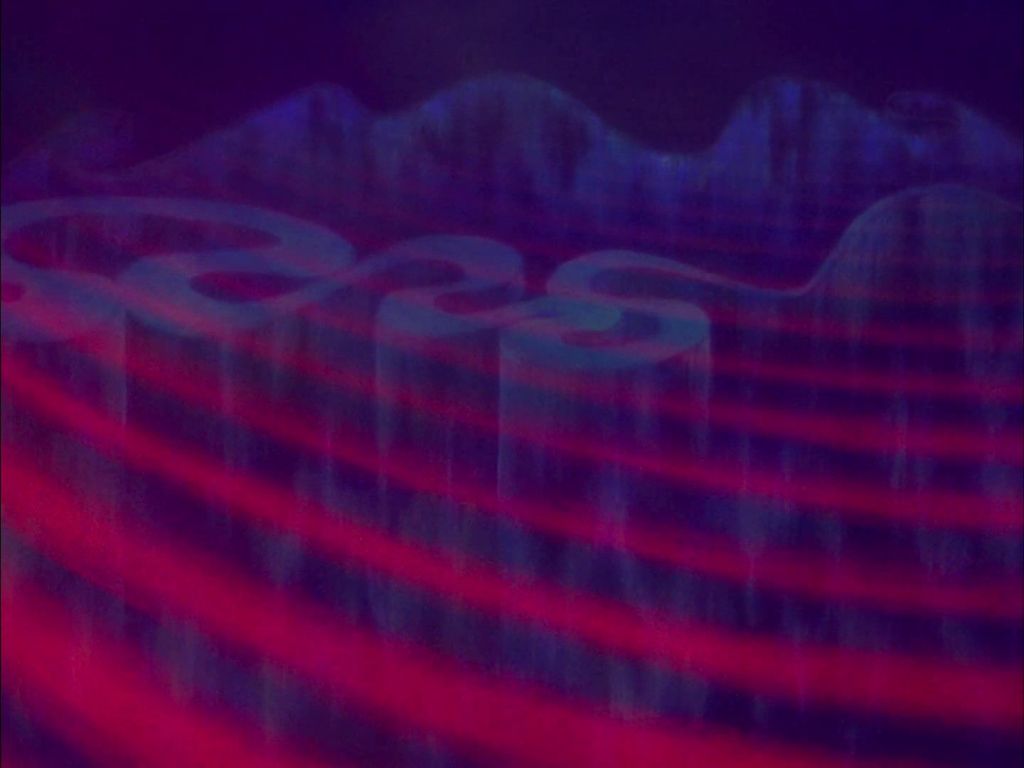
  • My brother and I always loved the Soundtrack segment as kids. It’s fun to watch the visualization of each instrument. In particular we enjoyed the low sounds of the bassoon, the waves starting to spill out under its own weight. This whole segment is even more impressive when you learn that the entire section is hand-drawn, and not just an actual sound wave (the sound wave of a triangle does not actually make a triangle shape).

The Pastoral Symphony

  • My “Six Degrees of Separation” from this film comes courtesy of my friend Ryan (whose was kind enough to share his zombie knowledge with me for a previous post). Ryan’s grandmother was dating Disney animator X. Atencio in the late 1930s, and X based the look of the dark blue-haired centaurette on her. Now that’s a legacy!
  • Cherubs have never done it for me. They’re supposed to be cute, but really they’re just naked babies with wings. Maybe they’re in here to appease the religious groups protesting the “Rite of Spring” dinosaurs? One thing’s for sure: thanks to the cherubs this movie has more butts than an ashtray.
  • A reminder that this segment once contained one of the most offensive stereotypes in Disney’s history, the black servant centaur Sunflower. Sunflower was removed in response to the Civil Rights movement of the 1960s, proof that this kind of cultural modification existed long before conservatives started yelling about the sanctity of Mr. Potato Head’s genitals. I agree with Roger Ebert, who once wrote that although films like “Fantasia” should always be preserved in their original form, the general public does not need to be subjected to the racial insensitivity of the time in a family movie.
  • And then the second half starts throwing in Greek gods: Bacchus, Zeus, Vulcan; it’s starting to look like a test run for “Hercules”.

Dance of the Hours

  • Random shout out to Alvise Loredan, the Venetian duke whose palatial home this segment apparently takes place in.
  • The whole segment is a lot of fun, but the punchline has been spoiled over the years by the occasional appearance by the hippos and gators in other Disney media. The elephants never seem to make the cut though. Overshadowed by “Dumbo” maybe?
  • It was during this segment that I realized how sleep inducing this whole movie is. And that’s not a comment on it being “boring”; practically every segment features a character yawning and/or napping: Yen Sid, Zeus, the Hippos, Chernabog later on. I also watched this movie on a particularly rainy Sunday, which didn’t help matters either. At this rate, who needs NyQuil?

Night on Bald Mountain/Ave Maria

  • “Bald Mountain” is the ultimate anti-Disney segment. I’m sure the current management hates that they constantly have to defend an 80 year old piece of animation that centers around ghosts gathering to worship the devil. Given that subject matter, “Bald Mountain” is hands down the scariest thing Disney ever produced (the Headless Horseman being a close second).
  • Also, just to clarify, this evil demon is Chernabog, not to be confused with Chernobog, the Slavic god of bad fate (and the evil yin to Belobog’s good yang).
  • Wow, Chernabog is ripped. Someone didn’t skip ab day.
  • All the ghost animation is stunning, but my favorite is the shot of spirits flying through the loop of a noose on their way to Bald Mountain.
  • HD transfers are great for animation, but you can definitely see where the animation ends and the background begins. It’s pretty easy to spot which parts of Chernabog will not be moving in any given shot.
  • Ave Maria” has some lovely visuals – and features the only vocals within the instrumental segments – but then it just kinda ends. Adding to this anticlimax is the film’s lack of end credits which, while preserving the film’s presentation as an actual concert, robs the audience of a chance to sit with the movie and see the names of the film’s creative talent. If I were Walt, I’d be a lot nicer to my animators right around now.

Legacy 

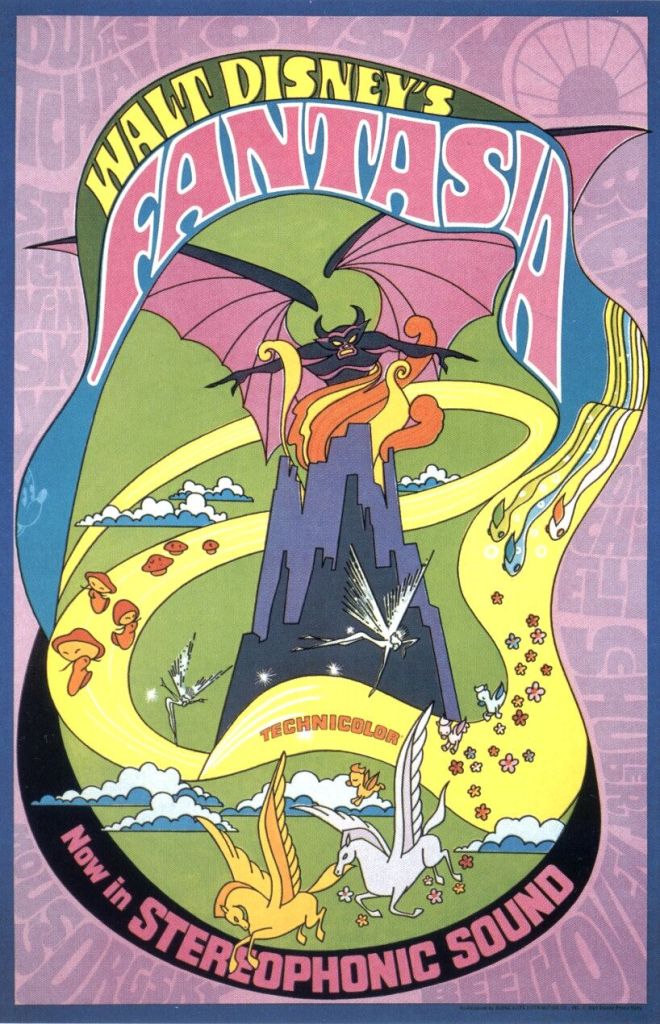
  • The original run of “Fantasia” consisted of a roadshow presentation at 13 theaters throughout 1940 and 1941. While a success with audiences and movie critics (though not necessarily music critics), “Fantasia” failed to recoup its investment due to the expensive installation of Fantasound equipment at each theater, and the ongoing economic impact of World War II. While “Fantasia” would be released several times over the decades, the film didn’t get out of the red until its very psychedelic reissue in December 1969.
  • Disney had talked about re-releasing “Fantasia” every few years with new segments. The closest he ever got in his lifetime was a selection of low-budget “package features” with musical-based shorts made to save money during the war. Among those films is 1946’s “Make Mine Music”, which includes the deleted “Clair de Lune” animation repurposed with a new song called “Blue Bayou”.
  • Ideas for a proposed “Fantasia” sequel always seemed to fall through, until the 50th anniversary reissue in 1990 (and subsequent success on home video) showed the Disney company that there was an audience for more “Fantasia”. Co-produced by Walt’s nephew Roy E. Disney, “Fantasia 2000” features seven new segments set to classical music. It’s…shorter than the original, I give it that.
  • I’m not sure if “The Sorcerer’s Apprentice” ended up helping Mickey’s film career, but it did give him one of his most iconic outfits. Fantasmic would be a lot weirder if Mickey was dressed as Steamboat Willie the whole time.
  • The Sorcerer’s hat even became a landmark at Disney’s Hollywood Studios, blocking the Grauman’s Chinese Theater and being an unpopular eyesore/pin trading station from 2001 to 2015.
  • Speaking of “Sorcerer’s Apprentice”, did the Nicholas Cage movie have anything to do with the short? Asking because I’m definitely never watching that movie.
  • Among Roger Meyers Sr.’s proudest achievements was the full-length musical “Scratchtasia”.
  • Sure, we’ve had other movies on this list that have inspired video games and theme park attractions, but “Fantasia” may be the only NFR movie to inspire a themed mini-golf course. Fantasia Gardens opened at Walt Disney World in 1996, and is still there!
  • But perhaps the biggest impact “Fantasia” made on pop culture was on Walt himself. Following the underwhelming critical and commercial response to the film, Disney never again attempted a film that emphasized artistic freedom over commercial appeal, opting to stick with the kind of safe, popular entertainment that became synonymous with the Disney brand. Walt occasionally struggled with this choice later on in his career, one such example occurring at a screening of “To Kill a Mockingbird” in 1962, after which Walt told his family, “I wish I could make a picture like that.”

Listen to This: Leopold Stokowski shows up three different times on the National Recording Registry: twice with the Philadelphia Orchestra, and once with his All-American Youth Orchestra. Of the film’s eight composers, Bach, Tchaikovsky, Stravinsky, Beethoven, and Mussorgsky all have their work represented on the NRR. Honorable mention to Ponchielli, whose “Dance of the Hours” is reworked as Allan Sherman’s “Hello Muddah, Hello Fadduh”.

Favorite Other Notes from the Original Post

  • Stokowski conducts the same way I dry my hands in a bathroom when there’s no paper towels left.
  • Pretty gutsy to do selections from “The Nutcracker Suite” but not the main march theme.
  • Did that dinosaur just mug at the camera?
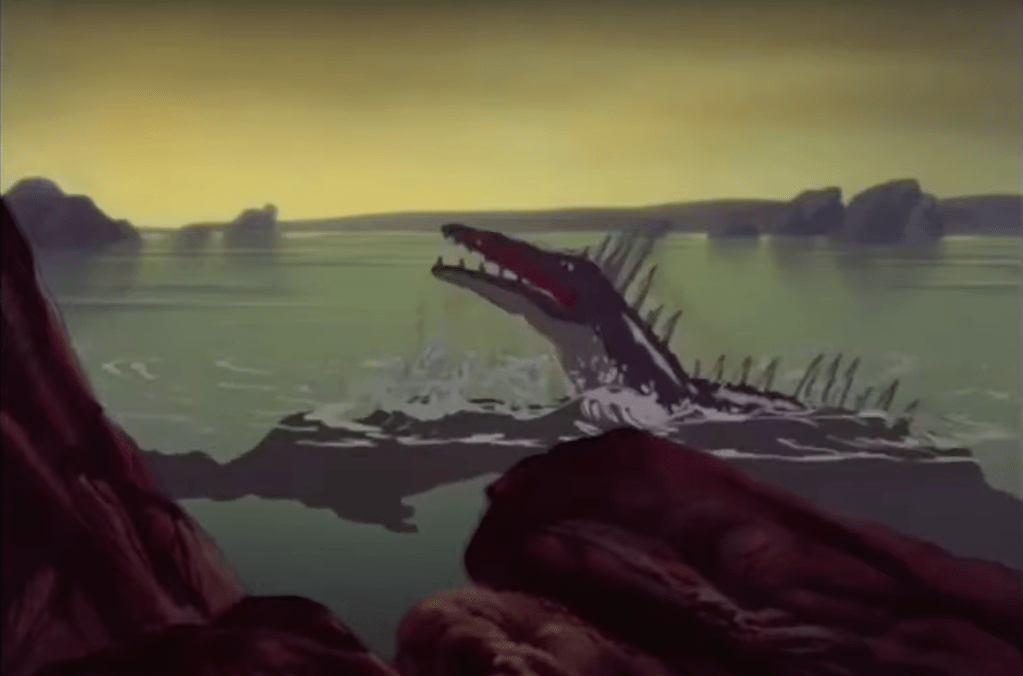
“Hey Ma, I’m in a movie!”
  • I always felt sorry for the people who live in the town at the base of Bald Mountain. That can’t be fun. Every night with these ghosts and the loud music. Some of us have work in the morning!
#30) Fantasia (1940) – Part 1

#30) Fantasia (1940)

OR “A Little Mice Music”

Directed by Samuel Armstrong (Toccata and Fugue, The Nutcracker Suite), James Algar (The Sorcerer’s Apprentice), Bill Roberts and Paul Satterfield (The Rite of Spring), Ben Sharpsteen and David D. Hand (Intermission/Meet the Soundtrack), Hamilton Luske, Jim Handley and Ford Beebe (The Pastoral Symphony), T. Hee and Norman Ferguson (Dance of the Hours), Wilfred Jackson (Night on Bald Mountain/Ave Maria)

Composed by Johann Sebastian Bach, Pyotr Tchaikovsky, Paul Dukas, Igor Stravinsky, Ludwig van Beethoven, Amilcare Ponchielli, Modest Mussorgsky, and Franz Schubert

Class of 1990 

This is a revised and expanded version of my original “Fantasia” post, which you can read here.

The Program: Performed by the Philadelphia Orchestra under the conduction of Leopold Stokowski, “Fantasia” is an artistic marriage between classical music and Disney animation. Walt’s animators visualize Bach’s “Toccata and Fugue” with abstract shapes, Tchaikovsky’s “Nutcracker Suite” with fairies and dancing flora, Dukas’ “The Sorcerer’s Apprentice” with Mickey Mouse, Stravinsky’s “Rite of Spring” with dinosaurs, Beethoven’s “Pastoral Symphony” with characters from Greek mythology, Ponchielli’s “Dance of the Hours” with dancing hippos and ostriches, Mussorgsky’s “Night on Bald Mountain” with some terrifying devil worship, and Schubert’s “Ave Maria” with…mostly multiplane backgrounds and tracking shots.

Why It Matters: The NFR calls it “Disney studios’ most ambitious animated feature”, and opines that the segments range from “elegant” to “kitschy”.

But Does It Really?: As a piece of film history, “Fantasia” is a game changer in its exploration of what an animated feature could be. In a way, “Fantasia” is the anti-Disney movie, with its dark themes and emphasis on mood over character, two wells that Disney has rarely gone to since. As a film for modern day viewing, “Fantasia” is…fine. It’s a treat for classical music/animation buffs to watch, but like an actual symphony concert, a little patience is required to appreciate “Fantasia” and its two-hour running time. “Fantasia” is a no-brainer for NFR inclusion, though I’m still on the fence if it holds up well enough to entertain a modern audience with no nostalgic attachments.

Everybody Gets One: Leopold Stokowski had been conductor for the Philadelphia Orchestra for 25 years when approached by Walt Disney to conduct a Mickey Mouse short based on “The Sorcerer’s Apprentice”. Stokowski was known for his bucking of orchestra traditions (he conducted without a baton!) and his controversial re-orchestrations of classical music that strayed from the composer’s intentions. Music critic and radio commentator Deems Taylor was chosen to serve as the film’s emcee, as well as to help Disney and Stokowski select which pieces would be performed.

Wow, That’s Dated: Like a lot of early Disney animation, “Fantasia” would be perfect if it weren’t for the racial stereotyping. The “Chinese Dance” from “The Nutcracker” is performed here by mushrooms drawn with slanted eyes and their caps doubling as conical hats. And although later versions have removed the most offensive Black stereotype centaur from “Pastoral Symphony” (more about her in Part Two), two Black centaurs with zebra legs somehow survived. Like an early COVID test, these moments are uncomfortable, but brief.

Title Track: From the word meaning a composition (usually musical) combining different forms and styles, “Fantasia” was one of over 1700 proposed titles from Disney staff members to replace the working title “The Concert Feature”. No one knows for sure who suggested “Fantasia”, but it was an early favorite of the directors that stuck around.

Seriously, Oscars?: “Fantasia” premiered in New York in November 1940, but was deemed ineligible for the 1940 Oscars because it had not played in Los Angeles (it opened at L.A.’s Carthay Circle in January 1941). Walt was so upset by this, he removed his animated shorts from Oscar consideration that year (“Pinocchio“, however, remained as a contender and eventual winner). At the 1941 Oscars, “Fantasia” still wasn’t nominated, but did receive two Special Oscars: to Leopold Stokowski for his “unique achievement in the creation of a new form of visualized music”, and to Walt Disney, William Garity, John N.A. Hawkins, and RCA for their creation of Fantasound, a precursor to surround sound that played with the movie. Disney also won that year’s Irving G. Thalberg Award for his producing career.

Other notes

  • As previously mentioned, “Fantasia” began as the standalone Mickey Mouse short “The Sorcerer’s Apprentice”. Disney was determined to revive Mickey’s declining popularity with filmgoers, hiring Leopold Stokowski and assigning his top animators to the project. When the short’s budget ballooned to $125,000 (Three to four times the usual short budget), Walt realized the only way to make his money back was if “Sorcerer’s” was included as part of a feature, thus inspiring him to make a film consisting of several shorts set to classical music.
  • Two of the originally proposed nine segments didn’t make the final cut of “Fantasia”. Claude Debussy’s “Clair de Lune” was fully animated before being cut for time, while Gabriel Pierné’s “Cydalise et le Chèvre-pied” (roughly translated “Cydalise and the Satyr”) was swapped out for Beethoven’s “Pastoral Symphony”, which retained the Greek mythology aesthetic of “Cydalise”.

Intro/Toccata and Fugue

  • I will take this time to express my displeasure with the current version of “Fantasia” made available by Disney. In 2000, “Fantasia” was restored to its original roadshow presentation, and while all of Deems Taylor’s extended on-camera introductions were reinstated, the audio of these additional moments had deteriorated beyond repair. Rather than keep Deems Taylor’s original audio and supplement it with subtitles or ADR, Disney chose to redub all of his dialogue, meaning that at no point in the current version do you actually hear Taylor’s real voice. And no offense to Corey Burton, one of Disney’s most prolific voice actors, but couldn’t they get someone who actually sounds like Deems Taylor?
  • Man, they make you wait for the animation. After a lengthy opening, and live-action shots of the orchestra performing the beginning of “Toccata and Fugue”, the first actual animation appears 7 1/2 minutes into the film. This is where that patience really comes in handy.
  • A lot of “Toccata” reminded me of some of the NFR’s more abstract pieces of animation, and it turns out Oscar Fischinger, the man behind “Motion Painting No. 1“, briefly worked on this segment. Fischinger quit before the segment had been animated, but you can definitely see his influence: a series of complex patterns formed by simple shapes.

The Nutcracker Suite

  • Deems Taylor mentions in his intro that “nobody performs [the “Nutcracker” ballet] nowadays”. Turns out this 1892 composition was a few years away from several productions that renewed public interest in the piece, making it a holiday staple. Whether or not “Fantasia” had anything to do with this revival is anyone’s guess.
  • The fairies in “Dance of the Sugar Plum Fairy” begin a motif in this movie I call “Full-frontal nothing”. These fairies’ human form appears to be nude, but there is no detail that warranted any censorship (though the censors made the “Pastoral” centaurettes cover up anyway).
  • My favorite part of the segments are the koi fish during the “Arabian Dance” who seemed to be startled at the sight of a camera being pointed at them.
  • And now you know where 90% of all Christmas commercial music comes from.

The Sorcerer’s Apprentice

  • In another anti-Disney move, “The Sorcerer’s Apprentice” is extremely faithful to the poem it’s adapted from – except for the mouse part.
  • As part of Disney’s attempt to revive Mickey’s popularity, the mouse was redesigned, getting pupils for the first time, as well as an overall rounder, “cuter” look.
  • Mickey brings a broom to life to help it carry water? Wouldn’t you enchant a broom to make it, ya know, sweep by itself? I guess it’s naturally doing that by walking.
  • Mickey Mouse has gone through a lot of phases in his career, but I think axe-wielding Mickey is my favorite. Speaking of, I did not realize brooms have the same regenerative properties as earthworms.
  • Everyone’s favorite piece of trivia: the sorcerer that Mickey is apprenticing for is named Yen Sid – Disney backwards. The animators even snuck in Walt’s trademark raised eyebrow.
  • Speaking of Walt, Disney lends his voice to Mickey Mouse in this segment’s tag with Leopold Stokowski. It’s one of the last times Walt voiced the mouse himself.

Rite of Spring

  • Just imagine if Disney tried to do anything today based purely on scientific evidence. Some of the more hardcore (re: Christian) Disney fans would throw a fit.
  • This segment was made long before scientists found evidence of dinosaurs evolving into birds, so Deems Taylor’s comments about some dinosaurs being “the size of a chicken” or containing “the brain of a pigeon” are a pretty outstanding coincidence.
  • I admired the animation of the fish swimming past various predators and evolving into the first creature to crawl onto land. A surprisingly beautiful moment in this movie.
  • I always forget how vicious the T-Rex battle with the stegosaurus is, and how quickly one-sided and gruesome it becomes. That being said, I can’t watch that scene – or most of this segment – without thinking of Primeval World at Disneyland.
  • In 1940, scientists had not yet adopted the now-common theory that a meteor wiped out the dinosaurs, so this segment concludes with the dinosaurs extinction from – as Taylor puts it – a “gigantic dust bowl”. “Rite of Spring” may be the biggest downer to come from Disney that doesn’t involve a parent’s death. Still, it’s better than “The Land Before Time”.
  • And on that note: Intermission! One of the many lessons this blog has taught me is that if a movie offers you an intermission, take it. Pause the film, get up, stretch, go to the bathroom, whatever you need to do. In a way, you’re simply adding to the authenticity of the film’s original theatrical experience.

We’ll take our own intermission here, and continue this deeper dive into “Fantasia” in Part 2!