#678) Bohulano Family Film Collection (c. 1958-c. 1979)
OR “Thrilla in Little Manila”
Directed by The Bohulano Family
Class of 2023
My thanks to the Center for Asian American Media for preserving the Bohulano Family film collection, and presenting them on Internet Archive. The embedded video is an introduction to the collection by Dawn Bohulano Mabalon.
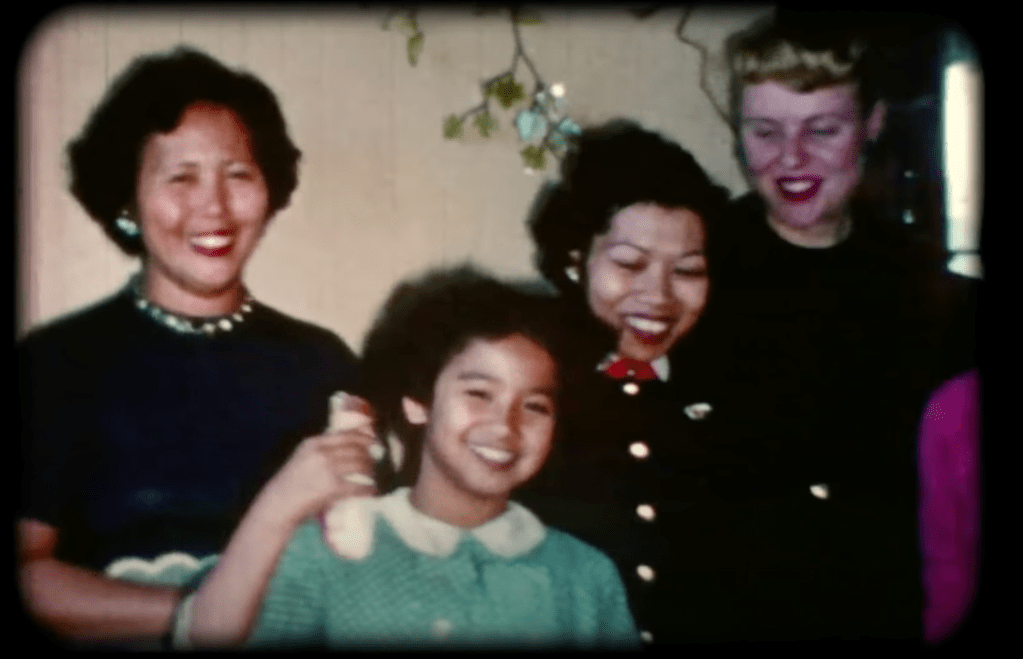
The Plot: Throughout the 20th century, Stockton, California was home to Little Manila, the largest Filipino community outside of the Philippines. The Bohulano family moved to Little Manila in 1955, and like countless other families, bought a camera and began filming their own home movies. The 15 reels of the Bohulano Family film collection span over 20 years (and 51/2 hours!), chronicling not only multiple generations of one family, but also the decline of Little Manila as it becomes a victim to Stockton’s ongoing gentrification, as well as the revival of Stockton’s Filipino community that rose from these ashes. These films also include family vacations, holiday celebrations, weddings, funerals, and a whole lot of dance recitals. Keep an eye out for Dawn, the Bohulano’s eldest grandchild, who will one day be key in getting these home movies preserved and celebrated.
Why It Matters: The NFR write-up is a general overview, highlighting that this film collection “documents the history of the Filipinix community (one of the largest in the country) during a period of significant immigration.”
But Does It Really?: This may be the most biased I have ever been in favor of a film’s NFR induction. Longtime readers know that Stockton is my hometown, so of course I will endorse anything that preserves Stockton’s history (especially in a positive light). I lived on the other side of Stockton from Little Manila and didn’t spend a lot of time in the neighborhood, so this viewing experience was simultaneously new and familiar. Overall, I found my viewing of these films surprisingly emotional; in part because of my own connection to Stockton, but also from watching this family grow through the decades. “Bohulano Family Film Collection” makes the NFR thanks to its detailed representation of a Filipino community, its preservation of Filipino history, and as a personal journey to a side of my hometown I never knew.
Shout Outs: Among the pop culture that crops up in these home movies are “The Wizard of Oz” and “Star Wars“. And thanks to the family trip to Disneyland, we get quick appearances by the Three Little Pigs, the Seven Dwarfs, and Dumbo.
Everybody Gets One: Delfin Bohulano immigrated to California in 1929, and met his wife Concepcion Moreno in the Philippines while stationed there during World War II. Delfin returned to California with his family in 1952, and bought a house in Stockton in 1955 through a veteran’s loan program. Over the years the Bohulanos raised their four children in their house on Jefferson Street, and frequently hosted their family – including an eventual seven grandchildren – at various gatherings. I should also note here that I cannot definitively determine who is actually behind the camera during these home movies, but I suspect it is multiple people, hence my directing credit to the Bohulano family.
Other notes
- The Filipino immigration boom of the early 1900s happened in part because the Philippines were colonized by the United States after the Spanish-American War in 1898 (this colonization continued until the Philippines’ independence in 1946). The Filipino were enticed to come to America to live out their own American dream, but found only racism and discrimination once they arrived. Many Filipino settled in Stockton, California due to the city’s ongoing need for migrant workers (Stockton was and still is an agricultural town). Stockton’s segregation laws forced the Filipino to live on the south side of town, with a Filipino neighborhood rising in the 1930s, dubbed Little Manila in the 1940s by journalist Frank Perez.
- The 15 reels that make up the Bohulano Family film collection seem to be in no particular order, with each reel jumping through time. I’ve put my notes as close to chronological order as possible.
- The earliest film in the collection is Delfin’s 50th birthday party in 1958. My main takeaway was how much everyone dressed up for a family gathering in the ’50s: Men in suits and ties, women in dresses and ridiculously puffy hair. I imagine this is what your resident grumpy old man is talking about when he says things were better back in the day.
- Unsurprisingly, there is a lot of footage of the family’s trip to the Philippines in 1967, the first time many of them had been back in almost 15 years. The timing of this trip is noteworthy: the Philippines were in a bit of an economic upswing following the 1965 election of Ferdinand Marcos as President, a presidency that immediately went south once Marcos declared martial law in 1972 and ran the country as a dictatorship until 1986.
- I hope you enjoy dancing, because there is a lot of it in these films. From impromptu dancing at the Bohulano house to the children’s dance recitals to demonstrations of both singkil and tinikling to a local production of “The Nutcracker”, there’s some kind of dancing in practically every reel. Heck, I bet there’s more dancing in this than in “That’s Dancing!“
- Speaking of “The Nutcracker”, the Bohulano Family film collection is eligible for my Die Hard Not-Christmas List. We get several family Christmases, a few Nativity scenes, plus an appearance by Santa!
- Hey, one of the teens at a family gathering flipped off the camera! Not only did the Bohulano family see that, but now thanks to its NFR designation, so did a bunch of random film historians and bloggers with way too much free time.
- Among the community events covered here is the Barrio Fiesta, an annual event celebrating the anniversary of the Stockton Filipino Center’s opening in 1972. Held every August, the Barrio Fiesta includes cultural performances, dinner, dancing (of course), and demonstrations of escrima, a form of Filipino martial arts. The center, now known as Filipino Plaza, is still around, as is the Barrio Fiesta.
- Another Stockton landmark featured is the Stockton Civic Auditorium, located close to Little Manila, and home to at least one wedding reception in this film. I had many a chorus and band recital at the Civic, as well as my senior prom.
- There are of course a few comparison points between these films and the Solomon Sir Jones films. Both are amateur movies covering underrepresented groups and their segregated neighborhoods, but Bohulano’s emphasis on family gives this a more emotional feeling rather than just a collection of faces and places. Side note: Between the 7 1/2 hours of Solomon Sir Jones and 5 1/2 hours of Bohulano, I think I’ve spent more time watching other people’s home movies than my own family’s!
- As a longtime Disneyland fanatic, it’s my duty to point out that this is the second NFR entry to include home movie footage of Disneyland. I can date the trip to 1975/1976 thanks to footage of “America on Parade”, Disney’s contribution to America’s bicentennial celebration. Also thanks to this parade, the NFR now has appearances by Bongo the Bear and the cast of “Song of the South”.
- Another part of Stockton that brought up a lot of memories for me is the family’s 1978 trip to Pixie Woods, Stockton’s local children’s park. Pixie Woods looks here just like I remember it from my trips in the early ’90s: the playgrounds, the rides, and the plywood cutouts of fairy tale characters that look just different enough from their Disney counterparts to avoid copyright infringement.
- 1978 also saw the family take a trip to New York City. Their sightseeing in Manhattan allows me to play another round of “What’s Playing on Broadway Back Now”: This time we get “A Chorus Line”, “The Wiz”, “Beatlemania”, and “I Love My Wife”, the latter of which the family sees and discreetly records a few moments of. Turns out the Bohulano were into slime tutorials long before the internet was.
- Towards the end these home movies get something new: Sound! It’s fun finally being able to hear what these people actually sounded like, and they are clearly having a blast cracking each other up. We even hear little Dawn shyly squeak out a few words.
Legacy
- Most of Little Manila started to get demolished in the ’60s and ’70s to make way for the crosstown freeway. Today only three buildings from the original neighborhood are still standing. The good news: due to Stockton’s frequent financial problems, they don’t have enough money to fully erase what’s left of Little Manila. The bad news: they don’t have enough money to fully preserve it either. Only time will tell, I guess.
- The Bohulano family’s home movies were preserved thanks to the tireless efforts of Dawn Bohulano Mabalon, one of Delfin and Concepcion’s grandchildren. Throughout her adulthood, Dawn raised awareness of California’s Filipino community as well as the historical significance of Little Manila. Her book “Little Manila Is In the Heart” helped shine a light on Little Manila’s perilous state. Fun Fact: Dawn taught Filipino history at San Francisco State University when I was a student there! Now I wish I had spent more time in the history department.
- Although we lost Dawn Bohulano Mabalon in 2018, her legacy and achievements live on, particularly the Little Manila Foundation, which still exists today as Little Manila Rising, and is devoted to the preservation and growth of the South Stockton community. Learn more about them here.
Further Reading: As you can guess, I really enjoyed researching this post. Most of my information about Little Manila comes from two books written by Dawn Bohulano Mabalon: 2008’s “Filipinos in Stockton” and 2013’s “Little Manila Is In the Heart“. Both books contain a thorough history of the Stockton Filipino community way beyond the simplified scope of this post. I can’t recommend them enough.
 The Horse's Head
2 thoughts on “#678) Bohulano Family Film Collection (c. 1958-c. 1979)”