#723) Lady Helen’s Escapade (1909)

#723) Lady Helen’s Escapade (1909)

OR “The Woman with No Name”

Directed by D. W. Griffith

Written by Stanner E. V. Taylor

Class of 2004

Until recently, “Lady Helen’s Escapade” was one of the hardest NFR titles to track down; no physical media release, no internet uploads, nothing short of scheduling a screening at the Library of Congress. That all changed recently thanks to the efforts of Benjamin Wilson (curator of this comprehensive NFR YouTube playlist) and a GoFundMe campaign to get a print from the Library of Congress digitized and uploaded to YouTube. Additional thanks to Eric Levy from filmregistry.net for bringing this development to my attention and hosting the film’s online premiere.

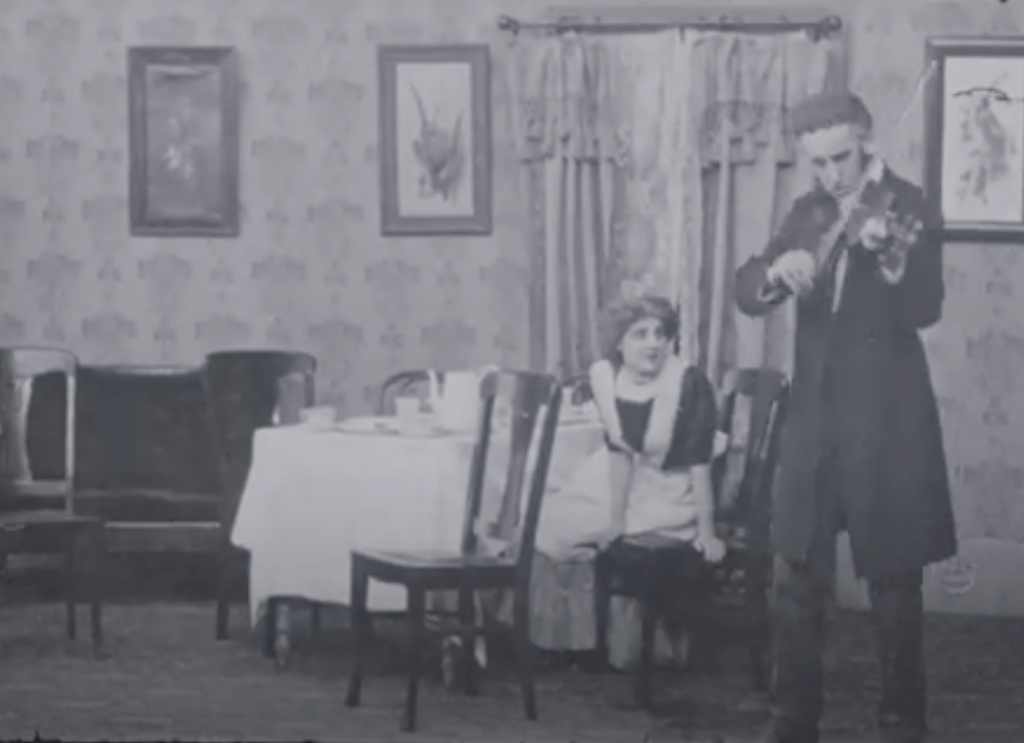
The Plot: Bored socialite Lady Helen (Florence Lawrence) wants to add some excitement to her life, so she answers a newspaper ad and takes a job as a boarding house servant. Much hilarity ensues as she stumbles through her new job, while simultaneously pining for a tenant – a handsome violinist (David Miles) – and fending off the advances of some enamored dinner guests. But the real story behind this short is one about its lead’s run as the first American movie star, as well as the story of this film’s recent resurrection.

Why It Matters: The NFR write-up is a brief ode to Florence Lawrence – “the first true star in American cinema”, with the film proper being referred to only as “sprightly”. An essay by NFR expert Daniel Eagan is a biography of Florence Lawrence, mixed with the little information we have regarding “Lady Helen’s”.

But Does It Really?: This is definitely another early 2000s “What don’t we have yet?” NFR entry. Florence Lawrence, while almost entirely forgotten today, is an important player in American film history, and having one of her films in the NFR makes sense. As a film, “Lady Helen’s Escapade” is fine if not outstanding, but it does a good job of representing Florence Lawrence as an actor (and is sadly one of her few surviving films). Why it took so long for this film to become readily available is beyond me, but thankfully that has been rectified, and hopefully a new generation of film lovers can discover Florence Lawrence and keep her legacy alive.

Everybody Gets One: Turns out the first American movie star is Canadian; Florence Lawrence was born Florence Bridgwood in Hamilton, Ontario. Her mother was Charlotte Bridgwood, a stage actor who performed under the name Lotta Lawrence. Florence began acting in her mother’s theater troupe at age three, though they eventually settled in New York after Florence’s father died and the Lawrence Dramatic Company disbanded. Unable to find work on the New York stage, Florence (now using “Lawrence” from her mother’s stage name) started acting in the new medium of film, eventually signing with Biograph in 1908. “Lady Helen’s Escapade” was one of dozens of shorts Lawrence made for Biograph in 1908 and 1909; though always uncredited. Film studios at the time never credited their actors, partly because most actors did not want to be associated with this new “low-brow” medium; but mainly for fear from the studios that name recognition would lead to actors demanding higher salaries (they were right). Fans of Florence Lawrence didn’t know who to address their letters to, so Biograph received tons of fan mail praising “The Biograph Girl”.

Wow, That’s Dated: Mostly the kind of slum tourism, aka slumming, that Lady Helen participates in by taking this job. The idea of visiting impoverished or disadvantaged places out of adventure or curiosity is still around but is now widely (and justifiably) criticized.

Other notes

  • One very important note regarding this film’s YouTube presentation: for whatever reason, the print made available by the Library of Congress did not include intertitles which, as you can gather from the complex plot synopsis, would have been very helpful to have. During our post-screening discussion back in September, it was theorized that the digital version was scanned from a paper print (which would have only included the visuals and not the text). If you’re going to watch “Lady Helen’s Escapade”, do yourself a favor and read a plot description beforehand (feel free to read mine again).
  • If nothing else, “Lady Helen’s Escapade” is a chance for me to watch and write about a D. W. Griffith film that isn’t mired in controversy. It’s also interesting to watch a Griffith film while he’s still figuring out this new medium. No revolutionary close-ups or cross-cutting, just point and shoot. “Lady Helen’s” was released eight months before “A Corner in Wheat”; one of Griffith’s first toe dips into the pool of artistic filmmaking.
  • Florence Lawrence is quite a capable leading lady, never overselling the comedy the way some of her co-stars do, which unfortunately leads to her getting wrongfully upstaged in her own movie. It’s a shame there isn’t more of Lawrence’s filmography around to see what kind of range she must have had.
  • I’m amused by the massive fur coat being worn by Lady Helen’s boyfriend. It looks like he’s being eaten by a wooly mammoth in real time. PETA would need an entire Sherwin-Williams to take this guy down.
  • As is often the case in these kinds of early romantic comedies, the men pining for Florence are ignoring her obvious disinterest in them. If only this print had intertitles, then she could have made her plea.
  • Once again, you owe it to yourself to read a plot synopsis before watching “Lady Helen’s Escapade”. The ending is so quick and disjointed that you get the sense the intertitles did a lot of heavy lifting. At the online premiere, our excitement before the film turned into bafflement by the end; a sort of “That was nice, but what happened?”

Legacy

  • Shortly after making “Lady Helen’s Escapade”, Florence Lawrence was lured away from Biograph to Independent Moving Pictures with the promise of better pay and – more importantly – billing. Lawrence’s reign as America’s first movie star continued into the 1910s, though a series of personal setbacks, as well as injuries sustained in a 1915 fire, led to her decline in stardom. By the 1920s, Lawrence was working solely as an extra or bit player (almost always uncredited, somewhat ironically). Florence Lawrence’s final films were as a bit player for MGM before her death in 1938.
  • Perhaps Florence Lawrence’s greatest contribution to history is one outside of her film work. In 1914, Lawrence invented an “auto signaling arm” for cars, but didn’t patent her idea, which would go on to become both the turn signal and the brake signal. Sadly, given my own experience on the road, most people do not use Lawrence’s invention when changing lanes on the freeway. Do not let her legacy be in vain!
  • D. W. Griffith continued to crank out shorts for Biograph through 1914, when he left following disputes regarding budget overruns. Griffith continued to push the envelope for films as an artform, and if you’ve read this far then you’re well aware of what he made in 1915. Moving on…
  • Although most of Florence Lawrence’s filmography has been deemed lost, “Lady Helen’s Escapade” survives, and in 2024 was finally made available online. My thanks again to Benjamin Wilson for his work campaigning for this film’s digitization, and Eric Levy for inviting me to its online premiere. It was wonderful meeting so many film lovers face-to-face (via Zoom) and sharing our silent film knowledge with each other. Bonus shoutout to Isabel of “Irresistible Cinema”, who was also in virtual attendance and covers the NFR on her website. Check her out!
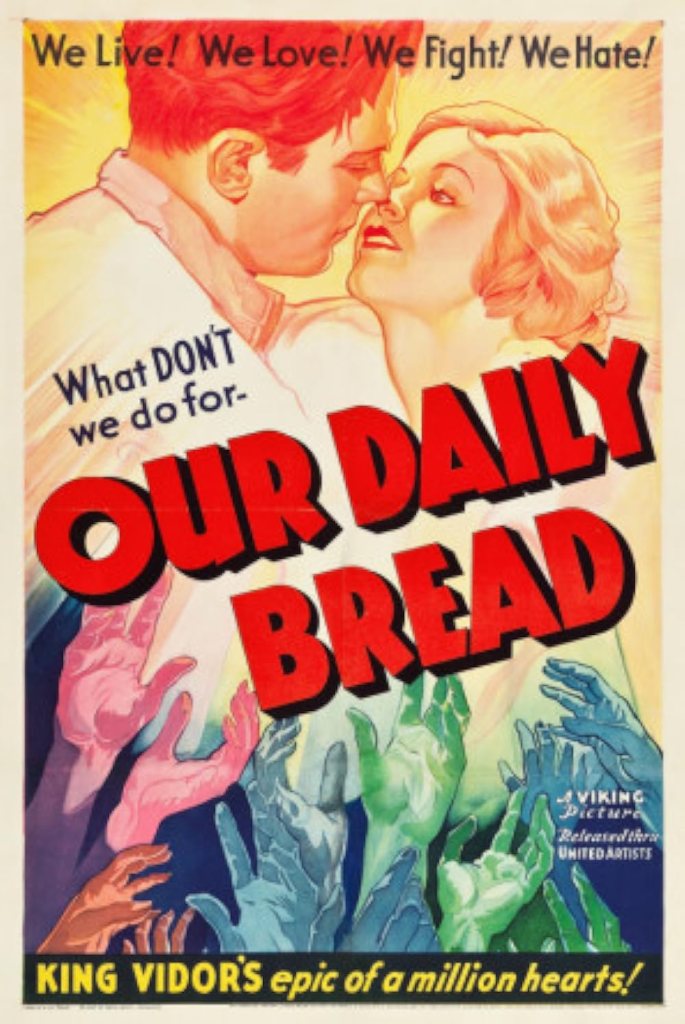
#722) Our Daily Bread (1934)

#722) Our Daily Bread (1934)

OR “Red Acres”

Directed King Vidor

Written by Vidor, Elizabeth Hill, and Joseph Mankiewicz

Class of 2015

The Plot: Big city dwellers John and Mary Sims (Tom Keene and Karen Morley) are hit hard by the Depression and struggle to pay their bills. Desperate for help, the Sims accept an offer from Mary’s Uncle Anthony (Lloyd Ingraham) to move to farmland he is paying mortgage on and grow crops to earn a living. John and Mary quickly relocate to the country, only to discover the land is barren and that they have zero farm skills. With the help of local farmer Chris Larsen (John Qualen), John develops a co-op community where men lend their trades to the farm in exchange for a place to live. Soon dozens of men and their families join the co-op and work amidst many setbacks to grow corn for harvest. It’s a tale of community and creative problem solving, set during the last time this country ever had an overall positive reaction to Socialism.

Why It Matters: The NFR gives the film its historical context, calling it a “radical exception” to the typical escapist films of the day. The write-up also admits that the film was “[c]riticized for its purportedly socialist ideas and also for its seemingly fascistic traits.”

But Does It Really?: This is on the “historically significant” side of things. As a film, “Our Daily Bread” is a bit clunky and heavy-handed, focusing more on its ideas than its story or characters. But the film’s unique Depression-era viewpoint, as well as its interesting behind-the-scenes development, help it stand out among so many other films of the era. I get why “Our Daily Bread” is on the NFR, but I also understand why there was no rush to get it on there; this is another movie whose viewing should be reserved just for us film list completists.

Shout Outs: If the names John and Mary Sims sound familiar, that’s because they are the same names King Vidor used for his leads in “The Crowd“. “Our Daily Bread” began life as a continuation of “The Crowd”, though all that survives of that concept are the names.

Wow, That’s Dated: This movie could only be made during the 1930s when America, discouraged by the politics that got it into the Depression, was still willing to consider Communism, Socialism, and other alternatives to representative democracy. Damn it Stalin, you just had to ruin it for everyone didn’t you?

Title Track: “Our Daily Bread” is one of two NFR movies that get its title from the Lord’s Prayer. The title is said once in the film proper when the Lord’s Prayer is being recited after the first crop growth.

Other notes

  • Once the Great Depression hit, King Vidor started thinking about how John and Mary from “The Crowd” would be affected. The idea of them moving to a farm and starting a co-op came about when Vidor saw a Reader’s Digest article proposing a similar idea as a solution to unemployment (hence the film’s declaration “Inspired by the Headlines of Today”). In 1933, Vidor had a deal with RKO to finance the picture, but after months of development the deal fell through once RKO realized that Vidor could make a higher profit on the film than the studio. Unable to get any other studio interested, Vidor financed the film himself under his newly formed Viking Productions (though he did eventually secure a loan from Bank of America) and used his friendship with Charlie Chaplin to get a distribution deal with United Artists.
  • King Vidor had originally planned on hiring his leads from “The Crowd” – James Murray and Eleanor Boardman – to reprise their roles as John and Mary. By the time production began, however, James Murray had relapsed into alcoholism and Eleanor Boardman had separated from her husband…King Vidor. Tom Keene and Karen Morley were cast instead based in part on their physical resemblances to the original actors. Once you know that casting tidbit it becomes obvious that these actors were cast based on their looks because neither one is that great. Heck, Tom Keene would go on to star in “Plan 9 from Outer Space”!
  • All this “Crowd” talk begs the question: Is “Our Daily Bread” a sequel to “The Crowd” or not? While most internet listings refer to this film as a sequel, the real answer is “Not really”. Despite the same lead characters, the two films aren’t directly connected, and no prior knowledge of “The Crowd” is needed to understand “Our Daily Bread”. Still, there’s nothing stopping you from considering it a direct sequel if that’s what you really want, although at some point in the intervening six years, John and Mary have learned to speak without the use of intertitles. And didn’t they have kids?
  • This film continues the early film trope that Swedes by their very nature are hilarious. They pronounce j’s like they’re y’s! Isn’t that nutty? Side note: Chris’ actor John Qualen played Swedes/Scandinavians for comic relief in several movies, including another NFR film; “The Searchers“.
  • Having no prior knowledge of the plot, I was worried that this movie would just be the tribulations of two city folk adjusting to farm life. Once John proposed a co-op, the film finally piqued my interest, and its NFR placement made a lot more sense. Side note: As someone whose primary skill set is watching and writing about films, I would not do well in a commune. “If you help build my house, I can put ‘Citizen Kane‘ in its proper historical context for you. Please?”
  • Shoutout to whoever did the production design. I love the makeshift co-op village constructed from whatever materials were on hand. My favorite is the house made from a disassembled car, with a dismantled car door serving as their front door, complete with roll-down window! Related Fun Fact: The farm scenes were partially filmed on Edgar Rice Burroughs’ Los Angeles ranch: the appropriately named Tarzana.
  • “There’s nothing for people to worry about, not when they’ve got the earth.” Okay sure, but what if we screwed up so badly we don’t have the earth anymore? Can one of you build the Axiom for us?
  • All this plowing footage and no stirring narration about how great our government’s New Deal programs are?
  • The most inconspicuous part of the film for me was the arrival of Sally, a young Joan Blondell-type who winds up in the co-op and causes some marital strife between John and Mary. In a movie with so much inherent conflict regarding the survival of the land and its inhabitants, did we need a homewrecker subplot? Maybe sassy platinum blondes were a requirement for all 1930s films. Also, it turns out my “Green Acres” joke at the top wasn’t too far off, because Sally is played by Barbara Pepper, 30 years before her work as Doris Ziffel. It’s all connected!
  • Today in lines that sound dirty but aren’t: John comforting Mary with “We’ve licked everything together so far.” John, that stays between you and your wife, alright? 
  • The last act of the film is devoted to the community coming together to build the irrigation needed to water their crops. It’s long, but it perfectly encapsulates the film’s “The needs of the many outweigh the needs of the few” mentality, and it’s easily the film’s most exciting sequence. Like the sniper scene in “The Big Parade“, Vidor filmed this with a metronome to time the action and increase the pace as the sequence progresses.

Legacy

  • “Our Daily Bread” premiered at the Chicago World’s Fair in August 1934 before its general release that October. At some point after its initial run, “Our Daily Bread” was re-released by its new distributor Astor Pictures Corp. under the much more evocative name “Hell’s Crossroads”. King Vidor revealed years later that while the film recouped its investment, it did so just barely with little to no profit.
  • As with many a film on this list (especially those not financed by a major studio), “Our Daily Bread” lapsed into public domain and was frequently played on TV. In fact, “Our Daily Bread” was one of the first films ever shown on TV, airing on New York’s experimental W2XBS (now WNBC Channel 4) in April 1940! If a movie airs on TV but no one owns a TV yet…
  • While “Our Daily Bread” has lingered in relative obscurity for the last 90 years, it is not without its fans, including Orson Welles who once called it one of his top 10 favorite movies. The film’s reputation has improved over the last decade, starting with the film’s NFR induction in 2015, plus a screening at the 2020 Berlin International Film Festival as part of a King Vidor retrospective.

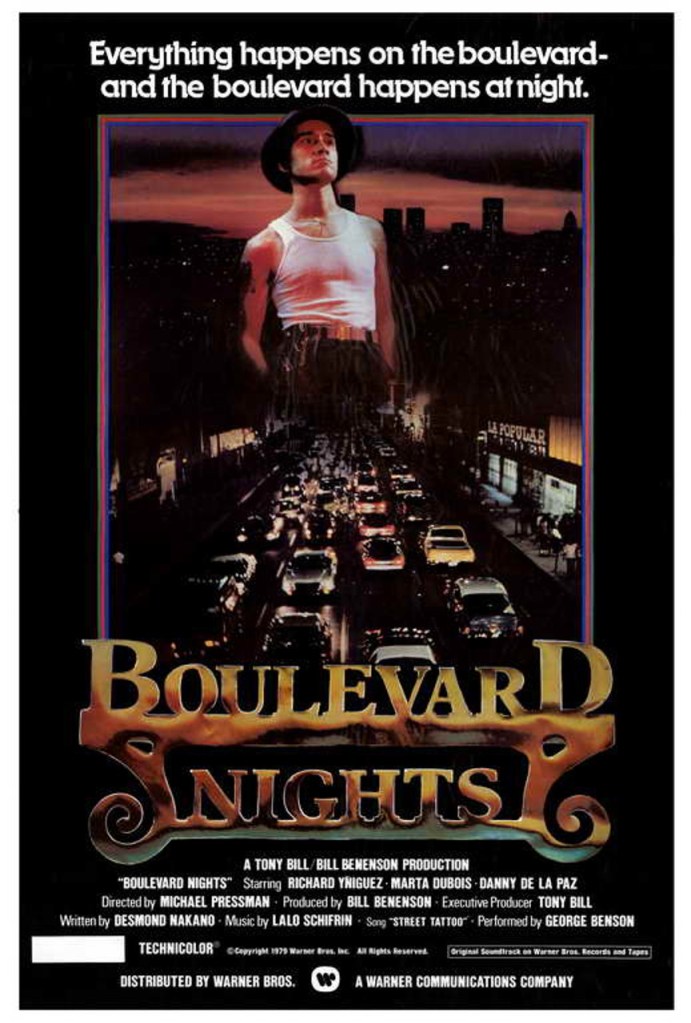
#721) Boulevard Nights (1979)

#721) Boulevard Nights (1979)

OR “Easy Lowrider”

Directed by Michael Pressman

Written by Desmond Nakano

Class of 2017

The Plot: “Boulevard Nights” centers on two brothers in East L.A.’s Mexican community; older brother Raymond (Richard Yniguez) loves driving his souped-up Chevrolet on Whittier Boulevard and going out with his girlfriend Shady (Marta DuBois), while younger brother Chuco (Danny De La Paz) is a member of the local street gang VGV, which is embroiled in a rivalry with the 11th Street gang. As a former member of VGV, Raymond tries to persuade Chuco to see his potential outside of the gang, getting him a part-time job at a local auto shop. As Raymond and Shady prepare to get married, Chuco’s devotion to VGV gets him into further trouble as their beef with 11th Street escalates into a full-out turf war. And if none of that interests you, this movie offers a whole bunch of great ’70s cars to feast your eyes on.

Why It Matters: The NFR calls the film “a pioneering snapshot of East L.A.”, and contextualizes the film with the other “gang” films of the era: “The Warriors”, “The Outsiders”, etc.

But Does It Really?: In all honesty I couldn’t get into “Boulevard Nights” and was ready to write it off as an anomaly on the NFR. But shortly after I finished this post, something remarkable happened to this movie: It got a Blu-ray release. Suddenly a number of articles popped up about this film’s significance as documentation of 1970s East L.A., and I had to rethink this whole post. As a standalone movie, “Boulevard Nights” is okay, but you’ve seen better versions of this same story in 100 other movies. Prior to its very recent reevaluation, most write-ups about this film’s importance could only connect it to “The Warriors” and the countless other gang films of the late ’70s. And if that’s all this movie had going for it, why not just induct “The Warriors”, which is much better remembered today and as of this writing still isn’t on the NFR? Fortunately, the support from this film’s Blu-ray release made me see the love a small but spirited group of L.A. cinephiles have for this movie, so “Boulevard Nights” gets a pass for its NFR induction. I’m happy for the people who champion this movie, but I’m ready to move on.

Everybody Gets One: Both this film’s director and screenwriter were the children of showbiz fathers: Michael Pressman’s father David was a blacklisted director, and Desmond Nakano’s father Lane was an actor. Desmond wrote the screenplay for “Boulevard Nights” while studying at UCLA, and it won the school’s Samuel Goldwyn Writing Award. This got the attention of producer Tony Bill, who optioned the script and financed the film independently with Warner Bros. serving as distributor. Pressman seized the opportunity to direct “Boulevard Nights” to prevent being pigeonholed as a comedy director (he had previously helmed “The Great Texas Dynamite Chase” and “The Bad News Bears in Breaking Training”).

Wow, That’s Dated: This whole thing is very late ’70s but look no further than Raymond’s feathery hair. It’s beautiful, but it dates everything.

Title Track: It tickles me that this movie has a theme song. I have no idea what Warner Bros.’ marketing strategy was, but we got “Street Tattoo (Theme from ‘Boulevard Nights’)” as a result. The song is performed during the end credits by George Benson, with music by Lalo Schifrin, lyrics by Gale Garnett, and additional special lyrics written and performed by Greg Prestopino.

Other notes

  • “Boulevard Nights” was notably filmed entirely on location in Los Angeles. Despite concerns that filming in East L.A. would be dangerous, production went smoothly, in part because the filmmakers insisted on collaborating with the community, employing many residents both in front of and behind the camera.
  • I feel like this movie starts on the wrong foot. Throughout the opening credits, we follow two 11th Street gang members as they walk through East L.A. early in the morning. As one of them is spray-painting the 11th Street insignia over a VGV tag, the VGV show up and start beating him. This only stops when Raymond appears, and the young 11th Street members run off. This was all set up in a way that made me think the 11th Street gang was our protagonists, and the next scene of Raymond and Chuco getting ready for work prompted me to say out loud “Wait, he’s the main guy?”. The whole opening is being told from the wrong perspective, taking me a little bit longer to get used to this movie. Speaking of the opening credits: Is that the “Welcome Back, Kotter” font?
  • Once I adjusted to Raymond being the protagonist, the film follows him on an exciting Saturday night cruising on Whittier Boulevard. This got me on board with the idea that “Boulevard Nights” is a “Saturday Night Fever” / “American Graffiti” kind of thing; young people hanging out and coming of age. But then they really veer into the gang movie tropes and I guess this is the movie now.
  • No disrespect to this cast, many of them making their film debuts, but they are across the board not great. No one’s terrible, but no one stands out as being particularly good. But in everyone’s defense, the screenplay is of no help in that department, with too many cliches and tropes working against any authentic performances.
  • The only actor I recognized from this cast is Carmen Filpi, who plays Mr. Diaz the local tattoo artist. I know Filpi best as Jack, the hobo that rides the rails with Pee-Wee in “Pee-Wee’s Big Adventure”.
  • I’m always happy to hear a Lalo Schifrin score (his “Cool Hand Luke” theme is one of my favorites), but what’s with the sad “Incredible Hulk” music as Chuco walks the streets by himself? (And for the record “The Lonely Man” was composed by Joe Harnell)
  • [Spoilers] The plotline of Raymond and Shady getting married goes smoothly; so smoothly in fact that I became increasingly suspicious that something terrible was going to happen to these two. Raymond and Shady go through with the wedding as planned, but during the reception an 11th Street gang member, aiming for Chuco, shoots Mrs. Avila (Raymond and Chuco’s mother) instead. Having recently gotten married myself (humble brag), I’m glad I didn’t see this movie before my own wedding. Granted, I currently have no beef with any local gangs that would prompt such a tragic occurrence, but you know me, I’ll worry about anything.
  • I really don’t have a lot to say about this movie. It was fine, but its NFR standing is more historical than artistic. In an effort to end on a positive note, I will say that I liked the car stuff with the hydraulics. That was cool. Why couldn’t the movie be more about that?

Legacy

  • “Boulevard Nights” was released in March 1979, just a few weeks after “The Warriors”, and was met with similar protests from people who were worried the film would incite riots and gang activity in the theaters. Despite Warner Bros.’ attempts to downplay the film’s gang elements, there were a handful of fatal shootings and stabbings upon the film’s release, prompting San Francisco to pull the film entirely. Despite these setbacks (and a mixed-to-negative critical response), “Boulevard Nights” managed to make a small profit in theaters. Since then, the film has attained what the NFR calls a “semi-cult status”, with the likes of Quentin Tarantino championing the film’s detailed presentation of East L.A.
  • Desmond Nakano would go on to write the film adaptation of “Last Exit to Brooklyn”. He also wrote and directed two feature films: 1995’s “White Man’s Burden” and 2007’s “American Pastime”, the latter based on his father’s experience in a Japanese internment camp during WWII.
  • Michael Pressman’s directing career continues to this day, primarily in television, directing episodes of everything from “Picket Fences” to “Weeds” to “Blue Bloods”. And because I had to put this somewhere: In 1991 Michael Pressman directed – and this is true – “Teenage Mutant Ninja Turtles II: The Secret of the Ooze”. Cowabunga indeed.

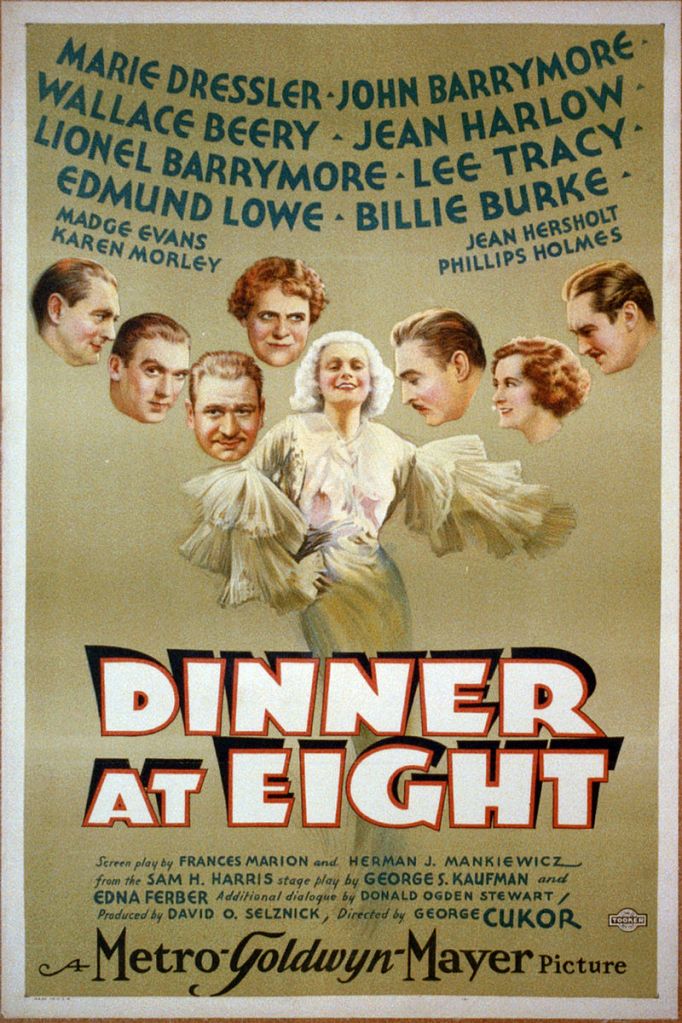
#720) Dinner at Eight (1933)

#720) Dinner at Eight (1933)

OR “There Goes Mr. Jordan”

Directed by George Cukor

Written by Frances Marion and Herman J. Mankiewicz; additional dialogue by Donald Ogden Stewart. Based on the play by George S. Kaufman and Edna Ferber.

Class of 2023

The Plot: Socialite Millicent Jordan (Billie Burke) is holding a dinner for the wealthy Lord and Lady Ferncliffe upon their arrival in New York. Her husband Oliver (Lionel Barrymore) isn’t thrilled with the idea, preoccupied with his underperforming shipping business and his declining health. Millicent does, however, concede to send a dinner invitation to Carlotta Vance (Marie Dressler) a famous stage actress who was romantically involved with Oliver many years earlier. Also invited are Oliver’s business rival Dan Packard (Wallace Beery), Dan’s young vivacious wife Kitty (Jean Harlow), who is having an affair with her physician Dr. Talbot (Edmund Lowe) and washed-up silent film star Larry Renault (John Barrymore) who is having an affair with the Jordans’ daughter Paula (Madge Evans). There are plenty of secrets to go around – and an equal number of laughs – as our characters get ready for…an evening meal at a set time.

Why It Matters: Goddammit Class of 2023, why are your write-ups so bad? The film’s official write-up on the NFR website gives a plot recap but no reasoning behind its induction, with the only superlative going to Jean Harlow’s character – “sultry”. The NFR 2023 press release, however, singles out George Cukor’s ability to successfully adapt plays into films, and heralds the ensemble as “arguably one of the greatest assembled to that point in cinema history.” Why wouldn’t you just copy and paste the press release paragraph to the official NFR page?

But Does It Really?: “Dinner at Eight’ is one of those movies that, while not as well remembered today, has lingered on in pop culture enough that its NFR inclusion isn’t too farfetched. Overall, the movie still provides plenty of laughs over 90 years later, though a few of these subplots border on the melodramatic and prevent the film from being an all-out laugh fest. While the whole ensemble is great, in true Cukor fashion this is a “women’s picture”, with Billie Burke, Marie Dressler, and Jean Harlow giving the standout performances. At a time when less and less Classic Hollywood movies are getting inducted into the NFR, I’m glad somebody remembered to add “Dinner at Eight”.

Everybody Gets One: A lifelong veteran of the theater, Marie Dressler found film success in the first feature-length film comedy, 1914’s “Tillie’s Punctured Romance” with Mabel Normand and Charlie Chaplin. Although her acting career waned in the 1920s, Dressler found new success in the sound era at MGM, winning one of the first Best Actress Oscars for her performance in “Min and Bill” alongside her future “Dinner at Eight” co-star Wallace Beery. Sadly, “Dinner at Eight” is one of Marie Dressler’s final films, as she died of cancer the summer after the film’s release at age 65.

Wow, That’s Dated: Obviously there’s references to the Great Depression, plus obscure shoutouts to Peter Stuyvesant, Jenny Lind, and John L. Sullivan (presumably the boxer and not the local car dealership).

Seriously, Oscars?: “Dinner at Eight” received no nominations at the 6th annual Oscars, though several of the film’s creatives were nominated that year for other films: director George Cukor for “Little Women”, screenwriter Frances Marion for “The Prizefighter and the Lady”, and actor May Robson for “Lady for a Day”.

Other notes

  • The play “Dinner at Eight” premiered on Broadway in October 1932, with the film rights initially being purchased in February 1933 by Joseph M. Schenck at United Artists. Shortly thereafter, the rights went to David O. Selznick, who had just jumped ship from RKO to rejoin the MGM family (literally, Louis B. Mayer was his father-in-law) as vice president with his own production unit. “Dinner at Eight” was Selznick’s first film as producer at MGM, sensing it was the property that could recapture the all-star glamor of “Grand Hotel“, the MGM hit which had just won the Oscar for Best Picture. Selznick also brought with him from RKO George Cukor, a stage director who pivoted to film with the advent of sound, and who would go on to direct pictures at MGM on and off for the next 25 years.
  • The more of these NFR movies I watch, the more I realize that Mr. Potter is the outlier in Lionel Barrymore’s career; his bread-and-butter was rascally old guys like Oliver Jordan. Funny how the one time you play against type is in the movie that goes down as your legacy.
  • Marie Dressler’s doing a nice job of playing theatrical without it being overblown for the camera. You get the sense that Carlotta was a real scene-stealer in the play. Also, let us relish this time in cinema’s youth when a stage actress in her early 60s could be a big movie star, and receive top billing in an all-star cast!
  • The brief scene of Marie Dressler, Lionel Barrymore, and Wallace Beery together made me theorize that “Dinner at Eight” may be the earliest film to feature three Oscar winning actors after their wins. There had only been five ceremonies up to this point, so it’s possible.
  • Like most movies from the 1930s, “Dinner at Eight” has dialogue that contains so much era-specific jargon and obscure references that it makes modern viewings more challenging. It’s almost like watching a Shakespeare play: you have to really pay attention to the dialogue, but a good cast can still get the main points across. “Dinner at Eight” is a very entertaining film, but there’s a little bit more homework you have to do to fully appreciate it.
  • MGM meta-reference #1: Millicent’s cousin Hattie mentions her husband constantly going to the movies, referring to herself as a “Garbo widow”.
  • Jean Harlow has more dialogue in her first scene of this movie than she had in all of “The Public Enemy“. The character of Kitty could easily be grating or unlikeable in the wrong hands, but Harlow gives her a lot of life. Harlow had such command of her vocal register; shifting from low and natural to high and whiny so well that you sense it’s all strategic on Kitty’s part to get what she wants. 
  • Billie Burke is absolutely delightful in this. Watching Millicent try to maintain a chipper disposition as her dinner plans continue to unravel is the funniest part of the movie. Glinda the Good Witch may be Burke’s legacy, but this is her best performance.
  • Despite being one of the most acclaimed actors of his or any generation, John Barrymore can’t do much with his subplot as a depressed has-been actor, dragging the picture to a grinding halt. Adding insult to injury, he doesn’t even have any scenes with his brother!
  • A few of the actors in smaller parts deserve mention here as well. Larry’s agent is played by Lee Tracy, who 30 years later would receive an Oscar nomination for playing a dying ex-president in “The Best Man”. The stage producer who meets with Larry is played by Jean Hersholt, of “Humanitarian Award” fame. Among the hotel staff are a waiter played by Herman Bing, who also voices the Ringmaster in “Dumbo“, and a bellboy played by Edward Woods, whose post-“Public Enemy” career clearly didn’t take off as much as Harlow’s or James Cagney’s.
  • MGM meta-reference #2: Carlotta’s dog is named Tarzan, though if you listen closely you can tell that the dog’s name has been dubbed over. It was originally written to be Mussolini, but a cautious MGM had it changed to something less controversial and more synergetic.
  • I was very patient with this movie’s first half, knowing that most of it was necessary set-up for the film’s second half, which I presumed would take place during the dinner. As the second half of the movie went along, I kept asking “But when do they get to the dinner?” This movie should be on a double feature with “Guess Who’s Coming to Dinner” as two NFR movies about people gathering for a titular dinner we never actually see!
  • Despite my frustrations, “Dinner at Eight” ends with an exchange between Kitty and Carlotta that has one of the best curtain lines of any movie.

Legacy

  • “Dinner at Eight’ was a critical and financial success, landing at #10 on the US box office for 1933. Selznick followed up “Dinner at Eight” with three more films in 1933 alone, including “Dancing Lady”: Fred Astaire’s film debut. Selznick stayed at MGM for two more years before founding his own independent production company.
  • George Cukor’s next film was back at RKO: the 1933 version of “Little Women” with Katharine Hepburn. As of this writing, George Cukor has directed eight films on the National Film Registry, from “Dinner at Eight” to 1964’s “My Fair Lady“. We can also give Cukor honorable mention for directing a few scenes of “The Prisoner of Zenda“, as well as for being the original director of “Gone with the Wind” before Selznick fired him.
  • “Dinner at Eight” is another one of those classic movies that gets referenced more than it gets parodied. Clips from “Dinner at Eight” pop up any time there’s a retrospective on one of its cast or crew, and the title is a mainstay of many sitcoms, including an early episode of “Frasier”.
  • To date there have been two remakes of “Dinner at Eight”, both for TV. A one-hour version starring Mary Astor and Pat O’Brien aired in 1955 on CBS’ short-lived “Front Row Center”, and a modernized version aired on TNT in 1989 with an all-star cast including Marsha Mason, Charles Durning, John Mahoney, and Lauren Bacall.
  • The original stage version of “Dinner at Eight” gets revived from time to time, with two revivals on Broadway, though neither ran as long as the original 1932 production. In 2017, “Dinner at Eight” was adapted into an opera, which…sure why not?
  • And finally, you can definitely see the influence Jean Harlow’s performance had on Lesley Ann Warren’s work as James Garner’s “moll” in “Victor/Victoria”. The hair, the clothes, the voice: it’s all there.

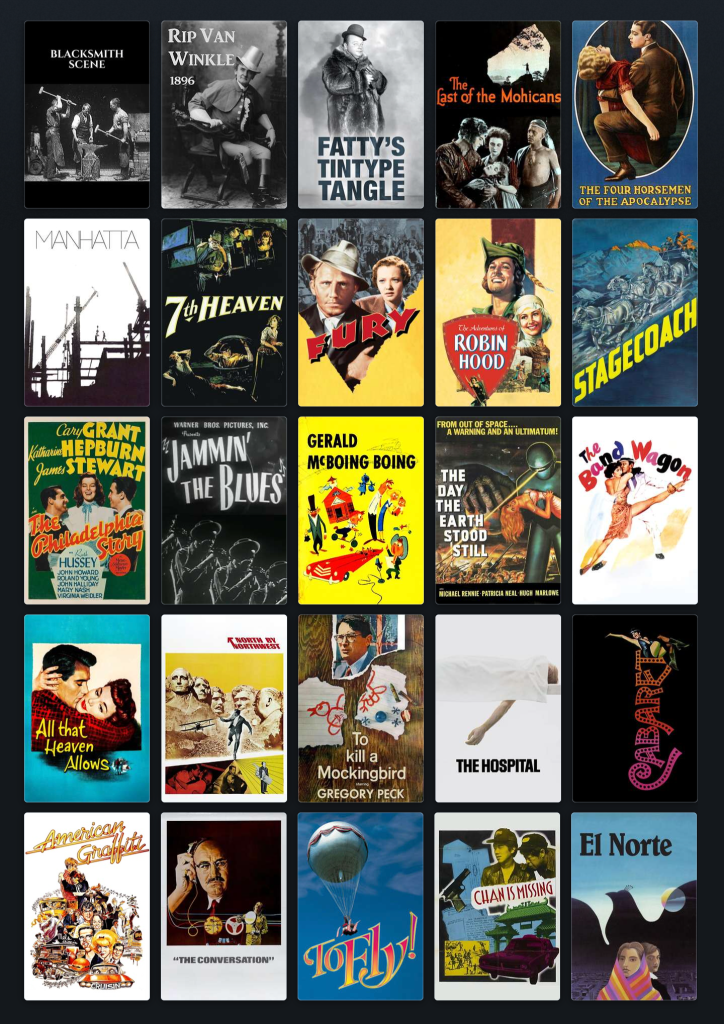
The NFR Class of 1995: This Is How We Do It

December 27th, 1995: The NFR is in 7th Heaven in their seventh year of film inductions, adding another 25 films for a new total of 175. Having finally watched all 25 films, here is my recap for the class of ’95:

Other notes

  • The evolution of the National Film Registry continues as the lesser-known titles on the list start to outnumber the pre-ordained classics. Yes, there’s “North by Northwest” and “Stagecoach”, but more of these movies are either “minor classics” or films with more historical significance. This roster also contains several NFR firsts: an IMAX movie, films from the 19th century, and films by Asian American and Mexican American directors.
  • Looking back on my original 25 write-ups, I have one question: What do I have against the class of 1995? I must have been in a perpetually bad mood because I don’t have a lot of positive things to say about this group; my opinion ranging from “it’s fine” to “this shouldn’t be on the list.” Perhaps when I finally complete this list, I’ll be in a better headspace to give some of these movies a second chance.
  • Actual articles from 1995 about this induction are hard to come by (especially since a movie from 1995 was recently added to the NFR, complicating my search phrases). One big piece of NFR related news from around this time is that the National Film Preservation Act got reauthorized in May 1996, though only for 7 years instead of the proposed 10 years, and with a reduced budget. I assume these compromises were somehow Newt Gingrich’s fault.
  • When the class of 1995 was announced, future NFR entry “Toy Story” was #1 at the US box office. Also playing in theaters at the time was “Sabrina” (the remake of another future NFR movie), and two movies that will probably make the NFR at some point: “Braveheart” and “Heat”.
  • A healthy number of double-dippers this year: Actors Wallace Beery, Robert Duvall, Harrison Ford, Cary Grant, Alan Hale, and Cindy Williams; producer Joseph L. Mankiewicz, director William K. L. Dickson, and producer/director Francis Ford Coppola; cinematographers Robert Burks and Joseph Ruttenberg, composers Bernard Herrmann and Franz Waxman, art director Cedric Gibbons, and editor Frank Sullivan.
  • Thematic double-dippers: Unconventional romances, third act courtroom dramas, overhead shots of New York City, biplanes/crop dusters, war as a historical backdrop, “Rock Around the Clock” during the opening scenes, mysteries set in San Francisco, and pre-fame Harrison Ford.
  • Favorites of my own subtitles: Seven Years’ Bore, Carriage Story, Save the Kate, Cyd and Fancy, Did Somebody Say MacGuffin?, I’m Mad at Health and I’m Not Going to Take It Anymore!, Boomers in Cars Getting Comfy, and Forget It Wayne, It’s Chinatown.
  • And finally, shoutout to the Walt Whitman photo that debuted in my “Manhatta” post and became a brief runner on the blog. What can I say, I love that photo of him. Look at that rustic Dumbledore with the come-hither stare…

Up next: The NFR class of 1996 and movie #200!

Happy Viewing,

Tony