#765) The Tall T (1957)

#765) The Tall T (1957)

OR “Best Budd’s”

Directed by Budd Boetticher

Written by Burt Kennedy. Based on the short story “The Captives” by Elmore Leonard.

Class of 2000 

The Plot: After he loses a bet and has to sell his horse, aging cowboy Pat Brennan (Randolph Scott) hitches a ride on a stagecoach that his friend Rintoon (Arthur Hunnicutt) is driving. Traveling with the newlywed Willard & Doretta Mims (John Hubbard & Maureen O’Sullivan) in tow, the stagecoach is held up at a way-station by Frank Usher (Richard Boone) and his young buck henchmen (Skip Homeier and Henry Silva). Upon learning that Doretta is the daughter of a wealthy local copper mine owner, Frank agrees to holding her ransom rather than simply robbing the stagecoach. While they wait for the money to arrive, Frank takes a liking to Brennan, who is aware that he and the rest of the captives will be killed after the ransom is paid. Can Brennan outwit the bad guys and save the day? And what exactly is a “Tall T”, anyway?

Why It Matters: The NFR’s brief write-up highlights the “deftly stylized” landscape in the film, as well as Boone’s work as “the most memorable of Boetticher’s witty, intelligent villains.” An essay by film distributor Michael Schlesinger is a love letter to Budd Boetticher.

But Does It Really?: Perhaps I set my expectations too high because of the Elmore Leonard connection (I liked “3:10 to Yuma”), but even at 77 minutes it was a chore to get through “The Tall T”. There are those who celebrate “Tall T” for being more complex and morally ambiguous than other Westerns of the era, and granted it is that, but it also felt a bit slight to me. At times the film aims for a gripping character study in the vein of “The Naked Spur”, but never fully hits that mark. Further research shows that “Tall T” made the NFR as representation of Budd Boetticher and his “Ranown Cycle” of Westerns, but without that context I could only take the film as face value, which given my track record for disliking Westerns did not bode well for “Tall T”. Based on the Boetticher/Ranown connection and the film’s uniqueness compared to other ‘50s Westerns, I won’t question the NFR standing for “Tall T”, but this was not one of my more memorable movie-watching experiences for this blog.

Everybody Gets One: Oscar “Budd” Boetticher spent the early 1940s working his way up the studio ladder at Columbia from crew member to first assistant director to director. In 1956, Boetticher got the opportunity to direct “Seven Men from Now”, a Western starring Randolph Scott and written by Burt Kennedy. Although the film was recut against Boetticher’s wishes, he enjoyed the collaboration so much that he quickly reunited with Scott and Kennedy for his next film, “The Tall T”. Also making their sole NFR appearance here is Richard Boone, best known at the time as the star of the TV drama “Medic”, who shortly after “Tall T” would begin a six season run in his most famous role as a gunfighter for hire on the Western “Have Gun – Will Travel”.

Wow, That’s Dated: Although we do have to sit through some chauvinism directed at the film’s sole female character, there are amazingly no slams against Indigenous people in this Western (in fact, no Indigenous people at all). Also, day for night shooting: How I’ve missed you.

Title Track: This film adaptation of “The Captives” needed another title because another film was already registered as “The Captives” (though I couldn’t find a record of any film called “The Captives” being released in the late 1950s). “The Tall Rider” was the film’s working title, with Boetticher changing it to “The Tall T” after the nickname for the Tenvoorde ranch, the way-station the robbery takes place at. Strangely, any dialogue referring to the ranch as “The Tall T” didn’t make the final cut, making the title a bit of a puzzler to the casual moviegoer. Side note: The film’s original trailer (embedded above) claims the T stands for Terror. It does not.

Seriously, Oscars?: No nominations for “The Tall T” from the Oscars or anyone else. Budd Boetticher’s sole Oscar nomination came in 1951 for his story of “Bullfighter and the Lady” (see “Legacy” below for more about Boetticher’s love of bullfighting and matadors).

Other notes 

  • “The Tall T” is the second of what has become known as “The Ranown Cycle” following “Seven Men from Now”. The Ranown Cycle got its name because the bulk of them were produced by Randolph Scott and Harry Joe Brown. There were seven films total in the cycle, though the canonicity of some of the later entries not involving Brown or screenwriter Burt Kennedy is debated among purists.
  • The film is surprisingly faithful to the original Elmore Leonard story, following the events and dialogue of “The Captives” almost completely verbatim. While “The Captives” begins with Brennan flagging down the stagecoach, “The Tall T” begins with the events leading up to that (which are only described in “The Captives” after their occurrence). I understand the inclusion of these opening scenes to pad out the runtime and give the main characters a proper movie introduction, but it means the robbery doesn’t happen until 20 minutes in. When your movie is 77 minutes, you need to hit the ground running. I think it was this stalled beginning that made me lose interest during my viewing. Unsurprisingly, Leonard liked this film adaptation…except for the added opening.
  • Hats off to Randolph Scott, who was 59 when he made this. His Brennan has more shades of gray than the typical hero Scott played in previous Westerns, but he’s nowhere as disreputable as his character in “Ride the High Country”. I also relate very much to the massive sweat stains Brennan has on his shirt throughout the opening. Been there, buddy. Been there.
  • Oscar nominee Arthur Hunnicutt is making the most of his limited screen time playing the kind of grizzled supporting part he played in so many Westerns. 
  • Elmore Leonard in particular liked Richard Boone’s performance in this film, saying he “recited the lines just the way I heard them when I wrote the story.” I thought Boone was fine as the main heavy, though I’m not familiar enough with Boone’s other performances to know how much of a stretch this role was for him.
  • Like Anthony Quinn and countless others before and after, Henry Silva was one of those actors you could cast as just about any non-white ethnicity you wanted. For the record, Henry Silva was of Sicilian and Spanish descent. And sadly, you heard it correctly: Silva’s character’s name in “Tall T” is a certain one-syllable Asian slur that rhymes with “drink”, as in the thing I needed after hearing what his character’s name was.
  • There are those who argue that at 46, Maureen O’Sullivan was too old to be “the girl” in this movie, but seeing as how the character is a plain Jane-type who everyone is amazed finally got married, I buy it. And as always with Maureen O’Sullivan’s performances, we get brief flashes of some of the genetics she passed down to her daughter, Mia Farrow.
  • [Spoilers] Man, Willard Mims sucks. He’s just a spineless, totally unlikable character, which I guess is a testament to John Hubbard’s performance. Even the movie’s bad guys don’t like how disrespectful Willard is to Doretta, and I was very grateful they shoot and kill him halfway through the movie. 
  • The “Naked Spur” comparisons start to crop up when Brennan attempts to turn the captors against each other, while also making totally unnecessary moves on Doretta while in a cave together. Come on man, she just became a widow!
  • [Spoilers] Besides the added opening sequences, the only deviation from “The Captives” comes at the end. Originally, Frank was the second of the three robbers to be killed off, making the death of, ahem, Henry Silva’s character the climax of the story. This obviously had to change for the movie version, which creates a final showdown between Brennan and Frank that feels…off. I can’t put my finger on it, but the movie ending just left me with a feeling of “What was that?” Maybe it was my sixth sense when a movie strays from its source material, or maybe I was just done with the movie by that point. Whatever, let’s go to “Legacy” and get out of here.

Legacy

  • The Ranown Cycle continued through 1960 with “Decision at Sundown”, “Buchanan Rides Along”, “Ride Lonesome”, “Westbound”, and “Comanche Station”, with Budd Boetticher and Randolph Scott collaborating on all seven.
  • Budd Boetticher spent most of the ‘60s working on the documentary “Arruza” about his friend, famed bullfighter Carlos Arruza. After many delays, “Arruza” finally received its US release in 1972, six years after Carlos Arruza died! Unfortunately for Boetticher, all of the directing opportunities he turned down to make “Arruza” had dried up, and he only made one more movie in his lifetime, the 1985 documentary “My Kingdom For…” about the role horses play in, you guessed it, bullfighting. Budd Boetticher died in 2001, but lived long enough to see his filmography get reappraised through the lens of the auteur theory.
  • “The Tall T” is one of those movies that Martin Scorsese saw as a kid and absolutely loves. Scorsese was on the National Film Preservation Board in 2000, and between this and “Goodfellas”, Scorsese must have really worked the room that year.
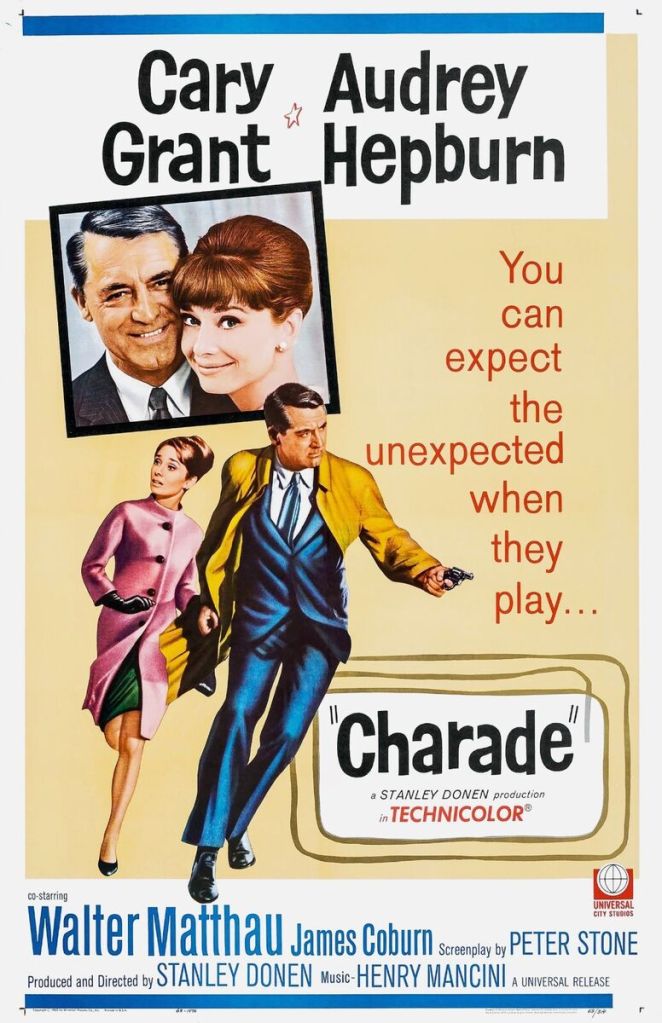
#764) Charade (1963)

#764) Charade (1963)

OR “Nord au Nord-Ouest”

Directed by Stanley Donen

Written by Peter Stone. Story by Stone and Marc Behm.

Class of 2022

The Plot: Following the mysterious death of her aloof husband Charles, Regina “Reggie” Lampert (Audrey Hepburn) is informed by CIA administrator Hamilton Bartholomew (Walter Matthau) that her husband stole $250,000 from the OSS during World War II, and was murdered by one of the men he double-crossed to get the money. Staying in a Paris hotel, Reggie receives numerous threats from Charles’ betrayed comrades (Ned Glass, James Coburn, George Kennedy), who believe she has the stolen money. She also receives support from Peter Joshua (Cary Grant), a charming tourist she previously had a flirtation with in the French Alps. Mysteries and identities are unraveled, and nothing is what it seems in this movie once called “the best Hitchcock movie Hitchcock never made”.

Why It Matters: The NFR gives an overview of the film and its “elegant and sophisticated” stars. An essay by fellow film blogger Michaela Owens focuses on how Reggie uses food as a coping mechanism throughout the movie. I fully understand the irony of what I’m about to say, but man that is a niche film observation.

But Does It Really?: I saw “Charade” for the first time about 15 years ago, but mercifully forgot enough of it that I was charmed all over again on this viewing. “Charade” gets my vote for the last great Classic Hollywood rom-com. The film successfully blends its genres with A+ talent across the board: winning lead performances, a superb script, airtight direction, plus some gorgeous location shooting in Paris. While not as revered as the rest of Grant, Hepburn, and Donen’s respective filmographies, “Charade” is an underrated classic that more than holds up six decades later, and I’m delighted it has found its rightful spot in the NFR.

Shout Outs: Reggie mentions “An American in Paris” while she and Peter walk along the Quai de Montebello. And in a nice bit of fortuitous foreshadowing, Peter references “On the Street Where You Live” from “My Fair Lady” (Audrey Hepburn would be cast in the film version shortly after production wrapped on “Charade”).

Everybody Gets One: Peter Stone got his start writing for television and the theater, but couldn’t get his screenplay “The Unsuspecting Wife” sold anywhere. On the suggestion of his agent (and with assistance from author Marc Behm), Stone adapted the script into a novel, now called “Charade”, had excerpts published in Redbook magazine, and started making the rounds to studios now very interested in the book’s film rights. Stone quickly sold the screenplay to Stanley Donen, and was on set every day for any last-minute changes, calling the production “an absolutely grand experience”.

Wow, That’s Dated: As with any old movie, there’s a lot of analog technology that would have to be completely overhauled if the film were made today (see “Legacy” below for how that didn’t pan out well). Oh, and the $250,000 would be about $4 million in today’s money.

Title Track/Seriously, Oscars?: Despite being a critical and box office hit, “Charade” only received a single Oscar nomination for its title song. Composer Henry Mancini and lyricist Johnny Mercer had won the Best Song Oscar the previous two years for their work in “Breakfast at Tiffany’s” and “Days of Wine and Roses”, but their potential threepeat was denied when the award went to “Call Me Irresponsible”, a song that has more than outlasted the film it came from: the Jackie Gleason comedy “Papa’s Delicate Condition”.

Other notes 

  • This thing is already so gloriously 1960s thanks to its animated (in every sense of the word) opening credits by Maurice Binder, the man who gave us the James Bond gun barrel opener, as well as many Bond credit sequences.
  • Another sign of the early ‘60s: Actual location shooting! This movie goes to great lengths to prove that it’s really Audrey and Cary in the French Alps. Shoutout to cinematographer Charles Lang for keeping the cinematography engaging even when there aren’t beautiful French vistas to shoot.
  • Cary Grant and Audrey Hepburn are so effortlessly charming in this; it’s as if they were set loose on the streets of Paris and the cameras just captured their natural repartee. Our stars’ wonderful chemistry is aided by the fact that the script was written with both of them in mind. Grant and Hepburn are so damn good that I may have to ignore this film’s major Michael Douglas Scale readout. There’s a 25 year age-gap between our romantic leads, a fact that made Grant hesitant to accept the part. He finally agreed when the age difference was written into the script, and the romantic sequences re-written to make Reggie the initiator, not Peter. Also helping matters is that Reggie is never infantilized; she’s an adult in a very adult situation, supported by another (albeit much older) adult. I never thought I’d find an NFR movie that could make me overlook standard Hollywood romantic age gaps, but you did it “Charade”.
  • If you’re going to have this much upfront exposition, don’t have it delivered with a very thick French accent. Jacques Marin does his best as Inspector Grandpierre, but I definitely lost a few pertinent details. More exposition gets handed out a bit easier by Walter Matthau in a fun little turn before he struck gold with “The Odd Couple”. Side note: This movie has not one, but three future Best Supporting Actor Oscar winners: Matthau, George Kennedy, and James Coburn.
  • My one quibble about the script: If Charles had the $250,000 he stole during the war, why did he auction off all of his belongings for the exact same amount of money? Even if he had already spent the stolen money and was raising the funds to flee the country, why the exact same amount? And doesn’t this all unnecessarily put Reggie in jeopardy? Fortunately, this movie is so charming that I didn’t think about any of this until after the movie was over.
  • Our trio of heavies are the right level of threatening for a rom-com/spy thriller hybrid. Ned Glass’ more comedic turn is nicely balanced by Coburn and Kennedy’s menace. And while it’s always nice to see George Kennedy show up on this list, I don’t appreciate that his character’s hook hand furthers the negative association of any “otherness” with villainy. Where’s Harold Russell when you need him?
  • The line that got the biggest laugh from me: Peter, upon realizing he and Reggie are walking right next to Notre Dame, “Who put that there?”
  • Is it just me or is this French kid Jean-Louis really annoying? I groaned out loud when he returned for the film’s third act. And clearly Jean-Louis’ actor Thomas Chelimsky is doing just fine without my grousing; he’s now a neurologist in Virginia. Also, you’re not hearing things: Jean-Louis is dubbed by a French woman throughout the movie. 
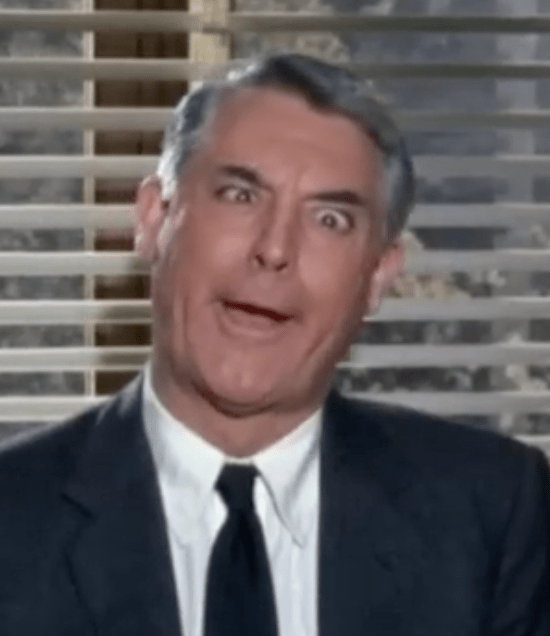
  • One of the reasons I feel “Charade” has stayed under the radar all these years is because no one wants to spoil its surprises. There are so many delightful twists and turns in “Charade” that you want to give others the pleasure of discovering them on their own viewing. No spoilers, but what I will say about the film’s ending is that 1) Charles’ murderer falls for the old “villain get distracted while monologuing his motives” trick and 2) I love the face Cary Grant makes during the film’s final scene. I hope that was an outtake that found its way into the final cut.

Legacy 

  • “Charade” premiered in September 1963 for a one-night benefit screening in Washington D.C (President Kennedy had a private screening at the White House at the same time and loved it). Upon its wide release that December, “Charade” was a critical success that would go on to be one of the highest grossing movies of the year (and Universal’s biggest hit of 1963). Unfortunately, whoever put the copyright notice in the opening credits forgot to include the word “copyright” or its symbol. Therefore due to copyright law at the time, “Charade” immediately fell into public domain, meaning the film could be aired on TV (and eventually get a home video release) by anyone without having to pay Universal. 
Yep, there’s your problem right there.
  • Cary Grant liked the screenplay for “Charade” so much that he requested Peter Stone write a draft of his next movie, the 1964 comedy “Father Goose”, which earned Stone an Oscar for Best Original Screenplay. Grant had tried to get Audrey Hepburn to reunite with him on “Father Goose”, but she was already committed to “My Fair Lady” (which, somewhat ironically, Grant had passed on). Despite their desire to make another movie together, “Charade” was the only time Grant and Hepburn shared the screen before Grant’s retirement in 1966, with Hepburn semi-retiring from films shortly thereafter.
  • “Charade” received the remake treatment with 2002’s “The Truth About Charlie”. Despite Jonathan Demme at the helm and a promising early starring role for Thandiwe Newton, “Charlie” falls into the “Stick With the Original” column so many remakes find themselves in. There’s no substitute for Cary Grant, and if there is, it definitely isn’t Mark Wahlberg. Side note: Because “Charlie” used enough plot elements from “Charade”, it was determined that Peter Stone should receive a screenplay credit. Stone opted to be credited under the alias “Peter Joshua”.

#763) Tarantella (1940)

#763) Tarantella (1940)

OR “Kiss of the Spider Woman”

Directed by Mary Ellen Bute

Class of 2010

The Plot: With music courtesy of pianist Edwin Gershecfski, “Tarantella” is, as described in the opening text, “a swift moving dance presented musically and in linear forms of color”. That’s all well and good, but how is this going to help with my tarantula bite?

Why It Matters: The NFR gives us a rundown of the film and Bute, citing her influence on future filmmakers and animators. An essay by film professor and author Lauren Rabinovitz is a thorough dive into the artistry of Mary Ellen Bute.

But Does It Really?: Even with the amount of experimental animation covered on this blog so far, “Tarantella” stands out for being ahead of its time. With its geometric patterns and avant-garde music, “Tarantella” predates UPA’s animation style by a full decade! Plus, Mary Ellen Bute’s work here can definitely be seen in the films of Sally Cruikshank, Lisze Bechtold, Ayoka Chenzira, and many of the other female animators on this list. A pass for “Tarantella”, but mainly as representation of Mary Ellen Bute and her trailblazing work in experimental animation.

Everybody Gets One: After studying painting at the Pennsylvania Academy of Fine Arts and stage lighting at Yale University’s Drama School, Mary Ellen Bute became interested in combing the two to create paintings that were visualization of music. Influenced by Oskar Fischinger (as well as working with inventor Leon Theremin and artist Thomas Wilfred), Bute continued these experiments through animated shorts throughout the 1930s and 1940s. Unlike many of her contemporaries, Bute had no problems with Hollywood, having her films screened at such major movie theaters as Radio City Music Hall in front of many a prestige studio feature.

Title Track: “Tarantella” opens with the definition of tarantella, citing the dance as a supposed Neapolitan remedy for a tarantula bite. The music in “Tarantella” appears to be more rooted in this origin, rather than the more upbeat evolution of the dance I associate with Italian weddings.

Seriously, Oscars?: No Oscar nomination for “Tarantella”. For the record, the winner for Animated Short in 1940 was MGM’s “The Milky Way”, the first time in the category’s history a non-Disney short took the prize.

It’s your favorite and mine: “Things I Thought I Saw During “‘Tarantella’”

  • Lips
  • Ben Day dots from old comic books
  • A barcode
  • TRON?
  • My totally illegible signature
  • The copyright logo
  • Lightning
  • The Looney Tunes opening
  • A ringworm
  • Clouds (though admittedly those could look like anything)
  • A seismograph
  • Ice picks
  • The dream sequence from “Vertigo
  • My optometrist’s peripheral vision test. Quick, press the button!
  • A whole lot of flashing. This should come with a warning.

Legacy 

  • Although completed in 1940, “Tarantella” would receive its commercial premiere in 1950 where it preceded the American run of the French film “La valse de Paris” [“Paris Waltz”] at the Paris Theatre in New York City. I suspect the then-recent rise to fame of UPA helped get “Tarantella” that booking.
  • Mary Ellen Bute continued making experimental animation throughout her career, eventually pivoting to live action films including 1966’s “Passages from James Joyce’s Finnegans Wake”, notably the first film for one of its co-editors, the legendary Thelma Schoonmaker. 
  • Shortly after Mary Ellen Bute’s death in 1983, the Museum of Modern Art hosted a retrospective of her film work. “Tarantella”, along with the rest of Bute’s filmography, continues to be celebrated in various exhibitions, including at the George Eastman Museum in 2024. 

#762) Siege (1940)

#762) Siege (1940)

Directed by Julien Bryan

Class of 2006

On September 1st, 1939, the city of Warsaw, Poland was attacked by German warplanes in what became known as the Siege of Warsaw, historically considered the start of World War II. Two days later, American photographer Julien Bryan arrived to document the ongoing attacks. Filmed over the following two weeks, “Siege” is a first hand account of Warsaw’s citizens fighting back against the Nazis. Unlike other, in this film’s parlance, “meager censored news reports” of the time, “Siege” doesn’t sugarcoat the uphill battle faced by Warsaw, as fires and air strikes destroy the city and claim the lives of 18,000 civilians. 

Having recently completed the marathon that was “Why We Fight”, I was trepidatious about watching another WWII film. Thankfully, “Siege” was a unique enough viewing experience, and much, much shorter. Because “Why We Fight” has to cover so much ground (and has an obvious American bias), several major events of the war can only be touched upon briefly. “Siege” gives us an on-the-ground account of the war’s first two weeks, told entirely from the perspective of the civilians who suffered the first of this war’s many casualties. “Siege” is lightning in a bottle documentation from a then-neutral country, and it is this compassionate yet unflinching perspective from Julien Bryan that makes “Siege” a noteworthy American film.

Why It Matters: The NFR hails the film as “a unique, horrifying record of the dreadful brutality of war” and includes a link to the film via the US Holocaust Memorial Museum’s YouTube page.

Everybody Gets One: Following a stint as an ambulance driver in WWI and attending the Union Theological Seminary in New York, Julian Bryan chose not to become ordained, opting instead to travel the world, documenting his journeys through written travelogues, photographs, and of course film. Most of his travels in the 1930s chronicled the rise of Nazism in Germany (some of Bryan’s footage of Nazi Germany was featured in fellow NFR entry “The March of Time: Inside Nazi Germany”). Bryan happened to be traveling to Warsaw via train in early September 1939 when he learned the city had been invaded. Upon his arrival, Bryan contacted the mayor of Warsaw and received a permit to document the city mid-attacks with his Leica still camera and his Bell & Howell movie camera.

Seriously, Oscars?: “Siege” received an Oscar nomination for Short Subject (One-Reel), losing to “Quicker ’n a Wink”, which comically chronicled MIT’s experiments with stroboscopic photography. Look no further for proof of America’s disinterest in the war than the Academy voting for “Ooh, shiny!”

Other notes 

  • As is often the case with NFR films chronicling massive destruction of any kind, I don’t have much else to say about “Siege”. The film’s imagery of a city on fire and citizens crying over the dead bodies of their loved ones says more than I ever could. I can only nod in agreement with Bryan’s final words within the film, “May God have mercy on them.”

Legacy 

  • Upon his return to the United States, Julien Bryan published several of his photographs of the Siege in both Life and Look Magazine. He also wrote a corresponding book (also called “Siege”) and sold his ten-minute film to RKO for distribution across their theaters.
  • Following the release of “Siege”, Julien Bryan made several shorts for the Office of the Coordinator of Inter-American Affairs, primarily about Latin American cultures. After the war, Bryan created the International Film Foundation and continued making documentary shorts for the rest of his career. Julian Bryan died in 1974, a few months after receiving a Decoration of Honor from Poland for documenting the Invasion of Poland.
  • In 2003, Bryan’s son Sam donated his father’s wartime photos and film to the United States Holocaust Memorial Museum. Their inclusion in the museum’s film archive no doubt caught the eye of the National Film Preservation Board, with “Siege” making the NFR three years later.

#761) The Living Desert (1953)

#761) The Living Desert (1953)

OR “Disney Arizona Adventure”

Directed by James Algar

Written by Algar, Winston Hibler, and Ted Sears

Class of 2000

The Plot: When we think of deserts, we think arid environments devoid of life, but thanks to Disney’s “True-Life Adventures” series, there’s more than meets the eye in “The Living Desert”. Our story takes place across the many deserts of Arizona (Painted, Sonoran, Chihuahuan, etc.) as we witness the survival tactics of the region’s many animals and insects, from the largest bobcats to the smallest millipedes. Is a lot of this movie staged for the camera? Yes. Is the narration hokey at times? Oh yeah. Is the film an exciting and fascinating glimpse into our own world? …Kinda.

Why It Matters: The NFR gives some historical background and praises the sequence of a rattlesnake fighting a tarantula, but also criticizes the narration’s “weak attempts at humor”. An essay by the film’s cinematographer N. Paul Kentworthy Jr. recounts his experience making the film.

But Does It Really?: As much as I love when a Disney movie makes the NFR, I’m confused as to why “The Living Desert” got the nod. While the “True-Life Adventures” series was popular in its time, I wouldn’t call it an NFR essential. And if you’re going to induct one of the “True-Life Adventures”, why not “White Wilderness”, the only one with any cultural impact (more on that one in “Legacy”)? Once I learned that “The Living Desert” has a UCLA connection via N. Paul Kentworthy Jr., this selection started to make more sense. The NFR loves a UCLA connection; be it films made by its students or preserved by their archives. Heck, I think the mere mention of UCLA bumps up your chances of NFR induction (which bodes well for me, frequent UCLA mentioner and co-director of the short film “Test Room D”). Tangent aside, “The Living Desert” is a pleasant enough documentary, though it’s the most naked proof that you can take any footage and manipulate a narrative through editing and music. I’ll give “The Living Desert” a pass as the forefather to the modern nature documentary, but even that’s a generous compromise. 

Everybody Gets One: As part of his MA thesis requirement at UCLA, N. Paul Kentworthy Jr. filmed a fight between a wasp and a tarantula, editing the footage into a narrative short with the intention of showing it as a “calling card” to potential employers. Kentworthy submitted his film to the team at Disney’s “True-Life Adventures” series, and an enthusiastic screening with Walt led to the film being bought by Disney, and Kentworthy being hired to film a few lighter sequences to make it feature length. Subsequently, because Disney now owned the footage exclusively, Kentworthy’s thesis quickly became a lengthy essay on the technical experience of making the film rather than the film itself.

Seriously, Oscars?: “The Living Desert” won the Oscar for Best Documentary (Feature), with the trophy going to its producer, Walt Disney. Throughout the ceremony, Disney also won the Oscars for Documentary (Short-Subject), Short Subject (Two-Reel), and Short Subject (Cartoon), making him the first person to receive four Oscars at the same ceremony. This remained a singular feat in Oscar history until 71 years later when Sean Baker won four Oscars for producing, directing, writing, and editing “Anora”.

Other notes

  • In the late 1940s, Walt Disney Productions was still recovering financially from the effects of World War II, and Walt, still smarting from the 1941 animators strike, was looking into live-action films as a feasible alternative. Inspired by a documentary from filmmaking couple Alfred and Elma Milotte, Walt commissioned the Milottes to film the people and nature of Alaska, ultimately crafting a narrative from their footage of seals in the Pribilof Islands for the first in a proposed “True-Life Adventures” series. The result was 1948’s “Seal Island”, which proved to be a surprise hit and won Disney the Oscar for Short Subject (Two-Reel).
  • The creative team behind the “True-Life Adventures” was a consistent group of Disney regulars. Both director/co-writer James Algar and producer Ben Sharpsteen started at Disney as animators and quickly rose the ranks to directing animated features before pivoting to the “True-Life Adventures”. Co-writer/narrator Winston Hibler joined the studio in the 1940s as a camera operator and dabbled in the occasional songwriting before finding his niche with the “True-Life” series. Because of Academy rules at the time, only Walt Disney (and eventually Ben Sharpsteen) took home any of the series’ eight Oscars, with James Algar occasionally accepting on behalf of the absent winner. For their contribution to the “True-Life Adventures” series, Algar, Sharpsteen, and Hibler would be inducted as Disney Legends in the 1990s.
  • “The Living Desert” was the eighth overall film in the “True-Life Adventures” series, and its first feature. “Living Desert” is also noteworthy for being the first Disney film released through their in-house distribution company, Buena Vista Distribution. Prior to 1953, Disney had distribution deals with several of the larger Hollywood studios, but following some disagreements with RKO (its distribution partner since 1937), and finding themselves in a better financial situation, Disney ended their contract with RKO and started distributing their own films. Buena Vista gets its name from the street the Disney studios are located at in Burbank, California.
  • “Living Desert” begins with an overview of the southwest landscape: shots of Mt. Whitney, Death Valley, and Monument Valley in possibly its only non-Western appearance on the NFR. We zoom in on California’s Salton Sea, and our first hint that this is more “edutainment” than a proper documentary, as the score matches the action of the bubbling mud pots. Disney in-house composer Paul J. Smith created the score, which appropriately enough has a decent amount of “Mickey Mousing” to it.
  • As we zero in on the various animal life in the desert, we are introduced to our featured players, including the red-tailed hawk and the tarantula. The latter’s introduction is the first instance of the narration getting a little too cutesy: “At the residence of Mrs. Tarantula, it’s always open house. She’s forever cleaning her parlor for guests that might drop by for dinner. Uh, her dinner of course.”
  • Another too-cute-for-its-own-good sequence centers around a battle between two male tortoises over a potential mate, with our hero using his skid to turn his rival on their shell. This victory incites the first true groaner in the narration: “Finally, it’s tortoise turned turtle.” Stop that!
  • Speaking of the narrator, Winston Hibler is warm and knowledgeable, but he’s no David Attenborough. Overall, the film is informative to be sure, but the lessened entertainment value makes it all slightly dull. This is not necessarily the film’s fault; nature footage like this was a rarity in 1953, but now you can see it on streaming any time you want.
  • Most of the film chronicles the survival habits of the various animals, plus several matchups: Peccary vs. Bobcat, Rattlesnake vs. Pocket Mouse, etc. This section also gives us the “Rattlesnake vs. Tarantula” sequence that the NFR deemed a highlight, and frankly I’m not seeing it. The fight is brief and unsatisfying, concluding with the narrator declaring “it’s a standoff, and nobody wins.” I’m beginning to think “The Living Desert” was at the bottom of the NFR’s Class of 2000 picks.
  • As nightfall approaches the desert, we get what I assume are primarily in-studio shots. Most of the original Kentworthy footage was shot on a mockup desert set in a Tucson studio owned by animal expert Robert Crandall. This explains how Kentworthy achieved some shots that would be near-impossible with ‘50s camera technology (such as the shots inside the kangaroo rat holes). For the Disney sanctioned reshoots, a larger studio was used, with individual shots pre-planned so they could be edited into a narrative in post-production.
  • Nighttime is also this movie’s insect section, with centipedes, millipedes, and all kinds of gross things. We also get a romantic tarantula courtship scene, and the film’s most manipulative sequence: a scorpion mating scene turned square dance. You can sense the footage being toggled back and forth to imply choreography as the narrator sings a mock hoedown. More like a do-si-don’t if you ask me.
  • As the sun quickly rises via timelapse photography, the film takes another cutesy turn with several animals imbued with more character and personality. There’s Old Nosy Parker the roadrunner (its name easily being the film’s most obscure reference), Sweet William the spotted skunk, and Skinny the ground squirrel. I assume that Disney wanted to do a Skinny spin-off because they are definitely trying to make him a thing, giving him a standalone storyline as the little runt who saves the day. He’s even got his own theme music!
  • After the disappointing tarantula vs. rattlesnake bout, the film climaxes with two much more entertaining matchups. First up, the tarantula takes on the Pepsis wasp, the original Kentworthy footage that started this whole thing. The segment has a cleaner set-up to what’s at stake, leading to a more engaging fight. This is followed by a very intense battle between the rattlesnake and the red-tailed hawk. 
  • After all this fighting, the film wraps up neatly with rainfall in the desert, followed by flash floods which dissipate into the dirt, becoming the liquid mud from the beginning of the film. We conclude with some suggestive footage of flowers blooming and our narrator telling us we have witnessed a mere fragment of the desert’s “eternal story”. And by “eternal” I’m sure they mean until we humans fuck it up beyond repair, but that’s another story.

Legacy

  • “The Living Desert” was released in November 1953 on a bill with two Disney shorts: the live action “Stormy, the Thoroughbred” and the animated “Ben and Me”. Despite some critical misgivings about the editing and narration, “The Living Desert” was a box office success. Footage from “The Living Desert” would appear on many an episode of Disney’s TV anthology series for years to come.
  • Six more “True-Life” features were released after “The Living Desert”, and the series concluded with 1960’s “Jungle Cat” about the jaguars of Brazil. If you know any film in this series, it’s 1958’s “White Wilderness”, which staged a scene of Canadian lemmings following each other off a cliff, leading to the urban legend that lemmings participate in mass-suicide. The staged aspect of this story didn’t come to light until the 1980s, and Disney has always attested that freelance filmmaker James R. Simon staged the lemming scenes without the approval or input of Disney. That’s their story and they’re sticking to it.