

#354) West Side Story (1961)
OR “Sang Warfare”
Directed by Robert Wise and Jerome Robbins
Written by Ernest Lehman. Based on the play by Arthur Laurents. Music by Leonard Bernstein, Lyrics by Stephen Sondheim.
Class of 1997
The Plot: “Romeo and Juliet” gets a modern retelling in the 1950s urban jungle of New York’s Upper West Side. There’s an escalating turf war between two gangs of juvenile delinquents: the Puerto Rican Sharks and the all-white Jets. At a local dance, former Jets leader Tony (Richard Beymer) meets Maria (Natalie Wood) – sister of Sharks leader Bernardo (George Chakiris)- and the two immediately fall for each other. Both parties are warned about seeing “one of them”, but the two continue to meet in secret, unaware of their love’s inevitable tragic conclusion. Oh, and it’s a musical.
Why It Matters: Though the NFR’s write-up praises the film for being “even bigger and more elaborate” than the stage production, it points out that both Natalie Wood and Richard Beymer are dubbed and miscast.
But Does It Really?: The original Broadway production of “West Side Story” was a watershed moment for theater, and the film has left a lasting ripple effect on American pop culture, but…it didn’t do much for me. The dance numbers are still electrifying and are matched by Bernstein & Sondheim’s untouchable score, but I couldn’t get into this film beyond its technical achievement. Ultimately, the miscasting of Natalie Wood is the film’s downfall, as is the then-common studio practice of dubbing all of the principles’ singing. “West Side Story” will always have a place in film history, but overall I don’t know if it holds up as well as people claim it does.
Everybody Gets One: Jerome Robbins was already a celebrated Broadway director/choreographer when he staged the original “West Side Story”. When approached by producer Walter Mirisch to choreograph the film, Robbins refused unless he could also direct. A compromise was reached: Robbins would direct the songs and dances, and the more experienced Robert Wise would handle the “book scenes”. Robbins’ extensive retakes led to the film going over-budget and behind schedule, and he was dismissed. “West Side Story” is his only film as a director.
Wow, That’s Dated: Of the main Sharks, Rita Moreno is the only one who is actually Puerto Rican; Natalie Wood is Russian, George Chakiris is Greek, and Jose de Vega is Fillipino. To make matters worse, Natalie Wood talks in a stereotypical Puerto Rican accent, and all of them wore dark makeup so that their skin tones matched.
Seriously, Oscars?: “West Side Story” tied “Judgment at Nuremberg” with 11 Oscar nominations and won 10, including Picture, the Supporting trophies for Chakiris and Moreno, and Director for Wise and Robbins – the first time that prize was shared. Robbins also received an honorary Oscar for his choreography. That’s all well and good, but what about “The Hustler”?
Other notes
Legacy
Listen to This: The “unequaled” original Broadway recording of “West Side Story” made the NRR in 2008. Cary O’Dell is once again on hand with a historical essay, as is a 2017 interview with Stephen Sondheim about all his NRR entries.
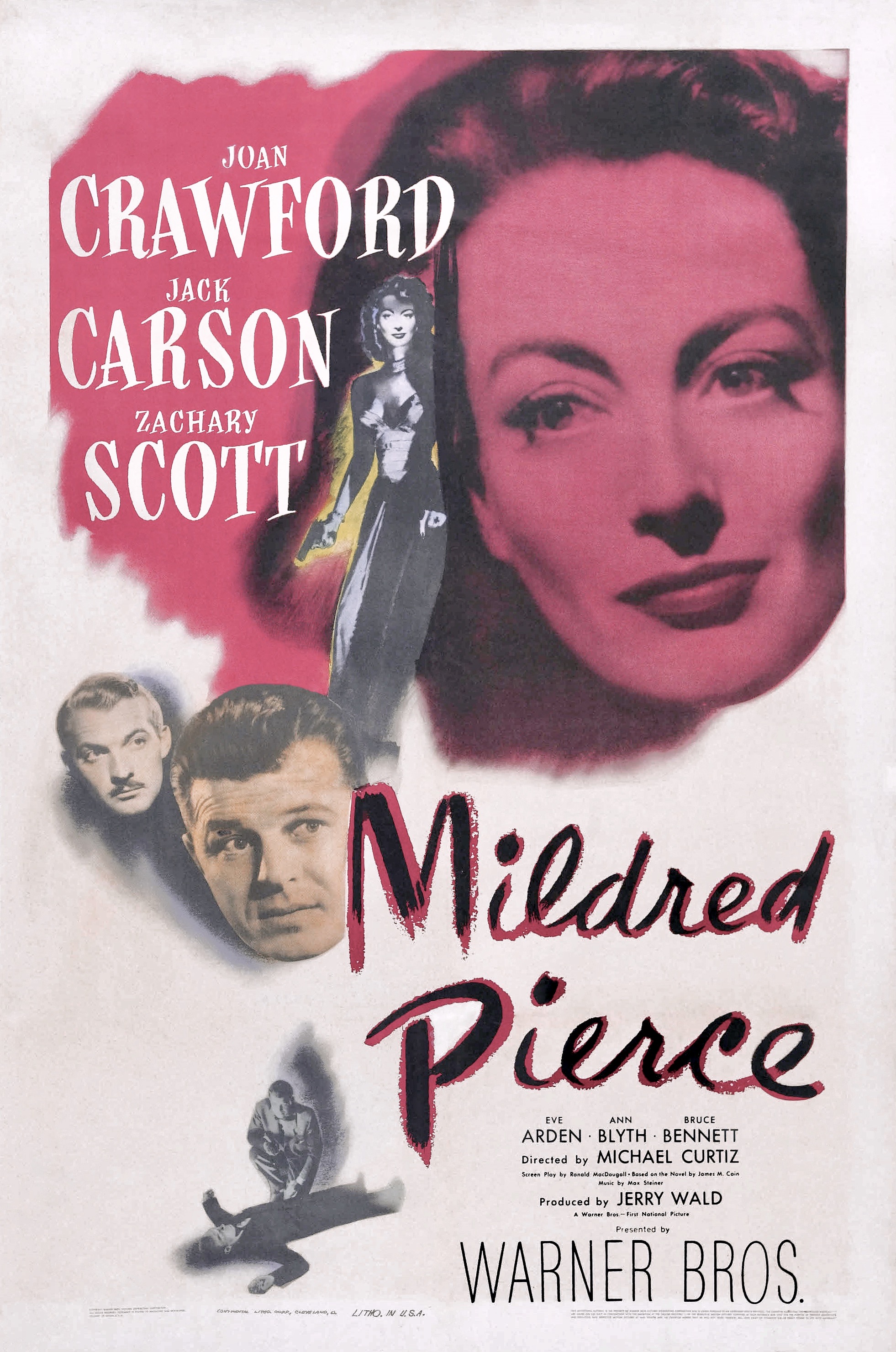
#353) Mildred Pierce (1945)
OR “Bridge over Troubled Daughter”
Directed by Michael Curtiz
Written by Ranald MacDougall. Based on the novel by James M. Cain.
Class of 1996
The Plot: Late one night, Mildred Pierce (Joan Crawford) discovers the dead body of her husband Monte Beragon (Zachary Scott) in their beach house. At the police station, Mildred dismisses the notion that he was shot by her first husband Bert (Bruce Bennett), and a flashback tells us how this all started. After she and Bert divorce, Mildred works as a waitress to support her daughters Veda and Kay (Ann Blyth and Jo Ann Marlow). With support from Bert’s former business partner Wally (Jack Carson), Mildred purchases a building from playboy Monte and converts it into a restaurant. Assisted by the wisecracking Ida Corwin (Eve Arden), Mildred becomes a successful entrepreneur, but her relationship with a spoiled, ungrateful Veda has become damaged beyond repair. There’s loads of double-crossing and emotional manipulation in one of Hollywood’s most iconic melodramas.
Why It Matters: The NFR calls it the “quintessential Joan Crawford film” and praises the work of Crawford, Blyth, Arden, and Carson. An essay by NFR-staple Charlie Achuff helps separate fact from fiction regarding the mythos of Joan Crawford.
But Does It Really?: I’ll label this one as “historically significant/a minor classic”. “Mildred Pierce” is not one of the essentials, but overall it is still a pretty damn good film. They sanitized the novel, but this story still has some bite to it, and a confident Crawford leads a strong ensemble. “Mildred Pierce” isn’t the Important Film it was in 1945, but it’s still an entertaining example of what was coming out of the Hollywood studio system, and holds up far better than most films of the era.
Shout Outs: Max Steiner’s score contains a brief reprise of his theme from “Now, Voyager”.
Everybody Gets One: Ann Blyth started acting at the age of five and got her professional start in the original Broadway cast of “Watch on the Rhine”. Shortly thereafter, she signed a film contract with Universal, and was loaned out to Warner Bros. after a successful screen test for Veda Pierce. Blyth’s career never replicated her “Pierce” success, but she’s still going strong at 90, speaking fondly of both the film and Joan Crawford.
Wow, That’s Dated: 1945 was an interesting year for women in America. The war was ending, and the same women who were asked to replace men in the workforce at the start of the war were now being told to go back to being housewives. “Mildred Pierce” was noteworthy for suggesting that women could be productive members of society outside of the kitchen.
Seriously, Oscars?: One of the biggest hits of 1945, “Mildred Pierce” received six Oscar nominations, including Best Picture. The film lost to fellow NFR entry “The Lost Weekend”, but it won the category that mattered most: Best Actress. Joan Crawford was home with pneumonia (allegedly; some claim she opted to stay home rather than risk embarrassment) and director Michael Curtiz presented her the statuette at her bedside.
Other notes
Legacy
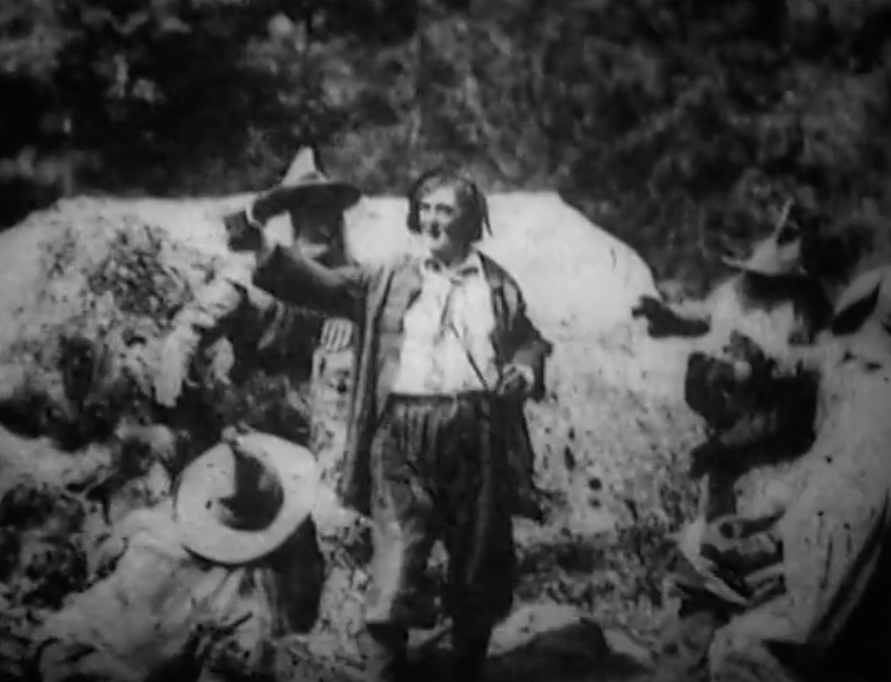
#352) Rip Van Winkle (1896/1903)
OR “The Big Sleep”
Directed by William K.L. Dickson
Based on the story by Washington Irving and the play by Joseph Jefferson and Dion Boucicault
Class of 1995
The Plot: The “Rip Van Winkle” film is comprised of eight short scenes from a popular stage version of the Washington Irving classic. The selected moments consist of Rip Van Winkle (Joseph Jefferson) wandering up the Catskill Mountains, meeting a group of dwarfs, consuming a lot of alcohol, and going to sleep. He awakens 20 years later to find himself an old man. And that’s all this version crams into its 4 ½ minute runtime.
Why It Matters: The NFR doesn’t give specific superlatives to “Rip Van Winkle”, just a general overview of the film’s history.
But Does It Really?: The NFR makes the case for “Rip Van Winkle” as the film that put Biograph Studios on the map, which, while completely forgotten today, is an important stepping stone to the movies as we know them. The film’s historical relevance is enough to get a pass from me, while the film’s presentation makes for an entertaining (albeit not intentionally so) viewing experience.
Everybody Gets One: Born to a set designer and an actress, Joseph Jefferson got a taste for the theater after appearing in a few “babe in arms” roles. At the age of 30, Jefferson, by then an established actor, played Rip Van Winkle in a successful 1859 production. While appearing in London, Jefferson met Irish playwright Dion Boucicault, who helped revise and rewrite the show. Jefferson toured with this version of “Rip Van Winkle” for the rest of his life, rarely performing any other play.
Wow, That’s Dated: Mainly the idea that a few static shots of a play was enough to make a hit movie. What a time to be a pioneer filmmaker.
Other notes
Legacy
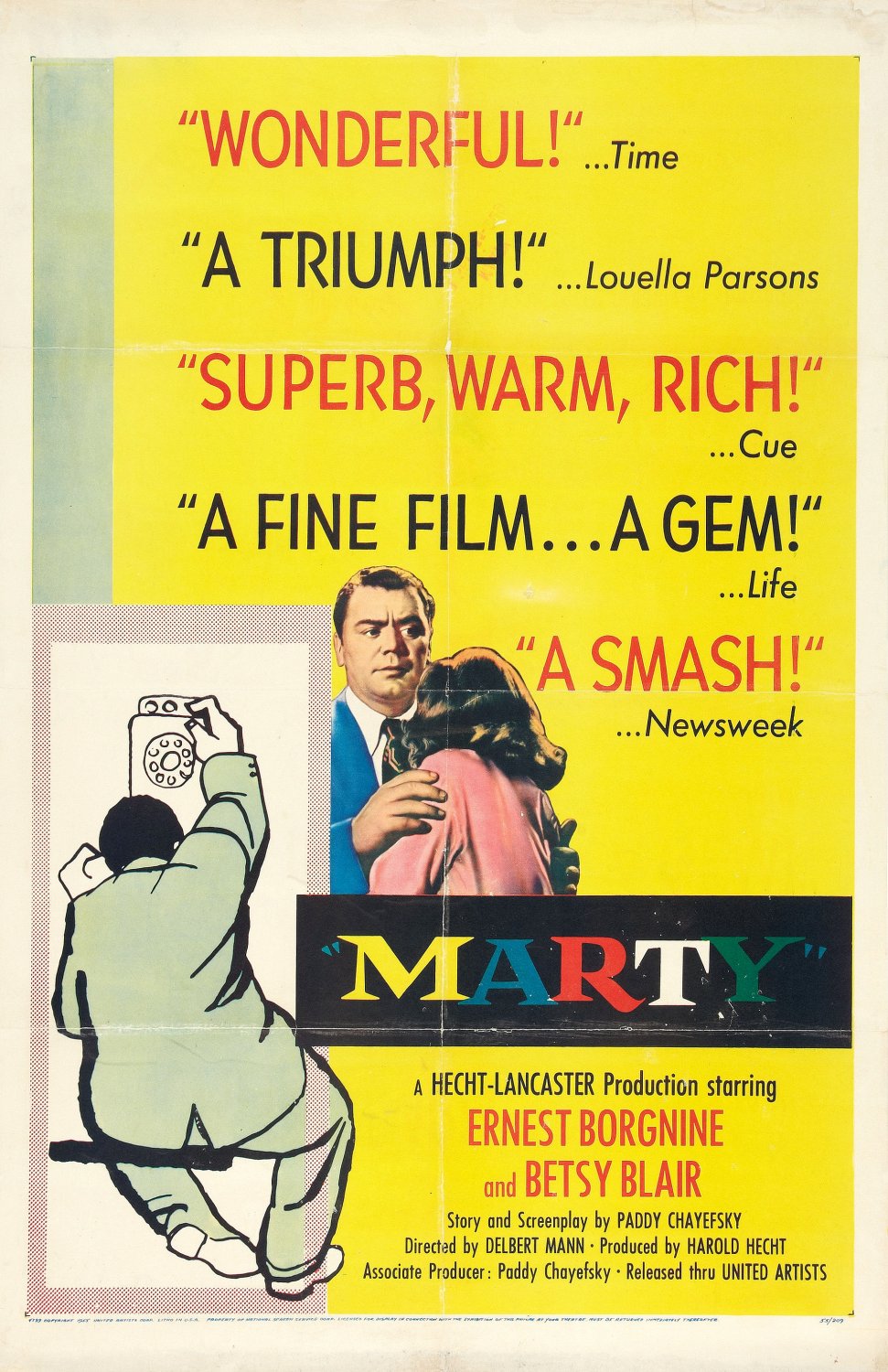
#351) Marty (1955)
OR “King of the Stardust Ballroom”
Directed by Delbert Mann
Written by Paddy Chayefsky. Based on his teleplay.
Class of 1994
Here’s the original trailer, introduced by the film’s producer Burt Lancaster!
The Plot: Marty Piletti (Ernest Borgnine) is a lovable Bronx butcher, a self-proclaimed “fat, ugly man”, and a 34-year-old bachelor. After encouragement from his mother (Esther Minciotti), Marty reluctantly goes to the Stardust Ballroom on a Saturday night. He has some initial difficulty meeting women, but soon hits it off with Clara (Betsy Blair) a homely schoolteacher stood up by her blind date. The two begin to bond, but is ‘50s America ready to see two regular, unconventional looking people find love?
Why It Matters: The NFR praises the “touching realism” of Mann’s direction and the “nuanced dialogue” of Chayefsky’s script.
But Does It Really?: “Marty” was the first mainstream romantic film that wasn’t glamorous. This isn’t Gregory Peck and Audrey Hepburn in Rome, these are two plain looking people falling in love in a neighborhood not unlike your own. It is this breakthrough that has kept “Marty” relatable to generations of filmgoers. The film still gets its annual shoutout as a Best Picture winner, but “Marty” holds up far better than its contemporaries, thanks primarily to Chayefsky, Mann, and especially Borgnine’s star turn. “Marty” isn’t a bona-fide film great, but it’s the little movie that could, and still can.
Everybody Gets One: Delbert Mann directed over 100 live teleplays throughout the ‘50s (including the original “Marty” teleplay) and Paddy Chayefsky insisted that Mann return to direct the film version. Actor Betsy Blair lobbied hard to play Clara, but United Artists was wary of casting someone on the blacklist. Her then-husband, Gene Kelly, used his Hollywood clout to get Blair the part. Not the best way to land a role, but Blair’s performance helps temper this incongruous start.
Wow, That’s Dated: Such ‘50s things as bathroom attendants, and phone booths in every bar! On a sadder note, most of Marty’s Bronx no longer exists (the RKO Chester referenced in the film was demolished in 2010).
Take a Shot: We have a title song!
Seriously, Oscars?: “Marty” opened in limited release, but reviews were strong enough that a wider release was immediately planned. Production company Hecht-Lancaster went all out on their Oscar campaign; spending more on the Oscars than the actual film ($400,000 vs. $343,000). The gambit worked, and “Marty” won four Oscars: Best Picture, Director, Actor, and Adapted Screenplay.
Other notes
Legacy
 The Horse's Head