#313) Blackboard Jungle (1955)

Blackboard_jungle

#313) Blackboard Jungle (1955)

OR “Stand and Deliver – ‘50s Style”

Directed & Written by Richard Brooks. Based on the novel by Evan Hunter.

Class of 2016

The Plot: Veteran Richard Dadier (Glenn Ford) takes a job as a high school English teacher to support himself and his pregnant wife Anne (Anne Francis). His class is populated with unruly teenage boys, including gang leader Artie West (Vic Morrow) and the rebellious Gregory Miller (Sidney Poitier). His students attack him, both verbally and physically, but Dadier stands firm, hoping against hope he can get these kids to actually apply themselves. But who can pay attention to all this when you have the hep sounds of Bill Haley & His Comets’ “Rock Around the Clock” playing over the credits?

Why It Matters: The NFR states that the film “effectively dramatizes the social issues at hand” and praises Poitier and Morrow, but mostly focuses on the film’s use of “Rock Around the Clock”.

But Does It Really?: “Blackboard Jungle” is the movie that gave us “Rock Around the Clock” and started Sidney Poitier on his road to fame, but that may be it. The film can still startle with its risqué subject matter, but its take on juvenile delinquency doesn’t pack the punch of a “Rebel Without a Cause” or “The Wild One”. Perhaps its focus on Glenn Ford – and therefore the older generation – prevents the film from reaching its maximum potential. Regardless, “Blackboard Jungle” has enough of a legacy for NFR inclusion, and gets a pass from me.

Everybody Gets One: Actors Vic Morrow and Paul Mazursky, the latter of whom would go on to write and direct a successful run of ‘70s character studies that have yet to make the Registry. Also on hand is Jameel Farah, who eventually changed his stage name to Jamie Farr and played Klinger on “M*A*S*H”.

Wow, That’s Dated: Two words: juvenile delinquency. Throw in some hip slang and frequent sexism and you got yourself 1955, Daddy-O!

Seriously, Oscars?: One of the biggest hits of 1955, “Blackboard Jungle” received four Oscar nominations: Adapted Screenplay, Cinematography, Art Direction, and Editing. The film lost to Best Picture nominees “The Rose Tattoo” and “Picnic”, as well as Best Picture winner “Marty”.

Other notes

  • Is a Blackboard Jungle any relation to an Asphalt Jungle?
  • Accounts vary on who exactly selected “Rock Around the Clock” for the film’s opening credits. Most sources cite Richard Brooks, while others say Glenn Ford’s 10-year-old son Peter was responsible. Regardless, it heralded the beginning of rock ‘n’ roll into mainstream America.
  • Fun Fact: “Rock Around the Clock” was the B-side. How different would “Blackboard Jungle” have been if Richard Brooks had opted for the A-side, “Thirteen Women (and Only One Man in Town)”?
  • Among the actors playing the faculty are stage legend Louis Calhern, future stage legend Richard Kiley, model/Scarlet O’Hara contender Margaret Hayes, and a young uncredited Richard Deacon!
  • Anne Francis is Glenn Ford’s wife? She looks like she’s 12! Did I accidentally rent “Baby Doll”?
  • Speaking of, that’s a 14-year age-gap between Ford and Francis. Another major readout on the Michael Douglas scale.
  • And then we get Sidney Poitier. Right from the start Poitier has the star quality that compels you to watch him, even when you’re supposed to be watching Glenn Ford. It’s also fun to see Poitier playing a character who is a complete 180 from the distinguished, sophisticated persona he would later craft for himself.
  • It appears Miller and Dadier are playing the first ever round of “Please Stop Calling Me Chief!
  • Among the taboo topics covered in this film are gang violence, bigotry, miscarriages, and sexual assault. Very edgy, though there’s still some work in terms of handling these subjects delicately. Anne Francis says Ms. Hammond probably provoked the students by “dress[ing] sexy”. Yikes.
  • Why would you ever bring your prized record collection to a school with a well-known discipline problem? According to Richard Kiley, he continued to get jazz records from concerned fans for the rest of his life.
  • Sidney Poitier was always open about his lack of musical abilities, and his singing is dubbed for this film. I guess the “Porgy and Bess” producers didn’t notice.
  • Dadier shows his students a UPA-esque cartoon of “Jack and the Beanstalk”. This leads to analysis by the students that would make Bruno Bettelheim proud.
  • Did they just censor Poitier saying “damn”? There are enough ethnic slurs in this film to make Quentin Tarantino blush, but heaven forbid these teenagers hear the word “damn”.
  • Thanks to the Christmas pageant, this is another movie for my “Die Hard” Not-Christmas list. And why did no one ask Calhern or Kiley to direct?
  • Dadier makes two dollars an hour!? Even adjusted for inflation that’s not much (roughly $19 an hour). Good thing we pay our public teachers well now, right? ….right?
  • A whole movie about ‘50s teenage gangs and not a single Jerome Robbins dance number? What a rip-off!

Legacy

  • The main takeaway from “Blackboard Jungle” is “Rock Around the Clock”. The film and the song helped each other achieve success, though the song quickly eclipsed the film in popularity. Teen audiences would jump out of their seats at the beginning of the film to dance to this song, though this did occasionally lead to rowdy behavior, with some theaters opting to mute the opening credits.
  • Sidney Poitier would take on the role of inspirational teacher to his own troubled students in 1967’s “To Sir, with Love”. Like its predecessor, the best thing about the film may be the song.
  • The film was spoofed in the 1957 MGM cartoon “Blackboard Jumble”, starring Droopy (well, three rowdy children who look like Droopy).

Listen to This: I still can’t believe “Rock Around the Clock” was only added to the National Recording Registry this last go-round. Learn more about the history of the song with this essay by music scholar David Deacon-Joyner (which sides with Team Richard Brooks on its “Blackboard Jungle” inclusion).
#312) Symbiopsychotaxiplasm: Take One (1968)

30_symbiopsychotaxiplasm

#312) Symbiopsychotaxiplasm: Take One (1968)

OR “The Dailies Show”


There’s a better subtitle out there – something more meta – but we’ll keep this for now.


Directed & Written by William Greaves

Class of 2015

No trailer, but this clip gives you a sense of the movie. Or not.

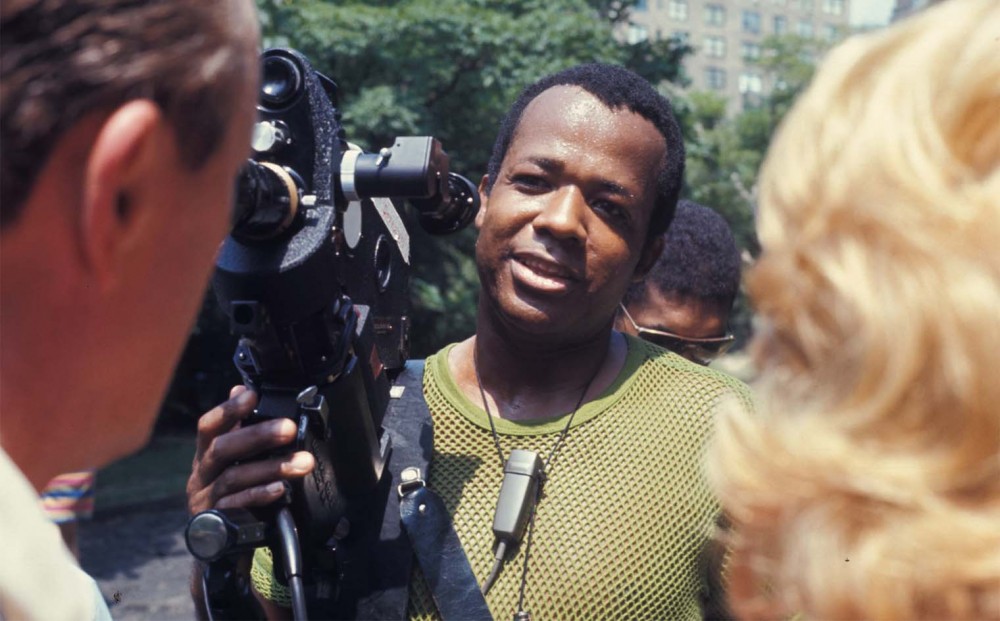
The Plot: Alice and Teddy (Patricia Ree Gilbert and Don Fellows) are a couple whose marriage is rapidly falling apart. Their confrontation in Central Park is actually a scene being filmed by William Greaves for a movie called “Over the Cliff”. A second film crew is documenting the interaction between Greaves, the actors, and the crew. A third camera crew is covering Greaves, the actors, the crew, the second crew, and anyone who happens by the shoot. And a film blogger (Tony Cirimele) is observing the final film some 50 years later for a review. Well, they’re not really reviews. These posts are more like observations. I guess it’s easier to observe than to critique.

Why It Matters: This movie gets a very long write-up by the NFR, which calls it, among other things, a “unique 1960s’ time capsule”. Portions of the write-up are lifted from the accompanying essay by film professor Maria San Filippo.

But Does It Really?: “Symbiopsychotaxiplasm: Take One” is one of the rare Registry entries that is absolutely one-of-a-kind. The whole process, as well as the process on top of the process, fascinated me. There are labyrinthine depths to this film, though I never quite seem to get the extra layers on films like these. Am I being too soft on these movies? Do I just give them a pass because I acknowledge that they’re complicated? And I just threw out the word “labyrinthine” like the kind of film snob I detest. But hey, with 750 of these I’m bound to repeat myself, right? Anyway, a pass to “Symbio” and William Greaves.

You know, I’ve always wanted to do a post that falls apart midway through. Maybe this is the film that will allow me to do that.

Everybody Gets One: After a stint at the Actors Studio, William Greaves pursued a performance career, but grew increasingly frustrated with the African-American stereotypes he was forced to play. Greaves studied film at the National Film Board of Canada and started a prolific career as a documentarian. While working on the TV Show “Black Journal” in his native New York, Greaves had the idea of combining his loves of acting and film into what he coined “a feature-length we-don’t-know-what”.

Wow, That’s Dated: References to then-current political figures former Governor George Wallace and New York City Mayor John Lindsay. But unfortunately, this being 1968 and all, the term “faggot” is thrown around a lot. A. Lot.

Take a Shot: Greaves explains his reasoning behind the title in the sequel: “Symbiopsychotaxiplasm Take 2 ½”. Oh wait; I shouldn’t be mentioning the sequel this early. I’ll hold off until later. Forget I said anything. Anyway, it’s a variation on “symbiotaxiplasm”, a concept that is essentially a microcosm where everything affects everything else.

Other notes

  • Don Fellows was a stage actor who is best remembered for his performance as Col. Musgrove, co-provider of exposition in “Raiders of the Lost Ark”. Very little is known about Patricia Ree Gilbert, and this is her only film. That’s a shame: Gilbert is the more natural film actor of the two. Fellows never quite tones down his natural stage presence.
  • “You’ve got me foxed”? Who says foxed anymore? Or ever?
  • How many of the couples being filmed during the opening credits actually signed a release form?
  • While not the only film on the Registry that blurs the line between fiction and reality, this is definitely an improvement over “David Holzman’s Diary”.
  • Maybe it’s staged, but I eat up artists discussing how to approach a scene like caviar. That’s an expression, right?
  • The crew gets together each night after the shoot to vent, as well as to question Greaves’ motivations. Arguments of creative control are never fun, especially when you’re stuck in the middle.
  • Alice is Ellen Burstyn-esque. Make that, Alice has an Ellen Burstyn quality to her. Better.
  • Does anyone else notice that most of my “Other notes” are from the first half of these films?
  • Whoa, what got bleeped? All other language goes uncensored, but Don is bleeped while discussing his character’s sexuality, apparently comparing Teddy to a real person. Did he accidentally out someone as bi?
  • Speaking of, Don (intentionally or not) gets more theatrical as the film progresses, and he always seems to be “on” for the cameras. I think we found this movie’s Michael Scott.
  • Hang on, there’s a work email I need to read. To be honest, sometimes I check my phone during these viewings. It’s not that I’m bored; sometimes I just can’t focus.
  • All of this discussion about the movie from Greaves and the crew begs the question: Can you analyze an unfinished piece of art?
  • They’re devoting a lot of screentime at the end to this homeless drunk. It’s a grating voice with no end in sight, why is this the climax of any movie?
  • I try to end the “Other notes” section with something that either comments on the ending or sums up my feelings on the film. But sometimes that doesn’t happen.

Legacy

This movie doesn’t really have a legacy, per se.

An Epilogue

“Symbiopsychotaxiplasm” didn’t get a distribution deal, but Greaves would show the film at festivals and schools across the country. One of the audience members at its 1993 Sundance screening was Steve Buscemi, who helped raise funding for a theatrical release. Thanks to Buscemi and Steven Soderbergh, “Symbio” finally got released in 2001, and four years later received the first of its four proposed sequels. “Symbiopsychotaxiplasm: Take 2 ½” (the one I didn’t mention earlier) reunites Greaves and several of his crew members to shoot another film, while commenting on the original film’s newfound cult following. It’s a film within a film that is a follow-up to a film within a film within a film, and comments on the original film within a film, as well as the film itself.

Well, it didn’t quite “fall apart” the way I wanted it to, but it’s definitely different from the other posts. And I guess that’s all I really wanted in the first place. Of course I could stop all of this any time I want to. No one’s holding a gun to my head. It’s just a nice motivator to keep writing. But perhaps that’s a discussion for another day. And… “Publish”.

screenshot2019-01-31at4.18.03pm

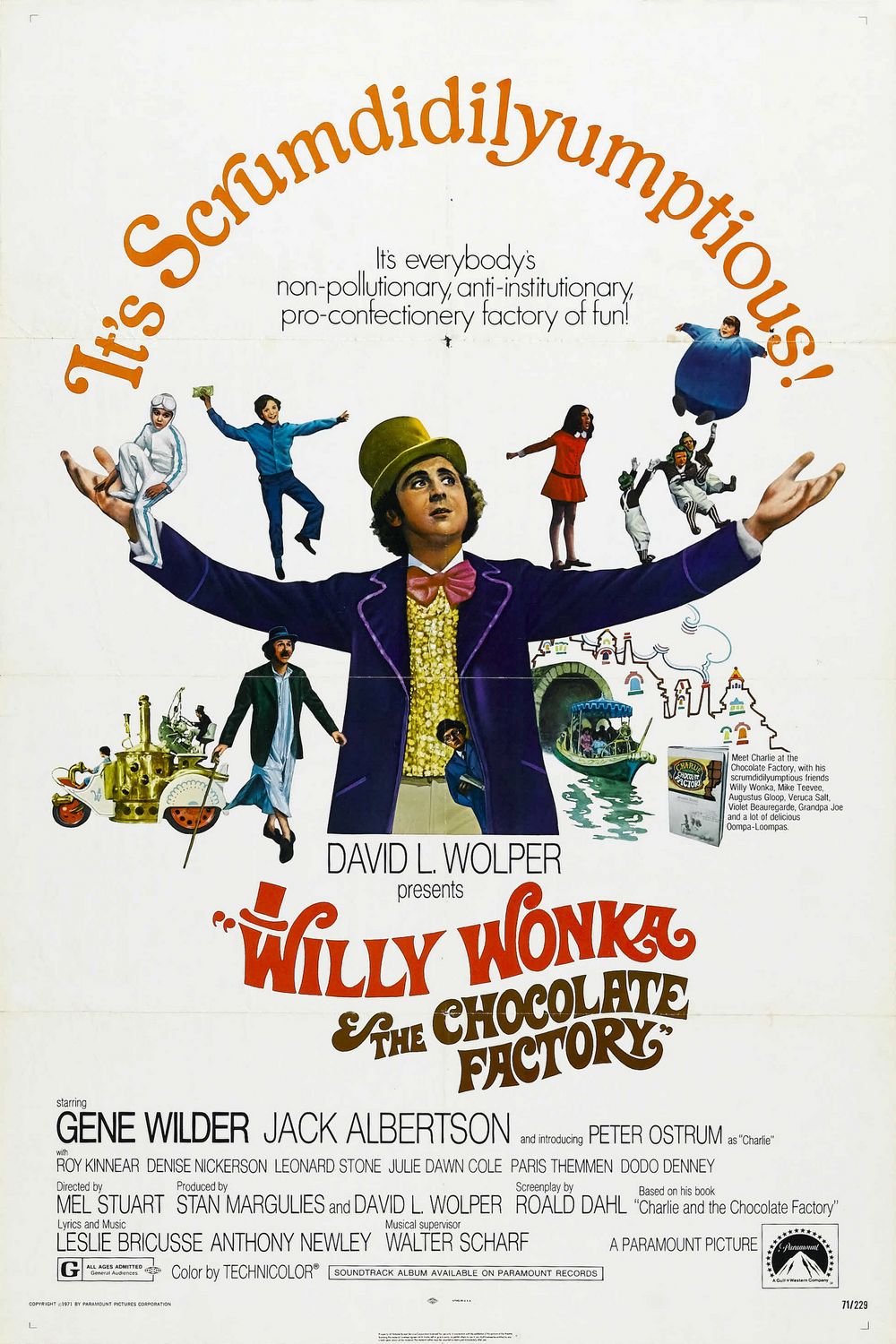
#311) Willy Wonka & the Chocolate Factory (1971)

willy_wonka_and_the_chocolate_factory_xlg

#311) Willy Wonka & the Chocolate Factory (1971)

OR “Candy Savage”

Directed by Mel Stuart

Written by Roald Dahl. Based on his novel “Charlie and the Chocolate Factory”. Songs by Leslie Bricusse and Anthony Newley.

Class of 2014

The Plot: Charlie Bucket (Peter Ostrum) lives in poverty with his family near the mysterious chocolate factory of reclusive Willy Wonka (Gene Wilder). One day, Wonka announces he will open up his factory to anyone who finds a golden ticket in their Wonka Bar. Charlie is one of the lucky recipients, and he and his Grandpa Joe (Jack Albertson) are given a tour of the factory by Wonka. Also on hand are the gluttonous Augustus Gloop (Michael Bollner), the gum-chewing Violet Beauregarde (Denise Nickerson), the spoiled Veruca Salt (Julie Dawn Cole), and the irritating Mike Teavee (Paris Temmen). Will the bad children get their comeuppance? Will Charlie live happily ever after? And what’s with the little orange guys?

Why It Matters: The NFR calls the film “surreal, yet playful at the same time”, praising Wilder, composers Bricusse and Newley, and production designer Harper Goff. Not surprisingly, the accompanying essay by Gene Wilder biographer Brian Scott Mednick focuses on Wilder’s participation in the film.

But Does It Really?: This is another film that’s too close to my childhood to be viewed objectively. “Wonka” is one of those movies where the imagery stays with you forever: from the bright, colorful chocolate room to the dark, creepy boat tunnel. Aided by some catchy songs and an iconic Gene Wilder performance, this film has endured year after year thanks to its inspired imagination and unapologetic weirdness. What took you so long, NFR?

Everybody Gets One: Director Mel Stuart had collaborated with producer David L. Wolper primarily on documentaries; his 1964 film “Four Days in November” about the Kennedy assassination earned him an Oscar nomination. It was Stuart’s daughter Madeline who suggested that he and “Uncle Dave” should turn “Charlie and the Chocolate Factory” into a movie.

Wow, That’s Dated: The film mostly succeeds at being timeless, but there are some very ‘70s hairstyles throughout (looking at you, Wilder), plus usage of the term “freakout” and a reference to the then-current moon landing.

Seriously, Oscars?: A decent but not runaway hit with audiences and critics, “Wonka” received an Oscar nod in the now-defunct category “Best Scoring: Adaptation and Original Song Score”. Bricusse and Newley (and orchestrator Walter Scharf) lost to John Williams for his adaptation of “Fiddler on the Roof”.

Other notes

  • A quick word on the film’s ownership: “Wonka” was originally released by Paramount, but the rights were co-owned by Wolper Productions and Quaker Oats (Wolper had convinced the food company to finance the film and release their own Wonka Bar for promotional synergy). When neither the film nor the candy bar met their expectations, Quaker sold their share back to Wolper, whose company was purchased by Warner Bros. in 1977, making “Wonka” a Warner picture.
  • Most of “Wonka” was shot in and around Munich, so that American audiences wouldn’t recognize the setting and accept the film as fantasy. This all makes for an excellent game of Punch Buggy.
  • “The Candy Man” is a lovely song sung by the affable Aubrey Woods, though I would never have guessed that Sammy Davis Jr. would one day make it part of his act.
  • The interludes about the worldwide search for Wonka Bars are all individually funny, but totally unnecessary. That being said, my favorite line reading in the entire movie is the very German “Shut up, Hofstedder, and tell me where the ticket is!”
  • “Cheer Up, Charlie”, aka “The Fast Forward Song”. Sorry Mrs. Bucket, but you’re keeping me from the chocolate factory.
  • Günter Meisner – Germany’s go-to movie Nazi – plays Slugworth. Like many of the film’s German day players, his voice was dubbed in post-production.
  • Jack Albertson lends a nice fairy-tale quality to Grandpa Joe, and “I’ve Got a Golden Ticket” lets him show off some of his old vaudeville moves.
  • Right out the gate (literally) Gene Wilder captures Wonka’s combination of warmth and mystique. You cannot imagine any other actor in the part.
  • “Pure Imagination” is another lovely song, aided by the film’s well-orchestrated reveal of The Chocolate Room.
  • The Oompa Loompas are definitely memorable, and entertaining enough that you forget they are an evacuee race doing free labor for an eccentric millionaire.
  • I just realized how little I’ve written about Charlie, the presumed main character. No knock against Peter Ostrum, but Charlie is such a cipher.
  • I hope the child labor people were on set the day Augustus Gloop was nearly drowning in the chocolate river. No wonder that kid quit acting.
  • That tunnel scene, man. You want to know why my generation is messed up? Because we all watched a chicken get decapitated for no reason in a kids movie!
  • I never noticed how many of the effects in this film are practical. With the exception of one process shot, Violet’s transformation into a blueberry is done entirely in camera.
  • Of all the kids, why does only Veruca get a solo? Even Charlie has to share his song with Grandpa Joe.
  • It seems like it takes more effort to make a giant chocolate bar and then shrink it down through TV then to just, ya know, make a regular sized chocolate bar.
  • Gene Wilder always played manic well, but Wonka’s outburst at the end takes the cake. Also, is this where “I said ‘good day’!” comes from?
  • So the moral is surround yourself with horrible people and you’ll seem great by comparison? What a weird little movie.

Legacy

  • For the record, Roald Dahl hated the film (which was drastically re-written without his approval) and denied Wolper the film rights to its sequel, “Charlie and the Great Glass Elevator”.
  • “Wonka” didn’t become a classic until it was rediscovered in the ‘80s thanks to video rentals and frequent television airings.
  • Everyone has spoofed this movie. There was even a point where every animated show did a “Wonka” episode: from “Family Guy” to “Futurama” to “Dexter’s Laboratory”.
  • The original promotional Wonka bars never made it to the shelves, but an endeavor from Nestlé in the mid-90s was more successful, giving us Nerds, SweeTarts, Laffy Taffy, and at long last, the Everlasting Gobstopper.
  • 2005’s “Charlie and the Chocolate Factory” is a more faithful adaptation of the book; well…up until Tim Burton starts manifesting his daddy issues. The typically private Gene Wilder was quite public about his dislike of the remake.
  • The stage versions are their own re-telling of the book, but have relented to including the film’s songs for brand recognition.
  • Of the five main children, only Julie Dawn Cole continued acting into her adulthood, but all five seem happy to reunite every few years to discuss their work on “Wonka”.
  • And of course:

2r24wj

#310) The Daughter of Dawn (1920)

Daughter of Dawn (1920)

#310) The Daughter of Dawn (1920)

OR “Two Guys, a Girl, and the Great Plains”

Directed by Norbert Myles

Written by Myles and Richard Banks

Class of 2013

No trailer, but here’s the first 12 minutes of the film.

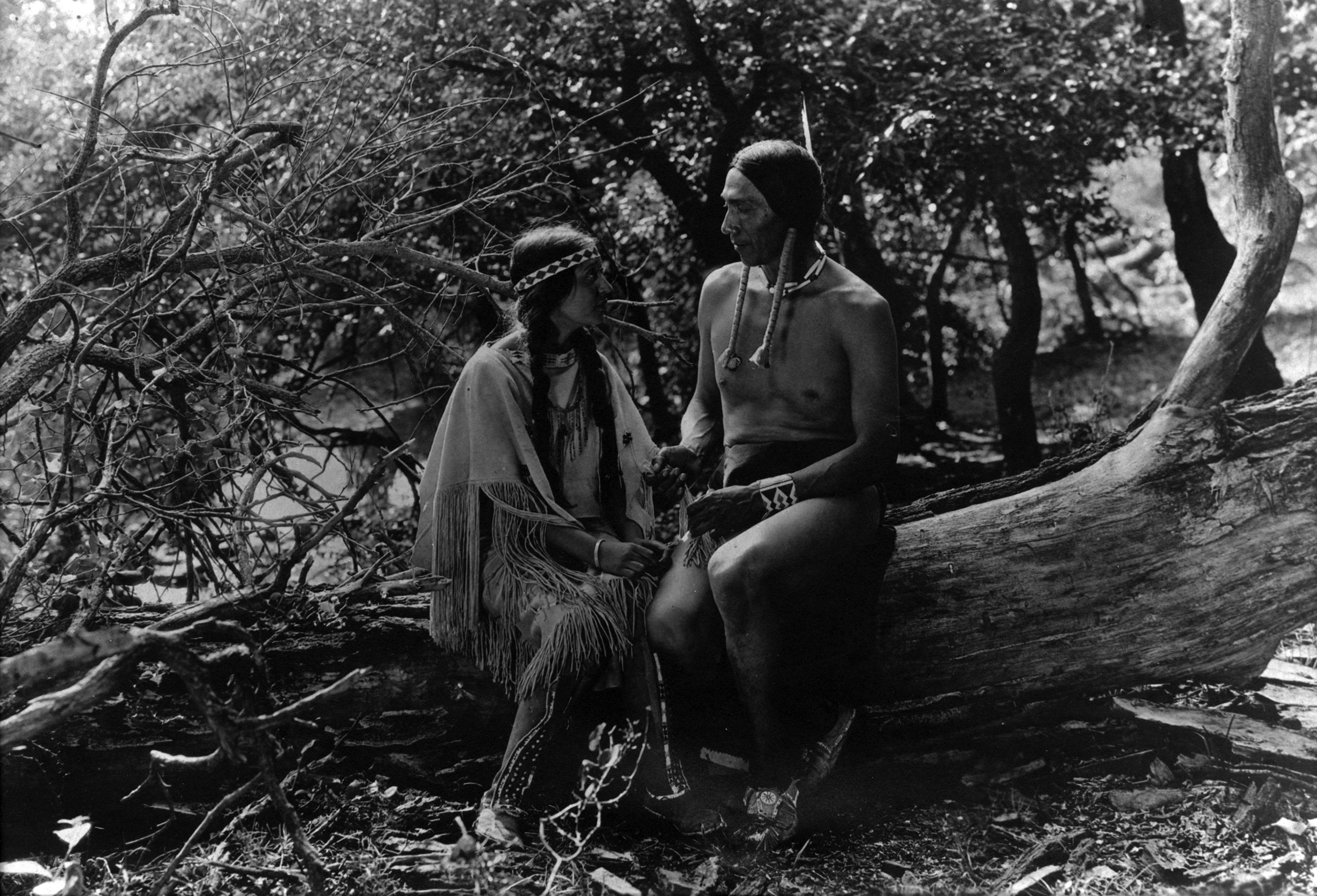
The Plot: Kiowa tribe member Daughter of Dawn (Esther LaBarre) wants to marry the brave hunter White Eagle (White Parker), but her father the Chief (Hunting Horse) wants her to consider the more powerful Black Wolf (Jack Sankadota). When Black Wolf learns that Daughter of Dawn is not interested in him, he plots with the Chief of the Comanche tribe (Belo Cozad) to steal the Kiowa’s horses and women. But this love triangle has four sides, as Black Wolf is oblivious to the adoration fellow Kiowa Red Wing (Wanda Parker) has for him. All this, plus a well-documented look at the Plains Indian lifestyle of the early 20th century, complete with a buffalo hunt!

Why It Matters: The NFR calls the film “a priceless record of Native-American customs, traditions and artifacts of the time” and mentions its then-recent restoration by the Oklahoma Historical Society.

But Does It Really?: This film made it to the NFR the quote-unquote easy way: be a silent film that is presumed lost for decades only to be rediscovered and restored with funding by the National Film Preservation Foundation. The film’s 2012 restoration no doubt led to its 2013 inclusion, but that’s all beside the point: “Daughter of Dawn” would have made the list anyway because of its historical significance. The film is 80 minutes of the Kiowa and Comanche tribes, with a cast comprised entirely of Native Americans, who brought their own clothing and artifacts for authenticity. As a film it’s a bit on the slow side, but at the end of the day you have a decent film and an indispensable historical document. “The Daughter of Dawn” deserves to be on this list, perhaps more so than some of the Registry’s more recognizable titles.

Everybody Gets One: Not a lot of information out there about the cast and crew, but this essay by Oklahoma History teacher Leo Kelley gives a bit of information on writer, director, and “interesting character” Norbert Myles. Myles started off as an actor who worked with practically every major silent film studio before getting “blackballed” from Hollywood for clashing with too many studio heads. In 1919, Myles was persuaded by filmmaker Richard Banks to direct a film for Banks’ Texas Film Company based on a Comanche legend Banks had been told.

Wow, That’s Dated: This whole movie features “women as property” as a major plot point. Also, buffalo! Look at all the buffalo! We screwed that one up for sure.

Take a Shot: Daughter of Dawn gets her name because she was born as the sun rose. By that logic, my name would be “Son of Right-After-Lunch”.

Other notes

  • A quick word about the restored print: either the original intertitles were missing or in poor condition, so they have all been replaced, using text from the shooting script to fill in the gaps. This includes the film’s prologue text, found on the front page of the script, thanking Richard Banks for his “knowledge of the Indian…gained during the twenty-five years that he lived with them”.
  • Not a lot is known about the cast, except that the actors playing White Eagle and Red Wing are the children of Quanah Parker, the “Last Chief of the Comanche”.
  • As for that beautiful landscape, the entire film was shot in the Wichita Mountains of Oklahoma.
  • The Chief is first referenced as being the “Father of Daughter of Dawn”. Any more relatives and we’ll need a flowchart.
  • Why do they keep calling them “ponies”? Those are full-grown horses, and that is false advertising.
  • Nice illustrations; were those part of the original intertitles?
  • Six years after “The Bargain”, the filmmakers of “The Daughter of Dawn” figured out how to film day-for-night: just tint the film dark blue afterwards.
  • Speaking of, I like the golden tint the rest of the movie gets. Gives it a sepia-tone feel, like you’re out in the sun alongside the characters.
  • My god, these intertitles are on screen forever! How slowly did people read back then? This whole movie could have been over in 20 minutes!
  • My favorite part about this movie is there isn’t a single white character. No Kevin Costner to play white savior, and no settlers pillaging the land. The Kiowa and Comanche tribes have enough problems as it is, thank you very much.
  • White Eagle and Black Wolf have to jump off a cliff to prove their love for Daughter of Dawn? Isn’t that the same process the Puritans used to determine who was a witch?
  • Has anyone else noticed that Daughter of Dawn has become a supporting character in her own movie? This movie should have been called “White Eagle and Black Wolf”.
  • “White Eagle’s physical injuries were soon routed by youth, love, and happiness.” Ah yes, back when you could cure a movie character with intertitles.
  • Am I watching the Comanche attack in real time? Pick it up everybody, it’s a movie!
  • “The Daughter of Dawn” is not without its faults, but it’s still better than the silent version of “Last of the Mohicans” on this list.
  • Wow, the credits were able to identify not only the cast, but also many of the allegedly hundreds of extras utilized during production. As I always say, there is no substitute for thorough research. Well done, Oklahoma Historical Society.

Legacy

  • How much of a legacy can a film that went missing for 92 years have? Hopefully the rediscovery is just the beginning of this film’s influence.

#2) The Godfather (1972) – Part II

b51716352822063ed92a43931022f7fd

Previously on #2) The Godfather (1972)… 

Other notes

  • The second half is when James Caan and Robert Duvall really get to shine. Caan has the flashier part, and most of his scenes were cut, but he is a joy to watch as he fully inhabits Sonny. Duvall doesn’t get a lot to do, but he makes the most of it, and the scenes where Tom and Sonny are at each other’s throats feel like a release for the character rather than unnecessary theatrics. The only better performance these two gave was pretending to be happy Joel Grey won their Oscar.
  • The scenes in Sicily offer a literal change of scenery for the film. That being said, Michael and Apollonia have one of the weirder “How We Met” stories. Side note: Simonette Stefanelli was 16 during production. Ick.
  • How long has Connie been pregnant? I’m expecting her to birth an elephant at the end.
  • The scenes of Carlo beating up Connie could not have been fun to shoot, especially if your brother is directing the scene. Thanksgiving at the Coppola household must have been rough that year.
  • And this is why people hate tollbooths. If only Sonny had FasTrak.
  • I think this movie’s alternate title was “A Comprehensive Guide to Ethnic Slurs”.
  • Diane Keaton tries her best, but I just don’t understand why Kay would still want to be with Michael. He’s given her plenty of red flags regarding the family business, and he was back in America for a year before he contacted her. Oh, and HE MARRIED ANOTHER WOMAN. Maybe it’s fleshed out more in the novel, but I question Kay’s motives.
  • Among the film’s other counts of “Seriously, Oscars” are the lack of nominations for Art Direction and Cinematography. Though it turns out that snubbing the brilliant camerawork of Gordon Willis would become an annual tradition at the Oscars (he was only nominated twice – “Zelig” and “The Godfather Part III” – before finally receiving an honorary Oscar in 2009).
  • The juxtaposition between the baptism and the five families being taken out is always a compelling viewing experience. Apparently it didn’t come together until Bach’s “Prelude and Fugue in D major” was added in. Did Bach score any other films?
  • That last shot always gives me chills. There was one final scene in the original cut (Kay praying for Michael in a church, the final scene in the novel), but ending it with the door closing is the perfect choice. Best “Searchers” homage ever.

Legacy

  • “The Godfather” immediately became a runaway hit and a cultural milestone in film. Many filmmakers have cited “The Godfather” as an influence on their careers, but the film did, however, further the stereotype of all Italians being shady mobsters. As someone of Italian descent I am here to tell you; it’s easier to connect me to Kevin Bacon than to the mob.
  • Early response to the film was so strong, a sequel was commissioned before the first one was released. Coppola and Puzo took a subplot from the novel about young Vito’s rise to power, fleshed it out with an original plotline continuing Michael’s dealings in Nevada, and bada-bing, the best sequel ever made.
  • The less said about “The Godfather Part III”, the better.
  • This is the movie that put Francis Ford Coppola on the map, so we have “The Godfather” to blame for “Captain EO”.
  • Everybody’s career benefited from the success of “The Godfather”. Pacino, Duvall, and Keaton all became Oscar winners/screen legends, Caan spent the ‘70s as a movie star and has been in demand ever since, Shire went on to become “Yo, Adrian” in “Rocky”, and Brando…kept on being Brando.
  • Speaking of, Brando rarely talked about his participation in “The Godfather”, but did take the time to spoof his own performance in 1990’s “The Freshman” (not the Harold Lloyd one).
  • “The Godfather” premiered on TV in November 1974, a month before “Part II” hit theaters. In November 1977, both films were re-edited in chronological order with over an hour of additional footage to become the miniseries “The Godfather: A Novel for Television”.
  • Mario Puzo wrote a few follow-up novels that took place in and around the events of the film. The first novel, 1984’s “The Sicilian”, occurs during Michael’s exile in Sicily. The subsequent film version deleted Michael for copyright reasons, and like many a Michael Cimino film, “The Sicilian” was critically savaged, but not without its supporters.
  • For the film’s widespread influence on popular culture, see “Scorsese, The Films of Martin”.
  • Of course without “The Godfather” we wouldn’t have “The Sopranos”. The strip club Tony Soprano conducted business in was called the “Bada Bing”, after James Caan’s line in the film.
  • So many parodies, where to begin? I’ve always been partial to Dom DeLuise’s cameo in “Robin Hood: Men in Tights”.
  • “The Simpsons” has spoofed “The Godfather” many times, including once with special guest star James Caan.
  • One of my personal favorites is this sketch from “Late Night with Conan O’Brien” featuring Robert Duvall and Conan regular Abe Vigoda.
  • Practically every line from “The Godfather” has been quoted and referenced, many of them becoming part of our lexicon. Look no further than 1998’s “You’ve Got Mail”.
  • It amazes me how many films in the Registry inspired video games. “The Godfather” made its way to Xbox and PlayStation 2 in 2006, with Duvall, Caan, Vigoda, and a posthumous Brando all reprising their roles. Both Coppola and the Mario Puzo estate expressed their dislike of the project.
  • And last but not least, the infamous horse’s head (a real head purchased from a dog food company) was auctioned off in 2013 for upwards of $30,000. The photo used for the lot description is the one I use for the blog.

Further Listening: Special mention to “Che La Luna Mezzo Mare”, the song Mama Corleone sings at Connie’s wedding. The Lou Monte recording is the closest I ever got to embracing my Italian heritage as a child. Enjoy.