#335) On the Bowery (1956)

OTB 5

#335) On the Bowery (1956)

Directed by Lionel Rogosin

Written by Mark Sufrin

Class of 2008

Here’s a modern trailer

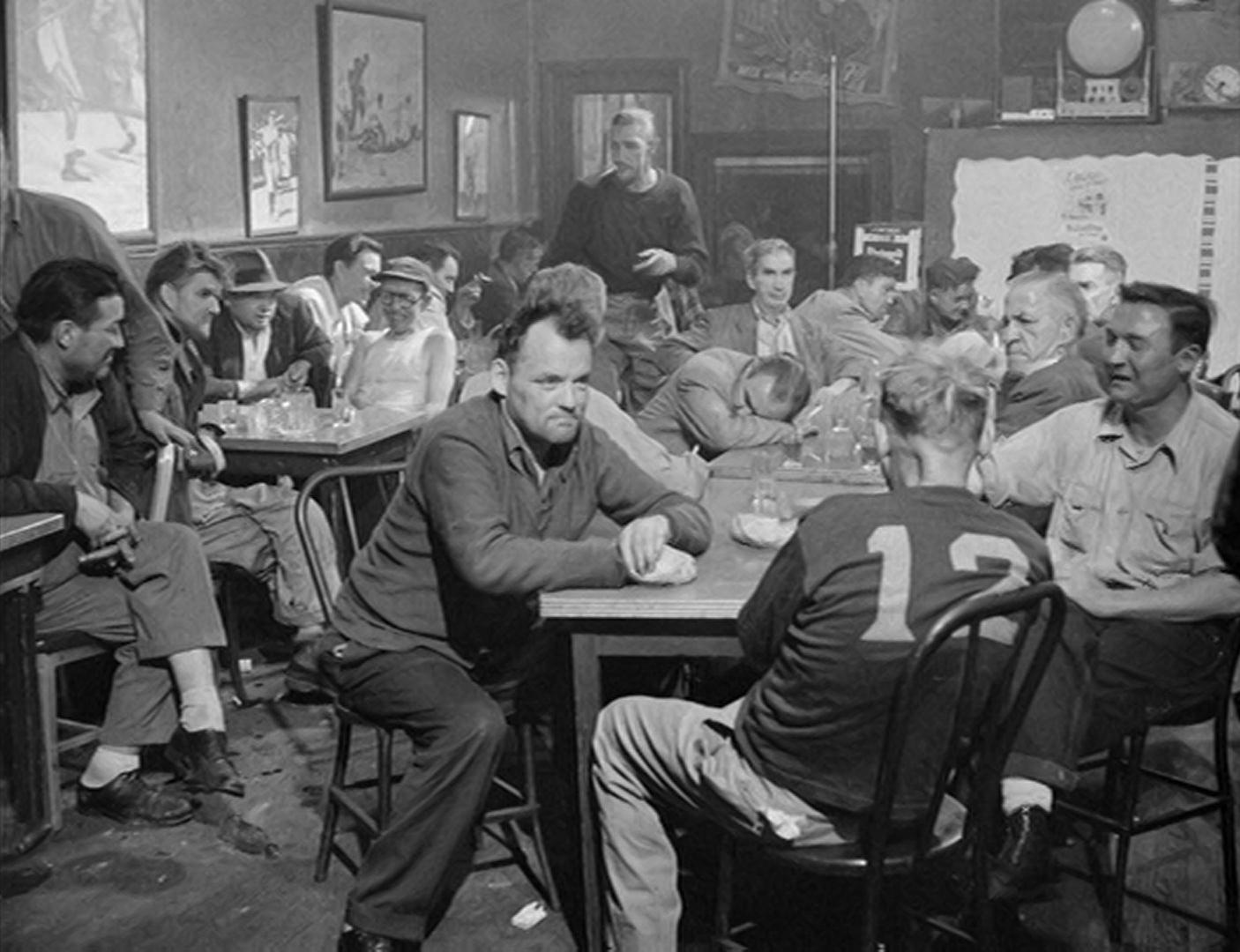
The Plot: Lionel Rogosin blurs the line between reality and fiction in this docudrama about New York’s troubled Bowery, using real residents as his cast of characters. Ray Sayler arrives in the Bowery looking for work, and meets up with longtime resident Gorman Hendricks. Ray becomes even more down on his luck when his suitcase is stolen while he is passed out from drinking, never learning that Gorman sold the suitcase to make extra money. Ray’s time in the Bowery is filled with an endless cycle of drinking, a short supply of employment, and a constant struggle for survival.

Why It Matters: The NFR calls the film an “unrelenting…wrenching portrait”, and quotes Bosley Crowther’s original New York Times review: “a dismal exposition to be charging people money to see.” Is that really the review you want to connect with a film’s entry into a national archive?

But Does It Really?: Once you get used to the “drama” part, “On the Bowery” is an interesting watch. I know very little about the Bowery, and this film was an eye-opener. The “scripted” parts help make the “unscripted” parts palatable, but ultimately knowing that these are real people with real struggles makes it all quite painful to watch. “On the Bowery” is a capsule of a long-forgotten American life, told in a unique, enticing format. A definite yes to the NFR inclusion of “On the Bowery” and filmmaker Lionel Rogosin.

Everybody Gets One: Son of philanthropist Israel Rogosin, Lionel served in the navy during WWII, and afterwards traveled to Eastern Europe, Israel, and Africa. Affected by the plight of the underprivileged, and having no interest in taking over his father’s textile industry, Rogosin taught himself filmmaking, with the goal of creating socially conscious docudramas. Before tackling his dream project about Apartheid in Africa, Rogosin decided to practice by making a film about the nearby Bowery. That story again: a filmmaker’s test movie made it into the NFR.

Wow, That Was Already Dated When the Film Came Out: The el-train tracks that literally overshadowed the Bowery were demolished shortly after filming of “On the Bowery”.

Take a Shot: The Reverend George Bolton actually says “on the Bowery” during his sermon. Did his speech influence the title or vice versa?

Seriously, Oscars?: After struggling to find distribution, “On the Bowery” made its theatrical debut in 1957. Despite its limited release and dour subject matter, the film managed an Oscar nomination for Best Documentary, losing to the more agreeable “Albert Schweitzer” by fellow NFR filmmaker Jerome Hill . “On the Bowery” was, however, the first American film to win the Venice Film Festival Documentary prize.

Other notes

  • Named after the Dutch word for farm (“bouwerij”), Bowery Lane was one of early New York City’s busiest thoroughfares. By the late 1800’s, the neighborhood had become overrun with flophouses, dive bars, and prostitutes. Many a song and short story has been written about the Bowery of the early 20th century, none of them good.
  • Both Ray and Gorman were non-professional actors that Rogosin convinced to star in the film. Surprisingly, both are natural performers. Ray even has your typical leading man look, though maybe that’s just because he’s the only person in this movie that doesn’t look like a catcher’s mitt come to life.
  • I will admit that this movie’s staged aspects are not as jarring as I thought. Clearly these men were given a lot of leeway in terms of their dialogue. Heck, it’s better than most improv performances I’ve been to (low bar, I know).
  • Ray does not want his watch to be sold. Do you have any idea what Christopher Walken went through to get that watch to him?
  • The famous Bowery Mission is featured in one scene, and it sounds like something straight out of “Guys and Dolls”. Where’s Stubby Kaye?
  • Not a lot of women in the Bowery. Is that a fair representation, or did no women feel like participating in the movie?
  • Drinks are only 15 cents, roughly $1.40 today. WHY ARE WE SO BAD AT INFLATION!?
  • I assume once the drinking really gets going the subtitles just say, “[????]”.
  • It was worth reminding myself during this viewing that mental institutions were still commonplace in the ‘50s. When we think of the homeless today, we automatically think of the mentally unstable, but everyone in this film more or less has their wits about them. Of course if I think too long about our abolition of mental institutions and the long-term effects it has had on mental health in the country…oh no I’m getting lightheaded. Where’s the paper bag?
  • Tangentially related to this movie: a “Bowery Boys” movie has yet to make the NFR.

Legacy

  • After completion of “On the Bowery”, Lionel Rogosin felt confident enough to make his dream project: 1960’s anti-apartheid “Come Back, Africa”.
  • Following “Africa”, Rogosin spent most of the ‘60s making socially relevant films and operating the Bleecker Street Cinema, which he transformed into a home for independent filmmakers. By the ‘70s, Rogosin faced increased difficulty finding financial backing for his movies, and sold the Bleecker. He spent the last two decades of his life as a writer in England (Europe appreciated his work far more than America ever did).
  • Tragically, many associated with “Bowery” – including cinematographer Dick Bagley and actors Ray Salyer and Gorman Hendricks – succumbed to alcoholism and passed away within a few years of the film’s completion. Hendricks actually passed a few weeks before the film’s premiere.
  • Many filmmakers have cited “On the Bowery” as an influence, including John Cassavetes and Martin Scorsese. Watching this film, you can definitely see the influence Rogosin had on these two.
  • The Bowery started to clean up in the 1970s as New York City made a concentrated effort to improve its image. As with most other major U.S. cities throughout the ensuing decades, the Bowery has been a victim of gentrification. Lousy hipsters.

#334) Back to the Future (1985)

MV5BZmU0M2Y1OGUtZjIxNi00ZjBkLTg1MjgtOWIyNThiZWIwYjRiXkEyXkFqcGdeQXVyMTQxNzMzNDI@._V1_

#334) Back to the Future (1985)

OR “H.G. Wells’ Oedipus Rex”

Directed by Robert Zemeckis

Written by Zemeckis & Bob Gale

Class of 2007

The Plot: Teenager Marty McFly (Michael J. Fox) is trapped in his hometown of Hill Valley with seemingly no real future. One night in 1985, Marty’s friend – eccentric scientist “Doc” Emmett Brown (Christopher Lloyd) – reveals his latest experiment: a time machine built into a DeLorean. When a terrorist group attacks Doc, Marty escapes in the car and accidentally travels back to 1955. While there, Marty prevents his father George (Crispin Glover) from meeting his mother Lorraine (Lea Thompson), therefore creating a paradox and threatening his own existence. Can he save his parents and himself? And can he and 1955 Doc find a way to send him back to…the time he came from?

Why It Matters: The NFR gives a plot synopsis, praises the “masterfully over-the-top” Christopher Lloyd, and states that the film spawned “a popular soundtrack and two enjoyable sequels”.

But Does It Really?: I watched “Back to the Future” a lot as a kid, and I’m happy to say that despite a few dated aspects here and there, it holds up remarkably well. An airtight script is aided by great performances from Fox and Lloyd, with every department of the production giving A+ work. On top of all this, “Back to the Future” is just pure fun from beginning to end, and manages to be a logical but never overcomplicated sci-fi story. “Back to the Future” is an iconic classic and another no-brainer for the NFR.

Shout Outs: Quick references to “Dr. Strangelove”, “Star Wars” and most notably, “Safety Last!”

Everybody Gets One: Robert Zemeckis’ writing partner Bob Gale was inspired to write “Back to the Future” when he found his father’s high school yearbook and wondered if they would have been friends if they were classmates. Michael J. Fox was originally unable to commit to “Future” due to his commitment to the TV series “Family Ties”. After Eric Stoltz was cast as Marty and subsequently let go, Fox was allowed to be in the film, on the condition that his “Family Ties” schedule came first. Fox spent weeks juggling the two projects, averaging about five hours of sleep every night.

Wow, That’s Dated: The film firmly establishes its 1985 setting with video-recorders, a Huey Lewis soundtrack, and oh yes, the DeLorean.

Seriously, Oscars?: The highest-grossing film of 1985, “Back to the Future” received four Oscar nominations, and won for its Sound Editing. Zemeckis & Gale’s screenplay lost to “Witness”, while Huey Lewis’ “The Power of Love” lost to Lionel Ritchie’s “Say You, Say Me” from “White Nights”. “Back to the Future” did not receive a Best Picture nod, no doubt because Universal already had a contender in that category: “Out of Africa”.

Other notes

  • No offense to Eric Stoltz, but only Michael J. Fox could have played Marty McFly. Fox has a fun combination of boy-next-door charm and offbeat acting that helps Marty from being a passive cipher. It’s a perfect match of character and actor.
  • The entire screenplay is a master class of set-up and payoff. Every line and shot is essential to the story and/or the characters. This is aided by the film’s excellent editing. No scene overstays its welcome: just the essential information and onto the next one.
  • Oof, the old age makeup on George, Biff and Lorraine has not held up. These are clearly people in their ‘20s playing middle-aged.
  • This time travel experiment brought to you by JCPenney: You’re looking smarter than ever!
  • Doc and the DeLorean get one of filmdom’s best intros. Christopher Lloyd manages to make Doc eccentric without seeming crazy. In addition, Lloyd and Fox have an easy chemistry together. There’s no logical reason these two should be friends, but they sell it.
  • I wish to take this time to apologize to all Libyans everywhere for how they’re portrayed in this film. Hell, I might as well apologize to the entire Middle East.
  • Wow, there’s so much more cursing is in this movie than I remember. I guess I watched the TV edit more often.
  • And then Lorraine falls for “Calvin Klein” and this movie takes a turn. Lea Thompson’s convincing naiveté as Lorraine smooth over some very rough patches.
  • Not to get all “wibbly wobbly timey wimey” on everyone, but I feel like Doc learning about his time machine 30 years before it happens would have a larger ripple effect on history.
  • The scene I wish existed: the montage of Doc taking Marty ‘50s clothes shopping.
  • Thomas F. Wilson is just perfect as Biff. Like many an ‘80s antagonist before and after, this casting was a blessing and a curse for Wilson.
  • You know it’s coming, but the first kiss between George and Lorraine is very sweet. Bonus points to Alan Silvestri for composing a sweeping underscore for “Earth Angel”.
  • The finale at the clock tower is always an exciting watch. I’ve seen this movie hundreds of times, and I still get anxious at the end.
  • I am willing to forgive the movie’s altered history stuff, but you cannot convince me the McFlys would still be living in the same neighborhood, let alone the same house in the new timeline.
  • Sure Biff is emasculated in the new 1985, but he still runs his own business, so lay off, butthead.
  • “No no no, Marty, you and Jennifer turn out fine. Well, Jennifer looks more like Elisabeth Shue, but still…”

Legacy

  • “Back to the Future” was a runaway hit, and Zemeckis & Gale started on a sequel. Production was delayed so Zemeckis could direct “Who Framed Roger Rabbit”, but “Back to the Future Part II” and “Part III” are both worth the wait, and the trilogy makes for satisfactory binge watching.
  • Several movies on the Registry have inspired a theme park ride, a few have even become video games, but how many films on this list have their own pinball machine? Just this and “Magnificent Ambersons”.
  • The 2015 documentary “Back in Time” is a loving glimpse at the film’s devoted (albeit a bit intense) fanbase.
  • To be honest, I could never get into “Rick and Morty”. You’d think its sense of humor would mesh with mine, yet here we are.
  • The film’s more problematic aspects are wonderfully articulated in this hilarious John Mulaney bit.
  • This is the only chance I’ll get to mention Crispin Glover’s weird Letterman interview.
  • And of course, “Back to the Future Part IV”…is a thing that should never happen. There, I said what we were all thinking.

Further Viewing: Wanna ask Thomas F. Wilson about “Back to the Future”? Chances are he’s already covered it in “The Question Song”!

Listen to This: The Penguins’ original version of “Earth Angel (Will You Be Mine)” was added to the National Recording Registry in 2004. The song’s “Back to the Future” connection gets a mention in this essay by Library of Congress staple Cary O’Dell.

#333) Daughter of Shanghai (1937)

038126133732f512ac6320d1a6c48a7c

#333) Daughter of Shanghai (1937)

OR “Slaying the Dragon Lady”

Directed by Robert Florey

Written by Gladys Unger and Garnett Weston. Based on a story by Weston.

Class of 2006

A rare case of a movie with no clips on YouTube, but here’s a tribute to Anna May Wong.

The Plot: Lan Ying Lin (Anna May Wong) is determined to find the men who murdered her father (Ching Whah Lee), a successful San Francisco businessman who refused to aid an illegal immigrant smuggling racket. One of her father’s clients, Mrs. Hunt (Cecil Cunningham), introduces Lan Ying to Kim Lee (Philip Ahn), the government agent assigned to crack down on the smuggling. Lan Ying travels to Port O’Juan and poses as a dancer to infiltrate the dive bar run by Otto Hartman (Charles Bickford), the man she believes is running the racket. But there are more surprises along the way in this remarkably stereotype-free mystery.

Why It Matters: The NFR calls the film “an intriguing, taut thriller” and “more truly [Anna May] Wong’s personal vehicle than any of her other films.” There’s also an essay by Library of Congress archivist Brian Taves.

But Does It Really?: I went into “Daughter of Shanghai” fearing 62 minutes of cringe-worthy stereotypes, and was pleasantly surprised when it wasn’t. Sure, it’s a run-of-the-mill B picture with its share of clichés and budget limitations, but the film stars two Asian Americans that are treated as, ya know, people. Thanks to Anna May Wong’s concentrated effort on expanding the roles Asian Americans can play in film, I can judge “Daughter of Shanghai” on its content rather than its antiquated racial issues. “Daughter of Shanghai” is the kind of film I’m looking for on this list: an underrated, largely forgotten film that was vastly ahead of its time. Yes, it’s on the list for what it represents more than for what it is, but its characterizations are refreshingly progressive, so no argument here for NFR inclusion.

Wow, That’s Dated: Mainly just ‘30s things like candlestick phones, taxi cabs, and printed newspapers. I am delighted I didn’t have to bring up coolies or the “Oriental riff” in relation to this film.

Take a Shot: Lan Ying Lin is introduced as “Daughter of Shanghai” before she performs at Hartman’s club. It makes no sense for the film or the character, but it does make a great title.

Seriously, Oscars?: “Daughter of Shanghai” received mixed critical response and tepid audience reactions, and quickly disappeared. Seeing as how the Oscars were still two years away from giving Hattie McDaniel an award in a prestigious studio picture, they were not going to nominate an Asian American for a B-Picture. Heck, “Daughter of Shanghai” didn’t even make the late show TV circuit.

Other notes

  • Anna May Wong was already an established Hollywood star by 1937, though she was still reduced to playing supporting roles and “Dragon Lady” stereotypes. After not being offered the lead role of O-Lan in “The Good Earth” (a role that went to white actor Luise Rainer), Wong traveled to China to visit family, and ended up staying for a year, absorbing the culture. Still under contract with Paramount, she returned to Hollywood, on the condition that her remaining films feature positive portrayals of Chinese-Americans.
  • Anthony Quinn and Buster Crabbe play the two thugs at the beginning. Quinn was just starting out in the movies, and Crabbe was fresh off his success as Flash Gordon.
  • Once I realized the film was going to treat Lan Ying and Kim Lee respectfully, I started to relax and enjoy myself. Wong is giving a nicely restrained performance, especially compared to some of the overacting happening around her. Side note: Wong was born and raised in Los Angeles, but got vocal coaching at Cambridge while in Europe during the early ‘30s, hence her slightly-British, more enunciated cadence.
  • Lan Ying’s dad isn’t a stereotype either! This is amazing! Though I’m pretty sure all of Ching Whah Lee’s dialogue is dubbed.
  • I get the feeling Cecil Cunningham would have been a great foil for the Marx Brothers or the Three Stooges.
  • For the record, Philip Ahn is Korean, not Chinese. But hey, he’s the co-lead in a 1937 B-picture; baby steps everyone.
  • There are a handful of scenes in which Lan Ying, Kim Lee and others briefly speak Chinese. There are no subtitles, so that’s a bonus element for anyone who speaks Chinese, though I’m pretty sure the dialogue translates to “White people don’t know that I’m lying.”
  • The film’s B-picture budget is on full display with the model work. The sequence of the helicopter landing in the water was obviously filmed in a tank at the Paramount backlot.
  • It’s not that the film gets worse during the third act; it’s just that Lan Ying becomes a very passive character all of a sudden. Hell, one shot is literally just Lan Ying standing there watching the male characters fight it out. I did not come this far in this movie for Kelly the chauffeur/Irish stereotype to end up being the hero.
  • Ugh, I was willing to forgive this movie’s third act, but it tripped at the finish line. The movie clips along with no romantic subplot between Lan Ying and Kim Lee, and then they discuss getting married right at the end. So close. But then again, not too many “how we met” stories involve dangling from a helicopter. Take that, Bob Saget voiceover!

Legacy

  • Anna May Wong continued to make films that put Chinese-Americans in a positive light, though she spent most of World War II aiding the Chinese war effort, and her screen appearances diminished. After the war Wong never regained her status as film star, but did find success on radio and television, including the first series to star an Asian-American: “The Gallery of Madame Liu-Tsong”. Unfortunately no prints of the 10 produced episodes survive.
  • Wong was set to appear in the film version of “Flower Drum Song” but had to withdraw due to health issues. She died of a heart attack in 1961 at the age of 56.
  • Anna May Wong’s work started being reappraised in 2005 (what would have been her 100th birthday). She has been celebrated in retrospectives, film festivals, at least three biographies, and the documentary “Anna May Wong, Frosted Yellow Willows: Her Life, Times and Legend”.

Listen to This: The Class of 2018

15edba674c

The Vernal Equinox: Spring has sprung, allergy season has officially started, and the National Recording Registry has picked its 2018 inductees. Links for each entry are embedded in the text when available. Don’t have time to listen to all of these recordings? The NRR has provided this handy video as well!

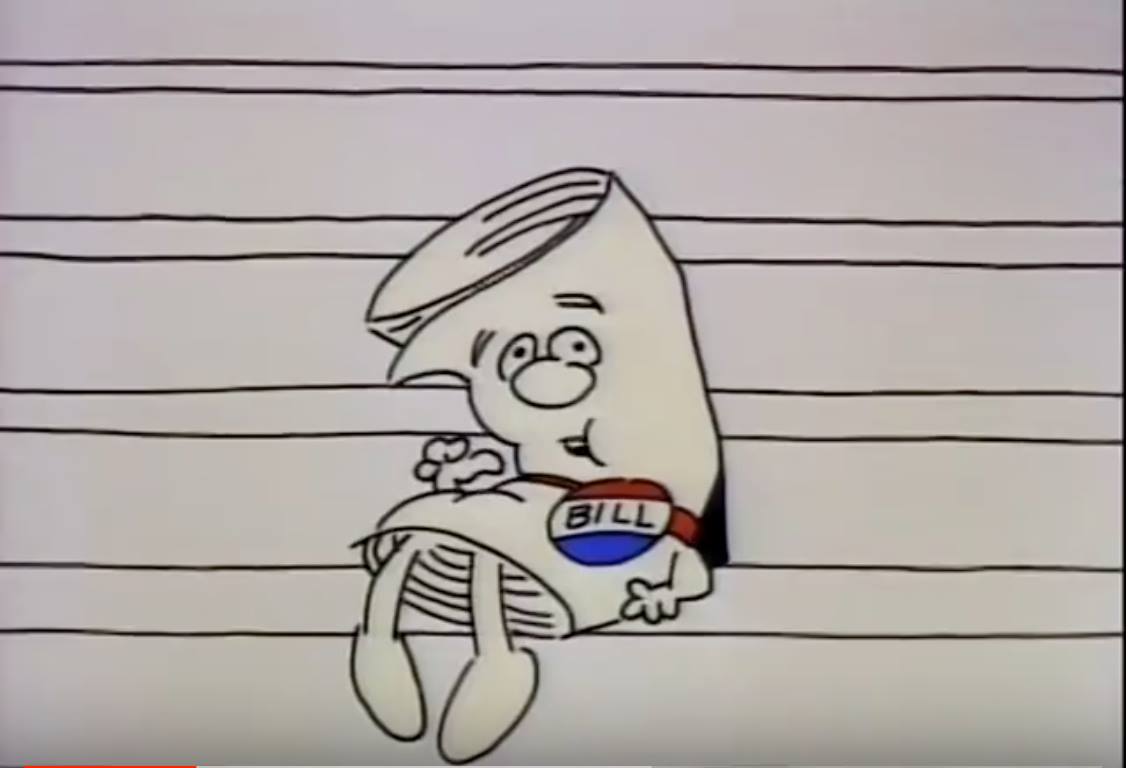
And just for the hell of it, here’s “I’m Just a Bill”, now considered by the National Recording Registry just as significant as Orson Welles’ “War of the Worlds” broadcast or Booker T. Washington’s Atlanta compromise speech.

#332) San Francisco Earthquake & Fire, April 18th 1906 (1906)

1906-earthquake

#332) San Francisco Earthquake & Fire, April 18th 1906 (1906)

Class of 2005

Today’s Oversimplified History Lesson: the 1906 San Francisco Earthquake. There’s a lot of information out there about the earthquake, so please educate yourself beyond this post. Easily the most fun way to research this: the earthquake simulation room at a San Francisco science museum whose name escapes me.

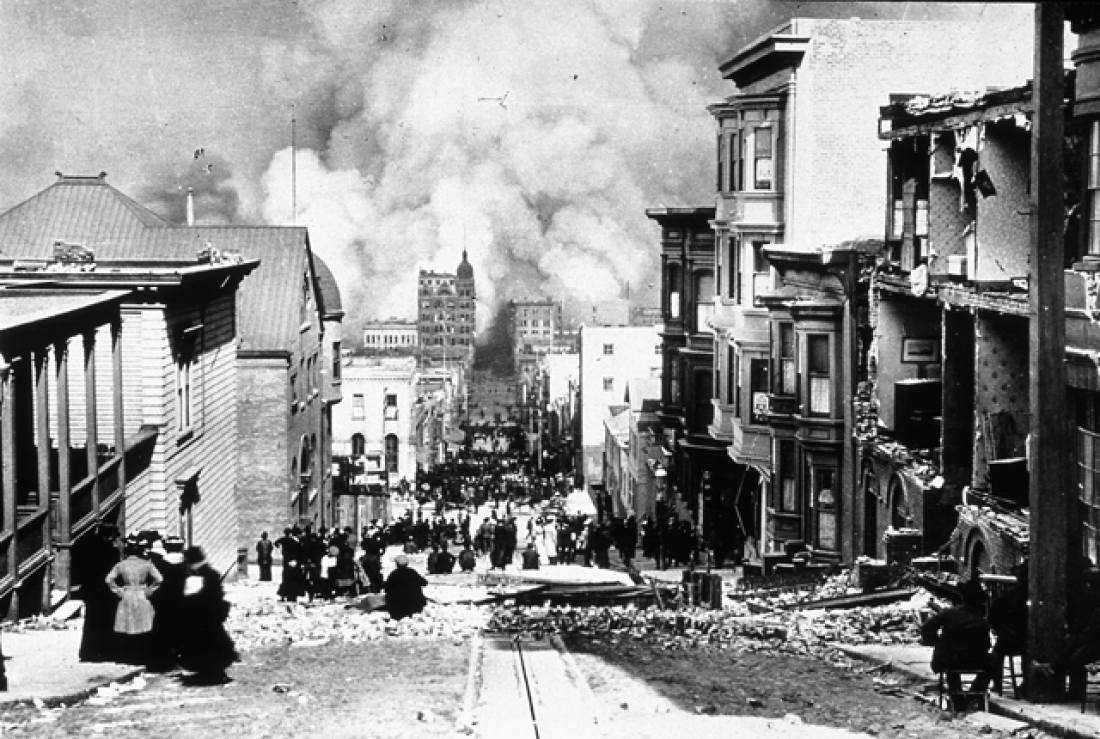
At 5:12 am on April 18th, 1906, a 7.9 magnitude earthquake hit just offshore of San Francisco. The initial destruction to most of the city’s buildings was exacerbated by the ensuing fires, which lasted the next four days. When everything finally settled, over $400 million dollars of damages had accumulated, and 80% of San Francisco’s buildings were completely destroyed. While accounts vary, the death toll is in the wide estimated range of between 700 and 3000 people, making it one of the most fatal earthquakes in world history.

While no footage exists of the actual event, this film depicts its aftermath. In 14 minutes, silent footage captures the ruins of downtown San Francisco, the immediate motions to feed and house the survivors, and the transportation of thousands of citizens by ferry to Oakland. The actual scenes might be played up a bit for the cameras, but the footage is nevertheless welcome in the National Film Registry for its historical significance.

Why It Matters: The NFR gives an overview, theorizes that some shots were “almost certainly staged”, and states that the intertitles “overdramatized and sentimentalized” the events.

Somebody Gets One: This is one of the rare NFR entries with no surviving record of who actually made it. And that’s why you always put your name on your things!

Wow, That’s Dated: Intertitles refer to “Man’s faithful friend the horse” and “odd looking automobiles”, plus…oh God, they actually say “Chinamen”.

Other notes

  • As a longtime resident of San Francisco, I realized that I’ve never really looked into this earthquake (I had just moved here during the centennial in 2006). It is a sobering experience watching streets I have travelled down many times completely covered in rubble and debris.
  • The more research I do about the 1906 earthquake, the more I have to confront this town’s longtime prejudice towards Chinatown and its inhabitants. The reason no one knows the earthquake’s actual death toll is because no one bothered to document Chinatown’s damage. Even worse, several city officials tried to use the earthquake as an excuse to get rid of Chinatown entirely.
  • Exhibit A that some of these shots were staged: several of the evacuees wave to the camera as they pass by.
  • What a dark companion piece this film must make with the other early 1900s San Francisco NFR entry: “A Trip Down Market Street”, filmed just four days before the earthquake.

Legacy

  • Many accounts of the day categorize San Francisco’s mood post-earthquake not as “devastated”, but rather “determined to rebuild” (though part of this was a business strategy to prevent companies from leaving). The cityscape of San Francisco as we know it today was created in the immediate aftermath of the earthquake. Reconstruction was more-or-less completed in time for the 1915 Panama-Pacific International Exposition, which celebrated the city’s literal rise from the ashes.
  • Perhaps the largest influence the earthquake had on San Francisco: many of the city’s major trade businesses moved to Los Angeles, causing L.A. to usurp San Francisco’s title as the largest city in California. L.A. holds that distinction to this day.
  • It should go without saying that San Francisco got really into earthquake awareness after 1906. When the Loma Prieta earthquake hit in 1989, while the structural damage was still massive, the death toll went down significantly (63, compared to 1906’s 700+). Part of that was the earthquake proofing that happened in the previous 80 years, and part of that was everyone staying home to watch the World Series (played by two Bay Area teams: the San Francisco Giants and the Oakland A’s).
  • Thousands attended the earthquake’s centennial commemoration in 2006, including 11 of the original survivors. The footage below was captured by the only friend of mine crazy enough to be in downtown San Francisco at 5am on a Tuesday.

Video courtesy of Heather Orth. Thanks, Heather!

Further Viewing: I can’t remember the name of it, but there’s a movie set in San Francisco that recreates the San Francisco earthquake. And it has a song called “San Francisco”, which later became the official song of San Francisco. What was it called? Oh man, this is gonna drive me nuts.

Listen to This: The City by the Bay’s other official song: “I Left My Heart in San Francisco”, as immortalized by Tony Bennett, and inducted into the National Recording Registry in 2018. I’m not crying, you’re crying.