#302) Baby Face (1933)

6e2b7eff037d1d1cb857b01d85656e91

#302) Baby Face (1933)

OR “Cracking the Pre-Code”

Directed by Alfred E. Green

Written by Gene Markey & Kathryn Scola. Story by Mark Canfield (aka Darryl F. Zanuck).

Class of 2005

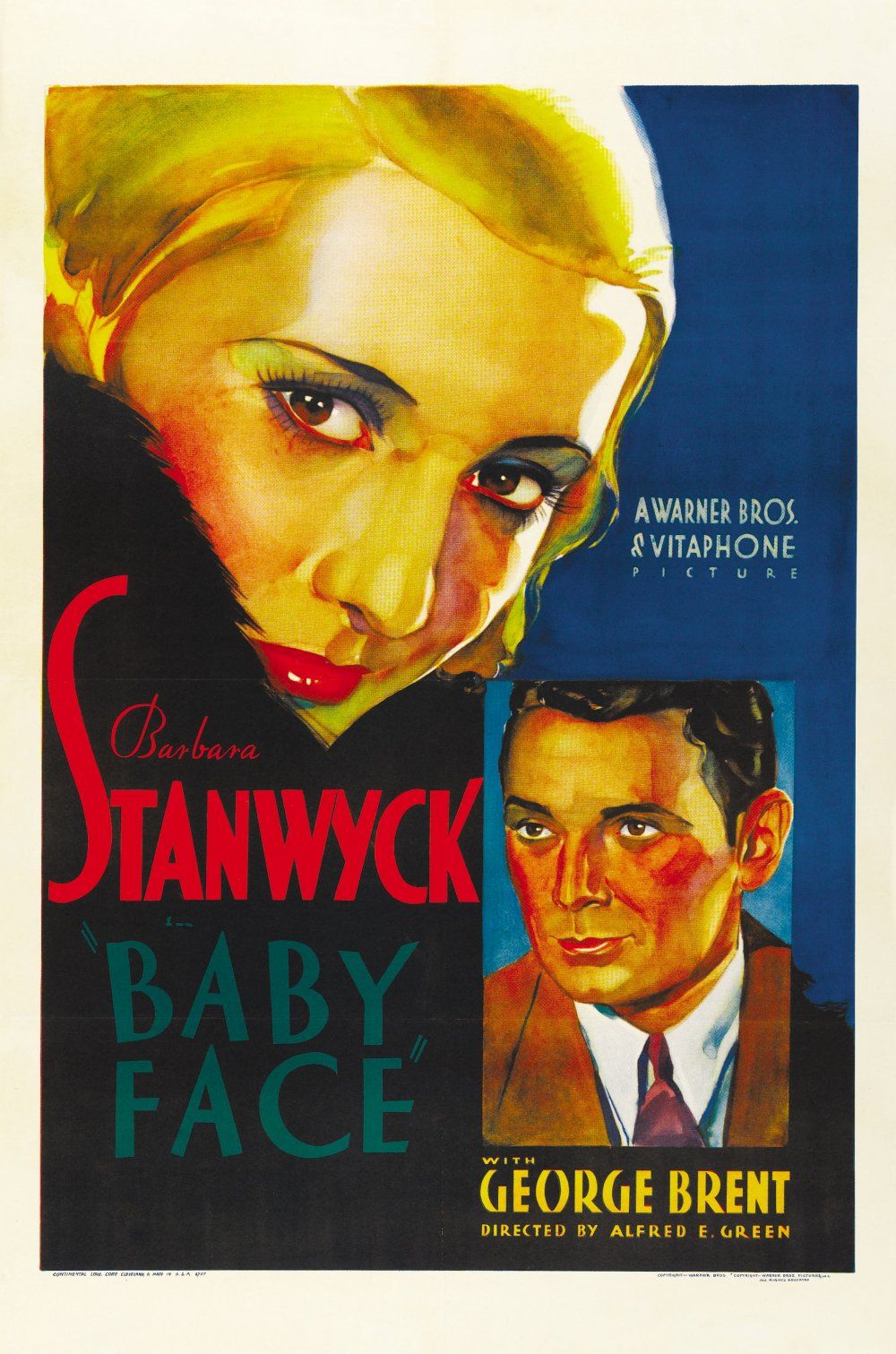
The Plot: Lily Powers (Barbara Stanwyck) has been subjected to sex with strangers since the age of 14 in order to help out her father’s (Robert Barrat) speakeasy. After his death, Lily is encouraged by her friend Cragg (Alphonse Ethier) and his Nietzschean philosophy to go out and exploit herself in a big city to get what she wants. Lily arrives in New York City and gets a filing job at Gotham Trust, seducing and manipulating every man in the building as she climbs her way to…excuse me, I’ve just been handed something from the New York State Censorship Board. I’ll just read what it…oh dear. Um…forget all of that.

The Plot: Lily Powers (Barbara Stanwyck) has been subjected to very vague abuse from her father (Robert Barret). After his death, Lily is encouraged by her friend Cragg (Alphonse Ethier) to go out and get what she wants by using her strong…morality. Lily arrives in New York City and gets a filing job at Gotham Trust, still seducing and manipulating men, but now there are consequences. After she has met her match in newly elected bank president Courtland Trenholm (George Brent), Lily must heed Cragg’s (recently overdubbed) words that “the price of the wrong way is too great.”

Why It Matters: The NFR calls it “[o]ne of the more notorious melodramas of the pre-Code era” and cites this film as one of the movies that gave us the Production Code. There’s also an informative essay by film professor Gwendolyn Audrey Foster.

But Does It Really?: First off, the main reason this film was inducted was due to the discovery of an original negative of “Baby Face” before it was censored. While a very enjoyable movie, “Baby Face” is on the Registry for what it represents more than for what it actually is. The unaltered version is definitely the superior film, while the cuts and alterations made by Warner Bros. at the behest of the Production Code led to a muddled mess of a film. Luckily, the original cut of “Baby Face” is readily available, and is a hidden gem from the ‘30s whose taboo subject matter and strong lead performance by Barbara Stanwyck can be appreciated generations later. My lingering question: are both versions of this film on the Registry?

Wow, That’s Dated: Your usual ‘30s fare: newsies, telephone operators, the term “permanent” rather than “perm”. But there’s also your usual ‘30s sexism, plus a reference to Chico the maid as “that fantastic colored girl”. Eye-rolls all around.

Take a Shot: A few of Lily’s co-workers refer to her as “Baby Face”, and the 1926 song of the same name plays over the opening credits.

Seriously, Oscars?: No Oscar nominations for “Baby Face” (perhaps due to its censoring). Warner Bros.’ Best Picture contenders that year were fellow NFR entries “42nd Street” and “I Am a Fugitive from a Chain Gang”.

Other notes

  • The whole reason for the film’s editing was that the New York State Censorship Board rejected the film for distribution. Knowing that New York screenings brought in a huge portion of a film’s income, Warner Bros. agreed to alter “Baby Face” to appease the censors. Lily is still quite promiscuous, but now it’s implied she changes because of put-upon morals, rather than natural character development. Also deleted are implications of Lily’s prostitution, and all references to Friedrich Nietzsche. This was the only known version of “Baby Face” until a negative of the pre-release cut was discovered in 2004.
  • Lily sarcastically refers to herself as “a ball of fire”. Not yet, Stanwyck.
  • I’m glad Stanwyck’s performance here is being rediscovered; Lily is an unapologetically strong character (especially for a female lead in the ‘30s) and Stanwyck is clearly relishing the opportunity to hone her “tough-as-nails” screen persona.
  • If you don’t have the time to watch both cuts, all you really need is to watch the two versions of Cragg’s speech. The entire movie is changed in a matter of seconds. You can hear the audio from both in this NPR interview from 2005.
  • Holy crap this train ride scene is steamy. No wonder it got cut.
  • This whole movie has what I call “The GLOW Conundrum”: are Lily’s means for success empowering for women or degrading? A discussion for those far more qualified than I.
  • The other piece of Hollywood lore in this film: a brief appearance by a young John Wayne! It’s interesting to watch the Duke in a performance that’s a far cry from his later, iconic work. And if you ask me, they layered his makeup on pretty thick. He’s practically a ghost.
  • Lily’s rise up the corporate ladder is greatly aided by the fact that every man who works at the bank is an idiotic horndog.
  • Another movie for the “Die Hard” Not-Christmas list!
  • You cannot utter the phrase “a victim of circumstances” without making the Curly noises immediately afterwards.
  • And then Lily gets sent off to Paris and the movie takes a turn. It’s not a bad turn, I guess I just enjoyed Lily manipulating everyone around her so much.
  • A board of directors that take responsibility for their mistakes? Clearly this is a work of fiction.
  • Meanwhile, at a model of Lily’s apartment building…
  • The last bit of censorship comes from a tacked-on “happy” ending. It’s an epilogue from the board of directors (I guess Stanwyck and George Brent were unavailable) reading a telegram about Lily and Courtland starting their new penniless life together in Pittsburgh. Like everything else about “Baby Face”, stick with the original cut.

Legacy

  • While the Motion Picture Producers and Distributors of America had a code of “Don’ts” and “Be Carefuls” at the time of “Baby Face”, films like this one prompted them to create the full Production Code, which would stay in effect until the mid-‘60s. The Code was employed across the country, eliminating the need of censorship on a state-by-state basis.
  • Barbara Stanwyck left Warner Bros. not too long after “Baby Face”, and kept plugging along in film after film until her breakthrough performance in 1937’s “Stella Dallas”.
#301) Enter the Dragon (1973)

mv5bngzimtkynzqtmddmzi00zdnklwe4ytatzgnlntizyzqymgm2xkeyxkfqcgdeqxvynjc1ntyymjg@._v1_

#301) Enter the Dragon (1973)

OR “Exit the Legend”

Directed by Robert Clouse

Written by Michael Allin

Class of 2004

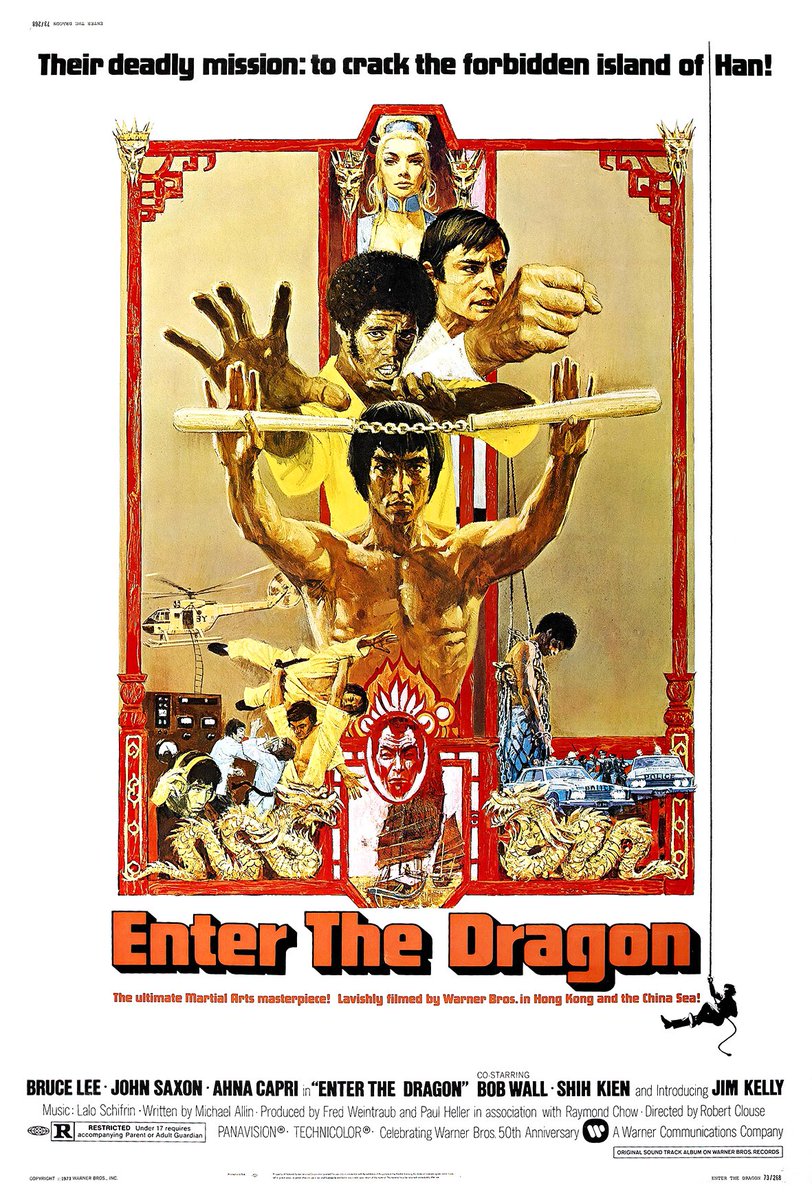
The Plot: Shaolin martial artist Lee (Bruce Lee) is approached by British Intelligence to infiltrate the private island of Han (Shih Kien), a suspected drug lord. Han is holding his annual martial arts competition, which in actuality is a front for henchmen recruiting. Along with compulsive gambler Roper (John Saxon) and Vietnam veteran Williams (Jim Kelly), Lee discovers Han’s nefarious deeds, but this entire plot is only here to justify Bruce Lee’s gravity-defying, eye-catching martial art skills.

Why It Matters: The NFR calls the film a “martial arts extravaganza” and praises Lee, as well as the film’s climactic fight scene. An essay by film critic/author Michael Sragow is a love letter to Bruce Lee.

But Does It Really?: Oh yeah. China has the market cornered on the martial arts genre, but thank God “Enter the Dragon” qualifies for NFR inclusion. The plot is thin and the dialogue insipid at times, but who cares when you can watch a true martial arts master at work? Bruce Lee is a legend of 20th century filmmaking, and his brief but monumental film career should be recognized. Hats off to Bruce Lee for putting the “art” in “martial arts”.

Everybody Gets One: Born in San Francisco but raised in Hong Kong, Lee Jun-fan (“Bruce” was a nickname from his mother) started practicing martial arts at the age of 16. Following several fights with alleged Hong Kong organized crime members, Lee moved back to San Francisco and started teaching Jeet Kune Do in Oakland. After a successful stint as Kato on “The Green Hornet”, Lee wanted to be a movie star, and was encouraged to make films in Hong Kong that would showcase his star power to American producers. Films like “Fist of Fury” and “Way of the Dragon” caught the eye of Warner Bros., who agreed to co-finance “Enter the Dragon” with Hong Kong studio Golden Harvest, and Lee’s own production company; Concord.

Wow, That’s Dated: This thing is soooo ‘70s. Special shoutout to cinematographer Gilbert Hubbs for his very ‘70s zoom-ins, and composer/recent Oscar recipient Lalo Schifrin for his “Shaft”-esque score.

Seriously, Oscars?: No nominations (from the Oscars or otherwise) for “Enter the Dragon”, so I’ll take this time to bemoan the continued lack of a stunt coordination category at the Oscars. How many great stunt people/martial artists like Lee deserve recognition for their film work?

Other notes

  • This is another movie with a nationality dispute. “Enter the Dragon” was primarily a Hong Kong production, but Warner Bros.’ participation, as well as its American director and writer, make it NFR eligible. No complaints here: watching a martial arts film after two years of standard studio fare was very refreshing for me. You don’t see a shirtless Bogie kicking his opponents in the face, I’ll tell you that.
  • We’re only five minutes in and this film has already dispensed some excellent life advice. Good thing I’m taking notes.
  • Be on the lookout for a young Jackie Chan in a handful of scenes. I spotted him during the fight between Su Yin and Han’s henchmen.
  • Jim Kelly was a middleweight karate champion who got the role of Williams when Rockne Tarkington backed out at the last minute. He’s clearly not an actor, but he does the best with what he’s given, and managed a brief film career thanks to this movie.
  • In a common practice of the era, “Enter the Dragon” was filmed without sound, with the entire soundtrack being recorded in post. You get used to it after a while, except for the recycling of the exact same sound effect every time a character hits the ground. It drove me nuts.
  • Established actor/former teen heartthrob John Saxon was a black belt in judo and karate, and did most of his own fighting. Not bad for someone two years away from “Mitchell”.
  • Bruce Lee is no Olivier, but he is most effective when you remove the dialogue. Even in scenes where he isn’t fighting, his movements are precise and disciplined.
  • The thugs have to fight each other to keep their jobs? Man, their union is not cutting it.
  • O’Hara is sporting the “Ben Affleck in ‘Argo’” haircut.
  • This film definitely has a Bond influence. Han looks like a cross between Dr. No and Blofeld, complete with cat!
  • Opium: The opiate of the masses.
  • “Enter the Dragon” follows the Standard Movie Fight Procedure: All henchmen attack the hero one at a time.
  • Wait, is Han Dr. Claw? Is THAT what he looks like?
  • The finale in the hall of mirrors is successful and popular enough to be declared an homage to “Lady from Shanghai” rather than a rip-off. Kudos to everyone; that thing must have been a logistical nightmare to shoot.

Legacy

  • A few weeks before the release of “Enter the Dragon”, Bruce Lee died of cerebral edema caused by heat stroke at the age of 32. The film went on to be a massive success in both Hong Kong and the United States, and helped cement Bruce Lee as a film legend.
  • Following Lee’s death, Robert Clouse and Harvest were able to utilize outtake footage of Lee – along with a double – to complete his final film: “Game of Death”.
  • Along with the TV series “Kung-Fu”, “Enter the Dragon” helped popularize martial arts for a western audience. You could, in fact, say that back in the ‘70s, everybody was Kung Fu fighting.
  • Many, many spoofs and homages over the years. We’ll stick with “A Fistful of Yen”, the centerpiece parody of “Kentucky Fried Movie”.
  • There have been threats of a remake for over a decade now, to be helmed at various times by the likes of Kurt Sutter, Spike Lee, and Brett Ratner (who I assume would not have had rehearsals). The ball is currently in the court of stuntman-turned-director David Leitch, so…that’s good at least.

Further Viewing: Several biopics about the life of Bruce Lee: 1993’s “Dragon: The Bruce Lee Story” was based on his widow Linda’s biography, while 2008’s “The Legend of Bruce Lee” got approval from his daughter Shannon.  Also worth a view is the 2000 documentary “Bruce Lee: A Warrior’s Journey”, which includes more outtake footage from “Game of Death”.

#300) The Dickson Experimental Sound Film (1894)

sonoro_dikson

#300) The Dickson Experimental Sound Film (1894)

OR “You Ain’t Heard Nothin’ Yet”

Directed by William K.L. Dickson

Class of 2003

This video features “Dickson” multiple times; with and without the soundtrack

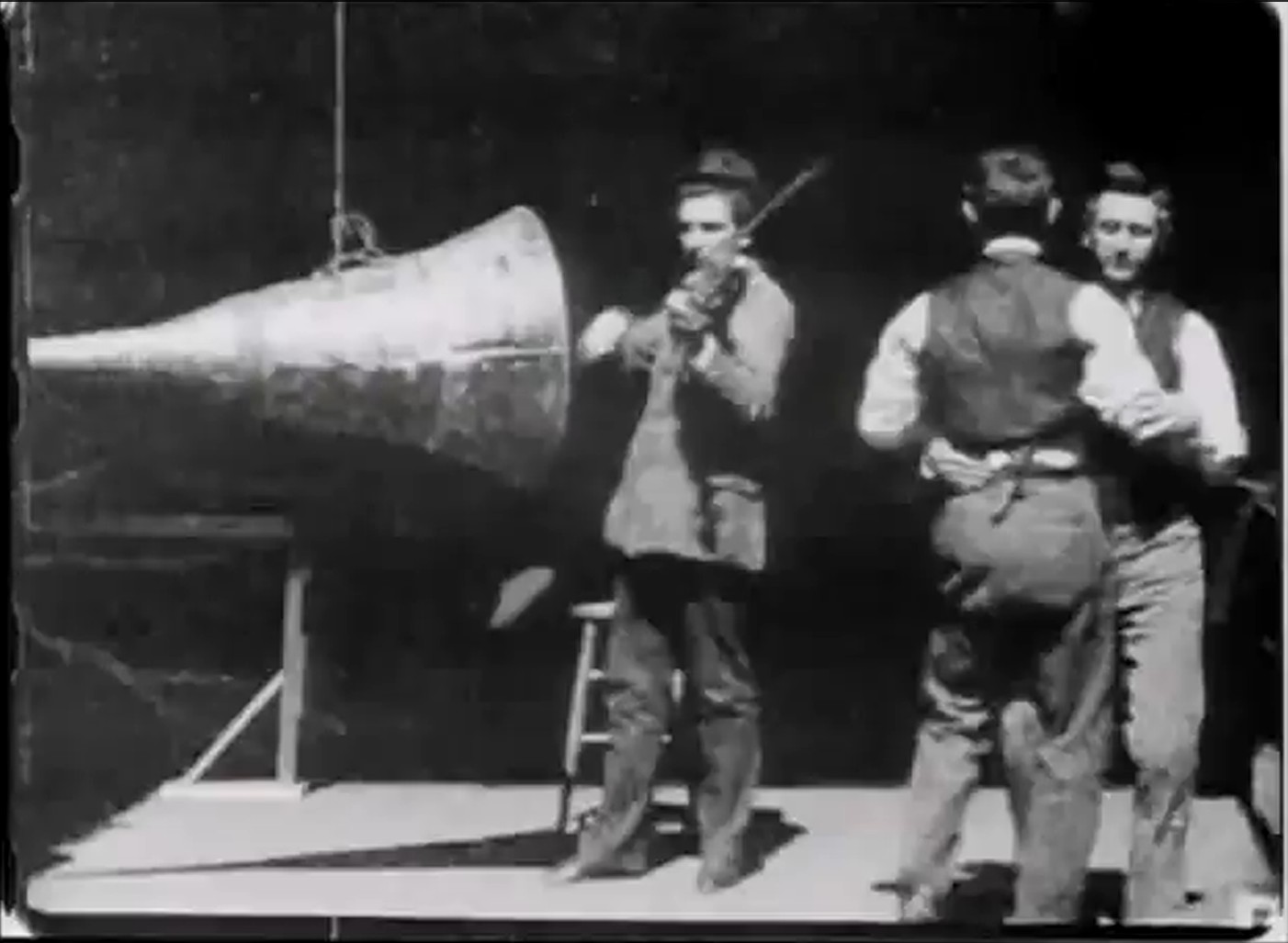
The Plot: A violinist (William Dickson?) plays “The Chimes at Normandy” into a recording horn, while two men slow dance in the foreground. Stick around for the surprise ending where a fourth man randomly wanders into the shot.

Why It Matters: The NFR gives the film historical context, stating how it “contributed to the development of future sound on film technology”.

But Does It Really?: Like so many Edison/Dickson films, this is a yes on a historic and technical front. This is the earliest known attempt to synch film with sound, and that alone is worthy of preservation. My question: is the NFR entry just the film, or the film with the soundtrack? Technically, they are two separate recordings.

Everybody Gets One: That’s William Dickson himself playing the violin. Well, maybe not. Some sources believe it’s Charles D’Almaine, then violinist for the New York Metropolitan Opera. The identities of the other three men are unknown, though they are most likely employees of Edison’s.

Wow, That’s Dated: Gee I don’t know, maybe the giant recording horn in the middle of the shot?

Other notes

  • Kudos to legendary film editor Walter Murch and his team for resynchronizing this film with its audio, possibly for the first time since 1894. Fun Fact: Murch has only directed one movie: “Return to Oz”.
  • “Dickson Experimental Sound Film” was shot at Edison’s Black Maria studio in New Jersey. This film was created to test out Edison’s new invention: the Kinetophone. The Kinetophone was similar to Edison’s Kinetoscope, with the addition of a phonograph that could play the film’s sound. There was, however, no way to automatically synch the film with the phonograph, and the Kinetophone didn’t take off the way Edison had hoped.
  • Try as “The Celluloid Closet” might, two men dancing doesn’t necessarily mean homosexual subtext. All-male stag dances were a thing back then. Though now that I think about it…
  • I wanna know what the deal is with the fourth guy that shows up at the very end. What’s he up to? I like to think he’s gonna smash the recording horn or pull Dickson’s pants down. Now that would have been an ending.
  • That song again is “The Chimes of Normandy” from the opera “The Bells of Corneville” by Robert Planquette.

Legacy

  • While not the first film with true synchronized sound, this is the film that proved it could happen, so I’m gonna blame Dickson for the most annoying sound in the world.

And with that “Dumb and Dumber” reference, we have now crossed off the 300th movie on this list, and so ends Year Two of The Horse’s Head. I’m taking some time off for the holidays, but I’ll be back in 2019 with more movies. In the meantime, I believe a very long nap is in order.

Happy Viewing,

Tony

The Horse’s Head: Class of 2018

nfr-jurassic-park-the-shining-my-fair-lady-universal-warner-brothers-ap-620

Oh National Film Registry, I wish I knew how to quit you.

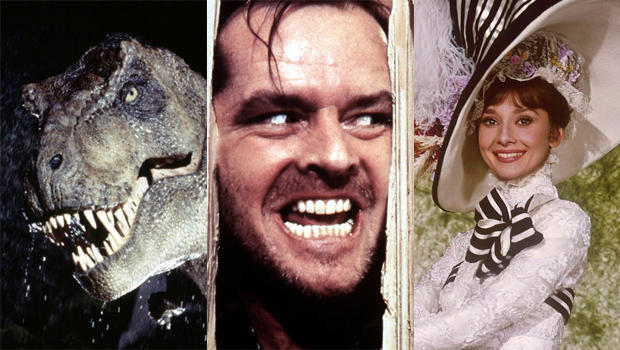
My early Christmas gift arrived this morning when the National Film Registry made its annual announcement of 25 American films deemed “culturally, historically, or aesthetically significant”. These 25 bring the official total to 750 movies.  Here, in chronological order, are the 25. Films with * denote a movie I submitted to the list this year. Honorable Mention goes to “Rebecca” and “My Fair Lady”, which I submitted last year, but didn’t make my cut this time. Ah well, they did just fine without me.

  • Something Good – Negro Kiss (1898)
  • Dixon-Wanamaker Expedition to Crow Agency (1908)
  • The Girl Without a Soul (1917)
  • The Navigator (1924)
  • The Informer (1935)
  • Rebecca (1940)
  • Leave Her to Heaven (1945)
  • The Lady from Shanghai (1947)
  • On the Town (1949)*
  • Cinderella (1950)*
  • Pickup on South Street (1953)
  • Bad Day at Black Rock (1955)
  • One-Eyed Jacks (1961)
  • Days of Wine and Roses (1962)
  • Hud (1963)
  • My Fair Lady (1964)
  • Monterey Pop (1968)
  • Hearts and Minds (1974)
  • The Shining (1980)*
  • Hair Piece: A Film for Nappy-Headed People (1984)
  • Broadcast News (1987)
  • Jurassic Park (1993)*
  • Eve’s Bayou (1997)
  • Smoke Signals (1998)
  • Brokeback Mountain (2005)

For the second year in a row, four of my picks made the final roster. Not bad says I. The 2018 inductees will be added to my rotation, with the first write-up appearing in February 2019. To quote another of this year’s entries, hold on to your butts.

#299) Stranger Than Paradise (1984)

a518e3bbf555542843aa006d9f74b615

#299) Stranger Than Paradise (1984)

OR “Jim Jarmusch Jim Jarmusch Will You Do the Fandango?”

Directed & Written by Jim Jarmusch

Class of 2002

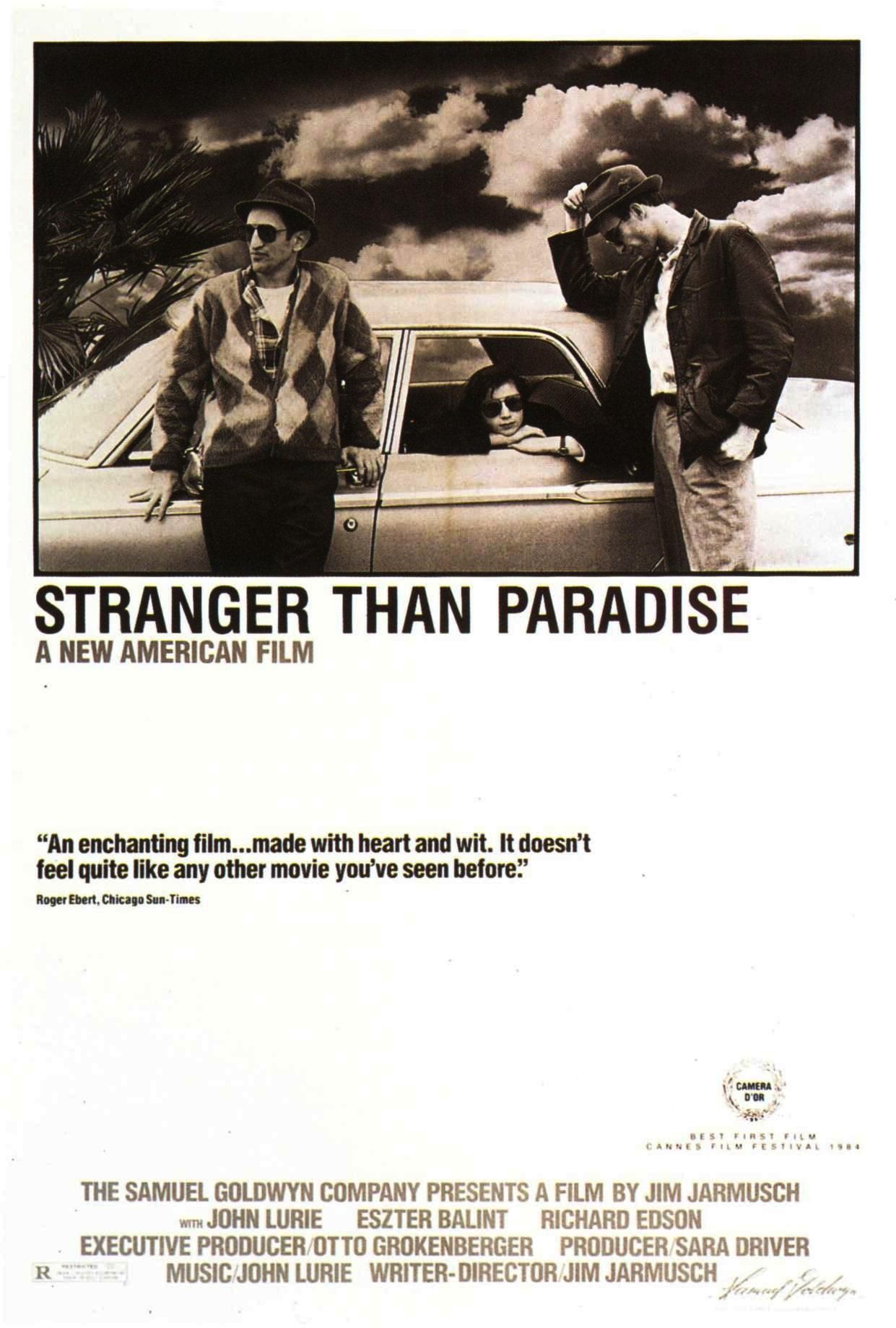
The Plot: It’s Jarmusch, there ain’t no plot. “Stranger Than Paradise” is three acts of Jarmusch’s trademark black and white minimalist realism. The first act (“The New World”) sees Willie (John Lurie) playing host to his Hungarian cousin Eva (Eszter Balint) in his New York City apartment. Willie does not want Eva around, but with the help of his friend Eddie (Richard Edson), finally warms up to her. In the second act (“One Year Later”), Willie and Eddie travel to a very cold Cleveland to visit Eva and Aunt Lottie (Cecillia Stark). The final act (“Paradise”) is Willie, Eddie and Eva traveling to Florida, where they experience the closest thing this film has to a plot.

Why It Matters: The NFR calls Jarmusch “a leading figure in independent cinema” and states that this film “reflects his non-traditional style.”

But Does It Really?: Oh sure. Jarmusch isn’t for everyone, and while it took me a bit to get into this movie, ultimately I dug it. His movies are very thin slices of life that, while seemingly uneventful, capture a lot about human condition and the small “in-between” moments in life. Heck, “Stranger Than Paradise” is so minimalist you can read practically anything you want into it. I’m not familiar with the oeuvre of Jim Jarmusch, and I’m not in any immediate rush to watch his other films, but “Stranger Than Paradise” is a perfect representation of his work, and quite deserving of a place on the Registry.

Shout Outs: You can hear snippets of “Forbidden Planet” when Willie and Eva are watching TV.

Everybody Gets One: While studying to be a poet at Columbia University, Jim Jarmusch went to Paris as an exchange student and wound up seeing a bevy of landmark European films at the Cinémathèque Française. After Columbia, Jarmusch studied film at New York University’s Tisch School of the Arts, under the tutelage of film noir legend Nicholas Ray. Although he ultimately didn’t graduate from Tisch, Jarmusch’s final school project evolved into his first feature film: 1980’s “Permanent Vacation”. 

Wow, That’s Dated: Landlines, and the world of early computers.

Seriously, Oscars?: Despite a heap of critical praise (and a Best Picture win from the National Society of Film Critics), “Stranger Than Paradise” received zero Oscar nominations. O Independent Spirit Awards, where art thou?

Other notes

  • All three of the film’s leads are primarily musicians: Lurie with the jazz group The Lounge Lizards, Edson as Sonic Youth’s original drummer, and Balint as a violinist in her native Hungary. Luckily, all three hold their own as actors, though it helps that there’s no heavy emotional lifting required for any of them.
  • How can I hate any movie in which Screamin’ Jay Hawkins’ “I Put a Spell on You” is prominently featured?
  • A foreigner coming to America and crashing at their cousin’s apartment. Oh my god, did this movie inspire “Perfect Strangers”?
  • Shoutout to cinematographer Tom DiCillo. The cinematography takes some getting used to, but once you do it sets up the world quite well. Each scene is one continues take, with minimal, clean camera movements. They are well-crafted compositions that never take you out of the film. Fun Fact: DiCillo is also the airport ticket agent at the end of the film.
  • What’s with Willie and Eddie’s fedoras? This film is so minimalist I can’t tell if it’s a period piece or not. WHAT YEAR IS IT!?
  • In addition to “Forbidden Planet”, Willie and Eva watch the cartoon “Bimbo’s Initiation”. Another bizarre trip from those crazy Fleischer Brothers.
  • Eszter Balint is so close to being Juliette Lewis.
  • The further along we go, the less I think this film will end with a car chase or a Bollywood-style musical number.
  • The “One Year Later” segment isn’t exactly a video from Destination Cleveland, is it? Jarmusch grew up in Cuyahoga Falls, Ohio (about 35 miles south of the Cleve) and once told the New York Times, “Growing up in Ohio was just planning to get out.” Woof.
  • I will admit that it’s always deceivingly difficult to capture realism on film, especially minimalist realism. If I’m a little bored, does that mean Jarmusch is doing his job?
  • Every time there’s a blackout in this film I instinctively think, “Is that it? Is the movie over?”
  • Old people cursing will never not be funny.
  • I rarely read other people’s reviews while I’m writing these posts, but I stumbled upon a line in Roger Ebert’s original review of “Stranger Than Paradise” that tickled me: “Aunt Lottie turns out to make Clara Peller look like Dame Peggy Ashcroft.” That sentence could only have been written in 1984.
  • Why is the Florida section called “Paradise”? Is Florida Paradise? And if so, what could possibly be stranger than Florida?
  • Black and white always seems like a gimmick, but in this case, I get it. With three diverse locations, “Stranger Than Paradise” would look like a travelogue in color.
  • Hey hey hey, we’re 75 minutes in; it’s too late to add any drama.
  • This is one of the rare movies with a Junkie Ex Machina.
  • What do you suppose this movie’s blooper reel looks like?
  • If this film is going to be about three people sitting around talking about nothing, their wacky neighbor Kramer better show up soon.

Legacy

  • Jarmusch still cranks out a movie every few years. Highlights include “Mystery Train”, “Coffee and Cigarettes”, and that one where Kylo Ren’s a bus driver.
  • Unlike other indie filmmakers, Jim Jarmusch seems game to poke fun at himself, as evidenced in these clips from “The Simpsons” and “Bored to Death”.
  • Every indie film that’s shot in black and white where seemingly nothing happens owes its existence to “Stranger Than Paradise”.
  • Of the three leads, Richard Edson has continued acting, and even has two other NFR entries: “Do the Right Thing”, and his memorable turn as the parking garage attendant in “Ferris Bueller’s Day Off”.
  • And of course, this movie’s drastic departure of a sequel: 2006’s “Stranger Than Fiction”.