#237) Dont Look Back (1967)

AB85DA1F-E529-400C-ADF1-3799C1434C41

#237) Dont Look Back (1967)

OR “London Calling, Yes, Bob Was There Too”

Directed by D.A. Pennebaker

Class of 1998

The Plot: Freewheelin’ singer/songwriter (don’t call him “folk singer”) Bob Dylan is going to England for his first major tour, and D.A. Pennebaker is there to film it all! Travelling with his entourage (including then-girlfriend Joan Baez), Dylan goes from Sheffield to Liverpool to London in a matter of two weeks in spring 1965. He sings his hits, but this film is mostly Dylan dealing with fame, show business, and some new up-and-coming singer named Donovan everybody keeps comparing him to.

Why It Matters: The NFR (which misspells the title, by the way) praises Pennebaker, saying his cinema vérité style “captures the enigma of Dylan”. They also call Bob Dylan a “fascinating subject”.

But Does It Really?: Lets chalk up “Dont Look Back” to “aesthetically significant”. I got nothing against Bob Dylan, I’ve just never paid him any mind. That being said, I did enjoy the film. Pennebaker knows how to take performers and get you to see the people under the persona. Dylan is the conflicting dichotomy you expect from a young artist-turned-celebrity; earnest, cocky, down-to-earth, arrogant. Bob Dylan has a massive footprint on American culture, and thank God Pennebaker was there to capture this pivotal turning point in his never-ending career. If you’re a Dylan fan, you’ll get a lot more out of this than I did.

Everybody Gets One: There’s no way I can unpack everything about Bob Dylan in this post. What I will say is that by the time filming began, the former Robert Zimmerman was already an established singer-songwriter caught up in the protests and civil rights movements of the era. He settled on England for his first tour after performing in a few clubs in London in 1963. He even appeared in a teleplay while he was there (“Madhouse on Castle Street”, which gets a shoutout in the film). Fun Fact: Bob got his stage name while reading poems by Dylan Thomas.

Wow, That’s Dated: Mid-60’s London: there’s nothing else quite like it. The men adorn their Beatles-moptops, the women their layers of hairspray. Also, at one point folk-singer Bob Neuwirth does a decent Lyndon Johnson impression.

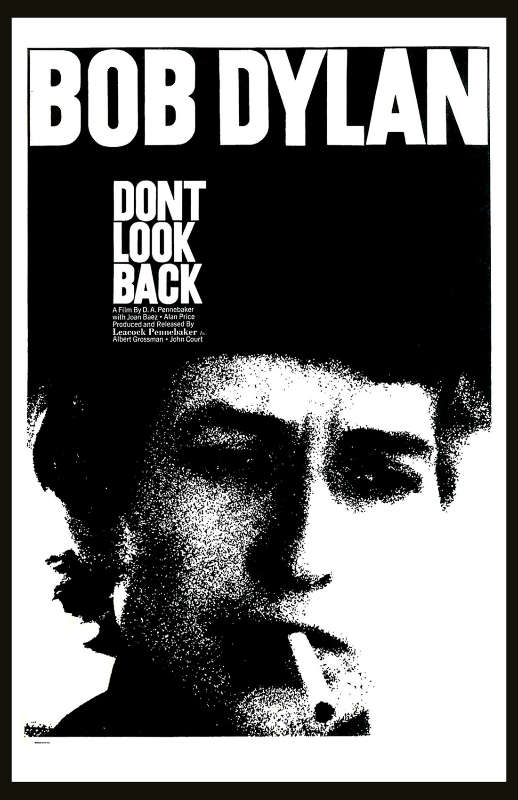
Title Track: A few things about the title: it’s not taken from the Dylan song “She Belongs To Me”, but rather a quote from baseball player Satchel Paige: “Don’t look back, something might be gaining on you.” Also, the lack of an apostrophe is intentional.

Seriously, Oscars?: No Best Documentary nomination for “Dont Look Back”. Coincidentally, one of the nominees that year was “Festival”, a look at the Newport Folk Festival that features performances by Bob Dylan and Joan Baez. “Festival” lost out to “The Anderson Platoon”, a French documentary about the Vietnam War.

Other notes

  • We start off with the iconic “music video” for Bob’s “Subterranean Homesick Blues”. Dylan and Pennebaker filmed it after the tour, but stuck it at the beginning of the film. If he hadn’t been a singer-songwriter, Bob could have been an excellent cue-card boy. And yes, that’s Allen Ginsberg in the background.
  • Bob Dylan was 24 when he did this tour, which explains a lot of his attitudes and actions. I thought I knew everything when I was 24, too. Also, Bob is from Minnesota? Would’ve lost that bet.
  • Does Bob Dylan look like Cate Blanchett or does Cate Blanchett look like Bob Dylan?
  • Fans must have known where Bob Dylan was going to show up, there’s a camera crew at the ready!
  • Wow, manager Albert Grossman does not mess around. It must be tough going through life looking like Garrison Keiller.
  • During one of the concerts, Bob’s microphone becomes unplugged. Are we sure Pennebaker wasn’t creating drama for his own movie?
  • Wow, being famous seems terrifying.
  • Bob looks fascinated by the electric guitar in the store. How much is that fan alienation in the window?
  • Oh man, this scene of Bob antagonizing the science student goes on forever. The student in question is Terry Ellis, who is now a successful record producer in his own right. So I guess it was worth it?
  • And then Donovan finally shows up. They seem cordial with each other, performing for each other and chatting. Not nearly as climactic as it’s intended to be. Side Note: I have a soft spot for “Atlantis”.
  • Was the Dylan tour America’s retaliation for the British Invasion?
  • Bob makes a lot of good (albeit tense) points during his Time magazine interview. At one point he says, “The truth is just a plain picture.” Not unlike Pennebaker’s style of documentary filmmaking.

Legacy

  • The Short Version: Bob Dylan more or less stopped playing acoustic guitar after this tour, and would go on to (among countless other things) convert to Christianity, win an Oscar and a Nobel Prize, and be on the same tour for the last 30 years.
  • Dylan and Pennebaker reunited for “Eat the Document”, which, with the exception of a few clips in Martin Scorsese’s “No Direction Home”, has not seen the light of day.
  • Pennebaker returned to the film yet again in 2007, using outtakes to make a whole new film, “65 Revisited”.
  • “Sebastian Cabot, Actor. Bob Dylan, Poet.” It’s a frickin’ masterpiece.
  • The movie “Bob Roberts” makes a lot of references to this movie. Did not see that one coming.
  • The footage of “Subterranean Homesick Blues” has been spoofed many times, but all you really need is “Bob”.
  • Bob’s line “Give the anarchist a cigarette” has had a life all its own, being referenced in various songs through the years.
  • And of course, the well-made but drastic departure of a sequel: “Don’t Look Now”.

Further Viewing: In the vein of “Dont Look Back”, my favorite Pennebaker film is “Original Cast Recording: Company”. Like the title suggests, Pennebaker witnesses the creatives behind the Sondheim musical “Company” spend 14 hours recording their Broadway cast album. Come for the insight, stay for Elaine Stritch’s finest film performance.

Listen to This: Readers, I give you “The Freewheelin’ Bob Dylan”.
#236) The Thin Man (1934)

0a62ee9c785362aea2dbf4c82c2ccdb3

#236) The Thin Man (1934)

OR “Nick & Nora’s Infinite Jest”

Directed by W.S. Van Dyke

Written by Albert Hackett & Frances Goodrich. Based on the novel by Dashiell Hammett.

Class of 1997

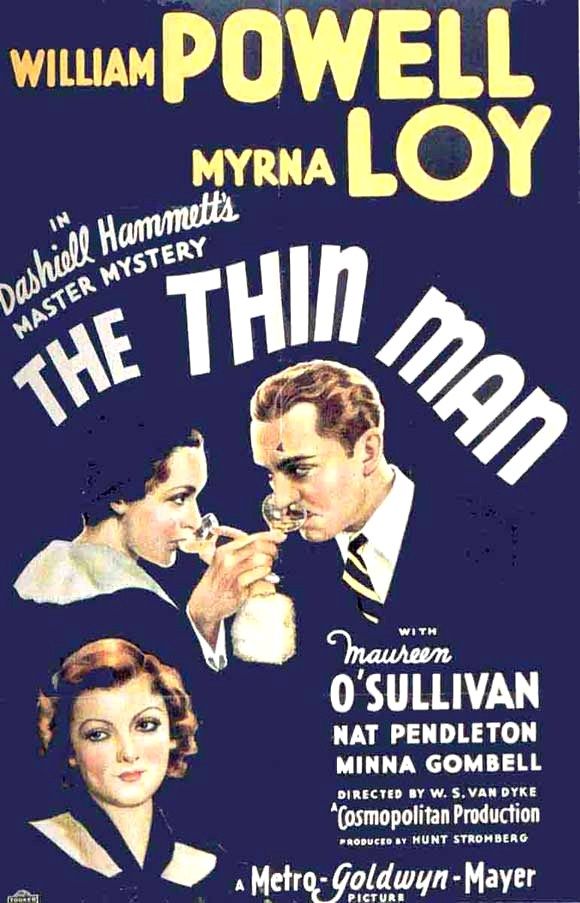
The Plot: Inventor Clyde Wynant (Edward Ellis) has gone missing, and his daughter Dorothy (Maureen O’Sullivan) wants family friend Nick Charles (William Powell) on the case. Nick is a retired detective who would rather spend the holidays in New York with his heiress wife Nora (Myrna Loy), their dog Asta (Skippy) and plenty of drinks and quips between them. But the mystery unfolds further when Clyde’s secretary/mistress Julia (Natalie Moorhead) is found dead. Who is the killer? What became of Clyde? And how does one get the nickname “The Thin Man”? Like the Charleses’ minibar, this case is wide open.

Why It Matters: The NFR write-up for “The Thin Man” doesn’t have specific superlatives, but they do mention the film’s general plot, Oscar nominations, and sustained popularity.

But Does It Really?: I liked this movie. I didn’t love it, but I did like it. William Powell and Myrna Loy are effortlessly charming and comfortable with each other; it’s no wonder they did five more of these. I never laughed out loud, but the back-and-forth rapport between these two did make me chuckle out loud several times (COL?). This is also one of the rare comedy/mystery movies where the mystery is actually good. Not surprising from the author of “The Maltese Falcon”, but it’s refreshing to have a movie that’s funny as well as suspenseful. Nick & Nora Charles are two indelible movie characters, and “The Thin Man” is a natural choice for the NFR.

Everybody Gets One: Most of the supporting cast, notably Cesar “The Joker” Romero. Shoutout to Natalie Moorhead as Julia (aka “the vic”) and Edward Ellis as Clyde (aka “The Thin Man”).

Wow, That’s Dated: Ah, the high-end lifestyle of post-prohibition America. Drinks flow freely and openly, but are still somewhat taboo.

Title Track: Nick actually does reference the “thin man” once about an hour into the film. It should be noted, however, that “The Thin Man” is only relevant in this entry. The sequels had “Thin Man” in the title solely for brand recognition.

Seriously, Oscars?: A critical and commercial hit, “The Thin Man” received four Oscar nominations: Picture, Director, Adapted Screenplay, and Actor for William Powell. It lost in all four categories to the first film to sweep the Oscars: Frank Capra’s “It Happened One Night”. William Powell and W.S. Van Dyke never won an Oscar in either of their prolific film careers. “The Thin Man” could have gone 0-5 if Myrna Loy had been nominated for Best Actress, but she didn’t make the cut. While never nominated for an Oscar, Ms. Loy did finally receive an honorary award in 1991.

Other notes

  • Part of the film’s endearing spontaneity is due to the direction of W.S. Van Dyke. Notorious for keeping retakes to a minimum, while bringing his films in on time and under budget, Van Dyke was known by his nickname, “One Take Woody”.
  • Albert Hackett and Frances Goodrich had been married for two years when assigned to adapt “The Thin Man”. They were informed by MGM to leave the mystery parts alone and focus on the dialogue between Nick & Nora. Incidentally, Dashiell Hammett based a lot of their dialogue in the book on his relationship with Lillian Hellman, which means the movie “Julia” should have been a lot funnier.
  • Just a reminder that Maureen O’Sullivan is Mia Farrow’s mom.
  • Nick and Nora don’t show up until Reel Two. That’s a long time to spend with the victim and the suspects. For a moment I thought I was watching the wrong movie.
  • Once the Charleses do show up, the movie really finds its footing. I could listen to this verbal tennis match all day.
  • “The Thin Man” is another movie for my “Die Hard” Not-Christmas List. Most of the film takes place around Christmas, but the Charleses just use it as excuse to drink more. Nora even has the great line “Next person who says, ‘Merry Christmas’ to me I’ll kill ‘em!”
  • I get the feeling Minna Gombell got a lot of roles originally turned down by Billie Burke.
  • Apparently the scene wipe had just been invented: we get four or five in a matter of minutes.
  • Edward Brophy as Morrelli is the most ‘30s thing about this movie. He’s not Edward G. Robinson, but he’s definitely the fast-talking gangster trope that people think of. Fun Fact: Brophy shows up in “The Thin Man Goes Home” as a completely different character!
  • A sign of a time pre-Miranda rights: the police punch the criminal in custody.
  • My favorite exchange in the film: “Ever heard of the Solomon Act?” “It’s alright; we’re married.”
  • The actual case keeps you guessing, but was I suppose to follow all of that? Hammett’s throwing a lot at me.
  • I thoroughly enjoy Nick & Nora’s pronunciation of “suspects” with the emphasis on the second syllable. Very “Too Much Tuna”. Go ahead, try it. Fun, right?
  • It comes as no surprise that Nick Charles would gather all of his suspects (still great) at a formal dinner. William Powell allegedly hated all of the dialogue he had to memorize for Nick’s summation, but the final result is effortless and wonderfully tense.
  • You could have ended with a train tunnel shot and you didn’t? Come on, movie!

Legacy

  • Over the next fifteen years, Powell & Loy reprised their iconic roles in five sequels, solving mysteries and trading barbs and drinking way above the legal limit.
  • Airing on ABC for two seasons, “The Thin Man” TV series saw Peter Lawford and Phyllis Kirk taking over the lead roles, while the setting was transplanted to the Greenwich Village of the late ‘50s.
  • I will find any excuse to reference Dick & Dora Charleston from “Murder by Death”.
  • One of the most notorious duds in Broadway history, the musical “Nick & Nora” ran for just 9 performances in December 1991. I have some thoughts (see “A Brief Editorial” below).
  • And of course, if you know one thing about “The Thin Man”, it’s their dog’s name. “Asta” is an answer in every crossword puzzle I’ve ever done.

A Brief Editorial: While I was far too young to have seen “Nick & Nora” on Broadway, I did see the only other production of it: A 2015 run at 42nd St. Moon in San Francisco. I cannot comment on the actual production (they did the best with what they were given), but the show gave me a better understanding of why “Nick & Nora” failed as a musical.

For starters, these aren’t characters that should be singing. If you’re going to convert witty banter to the stage, the appropriate adaptation is a straight play, not brief book scenes jammed in-between songs. As for the show itself, “Nick & Nora” starts off assuming you know who these two characters are, with no attempt at even the briefest of exposition (“Another martini, my retired detective husband?”) Even if you do know who Nick & Nora Charles are, their dynamic is immediately flipped at the start of the show when, out of heretofore unmentioned envy, Nora decides that she wants to be the one who takes on a case, in this instance a Hollywood murder one of Nora’s old friends is a suspect in. This culminates in the two having an argument at the end of Act I and going their separate ways, only to reconcile at the very beginning of Act II, leaving all that forced drama with zero emotional weight. And on top of all this, I figured out who did it by intermission (and I ain’t exactly Poirot in these situations). The writers foolishly label one major character a red herring too early on, making their absence throughout the show more conspicuous. “Nick & Nora” is a misguided musical that misses the essence of its source material, which shouldn’t have been musicalized in the first place.

#235) To Be or Not To Be (1942)

d103a2042ee4f7259972d30da2bd7342

#235) To Be or Not To Be (1942)

OR “Spying is Easy, Comedy is Hard”

Directed by Ernst Lubitsch

Written by Edwin Justus Mayer. Story by Melchior Lengyel.

Class of 1996

The Plot: It’s 1939 Warsaw and Joseph and Maria Tura (Jack Benny & Carole Lombard) are the most famous couple in Polish theater. Joseph is a bit of a ham and is devastated when an audience member (Robert Stack) walks out on his “Hamlet” two nights in a row. The man is Lt. Sobinski, a pilot who uses the “To be or not to be” soliloquy to head backstage and have a dalliance with Maria. All of this is pushed aside when the Nazis invade Poland, and the theater is closed down. When Sobinski discovers that resistance ally Siletsky (Stanley Ridges) is actually a Nazi spy, Joseph and Anna do their part to save their troupe from the Third Reich. Despite the above plot synopsis, the whole thing is actually hilarious.

Why It Matters: The NFR calls the film “a complex and timely satire that delicately balances humor and ethics.” There’s also an essay by author/professor/Hoosier David L. Smith.

But Does It Really?: You might need a little historical background to fully enjoy it, but “To Be or Not To Be” is still a thoroughly funny movie. Lubitsch somehow manages to make a movie that is both a satirical farce and a dark reportage of a country caught in war. Lombard and Benny are both excellent, but the whole cast is flawless. “To Be or Not To Be” tends to get lost in the shuffle of great comedies, but its sharp comedy and bold storytelling have helped it persevere over the years, and it is a welcome addition to the Registry.

Everybody Gets One: A successful vaudevillian and radio star, Jack Benny wasn’t quite able to jumpstart his film career. Benny was surprised when Ernst Lubitsch approached him with not only the lead role in his next film, but a lead role written specifically for him. His film career may have peaked with “To Be or Not To Be”, but Benny stated years later it’s the only one of his films he truly loves.

Wow, That’s Dated: The wartime setting is your first clue. Of the other dated parts, offering cigarettes in a formal setting is my favorite.

Seriously, Oscars?: Released shortly after the death of Carole Lombard (and America’s entry into WWII), critics and audiences weren’t quite ready to laugh at Lubitsch’s dark comedy. The film did, however, manage to snag one Oscar nomination: Best Score of a Dramatic or Comedy Picture. It helps that “To Be or Not to Be” was one of 18 films nominated in that category. No offense to Werner Heymann, but the score for this film isn’t too memorable, and lost to fellow NFR entry “Now, Voyager”. [UPDATE: Further research reveals that in the early ’40s – the last era of studio system monopolies – each studio was allowed to submit one movie for the Best Score categories, with a guaranteed nomination for their submission. “To Be or Not To Be” made the list because Romaine Film Corp./United Artists submitted it. Seriously, Oscars?]

Other notes

  • As previously mentioned, Carole Lombard was killed in a plane crash along with her mother in January 1942, one month before this film’s release. Only one line was deleted from the film in response to her death: Maria’s unfortunately ironic “What can happen in a plane?”
  • So a few things: The whole plot stems from Maria having her rendezvous with Sobinski while Joseph is performing the “To be or not to be” monologue from “Hamlet”. But the very next scene in Hamlet features Ophelia (“Get thee to a nunnery”). On the assumption that Maria is playing Ophelia (they never say who she is, but playing Gertrude would be…one interpretation) wouldn’t Maria have to be onstage immediately following the monologue? How long does Joseph take to deliver it? And why does she make Sobinksi wait until the third act to see her? Of course if you’re looking for logistics, “O, That This Too Too Solid Flesh Would Melt/Thaw and Resolve Itself Into a Dew!” is a terrible title for a movie.
  • Maria’s maid is either Shirley Booth or Marie Dressler. Ask your great-grandparents.
  • The thing about this movie that’s fascinating is how dark it is. We were still in the middle of WWII and not sure what the outcome would be. There’s a lot of this movie that focuses on the grim uncertainty of being this close to Nazis.
  • Obviously no one knew this would be Lombard’s final performance, but her Maria is as great as any of her other performances. In an interesting way it’s her most subtle performance. And while Benny never quite equals Lombard’s screen presence, his comic timing is, unsurprisingly, perfection.
  • At one point Sobinski tells Joseph that this is his “zero hour”. Not yet, Stack.
  • Shoutout to Sig Ruman as what may be filmdom’s first great cartoon Nazi (“Great Dictator” aside).
  • The jokes-per-minute ratio in this film isn’t as high as other comedies, but when the jokes do show up, they more than make up for lost time.
  • About 80 minutes into the film, Erhardt directs Joseph to his living room, and a weird figure appears in the right corner of the screen. Was it a crew member? What the hell was that?
  • One of my notes reads “just the best timing”. I’m pretty sure that was about Jack Benny, but really it could be about anyone.

Legacy

  • “To Be or Not To Be” was remade in 1983 as a vehicle for real-life couple Mel Brooks and Anne Bancroft. It can’t beat the timing of the original, but the 1983 version holds its own as a lighter variation of the same story. It’s also Mel Brooks’ best film performance.
  • Speaking of Mel, the line “Heil Myself” was lifted from this film and used by Mel in the musical version of “The Producers”.
  • Mickey Dolenz of “The Monkees” was inspired by “To Be or Not To Be” to write the song… “To Be or Not To Be”.
  • A comedy about a theater troupe seems an obvious choice for a play. A stage adaptation of “To Be or Not To Be” finally made it to Broadway in 2008, and quickly closed after being lambasted for departing too far from the film.

Listen to This: Jack Benny rose to fame with his long-running radio show, where he perfected his miserly persona. The National Recording Registry has preserved the episode that aired March 28th, 1948, featuring the pause heard ‘round the world.

#234) Manhatta (1921)

image001

#234) Manhatta (1921)

OR “Pre-Empire State of Mind”

Directed by Paul Strand and Charles Sheeler

Text adapted from the poem “Mannahatta” by Walt Whitman

Class of 1995

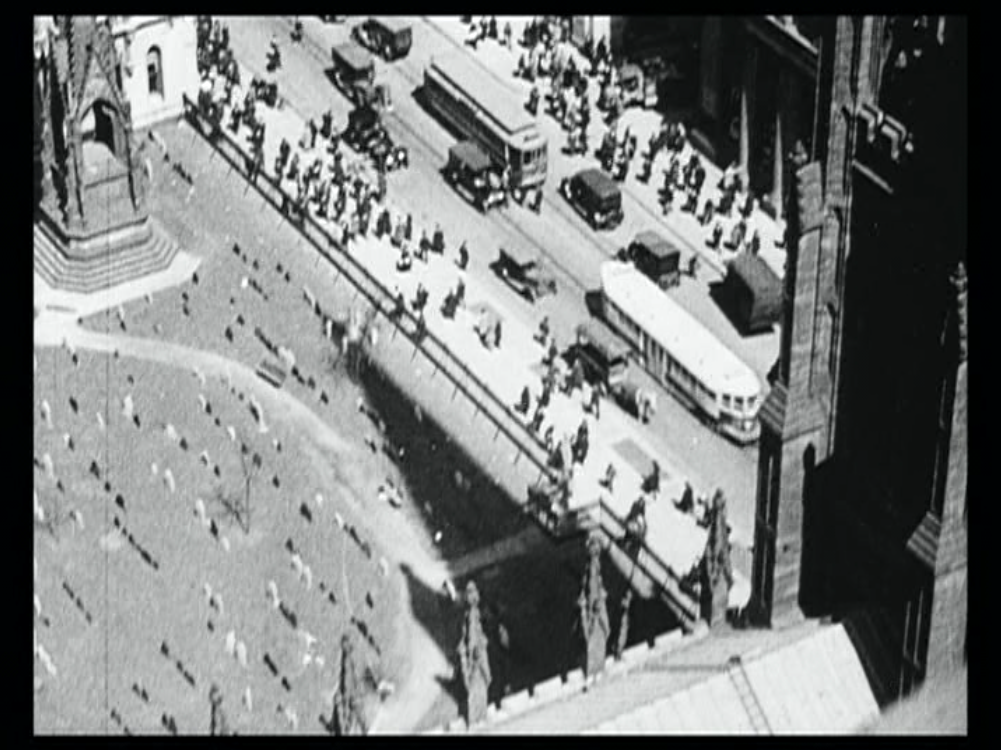
The Plot: Photographers Paul Strand and Charles Sheeler use their artistic viewpoints to highlight the sights of 1921 Manhattan. Using 65 camera set-ups and the words of Walt Whitman, the two filmmakers showcase the many facets of this “proud and passionate city” in this unique short.

Why It Matters: The NFR praises the film’s cinematography and states that the film’s artistry “helped to bring it to a broader audience than most avant-garde productions of the time.”

But Does It Really?: Sure, I’ll give it a pass. As longtime readers know, I will support any film that either a) encapsulates a specific time in American history, b) highlights artists not primarily known for filmmaking or c) is short. “Manhatta” is all of the above, and worth at least one viewing.

Everybody Gets One: Paul Strand was a photographer/activist who used his art to bring awareness to social issues. Among those influenced by Strand’s early work was Edward Hopper, so he’s got that going for him. Charles Sheeler was a fellow New York photographer whose work focused on buildings and machinery rather than nature and people (not unlike this film). His later career as a painter also followed this aesthetic with precisionism, an art movement known for its linear and structured format. And there’s no way I can cover all of Walt Whitman’s accomplishments in this post, so I’m just gonna leave you this link to a more thorough overview from the Library of Congress, as well as this photo. Look at that Rip Van Winkle with the come-hither stare.

Walt_Whitman_-_George_Collins_Cox

Wow, That’s Dated: Practically everything, from horse-drawn carriages to straw boaters as formal wear. It’s also a treat to see the Manhattan skyline before any of the buildings I associate with their skyline were constructed.

Other notes

  • The name “Manhatta” is derived from the Whitman poem “Mannahatta”, which is a Lenape word meaning “land of many hills”. Is Manhattan known for its hills?
  • Apparently only one 35mm print of this film survives. All restored versions are derived from this print. Nice save, Library of Congress!
  • Strand & Sheeler, the team so nice they’re credited twice!
  • Be on the lookout for a shot that closely resembles Paul Strand’s 1915 photograph “Wall Street”.
  • You can’t see a ‘20s construction site and not think of “Lunch atop a Skyscraper” (even though that photo wasn’t taken until 1932).
  • Anyone know what that Aztec looking building is?
  • There are some liberties taken with the original poem “Mannahatta” within the intertitles. Good thing that poem isn’t copyrighted or these two would be in a heap of trouble.
  • I’m pretty sure I can see Fannie Brice on the front of one of those tugboats.
  • Speaking of, ocean liners still need tugboats to get them out of dock? Surely that technology has advanced in the last 97 years.
  • In true Sheeler fashion, the only shots of people are crowd shots from overhead. No emphasis on specific people, just large masses.
  • Yeah, sunsets are not that impressive when it’s in black and white.

Legacy

  • Charles Sheeler pivoted more towards painting after “Manhatta”, but he kept at it for the next 40 years, with most of his work still being displayed in art museums around the world.
  • We’ll see more of Paul Strand’s cinematography in another NFR entry: 1936’s “The Plow That Broke the Plains”.
  • As for Walt Whitman, well…he had already been dead for 29 years when this came out, so not much changed for him.

#233) The Manchurian Candidate (1962)

manchurian_candidate_ver1_xlg

#233) The Manchurian Candidate (1962)

OR “Everybody Loathes Raymond”

Directed by John Frankenheimer

Written by George Axelrod. Based on the novel by Richard Condon.

Class of 1994

The Plot: After being captured during the Korean War, a U.S. platoon returns home and Staff Sergeant Raymond Shaw (Laurence Harvey) is given the Medal of Honor for saving his team. A few years later, the platoon’s commander Captain Bennett Marco (Frank Sinatra) has a recurring nightmare where he and the other soldiers are brainwashed by leaders of Communist China. He soon discovers that those dreams were real, and that Raymond is a sleeper agent programmed to assassinate any political figures that get in the way of his stepfather Senator Johnny Iselin (James Gregory) and domineering mother Eleanor (Angela Lansbury). Marco must stop Raymond before this plot destroys American democracy. And if political thrillers aren’t your thing, why don’t you pass the time by playing a little solitaire?

Why It Matters: The NFR cites the work of Frankenheimer, Axelrod and Sinatra, praises Harvey and Lansbury in particular, and quotes Pauline Kael’s description of the film as “the most sophisticated political satire ever made in Hollywood.”

But Does It Really?: Damn it, why are there so many prescient political movies on this list? The film has always been praised for its realism, but “The Manchurian Candidate” may be more relevant now than ever before. Axelrod and  Frankenheimer expertly deliver a story about the trances (literal and otherwise) that politics can cast. Add in a perfect ensemble, with a central performance by a never-better Sinatra, and you’ve got a film with some staying power. No argument here for NFR inclusion.

Shout Outs: At one point a driving shot features a theater marquee for “Pinocchio”, which may or may not be an anachronism (the 1940 film was re-released in both 1954 and 1962).

Everybody Gets One: Laurence Harvey, TV actor James Gregory, and Leslie Parrish, who was a few years away from her major political activism opposing the Vietnam War.

Wow, That’s Dated: Oh you know, just the usual casual racism and sexism that I have come to expect from movies of this era. [Sigh]

Seriously, Oscars?: Receiving good-to-mixed critical reviews and moderate box-office success, “The Manchurian Candidate” garnered two Oscar nominations. Ferris Webster lost Best Editing to Anne V. Coates’ legendary work in “Lawrence of Arabia”, while Angela Lansbury, the presumed frontrunner for Best Supporting Actress, lost to Patty Duke in “The Miracle Worker”. Duke is that film’s co-lead, but you can’t have a 16-year-old compete with Katharine Hepburn and Bette Davis, so category fraud it is! Even more appalling, John Frankenheimer was never nominated for an Oscar.

Other notes

  • These guys weren’t the only ones brainwashed during the Korean War: two subjects nicknamed “Hawkeye” and “Trapper” were conditioned to pull elaborate pranks, chase skirts, and mumble overlapping dialogue.
  • Laurence Harvey was born in Lithuania, raised in South Africa, and studied acting in London. I bring all of this up for one reason: is he making any effort to hide his accent? At least Angela Lansbury is trying to flatten hers to sound more American. Laurence Harvey went to the Leslie Howard School of Invisible Accents.
  • The initial revolving shot of the garden club is great. In fact that whole sequence has a great disorienting quality to it. A+ everyone.
  • Kudos to Frankenheimer for casting African-American actors like Joe Adams and James Edwards in roles where their race is not an issue. Unfortunately this is balanced out with non-Chinese actors playing Chinese characters with several racial slurs thrown at them.
  • Shoutout to Janet Leigh, who gets nothing to do in this film. Her character has no connection to the plot, any hint of dimension in the novel was eliminated from the screenplay, and to add insult to injury, Tony Curtis served her their divorce papers on the set of this film! That all being said, Leigh spoke highly of her experience on this film, praising Frankenheimer and Sinatra for helping her get the character.
  • I greatly enjoyed the movie’s one joke (“57”).
  • “The Manchurian Candidate” is the last movie I expected to see on my “Die Hard” not-Christmas list.
  • Today in Production Code censorship: Raymond calls his stepfather a “son of a numbskull”. Really takes the bite out of that scene.
  • So even back then politicians responded to gun violence with “thoughts and prayers”? [Deep Exhale]
  • Speaking of, “The Manchurian Candidate” made the NFR the same year as the Zapruder film. Did the 1994 NFR committee need a hug?
  • Sinatra knew that his first take was always his best, so he typically only did one take of a scene. When a camera gaffe made Marco out of focus for his big scene with Raymond in the hotel room, a second take was shot, but was deemed inferior to take one. So the first take, and Sinatra’s blurred face, made the final cut. Most film scholars justify the choice as Raymond’s blurred vision, which doesn’t make a lick of sense. For starters, the camera’s not even from his POV.
  • Almost every iconic moment from this movie happens in the final 20 minutes. Angela Lansbury in particular doesn’t really get to grandstand until then. She is, of course, perfection in her best film role.
  • Why isn’t that kiss in the “Cinema Paradiso” montage?
  • No spoilers, but my jaw dropped at that ending. Which is amazing considering I know I had it spoiled for me at some point, but I was so enthralled with the film in the moment I completely forgot.

Legacy

  • The film was successful, but contrary to rumors, it was not removed from circulation following the assassination of John F. Kennedy. The film’s copyright reverted to Frank Sinatra in 1972, and it appeared sporadically on television for the next few years. A 25th anniversary reissue led to the film being rediscovered and reappraised by a new generation of filmgoers.
  • Everyone has spoofed the main plot of this film, because political assassinations are hilarious! See “Zoolander”, “Naked Gun”, and “The Simpsons” for just a few examples.
  • Don’t worry; they remade the film in 2004. It had the pedigree, critics liked it (especially Streep), and it did okay for a political thriller, but we’re still talking about the original 56 years later.

Bonus Clip: While performing in “Blithe Spirit” on Broadway in 2009, Angela Lansbury dropped by “Theater Talk” to discuss the show and her career. The conversation turns to “The Manchurian Candidate” at about 15:30, and features her concise response to seeing the 2004 version.