#214) Daughters of the Dust (1991)

daughters-of-the-dust-movie-poster-1991-1020268332

#214) Daughters of the Dust (1991)

OR “No Family Is An Island”

Directed & Written by Julie Dash

Class of 2004

The Plot: “Daughters of the Dust” is a fictional account of the Gullah people, a culture of African-Americans descended from slaves, living on St. Helena Island – just off the coast of South Carolina – isolated from white influence. In 1902, the Peazant family gathers together for one last meal before moving to the mainland for better opportunities. The family matriarch Nana Peazant (Cora Lee Day) refuses to go and insists on holding onto the family’s deep spiritual roots, while her granddaughter-in-law Haagar (Kaycee Moore) is leading the charge to migrate and abandoning everything about the island. Among the other family members are Christian convert Viola (Cheryl Lynn Bruce), free-spirit Yellow Mary (Barbara-O), and conflicted Eli (Adisa Anderson), whose wife Eula (Alva Rogers) was raped and may be carrying an illegitimate child. This “Unborn Child” (Kay-Lynn Warren), serves as the film’s narrator, linking the family’s past, present, and future.

Why It Matters: The NFR calls the film “a poetic, impressionistic collage of gorgeous colors, music and imagery”, and points out the film’s claim-to-fame as “the first feature-length film by an African-American woman to receive a wide theatrical release.”

But Does It Really?: When determining a film’s preservation worthiness, I ask the same question: What piece of ground does this film stand on that no other film does? In the case of “Daughters of the Dust” it not only stands on unique ground, but a whole unique island. Aided by the history and customs of the Gullah people, “Daughters of the Dust” is a unique look at a culture of America that tends to be ignored, presented in a refreshingly unconventional way. It can be difficult to understand at times, but once you let yourself give into the film, it immerses you into its world. Its daring point-of-view and historical significance for African-American filmmakers earns “Daughters of the Dust” an uncontested place on the NFR. If you’re uncultured about the Gullah (like me), do a little bit of research and familiarize yourself with some of the basics. It will help your viewing immensely.

Everybody Gets One: Julie Dash spent the better part of 15 years trying to get this film made, basing the script not only on her research, but also on her father’s own experience with his Gullah family migrating to the mainland. “Daughters of the Dust” is the only NFR appearance for practically everyone in the cast, most of whom were/still are New York-based stage actors.

Wow, That’s Dated: That synthesizer score is very ‘90s. Julie Dash also loves the freeze-frame slow-motion move that I always associate with the early ‘90s.

Take a Shot: No one says the title, but the real drinking game is whenever anyone swats away a mosquito or gnat during a take. No wonder they want to leave the island.

Seriously, Oscars?: No Oscar love for “Daughters of the Dust”. The Academy was too busy snubbing “Malcolm X”.

Other notes

  • First off, a confession. Julie Dash has said she intentionally did not subtitle the film because she wanted the audience to listen to the characters’ thick Creole accents, an experience akin to watching a foreign film. Forgoing Ms. Dash’s advice, I put the subtitles on about 20 minutes in. I still didn’t pick up everything, but I got a better understanding of what was going on, albeit at the expense of immersing myself in the Gullah dialect.
  • My main takeaway from “Daughters of the Dust” was its perception of culture. The Peazant family runs the gamut from those who embrace the ways of their ancestors to those who have abandoned it completely, and everything in-between. The importance of preserving culture is stressed, but at the same time, any culture has to evolve or it will die. It all comes down to how much weight you want to carry on your shoulders going forward.
  • Shoutout to cinematographer/Julie Dash’s then-husband Arthur Jafa. There are some beautiful compositions throughout that really showcase the island as a living, breathing part of this family’s life. Apparently Jafa wasn’t able to bring a generator onto St. Simons Island, so he had to rely on natural light for every scene. Take that, “The Revenant”!
  • As tough as it was for me to crack this film’s outer shell, I still enjoyed it and ultimately gave a damn about these characters. The film’s pacing clips along well enough, though it does start to unravel near the end when everyone starts hysterically monologing at each other.

Legacy

  • Following the success of “Daughters of the Dust” Julie Dash’s film career…never really took off. Hollywood found the film “too different” and kept Julie from making the leap to mainstream movies. Dash has, however, been consistently working over the last 30 years, directing primarily for television, most notably the much more conventional “The Rosa Parks Story”.
  • Did you know Julie Dash also directed the music video for Tracy Chapman’s “Give Me One Reason”?
  • Julie Dash penned two books about “Daughters of the Dust”: one on the making of the film, and the other a novel set 20 years after the film’s events.
  • Dash’s film career didn’t take off, but at least she opened the door for the likes of Ava DuVernay and Dee Rees.
  • Is this where we get “Gullah Gullah Island” from? This culture was right in front of me this whole time!
  • You might not have seen the movie, but you’ve definitely seen its influence. The visual style of “Daughters of the Dust” is referenced throughout Beyonce’s “Lemonade”.

#213) (nostalgia) (1971)

hollis-frampton_nostalgia-2

#213) (nostalgia) (1971)

OR “Burn After Filming”

Directed & Written by Hollis Frampton

Class of 2003

The Plot: Experimental filmmaker/photographer Hollis Frampton showcases 12 of his photos from over the years. Fellow experimental artist Michael Snow narrates a transcription of Frampton’s recollections of the photo. Not interesting enough? Well what if I told you they burn the photos over a hot plate while the narration is happening? What do you think of that?

Why It Matters: The NFR calls it “eloquent and evocative in its exploration of memory and family” and…that’s it. The description of this one is literally one sentence. They do, however, include an essay that is just the liner notes from the DVD.

But Does It Really?: At first I was pretty “meh” about this film’s NFR inclusion. But the more I read about Hollis Frampton, the more I came around to the idea. As his avant-garde photography evolved into film he started to push the boundaries of what film could be. His concepts were deceivingly simple, yet quite thought-provoking. “(nostalgia)” is a perfect representation of Frampton’s work. It is not only a unique piece of filmmaking, it’s also, appropriately enough, about preservation and memory. These photos were long destroyed, but they live on in film. Makes ya think, don’t it?

Everybody Gets One: Both a high school and college dropout, Hollis Frampton knew early on that he wanted to be a poet. After a brief but illuminating correspondence with the poet Ezra Pound, Frampton realized that poetry was not his calling, and moved to New York with his former classmates Frank Stella and Carl Andre. He quickly took up photography, which quickly became filmmaking. I’m not sure when Frampton met Michael Snow, but they were both in the New York art scene of the early ‘60s, and that seems like a small enough group where everybody knows everybody. Michael Snow is a successful artist and experimental filmmaker in his own right, and at one point did an experimental music piece based around the Whitney Houston song “How Will I Know”.

Wow, That’s Dated: Mainly the practice of developing film. “One photograph left on the roll” would be replaced today with “low battery on my phone”.

Seriously, Oscars?: No nominations for “(nostalgia)”. I’m a little uncertain as to whether it would qualify as a live-action short or a documentary short. Weirdly enough, the film “Sentinels of Silence” won in both categories at the Oscars that year. Oscar rules were quickly changed so that documentary shorts could not also compete in the Live-Action Short category. It’s the kind of genre-bending head-scratcher that would feel right at home in one of Frampton’s films.

Other notes

  • Of course every time they burn a photo all I can hear is the “Bonanza” theme. I have got to update my references.
  • Michael Snow hails from Toronto, and that is a strong Canadian accent coming through the narration.
  • “(nostalgia)” is part of a series of Frampton films called “Hapax Legomena”. Roughly translated from Greek as “being said once”, it is the term used for words that only show up once in either a single work or a body of work. For example, this is the only one of these “Horse’s Head” write-ups to include the word “glockenspiel”.
  • What hapax legomena has to do with “(nostalgia)” I’ll never know. I’d have to look at Frampton’s other work, and a lot of his early stuff has been deemed lost (possibly burnt over a hot plate while a Canadian acquaintance narrates about another film).
  • It took me longer than I care to admit to realize that the narration is out of sync with the photos. Snow’s narration is describing the next photo we will see being burned. It keeps you engaged and forces you to create a mental image of the picture before you see it. As if setting these photos on fire wasn’t interesting enough.
  • “A Cast of Thousands” Booooooo. I’m glad the world of avant-garde art still has room for puns.
  • But why the parentheses in the title? Is the idea of nostalgia not the main focus? Is it secondary to something else?
  • “As you can see…” No I can’t, you tease of a movie!
  • Two words: time-lapse photography. This could have been much shorter.

Legacy

  • Hollis Frampton continued with film (as well as lecturing at SUNY Buffalo) before his untimely death in 1984. His final and most ambitious project was called “Magellan”, and was going to consist of one film for every day of the year.
  • Michael Snow is still with us and, in addition to his continued contributions to art and music, has been getting more lifetime achievement awards than there are lifetime achievement awards.
  • And of course, “Frampton Comes Alive!”

#212) From Here to Eternity (1953)

#212) From Here to Eternity (1953)

OR “Swines Before Pearl”

Directed by Fred Zinnemann

Written by Daniel Taradash. Based on the novel by James Jones.

Class of 2002

The Plot: Based on James Jones’ experience with Hawaii’s 27th Infantry, “From Here to Eternity” is the story of intertwined lives at the Schofield Barracks in 1941 O’ahu. Private Robert “Prew” Prewitt (Montgomery Clift) is transferred to Schofield due to his reputation as a middleweight boxer. Captain Dana Holmes (Philip Ober) wants Prewitt to join the boxing team to get himself a promotion. Prewitt refuses, and Holmes makes life for Prewitt a living hell in the barracks. The only support Prewitt gets is from First Sergeant Warden (Burt Lancaster) and fellow Private Angelo Maggio (Frank Sinatra). Along the way Prewitt falls for “hostess” Lorene (Donna Reed), while Warden has an affair with Holmes’ wife Karen (Deborah Kerr). But all this romance and drama is just the backdrop for a certain date at the end of 1941 which will live in infamy.

Why It Matters: The NFR calls the film “a lavish, star-studded blockbuster”, despite source material that is “unadaptable”. The write-up gives a plot recap and highlights “the famous lovemaking scene on the beach”.

But Does It Really?: The aforementioned beach scene is iconic enough to make the list but…that might be it. I don’t know, I just couldn’t get into this one. Perhaps its status as both “classic” and “Best Picture winner” builds it up too much, but “From Here to Eternity” is just fine. A well made film with good performances all around, but that’s about it. It took 14 rounds for “Eternity” to make the NFR cut, and it’s one of the few films to be dropped from the AFI’s Top 100, indicating that we all agree the film is above average, but not a bona-fide classic when compared to the others on the list.

Everybody Gets One: Despite a 40-year film career and six Oscar nominations, this is Deborah Kerr’s only NFR appearance. I suspect the argument for the inclusion of the increasingly insensitive “The King and I” is an uphill battle.

Title Track: No one says the title, but it comes from the Rudyard Kipling poem “Gentleman Rankers”: “Gentlemen-rankers out on a spree/damned from here to Eternity”.

Seriously, Oscars?: The mega-hit of 1953, “From Here to Eternity” led the pack with 13 nominations, and won eight, tying “Gone with the Wind” for the most Oscars ever. Among its win were Picture, Director for Fred Zinnemann, and the Supporting prizes for Frank Sinatra and Donna Reed. The Oscar wins for “From Here to Eternity” meant a virtual shut-out for fellow NFR entries “Shane” and “Roman Holiday”.

Other notes

  • Like many film adaptations of the time, liberties are taken with the source material. References to homosexuality, gonorrhea, and suicide are eliminated, as well as a few plot points altered to appease the U.S. Army.
  • Wow, this is the fastest opening credits sequence I’ve seen in a while. They really want to get this film started.
  • Nice trick shot, Monty. Where were you when they made “The Hustler”?
  • I must say Scotland-born, England-raised Deborah Kerr is doing a decent American accent.
  • Speaking of, in what universe is Deborah Kerr’s performance a lead performance? It’s clearly a key supporting turn. I suppose studio politics prevented a movie star from being in the Supporting Actress category.
  • That’s Superman himself, George Reeves, as Sgt. Stark. Despite subsequent rumors, his role was not significantly cut after test audiences recognized him as the Man of Steel, leading to his depression and suicide. Every scene that Reeves filmed is in the final cut.
  • Maggio asks Prewitt, “You got any prejudices against girls?” I’m not touching that one.
  • That’s Ernest Borgnine in his first major film role as the antagonistic Sgt. “Fatso” Judson. He is definitely not playing the piano in his first scene.
  • And now we get to the iconic beach scene. Romantic? Sure. But when has sex on a beach ever been a good, hygienic idea?
  • There’s a point about halfway through the film where everybody stops and monologues their backstories. I’ve never been fond of that trope, but I guess for me that all started when I was a child. Life was simpler then, until one summer…
  • Donna Reed is wonderfully cast against type in this film. Especially if all you know her from is “It’s a Wonderful Life”. Deborah Kerr is also against type here, but most modern audiences only know her from this movie, so it doesn’t stick out as much as Reed’s work.
  • When did Prewitt learn to play the bugle like that? From the sound of it, post-production.
  • No knock against Sinatra’s performance, but he is aided by getting to play all the Oscar tropes: he plays drunk, he monologues, he’s sympathetic, and then…[Spoilers].
  • Are there any native Hawaiians in this film? I suspect this movie isn’t a favorite of the Aloha State.
  • This is another one of those classic movies that has a title song that does not appear anywhere in the film.

Legacy

  • Frank Sinatra: Act II
  • James Jones wrote two more novels about his time in the Army during World War II: 1962’s “The Thin Red Line” and 1978’s “Whistle”. “The Thin Red Line” has been adapted into film twice, most memorably as the 1998 Terence Malick comeback vehicle.
  • The novel was adapted into a TV miniseries in 1979 starring William Devane and Natalie Wood. It is slightly more faithful to the novel than this film. The success of the miniseries led to a short-lived TV series following the characters after the Pearl Harbor attack.
  • The original novel of “From Here to Eternity” was censored by the publisher, and James Jones’ unedited version went unpublished until 2011. It is this version of the book that the Tim Rice musical is based on. The West End production received mixed reviews (most people were expecting something closer to film, which did not feature nudity, swearing, or gay subplots) and has yet to be seen since its original run.
  • And of course, everyone has spoofed the beach scene, including “Airplane!”, despite the filmmakers claiming they have never seen “From Here to Eternity”.

#211) It (1927)

36973280053_3743b3cedd_b

#211) It (1927)

OR “Pound Foolish”

Directed by Clarence Badger (with help from Josef von Sternberg)

Written by Hope Loring and Louis D. Lighton. Based on the novella by Elinor Glyn.

Class of 2001

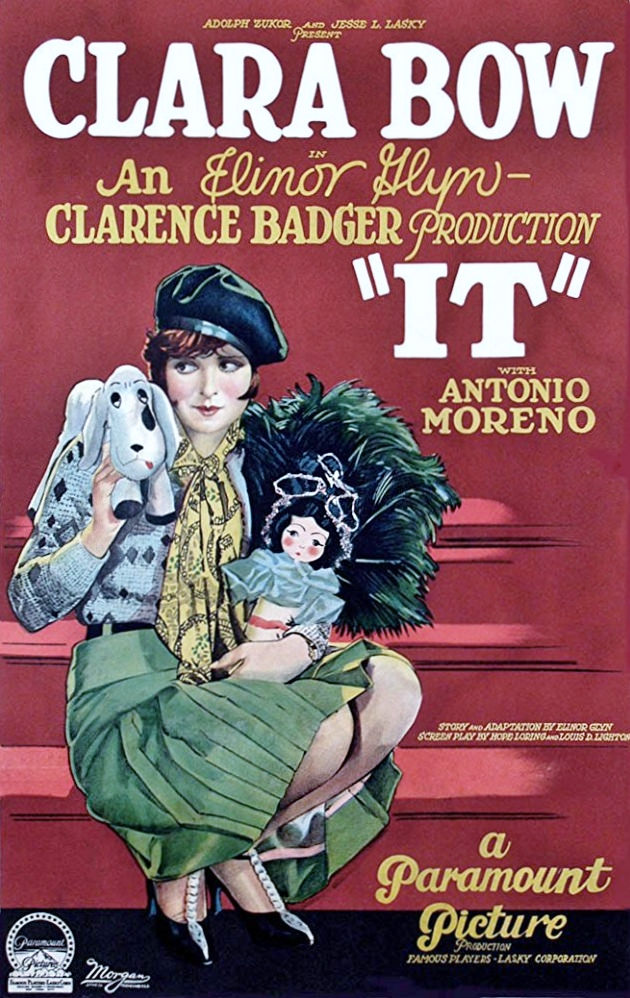
The Plot: Betty Lou Spence (Clara Bow) works at the Waltham department store and catches the eye of store owner Cyrus (Antonio Moreno) and his friend Monty (William Austin), who both believe she has the “It” quality they both read about in “Cosmopolitan”. Cyrus is infatuated with Betty, but they come from two different social classes, which is a romantic comedy no-no. When Betty goes to defend her roommate Molly (Priscilla Bonner) by claiming Molly’s son is her own, word gets back to Cyrus and misunderstandings ensue. But Betty makes it all work out thanks to her defining…allure? Is that the word I’m thinking of?

Why It Matters: The NFR gives some historical context to the film, calls the plot “frothy”, but does praise Clara Bow’s “incandescence”. There’s also an essay by film preservationist Dino Everett.

But Does It Really?: Oh sure. “It” is a perfect encapsulation of the ‘20s flapper era, and has a love story simple enough to still hold up today. I laughed a lot during this film, and Clara Bow’s performance is justifiably praised.  “It” is the kind of female-driven film we need more of, where the woman goes out and gets what she wants and her male co-stars are the one-dimensional, uninteresting ones. And above all, from start to finish this film has a certain…enticement? No, that’s not right either.

Everybody Gets One: Author Elinor Glyn came to prominence in the early 1900s with a radical concept: romance novels that appealed to female readers. Such scandalous titles as “Beyond the Rocks” and “Three Weeks” led to worldwide fame and the inevitable call from Hollywood. She spent the last few decades of her life overseeing her work’s film adaptations, penning a few screenplays and even directing one or two. “It” is also the only NFR appearance for Clara Bow’s two leading men: Antonio Moren and William Austin.

Wow, That’s Dated: Phrases like “old fruit” and “hot socks”, and the social stigma of unwed mothers.

Other notes

  • This film adaptation has very little to do with the original novella, but Elinor Glyn signed off on it, as well as declaring Clara Bow the “It” girl (according to the studio press at least).
  • Director Clarence Badger fell ill during filming, and was briefly replaced by Josef von Sternberg, who would go on to direct such NFR entries as “Morocco” and “The Last Command”.
  • Uh-oh, the intertitles were written by George Marion Jr., the guy who gave me all the flowery titles from “Ella Cinders”. I’m keeping my eye on you, Marion.
  • Fun Fact: William Austin was the first actor to play Batman’s Alfred the Butler on film.
  • Monty seems to be wearing a lot of eyeliner. That’s not smokey eye, that’s a forest fire!
  • My favorite ‘20s phrase in this film is when Betty exclaims “Sweet Santa Claus!” I presume this is a substitution for taking the lord’s name in vain. But hey, if you gotta pray to someone…
  • It’s a little tough to watch all this commercialism and decadence knowing that the economy will tank in two years.
  • Toodles? The baby’s name is Toodles? Someone lost their marbles.
  • Why does Betty have to alter her clothing to make a new dress? Surely Waltham’s offers an employee discount.
  • The appetizers at the Ritz are $2, while their entrees are $4.50. Today those figures would be, respectively, roughly $30 and $65. Yeesh!
  • When your girlfriend and her mother ask you who that woman is, never answer with “I don’t know, but isn’t she attractive?” Get the couch ready.
  • This may be the only movie to reference its source material in the actual film. Not only do characters read the issue of “Cosmopolitan” the first installment of “It” appeared in, but Elinor Glyn makes a cameo appearance as herself giving her own definition of “it”.
  • Is that the same beachside carnival they visit in “Sunrise”?
  • There’s a brief shot where Betty has to hold down her skirt while the wind blows it up. Clara Bow Marilyn-ed before Marilyn!
  • If that news reporter wants a real scoop he should just look in the mirror: He’s a young Gary Cooper in one of his early films!
  • Between this and “Ella Cinders”, I feel like there were a lot more movies in the ‘20s that starred independent women who weren’t defined by their men. What happened? The Depression? The rise of the studio system and the institutional sexism within? Both?
  • Hmmm, a ‘20s party that takes place on a yacht. Where did Eleanor get the idea for that one?
  • “I feel so low, old chap, that I could get on stilts and walk under a dachshund!” Marion!
  • The final shot has the best “Arrested Development”-esque sight gag this side of, well, “Arrested Development”.

Legacy

  • Clara Bow’s star power rose exponentially thanks to the success of this film. She had several other hits throughout the ‘20s and, while she successfully transitioned to sound film, retired from film in the early ‘30s to live on a ranch with her husband, western movie star and future Lt. Governor of Nevada Rex Bell.
  • The phrase “it girl” was first popularized when linked to Clara Bow and her performance in this film, and continues to be in common usage today.
  • The screenplay was adapted into the 2001 musical “The It Girl”. The show played Off-Broadway from May 2001 to…May 2001. But the original website is still up and the show can be licensed out for performance. Let’s paint the barn and put on a show, kids!

#210) The Land Beyond the Sunset (1912)

the land beyond the sunset 2

#210) The Land Beyond the Sunset (1912)

OR “Duh-nuh Duh-nuh Nuh, Fresh Air! Duh-nuh Duh-nuh Nuh, Child Scare!”

Directed by Harold M. Shaw

Written by Dorothy G. Shore

Class of 2000

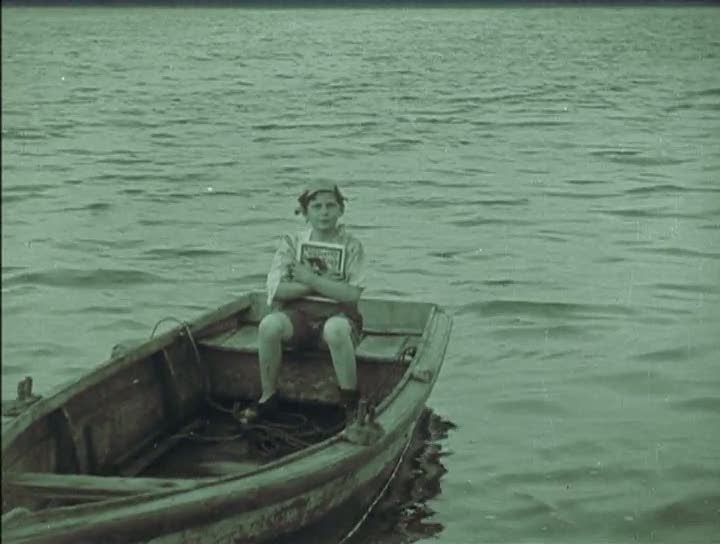
The Plot: Joe (Martin Fuller) is a poor newsboy who lives with his abusive grandmother (Mrs. William Bechtel) in a New York City tenement. One day he is invited to a picnic organized by the Fresh Air Fund, a non-profit that provides field trips for underprivileged youth. The children are taken to a park overlooking Long Island Sound, and Joe sees the ocean for the first time. Later, they are told a fairy tale about a “land beyond the sunset” and Joe dreams of escaping his current life to visit this magical land. Then Joe gets on rowboat and we get the most ambiguous ending this side of “Inception”.

Why It Matters: The NFR calls it “genuinely lyrical”, but that’s in quotations. Who are they quoting? There’s also a very brief essay by UC Davis professor and NFR go-to Scott Simmon.

But Does It Really?: I don’t know about this one. It’s an interesting watch, and a short running time is always a plus, but preservation worthy? If the NFR can’t come up with a good defense, what hope do the rest of us have?

Everybody Gets One: Unless I’m missing something, this is the sole NFR entry for everyone in the credited cast and crew. This may be the only one of the over 700 films that can make that claim.

Wow, That’s Dated: Newsies. That’s the main one.

Other notes

  • As evident from the intertitles, this is a Thomas Edison production. According to the Simmon essay, the company’s downfall was sticking to one-reelers while the rest of the industry had moved on to multi-reel features. This film was one of their last successes.
  • Of course Joe’s not going to sell any newspapers. He is clearly on a soundstage shot separately from the on-location footage.
  • Every time something sad happens to Joe I want them to play the sad Charlie Brown music.
  • Joe is invited to a picnic on “Saturday, July 30th”. July 30th was a Tuesday in 1912. Oh yeah, I did my research.
  • Do you think these kids (or the adults for that matter) had any idea that someone would be watching this film over 100 years later? It’s kinda crazy if you think about.
  • The witch in the fairy tale is played by Joe’s grandmother. Very “Wizard of Oz”.
  • Early superimposition. Well done.
  • Joe dresses like Pinocchio.
  • That…is a weird ending. Everything leading up to it was pretty straightforward, so this comes as a surprise.
  • My own take on the ending? That kid is dead. You better believe it.

Legacy