Long-time readers of this blog are familiar with my recurring segment “Wow, That’s Dated” in which I point out elements of a film that show its age. As we approach the end of 2017 it seems only fair that I look at my own work and acknowledge the passages that will make readers from the future say, “Wow, That’s Dated”.
And one update: My “Godfather” post refers to the Sacheen Littlefeather incident as “[t]he most awkward moment in Oscar history”. That moment has since been surpassed by this:
Happy New Year! We’ll be back with more movies in 2018!
The Plot: Mickey Mouse (voiced by Walt Disney) is the pilot of a steamboat run by the mean-spirited Pete (also voiced by Walt Disney). Mickey spends most of this short singing and dancing with his best gal Minnie (also also voiced by Walt Disney), and tormenting every animal in sight. All of this set to the new modern miracle of synchronized sound!
Why It Matters: The NFR describes it as “the film that introduced the world to Mickey Mouse” as well as the one that “established Walt Disney as a key player in the animation industry”. There’s also a detailed essay by Disney Archives Chief Emeritus Dave Smith.
But Does It Really?: It’s certainly not the laugh riot it was back in the day, but the historical and cultural significance of “Steamboat Willie” cannot be denied. Definitely worth a viewing as a pivotal moment in film history. Plus the songs are really catchy.
Shout Outs: The film gets its title and general premise from Buster Keaton’s “Steamboat Bill Jr.”, which makes sense seeing as how no one in this short is named Willie.
Everybody Gets One: We’ll see plenty more from Walt and his crew, but this is the only NFR entry for Walt’s brother Roy. Eight years older than Walt, Roy Disney was by all accounts a loving and supportive big brother. When Roy moved to Los Angeles after World War I, he became a banker, and when Walt joined him in L.A. a few years later, the two founded the Disney Bros. Studio, with Walt focusing on the creative aspects and Roy being the finance guy. Roy was a producer on “Steamboat Willie” and many previous shorts, before Walt bought out Roy’s shares in 1929. Roy continued to serve as CEO and Co-Chairman of the Board at Disney until his death in 1971, five years after Walt.
Wow, That’s Dated: Steamboats. That’s a big one. Also, the only reason this film exists was to cash in on the new sound craze in movies.
Other notes
“Steamboat Willie” preceded the film “Gang War” in theaters. The short is considered culturally significant, while the film is so obscure it no longer exists.
In addition to co-directing and co-writing, Ub Iwerks animated nearly every frame of this film himself.
While not the first animated film with synchronized sound, it was the first one to be successful. As always, history is written by the winners.
The song Mickey is whistling at the beginning is “Steamboat Bill”. Did you know that the song has lyrics? I sure didn’t.
Ah yes, back when Peg Leg Pete actually looked like a cat. And no longer had a peg leg.
Wow, an extended tobacco chewing sequence, you don’t see that anymore.
What is Minnie wearing? Is that a coconut bra? Pasties? A weird shirt design?
Say what you will about Minnie, she is a runner. She’s practically caught up with the boat!
Mickey Mouse’s film debut features him recklessly swinging a cat around in the air.
Excellent pre-“Flintstones” use of animals for instruments. It’s a living.
Primitive as it may be, the animation of Mickey’s reactions is quite good. Well done, Ub. I’ll do what Walt never could and give you the credit you deserve.
Legacy
As previously mentioned, this put Walt Disney on the map. So let’s blame “Steamboat Willie” for that Disney nature documentary where they pushed lemmings off a cliff.
“Steamboat Willie” gave us Mickey Mouse as we know him. Disney is still making shorts with the Mouse, and if you’re not watching the new ones, you are missing out.
The mouse caught the cat. The success of “Steamboat Willie” led to Pat Sullivan trying to convert Felix the Cat to sound. The attempt was unsuccessful and all but ended the Felix shorts.
The famous shot of Mickey steering the boat is the current logo for Walt Disney Animation.
Many spoofs over the years, including several by Disney. But the best will always be “Steamboat Itchy”.
“Saving Private Ryan” references “Steamboat Willie” in the most desperate attempt by a Nazi to appear American since “The Producers”.
In addition to its artistic legacy, “Steamboat Willie” is responsible for how long films are copyrighted in this country. The latest extension on “Steamboat Willie” (good until 2023) was in 1998, the same year the short was added to the NFR. What an amazing coincidence that had nothing to do with any sort of push from Disney.
Further Viewing: One more of the new Mickey shorts. They’re just great.
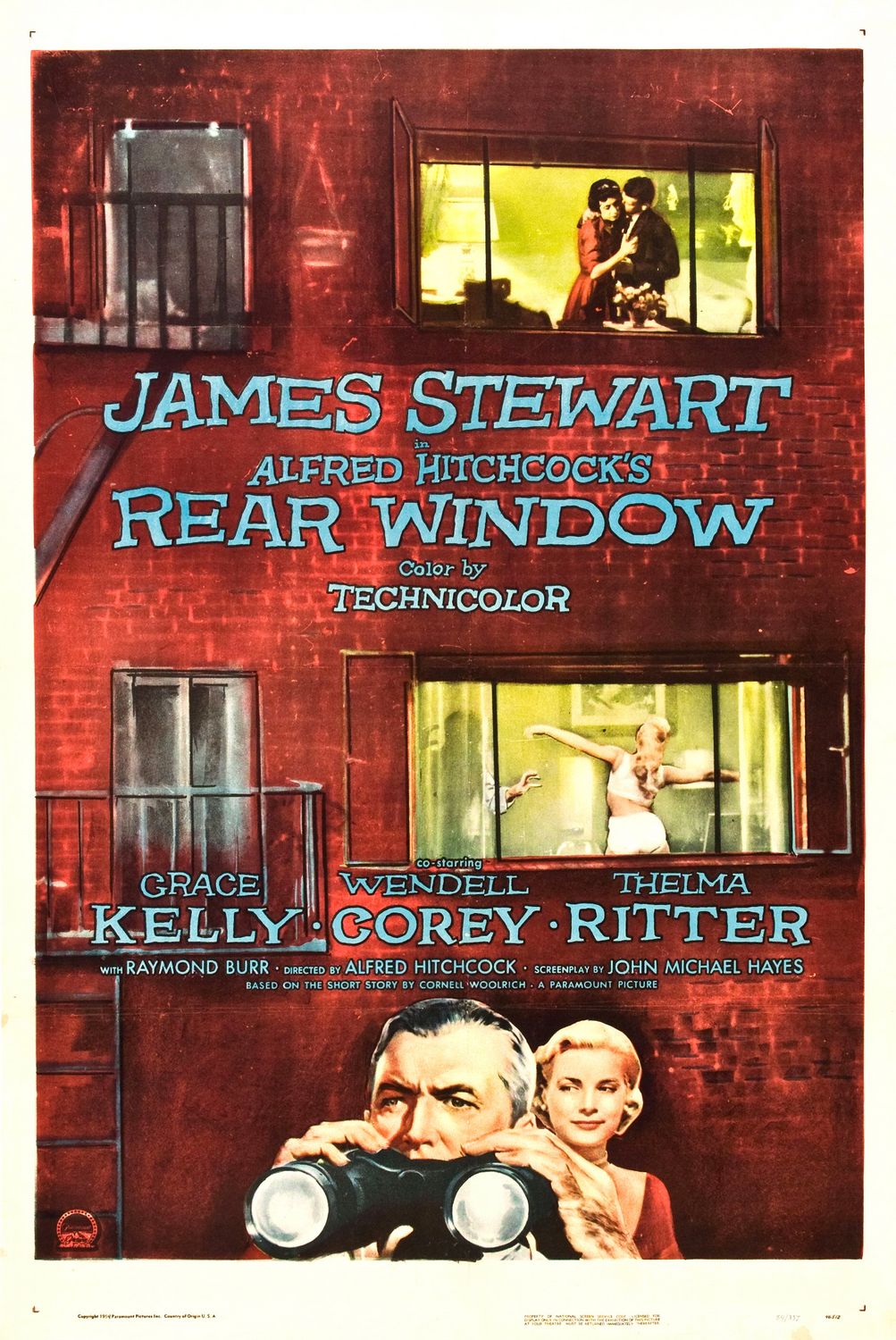
Written by John Michael Hayes. Based on the short story “It Had to Be Murder” by Cornell Woolrich.
Class of 1997
The Plot: Globetrotting photographer L.B. “Jeff” Jeffries (James Stewart) breaks his leg on assignment and is confined to a cast and wheelchair in his Greenwich Village apartment for six weeks. When not being tended to by his wisecracking nurse Stella (Thelma Ritter) or his high society girlfriend Lisa (Grace Kelly), Jeff spends his free time peeking at the neighbors. One day, Jeff notices that the bedridden wife of his salesman neighbor Lars (Raymond Burr) has disappeared. Everyone, including Jeff’s detective friend Lt. Doyle (Wendell Corey), believes she just went out of town, but Jeff is convinced that Lars killed his wife and disposed of the body. Can he prove it without ever leaving his apartment?
But Does It Really?: The plot of “Rear Window” is deceivingly simple, but the execution is exquisitely complex and endlessly rewarding. This is the movie that allowed Hitch to be the pure voyeur we always suspected he was. Hitch takes the premise of spying on your neighbors and makes us feel like we are right alongside Jeff, watching this all unfold. The cast is excellent, but the real stars are Hitchcock’s meticulous direction and an equally methodical screenplay by John Michael Hayes. Easily one of the best Hitchcock films.
Everybody Gets One: Screenwriter John Michael Hayes, as well as actor/future Academy President Wendell Corey. And special mention to Irene Winston as Mrs. Thornwald, aka “The vic”.
Wow, That’s Dated: Flashbulbs, phone books, and incredibly antiquated gender politics. Plus, this is back when songs like “Mona Lisa” and “That’s Amore” were Top 40 hits! If this were made today, the party would be singing along to that “Despacito” song you kids like nowadays.
Title Track: Lisa mentions “rear window ethics” about 80 minutes in. Grace Kelly immediately follows this up by tripping over her next line. I guess the pressure of saying the title was too much for her. No wonder she quit acting.
Seriously, Oscars?: “Rear Window” received four Oscar nominations: Cinematography, Sound, Adapted Screenplay, and Director. It lost in all four categories, ironically in two of these cases to another James Stewart movie (“The Glenn Miller Story”) and another Grace Kelly movie (“The Country Girl”). The film was not nominated for its massive replica Greenwich Village set, nor for Best Picture.
Other notes
That’s quite a jazzy intro for a murder mystery film.
How the set team didn’t get an Oscar nomination is just criminal. It really is an impressive undertaking.
That’s Gig Young as the voice of Jeff’s editor. He provides some surprisingly clunky exposition over the phone.
There is a 21-year age gap between James Stewart and Grace Kelly. That’s a pretty high number on what I’m now calling the “Michael Douglas Scale”. Plus it adds to my theory that Jeff was written to be a younger man.
Miss Lonelyhearts seems to be having dinner with Jeff’s friend Harvey.
A quick question for Jeff: What the hell is wrong with you? You’ve got a 25-year-old cosmopolitan intellect throwing herself at you, and you have commitment issues? Put a ring on it, you dumb bastard!
Hi, Hitch. Hitchcock’s cameo is about 26 minutes in; he shares the screen with the songwriter played by Ross Bagdasarian, who just finished composing his big Christmas song.
“I’m not stubborn, I’m just truthful.” I feel you, Jeff.
Everyone’s good in this, but Thelma Ritter is the MVP.
This is the point in films when Jimmy Stewart started to become a stammering parody of himself.
How much easier would Lisa sneaking over to the Thorwald apartment have been if they all had cell phones? Hell, throw in security cameras and this whole movie could have been over in 20 minutes.
I’ve seen this film several times, but the shot where Lars finally figures out what’s going on always gives me the chills. They didn’t call Hitch “The Master of Suspense” for nothing.
Because when I think modern day Jimmy Stewart, I think Shia LaBeouf. P.S.: The owners of the original short story tried to sue “Disturbia” for plagiarism, but the court ruled in favor of the film, saying there was no obvious infringement.
Further Viewing: A video by Jeff Desom is the entire film of “Rear Window” boiled down to a three-minute time-lapse. It is quite an impressive feat of editing.
Written by Deric Washburn. Story by Cimino & Washburn and Louis Garfinkle & Quinn K. Redeker (According to the WGA. Accounts vary.)
Class of 1996
The Plot: Lifelong friends Mike, Nick, and Steven (Robert De Niro, Christopher Walken, and John Savage) are sent to fight in the Vietnam War shortly after Steven’s wedding. Their experience fighting in the war and being tortured in a POW camp changes them forever. Mike’s return home is complicated by his inability to readjust to his previous life, his feelings for Nick’s girlfriend Linda (Meryl Streep), and the mysterious whereabouts of Nick.
Why It Matters: The NFR praises Cimino and the cast, calling the film an “astonishing epic” despite its “historical inaccuracy”.
But Does It Really?: Well that was thoroughly depressing. Seriously, I was in a major funk for several hours after watching “The Deer Hunter”. Don’t get me wrong, the film is well made and everyone is great, but what a difficult film to get through. Obviously any film about the Vietnam War is going to be tough to watch, but this one is especially distressing. Compared to “Apocalypse Now”, this film is less a cinematic experience and more an attempt at reportage. “The Deer Hunter” is being preserved here for a reason (if for nothing else, its cultural impact), but I don’t need to watch it again anytime soon.
Everybody Gets One: Details of Michael Cimino’s early life are still up for debate, but what we do know is that he started off as a screenwriter and commercial director. It was Clint Eastwood who gave Cimino his big break by buying his screenplay “Thunderbolt and Lightfoot” and allowing Cimino to direct the film.
Seriously, Oscars?: Universal knew they had a critical success and a potential Oscar winner in “The Deer Hunter”, but they weren’t sure it could score at the box office. The film was screened for legendary producer Allan Carr, who hatched a plan: give the film a limited release in December to qualify for the Oscars, launch a major awards campaign consisting of parties and word of mouth, and then send the film into wide release after the Oscars. The plan worked, “The Deer Hunter” won five Oscars (including Best Picture, Best Director, and Best Supporting Actor for Christopher Walken), and subsequently became one of the top box office earners of 1979. This practice of limited release for Oscar bait became the norm following “The Deer Hunter”, and still is.
Other notes
The film’s main theme “Cavatina” was originally composed for 1970’s “The Walking Stick”. The version heard throughout “The Deer Hunter” is performed by guitarist John Williams. (No, not that one. Or that one.)
How much do you want to bet De Niro did his own welding?
Walken manages to sneak in some singing and dancing, most notably to the song “Can’t Take My Eyes Off You”. Do you think Nick knew Gyp DeCarlo?
Just a reminder that at one point Meryl Streep was a one-time Oscar loser, like Linda Blair or Carol Channing.
Young John Savage looks like Young Jon Voight.
Oh my god, this wedding scene goes on forever. I’m convinced it’s filmed in real-time.
This movie has some real issues with women. Look no further than the wine-drinking scene: Who spills it, thereby cursing everyone?
I respect John not being able to go to Vietnam because of his bad knees. At least it’s not bone spurs.
Welp, I have now seen all of Robert De Niro. I can never un-see that.
Coincidentally, John Wayne (who gets name-dropped in the hunting scene) presented Best Picture to “The Deer Hunter”. This is extra ironic considering he was staunchly pro-Vietnam War (hence “The Green Berets”).
This was one of the first films about the Vietnam War to film in Thailand. The fist Russian roulette scene was filmed on location on the River Kwai.
Watching a classic film in HD is always great, but a good transfer makes this film’s use of stock footage really stick out.
Oh no these Russian roulette scenes are really hard to watch.
Yeah, the Vietnamese do not come off well at all. Which is disappointing considering we Americans weren’t exactly the cavalry either.
Meryl Streep only has two films on the Registry: this and 1979’s “Manhattan”. Both are from early in her film career and feature her in supporting roles. For being one of the world’s great leading ladies, you’d think more of her work would be preserved.
I’m sure it was a simple practical effect, but I legitimately had to look up if John Savage lost his legs or not.
There’s a “Miss Saigon” joke somewhere in all of this, but I’m too emotionally exhausted from this film to think of one.
Christopher Walken earned the hell out of his Oscar.
Legacy
Michael Cimino followed-up “The Deer Hunter” by writing and directing another epic: “Heaven’s Gate”. Running overlong and over budget, the film was a total flop and ended Cimino’s career. “Heaven’s Gate” was so bad it made some critics reevaluate their praise of “The Deer Hunter”.
This film (along with Oscar rival “Coming Home”) paved the way for Hollywood revisiting the Vietnam War for the next 20 years.
While “The Deer Hunter” is cited for popularizing Russian roulette (and related deaths), it also inspired Jan Scruggs to create the Vietnam Veterans Memorial in Washington D.C. So some good came from all of this.
Italian filmmaker Antonio Margheriti made an unofficial sequel in 1980 with “The Last Hunter”. It’s the sequel no one asked for!
This is the movie that gave us Christopher Walken, and everything that comes with it.
Further Viewing: Sadly, “The Deer Hunter” was John Cazale’s fifth and final film. He died of lung cancer shortly after filming wrapped. His brief but impressive legacy is celebrated in the 2009 HBO Documentary “I Knew It Was You: Rediscovering John Cazale”.
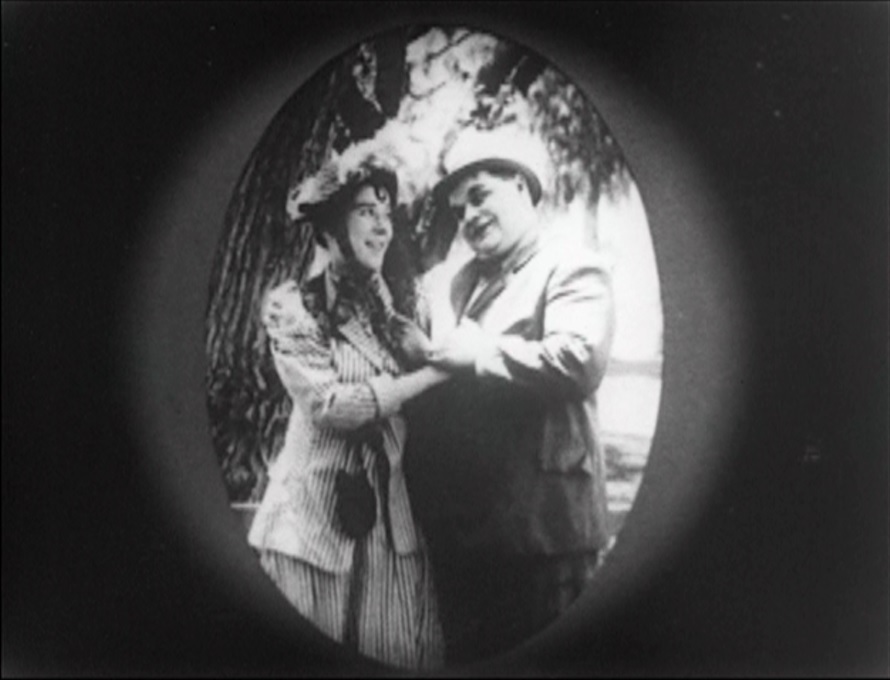
The Plot: Fatty (Roscoe Arbuckle) and his unnamed wife (Norma Nichols) are happy together, except for having to live with Fatty’s mother-in-law (Mai Wells) who drives them both crazy. When Fatty leaves the house one day, he ends up on a park bench near a young woman (Louise Fazenda). When a photographer (Glen Cavender) snaps their picture, the woman’s husband Edgar (Edgar Kennedy) thinks Fatty’s trying to move in on his wife. And this just sets off the Rube Goldberg machine that is silent film farce.
Why It Matters: The NFR salutes Arbuckle’s fame and talent, calling this film “Arbuckle at the height of his fame”. The write-up also unnecessarily questions Arbuckle’s innocence in the scandalous trial that ended his career. It was almost 100 years ago, NFR. Let it go.
But Does It Really?: I was surprised to learn that this is Roscoe Arbuckle’s only film on the Registry. Having only been familiar with the scandal that brought him down, I was pleased to watch this film and find a very endearing, very funny performer with a flair for physical comedy. “Fatty’s Tintype Tangle” may not be the funniest (or most coherent) film ever, but it represents the talent of a man whose work has sadly been sidelined by the other greats of the silent era, despite the fact that he’s the man responsible for those greats in the first place. Here’s to you Roscoe. And as always, fuck you William Randolph Hearst.
Everybody Gets One: Let’s get it out of the way: Roscoe Arbuckle’s fame as silent film character “Fatty” was completely overshadowed by the trials that saw him accused of raping and murdering actress Virginia Rappe. He was eventually acquitted, but the damage was done. Before the trial he was one of the silent eras first comic stars, discovering Chaplin and Keaton along the way. After the trial and several years of seclusion, he made a quiet comeback directing comedy shorts (under his father’s first and middle names, William Goodrich). He eventually returned to acting in the early ‘30s, but died of a heart attack on the same day he signed a feature-film contract with Warner Bros.
Wow, That’s Dated: Well for starters, the title. We also get the term “shandygaff”, as well as comical gunplay and spousal abuse. So there’s that.
Other notes
For the record, Roscoe Arbuckle only played a character named Fatty. He did not like being referred to as “Fatty” in real life (but hey, who would?).
A husband who does his wife’s hair for her? Interesting…
Mom kinda looks like Laurie Metcalf.
This film makes excellent use of close-ups for comic effect. It also features some pretty quick cuts, which means that the really boring silent films I’ve watched for this blog weren’t archaic, just lazy.
Did Fatty break that hat rack over his belly? So much for “no cheap fat jokes”.
We have a banana peel gag! Followed immediately by a fun reverse film gag.
Upon watching the scene with the actual tintype, I called shenanigans on the photo developing that quickly. Turns out the tintype was known for its speed, leading to its popularity around the turn of the century. It was the Polaroid of its day!
You can’t be menacing when your wardrobe resembles an elf.
This short shares its plot with 98% of all “Three’s Company” episodes. Speaking of, Mr. Furley would fit right in with all the camera-mugging going on here.
Silent film veteran Frank Hayes plays the police chief. Now that’s a face for silent films. He looks like if Gumby wished to be human.
They’re not officially the Keystone Cops, but they might as well be.
No wonder Edgar can’t shoot Fatty; his gun is loaded with flour for some reason. But seriously, how do you miss someone at that close a range with two guns?
Did Fatty just grind Edgar’s fingers? Jeez, even the Coen Brothers would think that’s too gruesome.
This film features a comic routine of Fatty walking over the power lines on a telephone pole. I doubt this would have the same impact if it were a modern day cell phone tower.
Well that was a weird ending.
Legacy
Roscoe Arbuckle’s legacy can be seen in our nation’s history of fat but graceful physical comedians: from Jackie Gleason to Chris Farley to Kevin James.
Without Arbuckle, there’s no Charlie Chaplin or Buster Keaton. I don’t want to live in that world.
Speaking of Chris Farley, he really wanted to make his dramatic film debut in a “Fatty” Arbuckle biopic, but died before the film could be produced. John Belushi and John Candy suffered eerily similar fates after considering the role of Arbuckle in the long-gestating project. Last I heard HBO wanted to make the film with Eric Stonestreet. Be very careful, Cameron.
A Brief Editorial: I’ll argue that the window to make a “Fatty” Arbuckle biopic has closed. Can you imagine releasing a movie in a post-#MeToo environment about a movie star accused/eventually acquitted of rape and murder while the deceased victim is completely discredited? Not gonna happen. But for my money, John Candy would have been the best in the role.




 The Horse's Head