And my personal Mt. Everest just got a bit taller.
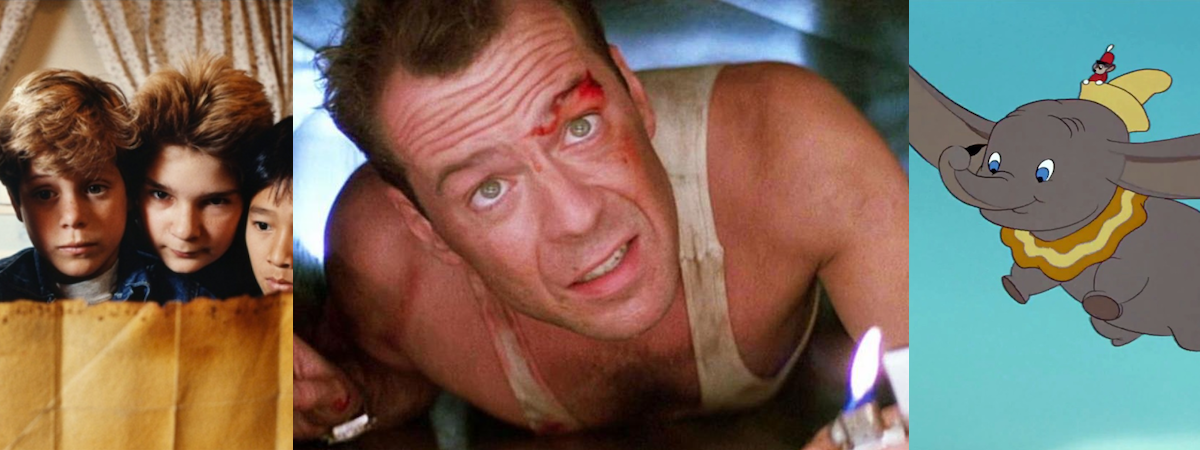
Here are (in chronological order) the 25 films selected for the National Film Registry in 2017. Films noted with an asterisk are films that I submitted on my nomination ballot.
Interior New York Subway, 14th Street to 42nd Street (1905)
The Sinking of the Lusitania (1918)
Fuentes Family Home Movies Collection (1920s-1930s)
He Who Gets Slapped (1924)
With the Abraham Lincoln Brigade in Spain (1937-1938)
Only Angels Have Wings (1939)
Dumbo (1941)
Gentleman’s Agreement (1947)
Ace in the Hole (1951)
Spartacus (1960)*
Guess Who’s Coming to Dinner (1967)*
Wanda (1971)
Lives of Performers (1972)
Time and Dreams (1976)
Superman (1978)
Boulevard Nights (1979)
The Goonies (1985)
La Bamba (1987)
Die Hard (1988)*
Thelonious Monk: Straight, No Chaser (1988)
Field of Dreams (1989)
To Sleep with Anger (1990)
4 Little Girls (1997)
Titanic (1997)*
Memento (2000)
These 25 films have been added to my official rotation, the first write-up will appear on this blog in February 2018.
In addition, the Library of Congress’ YouTube channel has added a selection of films from the Registry. Check it out, I know I will.
The Plot: David Holzman (L.M. Kit Carson) is a young filmmaker who decides to record his daily life in order to better observe/learn about himself. This leads to some pretty awkward interactions with friends and strangers alike, most disastrously with his model girlfriend Penny (Eileen Dietz). The result is a docudrama that blurs the line between fiction and reality.
Why It Matters: The NFR says the film “captures the essence of the filmmaker as artist while skewering it with its own devices”. They also say that “David Holzman’s Diary” led the way for “This is Spinal Tap”, “Waiting for Guffman”, and other mockumentaries. I…don’t think so.
But Does It Really?: It’s not the forefather to modern mockumentary, but “David Holzman’s Diary” definitely pushes the limits of docufiction. Carson gives such a natural performance I started to wonder if this was an actual documentary. The film definitely has its uncomfortably voyeuristic moments, but that may be the filmmakers making a statement about these kind of films (at least I’m hoping that’s what they were aiming for). I give “David Holzman’s Diary” a pass for its inventiveness, its introduction to Jim McBride, and its unique view of late ‘60s Upper West Side living.
Everybody Gets One: Pretty much everyone. There isn’t a lot of information about Jim McBride or L.M. Kit Carson prior to 1967, other than they were classmates at New York University together.
Wow, That’s Dated: Obviously the entire filming process. Today this would be filmed on a phone and uploaded to YouTube where it belongs!
Seriously, Oscars?: No Oscars, but it did win Grand Prize at the 1967 Mannheim-Heidelberg International Festival. So that’s cool.
Other notes
The song playing during the opening montage of David filming along the street is “Green Onions” by Booker T. and the M.G.s. Not super important, I’ve just never known what that song was called.
That camera weighs 18 pounds!? Someone please invent the camcorder.
Is it healthy for a man to have that many photos of his girlfriend on the wall?
Penny is uncomfortable being on camera because she’s “not dressed”. No one tell her that we’ve already seen her full-frontal photo shoot.
Pepe’s run about how fake this film is goes on for a while. At one point he asks where he should put his hands. Common concern.
David’s monologue while he’s filming a sleeping Penny makes him sound like that creepy guy from “American Beauty”. No, not that one.
I’m pretty sure David’s phone calls to Penny are the reason we have Caller ID now.
Ugh, Truffaut name-dropping. Like I already don’t hate you enough, David.
Sandra, where have you been all my life?
Very disappointed the internet doesn’t know which episode of the original “Star Trek” series David watches on TV. Come on, Trekkies!
And now a seemingly never-ending parade of old people on park benches! I kept expecting David to do a Tom Servo run.
Holzman’s filming strategy: Film until someone says to stop.
Answering services. What a horribly awkward job.
Any debates I had about the authenticity of this film were laid to rest when Max showed up. Bob Lesser is not much of an actor.
David thinks about trains going into tunnels while he’s masturbating? He watches too many movies.
When will couples learn not to start making out in front of an open window?
But how did he get the film back?
Legacy
Vlogs. I’m blaming this film for vlogs.
Jim McBride would continue making docudramas for the next decade before shifting to more conventional fare. His most notable films were his two with Dennis Quaid: “The Big Easy” and “Great Balls of Fire!”
A reminder that Jim McBride also directed the made-for-TV movie “Meat Loaf: To Hell and Back”.
M. Kit Carson would continue to act and produce, but his most successful film venture was as screenwriter for indie darling “Paris, Texas”.
Eileen Dietz is still going strong, though her main claim to film immortality is her brief performance as the demon Pazuzu in “The Exorcist”.
Written by Capra and Frances Goodrich & Albert Hackett. Additional Scenes by Jo Swerling. Based on the short story “The Greatest Gift” by Philip Van Doren Stern.
Class of 1990
The Plot: On Christmas Eve, the entire idyllic town of Bedford Falls prays for George Bailey (James Stewart), the Buildings & Loans manager who has helped out the whole town in lieu of his own dreams. These prayers are assigned to George’s guardian angel Clarence (Henry Travers), who takes a look at the important moments in George’s life. There’s his courtship with Mary Hatch (Donna Reed), his decades-long feud with stingy Mr. Potter (Lionel Barrymore), and all the small good deeds he’s done that, while seemingly inconsequential, make a world of difference in everyone’s life. And if you don’t know what happens next, I welcome you to our planet.
Why It Matters: The NFR calls it “a holiday favorite” that “has become synonymous with Christmas spirit”.
But Does It Really?: If this movie doesn’t warm your heart, you probably didn’t have one to begin with. “It’s a Wonderful Life” succeeds not just as a great holiday film, but also as a great film, period. Most Christmas movies get caught up in presents and Santa, but “It’s a Wonderful Life” has a message that’s far more important than the holidays: YOUR LIFE is important and you are here for a reason. The film may be a textbook example of sentimental “Capra corn”, but with a story this life affirming, and a cast and crew this perfect, who cares?
Everybody Gets One: Most of the minor supporting cast, special mention to future TV producer Sheldon Leonard as Nick.
Wow, That’s Dated: Certain attitudes towards women (mainly Violet Bick) and minorities (Potter calls the Martinis “garlic eaters”) don’t hold up. This is also back when we didn’t know how dangerous lead tinsel was, so we dumped all of it on our Christmas trees.
Title Track: No exact matches, but Clarence does tell George “You really had a wonderful life.”
Seriously, Oscars?: Despite a mixed response from critics and audiences, “It’s a Wonderful Life” managed five Oscar nominations, including Best Actor, Best Director, and Best Picture. The film lost all of its major nominations (as well as its box office) to the more topically relevant “The Best Years of Our Lives”. “Wonderful Life” did, however, take home a Technical Achievement Oscar for creating a new artificial snow compound made of soap flakes. That story again: the most Oscar-worthy aspect of this film is the snow.
Other notes
Liberty Films, an RKO Release; does any company associated with this film still exist? Did it premiere on the DuMont Network?
So according to this film’s theology, our guardian angels don’t show up until we’re at our lowest point? I thought they were always around. And what has Clarence been doing the last 200 years?
Wow, this movie goes dark real fast. In the first ten minutes we get suicidal thoughts, a physical impairment, an off-screen death, and child abuse.
George, Mary, and Violet are all around the same age in the flashbacks. Donna Reed and Gloria Grahame were within two years of each other. Jimmy Stewart, not so much.
You can feel the electricity between George and Mary from their first scene. The entire dance sequence is just delightful.
George tells Mary not to call the police because “they’ll be on my side”. Kinda creepy, perennial holiday classic.
My viewing of this film came right after the Senate passed the Tax Cuts and Jobs Act of 2017. George’s speech to Potter and the board struck a chord with me that I was not expecting.
What’s with the raven? I know it’s Capra’s good luck charm, but…what?
George, stop kissing your mom.
Jimmy Stewart is great of course, but Donna Reed does not get the credit she deserves. It helps that Mary is much more interesting than most “wife of main character” roles, and Reed adds a lot.
This film has some massive continuity issues. Someone fell asleep at the wheel.
Uncle Billy accidentally puts the $8000 in Potter’s newspaper. And that’s why print media is dead!
As of this writing, three of the four Bailey children are still with us: Carol Coombs (Janie), Karolyn Grimes (Zuzu), and Jimmy Hawkins (Tommy).
Why does it stop snowing in the alternate universe? Does George affect the weather too?
Angels must hate that cash registers don’t ring anymore. Do you think they’ve gone digital?
Mary’s a spinster librarian!? Nooooooo! At least in the original short story she was married to someone else. And in another version Mary works at a gentlemen’s club in pre-war Hawaii.
And then George runs around yelling “Merry Christmas!” and it’s just perfect and I’m not crying you’re crying.
Lots of questions about the ending. What happens to the car? Does George still have to account for the missing money? And Capra couldn’t add one line about Mr. Potter giving the money back or dying of a heart attack or something?
This ending may be the first recorded example of crowdsourcing.
And now a look at what the world would be like If “It’s a Wonderful Life” Had Never Been Made…
All sitcoms are forced to parody another holiday classic every year.
The 1977 TV Movie “It Happened One Christmas” is hailed as a completely original holiday classic.
Your local theater company performs some other ‘40s movie as a live radio drama. I dunno, probably “Rebecca”.
Biff Tannen is corrupt, powerful, and married to your mother. And this has happened to me…
For some reason the 1990 National Film Registry selects “Herbie Goes to Monte Carlo” for the 25th film that year.
“SNL” experiences inexplicable dead air during their 1986 William Shatner episode.
MST3K loses a lot of its references. I did not realize how much they went to this movie’s well.
And most importantly, Bert & Ernie from “Sesame Street” are named… Bert & Ernie. That one’s a coincidence.
Further Viewing: “Filmmaker IQ” can be a bit dry, but it has some of the most informative filmmaking videos on the web. This episode details the bizarre copyright issue that inadvertently turned “It’s a Wonderful Life” into a classic.
Every film on this list has its legacy, but “Snow White” has such a massive ripple effect in film it warrants its own separate post.
Okay everyone: deep breath, and here we go…
Every animated feature film owes a debt of gratitude to “Snow White”. Every single one.
Walt used the profits from “Snow White” to build the Disney Studios in Burbank, which is still in use today.
“Snow White” was the first film to have merchandise and a soundtrack album available upon the film’s release. And a wary Disney never attempted this again.
No sequels, but the Dwarfs helped teach Canada about war bonds in 1941.
Disney re-released “Snow White” in 1944 to help raise lost revenue due to World War II. The success of this release led to Disney re-releasing their films in theaters (and eventually home video) every seven years or so.
Many, many parodies and allusions over the years. We’ll stick with “Gremlins” and “9 to 5” for now.
This is the film that inspired Jerry Wallach to become a film producer, as well as the name of his estate, Villa Caselotti.
This movie gives us the trope of animals helping any and all fairy tale characters.
As previously mentioned, every song in this film is a classic, and “Some Day My Prince Will Come” became a jazz standard.
This gif:
Where else have I seen that animation during “The Silly Song”? Hmmm…
A 1943 Merrie Melodies short spoofed this film, and if you don’t know what I’m talking about, I ain’t saying anything else.
The film is referenced throughout the Disney theme parks, including a dark ride, a roller coaster, and a serene wishing well.
I guess the Seven Dwarfs have a show on Disney XD?
Oh no. Ohhhh nooooo.
A stage version of the film played Radio City Music Hall in the late ‘70s. A recording of this production aired on the Disney Channel, and for whatever reason I watched this version more often growing up.
And keeping with Disney’s latest trends, it appears “Snow White” will go the live-action remake route. [Deep exhale]
Directed by David Hand (But let’s be real: It’s Walt Disney’s show.)
Written by Ted Sears & Richard Creedon & Otto Englander & Dick Rickard & Earl Hurd & Merrill De Maris & Dorothy Ann Blank & Webb Smith (And again, mostly Walt). Based on the Grimm Brothers fairy tale.
Class of 1989
The Plot: Once Upon a Time, the princess Snow White (voiced by Adriana Caselotti) is the fairest in the land, and this does not go over well with her evil stepmother the Queen (voiced by Lucille La Verne). After a botched assassination attempt, Snow White flees into the forest and comes across the home of seven dwarfs (voiced by Roy Atwell, Pinto Colvig, Billy Gilbert, Otis Harlan, & Scotty Mattraw). The kind little men take her in, but the Queen finds out and has one last poisoned apple up her sleeve.
Why It Matters: The NFR calls it “[a] virtual watercolor painting come to life” and says that the animation’s details “never fail to amaze”. There’s also an historical essay by Disney animation expert J.B. Kaufman. “Snow White” is the first animated film to make the National Film Registry.
But Does It Really?: This is about as perfect as animation gets. “Snow White” is an ideal choice for Disney’s first animated feature. A few technical gaffes aside, the film is visually striking as well as having a wonderful story that embellishes and enhances the original fairy tale. A pillar upon which so much filmmaking has been built, “Snow White and the Seven Dwarfs” is untouchable in my book, and an obvious choice for the NFR’s first 25 films.
Everybody Gets One: Adriana Caselotti was 20 years old and already a trained opera singer when she recorded “Snow White”. Walt kept her under a strict contract to ensure her unique voice wouldn’t appear in other movies, spoiling the illusion. Caselotti’s film career ended before it started, but she lived to be 80 years old, spending the rest of her life as essentially Disney’s Norma Desmond.
Wow, That’s Dated: Grumpy’s open sexism probably wouldn’t fly today. In addition: jury’s still out on if they are referring to the mythical, Tolkein versions of dwarfs or anyone with dwarfism.
Seriously, Oscars?: Because it received a limited release in December 1937, “Snow White” was eligible for the 1937 Oscars, receiving one nomination: Best Music Score. The film lost to “One Hundred Men and a Girl” (Don’t ask). After the film’s nationwide success in 1938, the Academy chose to give Walt Disney an honorary Oscar the following year. For this special achievement, Walt received one Oscar, and seven miniature ones.
Other notes
This film opens with a note from Walt thanking the creative team. I can’t think of any film that has done this before or since.
Also note that all the animators get credit, but none of the voice actors. Walt sure didn’t like unions.
In true Disney fashion, Snow White’s biological parents are nowhere to be seen. We don’t even get an explanation of what happened to them. And if you’re upset because Disney took some liberties with the film’s source material, you may want to avoid literally every film they’ve ever done.
The Magic Mirror is great, but he’s no Hans Conried.
Did that dove just kiss the prince’s teeth?
This film does not waste any time. 10 minutes in and we’ve already gotten to Snow White running through the forest. This may be the shortest first act of any movie.
Ah yes, the native raccoons of Europe.
One of my notes simply reads, “God this animation is good”. Kudos to everyone, especially concept artist Gustaf Tenggren. The animation is pure storybook fantasy.
So having Snow White be your scullery maid just gave her a good work ethic and taught her cleaning skills she wouldn’t have gotten by simply being royalty. Kinda backfired on you, didn’t it Queenie?
The main difference between this and other versions of Snow White is the emphasis on the dwarfs. Every other major adaptation focuses on the Queen, making those versions much darker than this family friendly one.
My question every time I watch this film: How did the dwarfs get home before that tree fell over?
The development of the dwarfs is what makes this film, but it raises a lot of questions. Are they related to each other? Close friends? And why are they letting a teenage girl boss them around in their own house?
Please Grumpy, the correct pronunciation is “witches bwew”.
Of all the classic songs this film produced, is there any more memorable than “Bluddle-Uddle-Um-Dum”? Forget “Some Day My Prince Will Come”, there’s your jazz standard.
The whole scene of the Queen’s transformation is stunning to watch, and it’s filled with great shots that you wouldn’t be able to do in live-action.
For the curious, a European polecat is a mammal along the lines of a ferret or a weasel.
No thank you, I would not like a pie that has been prepared by birds.
The shot of the peddler woman staring directly at the camera always freaked me out as a kid. Oh who am I kidding, it’s still scary.
Pinto Colvig is the voice of two dwarfs: Grumpy and Sleepy. He was also the original voice of Goofy. Sleepy’s line “Maybe the old queen’s got Snow White” comes closest to his Goofy voice.
The majority of this movie takes place over the course of one day. Snow’s had a more eventful 24 hours than Jack Bauer.
I’m glad Snow White and the Prince live happily ever after, but how are they getting to that castle?
Legacy: There’s a lot I want to say about the legacy of “Snow White”, but it’s too much for one post. To Be Continued!
Further Viewing: Walt saw this 1916 silent version of “Snow White” as a young boy and never forgot it. The influence this film had on Walt’s version is pretty astonishing.