#126) Theodore Case Sound Test: Gus Visser and His Singing Duck (1925)
OR “Duck and a Cover”
Directed by Theodore Case
Class of 2002
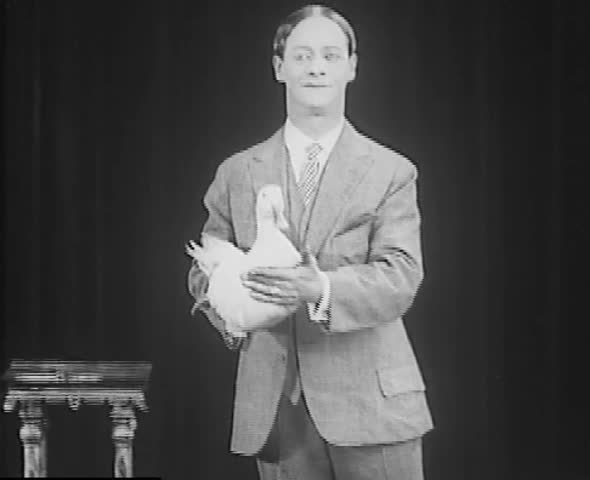
The Plot: The title says it all. Gus Visser helps test out Case’s new sound film by singing “Ma! He’s Making Eyes at Me”, with the assistance of a duck.
Why It Matters: The NFR admits this is “[o]ne of the Registry’s more unusual entries”, and includes a historical essay by UC Davis Professor Scott Simmon.
But Does It Really?: I…guess? It’s an early sound film, so technically it has historical significance, but…there weren’t any other films to choose?
Everybody Gets One:Theodore Case is one of the early pioneers in sound film, creating the Movietone sound system in the early ‘20s, and testing this technology by filming vaudeville performers. Unfortunately very little information is known about vaudeville performer Gus Visser, and even less information about the duck.
Wow, That’s Dated: This is one of those early sound films where you really can’t understand what the lyrics are. The aforementioned essay attempts to translate.
Other notes
Now that’s a hair part!
If this act were around today I don’t think it would get past that weird new version of “The Gong Show”.
Wait until PETA sees this.
That song again is “Ma! He’s Making Eyes at Me”; music by Con Conrad, lyrics by Sidney Clare.
In lieu of the typical “Legacy” section, I’m just going to list classic films that were added to the Registry AFTER “Gus Visser and His Singing Duck”:
Directed by Christian Nyby (According to the credits. We’ll get to that later)
Written by Charles Lederer. Based on the novella “Who Goes There?” by John W. Campbell.
Class of 2001
The Plot: Investigating a crash in the North Pole, a US Air Force team discovers a flying saucer under the ice. The only surviving remnant is an alien (James Arness) frozen in a block of ice. While debating whether or not to thaw the alien, one of the crew accidentally puts an electric blanket on the ice and the alien escapes. When it is revealed that the alien can regenerate, a debate escalates between Captain Hendry (Kenneth Tobey) and Dr. Carrington (Robert Cornthwaite) over whether to kill the alien or not. With below freezing temperatures and a killer on the loose, time is running out for the crew.
Why It Matters: The NFR praises the film’s “strong narrative and well-defined characters”, and also stands staunchly on the “Team Hawks” side of this film’s director debate.
But Does It Really?: It can’t beat the John Carpenter remake, but the original is quite suspenseful in its own right. The film takes a piece of well-written science fiction and turns it into a taut, thrilling film. Its influence can still be felt by any horror movie keeping the costs down with one set. Kudos to the director, whoever it may be.
Shout Outs: McPherson knows how to handle a gun thanks to “Gary Cooper in ‘Sergeant York’”, which was (also?) directed by Howard Hawks.
Everybody Gets One: Most of the cast, notably James “Marshall Dillon” Arness, who allegedly hated being in this film. And if they put you in a rubber suit and set you on fire you’d hate it too.
Wow, That’s Dated: Several references to the war and the atomic age. My favorites are shout-outs to current President Truman and the old phrase “that’s the $64 question”. Adjusted for inflation, that question is currently worth $188.86.
Seriously, Oscars?: Like its fellow 1951 sci-fi classic “The Day the Earth Stood Still”, “The Thing From Another World” received no Oscar nominations.
Other notes
The main dispute about this film is who actually directed it. The credited director is long-time Howard Hawks editor Christian Nyby, while Hawks is credited (above the title, no less) as producer. Depending on which cast member you ask, Hawks may have directed most of this picture himself. We may never know, but if it wasn’t Hawks, Nyby was definitely influenced by his boss. This was the Spielberg/Hooper “Poltergeist” argument of its day.
I love movies where the orchestra swells when the composer’s credit appears. Well done, Dimitri Tiomkin.
Despite her limited screen time, Hawks’ protégé Margaret Sheridan gets top billing. Her career never quite took off the way Hawks wanted it to.
Among the cast members is Robert Nichols, who I know best as Joe (aka Wienie Man) from “This Island Earth”.
Team Hawks Exhibit A: Overlapping dialogue.
Scotty calls this “the biggest story since the parting of the Red Sea”. Ummm…the war?
Can you guys dig up Captain America while you’re down there?
One of the doctors in the base is clearly dubbed by Paul Frees. Oh wait, that actually IS Paul Frees.
Why is it the shortest films that seem to have the most padding?
Scotty looks a bit like Gene Siskel.
Super carrot? Sounds like a cartoon superhero designed to get kids to eat their vegetables.
With a mysterious creature roaming around the North Pole like this, won’t someone please warn Santa?
Legacy
While this version strays from the original source material, John Carpenter produced a more faithful version with 1982’s “The Thing”. The result; a remake that’s just as good (if not better) than the original film.
Because no one asked for it, a prequel to the remake was made in 2011 about the first team to discover the alien. To add to the confusion, this film is also called “The Thing”.
The “X-Files” episode “Ice” takes a page from this film.
And of course, everyone who warns you to “Keep watching the skies!”
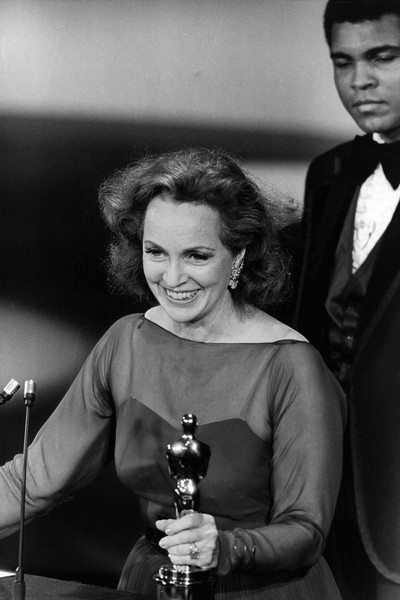
If you’re a fan of Oscar trivia, you probably know the answer to “What’s the shortest Oscar-winning performance?” Clocking in at just over five minutes, Beatrice Straight won Best Supporting Actress for her performance in “Network”. Most trivia geeks are happy just to leave it at that. But how did Beatrice Straight, a stage actress who rarely made films, win over Hollywood’s elite and take home acting’s highest honor with such limited screen time?
First off, let’s look at the actual performance. What it lacks in screen time, it more than makes up for in flashiness. Straight plays Louise Schumacher, the wife of TV news president Max Schumacher (William Holden). She appears briefly in the first half of the film, mainly just to establish that Max has a wife and to inform Max that Howard Beale (Peter Finch) has disappeared from crashing on their living room couch. You can briefly see the back of her head in her second scene as she, Max, and their daughter (Cindy Grover) watch the infamous “Mad as Hell” scene on TV. But the real Oscar gold comes in her third and final scene. Seated in their kitchen, Max confesses to Louise that he is having an affair with younger woman Diana (Faye Dunaway). What follows is an extended monologue in which Louise expresses her anger, her sadness, and eventually, the beginnings of her acceptance that her marriage is over. It is a scene that every actor dreams of playing, with a wide range of emotions and colorful dialogue. Certainly a memorable part no matter who played it, and Beatrice Straight absolutely nails it. In a film filled with cynical, corrupted people, Louise is the only person capable of complex emotion, and Straight brings all of it to the table in a performance that still gets to me, even on my umpteenth viewing of “Network”.
But of course, no actor wins an Oscar on the performance alone; there are always a few outside factors in play. For starters, “Network” was clearly a favorite among the Academy, leading the pack (alongside “Rocky”) with 10 nominations. It went over well with the acting branch in particular; Straight was one of five actors from the film to be nominated (“Network” is the most recent film to have received that many acting nods). And Straight wasn’t the only minor role to get nominated; Ned Beatty was up for Best Supporting Actor for his brief but equally showy role as Arthur Jensen. Prior to the nominations announcement, Straight did a few interviews for the film’s promotion, which no doubt helped boost her signal to Oscar voters, leading to a nomination for a film the Academy couldn’t stop showering with praise.
But an Oscar-worthy performance has to get past its competition first. Straight’s fellow nominees for Supporting Actress were: Jane Alexander in “All the President’s Men”, Jodie Foster in “Taxi Driver”, Lee Grant in “Voyage of the Damned”, and Piper Laurie in “Carrie”. For starters, Straight should have thanked Talia Shire in her acceptance speech. Shire could easily have won this category for “Rocky”, but United Artists opted to submit her as a lead actress instead. Of the final nominees, Grant could easily be eliminated, having won Supporting Actress the previous year for “Shampoo”. Like Straight, Jane Alexander’s performance is brief, but it lacks the fireworks provided for her fellow nominees (Alexander’s nomination was aided not only by the Academy’s love for “All the President’s Men”, but also by her recent work in the TV film “Eleanor and Franklin”).
So this leaves Straight and the two projected frontrunners: Foster and Laurie. Jodie Foster had just made the leap from just another Disney child actor to Oscar nominee thanks to her turn as a child prostitute in “Taxi Driver”. It’s a performance that had its share of supporters among critics and voters at the time, but I suspect her young age prevented those people from actually voting for her (Don’t worry about Jodie, her day in the Oscar sun would come 12 and 15 years later). Piper Laurie hadn’t made a film in 15 years when she returned to the screen as the religious, domineering mother of “Carrie”. It’s a performance that still holds up to this day (Hint hint, NFR [UPDATE: It’s on the list), but the film only received two nominations; this and Sissy Spacek for Best Actress, hardly enough overall support to give Laurie the win. That leaves Straight, a veteran stage actress in her first film in 12 years, giving a very brief but very powerful performance in a Best Picture nominee and frontrunner. Everybody had factors going for them, but Straight had the most, giving her the slightest advantage and ultimately the win.
Now of course, all of this is speculation. I wasn’t there, I’ll never know for sure. But so many times the Oscars come down to factors like the ones that ultimately led Straight to Oscar gold. Often listed among Oscar’s oddities, Straight shouldn’t be dismissed because her performance is “too short”, but rather celebrated because hers is one of the few short performances, to steal a phrase from fellow-nominee “Rocky”, to actually go the distance.
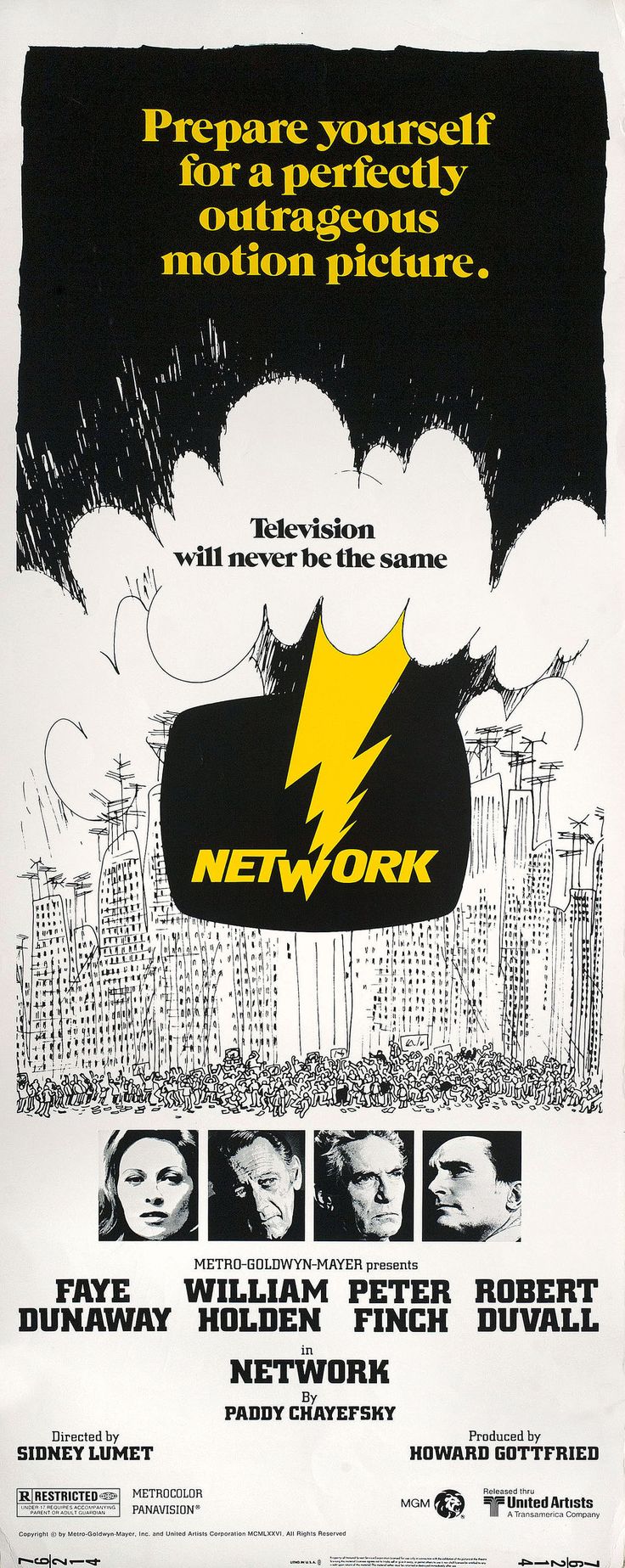
The Plot: Failing TV network UBS decides to lay off its longtime news anchor Howard Beale (Peter Finch). During a live broadcast, Beale announces he will commit suicide during his final show. He is taken off the air, but immediately put back on when his rant gives the show a significant ratings boost. Entertainment Division head Diana Christensen (Faye Dunaway) exploits Beale’s newfound fame and re-brands him as the “mad prophet of the airwaves”. Beale’s longtime colleague and News Division head Max Schumacher (William Holden) tries to stop all of this, but finds himself in a complicated emotional relationship with Diana. And all of this trouble for a 50 share.
Why It Matters: The NFR calls it “a piercing and vitriolic satire of television news” and praises Lumet, Chayefsky, and the cast. There’s also an essay by film professor and Lumet expert Joanna E. Rapf.
But Does It Really?: Full disclosure: “Network” is one of my favorite films, so you’re not getting an argument from me on its inclusion here. I have watched it many times over the years and still find something new to enjoy and appreciate. The script contains some amazing insight by Chayefsky that would not be out of place in today’s climate, primarily about the corruptive influence television has had on America. Add to the mix Sidney Lumet’s trademark straight-forward direction, and a full ensemble that relishes the opportunity to speak Paddy’s words, and you’ve got a classic. It’s no longer the satire it was initially hailed as, but “Network” continues to hold a mirror to what our world has become and how we choose (or not) to cope with it.
Shout Outs: A poster for “Singin’ in the Rain” can be seen hanging on the bathroom wall of Diana’s apartment for some reason.
Everybody Gets One: Peter Finch, as well as most of the bit players, most notably Beatrice Straight, Conchata “Berta” Ferrell, and the always dependable Lane Smith.
Wow, That’s Dated: Several references to 1976 television, my favorites being shout-outs to “Tony Orlando and Dawn”, “Phyllis”, and the Life cereal “Little Mikey” commercial.
Seriously, Oscars?: “Network” tied “Rocky” with 10 Oscar nominations, the most for the 1976 ceremony. The film walked away with four Oscars: Original Screenplay for Chayefsky, Actress for Dunaway, Supporting Actress for Beatrice Straight, and Actor for Peter Finch (Sadly, the first posthumous acting winner in Oscar history). Despite its front-runner status, “Network” lost Best Picture and Director to underdog “Rocky”, and Sidney Lumet never got over that.
Other notes
First off, a shout-out to Dave Itzkoff’s book “Mad as Hell”. It’s essentially a Chayefsky biography that emphasizes “Network”, but its detailed account of the film’s production is indispensable.
This whole post could be how much I love this cast. Dunaway and Holden are giving their career-best performances, and Robert Duvall is always great when you just let him yell at people.
Paddy has a lot to say about television and he doesn’t waste a second. This film hits the ground running with not only its plot, but with its creatively colorful dialogue (it sounds like every character swallowed a thesaurus).
This viewing made me realize how much Chayefsky loves subtle alliteration in his writing (“morbid middle-aged moods”, “a certain sinister silkiness”)
The conflicted romance between Max and Diana has always been my favorite part of the film. And to think just two years earlier these two were in “The Towering Inferno”.
As much as I love Peter Finch in this film, his English-by-way-of-Australian accent is noticeable. The main giveaway is his pronunciation of the word “homicide”.
The “Mad as Hell” scene is still great, and that preceding monologue is surprisingly still applicable to our times.
Boy, the FCC is really lax about the profanity on UBS. Beale says “shit” and “goddamn” during “The Howard Beale Show”.
I have so much to say about Beatrice Straight’s performance that it warrants its own write-up.
Speaking of bit parts, shout-out to Marlene Warfield as Laureen Hobbs. She is pitch-perfect in the role. If nothing else, her delivery of “that Bionic WOMAN” is flawless.
One of the few things that always seemed out of place to me is that Diana has to specify that Channel 3 is UBS in L.A. to a room full of the network’s L.A. affiliates. Wouldn’t they know what channel they work for?
We as a society need to bring back ruffled tuxedo shirts.
Wow, protesting was a lot harder before the internet.
And then we get Ned Beatty as CCA chairman Arthur Jensen. Yet another bit player who turns their moment into a meal (and, in Beatty’s case, an Oscar nomination).
No, that’s not Tim Robbins at the end. But it sure does look like him, I’ll give you that.
Legacy
You mean besides the complete corruption of television and the sensationalism of news that has happened over the last 40 years? I feel like that’s enough of a legacy for any movie, thank you very much.
“Network” is still cited by many as having one of the best screenplays ever. One of its main champions is Aaron Sorkin, who endlessly references the film in the pilot of “Studio 60”.
A stage version by Lee Hall is opening in London very soon, with Bryan Cranston taking over the Howard Beale role.
Louise Schumacher found a new life for herself studying the paranormal.
And of course, everyone who shouts that they’re “mad as hell” and “not going to take this anymore”.
The Plot: Narrated by Margaret Mead, the film is a documentation of a traditional Balinese dance featuring Rangda the witch, Barong the dragon, and several natives in a trance-like state.
Why It Matters: The NFR calls the film “groundbreaking”, and includes a link to the Library of Congress’ digital gallery of Margaret Mead.
But Does It Really?: The film gets a pass for its introduction to Mead and Bateson (but mostly Mead) and its depiction of Balinese culture that, while not completely accurate, is a good starting point for further study.
Everybody Gets One: Both Bateson and Mead were already respected anthropologists by the time they traveled to Bali, their photography evolving into filmed documentation. Margaret Mead was best known for her somewhat controversial study of Samoan sexual orientation, and Gregory Bateson was one of the scientists responsible for the double-blind study.
Seriously, Oscars?: No Documentary Short nomination for “Trance and Dance”. Instead they gave the award that year to the super artsy Canadian film “Neighbours” (which really isn’t a documentary).
Other notes
If nothing else, this film gives you the great SAT word “somnambulistic”.
Wow, so much text before the actual film. This clip needs a lot of set-up.
Why are the witch and the pregnant woman played by men? There are women involved in the rest of the dance, why not here?
The dragon worshipers follow the same rules with the witch as Super Mario does with a ghost; you can only attack when their back is turned.
I love that Margaret Mead always explains when the footage goes to slow-motion. As if no one would know just from watching.
The dancers are great at trances. They must be the best audience for a hypnotist.
This may be the only Registry entry that ends with suggested publications. I assume all of these titles are long out of print.
Legacy
Thanks to the work of Mead and Bateson (among others), Bali became a tourist destination for Western culture. There goes the neighborhood.
Though they were just married during filming, Margaret Mead and Gregory Bateson were divorced by the time “Trance and Dance in Bali” was finally released. The two continued their distinguished work in anthropology (among other fields) until their respective deaths in 1978 and 1980.
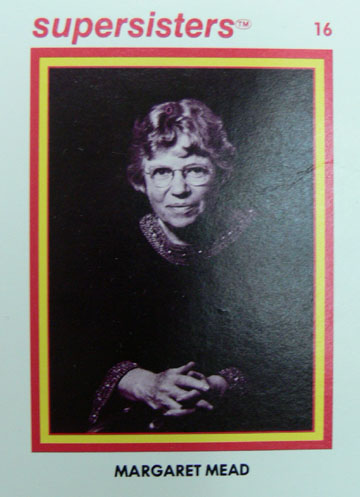
Margaret Mead may be one of the few filmmakers on this list with her own trading card!



 The Horse's Head