#68) Dracula (1931)

dracula_xlg

#68) Dracula (1931)

OR “The Man Who Bites”

Directed by Tod Browning (and possibly Karl Freund)

Written by Garrett Fort. Based on the novel by Bram Stoker and the play by Hamilton Deane and John L. Balderston.

Class of 2000

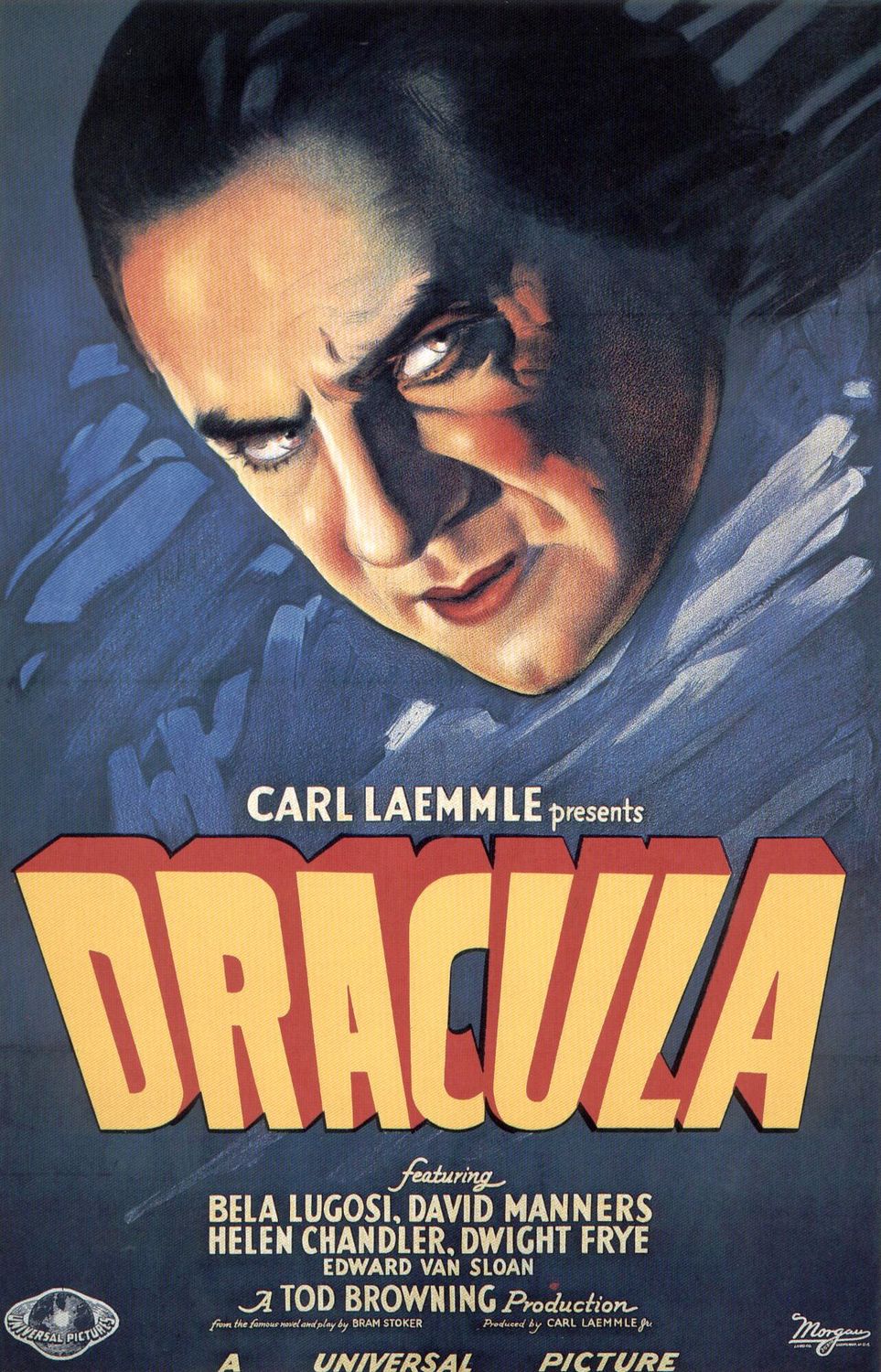
The Plot: Bela Lugosi is Count Dracula, a Transylvanian vampire who must drink the blood of the living. Assisted by his servant Renfield (Dwight Frye), they travel to London to settle the lease on an Abbey next to the local sanatorium. The Count falls for the doctor’s daughter Mina (Helen Chandler) and plans to make her his next bride. But Doctor Van Helsing (Edward Van Sloan) suspects Dracula’s vampire habits while studying the mysterious deaths that have happened since Dracula arrived.

Why It Matters: The NFR praise Browning, cinematographer Karl Freund, art director Charles D. Hall, and of course, Lugosi for “the ultimate vampire characterization”. Also included is an essay by Lugosi and Browning expert Gary Rhodes.

But Does It Really?: Oh of course. You cannot think of Dracula or any other vampire without thinking of Bela Lugosi’s performance. On top of that, the entire film has a wonderfully creepy vibe to it, thanks to its effective lighting and almost entirely absent soundtrack. 86 years later, “Dracula” can still elicit some serious chills.

Everybody Gets One: Actors Helen Chandler, Frances Dade and David Manners, the latter whom claimed never to have seen the final film.

Wow, That’s Dated: The film is done on such a cheap budget I can’t tell if it’s supposed to be the 1890s or the 1930s. So who’s to say what’s accurate and what isn’t?

Take a Shot: They say the Count’s name a lot. Don’t make this a drinking game.

Seriously, Oscars?: Despite its critical and commercial success, “Dracula” received zero Oscar nominations. The Academy gave a few nods to a similarly haunting film from 1931: Warner Brothers’ “Svengali” starring John Barrymore.

Other notes

  • Why Swan Lake at the beginning?
  • Ah yes, the native armadillos of Transylvania.
  • In addition to playing Renfield, Dwight Frye plays Dr. Frankenstein’s assistant Fritz in that Universal classic. There’s just something about the way he says “master” that just feels right.
  • Nope, definitely not a model of a ship, and it’s definitely being hit by regular sized waves.
  • The London newspaper is just called “The”?
  • Does Dracula not have eyelids?
  • When I die, please let it not be in an operating theater.
  • Special mention to Charles K. Gerrard and his bizarre comic relief performance as Martin, the sarcastic Cockney attendant at the sanatorium.
  • Can bats hover?
  • This film features very few special effects, but it gets the point across with clever editing and camera shots. Very effective.
  • Van Helsing kinda looks like Al Pacino in “You Don’t Know Jack”.
  • Helen Chandler’s natural South Carolina accent slips through a couple of times throughout the film.
  • In case you forgot, It’s a Universal Picture!

Legacy

  • Every Dracula you have ever seen is taking something from Bela Lugosi’s performance. Now that’s a legacy.
  • While helping establish the Universal Horror Series, “Dracula” only had two direct sequels; 1936’s “Dracula’s Daughter” and 1943’s “Son of Dracula”.
  • Dracula has been adapted for screen many times over the years, but the stage version this “Dracula” is based on got a Broadway revival and remake in the ‘70s with Frank Langella.
  • Last I checked, Dracula was dead…and loving it!
  • And of course, Blacula.

Further Viewing: It was common practice at the time for studios to film foreign-language versions of their films with different casts at the same time. The Spanish-language version of “Dracula” eventually found its own place in the NFR. Read my observations on that version here.

#67) Do the Right Thing (1989)

dj_simsa_do_right_thing_640

#67) Do the Right Thing (1989)

OR “Long Day’s Heat Wave Into Night”

Directed & Written by Spike Lee

Class of 1999

The Plot: “Do the Right Thing” centers around a diverse neighborhood in Brooklyn on one of the hottest summer days on record. Mookie (Spike Lee) works for Sal (Danny Aiello) at his pizzeria, but constantly clashes with Sal’s hothead son Pino (John Turturro) over their racial differences. Meanwhile neighborhood drunk Da Mayor (Ossie Davis) tries to woo Mother Sister (Ruby Dee), while Buggin’ Out (Giancarlo Esposito) attempts a boycott of Sal’s over the lack of African-Americans on his Wall of Fame. As the temperature rises and “Fight the Power” blasts from the boombox of Radio Raheem (Bill Nunn), the racial tension reaches a boiling point.

Why It Matters: The NFR calls it “provocative” and praises Lee and his cast. An essay by film critic David Sterritt discusses, among other things, why the film was so divisive in its day. “Do the Right Thing” was included in the NFR after the minimum 10-year eligibility period.

But Does It Really?: Yes! Dear God Yes! This film says so much about racial tension in this country, and unfortunately a lot of it is still relevant (perhaps even more so today than in 1989). Like so many of Lee’s films, “Do the Right Thing” is not here to entertain you. It is here to wake you up, shake you, and remind you that all is not right with the world. Like any film that really wants to you to learn something, it doesn’t actually give a lesson or a resolution. “Do the Right Thing” shows you all sides, points out the shades of gray in the middle, and asks you to think about what “the right thing” really is.

Shout Outs: Brief references to “The Godfather” and “Planet of the Apes”, plus a revised version of the “Love/Hate” speech from “The Night of the Hunter”.

Everybody Gets One: A large selection of the film’s supporting cast, most notably Giancarlo Esposito and Rosie Perez. And yes, that’s Martin Lawrence making his film debut. Truly, everybody gets one.

Wow, That’s Dated: There’s a lot of 1989 culture in this one. From Air Jordan to Roger Clemens to boom boxes the size of a Hummer. Plus, perhaps the most dated reference, a diverse Brooklyn.

Title Track: The great Ossie Davis tells Spike Lee to “always do the right thing”.

Seriously, Oscars?: “Do the Right Thing” was praised by many critics and was a success upon its release. The Academy gave it two nominations – Original Screenplay for Lee and Supporting Actor for Aiello – but gave the bulk of that year’s Oscars to “Driving Miss Daisy” instead. Lee was pretty upset about not getting a Best Picture nomination over a film that served racial tolerance with a more genteel hand. He predicted that in the future, “Do the Right Thing” would be the more discussed film between the two. If the NFR is any indication, he’s on to something.

Other notes

  • Speaking of the Oscars, a film with this many African-Americans in it and they give the acting nomination to a white guy. Some things never change.
  • This film introduces up to Rosie Perez. And that opening credits sequence is one hell of an introduction.
  • The easiest way to win me over is to have your lead character shout “Hell no!” to some Jehovah’s Witnesses. I like you, Mookie.
  • In addition to ongoing racial tensions, this film correctly predicted global warming.
  • Sal says that he only puts Italian-Americans on the wall. I hate to break it to him, but Sophia Loren is just Italian.
  • Quick drive-by cameo from Frank Vincent. He must be on his way to beat up Joe Pesci.
  • Shoutout to cinematographer Ernest Dickerson. There’s a lot of great camerawork being done here that demands a second viewing. For starters, a lot of these scenes are played out in one continuous take, but the shots are dynamic enough not to make the scene static, but also not flashy enough to call attention to themselves. It’s an impressive balancing act.
  • I also really like how many of the scenes feature other major characters in the background. It really gives the sense of a small neighborhood where everybody’s on top of each other.
  • Piragua guy courtesy of “In the Heights”.
  • Today’s history lesson; the graffiti behind Mookie and Jade that reads “Tawana Told the Truth”.
  • Oh my god I can’t believe they mention Donald Trump in this film. For you future historians, this was back when he was just a punchline in the late 80s, rather than Death, Destroyer of Worlds. [Side note to future readers: How’s Kathy Griffin doing?]
  • I promised myself that I would confess to you, the reader, if any film on this list made me cry. And I will admit that I cried at the death of [Name Redacted].
  • As always, Samuel L. Jackson is the voice of reason. I’m still not convinced that this film has a message, but if it does, I bet it’s “Chill!”

Legacy

  • Spike Lee’s next film “Jungle Fever” brings back pretty much the entire cast of this film, including the exact same police officer characters!
  • This shout-out on “The Critic”.
  • For some reason, “Do the Right Thing” has yet to spawn an attraction at any of the Universal Studios Theme Parks worldwide.
  • And of course, every “Spike Lee Joint” since then. We’ll see more from Mr. Lee when we take a look at “Malcolm X”.

Listen to This: The film’s main theme “Fight the Power” can be heard on Public Enemy’s third album “Fear of a Black Planet”, one of the most successful and influential hip hop albums of all time. “Fear” made it into the NRR in 2004, being hailed for its “new sound” and for its “coupling of a strongly political message with hip hop music.” I’m just glad that someone finally called out John Wayne on his shit.

#66) Tacoma Narrows Bridge Collapse (1940)

TACOMA NARROWS BRIDGE

#66) Tacoma Narrows Bridge Collapse (1940)

Filmed by Barney Elliot

Class of 1998

As far as I know, the footage preserved in the Library of Congress is this color footage of the collapse (minus the bizarre music selection).

Bonus version: This version is in black & white, but includes the kind of commentary we expect from ‘40s newsreels. And you think they sensationalize the news nowadays.

The Tacoma Bridge was one of the largest suspension bridges in the United States upon its completion in July 1940. On November 7th, the bridge (nicknamed “Galloping Gertie” by builders and public alike) collapsed during a strong wind. Local camera shop owner Barney Elliot captured the collapse on his 16mm camera. While not the greatest disaster in American history (there was only one casualty; a dog), the footage of the collapse is worth preserving. If nothing else it’s a good lesson for all you aspiring architects out there. You can find more information on the bridge and its history here.

Legacy

  • World War II prevented the bridge from immediately being rebuilt, but the good people of Tacoma finally got a new bridge in 1950.
  • IMDb only lists of handful of films that have featured clips of the collapse, but I’m pretty sure it’s made the stock footage rounds. It should be up there with “Fat Guy Gets Hit with Cannonball”.
  • The production logo at the end of “Drawn Together”. THAT’S where I know this from!

#65) Ben-Hur: A Tale of the Christ (1925)

Ben-Hur-1925

#65) Ben-Hur: A Tale of the Christ (1925)

OR “I Got a Friend in Jesus”

Directed by Fred Niblo (and a whole bunch of uncredited directors)

Written by June Mathis and Carey Wilson. Based on the novel by General Lew Wallace

Class of 1997

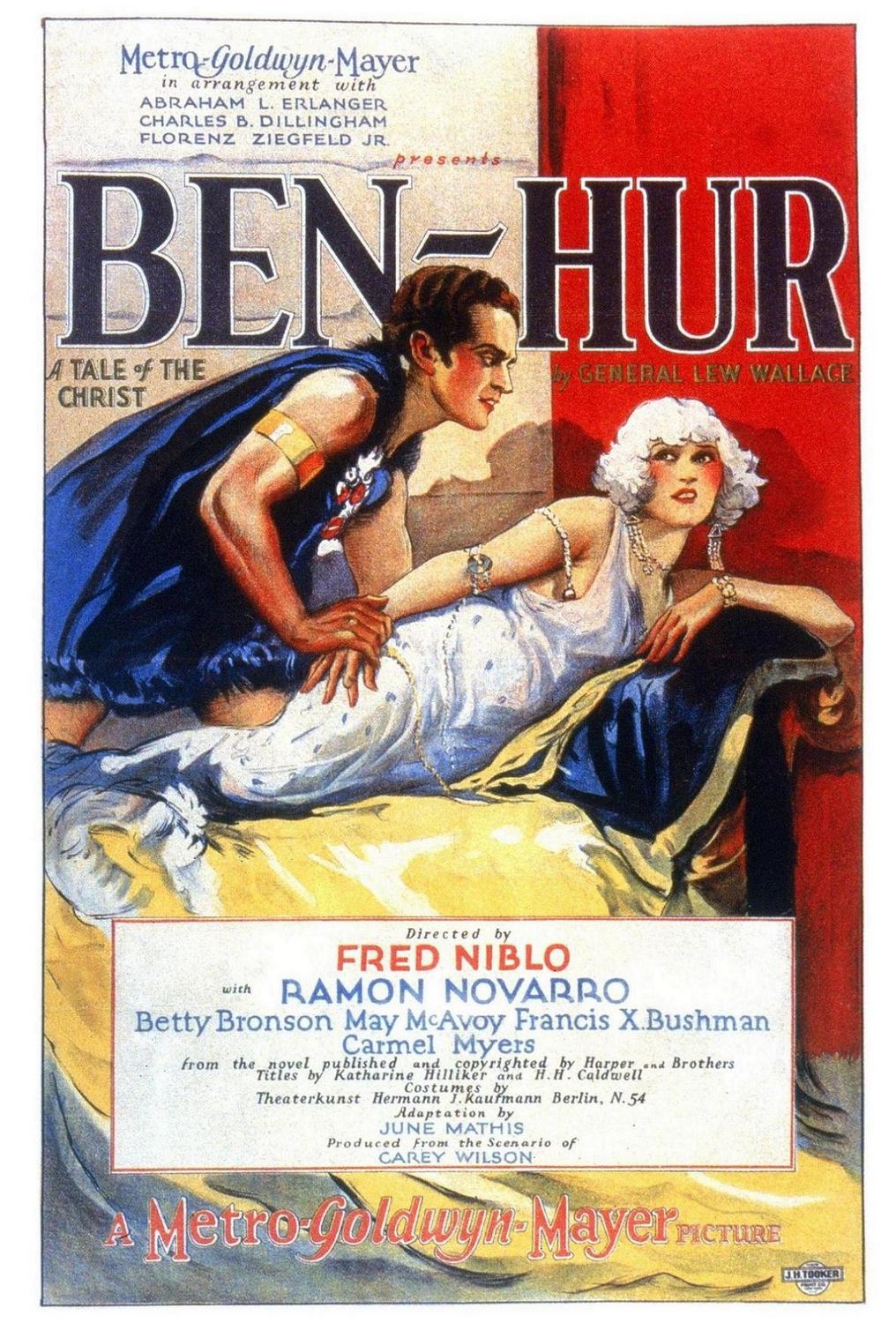
The Plot: Set in the same time period/location as Jesus, Judah Ben-Hur (Ramón Novarro) is a Jewish prince falsely accused of murder by Roman soldier/childhood friend Messala (Francis X. Bushman). Judah is forced into slavery and separated from his mother and sister (Claire McDowell & Kathleen Key). After encountering young Jesus (Claude Payton), Judah’s faith gets him through his imprisonment and eventually into a chariot race against Messala. With a cast of thousands!

Why It Matters: The NFR points out the film’s spectacular chariot race and Technicolor sequences, and mentions that this is the film that put Hollywood studio MGM on the map. An essay by silent film expert Fritzi Kramer goes into detail about just how epic this whole thing was in its day.

But Does It Really?: Absolutely. This is one of those fabled Hollywood epics that needs to be on the Registry to accurately tell the story of American film. It’s still quite an impressive feat of filmmaking to watch over 90 years later.

Everybody Gets One: Ramón Novarro was a matinée idol and “Latin Lover” in the vein of Rudolph Valentino. He is unfortunately one of those Hollywood stars whose untimely murder has eclipsed his actual film achievements. Francis X. Bushman* was also a leading man of the silent era, but his career ended when he lost his fortune in the 1929 Stock Market Crash. He managed to reemerge in the ‘50s and ‘60s as an older character actor. I remember him best from “The Phantom Planet”. And special mention to Claude Payton as Jesus. Those are some of the best hands in the business.

Wow, That’s Dated: I’m just going to assume that no one in this film is actually Jewish or Italian or Middle-Eastern.

Other notes

  • I have to say that the novel/film’s subtitle is misleading. I would argue it’s more of “A Tale in Which the Christ Shows Up Sometimes”.
  • Author Lew Wallace was an actual General; he served in the Union Army during the Civil War. He began writing stories as a distraction while he was supposed to be studying law with his father.
  • That’s Betty Bronson from the silent “Peter Pan” as Mary. The Mother of Christ is The Boy Who Wouldn’t Grow Up.
  • Cool, parts of this film are in early Technicolor! Does that mean they’re in Oz?
  • Judah and Esther’s meet-cute involves a diseased pigeon. Great.
  • Gratus is the Archduke Ferdinand of this story.
  • As a reward for sitting through a 2 ½ hour silent film, “Ben-Hur” contains occasional pre-Code nudity.
  • The galley attack is pretty amazing to watch. Blink and you’ll miss an extra get impaled with a spear!
  • Jesus is photographed in this film exactly like The Onceler.
  • Antioch is described as “colorful”, yet isn’t in Technicolor. What gives?
  • “By the three-horned goat of Ranor” is my favorite intertitle. The internet has yet to tell me what the hell that means.
  • Iras has a sort-of Mae West thing going on. Mae East?
  • Judah competes in the chariot race as “The Unknown Jew”. Does that mean he has to wear a paper bag over his head and appear on “The Gong Show”?
  • What can I say? That chariot race is still exciting to watch. But don’t think I didn’t notice the occasional under cranking going on.
  • If the stories are true, the extras in the chariot race include current and future MGM stars. Among them; Joan Crawford, Mary Pickford, Harold Lloyd, John & Lionel Barrymore, Dorothy & Lillian Gish, and Marion Davies.
  • Hey, down in front, guy sitting on the other side of the Last Supper!
  • The people of Ancient Jerusalem should not think they’re better than lepers. I don’t see any of them with indoor plumbing or any basic hygiene skills.
  • I guess Judah Ben-Hur was the first Born-Again Christian. Can you convert to a religion that hasn’t yet established itself?

Legacy

  • The novel has been adapted into film many times over the years, most notably the 1959 remake by this film’s assistant director; William Wyler. It’s longer and even more epic, and went on to win all the Oscars and find its own place on the NFR.
  • The most recent screen version of Ben-Hur came in 2016 and I guess makes Judah and Messala brothers? By all accounts it’s terrible.

* CORRECTION: Francis X. Bushman also has a brief uncredited appearance in “The Bad and the Beautiful“.

#64) MASH (1970)

4145

#64) MASH (1970)

OR “How Do You Solve a Problem Like Korea?”

Directed by Robert Altman

Written by Ring Lardner, Jr. Based on the novel “MASH: A Novel About Three Army Doctors” by Richard Hooker.

Class of 1996

The Plot: Set in a Mobile Army Surgical Hospital (there’s your trivia answer) during the Korean War, “MASH” chronicles the episodic misadventures of surgeons “Hawkeye” Pierce (Donald Sutherland), “Trapper John” McIntyre (Elliott Gould) and “Duke” Forrest (Tom Skerritt). They drink martinis, hit on every nurse in sight, and cause trouble for the higher brass, most notably Major Burns (Robert Duvall) and Major Margaret Houlihan (Sally Kellerman), who gets more than her share of abuse from the unit.

Why It Matters: The NFR applauds the film’s “black comedy” and “gritty presentation” and praises Altman, Lardner and a “[s]pirited ensemble”.

But Does It Really?: Perhaps my appreciation for the TV series gave me a disadvantage, because the film is…okay. I laughed a lot, but the film’s anti-war stance seems a bit tame. Whether that’s my familiarity with the show or today’s more common acceptance of anti-war sentiments, I don’t know. I place “MASH” slightly more on the culturally significant side of this list. I’ll be curious to see if the film continues to hold up compared to the TV series.

Shout Outs: Henry Blake briefly mentions “Knute Rockne” during the football game.

Everybody Gets One: Gary “Radar” Burghoff was the only cast member to reprise his role for the TV series.

Wow, That’s Dated: While Altman intentionally made very little effort to make this film an authentic period piece, Elliot Gould’s moustache screams 1970.

Take a Shot: As is often the case with movies where the title is a location, they say, “MASH” consistently but not frequently.

Seriously, Oscars?: “MASH” scored five nominations, including Best Picture. At the time, Oscars were still handed out by Old Hollywood, so they favored the more traditional pro-war “Patton”. The Academy did, however, give Best Adapted Screenplay to “MASH” and its Old Hollywood screenwriter, Ring Lardner, Jr., even though very little of his dialogue ended up in the final cut. Robert Altman lost the first of his five Best Director nominations. And how “Suicide is Painless” didn’t get an Original Song nomination is just unacceptable.

Other notes

  • First of all, I have to say that I do love that poster. That one image somehow tells you everything you need to know about the film.
  • The title “MASH” is presented without the asterisks during the opening credits, but the poster and TV series include them. I don’t know who to trust anymore.
  • Boy these credits are making a lot of introductions. What a host.
  • Ah yes, Sutherland’s whistle thing that he sneaks in. I knew “Fantastic Mr. Fox” got it from somewhere.
  • With this film we are introduced to Robert Altman’s bold idea that you actually don’t need to hear or understand any dialogue.
  • I forgot how much rampant sexual harassment happens in this film. I’m supposed to like these guys, right?
  • Shout-out to The Bickersons.
  • Best line in the film; “If I nail Hot Lips and punch Hawkeye can I go home?”
  • The song “Suicide is Painless” was written by Robert Altman’s 14-year-old son Mike. It became the TV series’ theme song as well, and Mike made more money off the song than his dad did from the film.
  • Sometimes Margaret’s last name is given as “Houlihan” and other times as “O’Houlihan”. All evidence I can find shows that it’s always been “Houlihan” and that the few instances of “O’Houlihan” are slip-ups by the actors kept in the film.
  • The film’s claim to be the first major film to say “fuck” has been contested. Further research is needed.
  • That…is a weird ending. Although at least now I know how to pronounce “Auberjonois”.

Legacy

  • As mentioned throughout this post, “MASH” the film became “M*A*S*H” the long-running, Emmy-magnet TV series. The NFR calls it “folksier” than its film counterpart, but that’s really only the first few seasons. It’s sanitized for broadcast, but “M*A*S*H” broke out of the film’s shadow and became the better known of the two. That being said, Altman hated the show.
  • About halfway through the run of the TV series, a spin-off show called “Trapper John, M.D.” followed that character’s life in modern-day (1979) San Francisco. The producers of “M*A*S*H” sued for royalties, but the court declared the show a spin-off of the film rather than the series, hence its inclusion here.
  • Based on the success of the film, Richard Hooker wrote two more novels: “M*A*S*H Goes to Maine” and “M*A*S*H Mania”. An attempt at turning “Maine” into a film never took off.
  • And of course, this is the film that gave us Robert Altman, so I blame “MASH” for “Popeye”.

Further Viewing: “MASH” isn’t the first film about the Korean War’s mobile hospital units. 1953’s “Battle Circus” told a story of love and war with Humphrey Bogart as a Hawkeye-esque doctor and June Allyson as, let’s say a “Lukewarm Lips” kind of nurse. I haven’t seen it, but let’s just assume it’s a bit more pro-war than “MASH”.

Further Further Viewing: 1970’s other irreverent look at war, “Catch-22” had an all-star cast, a very hot Mike Nichols at the helm, and a best-selling novel as its source material. All signs pointed to “Catch-22” being the bigger hit film over “MASH”. That didn’t happen.