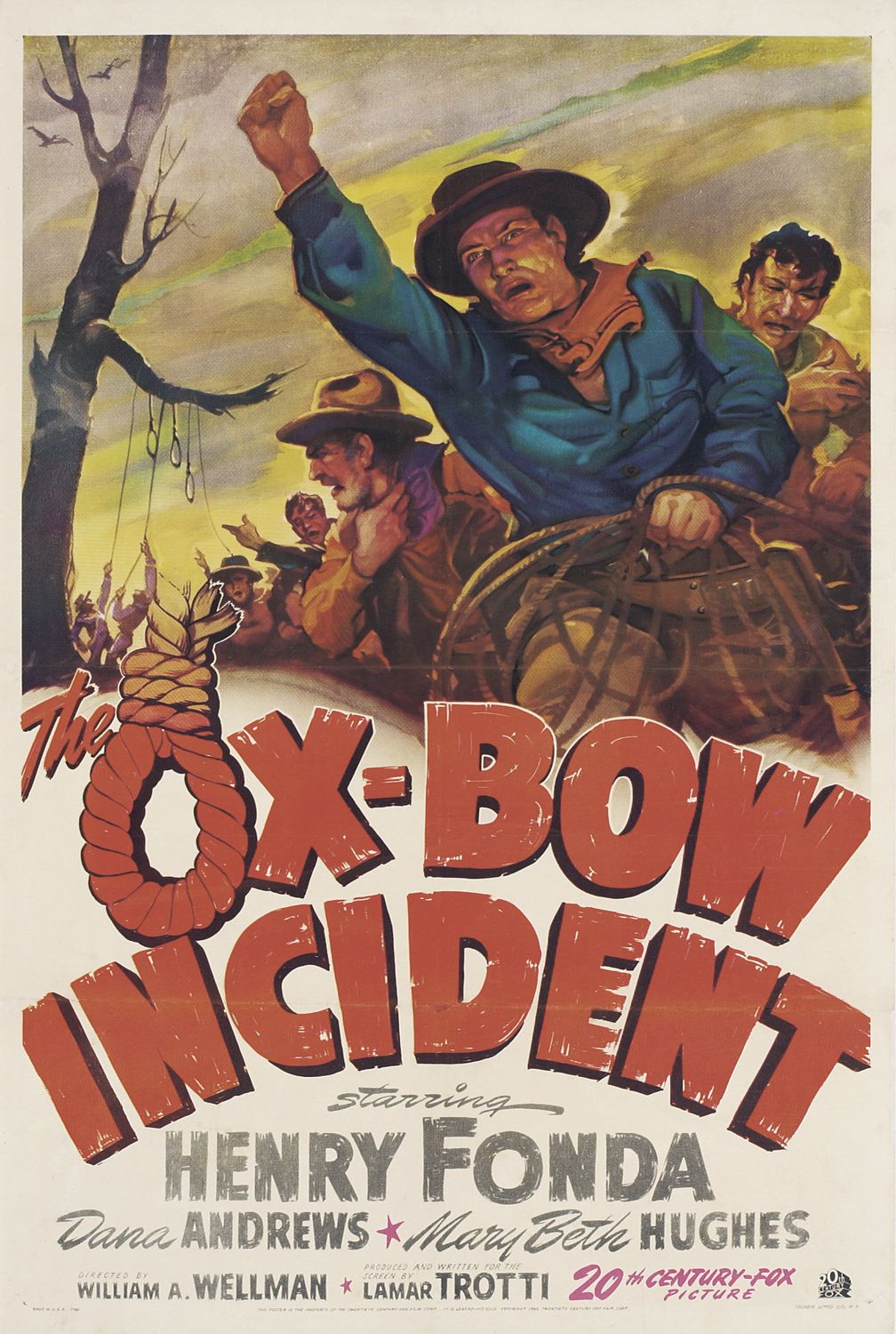
#38) The Ox-Bow Incident (1943)

ox_bow_incident_xlg

#38) The Ox-Bow Incident (1943)

OR “Not Quite Fonda This One”

Directed by William A. Wellman

Written by Lamar Trotti. Based on the novel by Walter Van Tilburg Clark.

Class of 1998

The Plot: In 1885 Nevada, drifters Gil & Art (Henry Fonda & Harry Morgan) ride in to town and learn of some recent cattle rustling. When word spreads that a local rancher has been murdered, the townsmen form a posse comitatus with the intent of hanging the killers. Gil & Art tag along and eventually find three men (Dana Andrews, Anthony Quinn & Francis Ford) with the rancher’s cattle and gun. The men claim innocence and the town’s hasty sense of justice is called into question.

Why It Matters: The NFR calls the film “a quiet yet intense study of the mentality and interpersonal dynamics of mobs.” Boy, that makes you want to go out and grab some popcorn, don’t it?

But Does It Really?: This is one of those films that I’ve always heard of but couldn’t tell you why it’s a classic. After watching it…I still can’t tell you. Not that it’s awful (there’s some impressive cinematography from Arthur C. Miller throughout), but it never goes to that next level you want from a classic film. Its scope is almost too small for film, it feels like a short story adapted for television. Fonda has given us films about society’s moral compass before and after this one (“The Grapes of Wrath”, “12 Angry Men” etc.). He’s even got better westerns on the list – “My Darling Clementine” and “Once Upon a Time in the West” come to mind. “The Ox-Bow Incident” is a story that needs to be told, but it has been, and by much more memorable movies.

Everybody Gets One: Due to everyone being a contract player during the Golden Age of Hollywood, pretty much everybody in this film has at least one more NFR entry on their resume. I’m sure I’ll even see some of the horses in another film. But I’ll give special mention to Frank Orth as Larry Kinkaid (aka “the vic”).

Wow, That’s Dated: For his performance as Poncho, Chrispin Martin gets to speak broken English in what I can only describe as a “Speedy Gonzales accent”.

Seriously, Oscars?: The film was nominated for Best Picture and…that’s it. In fact, it’s the most recent film to only receive a Best Picture nomination. It lost to “Casablanca”, because duh.

Other notes

  • The novel is over 300 pages? How?
  • San Francisco is the name of a saint. Don’t call it “Frisco”.
  • Umm, Fonda just punched a guy and then stomped on his face.
  • Nope, definitely not a fake backdrop behind the saloon set. Definitely didn’t start rustling when the actors walked past it. Nothing to see here.
  • Surprise uncredited appearance by Margaret Hamilton as the judge’s housekeeper! I guess the “Wizard of Oz” residuals hadn’t started coming in yet.
  • Jane Darwell is playing the role that today would go to Kathy Bates. Surprisingly, despite spending a lot of time in the film, Darwell does not directly interact with her former film son Henry Fonda.
  • As a MSTie I feel it should be noted that Rose and her new husband (Mary Beth Hughes & George Meeker) would reunite a year later to film “I Accuse My Parents”.
  • He’s played Greek, Italian, Arabian and even French, but this is one of the rare films where Mexican-born Anthony Quinn actually plays a Mexican!
  • “This is only slightly any of your business” has got to be one of the least effective threats in film history.
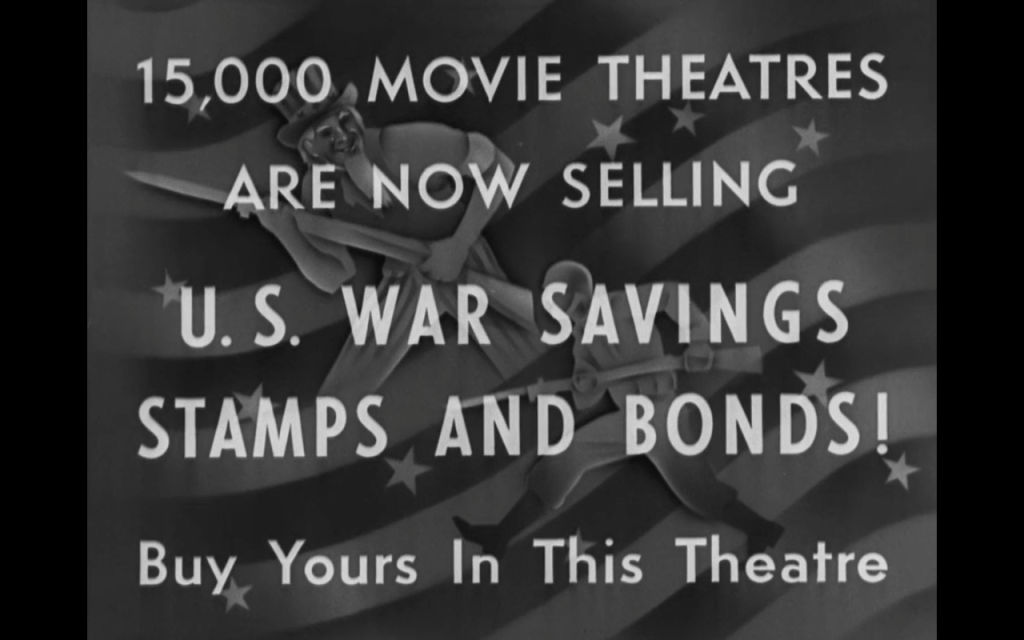
  • And of course, buy your War Bonds in this theatre!
Screen Shot 2017-03-18 at 8.55.40 PM

Legacy

  • Sure I didn’t go for it, but “The Ox-Bow Incident” is one of the favorite films of Clint Eastwood and even Henry Fonda himself. So what do I know?
  • The film is referenced by Hawkeye on an episode of “M*A*S*H”. One wonders what Colonel Potter made of Art in this film.

Further Viewing: Now’s as good a time as any to showcase one of those Henry Fonda clip retrospectives. This one comes from TCM and features tributes from his children Jane and Peter.
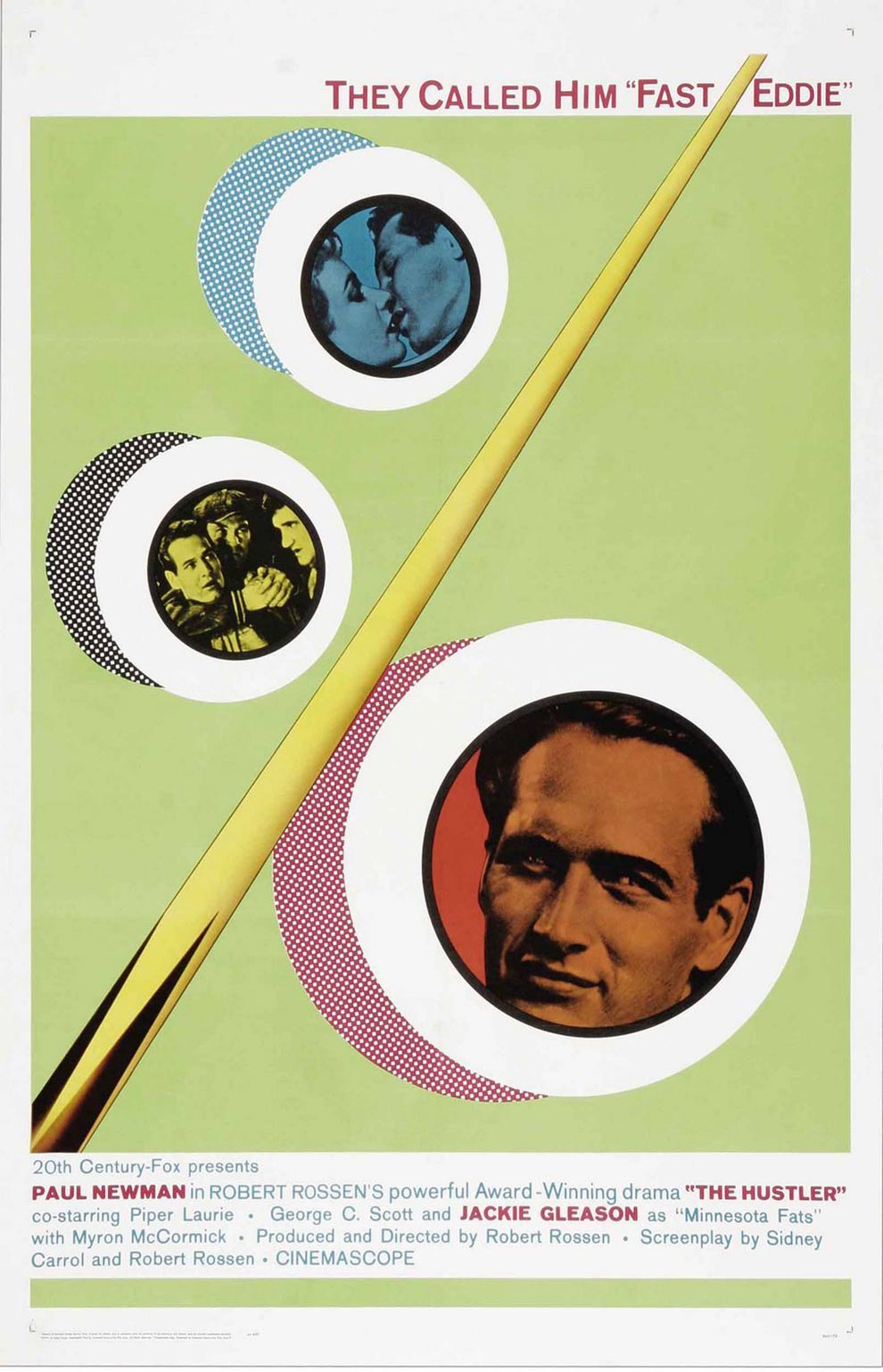
#37) The Hustler (1961)

hustler1961

#37) The Hustler (1961)

OR “Harold Hill was Right”

Directed by Robert Rossen

Written by Rossen and Sidney Carroll. Based on the novel by Walter S. Tevis.

Class of 1997

The Plot: “Fast” Eddie Felson (Paul Newman) is a small-town pool hustler looking for his big break. He challenges champion Minnesota Fats (Jackie Gleason) to a match. Eddie starts off strong, but his cockiness gets the better of him and he loses everything. While on the streets he starts a relationship with Sarah (Piper Laurie) an alcoholic with dashed dreams of her own. Eddie starts hustling again and attracts the eye of high-roller Bert Gordon (George C. Scott) who tries to craft the “born loser” into a true champ. Eddie’s hunger for winning fuels him, but at a personal cost.

Why It Matters: The NFR calls it a “moody, deliberately-paced morality play” and singles out the film’s direction, writing, cinematography and performers, specifically George C. Scott.

But Does It Really?: It could have been just a little shorter, but the film is definitely worth it as a character study of people’s competitive natures. The film’s strength is the emphasis on character rather than on the game of pool itself, which I feel a lesser director would have done. Performances by the four leads are solid (if maybe a little too “Actors Studio” for my taste) and the pool games are riveting. While the film’s impact may have worn off over the years, I’d still chalk this one up to a “minor classic”.

Everybody Gets One: Amazingly this is the only appearance for stars Jackie Gleason and Piper Laurie. Also noteworthy are appearances by Vincent “Old Italian Stereotype” Gardenia and Michael “Old Greek Stereotype” Constantine. Plus that’s boxer Jake LaMotta as the bartender when Eddie and Sarah meet up again. Hey, someone should make a movie about him!

Wow, That’s Dated: Mainly the fact that modern professional pool players are not as cool or classy as Paul Newman or Jackie Gleason.

Seriously, Oscars?: “The Hustler” received nine Oscar nominations, including Best Picture. Almost completely shut out by “West Side Story” and “Judgment at Nuremberg”, the film won two technical awards; Art Direction and Cinematography. Most noteworthy is George C. Scott’s Supporting Actor nomination. After losing for “Anatomy of a Murder” two years earlier, Scott decided he no longer believed in competition among actors and asked that the Academy remove his nomination. The Academy declined his request. Scott split the vote with Gleason and lost to George Chakiris for “West Side Story”.

Other notes

  • Speaking of Oscars, I’m disappointed that Dede Allen didn’t get a nomination for her editing. It took a while for Hollywood’s Old Home Guard to accept that faster New York style of editing. And kudos to Fox’s Oscar campaign for putting Piper Laurie in the lead category. They could have easily put her in supporting and committed category fraud, but Fox made the right choice.
  • I’m a sucker for films that are shot in Black & White with a 2.35:1 aspect ratio. They always look so artful. This is the brief era of film where this combination was more frequent.
  • We’re still in the Hays Code era, so characters aren’t allowed to swear. Instead we get substitutes like “up the flagpole”, “crum”, and “kiss off”. The film, however, is edgy enough to let Sarah call Bert a “bastard”.
  • Holy hell those trick shots are amazing! Gleason was a seasoned pool player and did all his own shots. Newman picked up the game quickly and only needed assistance on one shot by pool champ (and the film’s technical advisor) Willie Mosconi.
  • This film has one of my favorite types of scenes; montages that have several images superimposed over each other.
  • I’m convinced that Gleason actually misses one of his shots, but they cut away before you see where the ball ends up. You win this round, Rossen.
  • Why is Piper Laurie dubbed so much? Like, almost every scene she’s in. It’s especially noticeable in her big scene towards the end where the sync is way off.
  • That’s character actor Murray Hamilton as Kentucky pool champ Findley. For those of you keeping score, he’s in movies about pool sharks and actual sharks.
  • George C. Scott is good, but he only gets to do his famous “Turn It Off!” line reading once, saved towards the end for, “You owe me MONEY!” This was only Scott’s third film, yet the transition from stage actor to film actor is already seamless.

Legacy

  • 25 years later Paul Newman reprised Fast Eddie in the Scorsese-helmed semi-sequel “The Color of Money”. Reviews were mixed, but Newman’s performance finally won him his first and only Academy Award.
  • “The Hustler” is credited with helping to revive interest in pool. So…that’s cool I guess.
  • Shortly after the film came out, pool player Rudolf Wanderone started calling himself “Minnesota Fats” and claimed that Gleason’s character was based on him. The story didn’t stick, but the nickname did.

Further Viewing: The 1978 showdown between aforementioned pool champions Minnesota Fats and Willie Mosconi. Because it’s a ‘70s sports match, Howard Cosell provides commentary.

Listen to This: The Class of 2016

Chd4V--Y_fix

The NFR’s sister organization The National Recording Registry recently announced their 25 selections for 2016. Congratulations to all artists involved! Here’s a run-down of all 25, with links where applicable.

1.  The 1888 London cylinder recordings of Col. George Gouraud (1888)

2.  “Lift Every Voice and Sing” (singles), Manhattan Harmony Four (1923); Melba Moore and Friends (1990)

3.  “Puttin’ on the Ritz” (single), Harry Richman (1929)

4.  “Over the Rainbow” (single), Judy Garland (1939)

5.  “I’ll Fly Away” (single), The Chuck Wagon Gang  (1948)

6.  “Hound Dog” (single),  Big Mama Thornton (1953)

7.  “Saxophone Colossus,” Sonny Rollins  (1956)

8.  The Brooklyn Dodgers and the New York Giants at the Polo Grounds, announced by Vin Scully (September 8, 1957) [No link available, so here he is talking about Lucky Strike]

9.  “Gunfighter Ballads and Trail Songs,” Marty Robbins  (1959)

10. “The Incredible Jazz Guitar of Wes Montgomery,” Wes Montgomery (1960)

11. “People” (single), Barbra Streisand (1964)

12. “In the Midnight Hour” (single), Wilson Pickett  (1965)

13. “Amazing Grace” (single), Judy Collins  (1970)

14. “American Pie” (single), Don McLean  (1971)

15.  “All Things Considered,” first broadcast (May 3, 1971)

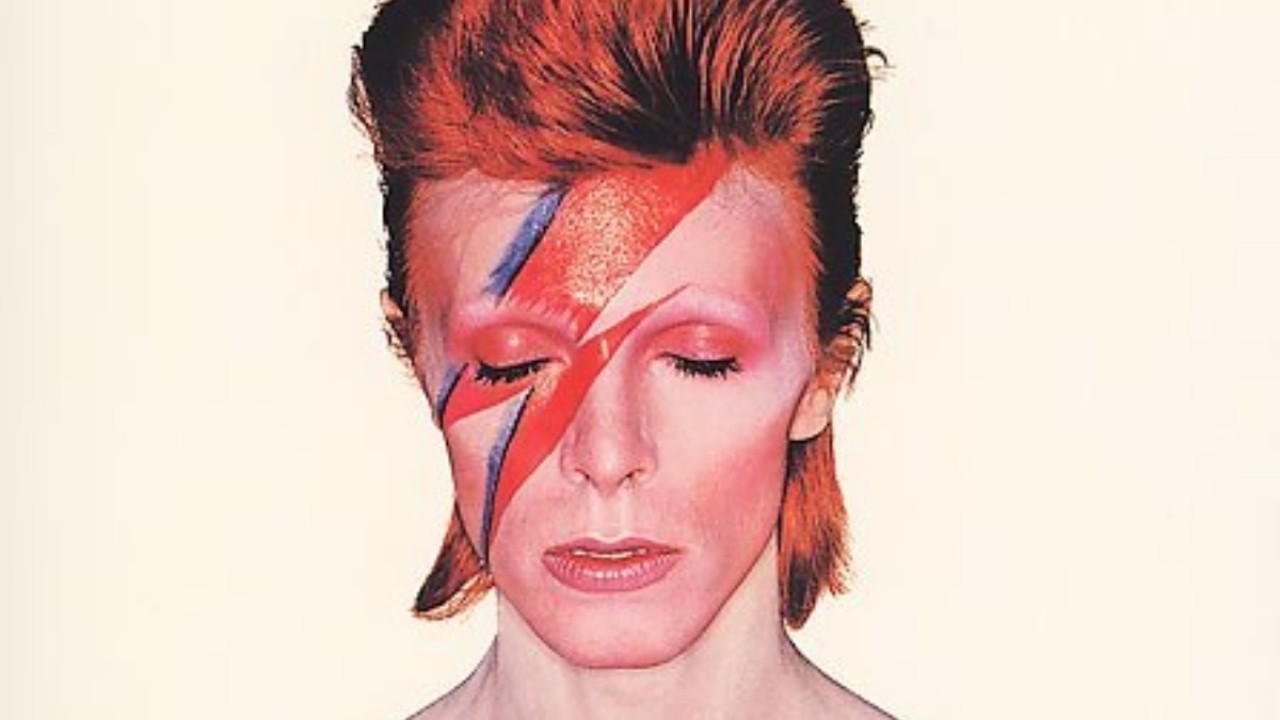
16. “The Rise and Fall of Ziggy Stardust and the Spiders from Mars,” David Bowie (1972)

17. “The Wiz,” original cast album (1975)

18. “Their Greatest Hits (1971–1975),” Eagles  (1976)  

19. “Scott Joplin’s Treemonisha,” Gunter Schuller, arr. (1976)

20. “Wanted:  Live in Concert,” Richard Pryor  (1978)

21. “We Are Family” (single), Sister Sledge (1979)

22. “Remain in Light,” Talking Heads (1980)

23. “Straight Outta Compton,” N.W.A (1988)

24. “Rachmaninoff’s Vespers (All-Night Vigil),” Robert Shaw Festival Singers  (1990)

25. “Signatures,” Renée Fleming  (1997)

We’ll see some of you again as future installments of “Listen to This”.

#36) Flash Gordon (1936)

b3192b6945f32fb7e36ba084a6930aa8

#36) Flash Gordon (1936)

OR “Same Flash Time, Same Flash Channel”

Directed by Frederick Stephani

Written by Stephani & George Plympton & Basil Dickey & Ella O’Neill. Based on the comic strip by Alex Raymond.

Class of 1996

The Plot: The immense planet Mongo is headed straight towards Earth, so Flash Gordon (Larry “Buster” Crabbe) and some lady he meets named Dale (Jean Rogers) head out to the planet on a rocket ship piloted by Dr. Zarkov (Frank Shannon). They arrive only to find that Mongo is run by the evil Emperor Ming (Charles B. Middleton) and his young manipulative daughter Princess Aura (Priscilla Lawson). Aided by Prince Barin (Richard Alexander) and King Vultan (Jack “Tiny” Lipson), Flash and his gang encounter space monsters, explosions, and a cliffhanger every 20 minutes in this 13-part film serial.

Why it Matters: The NFR praises the serial’s “ambitious” production values and includes a historical essay by “Flash Gordon” expert Roy Kinnard.

But Does It Really?: “Flash Gordon” is a lot of harmless cheap ‘30s fun, but man is it long. I know I’m not watching them as intended (one episode a week), but 4 hours of this stuff in one go is a lot. That being said, if you’re going to include one film serial on your Registry, this is the one. In our era of binge-watching, maybe space (ha ha) these out over a few days.

Shout Outs: Set pieces, props, and score selections are reused from previous Universal pictures, including “The Bride of Frankenstein” and “The Invisible Man”.

Everybody Gets One: Larry “Buster” Crabbe was an Olympic swimmer who won a gold medal in 1932 for the 400-meter freestyle. Both Priscilla Lawson and Jean Rogers were former beauty queens whose acting careers didn’t last too long after “Flash Gordon”; Lawson dropped out to enlist in the Women’s Army Corps, Rogers got in trouble with Louis B. Mayer and became one of many who would “never work in this town again.”

Wow, That’s Dated: This serial hails from the era of science fiction films when you could just dangle a rejected Christmas tree ornament on a string and call it a spaceship. Also when was the last time anyone ever mentioned their polo game?

Take a Shot: It’s four hours and he’s the title character, please don’t do this as a drinking game. As an alternative, anytime someone says “Flash” just sing the first part of that Queen song.

Other notes

  • Listen Crabbe, either your name is Larry or it’s Buster. Not both.
  • I love that the guards refer to Flash as “the blonde giant”, even though he is clearly the same height as everyone else, and on top of that, he’s not even the only blonde!
  • They love that lightning bolt scene wipe. And who can blame them? It’s awesome!
  • Never trust a man who parades around in tiny shorts.
  • I can’t get over the costume of Ming’s Captain of the Guards. Did he lose a bet?
  • Ming believes science will answer everything, but has to check with a god before he can marry Dale. Huh?
  • One of the monsters looks like it could be Godzilla’s dad. And I’m pretty sure another one of these things was the Jabberwocky in the creepy ‘80s “Alice in Wonderland”.
  • I’m choosing to ignore the obvious glass in between the fish and the camera.
  • Hmmm…a leader who takes offense to being called a puppet. Hmmm…
  • I cannot take a bad guy seriously when his name is pronounced Kayla.
  • And then Vultan shows up and things get really weird. That being said, casting Brian Blessed in this role for the remake is possibly the greatest casting ever.
  • Vultan slaps a bear on the ass! Quick, someone invent PETA and then call them!
  • You’d think someone named Ming the Merciless would just kill these guys immediately, what with the whole “merciless” thing.
  • I’m enjoying the sax music during each episode’s recap.
  • Wait, they actually call it the Tunnel of Terror? I thought that was just an episode title!
  • Oops, Jean Rogers speaks one of her lines too soon. No time for retakes I guess, they just keep rolling.
  • Is it just me, or are there long stretches of this serial where Flash doesn’t do a damn thing?

Legacy

  • The Flash Gordon serial’s success led to two more serials; 1938’s “Flash Gordon’s Trip to Mars” and 1940’s “Flash Gordon Conquers the Universe”.
  • For those of you who don’t have the time to watch the whole thing, Universal cut the entire serial down to 68 minutes and released it as the film “Rocket Ship”.
  • Buster Crabbe would go on to play Buck Rogers in a 1939 serial, and would make a nice little piece of stunt casting in Buck’s 1979 reboot.
  • “Flash Gordon” would be remade a few times, most notably as the big-budget 1980 film, and the short-lived 2007 TV series.
  • And of course, when George Lucas couldn’t get the rights to remake “Flash Gordon” in the ‘70s, he decided to write his own space opera. And he called it… “American Graffiti”.

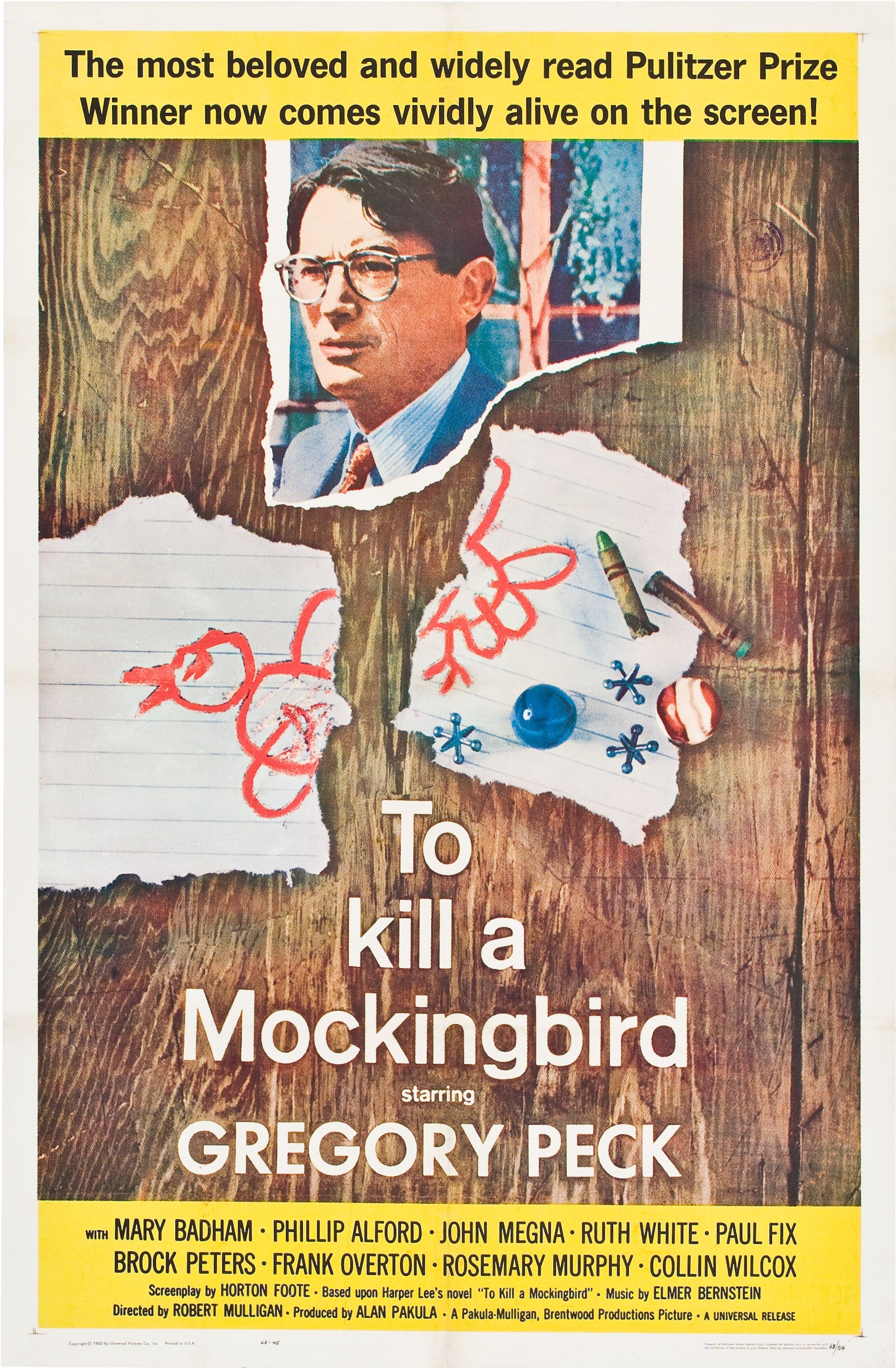
#35) To Kill a Mockingbird (1962)

1962_-_To_Kill_a_Mockingbird_Movie_Poster_-2

#35) To Kill a Mockingbird (1962)

OR “Your First Freshman English Paper”

Directed by Robert Mulligan

Written by Horton Foote. Based on the novel by Harper Lee.

Class of 1995

The Plot: Loosely based on Harper Lee’s childhood in Monroeville, Alabama, “To Kill a Mockingbird” concerns a young girl named Scout (Mary Badham, older version voiced by Kim Stanley) and her life in 1930s Alabama with her brother Jem (Philip Alford) and her father Atticus (Gregory Peck). When Atticus is asked to legally defend Tom Robinson (Brock Peters), a black man accused of raping a white woman (Collin Wilcox), Scout and Jem learn about racial and political injustice while coming of age.

Why It Matters: The NFR says the film is “adapted exquisitely” from its source novel, and mentions Peck’s performance.

But Does It Really?: God bless this movie. The book might still be controversial in some quarters, and the film might not help the whole “white savior” phenomenon, but at its core “To Kill a Mockingbird” is a beautifully told, wonderfully filmed story about perspective and tolerance. Peck is giving the performance of a lifetime in a way that somehow calls attention to itself but at the same time isn’t flashy. While maybe a little too wistful for its own good, the film still teaches an important lesson on what it takes to truly be human.

Everybody Gets One: Let’s start with child actors Mary Badham and Philip Alford. Their acting careers seemed to wane with the onset of puberty, but both would go on to be successful in other professions. Also making their only appearance are character actors Rosemary Murphy, William Windom, and Collin Wilcox. And so far this is director Robert Mulligan’s only film to make the cut.

Wow, That’s Dated: During a few dramatic moments (most notably Mayella’s testimony), there’s some artificial zooming going on within the frame. I always associate that with late ‘50s/early ‘60s filmmaking.

Title Track: Atticus says the phrase “to kill a mockingbird” once about 37 minutes in. It’s a metaphor about destroying innocence…or something like that. Scout comes close towards the end by paraphrasing the title.

Seriously, Oscars?: “To Kill a Mockingbird” was nominated for eight Oscars and won three; Adapted Screenplay, Art Direction, and Best Actor for Gregory Peck (one of the rare times the Oscars got it absolutely right). The film lost Picture, Director and Original Score to the equally good but much more epic “Lawrence of Arabia”. And 10-year-old Mary Badham was nominated for Best Supporting Actress (even though she’s a co-lead), but lost to 16-year-old Patty Duke (also a co-lead in “The Miracle Worker”).

Other notes

  • Everyone’s favorite piece of literary trivia, Dill Harris is based on Harper Lee’s childhood friend from Monroeville: Truman Capote.
  • According to Superman Vol. 2 #81, this is Clark Kent’s favorite film. Which is surprising, you’d think he’d pick something with his dad in it.
  • No offense to then nine-year-old Mary Badham, but I do not believe that Scout is six at the beginning.
  • Geez, Dill asks more exposition-based questions than Elliot Page in “Inception”.
  • What exactly was the jury selection like for this trial?
  • For his testimony, I find Bob Ewell guilty of first-degree bad continuity.
  • Collin Wilcox strikes me as an early ‘60s Amanda Plummer. So…Tammy Grimes, I guess.
  • Man, they really like the phrase “bust up a chifforobe”. There’s your drinking game.
  • Kudos to Brock Peters. His performance is quite impactful, which is impressive because it’s essentially one scene.
  • And then there’s Atticus’ final summation. Jesus Christ, is that good. They cut away when they need to, but for the most part Peck does it in one take, and boy does he nail it.
  • Ah yes, Elmer Bernstein’s poignant “Walking Home with a Ham” theme. If you think that’s ridiculous, you should have seen some of the other kids at the pageant.
  • With his performance as Boo Radley, Robert Duvall makes his film debut, as well as his first of at least eight appearances on the National Film Registry.

Legacy

  • Harper Lee never wrote another book after “To Kill a Mockingbird” and very publicly (and entertainingly) declined any and all interviews. The release of the sequel/first draft “Go Set a Watchman” is still mired in controversy.
  • For many years “To Kill a Mockingbird” was annually produced as a stage play in the old courthouse of Harper Lee’s hometown. In true Harper Lee fashion, she refused to ever attend.
  • Submitted for your approval, Scout’s seemingly innocent yet obviously dubbed appearance on the last episode of… “The Twilight Zone”.
  • Without Boo Radley, there’d be no Old Man Marley/Pigeon Lady.
  • This film is probably responsible for every “White People End Racism” movie ever, from “The Help” to “Hairspray” to “Hidden Fences”.
  • As for film sequels, I think the closest we’ll ever get is “Capote”/“Infamous”.
  • Also I recently met someone who named their child Atticus. So…there’s that legacy for ya.

Further Reading/Viewing: For those of you wondering what Truman Capote made of his childhood, he wrote two short stories about it: “A Christmas Memory” and “The Thanksgiving Visitor”. Both stories were first adapted for television in the late ‘60s starring Geraldine Page, and then remade in 1997 starring Patty Duke (full circle!). A stage version features a tomboy character named Nellie, who may or may not be Harper Lee.