#706) Fox Movietone News: Jenkins Orphanage Band (1928)
OR “Charleston in Charge”
Produced by Fox Movietone News
Class of 2003
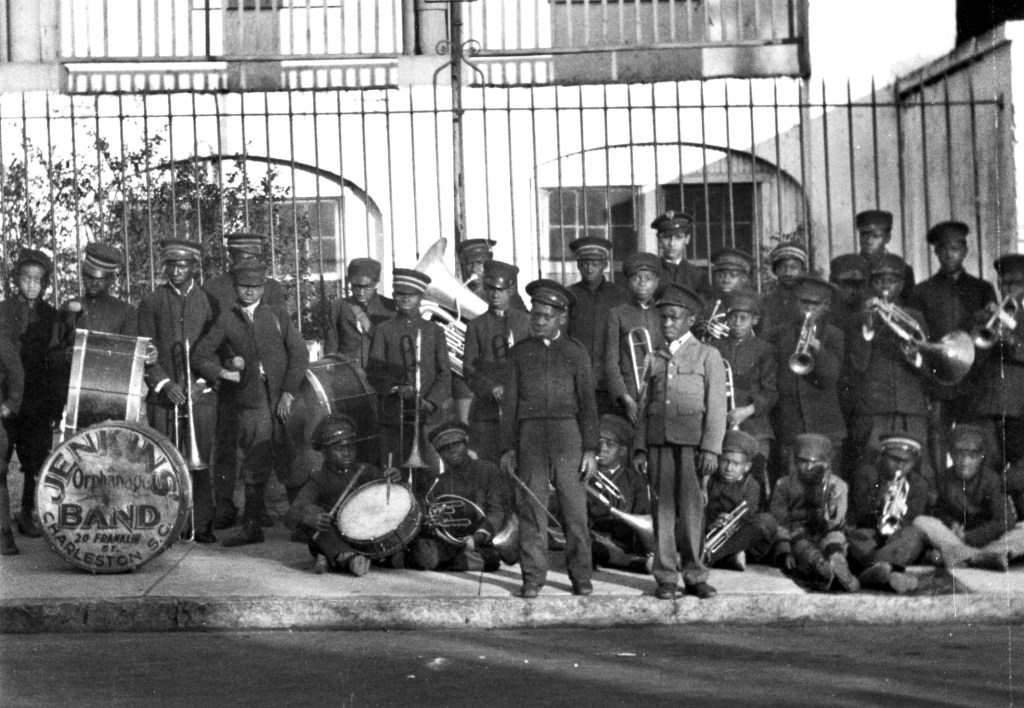
The Plot: Fox Movietone News travels to Charleston, South Carolina to record the world-famous Jenkins Orphanage Band. Comprised entirely of African American orphans, the Jenkins Orphanage Band wows us with their hot rendition of “Shoutin’ Eliza”, complete with some of the latest dance moves. And then they do it all over again because these are outtakes from the actual newsreel, comprising take after take of the band performing the same song.
But Does It Really?: Sure, but I’m a little confused. The title implies that this is the original Fox newsreel about the Jenkins Orphanage Band, but the only footage available online is 10 minutes of outtakes. While this footage matches the NFR’s description of the film, nothing in the NFR write-up mentions the outtakes. This leaves me with several questions: Does the final newsreel still exist? Did it ever exist? Did I watch the actual NFR inducted film or is this my biggest fake out since “Empire“? As far as I can tell, these outtakes are the film in question, but an official confirmation would be nice. I still support “Jenkins Orphanage Band” making the NFR, I just want to make sure I watched what I was supposed to watch.
Everybody Gets One: Founded in 1891 by the Reverend Daniel Jenkins, the Daniel Jenkins Orphanage was Charleston’s only orphanage established specifically for African American children. Funding for the orphanage was always an issue (their original funding from the Charleston city council was $100 – about $4000 today), and Jenkins, inspired by the African American military bands of the Civil War era, organized a band comprised of his orphans to travel the northern states as a fundraiser. A trip to London around 1896 received major press coverage, and soon the band’s reputation grew. In the first decade of the 1900s alone the Jenkins Orphanage Band played the Pan-American Exposition, the St. Louis World’s Fair, and the inaugurations of both Theodore Roosevelt and William Howard Taft. The band maintained their popularity over the years by incorporating the latest music into their act such as ragtime and jazz. Fox News (not to be confused with the much later cable news channel) first filmed the Jenkins Orphanage Band in 1926 with standard silent film, but with the advent of sound the rebranded Fox Movietone News returned on November 22nd, 1928 to record the only surviving sound footage of the Jenkins Orphanage Band.
Other notes
Once again, the song is “Shoutin’ Eliza”, and I hope you like it because you’re going to hear it a lot in the next 10 minutes. Is this the only song they know how to play?
For a band comprised of children with little training, they sound great. Though I notice they start to get a little sloppy in the later takes, which is understandable.
One interesting bit of trivia: the children in the band were trained on each instrument! This film also shows off another of the band’s traits: having the band’s smallest children conduct.
About halfway through we get a few takes of a young boy doing a number of dance moves for the camera, including the Charleston, which may have originated with members of the Jenkins Orphanage Band! This is followed by two little girls dancing in front of the band, and what they lack in skill they more than make up for in adorableness.
The last part of the outtakes is the off-camera director trying to get a child to face the camera and say, “Hey hey!”. As these are outtakes, we never find out if this kid ever performed a satisfactory take. The best this cameraman can get is the kid saying “Hey!…Hey!”
Legacy
Following the death of Reverend Daniel Jenkins in 1937 (and the orphanage’s relocation after part of the original building was damaged in a fire), the Jenkins Orphanage Band continued performing, until finally being phased out in the 1980s due to financial constraints. The Jenkins Orphanage, however, continues operating to this day, now known as the Jenkins Institute for Children.
Directed & Written by Preston Sturges. Based on the story “Two Bad Hats” by Monckton Hoffe.
Class of 1994
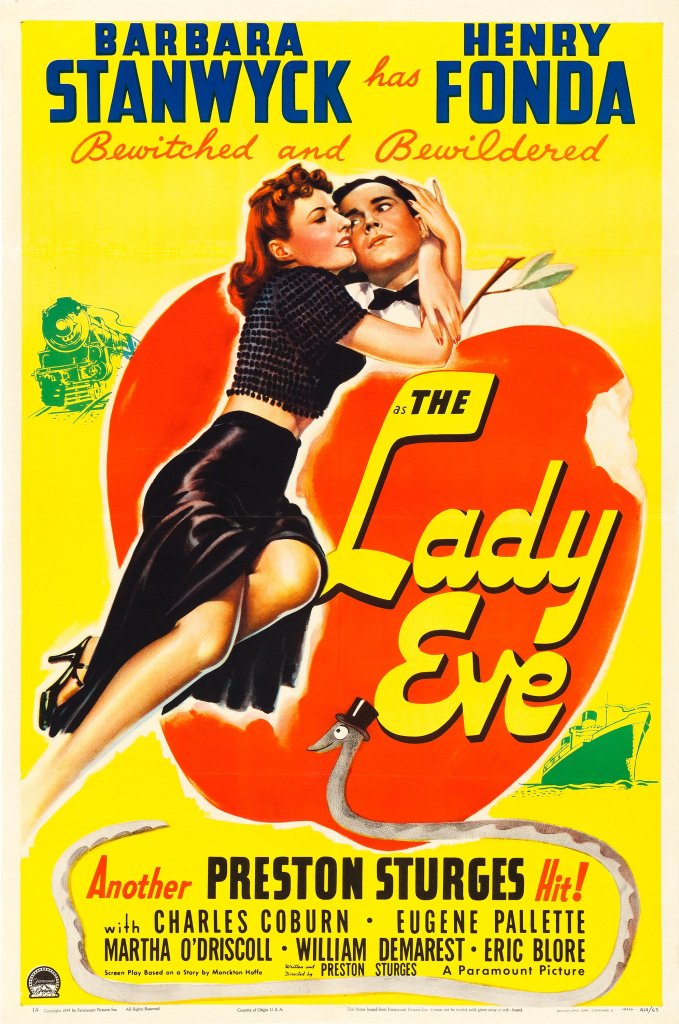
The Plot: Charles Pike (Henry Fonda) is the heir to his family’s ale company and has been studying snakes in the Amazon for the past year. As he returns home on an ocean liner, every woman onboard vies for his attention, but the socially awkward Charles pays them no mind, except for Jean Harrington (Barbara Stanwyck), a glamorous, assertive Barbara Stanwyck-type. What Charles doesn’t know is that Jean, along with her father “Colonel” Harrington (Charles Coburn), is a renowned con artist with an eye on fleecing Charles out of his fortune during a card game. During her long con, Jean ends up falling in love with Charles, who rejects her once he learns of her true identity. Upon returning to his family home in Connecticut, Charles is introduced to the Lady Eve Sidwich, a British socialite who looks an awful lot like Jean. And that’s only the beginning of the complications in another bona-fide Preston Sturges screwball comedy.
Why It Matters: The NFR praises the film for having “sparkling dialog, a quick pace and more than a touch of Sturges’ trademark screwiness”. The supporting work of Charles Coburn and William Demarest are also highlighted.
But Does It Really?: I first saw “The Lady Eve” about 12 years ago, and I must have been in a bad mood that day because I enjoyed myself much more during this viewing. Having now watched allfour of Preston Sturges’ NFR movies, there isn’t one that stands out over the others as his definitive work, but each is a good example of the kind of quality comedies Sturges was famous for. As for “The Lady Eve” itself, it’s good and very close to great. There’s a lot of top-notch jokes delivered by a very game cast, but the more sincere moments and the almost impenetrable ’40s jargon prevented me from fully enjoying myself. Regardless of my feelings, “The Lady Eve” has left its mark as one of Hollywood’s definitive screwball comedies, and I have no qualms about it making the NFR alongside Sturges’ other classics.
Everybody Gets One: Hailing from Connemara, Ireland, Monckton Hoffe was primarily an actor and a playwright, with his first hit play “The Little Damozel” playing London in 1909. The inevitable film version in 1916 started Hoffe’s screenwriting career, and by the 1930s he had made it to Hollywood. Although Hoffe was under contract at MGM in the late ’30s, his 19-page story “Two Bad Hats”, ended up at Paramount, where Preston Sturges was assigned to write the screenplay. This marks one of the rare occurrences where Sturges adapted someone else’s work, though he ended up throwing out everything but the bare bones of “Two Bad Hats” and creating most of the characters and situations himself.
Seriously, Oscars?: Despite winning the Oscar for his “Great McGinty” screenplay a year earlier, Preston Sturges was not nominated for “The Lady Eve”. In fact, the film’s sole nomination was for Monckton Hoffe in the now-defunct Best Original Story category, losing to “Here Comes Mr. Jordan”. Coincidentally, two members of the “Lady Eve” cast received Oscar nominations that year for other movies: Charles Coburn in Best Supporting Actor for “The Devil and Miss Jones”, and Barbara Stanwyck in Best Actress for her other 1941 NFR comedy “Ball of Fire“.
Other notes
Preston Sturges was originally assigned to write “The Lady Eve” as a vehicle for Paramount star Claudette Colbert, though by the time production finally commenced in 1940 Colbert had left the studio. Two months before filming began, Fred MacMurray and Madeleine Carroll were announced as the leads, only to be replaced by Henry Fonda (on loan from Fox) and Paulette Goddard, with Barbara Stanwyck as a last-minute replacement for Goddard. It’s a testament to Fonda and Stanwyck that you can’t imagine any of these other actors playing Charles and Jean.
I don’t know what’s more terrifying about these animated credits; opening your movie with a cartoon snake, or that the snake is wearing a top hat and winking at me.
The brief Amazon sequence was filmed in the exotic location of Baldwin Lake at the Los Angeles County Arboretum and Botanic Garden. Keep an ear out for the stock Kookaburra sound effect (“ooh-ooh-ooh-ah-ah-ah”). which, as I’ve mentioned before, is out of place given that the bird is native to Australia and New Guinea.
Today in Code era profanity workarounds, one of the frustrated bartenders receiving another order for Pike’s Pale – the ale that won for Yale: “Tell ’em to go to Harvard!”
Speaking of Pike’s Pale, Charles and Jean have a brief beer vs. ale debate. Hipsters must love this movie.
Stanwyck is of course wonderful in this, playing the kind of fast-talking free-spirited dame she always excelled at. The revelation for me, however, was Henry Fonda, here in one of the few comedies on his resume (and the only comedy of his nine NFR appearances). Being more accustomed to the stoic, moral persona of his later career, it’s fun watching Fonda loosen up and play a naïve rom-com lead. Allegedly Sturges’ colleagues suggested he reduce the number of pratfalls Charles endures throughout the movie, but I’m glad he didn’t listen because I laughed out loud every time.
Preston Sturges must have found something amusing about the phrase “up the Amazon”; Charles says it no less than five times during the movie. I guess Sturges was the David Letterman of his time: when he thought a phrase was funny, he ran it into the ground.
While most of the Preston Sturges stock company won’t show up until this movie’s second half, we do spend a lot of the first half with the reliably funny grouchiness of William Demarest as Charles’ bodyguard Muggsy. Demarest also gets to say the very ’40s phrase “cock-eyed cookie pusser”, which I’m told isn’t as dirty as it sounds.
Oof, Stanwyck is bringing the heat in the chaise scene. The dialogue is subtle enough, but Stanwyck’s line readings leave no room for misinterpretation; she wants some. I assume Charles spending the scene on the floor next to the chaise is another code-era workaround, it technically can’t be about sex if they’re not on the same surface.
I really enjoyed the card game, where Jean, having now fallen for Charles, tries to prevent her father from taking Charles to the cleaners. It’s an expertly crafted scene with three well-defined characters, each knowing something the other two don’t know, and Fonda, Stanwyck, and especially Coburn play it brilliantly.
If you know one line from this movie, it’s Jean’s line about her unfinished business with Charles: “I need him like the ax needs the turkey.”
The good news: This movie has Eric Blore, one of my favorite Classic Hollywood character actors. The bad news: He doesn’t get to do anything remarkably funny in this. We don’t even get one of his double-takes! What are we even doing here?
More bad news: This movie has one of my least favorite Classic Hollywood character actors: Eugene Pallette. The gruff-voiced, real-life racist Pallette is grating and off-putting as Fonda’s dad. Adding insult to injury, Pallette enters the movie singing. No thank you.
When I first watched “The Lady Eve” all those years ago, it bothered me that Charles didn’t immediately recognize Jean in disguise as Eve. Clearly I wasn’t paying attention, as this movie goes out of its way to state that Charles has his suspicions, but figures that if it really is Jean she would have put more effort into a disguise, so the similarities between Jean and Eve must be a coincidence.
The other part that’s hard to comprehend through a modern lens is how much easier it was to con people back then. I guess people were more trustworthy and weren’t expecting it as much. Perhaps my decades of big city living have conditioned me to automatically not trust people.
Another great moment is Charles proposing to “Eve” while they take a break from horseback riding, with Charles’ horse constantly upstaging them by butting in between them. You can even see Barbara Stanwyck trying to stifle her laugh during the take.
You have a character prone to pratfalls and a multi-tiered wedding cake, yet you don’t have him fall into it? Come on Preston. What is this, your first day or something?
The Harringtons’ confidante Gerald (Melville Cooper) suggests that Jean push her new husband off a moving train. File that one away for later, Stanwyck, it’s a good way to collect double the insurance money. I forget what that’s called.
While the laughs start to diminish as this movie ties up its romantic loose ends, the last few minutes clip along at the right speed, and we get an unexpected and very funny curtain line.
Legacy
“The Lady Eve” was a hit upon release, with the New York Times naming it the best film of 1941. “Lady Eve” was such a hit with audiences and critics it completely overshadowed Preston Sturges’ other movie that year: “Sullivan’s Travels“.
Like a majority of Paramount’s pre-1950 film library, “The Lady Eve” was sold to Universal in the late ’50s, which led to its frequent TV airings and rediscovery. Since then, “Lady Eve” routinely ranks among not only the best comedies ever made, but the best films period.
Although many movies have used plot elements from “The Lady Eve”, the film proper has only one remake: 1956’s “The Birds and the Bees” starring Mitzi Gaynor, David Niven, and most confusingly, George Gobel. This was at the peak of Gobel’s TV fame as he tried to parlay that into a film career. Didn’t take.
The Plot: Writer Pierre Delacroix (Damon Wayans) hates his job at the CNS television network, working for his White boss Thomas Dunwitty (Michael Rapaport) who constantly rejects his scripts with positive depictions of African Americans. Hoping to get fired (he is contractually unable to quit), Pierre, with reluctant assistance from his secretary Sloan Hopkins (Jada Pinkett Smith) and recruited buskers Manray and Womack (Savion Glover and Tommy Davidson), pitches a modern-day minstrel show complete with blackface and the offensive stereotypes of the era. To everyone’s surprise, Dunwitty loves the idea and gives the series the green-light, with “Mantan: The New Millennium Minstrel Show” becoming the biggest hit on television. Although the show is met with protest, notably by a militant Black group led by Sloan’s brother Julius (Mos Def), its runaway success leads a resurgence in blackface, and Pierre gets caught up in the attention and accolades he is receiving for the show. But the satire takes a sharp turn into tragedy in this Spike Lee joint finding a new audience 20 years later.
Why It Matters: The NFR praises Spike Lee’s “unique talents” and his ability to use satire that “reveals the ills of society”.
But Does It Really?: I had to sit with this one for a while. I remember “Bamboozled” coming and going in 2000, but I was totally unaware of its reassessment as a cult favorite that predicted where the culture was going, so imagine my surprise when it showed up on the Registry. As for the film itself, I think Spike Lee was trying to have it both ways: a satiric comedy criticizing the media depictions of African Americans, as well as a more somber cautionary tale of modern-day minstrelsy, and I don’t think he fully succeeds at either. Granted, the movie is at times very funny and very distressing, and Spike Lee’s commentary on Black media is still depressingly accurate almost 25 years later, but ultimately the film itself could have been sharper, more focused, or at the very least shorter (Comedy is fast, this movie is 136 minutes). Either the NFR induction of “Bamboozled” is too early or, just like Spike Lee with this movie, maybe the NFR knows something the rest of us are just figuring out.
Wow, That’s Dated: A lot of ’90s culture mentioned throughout, including Jerry Springer, the OJ Simpson trial, “Gettin’ Jiggy wit It”, “Kenan & Kel”, “Show me the money!”, and I swear I’m not making this up, the TV show “Homeboys in Outer Space“.
Title Track: The title is said once courtesy of the “Malcolm X” clip (“Ya been took! Ya been hoodwinked! Bamboozled!”). Bamboozled is also the name of one of the antique games Pierre collects.
Seriously, Oscars?: No Oscar love for “Bamboozled”. In fact, outside of several Black Reel nominations and a Freedom of Expression award from the National Board of Review, no awards love at all. Adding insult to injury, this is one of the rare NFR movies to receive a Stinkers Bad Movie Award nomination: Damon Wayans for Worst Actor (losing to John Travolta in “Battlefield Earth”).
Other notes
Spike Lee had been kicking around the kernel of “Bamboozled” for most of his filmmaking career, publicly condemning depictions of African Americans in film, TV, and most notably music videos throughout the ’90s as a form of “neo-minstrelsy”. Lee was particularly appalled at the short-lived UPN sitcom “The Secret Diary of Desmond Pfeiffer” (a sitcom about slavery, let that sink in) as well as recent films with the “magic negro” trope like “The Green Mile” and “The Legend of Bagger Vance”. “Bamboozled” was Spike Lee’s critique of all this, moralizing that you didn’t need to wear blackface to be in a minstrel show.
To ensure no one misses the point, we open with Pierre addressing the camera and giving us the actual definition of the word “satire”. It’s excessive, but you can’t say Spike didn’t warn you about what was coming.
It’s an interesting casting choice to have Damon Wayans, one of our funniest stand-ups/sketch comedians, play the buttoned-up straight man. It makes you appreciate the moments where Pierre is allowed to loosen up (his stunned reactions during the “Mantan” auditions are my favorite). While we’re talking about Wayans’ performance, Pierre’s French-by-way-of-Sidney-Poitier-impression accent is definitely a choice, but you do get used to it after a while. I suspect the accent is what earned Wayans his Stinkers nomination, but I don’t think it’s that bad.
“Bamboozled” is notable for being filmed primarily with digital camcorders, which gives the film a lesser overall picture quality (I legitimately thought something was wrong with my TV) but did allow Spike Lee to film from more angles during a take and keep the film under budget. It also adds to the film’s authenticity and ridiculousness, almost like a hidden-camera show.
I know Jada Pinkett Smith primarily through the media attention her personal life has been getting in recent years, so her performance as Sloan is an important reminder that she is a very good actor, doing some wonderfully layered work here. And that is all I wish to say about Jada Pinkett Smith at this particular moment; opting to – and I’m paraphrasing here – keep her name out of my fucking mouth.
Another meta-reference: Dunwitty defends his use of the n word by saying that he doesn’t “give a god damn what that prick Spike Lee says”. Things get meta again during the pitch meeting with Pierre’s shout-out to “In Living Color”, the sketch comedy show that gave Damon Wayans and Tommy Davidson their start.
The pitch scene is hilarious, with Dunwitty’s explosive enthusiasm for the project matched by the flawless stunned reactions of Sloan, Manray, and Womack. The writing of the scene is specific enough to make me believe Spike Lee has had a few pitch meetings like this.
One of the more poignant moments in the film that I appreciated is the scene where Manray and Womack apply the blackface makeup for the first time. The detailed application process is narrated by Sloan, and you can see some wonderful, subtle emoting from Tommy Davidson and Savion Glover as their characters internally struggle with what they are doing.
The first “Mantan” taping is uncomfortable, but unlike every other horrible, racist moment in other NFR movies I’ve watched, this one is at least intentionally uncomfortable. Also note the switch from digital camcorder to more pristine 16 mm film, but only for the “Mantan” episodes. And no you’re not seeing things, the “Mantan” house band is being played by future “Tonight Show” house band the Roots. I was not expecting to see Ahmir “?uestlove” Thompson in this.
Another moment I found interesting was the standing ovation at the end of the first “Mantan” taping. You can see a few audience members start to stand and clap after looking around and seeing everyone else doing it. It made me more aware of the kind of racism that spawns not just from your own inner hatred, but also from external peer pressure. I know I’ve been tough on Spike Lee in this post, but he gave me that profound moment and I am grateful.
I love movies like this and “Network” where performers on broadcast TV can say anything they want without getting censored. Apparently “Bamboozled” takes place in a universe without an FCC.
Making their NFR debut: Reverend Al Sharpton and attorney Johnnie Cochran as themselves leading the “Mantan” protest groups. Another cameo that made me chuckle is a very game Matthew Modine presenting Pierre with an award and being mistaken for Matt Dillon. Weirdly, this is Modine’s only NFR appearance. Where’s “Full Metal Jacket”?
As the “Mantan” juggernaut continues, more and more people within the film start wearing blackface, to the point where the whole studio audience is wearing it. It makes these kinds of racial representations akin to a fast-spreading disease or something like Nazism; despite the obvious warning signs, you aren’t fully aware of its danger until it’s too late.
The film ends with a long, long montage of seemingly every racist Black depiction in Hollywood history; from such White stars as Al Jolson and Judy Garland in blackface to the subservient characters played by the likes of Black actors Butterfly McQueen, Hattie McDaniel, and Lincoln Perry aka “Stepin Fetchit”. It goes on for a very long time, but I think the point is to sit with that discomfort and be surrounded by these unavoidable stereotypes. Spike once called this montage “some of the most powerful filmmaking I’ve ever done” and is always quick to shoutout Judy Aley for her work researching and curating these images. The film’s end credits are played over footage of Pierre’s racist memorabilia collection, another sign of our commodification, objectifying, and normalizing of these stereotypes.
Legacy
“Bamboozled” opened in October 2000 to mixed reviews and dismal box office. Most reviews of the time criticized Lee’s use of blackface, framed in the typical post-racial refrain of “that doesn’t happen anymore, so why bring it up?”, the first hint that “Bamboozled’ may have been a bit ahead of its time. Spike Lee returned to the good graces of the film world with his next joint: the more conventional 2002 drama “25th Hour”.
The reevaluation of “Bamboozled” began around 2015 with the publication of Ashley Clark’s “Facing Blackness: Media and Minstrelsy in Spike Lee’s Bamboozled“, in which he argues that “Bamboozled” is “the central work in Lee’s canon”. A Criterion release in 2020 for the film’s 20th anniversary has also helped enhance the film’s reputation.
In the last decade, the prescient nature of “Bamboozled” has become more obvious with the fueled racism of the Trump administration, as well as Black activists fighting to steer the media narrative of African Americans away from these enduring stereotypes. Whether or not “Bamboozled” continues to be a misunderstood cult classic is anyone’s guess, but its recent NFR induction is certainly a point in the movie’s favor.
Further Reading/Viewing: The year after “Bamboozled” was released, Percival Everett published his novel “Erasure”, a similarly scathing takedown of African American media depictions, this time in the world of literature. Over 20 years later, writer Cord Jefferson adapted “Erasure” into the film “American Fiction”, winning an Oscar for Best Adapted Screenplay for his efforts.
December 14th, 1993: Librarian of Congress James H. Billington announces the next 25 films to make the National Film Registry, bringing the total to 125 films. 31 years later, yours truly has watched all 25 of them. Here’s a reminder of what made the Class of ’93, plus a blurb from each of my blog posts.
The Cheat (1915): “the kind of moralistic melodrama I’ve come to expect from the 1910s; hardly the kind of film I’d associate with Cecil B. DeMille”
His Girl Friday (1940): “snappy dialogue, wonderful chemistry between [Cary] Grant and [Rosalind] Russell, and a pace so frenetic it can never be duplicated, only appreciated.”
Cat People (1942): “one of the more influential iconic movies in the horror genre.”
Yankee Doodle Dandy (1942): “a very simple (and partially inaccurate) biopic…but really this is a vehicle for [James] Cagney.”
Chulas Fronteras (1976): “[Makes the NFR for] its preservation of two similar cultures separated by an invisible line.”
Blade Runner (1982): “a well-crafted piece of science fiction with effective, imaginative world building.”
Other notes
This is the year the NFR starts to have some fun. With the first 100 selections, they got most of the preordained classics out of the way; and now it’s time to loosen up. There are still the big ones like “Shane” and “Godfather Part II”, but there’s also a newsreel, a Tex Avery cartoon, a cult horror movie, a documentary made entirely of archival footage, and an experimental short that is possibly the NFR’s first “staring at water” movie. They also throw in the recently-eligible “Blade Runner”, which was just finding new recognition thanks to the previous year’s “Director’s Cut” release.
Interesting to note that most of the more iconic films on the list are the ones that I felt may have been over-hyped, with many of my write-ups saying something in the vein of “it’s good, but not as great as everyone says it is”. Meanwhile some of the more obscure titles, free from any preordained classic status, received higher praise from me.
Also noteworthy that both “It Happened One Night” and “One Flew Over the Cuckoo’s Nest”, the two Big Five Oscar winners eligible at the time, made the list in the same year (the third Big Five winner -“The Silence of the Lambs” – would join their ranks in 2011).
Despite multiple films on this list dealing with racial relations and non-White cultures, all 25 of these films are directed by White people. In fact, except for Lois Weber, they’re all White men. Baby steps, everyone. We’ll get to Spike Lee soon enough.
As the NFR entered its fifth year of inductions, critics were starting to notice the patterns of what makes an “NFR list”. Gary Arnold of The Washington Times noted “a quota system has evolved, with at least one slot set aside for documentaries, abstraction and ethnic consciousness.” Don’t know how I feel about the phrase “ethnic consciousness”, but he’s got a point.
According to Library of Congress articles of the time, 1300 films were considered for the Registry in 1993. One passage I found interesting was the Library of Congress encouraging the public to nominate films for the 1994 list, but also requesting that “the public try to limit suggestions to fewer than 50 titles”. I assume this was before the NFR’s online submission process, which automatically caps at 50 entries. Imagine the extended lists from ’90s film nerds that arrived at the Library of Congress back in the day. I wouldn’t be surprised if all 1300 movies were nominated by one guy! Someone please invent the internet.
In the same week the Class of 1993 was announced, “Mrs. Doubtfire” was number one at the US box office, with future NFR entries “Jurassic Park” and “The Nightmare Before Christmas” playing in theaters. Coincidentally, “Schindler’s List” would begin its theatrical run the day after the NFR announcement. Also in theaters was perennial favorite “Cool Runnings”!
Articles at the time mentioned that the Library of Congress would be funding a nationwide tour of some of these new titles that would screen the movies “as they were intended to be seen – on a large screen in a darkened theater”. Funny how 30 years later the idea of seeing a movie in a theater has come back around to being a selling point. Does anyone know if these screenings actually happened?
This year’s double-dippers include actors Donald Crisp and Roscoe Karns, cinematographers James Wong Howe and Joseph Walker, art director Cedric Gibbons, and film editor Gene Havlick.
Thematic double-dippers: screwball comedies, above-average dogs, references to Hitler, Child protagonists, Mexican-border towns, repurposed opera music, late ’50s New York, race relations mixed with unfortunate casting, Senate committees, and an overall vibe of corruption.
Favorites of my own subtitles: “Who Do You Think You Arrrr”, “Black Panther: Philophobia Forever”, “Song and France”, “All My Hexes Are From Tex’s”, “Sorrowful Ladd”, “Winchell While You Work”, and “Chuck and the Fatman”.
Next up, the NFR class of 1994, a roster of films that once made me asked the question, “Did the 1994 NFR committee need a hug?”
Written by Cassavetes, Robert Alan Aurthur, and the cast.
Class of 1993
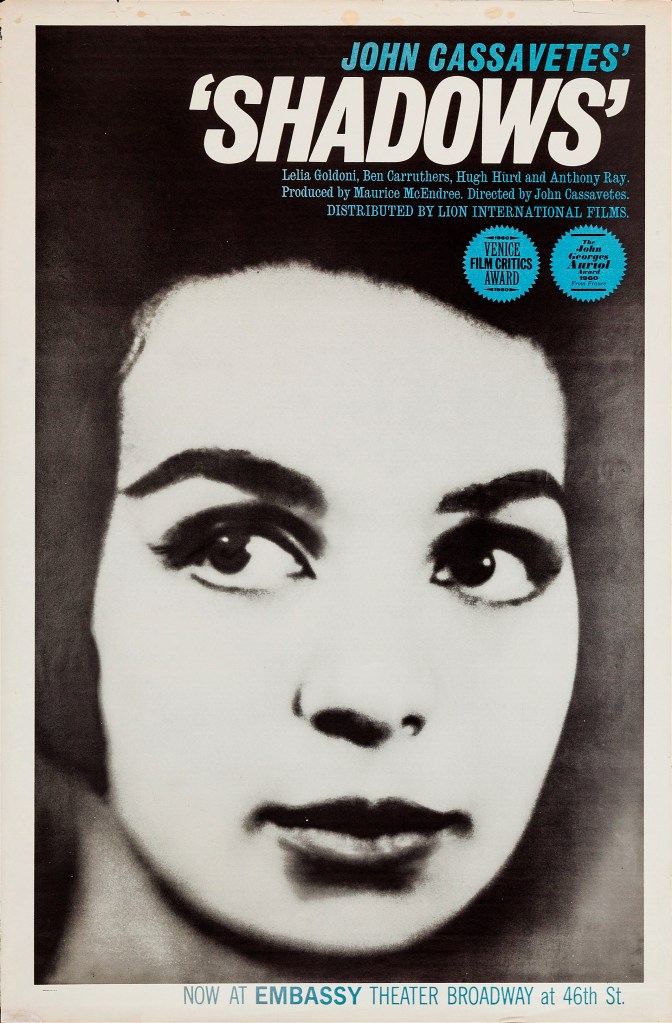
The Plot: Ben, Hugh, and Lelia (Ben Carruthers, Hugh Hurd, Lelia Goldoni) are three siblings living in New York at the height of the Beat Generation. The siblings are all African American, though Lelia is light skinned and often passes for White. Both Ben and Hugh have musical aspirations, but Ben wastes his days loafing about with friends at the local bars, while Hugh’s act can’t catch a break, despite the efforts of his agent Rupert (Rupert Crosse). Lelia’s love life takes a turn when she starts seeing Tony (Anthony Ray), a White man who doesn’t realize she’s Black. But all of this is place-setting for a freeform character study completely improvised by the actors.
Why It Matters: The NFR gives a rundown of the film’s production, and praises Cassavetes’ choice to make a film that “treats race and identity not as sociological discourse but as a sort of free jazz.” An essay by Cassavetes expert Ray Carney delves into the film’s theme of identity.
But Does It Really?: “Shadows” is one of those movies that needs a little explanation to fully appreciate. Unlike most movies, “Shadows” isn’t so much a piece of entertainment as it is the results of an experimental exercise, a filmed acting workshop. The results are far from the high production quality of many an NFR entry, but even with the film’s rough presentation, you can see Cassavetes’ love of the game: an artist determined to tell this story, whatever it ends up being. While I found the film a bit stagnant and unfocused, I get that without the film’s production context I wasn’t approaching it from the right angle. Still, I’m willing to justify “Shadows” on the NFR as an important “stepping-stone movie”: Cassavetes’ best work was still ahead of him, but none of those exist without “Shadows”.
Shout Outs: Look closely for a movie theater marquee advertising “The Ten Commandments“. Speaking of…
Wow, That’s Dated: Lots of marquee advertisements throughout for such ’50s films as “The Night Heaven Fell” and “Naked Paradise”, as well as the Broadway musical “The Most Happy Fella”. Also, we get not one but two shoutouts to Steve Allen, who at this point in his career had left “The Tonight Show” and was hosting his primetime variety series “The Steve Allen Show”. Hi-ho, Steverino!
Seriously, Oscars?: In a year dominated by “Ben-Hur” there was no way a little movie like “Shadows” was going to squeak into the Oscar conversation. The film did, however, fare better in Europe, winning the Critics Award at the 1960 Venice Film Festival and receiving four BAFTA nominations.
Other notes
At this point in his career, John Cassavetes was starting to make a name for himself not only as an actor, but as an acting teacher, co-founding “The Cassavetes-Lane Drama Workshop” in New York with Burt (future father of Diane) Lane. An alternative to the Actors Studio and “the method”, Cassavetes’ workshop emphasized performances stemming from character rather than psychology or emotions. One day his class performed an improvised scene about a light-skinned Black woman dating a racist White man. Cassavetes was so inspired by this scene that while he was on Jean Shepherd’s local radio program to promote “Edge of the City”, he pitched a movie based on this concept to the listening audience, who sent in money to help finance the film (hence this film’s credit “Presented by Jean Shepherd’s Night People”, a nickname for Shepherd’s listeners). “Shadows” was filmed throughout 1957 with actors from Cassavetes’ acting workshops and a script with a detailed plot description but no dialogue, which was improvised by the actors during rehearsals.
After the completion of “Shadows”, Cassavetes screened the film in 1958, and reception was mixed to negative. Knowing he could salvage the film, Cassavetes wrote a revised screenplay with writer and friend Robert Alan Aurthur, and reunited the cast to reshoot several new scenes that emphasized the sibling relationship over the original themes of racism and prejudice. It is this reworked version that is widely available today, with an estimated 60% of the final film being comprised of these reshoots. We’ll come back to the original cut in the “Legacy” section.
I must acknowledge the elephant in the room: despite her casting as one of the Black characters, Lelia Goldoni was of Sicilian descent. Ben Carruthers was 1/16th Black and used a sunlamp to make his skin appear darker, though he only did this for the original shoot, resulting in a handful of cringy shots in the final film. While this casting is obviously problematic and wouldn’t fly today, I will admit it didn’t bother me as much as I thought it would (Except for those sunlamp shots. What were you thinking, Ben?)
The print I watched was the UCLA restoration, which received a grant from (among others) the Hollywood Foreign Press Association, aka the organization behind the Golden Globes. I didn’t realize they did things other than hobnob with A-listers and give out awards to said A-listers.
“Shadows” is filmmaking at its most raw: Full-on guerrilla filming (multiple passersby look at the camera), disjointed continuity from the improvisations, and lots and lots of dubbed dialogue. It makes Cassavetes’ later films seem very polished by comparison. Given this film’s rough aesthetic, late ’50s setting, and fondness for jazz music, I was expecting it to turn into “The Cry of Jazz” at any moment.
I was captivated by Lelia Goldoni’s performance. The character of Lelia is flighty and indecisive, but always compelling. Goldoni really is the breakout star of this movie, and it’s a shame her film career never really took off.
Side note: Lelia Goldoni and Ben Carruthers, who play siblings in this movie, were briefly married shortly after this film was made. So that’s how it is in their family…
Both Cassavetes and his wife Gena Rowlands make cameos in this movie: Cassavetes as the man helping Lelia outside the movie theater, and Rowlands as a nightclub patron. I must have blinked during that nightclub scene because I definitely missed Rowlands.
This movie takes its time getting started, but when it does…it still takes its time.
Things escalate quickly between Lelia and Tony, with Lelia losing her virginity to Tony just a few quick scenes after their first meeting. I’m sure 1959 audiences were scandalized by the film’s depiction of pre-marital sex (although we only see them post-coital with zero nudity), to say nothing of Lelia’s line “I didn’t know it could be so awful”. I don’t know if I can endorse a movie where a guy named Tony is secretly racist and bad in bed.
Shout out to Rupert Crosse as Hugh’s agent Rupert Crosse. The character is nothing to write home about, but it’s worth noting that Crosse’s acting career would eventually lead to his work in the 1969 Steve McQueen film “The Reivers”, for which he became the first African American to receive an Oscar nomination for Best Supporting Actor. That’s a milestone that gets ignored way too often. Get it, Rupert!
The final credit reads “The film you have just seen was an improvisation.” Interesting choice, though I wonder if having this disclaimer at the beginning of the movie would have helped audiences understand/appreciate it more. It definitely would have helped me.
Legacy
Although “Shadows” wasn’t well received upon its initial release, the film found success in Europe and was part of an ever-growing new wave of independent American filmmakers who were able to create and successfully distribute their movies outside of the Hollywood system. The reputation of “Shadows” grew as Cassavetes’ future filmography developed a following.
John Cassavetes was able to parlay his direction of “Shadows” into bigger directing gigs, helming two films for Hollywood: 1961’s “Too Late Blues” and 1963’s “A Child Is Waiting”. Neither experience was particularly great for Cassavetes, who shifted back to acting on film and TV, saving up enough money to fund his next indie feature: 1968’s “Faces“.
As for the first cut of “Shadows”, the aforementioned Ray Carney spent over 20 years trying to track down the original 1958 version, a journey that eventually led him to an attic in Florida and the daughter of the second-hand shop owner who had inadvertently bought the missing film years earlier. The original “Shadows” was restored in 2004, though screenings of this version are scarce as the Cassavetes estate has questioned its legitimacy and have pursued legal action to prevent its release.
With its structured improvisational format, can we claim “Shadows” as an influence on “Curb Your Enthusiasm”? I mean, there were a few episodes where Larry dated Vivica A. Fox’s character with disastrous results; the parallels are right there.


 The Horse's Head