#611) Princess Nicotine; or, the Smoke Fairy (1909)

#611) Princess Nicotine; or, the Smoke Fairy (1909)

OR “Alright, another freebie!”

Directed by J. Stuart Blackton

Class of 2003

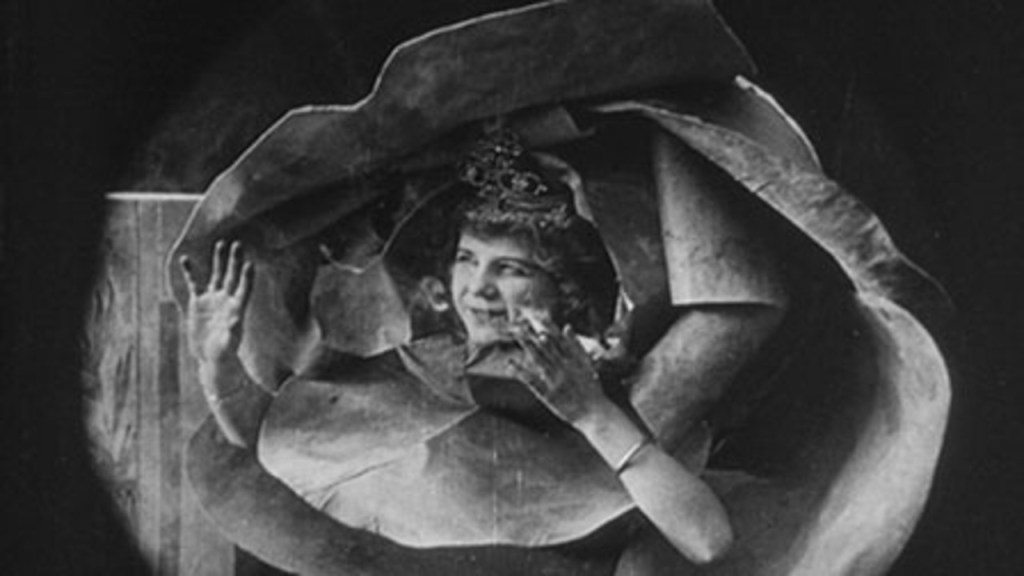
The Plot: A man (Paul Panzer) settles in for the evening with a pipe of tobacco. When he falls asleep, he dreams of two tiny fairies (Gladys Hulette and Actor Unknown) emerging from his cigarette box and playing tricks on him. Despite this odd premise, “Princess Nicotine” boasts some genuinely impressive special effects.

Why It Matters: The NFR calls the film a “fantasy tour de force” as well as “the most celebrated special effects film of its day.” An essay by film professor/NFR stalwart Scott Simmon is taken directly from his program notes for the “Treasures of the American Archive” DVD. 

But Does It Really?: What the hell did I just watch? Like many of these early silent shorts, “Princess Nicotine” is confusing, but man are those special effects a sight to behold. At one point I literally asked the question “How did they do that?” “Princess Nicotine” makes the NFR for its incredible effects, as well as representation of J. Stuart Blackton, a pioneer of early film.

Everybody Gets One: J. Stuart Blackton was a reporter for the New York Evening World when he was assigned to interview Thomas Edison about his new invention the Vitascope. Blackton was so impressed and won over by Edison that he pivoted to filmmaking, adding short films to his stage performances with magician Albert Smith. In 1897 Blackton and Smith founded the American Vitagraph Company (later Vitagraph Studios), and their immediate success led to more creativity and experimentation with their films. Inspired by Georges Méliès, Blackton’s films started to include optical and in-camera effects, as well as stop-motion animation. In addition to its noteworthy effects, “Princess Nicotine” may have been an advertisement for Sweet Caporal Cigars. Speaking of…

Wow, That’s Dated: While the dangers of smoking tobacco were known and documented throughout the early 20th century, advertisements for tobacco products were quite common, only coming to a head in 1964 when a 386-page report by the U.S. Surgeon General Dr. Luther Terry undeniably linked smoking to cancer. Since then, more rules and regulations have been put into place banning the advertisement of tobacco products in various forms, especially anything geared towards children. According to the CDC, while cigarette smoking is still the number one cause of preventable disease and death in the United States, as of 2020 the total population that smokes is 12.5%, down significantly from 42% in 1964.

Other notes

  • My main takeaway from this short was, naturally, the special effects. At first, I assumed the fairy on the table was achieved using double exposure, and while that technique was used for a few shots, most of those effects were achieved in-camera. The actors playing the fairies performed next to the camera, with their movements reflected onto a mirror several feet behind the table which, when viewed through the camera lens, made it appear that they are tiny figures on top of the table. Over 110 years later, it still looks great.
  • Paul Panzer was a silent film actor who transitioned to bit parts in talkies. He is one of Rick’s waiters in “Casablanca“, and we’ll see more of him when I finally get around to covering “The Perils of Pauline“.
  • This feels like a good time to shout out cameraman Tony Gaudio, who would go on to be the cinematographer for such future NFR entries as “Little Caesar“, “The Life of Emile Zola“, and “The Adventures of Robin Hood“.
  • Nothing to see here, just a child smoking a cigarette. Go on about your business.
  • I’m always tempted to try and delve into these films on a deeper level, with the hope of discovering some hidden meaning or metaphor, but sometimes a film about a cigar is just a film about a cigar.

Legacy

  • According to the aforementioned Simmon essay, audiences immediately took notice of the special effects in “Princess Nicotine”, leading to an article in Scientific American that called them “so startling that it defies explanation by the initiated.”
  • Vitagraph would continue making shorts until 1925 when the company was sold to Warner Bros. The company’s early developments with sound film were picked up by Warner for their features, which culminated in “The Jazz Singer” in 1927.
  • J. Stuart Blackton lost most of his Vitagraph fortune in the 1929 Stock Market Crash and spent the remainder of his life working odd jobs and showing his old movies on the lecture circuit. Blackton was working on a color film project with Hal Roach when he died of complications from a car accident in 1941 at the age of 66.

Further Viewing: J. Stuart Blackton’s experimentation with stop-motion animation led to 1906’s “Humorous Phases on Funny Faces”, widely considered the first animated film. I’ve nominated this film for NFR consideration in the past and, as of this writing, the granddaddy of all animation has yet to make the cut.

The Horse’s Head Goes to Washington!

Hi-ho readers!

Normally I don’t talk about my personal (aka “real”) life on the blog, but I felt that my recent trip to Washington warranted an exception. Last week the GF and I took a much needed vacation, recharging our batteries out in beautiful Maryland. It was my first time visiting the Old Line State, and my time there was both pleasant and relaxing (except for a brief detour in downtown Baltimore, but that’s another story).

As a native Californian, east coast geography still baffles me (You drive for 20 minutes and then you’re…in another state?) so I didn’t realize until planning this trip that we were a short drive away from Washington D.C. Having never been there before in my life, the GF and I planned a day trip to Our Nations’s Capital. With no real agenda at hand, we had a fun day moseying around the National Mall, taking in the city’s major landmarks, and speculating which business-attired pedestrians were “those fat cats” I associate with political corruption. We saw most of the big icons – the White House, the US Capitol, the spot where Forrest Gump reunited with Jenny – but the highlight of our trip was by and large a stop at my own personal Mecca: The Library of Congress, birthplace of the National Film Registry.

[Insert delighted squeal noises here]

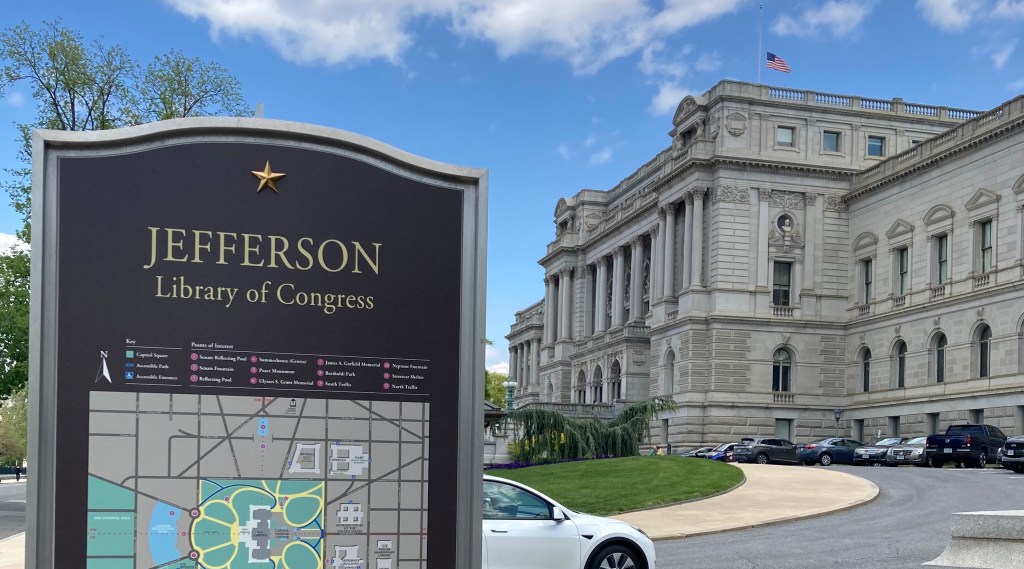
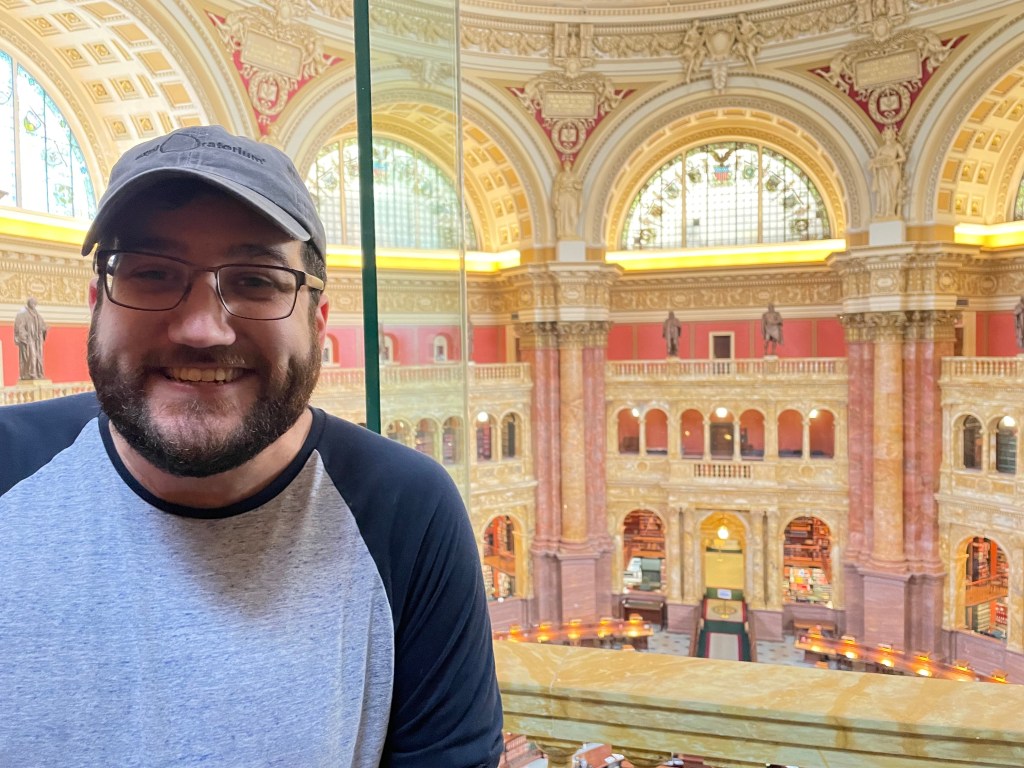
We started at the Thomas Jefferson Building, home of the main reading room and all the public exhibitions. I’m not sure what exactly I was expecting, but I was blown away by the sheer beauty of the place. From its marble staircases to its endless line of murals, that building is gorgeous. The exhibits are worth the trip out (especially the Rosa Parks exhibition currently housed there), and I geeked out pretty hardcore when I laid eyes on the the Reading Room (as seen in “All the President’s Men“). Naturally, our self-guided tour ended at the gift shop, where we bought our fair share of swag from an employee who was just as grateful as we were that the field trips were starting to die down for the day. I feel you, bro. I feel you.

Look at that happy little film geek. Photo Credit: The GF.

But our time with the Library of Congress didn’t stop there. In my pre-trip research, I found that the Library’s Moving Image Research Center is in the James Madison building, across the street from the Jefferson building. Thankfully, the library is open to any inquiring researcher (appointments preferred, of course), and the GF and I headed across the street to pay a visit. Our time there was brief, but incredible. Sitting in the serenity of the Moving Image Research Center, surrounded by books on every conceivable film and TV topic, sitting among people who have devoted their lives to preserving film history, was a dream come true and surprisingly moving. Shout out to Dorinda, one of the Moving Image Research Center’s viewing technicians who helped me find what I was looking for, sent me a follow-up email with more resources, and even loaned me a quarter for the locker! If the Library has an Employee of the Month program, she gets my vote.

Photo Credit: The GF, who feels that the “Reviews, Etc.” sign in the background works as an alternate title for this blog.

When I started this blog five years ago, I never thought I would find myself momentarily researching film history in the honest-to-god Library of Congress. Much like the 600+ movies I’ve chronicled over the years, life itself boils down to moments; people and places and feelings and connections we hold onto long after we’ve forgotten everything else. I will always remember and cherish those moments sitting in that research library with my GF, my own personal slice of heaven on Earth.

Happy Viewing, and keep taking care of each other.

Tony

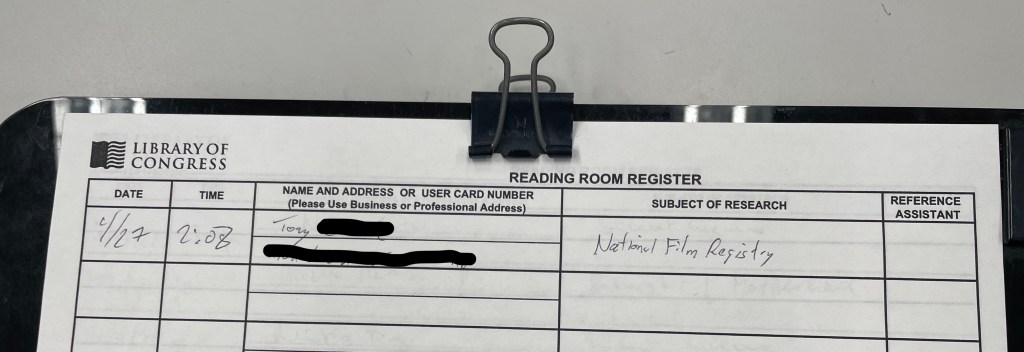
And now I’m on their registry. Full circle! Photo credit: The GF

P.S.: While visiting family in Maryland, we went to the movies and saw “The Unbearable Weight of Massive Talent” with Nicolas Cage. It was good. Not amazing, but an enjoyable, entertaining movie. If you’re a fan of Mr. Cage or just a general movie geek, there’s plenty of details you will find rewarding. Cage is great as usual, and his chemistry with Pedro Pascal is wonderful. If the movie had just been the two of them forging their bromance it would have been perfect.

#610) Why Man Creates (1968)

#610) Why Man Creates (1968)

OR “Better Call Saul”

Directed by Saul Bass

Written by Bass and Mayo Simon

Class of 2002

The Plot: Iconic title designer Saul Bass takes a turn behind the camera to try and explain “Why Man Creates”. In his signature style, Bass takes millennia of human creativity and boils it down to the common threads: the inspiration, the experimenting, the successes, the failures. All of this is told through a series of vignettes that range from fun animation to avant-garde presentations to the simple act of writing. Saul Bass successfully takes all of these big ideas and compresses them into one 25-minute film that is endlessly – forgive me – creative.

Why It Matters: The NFR write-up is mostly an overview of both Bass and the film, but the accompanying essay by archivist and Bass expert Sean Savage dives into more detail.

But Does It Really?: “Why Man Creates” is in the NFR subcategory I call “But What I Really Want To Do Is Direct”. This list contains several movies directed by people whose filmmaking talents were in other departments (Haskell Wexler, Cedric Gibbons, and Busby Berkeley, to name a few), so I have no objections to including a film by Saul Bass, whose praises I have sung in many previous posts. “Why Man Creates” is probably the best known of Bass’ short films, and its universal themes have aided in its longevity and accessibility. A yes for both “Why Man Creates” and Saul Bass on the Registry.

Everybody Gets One: While this is far from his only NFR appearance, a quick word on Saul Bass. Born and raised in the Bronx, Saul Bass started his showbiz career designing movie posters. His commission for Otto Preminger’s “Carmen Jones” so impressed the director, Preminger hired Bass to design the opening credits in the same aesthetic. Throughout the ’50s and ’60s, Bass designed several eye-catching opening title sequences for such directors as Billy Wilder, Stanley Kramer, Robert Wise, and of course, his legendary collaborations with Alfred Hitchcock. By the mid-60s, Bass was focusing more on filmmaking, helming a number of corporate-sponsored shorts for such events as the 1964 New York World’s Fair. “Why Man Creates” was commissioned by Kaiser Aluminum as a recruiting film for scientists and engineers.

Title Track: Saul Bass actually hated the title “Why Man Creates”, which, according to the aforementioned Savage essay, was imposed by Kaiser. The title itself never appears in the film, which opens with the handwritten introduction, “A series of explorations, episodes, and comments on creativity.” For the rest of Bass’ life, he always referred to this film as “the creativity film”.

Seriously, Oscars?: “Why Man Creates” won the Oscar for Best Documentary Short Subject in 1969. Although I question the film’s categorization, this was Saul Bass’ only Oscar win, so I can’t gripe too much. Bass received two more nominations in the ’70s, both in the more appropriate category of Live Action Short Subject.

Other notes

  • Not a lot of information out there about co-writer Mayo Simon, other than he collaborated with Saul Bass on a number of projects, and wrote several plays, teleplays, and screenplays throughout his career, including the script to “Futureworld”.
  • After a flashy, fast-cut opening was rejected by Kaiser, Bass reshot all the title sequences as someone writing out each title by hand with a pencil. I’ll do the note writing around here, thank you very much.
  • The film’s opening segment begins with cavemen creating hunting tools, followed by the cave painting of their first prey. This begins a lengthy vertical pan up a seemingly never-ending tower populated with every major civilization and technological advancement in the history of the human race. No easy task, but in true Bass fashion its stylized minimalism speaks volumes. 
  • Among the discoveries made in this segment: the integer 0, depicted here as being discovered by a Muslim scholar. I guess someone had to find it. Coincidentally: my research shows that ancient Egyptians visualized their zero equivalent baseline using their word for beautiful: nfr
  • One segment features public reactions to creativity, consisting of “man on the street” reactions from real people, most of whom hate the final results (unseen by the viewer). One man says it represents “the decline of the west”. No, that comes later. One of the few positive responses comes from an unseen voice, and I’m pretty sure that’s prolific voiceover actor June Foray giving her approval. Now that’s something I really like.
  • Another segment about a ping pong ball that bounces higher than all the others is titled “A Parable”. It’s been done.
  • Either the most dated or least dated segment is one chronicling scientists who have spent years tackling such various big concepts as a cure for cancer and an alternative to the Big Bang Theory. This must have been the Kaiser mandated “hard sell” section. One of those scientists, Renato Dulbecco, went on to win the 1975 Nobel Prize in Physiology or Medicine for his cancer research. 
  • Ultimately, while Bass never intended this film to be the be-all-end-all discussion of creativity, “Why Man Creates” does end up having a thesis statement. In addition to the film’s emphasis on individuality and thinking outside the box, Bass answers the titular question with “I Am”. Humans create as an outward expression of self, which this film views as a subconscious attempt at immortality. Years from now, people can see our creativity as it says for us “I was here.” For example, my blog posts are a subconscious way for me to say “I am here, I am unique, and Josef von Sternberg is overrated.”

Legacy

  • According to Sean Savage, “Why Man Creates” is the most viewed educational film of all time. The film was a staple of classroom viewings and art exhibitions, and an edited version aired as part of the premiere episode of “60 Minutes” in September 1968.
  • Saul Bass continued his pivot towards filmmaking and away from title design throughout the ’70s and ’80s, including his only feature-length film, 1974’s sci-fi thriller “Phase IV”. Bass returned to title design on a semi-regular basis in the late ’80s and early ’90s, designing credit sequences for the likes of Martin Scorsese, Penny Marshall, and James L. Brooks. Saul Bass’ final title design was for Scorsese’s “Casino” in 1995 before his death the following year at age 75.
  • And finally, I would be remiss if I didn’t mention that Saul Bass also designed a number of company logos, including the AT&T blue globe and, most importantly, the logo for the National Film Registry.

Further Viewing: One of many video essay appreciations out there for Saul Bass, courtesy of The Royal Ocean Film Society.

#609) The Miracle of Morgan’s Creek (1944)

#609) The Miracle of Morgan’s Creek (1944)

OR “Dude, Where’s My Husband?”

Directed & Written by Preston Sturges

Class of 2001

The Plot: Among the residents of the mid-west town of Morgan’s Creek is Trudy Kockenlocker (Betty Hutton), the fun-loving daughter of her gruff police officer father (William Demarest), and Norval Jones (Eddie Bracken), the naive, perpetually nervous boy-next-door who has always pined for Trudy. One night Trudy attends a send-off dance for a group of soldiers heading off to war, and comes home the next morning with no memory of the evening’s events. Slowly, she pieces together that not only did she marry one of the soldiers, but she is pregnant with his child. With the help of her sister Emmy (Diana Lynn), Trudy concocts a plan to annul the marriage and marry Norval to keep her pregnancy legitimate. But complications and hilarity ensue, as they so often do in the breakneck comedies of Preston Sturges.

Why It Matters: The NFR calls it “possibly the screwiest of Preston Sturges’ screwball comedies”, praising William Demarest’s performance, and citing the film’s skirting of the Production Code. Plus, there’s a link to watch the film free online. Cool!

But Does It Really?: We’ll put “Miracle” in the “minor classic” category. While “Sullivan’s Travels” is the best of the Sturges comedies, “Miracle” is not without its share of small town charm and hilarious performances. Some of its wartime jargon and binary gender politics date the film, but if you’re willing to go along with it, “Miracle” is a sweet, funny little slice of Americana with a lot of meat on its bones.

Everybody Gets One: Betty Hutton was a contract player with Paramount when “Morgan’s Creek” came her way and made her an overnight star. Hutton continued to find success as a recording artist, but her filmography is limited due to a litany of personal and behind-the-scenes drama. Despite her varied showbiz career, Hutton always spoke highly of Preston Sturges, calling him the only director who “ever let me act”.

Wow, That’s Dated: A lot of wartime talk in this one, especially regarding “the boys”. Plus the kind of “women, am I right?” misogyny that tends to crop up in films of this era.

Seriously, Oscars?: One of Paramount’s biggest hits of 1944, “The Miracle of Morgan’s Creek” received its share of critics prizes, and one Oscar nomination for Original Screenplay. Struges found himself in competition with…himself for his script for “Hail the Conquering Hero“, and no doubt split his own vote, paving the way for wartime biopic “Wilson”.

Other notes 

  • As expected with this kind of subject matter, the Production Code had a lot of problems with “The Miracle of Morgan’s Creek”. Prior to filming, the PCA sent Sturges a seven page letter urging him to be “extremely careful” about the subject matter, recommending that the film’s plot points either be “drastically cut down” or “rewritten entirely”. In addition to concerns about underage drinking and a Christ-like birth, the US War Department objected to the “implication of the soldiers’ lack of proper conduct”. Sturges started filming in late 1942 with only 10 pages of approved script, which led to massive rewrites and a strained production schedule. Due to a backlog in Paramount films (including another film by Sturges), “The Miracle of Morgan’s Creek” wasn’t released until February 1944, a full year after production wrapped.
  • Here’s an odd one from the Preston Sturges Cinematic Universe: the film is bookended by cameos from Brian Donlevy and Akim Tamiroff, reprising their starring roles from Sturges’ 1940 political satire “The Great McGinty”. Weirdly, they are credited solely by their character names: “McGinty” and “The Boss”, respectively. Makes me think that Springsteen’s going to be in this.
  • There’s a lot of fast-talking and ’40s jargon in this one. I have no idea what’s going on, but at least it’s funny.
  • I’m enjoying all the performances in this movie, especially William Demarest as Trudy’s put-upon father. Demarest is prepping for the kind of exasperated caretaking he would perfect as Uncle Charley on “My Three Sons” 20 years later. And he does his own pratfalls!
  • Apparently I can’t get away from piano prodigies. After the fictional ones from last week’s post, this movie features real-life prodigy Diana Lynn as Trudy’s smart-aleck little sister Emmy. That explains all the piano playing she does in this movie. Also, she’s 14!? Everyone in that generation looks like they’re 40.
  • Longtime readers know I’m a sucker for one-take scenes, and like the rest of Sturges’ oeuvre, “Miracle” features plenty of them. Most of the single-take scenes are “West Wing”-esque walk and talks, typically of Hutton and Bracken trading dialogue as they wander through their idyllic small town. It’s impressive, though a few artificial zooms are utilized to hide some cuts.
  • Preston Sturges’ films are populated with his stable of character actors in supporting parts, and “Miracle” is no exception (Demarest, Porter Hall, Al Bridge, J. Farrell MacDonald, etc.) . Every part is cast to perfection, with even the smallest bit role making an immediate impression with their strong characterizations.
  • This is definitely one of filmdom’s funniest proposal scenes, and the follow-up sequence between Trudy and Norval is hilarious, with Bracken’s overblown reactions knocking it out of the park.
  • My favorite exchange in the movie: “Did you break anything dear?” “Nothing but my back.”
  • I love me some ’40s slang, but “zipper-puss” takes the cake. That could mean anything!
  • Wait, she’s a minor!? How old is everyone? Betty Hutton was 21 when she filmed “Miracle”, but I guess the character is 17? You know Preston, you could have made her newly 18 and saved yourself a lot of trouble.
  • I laughed pretty hard at the scene where Kockenlocker tries to subtly suggest that Norval knock him out and escape the jail cell, with Norval earnestly oblivious to Kockenlocker’s increasingly frustrated hints. “You get me?”
  • Hey, another movie for my “Die Hard” Not-Christmas list! This movie’s turning into the funnier cousin of “It’s a Wonderful Life“.
  • The line that surprised me the most is Mr. Kockenlocker’s line about “the Almighty, or whatever it is that makes the wheels go round.” How dare you suggest that there is any religion other than white-bread Christianity!
  • The original publicity for this film urged viewers not to reveal the “Miracle” at the end of the movie, and to their credit I still didn’t know what it was almost 80 years later. No spoilers, but it’s a pretty big surprise, and the newspaper headline “Canada Protests” made me laugh out loud.
  • One minor spoiler: I was not expecting Hitler to show up in this. Longtime stage and screen actor Bobby Watson found a second career playing the Führer in cameos for both comedies and dramas throughout the early ’40s. Hitler’s raving in his brief moment here is very reminiscent of those “Hitler Reacts” videos from a few years back.

Legacy 

  • “Morgan’s Creek” continued Preston Sturges’ untouchable streak of hit comedies at Paramount. Infighting with Paramount led to Sturges’ departure from the studio in 1944 following the release of “Miracle” and “Hail the Conquering Hero”. Although Sturges made several more films, none could touch the classic status of his Paramount films.
  • “The Miracle of Morgan’s Creek” received the remake treatment with 1958’s “Rock-A-Bye Baby” starring Jerry Lewis in an update of the Eddie Bracken role. From the clips I’ve seen, it looks like this was more an attempt to take down that new rock ‘n roll music the kids were into.
  • Although Betty Hutton’s career peaked at “Morgan’s Creek”, she hit another apex replacing Judy Garland in the film of “Annie Get Your Gun”. Eddie Bracken’s film career stalled, but he found a second career on the stage, returning to film in his later years in such comedies as “National Lampoon’s Vacation” and “Home Alone 2: Lost in New York”.

Listen to This: The Class of 2021

It’s here at last! Typically the National Recording Registry announces its annual roster of inductees in mid-to-late March, and although the NRR Class of 2021 didn’t arrive until today, it was worth the wait. Below are the latest 25 recordings to make the registry, with embedded links where available.

  1. Harlem Strut” — James P. Johnson (1921) 
  2. Franklin D. Roosevelt: Complete Presidential Speeches (1933-1945)
  3. Walking the Floor Over You” — Ernest Tubb (1941) (single)
  4. On a Note of Triumph” – Norman Corwin, Martin Gabel (May 8, 1945)
  5. Jesus Gave Me Water” — The Soul Stirrers (1950) (single)
  6. Ellington at Newport” — Duke Ellington (1956) (album)
  7. We Insist!  Max Roach’s Freedom Now Suite” — Max Roach (1960) (album)
  8. The Christmas Song” — Nat King Cole (1961) (single)
  9. Tonight’s the Night” — The Shirelles (1961) (album)
  10.  “Moon River” — Andy Williams (1962) (single)
  11.  “In C” — Terry Riley (1968) (album)
  12.  “It’s a Small World” — The Disneyland Boys Choir (1964) (single)
  13.  “Reach Out, I’ll Be There” — The Four Tops (1966) (single)
  14.  Hank Aaron’s 715th Career Home Run – Milo Hamilton (April 8, 1974)
  15.  “Bohemian Rhapsody” — Queen (1975) (single)
  16.  “Don’t Stop Believin’” — Journey (1981) (single)
  17.  “Canciones de Mi Padre” — Linda Ronstadt (1987) (album)
  18.  “Nick of Time” — Bonnie Raitt (1989) (album)
  19.  “The Low End Theory” — A Tribe Called Quest (1991) (album)
  20.  “Enter the Wu-Tang (36 Chambers)” — Wu-Tang Clan (1993) (album)
  21.  “Buena Vista Social Club” (1997) (album)
  22.  “Livin’ La Vida Loca” — Ricky Martin (1999) (single)
  23.  “Songs in A Minor” — Alicia Keys (2001) (album)
  24.  WNYC broadcasts for the day of 9/11 (Sept. 11, 2001) 
  25.  “WTF with Marc Maron” (Guest: Robin Williams) (April 26, 2010)

As always, it’s an eclectic list with a lot of worthy inclusions. This year definitely has a few “Wasn’t that already on this list?” entires (“Moon River” and “The Christmas Song” come to mind), but my reaction to most of these recordings was an immediate head nod of approval. And although my attempt to get Robin Williams on one of these registries probably had nothing to do with this, I’m happy to see him represented from an unexpected source.

As always, you can submit your own nominees for consideration, as well as listen to this year’s inductees on the NRR’s official playlist. Now if you’ll excuse me, I have to spend the next several days trying to get “Livin’ La Vida Loca” out of my head (a sentence I haven’t said in over 20 years).