#594) The Last Waltz (1978)

#594) The Last Waltz (1978)

OR “Band’s End”

Directed by Martin Scorsese

Class of 2019

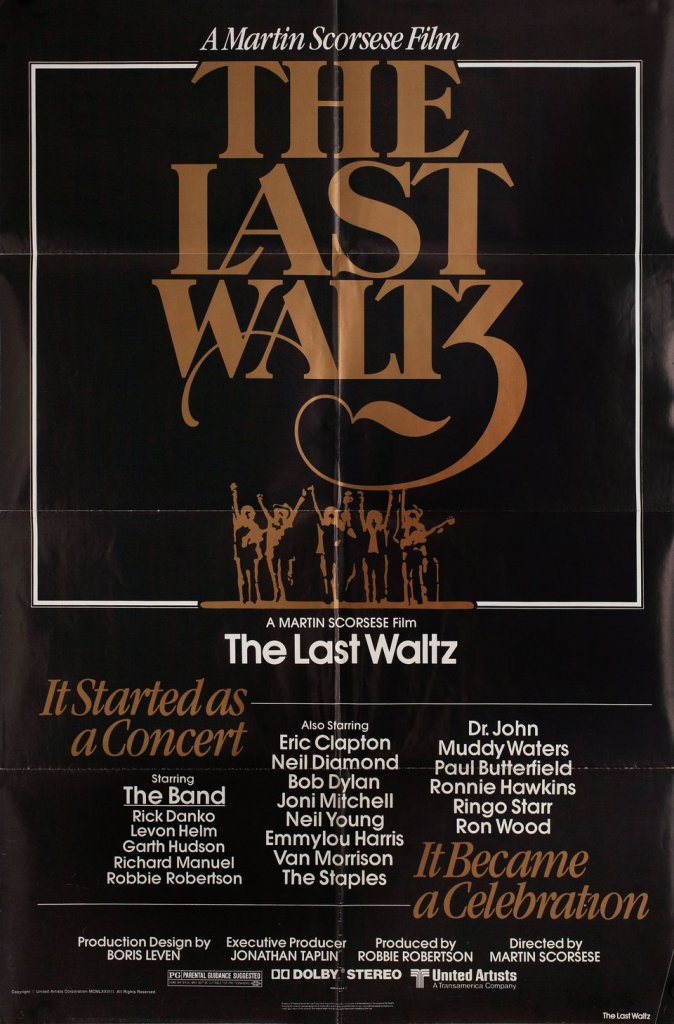
The Plot: Influential Canadian-American rock group The Band (Rick Danko – bass guitar, Levon Helm – drums, Garth Hudson – organ, Richard Manuel -piano, Robbie Robertson – guitar) gather together for one final concert on Thanksgiving Day 1976 at San Francisco’s Winterland Ballroom. Rather than treating the concert as a farewell performance, the Band opts for a celebration of their 16 years on the road, inviting an all-star lineup of artists to join them. In addition to the ’70s folk rock of The Band, “The Last Waltz” features performances by Ronnie Hawkins, Dr. John, Neil Young, Neil Diamond, Joni Mitchell, Paul Butterfield, Muddy Waters, Eric Clapton, Van Morrison, Bob Dylan, Ron Wood and Ringo Starr! And in the midst of all of this, Martin Scorsese and a murderers’ row of cinematographers capture the event and turn it into a cinematic experience.

Why It Matters: Oddly enough for a recent NFR entry, the official listing for “The Last Waltz” is brief and lacking in superlatives. The NFR write-up is mostly a description of the concert and its impressive roster of talent.

But Does It Really?: I dunno, I guess you had to be there? With all due respect to Martin Scorsese and The Band, I couldn’t get into “The Last Waltz”. I enjoyed the music, but this film didn’t carry its intended weight for me. “The Last Waltz” lacks the zeitgeist and iconic moments of “Woodstock” or “Monterey Pop“, and I don’t have the nostalgic lens as a viewer to understand the importance of The Band and this concert. I enjoyed “The Last Waltz” as a fun bit of ’70s rock, but I risk pissing off a lot of Boomers by questioning this film’s NFR standing.

Everybody Gets One: The Band began life in 1958 as The Hawks, backing up country singer Ronnie Hawkins. After backing up Bob Dylan on his mid-60s electric tour, The Hawks became The Band (stories differ on how exactly the name came to be) and recorded their first album “Music from Big Pink“. The album was a success, and The Band inspired generations of musicians with their melding of rock, folk, country, and R&B.

Seriously, Oscars?: No Oscar love for “The Last Waltz”. For the record, 1978’s Best Documentary winner was Arnold Shapiro’s “Scared Straight”, about the prison reform program that studies have shown isn’t very effective. 

Other notes

  • After 16 years of touring, Robbie Robertson was tired of being on the road. A recent boating accident involving Richard Manuel prompted the end of The Band’s live performances (although Levon Helm felt that Robertson forced the band’s early retirement). Invitations for both Ronnie Hawkins and Bob Dylan to perform at their final concert (already named “The Last Waltz”) snowballed into an overbooked concert that ran anywhere from five to seven hours (sources vary). Robertson had the idea to film the concert, and approached Martin Scorsese based on his rock soundtrack of “Mean Streets” and his work co-editing “Woodstock”. Scorsese accepted immediately and crafted a 300 page shooting script based around camera angles and lyrics in less than six weeks.
  • The opening text of the movie states “This Film Should Be Played Loud!” That’s all well and good, but I got neighbors all around me and walls like a ryokan. Not happening.
  • The Band’s cover of Marvin Gaye’s “Don’t Do It” was actually their final encore of the evening, but was moved to the beginning of the film, structuring the whole thing like a flashback. Sure, why not.
  • I’m gonna go ahead and declare the ’70s to be our hairiest decade in history.
  • Ronnie Hawkins makes a welcome appearance reuniting with his former backup, and does a mean cover of Bo Diddley’s “Who Do You Love?”.
  • I’ve always enjoyed the soulful, gravelly sounds of Dr. John, and I’m digging his sparkly jacket! Fun Fact: He was the inspiration for Dr. Teeth on “The Muppet Show”.
  • Neil Young does a lovely rendition of “Heartless” (with recent Kennedy Center honoree Joni Mitchell on backup vocals). It seems, however, that Young did not get the message that a southern man don’t need him around anyhow.
  • Weirdly, I don’t have much to say about The Band or their performance here. There’s a bit of disconnect not only between me and this movie, but also between the performers. The guest artists clearly have a lot of affection for The Band, but the actual Band members don’t seem to be having any fun in this. Maybe I’m sensing the growing discord between Robertson and his band mates? Or maybe they’re all on drugs.
  • I spent most of the film wondering “Did The Band have any songs I’ve actually heard of?” Turns out it’s “The Weight”, aka that “Take a load off” song. “The Weight” is one of a few songs filmed in-studio for this movie after the concert, giving The Band a chance to perform with gospel group The Staple Sisters, one of their many musical influences.
  • My Neil Diamond note simply reads “Neil Diamond?” Turns out Diamond and Robbie Robertson co-wrote “Dry Your Eyes”, which Diamond performs here, as well as on his then-recent album “Beautiful Noise”.
  • Shoutout to the film’s camera operators who helped bring Scorsese’s detailed vision to life – in one night! Michael Chapman (later of “Raging Bull“) was the head cinematographer, and the camera team on the ground included Vilmos Szigmond and Lásló Kovács. It’s fun watching these titans of Hollywood cinema running around in the background setting up and dismantling cameras.
  • Initially, Muddy Waters’ performance wasn’t going to be filmed, as this was a designated time for the camera crew to reload. Thankfully, Lásló Kovács took off his headset (he was tired of taking Scorsese’s orders), and missed the command, capturing Waters’ “Mannish Boy” in the process. Scorsese calls the song’s appearance in the film “just luck”.
  • I think it’s safe to say that Garth Hudson is the only rock organist of any notoriety. Chest Fever!
  • Interspersed throughout the concert are interviews with The Band in their Shangri-La recording studios in Malibu. Robertson is definitely the storyteller of the group, appearing more animated than his seemingly lackadaisical cohorts. Like the studio performances, the interviews were filmed after the concert; as evident by Robertson’s mention of Elvis’ death, which occurred nine months after “The Last Waltz”.
  • So that’s what Van Morrison looks like!
  • Special mention to Lawrence Ferlinghetti, poet and co-founder of San Francisco’s City Lights bookstore, who died earlier this year at the age of 101! Ferlinghetti appears in “Waltz” to recite his poem “Loud Prayer”, one of the few pieces of poetry from the concert to make it into the film.
  • I believe this makes three NFR appearances for Bob Dylan? At least he seems happy to be there, and I can understand what he’s saying! Dylan actually tried to back out of performing at the last minute, unaware that his appearance was the reason the film was financed to begin with. It took an intervention from venue owner BIll Graham for Dylan to take the stage.
  • The finale is an all-skate of Dylan’s “I Shall Be Released” with all of the evening’s performers, plus Ron Wood and Ringo Starr! Thanks to his appearance here, Ringo is the only Beatle on the National Film Registry. And “Last Waltz” is a lot easier to sit through than “Get Back“, let me tell you.

Legacy

  • “The Last Waltz” premiered in spring 1978 and was well received by movie and music critics alike. The most vocal dissent for this film came from Levon Helm, who wrote in his 1993 memoir “This Wheel’s on Fire” that he disapproved of the final film and its emphasis on Robbie Robertson.
  • Following the “Last Waltz” concert and their remaining studio album under contract with Capitol Records, The Band parted ways in 1977 and never performed again….until a year later when they reunited as an encore at a Rick Danko solo concert. The Band would start touring again in 1983 (minus Robbie Robertson) and would see a few personnel changes following the deaths of Richard Manuel and Rick Danko. The Band disbanded for good in 1999.
  • Scorsese would return to the world of rock documentaries a few times over the years, including the Rolling Stones concert feature “Shine a Light”, and two documentaries about Bob Dylan.
  • Perhaps the most fruitful outcome of “The Last Waltz”: Robbie Robertson has helped compose and/or compile music for such Martin Scorsese films as “Raging Bull”, “Gangs of New York”, and “The Irishman”

Listen to This: Unsurprisingly, practically everyone in “The Last Waltz” pops up on the National Recording Registry. Among their ranks: The Band, the Staple Sisters, Neil Diamond, Joni Mitchell, Muddy Waters, Emmylou Harris, and Ringo Starr. Honorable mention to Eric Clapton, who is sampled on Public Enemy’s “Fear of a Black Planet“. Van Morrison, Ron Wood and Neil Young are the most conspicuous absences from this group.

And with that, we conclude our own “Last Waltz” of 2021. As always, thank you dear reader for your continued support of “The Horse’s Head”, especially those of you who have been checking in for almost five years now! We’ll be taking time off for the holidays, and returning with new posts in January. Until then, be safe and take care of each other.

Happy viewing,

Tony

#593) The Navigator (1924)

#593) The Navigator (1924)

OR “We Ship That”

Directed by Donald Crisp and Buster Keaton

Written by Clyde Bruckman & Joseph Mitchell and Jean Havez

Class of 2018 

The Plot: Rollo Treadway (Buster Keaton) is a wealthy man who decides one day to propose to his neighbor Betsy O’Brien (Kathryn Maguire), not because of love, but rather just on a whim. When Betsy rejects his proposal, Rollo decides to still take the Hawaiian cruise he had already booked for them. Through a few comic misunderstandings, both Rollo and Betsy independently end up on The Navigator, a ship owned by Betsy’s father (Frederick Vroom) that is accidentally set adrift. Realizing they are lost at sea with only each other and no help in sight, Rollo and Betsy adapt to their new living situation through the kind of creative stunts and gags we have come to associate with Buster Keaton.

Why It Matters: The NFR cites the film’s historical significance and praises its “imaginative gags”. They also crib from Pauline Kael’s retrospective review of Keaton’s career, when she hailed this film as “[a]rguably Buster Keaton’s finest – but amongst the Keaton riches can one be sure?”

But Does It Really?: I’m willing to chalk this up to the historical significance of being Keaton’s first big hit, and while “The Navigator” is an inventive film with plenty of funny moments, I wouldn’t call it Keaton’s best or most memorable movie. Still, second-tier Keaton is better than most people’s best, so I have no objections with including “The Navigator” among the NFR’s Keaton collection.

Title Track/Every Ship Gets One: The Navigator of “The Navigator” was a real life cargo ship. Built in 1890, the SS Mississippi (later renamed the USAT Buford) lived many lives, providing supplies for San Francisco after the 1906 earthquake, transporting refugees out of Europe during World War I, and deporting 250 radicals (including Emma Goldman) out of America as the “Russian Ark”. After being sold to a private owner, the USAT Buford was discovered in a San Francisco shipyard by Keaton’s art director Fred Gabourie. Buford was rented, renamed The Navigator, and inspired Keaton to write his next screenplay.

Wow, That’s Dated: The natives that Rollo and Betsy encounter are your typical generic natives in the kind of limited roles available for Black actors in early film. Also very dated: a joke referencing the songs “Kiss Me Again” (from the operetta “Mlle. Modeste”) and “Alice, Where Art Thou?

Other notes 

  • Shoutout to The Keaton Project. Created in 2015 by Italian film archive Cineteca Di Bologna, their mission is to restore all of Buster Keaton’s films from the 1920s. For this post, I watched their 2017 restoration of “The Navigator”.
  • Because it bears repeating: Betsy’s father is played by actor Frederick Vroom. Apparently the last name Vroom is an Anglo-Saxon name dating back to the 12th century, and comes from the Dutch word meaning pious or devout and not – as I had hoped – from the sound a race car makes.
  • As I’ve come to expect from Keaton’s films, even the intertitles are funny. “Every family tree must have its sap.” Well done.
  • This film has plenty of laugh-out-loud moments. The first big one for me is when Rollo is driven by his valet to see Betsy, who lives directly across the street. A hilarious visual, and social commentary to boot!
  • I still can’t get over that they used a real boat for this film, and were given carte blanche to do whatever they wanted to it. This does, however, confirm my theory that “The Navigator” is just a bunch of boat-related gags strung together. It’s a movie where the set-piece came first and the script second.
  • Rollo and Betsy spend a lot of time running around the boat trying to find each other. Surely they could have heard each other’s footsteps. The boat isn’t silent too.
  • The whole bit of Rollo trying to prepare his own meal for the first time is very funny, and very relatable (Trying to open a can and it breaks on you? Been there.) I laughed pretty hard at Rollo/Buster’s stoneface as he returns from, shall we say, “losing his lunch”.
  • Tip of my hat to Kathryn McGuire, re-teaming with Keaton after playing his leading lady in “Sherlock Jr.“, and quite an adept physical comedian herself. She more than holds her own with Keaton, gamely being dragged around, dangled from ropes and so on. Who knows how big McGuire could have gotten if Hollywood had given her half a chance.
  • Yes, this film’s co-director is the same Donald Crisp who would later be an Oscar-winning character actor in MGM’s staple of stars. A prolific director throughout the silent era, Crisp was brought on “The Navigator” to direct the more dramatic scenes. Crisp, however, wanted to contribute more on the comedic scenes, which were (obviously) Keaton’s domain. This – mixed with his scenes being deemed overdramatic – led to Crisp leaving the project and Keaton reshooting most of Crisp’s scenes himself. Crisp still appears in the final film: he’s the grizzled captain in the portrait that Rollo mistakes for an intruder.
  • Another dated song reference: the pseudo-sea shanty “Asleep in the Deep“, aka “That song Goofy randomly sings in a few cartoons”.
  • Rollo may have invented the first in a long line of Rube Goldberg-style breakfast machines in movies. This movie crawled so “Pee-wee’s Big Adventure” could walk.
  • I’m a sucker for old-timey diving suits. They just seems so bulky and hindering for underwater exploration. Rollo dons the gear for an extended underwater sequence, filmed partially in a large tank in Los Angeles, and partially in Lake Tahoe. Take that, “Twenty Thousand Leagues“.
  • Okay, that octopus is clearly crawling on a plate of glass in front of the camera. This is some straight-up Ed Wood nonsense.
  • Oof, these native stereotypes are brutal. Now we know why no one mentions this movie anymore.
  • “The Navigator” is one of the rare movies with a “submarine ex machina” (“Deus ex aqua-na”? I’ll workshop it). This does lead to what is probably the film’s most memorable gag, when Rollo accidentally leans on a large lever, causing the ship (and the entire scene) to rotate a full 360 degrees. It’s an impressive stunt, I just wish the rest of the movie worked its way up to that better.

Legacy 

  • “The Navigator” was Buster Keaton’s fourth feature-length film and, more importantly, his first hit. With “The Navigator”, Keaton began to earn the audience and critical reception that would cement his legacy as one our finest film comedians.
  • After “The Navigator”, the real Navigator returned to civilian life, until its final voyage to Japan in 1929 to be scrapped for parts.
  • Having now seen “The Navigator”, I wouldn’t be surprised if Keaton’s 1928 follow-up “Steamboat Bill Jr.” was an excuse to use all the boat gags he couldn’t fit into this movie.
  • As for the film’s ongoing legacy, there’s not a lot of references to “The Navigator” specifically; usually just mentions in conjunction with Keaton’s more iconic films. I dunno, can I use this film as an excuse to reference “Flight of the Navigator”? Remember that movie?

The Horse’s Head: Class of 2021

It’s time for a rousing chorus of “Yub-Nub“, because here’s the NFR class of 2021! 

This morning, the National Film Registry announced the induction of 25 movies to be added to their list of significant American films. Spanning over 100 years, these films run the gamut from silent treasures, animation, documentaries, Hollywood blockbusters, and indie darlings.

In chronological order, here are this year’s NFR inductees. Entries with a (*) indicate movies that I submitted for consideration this year. Entries with a (+) are movies that I have submitted in previous years.

  • Ringling Brothers Parade Film (1902)
  • Jubilo (1919)
  • The Flying Ace (1926)
  • Hellbound Train (1930)
  • Flowers and Trees (1932)
  • Strangers on a Train (1951)
  • What Ever Happened to Baby Jane? (1962)*
  • Evergreen (1965)
  • Requiem-29 (1970)
  • The Murder of Fred Hampton (1971)
  • Pink Flamingos (1972)*
  • Sounder (1972)+
  • The Long Goodbye (1973)
  • Cooley High (1975)
  • Chicana (1979)
  • Richard Pryor: Live in Concert (1979)
  • The Wobblies (1979)
  • Return of the Jedi (1983)*
  • A Nightmare on Elm Street (1984)
  • Stop Making Sense (1984)
  • Who Killed Vincent Chin? (1987)
  • The Watermelon Woman (1996)
  • Selena (1997)*
  • The Lord of the Rings: The Fellowship of the Ring (2001)+
  • WALL-E (2008)*

For the second year in a row, I have tied my personal record by nominating five of the movies that made this year’s roster. “Selena” was the only one more-or-less guaranteed to make it (Thanks Rep. Castro), and I’m relieved to free up my “What Ever Happened to Baby Jane?” slot after five years of submissions. And while it will definitely be a while before I have the stomach to watch “Pink Flamingos”, I stand by my choice to nominate the film. Careful what you wish for, I guess.

While this year’s crop of movies don’t feature as many popular crowd-pleasers as years past, it does succeed at being a broad range of films from a diverse array of filmmakers. I also appreciate the NFR’s emphasis on films that cover topics that, while uncomfortable subject matter for the movies, need to be seen and discussed (three of this year’s inductees center around race-related violence towards people of color). I look forward to the inevitable eye-opening experience these films will present me with.

As always, you can nominate your favorites to the National Film Registry, whose 2022 submissions are now open. The NFR website includes a list of movies not yet on the list for easy reference. Meanwhile, the first of the 2021 titles will pop up on this blog next month, so stay tuned.

Happy Viewing,

Tony

#592) Die Hard (1988)

#592) Die Hard (1988)

OR “McClane in Pain Brays Vainly at the Slain”

Directed by John McTiernan

Written by Jeb Stuart and Steven E. de Souza. Based on the novel “Nothing Lasts Forever” by Roderick Thorp.

Class of 2017

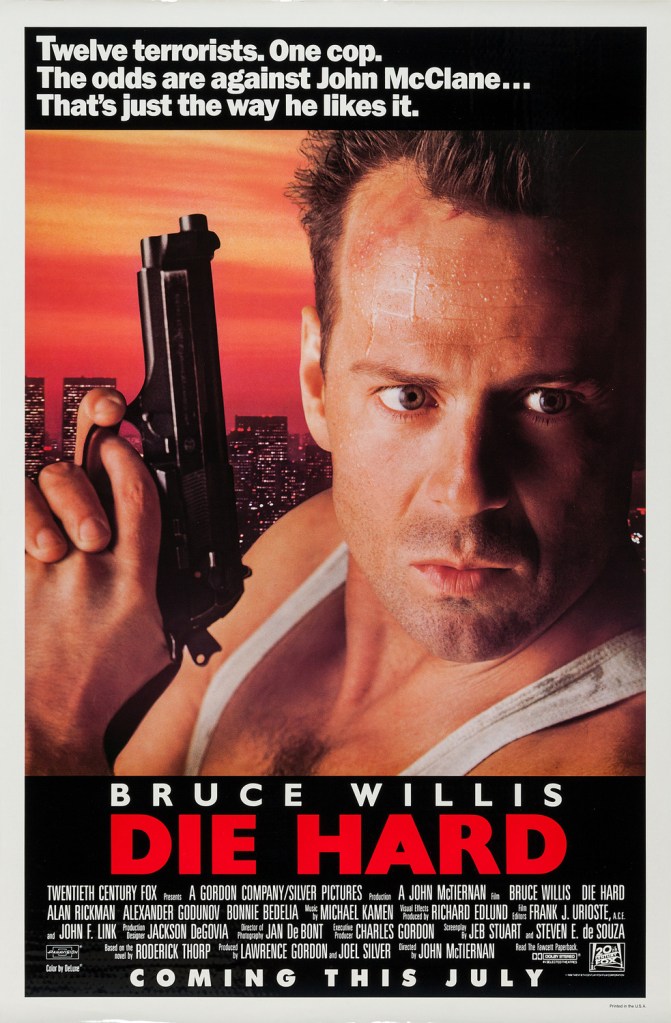
The Plot: NYPD Detective John McClane (Bruce Willis) arrives in Los Angeles on Christmas Eve to join his estranged wife Holly (Bonnie Bedilia) for her office Christmas party at Nakatomi Plaza. During the party, the building is taken over by Hans Gruber (Alan Rickman), a German thief posing as a terrorist to distract everyone while his accomplices steal the company’s $640 million in bearer bonds. McClane escapes unnoticed and, with outside assistance from LAPD Sergeant Al Powell (Reginald VelJohnson), must use his wits and whatever weapons on hand to thwart Gruber and his team. But the real question isn’t whether or not McClane will succeed, it’s whether or not you consider “Die Hard” a Christmas movie.

Why It Matters: The NFR calls the film a “slam-bang thriller”, praising its “[g]ripping action sequences and well-crafted humor”. Author and action-movie expert Erich Lichtenfeld delivers an appreciative essay on the film.

But Does It Really?: Yes, “Die Hard” is one action cliché after another, and yes, some of it has not aged spectacularly, but overall I had a fun time watching “Die Hard”. Action movies get a bad rap from film snobs like me, but it’s hard not to enjoy a movie this excitingly staged and shot, with great central performances from Willis and Rickman. With its iconic moments, quotable dialogue, and continuous sequels and spoofs, “Die Hard” endures, and has earned its spot on the NFR. 

Shout Outs: Musical allusions to “Singin’ in the Rain” and “A Clockwork Orange“, plus a real funny “High Noon” reference.

Everybody Gets One: This is the only NFR appearance for (among others) director John McTiernan and the late great Alan Rickman. “Die Hard” producer Joel Silver selected McTiernan based on his work helming the 1987 movie “Predator”, and wanted Rickman after seeing the actor perform in the original Broadway production of “Les Liaisons Dangereuses”. “Die Hard” is Rickman’s film debut!

Wow, That’s Dated: Primarily the major influence the Japanese were having on American businesses in the ’80s, plus fleeting references to VCRs, Magic Johnson, Run-D.M.C., West Germany, and the idea that you could carry a gun onto a plane. Bonus dated reference to Josée Normand, credited here as “Hair Stylist to Bruce Willis”.

Seriously, Oscars?: A surprise hit with audiences, “Die Hard” garnered four Oscar nominations: Sound, Sound Editing, Film Editing, and Visual Effects. “Die Hard” lost in the Sound category to “Bird”, and the remaining three categories to the flashier technological work of “Who Framed Roger Rabbit“.

Other notes

  • Stay with me: “Die Hard” is based on a book, and is technically a sequel. Roderick Thorp’s 1966 novel “The Detective” centered around Joe Leland, a private detective investigating a mysterious suicide. This novel was adapted for film by Fox in 1968 starring Frank Sinatra as Leland. In 1975, Thorp was inspired to write a sequel after seeing “The Towering Inferno“, and in 1979 published “Nothing Lasts Forever”. Fox owned the screen rights to the book, but nothing came of it. In 1987, writer Jeb Stuart was looking for work, and took an offer to adapt the long dormant novel into a movie. The script was remarkably faithful, with Stuart throwing in the heist plotline and changing John’s last name to McClane (a tribute to his own Celtic heritage). 
  • Because of its connection to “The Detective”, Fox was contractually obligated to offer the lead to Sinatra, who promptly turned it down (he was 71). The usual suspects like Sylvester Stallone and Arnold Schwarzenegger passed, and practically every leading man in Hollywood was considered before the offer was made to TV star Bruce Willis, still relatively new to film. An informal survey conducted by CinemaScore showed Fox executives that Willis’ participation would not have a negative impact for audiences, and Willis got the part (though Fox did omit his image from some of the early posters).
  • Before “Die Hard”, ’80s action movies were dominated by big guys with big muscles and bigger guns. Bruce Willis’ smaller physique, mixed with his natural smart-ass charm, turned John McClane into more of an everyman. McClane isn’t an unstoppable Superman, he’s an average Joe (albeit an average Joe with police training) in-over-his-head and making it up as he goes. Willis’ on-screen charisma helps us relate to the unrelatable.
  • The businessman on the plane who tells John to take his shoes off is played by Robert Lesser, who shows up in one of my favorite Christmas movies: “Ernest Saves Christmas“.
  • Oh Alan, you are sorely missed. As the most British German person ever, Rickman owns the film with a performance that could have easily been overshadowed by the action and effects. His Gruber is proof that some stories need a villain more interesting than the hero.
  • Shoutout to cinematographer Jan de Bont; capturing the action sequences in excellent compositions, as well as filming several scenes “in-camera”, giving them a better flow than quick edits would. De Bont would go on to direct a few action movies of his own, including “Speed” (aka “Die Hard on a Bus”).
  • Hey Carl! Yes, I know the character’s name is Al, but when Reginald VelJohnson plays a cop, he’s Carl Winslow from “Family Matters”. End of discussion.
  • Shout-out to my GF, who correctly pointed out that Argyle the limo driver is listening to the same song (Steve Wonder’s “Skeletons”) every time we cut back to him, even when significant time has elapsed. How long is that song?
  • This may be the first movie to feature the “Chekhov’s C4 explosive” trope.
  • I’ve spent so much time watching older, Code-era movies that when an NFR entry features excessive violence and language, it sticks out. Speaking of…
  • “Yippee-ki-yay, motherfucker” is a continuation of McClane’s fondness for Roy Rogers, who used the similar catchphrase “Yippee-ki-yay, kids!” on his TV show. Rogers was 77 when “Die Hard” was released, and I would love to know if he ever learned of his unintentional contribution to pop culture.
  • That’s two movies in a row I have covered that feature Paul Gleason as the kind of arrogant authority figure only he could play. I wonder how many weeks of detention Gruber is gonna get?
  • Is everyone in this movie a corrupt asshole? Between Holly’s coked-out co-worker, the LAPD officers, the FBI Agents Johnson, and the TV reporter, the only two morally just people in this movie are the rogue New York cop and the coldblooded murderer/thief.
  • Rickman’s giving that great a performance AND he does a flawless American accent? Where is his Oscar?
  • Kudos to this film’s sound mixers. I usually have to adjust the volume a lot when I’m watching an action movie, but “Die Hard” is pretty level for the whole runtime. The dialogue was coherent, yet the violence was not deafening. Well done, everyone.
  • McClane picking glass out of his bloodied feet is one of the more disturbing images in moviedom. This is either Quentin Tarantino’s favorite or least favorite scene.
  • With its skyscraper setting, fiery action scenes and helicopter finale, you can definitely see the “Towering Inferno” influence on this film. It’s just like “Towering Inferno”, but with boobs and swearing!
  • [Spoiler] Gruber’s fall from the top of the skyscraper is a memorable and extraordinary shot, albeit marred by the interjection of Gleason’s line “Oh I hope that’s not a hostage.” Not every scene needs snarky commentary.
  • [Mini-Spoiler] Ah crap, I forgot that Carl’s backstory is him accidentally shooting a kid. And I thought the casual racism and homophobia would be this movie’s most dated quality. Turns out it’s making the audience applaud because a cop finally mustered up the courage to shoot someone. Sweet Jesus.
  • Still, not the worst office Christmas party I’ve ever seen.

Legacy

  • “Die Hard” was one of the biggest hits of 1988, propelling Bruce Willis from “that guy on ‘Moonlighting'” to bona-fide movie star. Caught slightly off-guard, Fox immediately put a “Die Hard” sequel into production. While the first two sequels were adaptations of unrelated books with McClane shoehorned in, the next two were original stories that – ironically – had more in common with the “Rambo”-type action movies the original film differentiated itself from.
  • A sixth film – a “Godfather II“-esque prequel/sequel titled “McClane” was in development in the late 2010s before being cancelled following Disney’s acquisition of Fox.
  • “Die Hard” helped create the entire ’90s action movie aesthetic: the jaded cop, usually estranged from his wife and family, pitted against a group of international terrorists with only an endless supply of machine guns and quips at his disposal. This trend was immediately retired in 2001 after being deemed insensitive following the 9/11 terrorist attacks.
  • Like many modern movies on this list, “Die Hard” has had its share of media tie-ins. The film has countless video games, as well as a successful comic book adaptation and the inevitable tie-in with DieHard car batteries.
  • I absolutely adore the “Bob’s Burgers” episode in which the children write and perform the “Die Hard”/”Working Girl” musical mashup “Work Hard or Die Trying, Girl”. They even got Carly Simon to riff during the credits!
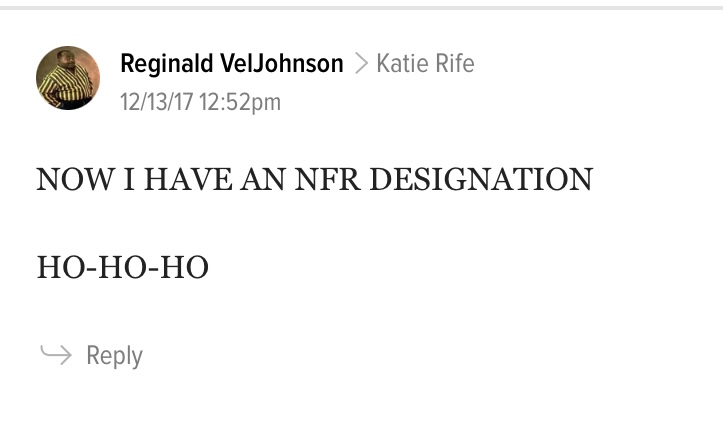
  • And finally, when “Die Hard” was added to the NFR in 2017, Reginald VelJohnson commented on an AV Club article to celebrate his new place in the Library of Congress. Apparently he forgot he was in “Ghostbusters“, which was added to the Registry in 2015.

If you’re still reading, it’s because you are waiting for me to answer the million dollar question: Is “Die Hard” a Christmas movie? 

Yes.
But also no.

The real question is “How do we define a Christmas movie?” Is it a movie that focuses solely on the Christmas season? Or one that just features it? If it’s the former, would “It’s a Wonderful Life” count? It only features Christmas at the very end. What about movies that have nothing to do with Christmas, but that families have made their annual holiday viewing? (Looking at you, “Sound of Music“) It is this lack of a definition that has not only made “Die Hard” difficult to categorize, but also explains why people get so upset when you tell them “Die Hard” isn’t a Christmas movie: it’s based on their own definition, a personal choice that – when called into question – feels like an attack.

Do I think “Die Hard” is a Christmas movie? Yes, but not because of any strong attachment I have to it. The “Die Hard is a Christmas movie” conversation started as a joke; the irreverent choice for people tired of the same five Christmas movies year after year. But like any joke, if you repeat it too many times, it’s not funny anymore. “Die Hard” is no longer an ironic answer to the question “What’s your favorite Christmas movie?”, but rather a legitimate answer because we made it one. People died on that hill so many times that the conversation stopped being fun, and we collectively threw our arms up and said, “Fine. Have it your way. It’s a Christmas movie.” So in conclusion, whether we meant to or not, we have made “Die Hard” as much a part of our Christmas culture as Santa Claus and the Grinch. Now let’s never speak of this ever again.

#24) The Middleton Family at the New York World’s Fair (1939)

#24) The Middleton Family at the New York World’s Fair (1939)

OR “Capital Punishment”

Directed by Robert R. Snody

Written by Reed Drummond and G.R. Hunter

Class of 2012

This is a revised and expanded version of my original “Middleton Family” post, which you can read here.

The Plot: In this Westinghouse sponsored industrial film, the Middleton family of Indiana arrive in New York to see all the technological wonders on display at the 1939 New York World’s Fair…well, at least the Westinghouse exhibits. Father, Mother, son Bud, daughter Babs, and Grandma (Harry Shannon, Ruth Lee, Jimmy Lydon, Marjorie Lord, Adora Andrews) witness such marvels as an electric dishwasher, a time capsule to be opened in 5000 years, a voice-command robot named Elektro, and a new invention called television. But all of this takes a backseat to a love triangle between Babs, her hometown sweetheart Jim Treadway (Douglas Stark) and her art teacher/Communist boyfriend Nicholas Makaroff (George J. Lewis). What follows is pure capitalism baked inside a love story baked inside more capitalism.

Why It Matters: The NFR calls the film “a vibrant documentary record of the fair’s technological achievements and the heartland values of America”, though admits that the film is “[b]oth charming and heavy-handed”. An essay by professor and 1939 World’s Fair expert Andrew F. Wood echoes this sentiment, calling the film “more a time capsule of corporate propaganda than cinematic excellence.”

But Does It Really?: “Middleton” is an interesting little curio on this list. Anyone expecting a standard industrial short will be surprised by this film’s openly pro-Capitalism, anti-Communist agenda, complete with a story arc that dominates the film. Still, there’s enough enjoyable bits of ’30s culture throughout, and a thorough documentation of what Westinghouse had to offer us in 1939 (all in Technicolor, no less). “Middleton” is an interesting encapsulation of an optimistic country coming out of a decade-long depression, blissfully unaware of the impending darkness of another world war. A yes for “The Middleton Family” on the NFR, but definitely do your homework before viewing this.

Shout Outs: Quick references to such ’30s pop culture/NFR mainstays as Mickey Mouse, Laurel & Hardy, the Marx Brothers, and Frankenstein’s Monster.

Everybody Gets One: Marjorie Lord’s career was just getting started when she played Babs Middleton. While primarily a stage actor, her most famous role would be as Danny Thomas’ second wife on “The Danny Thomas Show” in the 1950s. Fun Fact: Marjorie Lord is the mother of Oscar nominated actor Anne Archer.

Wow, That’s Dated: We’ll get to the more heavy-handed dated aspects as we go, but for now we’ll settle on such then-topical references as the WPA, Dick Tracy, Barney Google, and the Dionne quintuplets.

Other notes

  • World Exhibitions (alternatively known as Expositions or Fairs) started appearing in major metropolitan cities throughout the 19th and early 20th century, typically as large demonstrations of new technology. The first official World’s Fair was the Great Exhibition in London in 1851, with America hosting their first in Philadelphia in 1876 (the aptly named Centennial Exposition). Fairs in Chicago, San Francisco, and St. Louis followed, and New York’s 1939 fair would be the Big Apple’s first. Among the companies with exhibitions at the ’39 fair was the Westinghouse Electric & Manufacturing Company, who commissioned Audio Productions Inc. to make a 50-minute film about their exhibit. The fair opened on April 30th, 1939, with “Middleton Family” being filmed on location that June.
  • Watching this movie is like watching an episode of “The Twilight Zone”: it all looks like normal life, but something is definitely off. There’s a lot of talk about how wonderful progress is, with immediate dismissal of any contrarian talk. This is all incredibly odd when being viewed through a modern lens, but try to remember its intended audience: Americans coming out of a Depression, fearful of machinery replacing manual labor, with Communism’s popularity starting to take a nosedive.
  • Harry Shannon is giving me some Lee J. Cobb vibes. If Shannon looks familiar, you may be remembering him from his brief yet important role as Charles’ father in “Citizen Kane“.
  • The Westinghouse Time Capsule (along with its 1965 counterpart) is still buried in Flushing Meadows Park, though it is now predicted that the capsules will be underwater in 6939 due to climate change.
  • The guy playing Jim is no actor (this is Douglas Stark’s film debut), but he does have the unenviable task of delivering corporate talking points as naturally as possible. Hey, at least he memorized his lines.
  • Every line uttered by Bud in this movie was followed by me saying, “Shut up, Bud.” Jimmy Lydon is the textbook bratty younger brother in this, so…good job?
  • While Westinghouse did have an early display of television technology at the World’s Fair, it was the RCA exhibit that showcased this new breakthrough front and center (they even televised the fair’s opening ceremony). This may explain why TV is barely mentioned or featured in this film.
  • Man, Nick is such a jerk. I get that we’re not supposed to sympathize with a Communist, but did you have to make him so repellent? He doesn’t know who the Marx brothers are! Pinko!
  • “Funny how a man with facts can break down an argument.” Very important to remember. Also, shut up Bud.
  • If the capitalist rhetoric is too much for you, stick around for Grandma’s appreciation for electrical engineers and how they improved life for housewives. “They signed our Emancipation Proclamation.” Hoo boy.
  • Easily my favorite part of this whole movie, Elektro the Moto Man. I love everything about this robot: his art deco-by-way-of-Frankenstein aesthetic, the unnatural way you have to speak to utilize his voice command, and the fact that the first trick he demonstrates for an audience is smoking a cigarette.
  • Man, the love triangle really takes over the last third of this film. They’re not even at the Fair anymore. Bring back the smoking robot!
  • Shoutout to Georgette Harvey, cast here in the thankless role of Elvira the maid. Harvey was part of the original Broadway cast of “Porgy and Bess”, and unsuccessfully auditioned for the role of Mammy in “Gone with the Wind“.
  • Among the countless exhibitions the Middleton Family missed out on at the fair by only seeing the Westinghouse building: the fair’s iconic Trylon and Perisphere, General Motors’ Futurama (a look at the cars of 1959!), the first presentations of nylon fabric and the View-Master, over 300 pieces of art by the “Old Masters”, the Jewish Palestine pavilion which introduced what would eventually become Israel, Billy Rose’s Aquacade, and the Nimatron, considered the first digital computer.

Legacy

  • “Middleton” was released in October 1939 (one month after World War II began in Europe) and was one of the few industrial shorts to get a major theatrical release. “Middleton” was made available for free to any theater that wished to play it on the bottom half of a double bill.
  • The New York World’s Fair ran from April to October 1939, and then re-opened for the same period in 1940. Upon its closure in October 1940, most of the fairground was demolished, though Flushing Meadows would go on to host New York’s next World’s Fair 25 years later.
  • World Fairs have never really gone away, but they have evolved into World Expos (as well as Specialised Expos). At the time of this writing, Dubai is hosting the delayed Expo 2020, with the next World Expo being held in Osaka, Japan in 2025.
  • Audio Productions Inc. would go on to make several industrial shorts for the next 30 years, including two that would be spoofed on MST3K: 1947’s “Body Care and Grooming” and 1948’s “The Chicken of Tomorrow”. At some point Audio Productions folded, with their catalog falling into public domain, allowing for easy access to “The Middleton Family”.